This site is supported by our readers. We may earn a commission, at no cost to you, if you purchase through links. This content is for general informational and educational purposes only and is not a substitute for professional medical, dermatological, or nutritional advice.
Most guys grow a mustache and then wing it from there. They trim when it starts curling into their mouth, eyeball the length in the mirror, and wonder why it never looks the way they pictured.
Here’s the reality: maintaining mustache length isn’t a guessing game. Your face shape, natural growth direction, and the tools you’re working with all determine whether the final result looks intentional or sloppy. Even a millimeter off in the wrong place can throw off the whole look.
Get these fundamentals right, and every trim becomes a consistent routine you can repeat with confidence.
Table Of Contents
Key Takeaways
- Your face shape, natural growth direction, and target style — chevron, handlebar, beardstache — should determine your mustache length before you ever pick up a trimmer.
- Always trim on completely dry hair, work from the outer edges inward using guard settings, and check symmetry from three angles to avoid the most common mistakes that leave a mustache looking patchy or uneven.
- Trimming every one to two weeks keeps each session precise and manageable, while daily wax for hold and a few drops of jojoba or argan oil for conditioning are what keep the shape locked in between cuts.
- Sleep deprivation and chronic stress can quietly slow your growth and thin your mustache by suppressing testosterone and cutting follicle activity — so your lifestyle habits matter just as much as your grooming routine.
Choose Your Ideal Mustache Length

Getting the length right starts before you ever pick up a trimmer. A few key factors — your face shape, your style goals, and how your hair naturally grows — will point you toward what actually works for you. Here’s what to think about before you commit to a length.
Once you’ve got a clear sense of your target length, it’s worth browsing beard trimmers designed for first-time growers to find a tool that matches your specific goal rather than retrofitting your style around whatever you happen to own.
Match Length to Face Shape
Your face shape is the blueprint for everything.
A round face needs a longer, tapered mustache that extends past the mouth corners to create the illusion of width. Got a long face? Go shorter and fuller, sitting close to the lip.
Square jawlines soften nicely under a natural, relaxed mustache. Always check symmetry from the front and both sides first.
Consider Your Mustache Style
Your mustache style sets the length target. A chevron sits close to the lip and stays compact. A handlebar needs real length to grow, twist, and train those curls. Most styles reach a workable length in 4 to 8 weeks of consistent growth before they can be properly shaped.
- Chevron: partial lip coverage, trimmed past mouth corners
- Handlebar: long ends trained daily with wax
- Lampshade: wider at top, ends angled inward
- Beardstache: full mustache leads, beard trimmed to 4-6mm
Follow Natural Growth Patterns
Hair grows roughly 0.3 to 0.5mm per day, but your mustache growth direction matters as much as the rate. Center hairs grow straight down; edge hairs angle outward slightly. Work with that natural flow, not against it, and your symmetry trimming stays cleaner.
Follicle density peaks at the center, so expect a fuller middle and thinner edges from the start.
Balance Mustache and Beard
Growth direction is one thing, but once you’re running both a mustache and a beard, beard and mustache balance becomes the real challenge.
Trim your mustache every 7-10 days and your beard every 3-4 days to keep one from overpowering the other. Mustache wax shapes the upper lip area, while beard balm controls the bulk below, keeping each zone distinct.
Set a Target Length
Once you know your face shape and style, pin down an actual number. Measure in millimeters from your upper lip to the tip of your longest hairs. A Chevron sits around 8-10mm, a Handlebar needs 12mm or more. Your pinky finger width is a quick 10mm check.
Set incremental goals, adding 1-2mm every few weeks, and track progress with photos.
Trim Mustache Length Step by Step
Getting the length right starts long before you pick up your trimmer. A clean, well-prepped mustache is easier to work with and gives you a much more accurate cut. Here’s exactly how to do it, step by step.
If you’re just starting out, mustache trimming tips for beginners walk you through the prep and technique in a way that makes the whole process far less intimidating.
Wash and Dry Completely

Before anything else, start with a clean mustache. Wash with a gentle cleanser or mild shampoo, rinse with lukewarm water, then pat dry using pressing motions, not rubbing. Rubbing causes frizz and breakage.
Let it air dry completely, or use a cool dryer setting. Wet hair looks longer than it is, and that leads to uneven cuts.
Comb Hairs Straight Down

Once dry, grab your mustache comb and pull hairs straight down from center outward. This length assessment method catches uneven spots instantly.
- Hair growth direction: always comb with the grain
- Even tension technique: keeps hairs aligned for accuracy
- Stray hair detection: easier when every strand lies flat
That setup shows exactly where to focus before choosing your guard length.
Remove Bulk With Guards

Start with a 4 to 6mm guard to knock down length before anything else. That setting removes bulk without cutting too close, giving you room to shape it up.
Keep the guard flat against the hair and make multiple slow passes, moving from the outer edges inward. Rushing or pressing harder than needed pulls the trimmer off track and leaves patchy results.
Trim Small Sections Symmetrically

Think of your nose as your anchor. Trim one side from the outside in, then mirror that exact amount on the other side. This alternate side trimming prevents over-cutting on one side.
Reach for scissors here for tight control, especially at handlebar ends. Step back from the mirror every few snips, as close-up views can fool you when judging evenness.
Define The Lip Line

The lip line is where your mustache either looks intentional or just… overgrown.
Comb hairs downward, then trim along the upper lip’s natural curve using precision scissors or a narrow T-blade detail trimmer. Short snips from center outward keep things even.
Check the philtrum, that center dip trips most people up, leaving stray hairs that ruin an otherwise clean line.
Keep Length Consistent Between Trims

Trimming is only half the battle — what you do between sessions determines whether your mustache stays sharp or slowly creeps into chaos. A few simple habits, done consistently, make all the difference in keeping your length exactly where you want it. Here’s what works:
Trimming shapes your mustache, but consistent daily habits are what keep it there
Trim Every One to Two Weeks
Your mustache trimming frequency matters more than most guys realize. Letting it go three or four weeks means you’re cutting a lot more each session, which makes it harder to stay precise. A one to two week grooming routine keeps growth in check:
- Removes only a small amount each time
- Preserves shape and density
- Makes symmetry much easier to maintain
Check Length From Three Angles
Once you’re trimming on a regular schedule, checking from multiple angles keeps your work honest. Stand 2-3 feet from the mirror and assess the front view for symmetry first. Then shift to a 45-degree side angle to catch thickness issues. A quick top-down look reveals uneven density or stray hairs you’d otherwise miss. Use daylight or full-spectrum lighting throughout. Yellow light distorts length perception.
Control Hairs With Wax
Wax is your day-to-day control tool. Start with a pea-sized amount, rub it between your fingertips until smooth, then work it through your mustache from center outward. It stays pliable, so you can reshape throughout the day without cracking.
For longer styles, mustache-specific wax gives a firmer hold than a regular pomade or styling paste. Wash it out before bed.
Prevent Tangling With Oil
Oil does what wax can’t: it conditions. Jojoba or argan oil keeps hairs flexible and tangle-free. Apply 2-3 drops to damp hair right after washing.
- Work from root to tip using your fingertips
- Follow with a boar bristle brush
- Reapply at night to prevent knotting
Split ends catch on healthy hairs and worsen tangles. Trim split ends every few weeks.
Avoid Common Trimming Mistakes
Even small slip-ups compound over time. The biggest one? Trimming on damp hair — wet strands stretch, so you cut too short and end up with a thin, patchy mess once everything dries. Always dry completely first.
Avoid overcutting the center. That middle section grows differently, and shaving too much there kills fullness fast. Work in small increments, check from three angles, and stay honest about symmetry.
Top 5 Mustache Maintenance Tools
The right tools make all the difference between a clean, sharp mustache and one that always looks a little off. Whether you’re trimming for precision or just keeping things tidy between cuts, having the right kit in your corner saves you time and frustration. Here are the five tools worth keeping on your grooming shelf.
1. Philips Norelco Multigroom 7000 Trimmer Kit
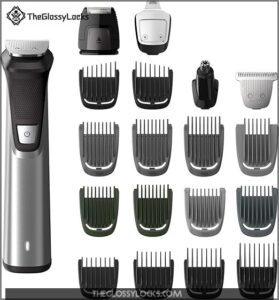
The Philips Norelco Multigro Multigroom 7000 earns its spot in any serious grooming kit. Its DualCut self-sharpening blades stay sharp for up to five years without oil, which means less fuss between trims.
You get five hours of runtime per charge, and a quick five-minute plug-in takes care of touch-ups on the fly.
The reinforced fiberglass guards won’t bend mid-pass, so your length stays consistent every time.
| Best For | Anyone who wants a reliable all-in-one grooming kit for beard, body, and facial trimming with minimal maintenance and long battery life. |
|---|---|
| Grooming Type | Electric trimmer |
| Build Material | Steel blades, fiberglass guards |
| Power Source | Lithium-ion rechargeable |
| Portability | Cordless, travel-ready |
| Cutting Element | DualCut self-sharpening blades |
| Maintenance | No blade oil needed |
| Additional Features |
|
- Self-sharpening DualCut blades stay sharp for up to five years with no oiling required
- Five hours of runtime per charge keeps you covered through multiple grooming sessions
- 23 included attachments cover beard, head, body, and face — all in one kit
- Maximum 16mm guard length makes it a poor fit for longer hairstyles or barber-style cuts
- Not designed for close shaving or bald head shaving without extra attachments
- The included storage bag struggles to keep all 23 pieces organized neatly
2. Wahl Lithium Detail Trimmer Kit
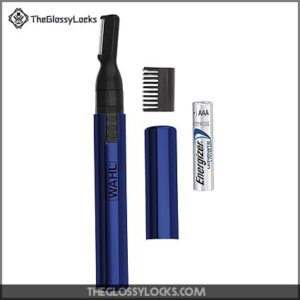
The Wahl Lithium Detail Trimmer is built for close work. Its T-wide blade cuts down to 0.4mm with zero overlap, so you can trace the lip line cleanly without second-guessing yourself.
The battery delivers 100 minutes of runtime on a single charge, which covers a full week of daily touch-ups. Running late? A one-minute quick charge gets you back in business fast.
Lightweight and well-balanced, it sits comfortably in your hand and doesn’t fight you around the curves.
| Best For | Anyone who wants a compact, travel-friendly trimmer for precise facial grooming — eyebrows, nose, ears, and neckline touch-ups. |
|---|---|
| Grooming Type | Electric detail trimmer |
| Build Material | Anodized aluminum, steel blades |
| Power Source | AAA lithium battery |
| Portability | Compact and portable |
| Cutting Element | Interchangeable trimmer heads |
| Maintenance | Rinseable blades |
| Additional Features |
|
- Interchangeable heads make it versatile for multiple grooming tasks, from eyebrows to ear and nose hair
- Lightweight and portable at just 2 ounces, easy to toss in a bag for travel
- Rinseable blades keep things hygienic and maintenance simple
- The trimmer head can detach easily if dropped, which is a durability concern
- Some users find the noise level louder than expected for a small trimmer
- Blade performance may decline over time with regular use
3. Tweezerman Moustache Scissors Precision Trimming
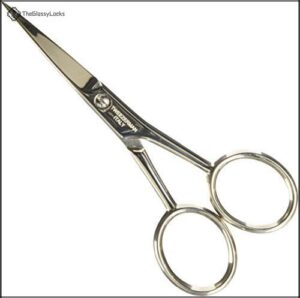
Some jobs call for scissors, not a trimmer. The Tweezerman Moustache Scissors offer hand-controlled precision for lip line cleanup and corner blending that electric tools just can’t replicate.
The micro-serrated blades grip each hair before the cut, so nothing slips mid-snip. At 1.44 ounces with roomy finger loops, they’re comfortable to hold through a full grooming session.
One caveat: keep them dry between uses. Despite the stainless steel build, some users report early rusting when stored near moisture.
| Best For | Anyone who prefers hand-controlled precision for beard, moustache, or eyebrow grooming — especially those with larger fingers who find standard scissors awkward to hold. |
|---|---|
| Grooming Type | Manual scissors |
| Build Material | Stainless steel |
| Power Source | None (manual) |
| Portability | Lightweight, portable |
| Cutting Element | Straight precision blades |
| Maintenance | Wipe-clean design |
| Additional Features |
|
- Micro-serrated blades grip each hair before cutting, reducing slippage for cleaner, more accurate snips
- Lightweight at 1.44 ounces with roomy finger loops, making them comfortable to use through longer grooming sessions
- Great for detailed work — lip line cleanup, corner blending, and eyebrow shaping where electric trimmers fall short
- Several users report rusting within days or weeks, despite the stainless steel construction
- The pointed tips make them unsuitable for nose or ear hair trimming — a safety concern
- Can tear rather than cut cleanly on coarser hair, which may frustrate users with thicker facial hair
4. Jason 4.5 Inch Stainless Steel Beard Trimming Scissors

Budget-friendly and sharper than they look, the Jason scissors earn a spot in any grooming kit. The 4.5-inch stainless steel blades are compact enough to work the lip line with real control, and the convex edge slices through coarse hairs cleanly.
Lightweight ergonomic grips cut down on hand fatigue, which matters on longer sessions or if you deal with mobility issues. Some users note a slightly flimsy feel, but blade sharpness does the actual work. Dry them after every use.
| Best For | Home groomers who want sharp, lightweight scissors for trimming facial hair, bangs, or detailing work—especially those with small hands or hand mobility issues. |
|---|---|
| Grooming Type | Manual scissors |
| Build Material | Stainless steel |
| Power Source | None (manual) |
| Portability | Storage box included |
| Cutting Element | Adjustable tension blades |
| Maintenance | Alcohol-cleanable blades |
| Additional Features |
|
- Sharp convex blades slice through coarse hair cleanly without pulling or snagging
- Lightweight ergonomic design reduces hand fatigue, great for users with arthritis or limited grip strength
- Compact 4.5-inch size gives excellent control for precise work around the lip line and facial edges
- Feels flimsy or toy-like to users expecting professional-grade heft and build quality
- Finger holes are sized for average adult hands, so very small or large hands may find them awkward
- The pointed tip may feel sharper than expected despite the snubbed design
5. Kent Beard Mustache Pocket Comb
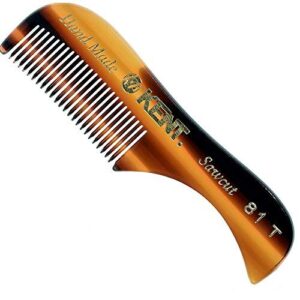
The Kent pocket comb punches above its weight. Handmade in England from cellulose acetate using a saw-cut technique, it features fine, rounded teeth that glide through mustache hairs without snagging or irritating the skin. At just 2.8 inches, it slips easily into any pocket.
Use it to comb hairs straight down before trimming, or to distribute wax evenly through longer styles. Lightweight, precise, and built to last, it’s one of those tools you reach for every single day.
| Best For | Anyone who wants a precise, portable grooming tool for maintaining a mustache or short beard on the go. |
|---|---|
| Grooming Type | Manual comb |
| Build Material | Cellulose acetate |
| Power Source | None (manual) |
| Portability | Pocket-sized, 2.8 inches |
| Cutting Element | Fine-tooth rounded tips |
| Maintenance | Hand-polished finish |
| Additional Features |
|
- Handmade from cellulose acetate using a saw-cut technique, giving it smooth, rounded teeth that won’t snag or irritate skin
- Compact 2.8-inch size slips into any pocket, making it easy to keep on you for quick touch-ups throughout the day
- Stimulates natural oils and cuts down on static, leaving your mustache or beard looking neat and well-conditioned
- Too small to work effectively on full or longer beards, so it’s really only useful for shorter styles
- Its compact size makes it easy to misplace or lose, especially when carrying it loose in a pocket
- The finish may chip over time with regular handling, which can affect its appearance
Frequently Asked Questions (FAQs)
Can diet affect mustache growth and thickness?
Yes, diet plays a real role. Protein, zinc, and biotin feed your follicles the building blocks they need, while poor nutrition can slow growth and weaken hair shafts over time.
How do I fix an uneven mustache after trimming?
Let the uneven side grow out to match the longer side, then re-trim both together. Always recheck after drying completely, comb hairs down, and trim in tiny increments to keep both sides balanced.
Does mustache color change with age or health?
Those silver threads creeping into your mustache aren’t random. Age and genetics drive most color changes, as melanocytes in each follicle gradually stop producing pigment. Low B12 or chronic stress can speed it up.
What causes mustache hairs to grow in different directions?
Mustache hairs grow in different directions because of follicle angle and shape, which are largely genetic. Round follicles produce straighter growth, while oval or triangular ones cause waviness, and each follicle sits at its own unique angle.
Can stress or sleep affect mustache growth rate?
Sleep and stress silently sabotage your mustache. Poor sleep cuts growth nearly 20%, while stress spikes cortisol, suppressing testosterone. Both slow follicle activity, leaving your mustache thinner and patchy over time.
Conclusion
Go ahead, keep eyeballing it in the mirror and wondering why it never quite looks right.
The guys who actually know how to maintain mustache length aren’t working harder, they’re just working smarter, with the right tools, a consistent schedule, and a clear target length locked in from the start. Two weeks between trims, three angles carefully checked, one good comb through. That’s the whole system. Own it, and your mustache stops being an accident.