This site is supported by our readers. We may earn a commission, at no cost to you, if you purchase through links. This content is for general informational and educational purposes only and is not a substitute for professional medical, dermatological, or nutritional advice.

That rough patch on the back of your arms isn’t dry skin. It’s keratosis pilaris, a buildup of keratin plugs that no amount of scrubbing will fix. Physical exfoliants buff the surface, but they can’t touch what’s happening inside the follicle.
Chemical body exfoliant benefits go deeper. Ingredients like salicylic acid dissolve the oil and dead cells clogging your pores, while AHAs such as glycolic acid loosen the dull layer that blocks moisture and light. The result is smoother texture, fewer breakouts, and better absorption of everything you apply afterward.
Below, you’ll find the eleven benefits worth knowing, plus safety protocols and the five products dermatologists actually recommend.
Table Of Contents
- Key Takeaways
- 11 Chemical Body Exfoliant Benefits
- Chemical Versus Physical Body Exfoliation
- Choosing and Using Chemical Exfoliants Safely
- Top 5 Chemical Body Exfoliants
- Frequently Asked Questions (FAQs)
- How often should you use a chemical exfoliant on your body?
- What is a good chemical exfoliant for the body?
- Do dermatologists recommend body scrubs?
- What are the benefits of using chemical exfoliants?
- Can chemical exfoliants remove deep acne scars?
- How long before lactic acid shows results?
- Why apply exfoliants at night instead of morning?
- What SPF should I use with exfoliants?
- How many acids can I combine safely?
- Conclusion
Key Takeaways
- Chemical body exfoliants like salicylic acid work inside the follicle to dissolve oil and dead cell buildup—something scrubs can’t reach—making them the better fix for keratosis pilaris, body acne, and rough texture.
- Different acids suit different goals: 2% salicylic acid for clogged pores and breakouts, glycolic acid for dullness and tone, and gentler lactic acid for sensitive or dry skin.
- Most problems come from overuse, not the ingredients—start once or twice weekly, patch test, avoid exfoliating irritated skin, and never stack acids with retinoids.
- Because exfoliation increases sun sensitivity and results build over weeks, pair any product with daily SPF 30, moisturize consistently, and stick with one acid type per session for at least six weeks.
11 Chemical Body Exfoliant Benefits
Chemical exfoliants work at a cellular level, and the results go far beyond just smoother skin. Depending on which acids you use, you can target everything from clogged pores to uneven tone. Here are eight benefits worth knowing before you build your routine.
If you’re curious about how exfoliation fits into the bigger picture, this guide to shaving and skin exfoliation techniques breaks down where glycolic acid fits in.
Smoother Skin Texture
When dead skin cells accumulate on the surface, they scatter light unevenly, making your skin feel rough and look dull. If you’re wondering which acids to start with, a good guide to using AHAs safely breaks down how to get results without overdoing it.
Chemical body exfoliators dissolve the bonds holding those cells in place, speeding up your skin’s natural turnover.
Regular chemical exfoliation works from the surface outward, so you’ll notice fewer rough patches and a smoother, more even skin texture over time.
Clearer
That smoother texture you’re building sets the stage for visibly clearer skin. Chemical body exfoliants loosen the dead skin cells that trap oil and debris, a process tied to gentle pore cleansing rather than scrubbing.
As buildup fades, body acne triggers diminish and light reflects more evenly, so your skin looks brighter and calmer.
Expect gradual improvement, since skin smoothing happens over days, not hours.
Unclogged Pores
take this a step further. Salicylic acid, the star BHA in most chemical body exfoliants, is oil-soluble, so it travels into the pore itself and dissolves the sebum and dead skin cells stuck to the follicle wall. That’s inside-out pore cleansing, something scrubs can’t match. Stick with a 2% concentration and give it 4 to 6 weeks. If you have darker skin tones and pigmentation concerns, a gentler option like a mandelic acid exfoliant for dark skin fades marks without triggering irritation.
Because it works best for oily, acne-prone skin, salicylic acid is less suited to dry or photodamaged skin, where water-soluble AHAs are generally preferred for surface texture and pigmentation concerns.
Reduced Body Bumps
Those clogged pores often show up as body bumps, especially keratosis pilaris on your arms and thighs. Chemical body exfoliators dissolve the keratin plugs causing them:
- Salicylic acid clears oil-based buildup inside follicles
- Lactic acid loosens surface keratin gently
- Consistent use drives real skin texture improvement
- Overdoing the exfoliation process backfires, so start twice weekly
Brighter
Dullness often comes from buildup, not just pigment. Layers of dead cells scatter light unevenly, so your skin looks flat even when it’s healthy. Chemical body exfoliators loosen those bonds, speeding skin renewal so fresher cells reach the surface.
If you’re unsure which exfoliating method fits your skin, this guide to the benefits of exfoliating skin breaks down the options simply.
Glycolic acid works well for skin texture improvement, while lactic acid adds hydration. Pair exfoliation with niacinamide to visibly soften hyperpigmentation and support skin brightening.
Even Tone
Hyperpigmentation fades slowly because pigment sits deep in the surface layers. Chemical exfoliants speed up cell turnover, gradually clearing discolored cells so skin tone evening becomes visible over weeks, not days.
Expect texture changes first, then brighter color. Thicker areas like arms and legs take longer. Stay consistent, keep strength moderate, and avoid irritation that triggers post-inflammatory hyperpigmentation.
Improved Skin Hydration
Think of your skin barrier as a sponge: when dead skin cells pile up, it can’t soak up water properly. Chemical exfoliants clear that crust away, so skin hydration actually improves.
- AHAs boost cell turnover, helping your barrier hold moisture
- Dermal remodeling helps water-binding glycosaminoglycans
- Salicylic acid clears follicle buildup that roughens skin
- Smoother surfaces reduce patchy moisture retention
- Overuse backfires, so prioritize skin barrier repair
Pair exfoliation with humectants and occlusives.
Enhanced Product Absorption
Picture a sponge fresh from the package versus one crusted with dried residue: water soaks into the first instantly. Your skin works the same way.
Chemical exfoliation clears away dead cell buildup, so serums and moisturizers sink in instead of sitting on the surface. Apply products after the sting settles, and you’ll boost topical application efficacy while protecting skin barrier function.
Chemical Versus Physical Body Exfoliation
Which gives you more control: a scrub you can feel or an acid you can dose? That’s the real difference between physical and chemical exfoliation.
Physical exfoliants rely on friction. Buffing particles across your skin removes loose debris fast, but the results depend entirely on your technique. Press harder or scrub longer, and you risk micro-tears and irritation, especially over an already stressed barrier.
Chemical exfoliants work differently. Acids like salicylic acid dissolve the bonds holding dead cells together, loosening keratin buildup and unclogging pores where oil accumulates. Because formulas specify active percentage and pH, you get repeatable strength per use, something a fixed-grit scrub can’t promise.
The trade-off? Chemical exfoliants can still irritate if you overuse them. And layering either method with harsh scrubbing amplifies redness and stinging, so pick one lane and stay consistent.
Choosing and Using Chemical Exfoliants Safely
Here’s the truth: most problems with chemical exfoliants come from overuse, not the ingredients themselves. You’ll get better results by starting slow and listening to your skin.
Most chemical exfoliant problems come from overuse, not the ingredients—start slow and listen to your skin
Begin with once or twice a week on dry skin, then build up gradually. Skip exfoliating entirely on broken, sunburned, or actively irritated skin, because a compromised barrier will sting badly and can flare into dermatitis.
Patch test first. Apply a small amount behind your knee or inner arm and wait 24 to 48 hours. It’s a two-minute step that saves you weeks of recovery.
Watch for these warning signs:
- Stinging that lingers more than a few minutes
- Tightness, flaking, or shiny, tender patches
- Redness that spreads or worsens daily
If any appear, stop immediately. Don’t stack exfoliants with retinoids, and never leave a rinse-off product on longer than directed. Finish with postexfoliation care: a bland moisturizer and daily sunscreen, since freshly exfoliated skin is more sun-sensitive. That’s safe exfoliation, even for sensitive skin.
Top 5 Chemical Body Exfoliants
You know how chemical exfoliants work and how to use them safely, so now let’s get specific. The five products below cover different formats, acid strengths, and skin concerns, from leave-on lotions to in-shower washes. Each one earns its spot for a reason you’ll see as you read through.
1. Paulas Choice Weightless Body Treatment
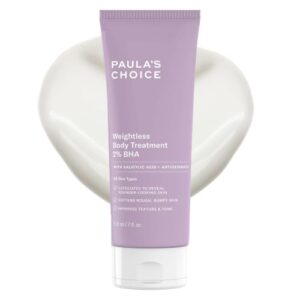
The Paula’s Choice Weightless Body Treatment earns its spot as our top pick because it treats rough, bumpy skin without the heaviness of a traditional lotion. Its 2% salicylic acid digs into pores to clear body acne and keratosis pilaris, while green tea and chamomile calm redness.
The fragrance-free formula absorbs fast, so you can dress right away. Apply it to damp skin after showering, start every other day, and always follow with daytime sunscreen on exposed areas.
| Best For | People with keratosis pilaris, body acne, or rough, bumpy skin on the arms and legs who want a lightweight, fragrance-free treatment that absorbs quickly. |
|---|---|
| Primary Acid | 2% Salicylic Acid |
| Exfoliation Type | Chemical |
| Product Form | Lotion |
| Net Weight | 7 fl oz (207 mL) |
| Fragrance-Free | Yes |
| Skin Suitability | Sensitive Skin |
| Additional Features |
|
- Contains 2% salicylic acid to unclog pores and treat body acne and keratosis pilaris
- Green tea and chamomile antioxidants help calm skin and reduce redness
- Lightweight formula absorbs fast without greasy residue, so you can dress right away
- Can cause significant irritation or allergic reactions on delicate areas like the chest
- Mixed reviews on moisturizing ability, with some users finding it insufficient
- Scent is inconsistent—some find it unpleasant while others notice little to no smell
2. Nécessaire Eucalyptus Body Exfoliant
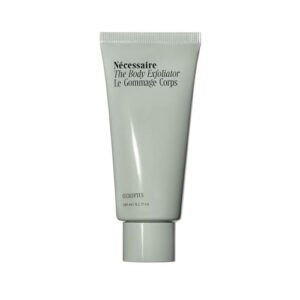
Where Paula’s Choice is a leave-on treatment, the Nécessaire Eucalyptus Body Exfoliant works in the shower as a two-in-one exfoliator, pairing volcanic pumice with AHA, BHA, and PHA to smooth rough patches on knees, elbows, and armpits. Salicylic acid clears pores while eucalyptus, Siberian fir, lavender, and ginger give it a spa-like scent.
It’s dermatologist-tested, hypoallergenic, and vegan, though the runny texture can get messy. Apply to damp skin, rinse, and moisturize after. At $35, it’s an investment, but the recyclable bio-resin bottle and B Corp credentials add value.
| Best For | Those with keratosis pilaris, ingrown hairs, or rough patches on knees, elbows, and armpits who want a shower-friendly chemical-plus-physical exfoliator and don’t mind paying $35 for a clean, sustainable formula. |
|---|---|
| Primary Acid | AHA/BHA/PHA Blend |
| Exfoliation Type | Physical + Chemical |
| Product Form | Body Wash/Scrub |
| Net Weight | 9.14 oz |
| Fragrance-Free | No |
| Skin Suitability | All Skin Types |
| Additional Features |
|
- Combines volcanic pumice with AHA, BHA, and PHA for both physical and chemical exfoliation in one step.
- Dermatologist-tested, hypoallergenic, non-comedogenic, and vegan, with a spa-like eucalyptus, fir, lavender, and ginger scent.
- Packaged in a recyclable bio-resin bottle with strong sustainability credentials (B Corp, Climate Neutral, Plastic Neutral, FSC).
- Runny texture can be messy, especially when opening the cap.
- May strip self-tanner and can feel harsh without follow-up moisturizer.
- At $35, some users find it expensive for daily use.
3. CeraVe Salicylic Acid Body Wash
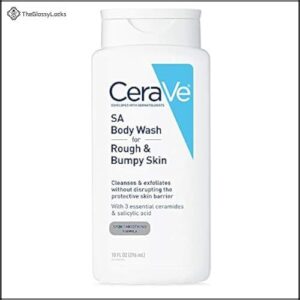
If you want a budget-friendly option, the CeraVe Salicylic Acid Body Wash costs $13.99 and cleanses while it exfoliates. Salicylic acid loosens dead skin cells on rough arms, legs, and backs, while three essential ceramides and MVE technology support your skin barrier for 24-hour hydration.
It’s fragrance-free, non-comedogenic, and dermatologist-developed, so it suits sensitive and acne-prone skin.
Use it daily in the shower, rinse well, and follow with moisturizer. Give it several weeks; results build gradually.
| Best For | People with rough, bumpy, or acne-prone skin on their body who want a gentle, fragrance-free exfoliating cleanser that won’t irritate sensitive skin. |
|---|---|
| Primary Acid | Salicylic Acid |
| Exfoliation Type | Chemical |
| Product Form | Lotion |
| Net Weight | 10 oz |
| Fragrance-Free | Yes |
| Skin Suitability | Dry, Sensitive, Oily, Acne-Prone |
| Additional Features |
|
- Exfoliates with salicylic acid while cleansing, smoothing rough patches on arms, legs, and back
- Contains ceramides, hyaluronic acid, and niacinamide to hydrate and support the skin barrier
- Fragrance-free, non-comedogenic, and dermatologist-developed, making it safe for sensitive and eczema-prone skin
- The 10 oz bottle may feel like poor value at $13.99
- Some users see no improvement even after a month of use
- Requires consistent use over several weeks before results become noticeable
4. PanOxyl 2% Salicylic Acid Body Spray
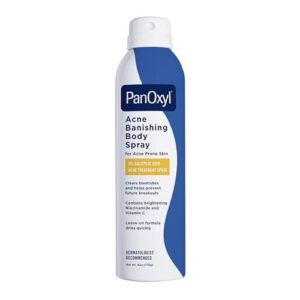
If you’d rather treat than rinse, the PanOxyl 2% Salicylic Acid Body Spray targets breakouts where washes miss. Its 360-degree nozzle sprays upside down, so you can reach your lower back and shoulders without twisting.
The leave-on formula dries fast and pairs salicylic acid with niacinamide, vitamin C, witch hazel, and aloe in an 8.15-ounce can. Expect a strong odor, and cut back if your skin gets dry.
Consistent daily use over months delivers the clearest results.
| Best For | People dealing with body acne in hard-to-reach spots like the lower back and shoulders who want a leave-on treatment rather than a rinse-off wash. |
|---|---|
| Primary Acid | 2% Salicylic Acid |
| Exfoliation Type | Chemical |
| Product Form | Spray |
| Net Weight | 8.15 oz |
| Fragrance-Free | N/A |
| Skin Suitability | N/A |
| Additional Features |
|
- 360-degree nozzle sprays in any direction, including upside down, making it easy to treat areas like the lower back.
- Leave-on formula dries quickly and combines salicylic acid with soothing ingredients like niacinamide, vitamin C, witch hazel, and aloe.
- Helps unclog pores and prevent new blackheads, whiteheads, and pimples while brightening overall skin tone.
- Strong, pungent odor that may cause coughing or throat irritation.
- Can excessively dry the skin, requiring reduced application frequency.
- Needs consistent daily use over several months before visible results appear.
5. First Aid Beauty KP Bump Scrub
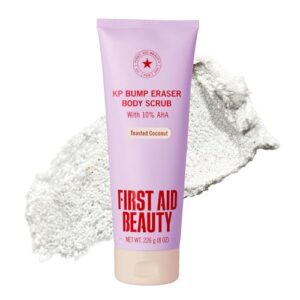
First Aid Beauty KP Bump Scrub targets keratosis pilaris with 10% glycolic and lactic acids, plus pumice buffing beads that smooth without microplastics.
You’ll find it in Strawberry, Coconut, Peach, or Original, in an 8.89-ounce tube free of drying alcohols, parabens, and sulfates.
Expect a light tingling as the acids work.
Because it increases sun sensitivity, apply sunscreen afterward, and use it consistently, since bumps can return when you stop.
It’s vegan and cruelty-free, too.
| Best For | Anyone dealing with rough, bumpy skin from keratosis pilaris who wants a dual chemical and physical exfoliating scrub that’s gentle enough for sensitive skin. |
|---|---|
| Primary Acid | 10% Glycolic & Lactic Acids |
| Exfoliation Type | Physical + Chemical |
| Product Form | Scrub |
| Net Weight | 8.89 oz (252g) |
| Fragrance-Free | No |
| Skin Suitability | Sensitive Skin |
| Additional Features |
|
- Combines 10% glycolic and lactic acids with pumice buffing beads for effective dual exfoliation
- Free of drying alcohols, parabens, sulfates, and artificial colorants
- Vegan, cruelty-free, and gluten-free, making it suitable for sensitive skin
- Increases sun sensitivity, requiring diligent sunscreen use
- May cause a light tingling sensation during and after application
- Requires consistent use, as KP bumps can return if you stop using it
Frequently Asked Questions (FAQs)
How often should you use a chemical exfoliant on your body?
Most chemical exfoliants work best 1–3 times weekly. Start once a week, then increase only if your skin tolerates it. Rinse-off formulas allow more frequent use; with any skin irritation, cut back and prioritize postexfoliation care.
What is a good chemical exfoliant for the body?
A patient of mine cleared stubborn back acne in six weeks with a simple swap: a salicylic acid body wash.
For you, the best chemical exfoliant depends on your goal: choose 2% salicylic acid for breakouts and bumps, glycolic acid for dullness, or gentle lactic acid for sensitive skin.
Do dermatologists recommend body scrubs?
Think of your skin as silk: most board-certified dermatologists prefer chemical exfoliants over physical scrubs for the body, since coarse granules can cause micro-tears, though hybrid scrubs work for thicker areas.
What are the benefits of using chemical exfoliants?
Chemical exfoliants dissolve dead skin buildup, giving you smoother texture, unclogged pores, fewer bumps, brighter and more even tone, and better hydration and product absorption, all without harsh scrubbing.
Can chemical exfoliants remove deep acne scars?
The short answer is no. Chemical exfoliants can’t remove deep acne scars, because those are structural changes in your dermis. You’ll need a dermatological treatment like skin resurfacing, microneedling, or a chemical peel instead.
How long before lactic acid shows results?
Roughly 40% of users report visible smoothing within two weeks, per consumer surveys. With lactic acid, expect softer skin texture in 1–2 weeks, brighter tone around 4–8 weeks, since skin cell turnover and the exfoliation process build gradually.
Why apply exfoliants at night instead of morning?
Your skin cell turnover peaks at night, making your nighttime skincare routine the ideal window for chemical exfoliants. It’ll also shield fresh skin from the UV sensitivity AHAs trigger once they’ve cleared dead skin cells.
What SPF should I use with exfoliants?
Ironically, the more frequently you use chemical exfoliants, the more sun protection you need. Reach for broad-spectrum SPF 30 daily in your skincare routine, and reapply when you sweat or swim for best skin health.
How many acids can I combine safely?
A formula with a pH below 5 delivers far more active acid than higher pH versions. One acid type per session is your safe limit. Combining AHAs and BHAs compounds exposure without improving exfoliation results.
Conclusion
Think of your follicles as tiny doorways. When keratin and oil pile up, they slam shut, leaving bumps and dullness behind.
Chemical body exfoliant benefits work because acids clear those doorways from the inside out, not just the surface.
Start slow, moisturize daily, and wear sunscreen on treated areas. Pick one product from the list above, use it consistently for six weeks, and let patience do the rest.
Smooth, clear skin follows.