This site is supported by our readers. We may earn a commission, at no cost to you, if you purchase through links. This content is for general informational and educational purposes only and is not a substitute for professional medical, dermatological, or nutritional advice.

It’s 11 p.m., the wedding is Saturday, and a red bump just surfaced on your chin. Panic sets in. So does the urge to squeeze, which is the one move guaranteed to leave a dark mark that outlasts the pimple by months.
Here’s the catch: what ingredients treat acne spots fast depends on the spot. A surface whitehead, a deep tender lump, and a fading brown mark each respond to different actives, and the wrong one wastes days or irritates your skin.
Match the spot to the ingredient, and you’ll know exactly what to reach for tonight.
Table Of Contents
- Key Takeaways
- What Kind of Acne Spot is It?
- Which Ingredients Treat Active Pimples Fastest?
- Can Hydrocolloid Patches Help Overnight?
- Which Ingredients Fade Dark Acne Marks?
- How Should You Apply Spot Treatments?
- When Are Spot Treatments Not Enough?
- Frequently Asked Questions (FAQs)
- What gets rid of acne spots quickly?
- What is the best ingredient for treating acne spots?
- What helps acne marks fast?
- What is the best ingredient to get rid of acne marks?
- Can you combine benzoyl peroxide and salicylic acid?
- How often can you use spot treatments daily?
- Does toothpaste work on pimples overnight?
- Is tea tree oil safe for sensitive skin?
- Should you pop a pimple before treating it?
- Conclusion
Key Takeaways
- Match the ingredient to the spot: benzoyl peroxide for red, inflamed pimples, salicylic acid for clogged pores and whiteheads, and a hydrocolloid patch for surface spots that are draining.
- Dark marks left behind need a different toolkit, with azelaic acid as your best bet and retinoids, niacinamide, or vitamin C helping over weeks rather than days.
- Apply a thin, pea-sized layer to clean, dry skin, use one active at a time, and never pick or squeeze, since more product and picking just bring irritation and darker marks.
- Deep, tender lumps or breakouts that keep returning in the same place are beyond what spot treatments can reach, so see a dermatologist.
What Kind of Acne Spot is It?
Why does one acne spot vanish in days while another camps out for weeks? Because they’re different animals, and your acne spot treatment only works when you know which one you’re facing.
Deep cystic bumps need ingredients that work below the surface, so this guide to effective cystic acne spot treatment shows how to match each product to the kind of spot you have.
Look for a head. A red bump with a white or yellow center is an inflamed pimple, close to the surface and fast to change. Flat, skin-colored bumps are comedones, meaning clogged pores that never get angry.
No head, but deep and tender? That’s a blind pimple. Persistent, firm lumps that keep returning in the same spot, especially along your chin and jawline, lean toward cystic acne.
Flat red or brown marks with no bump? Those are leftovers, not active acne, so skip the overnight treatment for pimples.
Which Ingredients Treat Active Pimples Fastest?
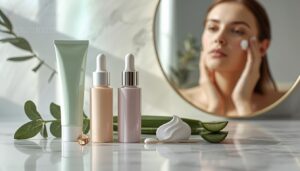
When a pimple pops up, you want a fast-acting spot treatment, not a science lecture. Three over-the-counter ingredients earn their spot in your routine, and each one works on a different kind of breakout. Here’s how to match the right one to your pimple and take back control.
Benzoyl Peroxide for Inflamed Pimples
Reach for benzoyl peroxide when you’ve got a red, tender, inflamed pimple. Its antibacterial action works fast, and the inflammation reduction shows up within days.
Why it earns its spot:
- Targets active, inflamed lesions
- Kills acne bacteria quickly
- Works well as an acne spot treatment
- Skips clogged pores, so don’t expect miracles there
Start small, though; it can irritate skin.
Patch-test any new product on a small area first, and see this guide on how to remove beard shadow for gentler options.
Salicylic Acid for Clogged Pores
Benzoyl peroxide skips clogged pores, so here’s your fix: Salicylic Acid BHA. It’s oil-soluble, so it slips into the follicle for real comedone dissolution. Think pore unclogging without the scrubbing.
Look for 0.5% to 2% in a gel or liquid. You’ll get exfoliation benefits, but go easy. Overdo it and your clogged pore turns red and angry. Stay consistent, though.
Sulfur as Another OTC Option
Salicylic acid not your match? Try sulfur. It’s an old-school acne spot treatment with a loyal fan base, especially for oily skin.
Sulfur brings sebum control and gentle antibacterial action, plus mild exfoliation. Picture it:
- A small, early whitehead fading
- Shine settling down
- Peeling you can hide with moisturizer
Skip it on deep, angry cysts. Expect a noticeable odor, too.
For a gentler daily routine that calms irritation and keeps flare-ups in check, try this acne treatment that reduces redness without over-drying your skin.
Can Hydrocolloid Patches Help Overnight?

Some pimples are perfect candidates for hydrocolloid patches, and others aren’t. Here’s the split. If your spot has a moist, inflamed tip, the patch pulls in fluid and gives you real fluid absorption plus lesion protection. Think of it as a tiny, sticky bodyguard.
As an overnight acne treatment, it shines for surface-draining spots. It also keeps your fingers away, so you won’t pick at it in your sleep. Deep, closed bumps? Not so much. The patch can’t reach what’s under the skin.
Expect modest spot reduction, not a miracle. Patches carry no acne-fighting actives, so they won’t stop new breakouts nearby. Peel one off in the morning. If it looks white and puffy, it’s done absorbing. Then toss it.
Which Ingredients Fade Dark Acne Marks?

Once the pimple is gone, the dark acne marks often stick around. Fading them takes a different toolkit than flattening a breakout, so don’t expect your spot treatment to handle it. Here are three ingredients that can help you even out your tone.
Azelaic Acid for Acne Marks
Dark marks linger long after the pimple leaves. That’s postinflammatory hyperpigmentation, and Azelaic Acid is your steady fix.
It helps melanin reduction while calming inflammation, so fading happens gradually, over weeks. Start with 10% and apply once daily. Stinging? Pair it with niacinamide for skin barrier repair, and skip harsh exfoliants. Consistency beats intensity here. Expect patience, not overnight miracles.
A gentle niacinamide 10% serum used in the morning can support your skin barrier and help even out tone alongside azelaic acid.
Retinoids for Gradual Fading
Think of retinoids as a slow-moving street sweeper, not a leaf blower. They won’t clear a dark mark today, but they keep the pavement turning over.
Retinoids are a slow-moving street sweeper, not a leaf blower: they won’t erase dark marks today, but they keep skin steadily turning over
That’s gradual hyperpigmentation fading for you. Adapalene is gentler, tretinoin hits harder. Both speed up cell turnover, so postinflammatory hyperpigmentation lifts over weeks. Go easy, though. Irritation keeps marks stubborn.
Vitamin C for Uneven Tone
Vitamin C is the dimmer switch for leftover pigment.
It controls melanin reduction and antioxidant protection, which makes dark spot fading steadier and hyperpigmentation fading more even.
Look for:
- Stable derivatives if you’re sensitive
- Opaque, airtight packaging
- Daily morning use under sunscreen
Be patient. It won’t touch active bumps, and strong formulas can irritate, so start gentle. Results take weeks.
How Should You Apply Spot Treatments?
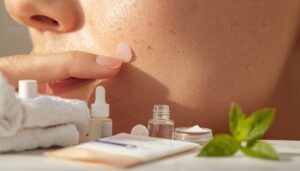
Here’s the secret: a spot treatment works best when you use less of it. More product just means more irritation.
Start with clean, fully dry skin. Damp skin dilutes your active ingredient and spreads it past the pimple. Then dab a thin layer on the bump itself, about a pea-sized amount for the whole spot area.
- Wash hands before and after touching the spot.
- Keep product off your eyes, lips, and nose corners.
- Skip picking, which invites dark marks.
- Never stack strong actives on one spot.
Let it dry completely before active ingredient layering. Then add moisturizer, since good moisturizer timing keeps skin calm without diluting the treatment. Morning routine? Finish with sunscreen, which plays nicely with most spot treatments. Wearing a hydrocolloid patch overnight? Add it last.
When Are Spot Treatments Not Enough?

Still breaking out in the same spot? That’s your skin talking, and it’s not impressed by one dab of product.
An acne spot treatment only reaches the surface. If bumps arrive in waves, keep returning to one area, or sit deep and tender, you’re dealing with a bigger flare. Nodules and cysts need real cystic acne management, and that means seeing a dermatologist, not stacking more patches.
Burning or peeling? Pause the actives. Irritated skin makes any fastacting acne solution look useless, so focus on skin barrier repair first with a gentle cleanser and a plain moisturizer.
Then shift to whole-face breakout prevention: a steady routine, not lesion-by-lesion firefighting. Control beats chasing. Consistency is what keeps new clogs from forming.
Frequently Asked Questions (FAQs)
What gets rid of acne spots quickly?
Match the fix to the spot.
Benzoyl peroxide calms red, inflamed pimples, while salicylic acid unclogs whiteheads and blackheads. Adapalene helps long term, niacinamide soothes, and azelaic acid fades dark marks. Patience still matters here.
What is the best ingredient for treating acne spots?
Ever wonder why one ingredient can’t win every round? Your spot decides. For inflamed pimples, benzoyl peroxide leads. For lingering dark marks, azelaic acid wins, while salicylic acid, adapalene, and niacinamide play solid supporting roles.
What helps acne marks fast?
Dark marks are stubborn tenants, so evict them with azelaic acid gel nightly. Add niacinamide serum in the morning. Hyperpigmentation fading takes weeks, not days, and azelaic acid plus niacinamide gives you your fastest shot.
What is the best ingredient to get rid of acne marks?
Azelaic acid is your best bet. It calms inflammation and slows pigment production, so those flat brown marks fade faster. Retinoids and niacinamide back it up. Indented scars? That’s a clinic job.
Can you combine benzoyl peroxide and salicylic acid?
Yes, you can. Combining benzoyl peroxide and salicylic acid works because one fights bacteria and the other clears clogged pores. Start slowly, run skin sensitivity testing first, and use one acne spot treatment at a time.
How often can you use spot treatments daily?
Here’s how often can you use spot treatments daily: start with once daily. A dermatologist recommended acne spot treatment works best when frequency of use stays modest. Burning or peeling? Simply ease off a day.
Does toothpaste work on pimples overnight?
Toothpaste on a pimple is like fighting a fire with perfume. It’s unproven, and detergents and fragrance can irritate skin.
Try a toothpaste alternative: benzoyl peroxide, salicylic acid, or hydrocolloid patches as your spot treatment.
Is tea tree oil safe for sensitive skin?
Tea tree oil’s antimicrobial action is tempting, but sensitive skin reacts to it. Undiluted drops raise your risk of redness and contact dermatitis.
Run a patch test, choose fragrancefree skincare, and stop if burning starts.
Should you pop a pimple before treating it?
No. Skip the pimple popping.
Squeezing inflammatory acne pushes gunk deeper, rips your skin barrier, and invites a bacterial infection. Go straight to spot treatment instead, and your pimple heals faster, with fewer dark marks.
Conclusion
Rome wasn’t built in a day, and neither is clear skin, but one bump doesn’t need that long. Knowing what ingredients treat acne spots fast means you can stop guessing at 11 p.m. and start matching the spot to the fix.
Use benzoyl peroxide or salicylic acid on active pimples, a patch on whiteheads, and azelaic acid on lingering marks. Hands off the squeezing. If bumps keep coming back, see a dermatologist. Then sleep tight.