This site is supported by our readers. We may earn a commission, at no cost to you, if you purchase through links. This content is for general informational and educational purposes only and is not a substitute for professional medical, dermatological, or nutritional advice.

The pimple healed two weeks ago, but the mark is still there. You touch the spot, and it’s flat. No bump, no soreness, just a stubborn patch of red or brown that won’t leave.
That patch isn’t an active pimple. It’s what inflammation left behind, and what causes acne spots to linger comes down to damaged blood vessels, extra melanin, and habits that restart healing. Sun exposure, skin tone, and picking all stretch the timeline.
Once you know which type of mark you have, you can fade it faster and spot the signs that mean it’s time to see a dermatologist.
Table Of Contents
Key Takeaways
- Flat red or brown marks aren’t active pimples or scars, because they come from widened blood vessels (red) or extra melanin (brown) that inflammation leaves behind.
- Picking, squeezing, and skipping sunscreen keep your marks around longer, since they restart healing and keep blood vessels open and melanin active.
- You can speed fading by cleansing gently, moisturizing, wearing broad-spectrum SPF 30 daily, and using proven ingredients like retinoids, azelaic acid, or niacinamide.
- You should see a dermatologist if a mark hasn’t improved after 6 to 8 weeks of steady care, or sooner if you have deep painful acne, scarring, bleeding, or signs of infection.
Why Do Acne Spots Linger After Healing?
You’ve healed the pimple, but the spot it left behind is still there. That’s common, and it usually comes down to what kind of mark you’re dealing with. Here’s how to tell active pimples apart from leftover marks, and how to sort those marks into red spots, dark spots, and scars.
If redness is the lingering problem, the right ingredients make a real difference, and this guide to affordable acne treatments for redness can help you fade those marks without overspending.
Active Pimples Versus Leftover Marks

When a spot stays after the bump goes down, you need to know which one you’re dealing with. Active Pimples Versus Leftover Marks comes down to texture and tenderness. A raised, warm, or sore spot still shows an inflammatory response. A flat red or brown patch is one of the post acne marks.
Skin healing and barrier function take time.
Red Marks, Dark Spots, and Scars
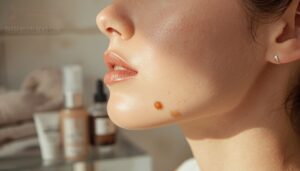
Once the bump is flat, the mark left behind falls into one of three groups. Red or pink marks are PIE, caused by dilated capillaries. Brown or dark patches are post inflammatory hyperpigmentation, where extra melanin collects after inflammatory markers rise.
Acne scarring is different. It changes texture. Marks often fade with skin barrier repair and sunscreen. Scars rarely do. Mild PIE may fade on its own within three to six months, but significant redness can last a year or longer, especially if breakouts continue or spots are picked.
What Causes Lingering Red Acne Marks?
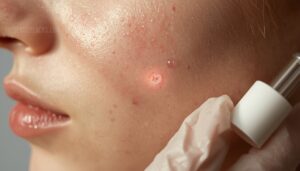
Red marks usually stick around for a few specific reasons. Some come from what happens inside your skin, and others come from what you do to it afterward. Here are the main causes, so you can see which ones apply to you.
Persistent Blood Vessel Changes
Think of your capillaries as garden hoses that stay stretched after a flood. That’s post inflammatory erythema (PIE). Acne inflammation leaves lasting vascular dilation, so more blood flows near the surface.
Pairing a gentle cleanser with targeted hyperpigmentation skin treatments helps fade the lingering redness and dark marks acne leaves behind, without stressing a sensitive skin barrier.
- Capillaries widen.
- Microcirculation speeds up.
- Walls stay fragile.
- Redness shows through.
- Telangiectasia can develop.
Heat and sun keep vessels open, so marks fade slowly. Texture stays smooth, unlike scarring.
Picking And Squeezing
Picking or squeezing pimples makes redness last longer. Pressure ruptures the follicle wall and pushes acne inflammation into the surrounding skin. That adds fresh vascular damage on top of vessels that are already dilated.
Your skin repair process then restarts from scratch. Reopened spots stay inflamed and red for weeks, and deeper lesions can scar. Hands off is the fastest fix.
Skin Barrier Damage
When you have a damaged skin barrier, redness lingers longer. Lost ceramide and higher transepidermal water loss slow the skin repair process and raise skin sensitivity. Over-exfoliating makes it worse. Living with that can often feel like:
- Frustration when marks refuse to fade
- Self-consciousness in every mirror
- Worry that something’s wrong
- Impatience with slow progress
- Discouragement after months of effort
Sun Exposure
Sunlight keeps red marks around longer than they need to be. UV rays hold tiny blood vessels open, so the redness fades slowly. Daily UV protection helps your skin recover.
For deeper skin tones, pairing that daily sunscreen with a targeted hyperpigmentation treatment routine for dark skin can help dark spots fade more evenly.
Sun exposure also triggers melanin. That’s how hyperpigmentation acne turns into stubborn dark spots. Visible light adds to the problem, so choose a broad-spectrum sunscreen. Skipping it can leave lasting skin discoloration.
Skin Tone Differences
A pimple heals, but a shadow stays behind like a thumbprint on glass.
Darker skin tones react to inflammation with melanin overproduction, so postinflammatory hyperpigmentation lingers.
Here’s what helps:
- Wear SPF 30 sunscreen every day.
- Don’t squeeze pimples.
- Start hyperpigmentation prevention early, before marks form.
- Ask your dermatologist whether melasma is involved.
- Consider skin tone correction treatments for stubborn marks.
Why Do Dark Acne Spots Persist?
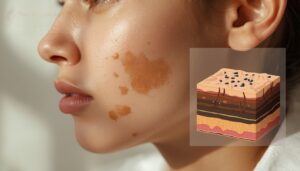
Think of a dark spot as a coffee stain on a shirt. The spill is over, but the color stays behind.
A dark spot is like a coffee stain on a shirt: the spill is over, but the color lingers
Hyperpigmentation acne works the same way. Inflammation tells your melanocytes to make more pigment. This melanin overproduction leaves flat brown or gray marks called postinflammatory hyperpigmentation. They aren’t active pimples, and they aren’t scars.
Pigment sits in the epidermis or deeper in the dermis. Surface pigment sheds with your skin cells. Deeper pigment gets trapped, so it fades slowly. A new breakout in the same spot can restart the process, which keeps dark spots around.
Skin tone correction starts with knowing what you’re looking at. A flat mark that changes color is pigment. A dented or raised one isn’t.
What Makes Acne Marks Take Longer?

Not every mark fades on the same schedule. Several factors decide how long yours sticks around.
Depth matters most. Pigment sitting in the upper layer of skin clears faster than pigment sitting deeper, where turnover is slow. Recurring breakouts in one spot also reset the clock. Each flare releases inflammatory mediators that tell your skin to make more melanin.
Redness behaves differently. Post-inflammatory erythema, or PIE, comes from widened blood vessels and can last months. A damaged skin barrier keeps that low-grade irritation going.
Oily skin adds another layer. Active sebaceous glands keep producing the oil that feeds new breakouts, so fresh marks may form before old ones fade. You then end up with marks at several stages at once.
How Can You Help Acne Marks Fade?

Most acne marks fade with time, but you can speed things up. Two habits make the biggest difference, and both are simple to start. Here’s what to focus on, along with how each one helps your skin recover.
Gentle Skincare and Sun Protection
Your skin heals best when you leave it alone. Use gentle cleansing with a mild, non-abrasive cleanser. Scrubbing doesn’t fade marks faster, and irritation can deepen post-inflammatory hyperpigmentation.
Add a fragrance-free moisturizer for skin barrier protection. Then wear broad-spectrum SPF 30 sunscreen daily. Photoprotection keeps UV from darkening marks. Reapply every two hours outdoors.
Preventing New Breakouts and Marks
Caring for healed spots is only half the job. You also need to stop new ones from forming. Comedonal acne responds well to noncomedogenic products, so check labels on makeup and moisturizers. Hormonal acne often needs a dermatologist’s help.
If you use retinoid therapy, apply it a few nights a week at first. Support skin barrier protection, and don’t pick.
When Should Persistent Acne Spots Be Checked?

Home care works for most marks, but not all of them. If a spot hasn’t improved after 6 to 8 weeks of steady treatment, a dermatologist consultation is the next step.
Don’t wait if you have cystic acne, severe acne, or deep, painful bumps. These can scar, and scars are harder to treat than color changes. Hormones may drive the pattern, and a clinician can adjust treatment for that.
Get a spot checked if it bleeds on its own, crusts repeatedly, drains, or won’t heal. The same goes for any mark that changes size, shape, or color. Not every spot is acne.
Seek care quickly for spreading redness, warmth, swelling, fever, or any redness near your eye. These can signal infection that needs prompt treatment.
Frequently Asked Questions (FAQs)
Why do my pimples linger so long?
It feels like your pimples move in and pay rent. Deep cystic acne sits under the surface, where inflammation takes weeks to calm. Hormones keep oil glands active, so skin repair runs slower than new breakouts.
Why have I had acne for 20 years?
Twenty years usually means repeated new breakouts, not one stubborn pimple. Adultonset acne and hormonal acne keep oil, clogged pores, and inflammation going.
Topical retinoids help; isotretinoin suits severe cases. Patient education improves your results.
At what age is acne the worst?
Ironically, the years you’d most like to look your best are when acne hits hardest. For most people, it peaks between 16 and 19, when hormonal acne and sebum overproduction run highest.
Why is my acne spot not going away?
Is it still a pimple, or just a mark? Most lingering spots are flat discoloration that fades slowly. Retinoids, niacinamide, and azelaic acid help. Skip topical steroids and harsh chemical peels, which irritate your skin.
How long do acne marks usually take to fade?
Red marks usually fade in 4-12 weeks, dark spots in 2-6 months. Epidermal turnover, melanin, and reactive oxygen species set the pace. Azelaic acid and retinoids speed things up, and daily SPF protects your progress.
Can makeup cover lingering acne marks safely?
Think of makeup as a curtain, not a cleaner. Yes, cosmetic camouflage is safe when you use noncomedogenic products on healed skin, wash tools often, and remove it nightly. Add broad-spectrum sunscreen underneath.
Does diet affect how quickly acne marks heal?
Yes, it can. A glycemic index diet matters most. Sugary foods spike insulin, which feeds your inflammatory skin response. Dairy and acne are linked too. Add vitamin C, zinc, and omega-3s to speed repair.
Conclusion
Picture a faint smudge on your cheek, the ghost of a pimple that left weeks ago.
Now you know what causes acne spots to linger: inflamed vessels, extra melanin, and the picking that resets healing.
That knowledge gives you control. Keep your hands off, wear daily sunscreen, and use gentle products while the mark fades.
If a spot hasn’t improved after a few months, or you notice scarring, see a dermatologist. Marks fade with time.