This site is supported by our readers. We may earn a commission, at no cost to you, if you purchase through links. This content is for general informational and educational purposes only and is not a substitute for professional medical, dermatological, or nutritional advice.

Sealed cuticles and salt-and-pepper strands make a tough combination, and if your hair test float, you already know the frustration. Low porosity hair resists moisture, resists product, and often resists dye the same stubborn way. So the real question, will henna cover grays on low porosity hair, deserves an honest answer rather than a hopeful guess.
Yes, it can, but not on the first try in the way you might expect. Coverage depends on how you prep your strands, how long you leave the paste on, and whether mineral buildup stands between your hair and the lawsone pigment trying to bond with it. Get those variables right, and gray coverage climbs from a patchy start toward something close to complete.
Table Of Contents
- Key Takeaways
- Will Henna Cover Grays on Low Porosity Hair?
- How to Prepare Low Porosity Hair
- How to Apply Henna for Gray Coverage
- How Many Henna Treatments Are Needed?
- Maintain Moisture, Color, and Hair Safety
- Frequently Asked Questions (FAQs)
- What are the benefits of henna for low porosity hair?
- How long should henna stay in low porosity hair?
- Can henna fade or wash out completely?
- Does henna work on previously chemically dyed hair?
- How long does henna take to fully develop?
- Can you lighten hair after using henna?
- Is strand testing necessary before full application?
- Can henna color be mixed with other dyes?
- Does diet or overall health affect henna results?
- Is henna safe to use during pregnancy?
- Conclusion
Key Takeaways
- Yes, henna can cover grays on low porosity hair, but you’ll likely need multiple applications since your first treatment often only reaches 40-80% coverage.
- Clarifying your hair with a sulfate-free shampoo or chelating treatment beforehand removes the mineral buildup and product residue that block lawsone from bonding with your strands.
- Applying gentle heat during processing helps open your tightly sealed cuticles, letting the dye penetrate deeper and develop more evenly.
- Give your color time to fully oxidize (about 72 hours) before judging results, and plan on root touch-ups every 4-6 weeks to maintain even coverage as new grays grow in.
Will Henna Cover Grays on Low Porosity Hair?
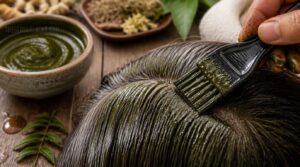
Yes, henna can cover your grays, even with low porosity hair working against you. It just takes a bit more patience and know-how than it does for higher porosity strands. Here’s what you can actually expect from the process, from coverage rates to how your color develops.
Since low porosity strands take longer to absorb pigment, checking how long to leave henna on hair for full gray coverage can save you from rinsing too soon.
Expected Gray Coverage Results
So what can you actually expect? On low porosity hair, your first henna application often delivers 70 to 80 percent gray coverage. Lawsone pigment needs 24 to 48 hours to fully oxidize, so wait before judging results.
Sequential applications push coverage past 90 percent, with longevity after first treatment averaging four to six weeks.
Why Gray Hair Resists Henna
Gray hair fights you for reasons rooted in biology, not bad luck. Melanin absence strips away henna’s usual binding sites, while a tighter cuticle barrier and coarse texture block penetration.
Add mineral buildup from hard water and you get surface staining instead of true color:
- Flattened cuticles resist lawsone
- No melanin means less bonding
- Coarse strands slow absorption
Clarifying strands beforehand with a sulfate shampoo before dyeing removes the oils and buildup that would otherwise block proper dye uptake.
Low Porosity Dye Absorption
Beyond gray strands, your overall strand structure matters too. Low porosity hair keeps cuticles sealed tight, blocking hair cuticle penetration and slowing hair color absorption. Try the water penetration test: strands that float resist saturation. Buildup worsens this blocking effect, while dye molecule interaction with lawsone simply can’t reach keratin sites underneath.
Once the color is on, you can also protect those sealed cuticles by drying your hair without a blow dryer, using small sections and gentle airflow instead of harsh heat.
Choosing the right formulas makes a real difference, as some Cantu products for low porosity hair are better suited to working around sealed cuticles than others.
Prepping low-porosity hair after cleansing is just as critical — following post-wash care steps for 4C hair helps keep cuticles primed for better dye absorption.
To help lawsone reach those stubborn keratin sites, mixing henna with lemon juice for deeper pigment bonding can give the dye molecules the acidic boost they need to penetrate even tightly sealed cuticles.
| Porosity | Absorption Speed | Coverage Risk |
|---|---|---|
| Low | Slow | Uneven |
| High | Fast | Even |
Henna Color on Gray Strands
So what does that sealed cuticle actually mean for color? Lawsone still bonds to keratin on the surface, staining each gray strand, but unevenly.
- Lawsone pigment binding varies by strand
- Some grays absorb fast, others resist
- Indigo layering deepens tone after henna
- Sequential applications build coverage over time
Expect natural gray strand variability, not instant uniformity.
How to Prepare Low Porosity Hair
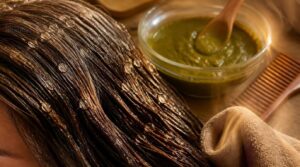
Think of low porosity hair like a raincoat—tightly sealed cuticles that make it work harder for henna to soak in. Before you mix a single batch of paste, your strands need the right conditions to actually let that pigment through.
A little heat and the right prep can coax those cuticles open, which is exactly what this guide on boosting moisture retention in low porosity hair walks you through.
Low porosity hair is like a raincoat—sealed tight, making it work harder to let henna’s pigment soak in
Here’s what you need to do to get your hair ready for maximum color absorption.
Remove Product and Mineral Buildup
Think of buildup as a raincoat on your strands: product residue and mineral scale block dye contact. Run a baking soda rinse or bentonite clay mask, then an acid pre rinse, vinegar soak method, for calcium dissolution. This mineral scale removal via clarifying treatments (or chelating shampoo) strips deposits, letting henna touch hair directly instead of sliding off buildup.
Choose a Gentle Clarifying Method
Not every buildup remover suits low porosity hair equally, so match the method to your strand’s sensitivity. A sulfate free clarifying shampoo with chelating agents works well for most; an enzyme treatment offers weekly gentleness.
Apple cider vinegar rinses balance pH, while charcoal cleanses tackle heavier residue.
Keep clarifying frequency to once every 2-3 weeks.
Avoid Oils Before Application
Like a raincoat shedding water, oil-coated strands can shed henna, too. Skip serums, butters, and conditioners for 24-48 hours pre-treatment.
This oil barrier impact matters most on low porosity hair, where water already struggles to penetrate. Stick to water-based prep, clarify thoroughly, and you’ll give henna the direct contact it needs to cover grays evenly.
Perform Patch and Strand Tests
Skipping tests is gambling with your hair. Mix a small batch, dab it behind your ear, and wait 24 hours before touching your scalp, checking for redness or itching.
Next, coat one nape strand for your planned processing time. Even color uptake signals your low porosity hair is ready; patchy results mean grays need extra prep before you commit to full coverage.
How to Apply Henna for Gray Coverage
Once your hair is clean and ready, application becomes the part where precision really pays off. Low porosity strands don’t forgive shortcuts, so every step here matters more than it might with typical hair. Here’s exactly how to apply henna for the fullest, most even gray coverage possible.
Choose Pure Natural Henna
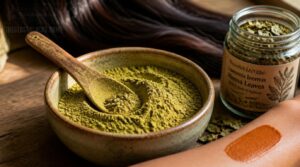
Not all henna is created equal, and low porosity hair can’t afford weak pigment. Check the label for Lawsonia Inermis as the sole ingredient, no fillers.
- Ingredient verification – confirm no metallic salts or PPD
- Powder texture check – fine, lump-free, well-milled
- Stain test results – copper-orange on skin within 24-48 hours
Third party certification adds confidence when self-declared claims fall short.
Mix for Maximum Dye Release
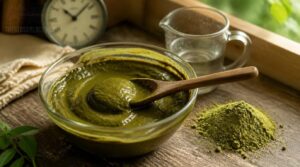
Think of mixing as waking the dye up. Combine henna powder with warm water, not hot, at a ratio that forms a smooth, yogurt-like paste, then let it rest 8-12 hours so lawsone fully releases.
Skip salt; it disrupts even coating. Run a quick water float test on leftover paste to confirm consistency before applying.
Apply to Grayest Areas First
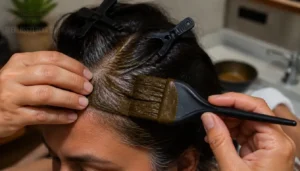
Once your paste rests, order matters more than you’d think. Your targeted application strategy starts at the hairline and temples, where grays concentrate and resist dye most.
Section hair into small, manageable parts for precision, applying a thicker layer to grayest sections first.
- Front hairline and temples
- Part lines
- Crown density
- Isolated gray strands
This sectioning for precision covers grays evenly before moving on.
Use Warmth During Processing
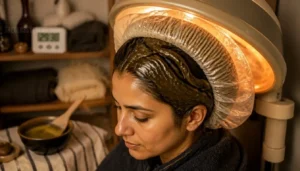
With sections placed, warmth becomes your ally. Low porosity strands have tightly bound cuticles, so cuticle opening through heat application matters. Use a hooded dryer or hair dryer over your plastic cap at medium temperature, 5-10 minute bursts. Add a beanie for heat retention, keeping paste warm 1-2 hours total for full gray coverage.
Rinse Without Shampooing
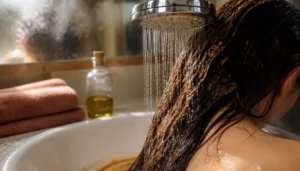
Once that hour or two of heat wraps up, resist reaching for shampoo. Rinse with warm water only, until it runs clear, this shampoo-free rinse timing protects the bond forming between lawsone and keratin.
Water temperature impact matters too: warm water opens cuticles for removal, but skip hot water later, since it strips freshly developing color right off low porosity strands.
How Many Henna Treatments Are Needed?
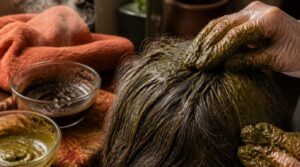
Like coffee steeped a second time for a darker cup, low porosity hair often needs more than one round of henna to reach full, even color. Some of you’ll get lucky on the first try, while resistant grays hold out for another pass.
Here’s what to expect treatment by treatment, from that first application through your ongoing touch-up routine.
First-Application Coverage Expectations
Don’t expect miracles on day one. Your first henna application usually covers 60-80% of grays, though low porosity hair often lands at 40-60%, since resistant cuticles slow dye absorption.
With 3-6 hours of processing and proper clarifying beforehand, you’ll see a reddish-brown tint developing, visible within 24 hours, fully settled by 72.
Layer Henna on Resistant Grays
Once that first pass falls short, layering is where the real coverage happens. Sequential applications on resistant grays lift coverage to 91%, since each treatment deposits more lawsone into stubborn strands.
For low porosity hair, use targeted reapplication on the grayest sections, choose henna above 1.8% lawsone concentration, and keep heat-enhanced absorption working through plastic wrap.
Allow Color to Oxidize
Like a raincoat slowly darkening in a storm, henna needs time. Rinsing washes out 30-40% of the color; full oxidation takes 72 hours as lawsone bonds to keratin.
- Skip shampoo for 48 hours
- Avoid heat styling
- Rinse with cool water
Sulfate-free shampoo and UV protection preserve that deepening color afterward.
Fix Patchy or Uneven Coverage
Even with careful application, uneven spots happen on low porosity hair. Two fixes work: a Spot Treatment with fresh henna paste on grayest sections, or a Gloss Touch-Up (henna-conditioner, 1:4) for milder patches.
| Method | Ratio | Time |
|---|---|---|
| Spot Treatment | Pure henna | 2-3 hrs |
| Gloss Touch-Up | 1:4 | 4+ hrs |
| Salt Mix boost | +1 tsp salt | Standard |
Sectional processing catches what round one missed.
Schedule Regular Root Touch-Ups
Low porosity hair regrows visibly within 2-3 weeks, so root touchups every 4-6 weeks keep coverage smooth.
Adjust Growth Scheduling with the seasons: summer sun calls for touch-ups every 3-4 weeks, winter allows 6-8.
Freeze henna paste up to 3 months for quick weeknight applications (45 minutes, gray areas only).
Monitor scalp moisture, dry scalp needs touch-ups sooner, every 3 weeks.
Maintain Moisture, Color, and Hair Safety
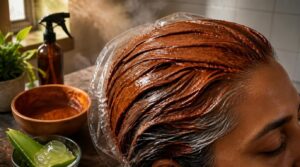
Getting the color to develop is only half the job—keeping your strands healthy and vibrant afterward is what makes low porosity henna truly work long-term. Your hair just went through a lot, soaking up pigment for hours, and it needs the right follow-up care to stay balanced.
Here’s exactly what to do next to protect your moisture, your color, and your scalp.
Deep Condition After Henna
Henna coats the strand like a raincoat, sealing in color but leaving little moisture retention behind.
Deep condition 24 to 48 hours post-rinse, choosing protein-free formulas that favor glycerin and oils. This moisture protein balance softens low porosity hair without stiffness, easing detangling and supporting scalp comfort post-henna while you work toward full gray coverage.
Use Lightweight Water-Based Products
Think of a glycerin of a glycerin-water spritz as a light drink for thirsty strands, not a heavy meal. Between henna sessions, swap oils for water-based hydration: quick drying, residue-free, and gentle on scalp breathability. Lightweight formulas won’t dull your color longevity or clog low porosity cuticles, keeping your effort to cover grays on low porosity hair looking fresh, not filmy.
Reduce Premature Color Fading
Sun and heat are the real thieves here. UV rays break down pigment fast, so shade or a UV-protectant spray matters.
Skip daily blow-drying, stretch washes out with sulfate-free shampoo, and towel-blot instead of rubbing.
This color locking aftercare routine keeps your gray coverage on low porosity hair vibrant well past the typical 4–6 week fade window.
Avoid Black Henna and PPD
Protecting that fade-resistant color you just built means steering clear of one dangerous shortcut: black henna. It often hides PPD, an oxidative chemical dermatologists link to blistering and scarring. Studies found PPD in every tested sample, up to 29.5%.
Always check the ingredient label, request a PPD allergy test 24-48 hours prior, and choose safe, PPD-free alternatives for low porosity hair.
Monitor Irritation and Dryness
Even PPD-free henna deserves a watchful eye. Scalp sting during processing signals poor tolerance, so rinse promptly. Track redness progression, flaking, or itching afterward; anything lasting past a week needs a dermatologist.
Your aftercare checklist:
- Patch test 24-48 hours prior
- Rinse at first sting
- Moisturize damp skin with glycerin
- Watch for spreading redness
Frequently Asked Questions (FAQs)
What are the benefits of henna for low porosity hair?
Henna gives low porosity hair a genuine hair strength increase and hair shine boost through keratin binding. You’ll notice better moisture retention, natural scalp care, and a real color longevity boost, especially when warmth activates the cuticle during processing.
How long should henna stay in low porosity hair?
Good things come to those who wait, and your hair cuticle is no exception. Keep henna on for four to six hours, the best contact period letting low porosity strands fully absorb pigment along the Gray Absorption Timeline.
Can henna fade or wash out completely?
No, it won’t wash out completely. Lawsone binds permanently to keratin, so fading happens gradually over weeks through oxidation and water exposure, not all at once, which is exactly why touch-up frequency matters for lasting coverage on low porosity hair.
Does henna work on previously chemically dyed hair?
Yes, but results vary. Prior chemical processing changes dye uptake, so henna on chemically dyed hair can shift unpredictably, sometimes toward green or muddy tones.
Always clarify first and strand-test, since your original color determines the final outcome.
How long does henna take to fully develop?
Plan on four to six hours of paste time, then two to three days of oxidation as lawsone deepens. Warmth speeds development; low porosity hair benefits most from heat, moisture, and patience post-removal.
Can you lighten hair after using henna?
Technically, yes, but bleach reactions with henna often turn brassy or orange since lawsone resists lifting. Try natural lightening options or gradual color stripping first, especially on low porosity hair, where uneven cuticle opening makes chemical lightening riskier and less predictable.
Is strand testing necessary before full application?
Like tasting a sauce before serving it, a strand test protects you from surprises. It’s essential: test before application to predict color outcome, determine processing time for low porosity hair, and confirm gray coverage before committing.
Can henna color be mixed with other dyes?
Absolutely, an Indigo Henna Mixture deepens color naturally. Adjust Color Mixing Ratios for brown to black tones, control Application Temperature, and always run a Pre-Mix Patch Test first, since chemical dyes react differently than natural combinations on gray hair.
Does diet or overall health affect henna results?
Well-nourished scalps hold color, poorly nourished ones fight it. Nutrient deficiencies and oxidative stress alter scalp chemistry, while hydration and hormonal balance shift pH, so overall hair health genuinely changes how henna’s stain develops and lasts.
Is henna safe to use during pregnancy?
Pure natural henna carries general pregnancy safety consensus, but always check ingredient purity first. Skip black henna (PPD risk), do a patch test 48 hours ahead, and loop in your healthcare provider before applying anything to your hair.
Conclusion
Sealed cuticles once locked henna out; prepped, clarified strands now soak it in like rain into raincoat fabric. That shift, patchy resistance giving way to rich, even color, answers will henna cover grays on low porosity hair with a confident yes.
Coverage isn’t instant. It builds with each treatment, each rinse, each patient touch-up. Trust the process, respect your hair’s rhythm, and those stubborn grays will finally surrender to lasting color.