This site is supported by our readers. We may earn a commission, at no cost to you, if you purchase through links.

Your hair care routine might include a dozen products, but there’s one ingredient that’s been transforming Moroccan hair for centuries—and it comes from a fruit pit. Argan oil for hair isn’t just another trendy botanical extract; it’s packed with vitamin E, antioxidants, and fatty acids that actually penetrate the hair shaft instead of sitting on the surface.
Whether you’re battling frizz, heat damage, or dryness that won’t quit, this golden oil caters to what your hair needs most. The secret lies in how you apply it—because using argan oil the right way means the difference between silky, manageable strands and a greasy mess that weighs everything down.
Table Of Contents
- Key Takeaways
- What is Argan Oil for Hair?
- Benefits of Argan Oil for Hair
- How to Use Argan Oil on Hair
- Argan Oil for Different Hair Types
- Safety Tips and Precautions
- Frequently Asked Questions (FAQs)
- How long does it take for argan oil to work on hair?
- Can argan oil be used on color-treated hair?
- Is argan oil safe for pregnant women?
- Can argan oil be used on children?
- What are the side effects of using argan oil on hair?
- Can argan oil help with dandruff or flakiness?
- How long does argan oil last once opened?
- Does argan oil work on hair extensions or wigs?
- Can you mix argan oil with other hair oils?
- Will argan oil weigh down thin hair strands?
- Conclusion
Key Takeaways
- Argan oil’s oleic acid (39-48%) and linoleic acid (29-36%) penetrate the hair shaft to lock in moisture and rebuild your hair’s natural barrier, while vitamin E and tocopherols fight oxidative damage from heat styling and environmental stress.
- Fine hair needs only 1-2 drops applied to damp ends (never roots) to avoid greasiness, while thick or textured hair can handle 3-6 drops or up to 2 teaspoons for deep treatments—overuse creates buildup that flattens strands.
- You’ll see shine and frizz control within 1-2 weeks of consistent use, but deeper benefits like improved elasticity and strengthened follicles take 4-6 weeks to become noticeable.
- Always patch test on your inner forearm for 24-48 hours before full application since allergic reactions—though rare—can occur, especially in people with nut allergies or sensitive skin.
What is Argan Oil for Hair?
Argan oil comes from the kernels of the argan tree, and it’s packed with vitamins, antioxidants, and fatty acids that your hair will love. You can find it in pure form or mixed with other ingredients, designed specifically for cosmetic use on your hair and scalp. Argan oil’s vitamin E and fatty acids improve hair elasticity while promoting healthier scalp conditions naturally.
Let’s break down where this golden oil comes from, what makes it so powerful, and the different product types you’ll encounter. Let’s break down where this golden oil comes from, what makes it so powerful, and the different product types you’ll encounter—including peppermint oil for beard growth.
Origin and Extraction Process
Argan oil comes from kernels of the argan tree grown in southwestern Morocco—mostly around Agadir. Traditional kernel harvesting involves hand-cracking, then cold pressing to lock in polyphenols and other natural hair products. Argan oil, extracted from kernels of Morocco’s Argania spinosa tree through cold-pressing methods, is rich in natural nutrients for hair and beard care.
Modern extraction methods might use solvents or centrifuges, but cold pressing keeps more argan oil benefits intact. Some oil refining happens to remove impurities while preserving those hair-loving fatty acids you’re after. Cold pressing retains up to 80% more antioxidants than refined methods, similar to how sunflower oil preserves nutrients when processed gently.
The quality of argan oil can be ensured through rigorous scientific study audits to verify its authenticity and effectiveness.
Key Nutrients and Compounds
So what makes this oil work wonders on your hair? The fatty acid profile is impressive: oleic acid (39–48%) and linoleic acid (29–36%) deliver those emollient characteristics that lock in moisture. The fatty acids in organic hair oil treatments create a protective barrier that keeps moisture locked inside each strand.
Vitamin E benefits come from tocopherols at about 0.5–1.0%, fighting oxidative damage. Plus, trace polyphenols and sterols add antioxidant properties—protecting your strands from environmental stress and boosting overall hair health.
Types of Argan Oil Products
Now that you understand the powerful compounds inside, let’s talk about what you’ll actually find on shelves. You’ve got three main options:
- Pure argan oil – Single-ingredient extraction from argan kernels, no additives
- Argan oil blends – Combined with other botanical oils or silicones for enhanced texture
- Hair serums and leave-in conditioners – Argan-based formulas with humectants, proteins, or polymers that create protective films
Each meets different hair care needs!
Benefits of Argan Oil for Hair

Argan oil isn’t just another trendy hair product—it’s packed with fatty acids, vitamin E, and antioxidants that actually deliver on their promises. Whether you’re dealing with frizz, breakage, or dull strands, this Moroccan oil works on multiple levels to transform your hair’s health and appearance.
Let’s break down exactly what argan oil can do for your hair.
Deep Moisturization and Hydration
Your hair’s thirsty? Argan oil’s fatty acids work like a seal on each strand, locking in moisture retention while regenerating the cuticle.
The oleic and linoleic acids rebuild your hair’s natural barrier, preventing water loss at the source. Vitamin E adds antioxidant protection that keeps hydration stable.
This deep moisturization transforms brittle strands into soft, nourished hair that actually holds onto hydration.
Frizz Control and Shine Enhancement
Humidity wreaking havoc on your style? Argan oil’s non-polar fatty acids seal each cuticle, reducing surface friction and lowering porosity—your best frizz fighters in muggy weather.
The lightweight occlusive layer reflects light beautifully, delivering that glossy shine boosters create without greasiness.
Squalene forms a protective barrier during styling, while tocopherols minimize moisture loss. You’ll notice smoother, shinier strands that actually stay put.
Protection Against Heat and Styling Damage
Your flat iron doesn’t have to spell disaster. Argan oil’s linoleic and oleic acids create thermal shielding that works wonders against styling damage, lowering surface temperatures while boosting lubrication.
Before you reach for that heat protectant, consider this:
- Vitamin E and polyphenols defend against oxidative stress from hot tools
- The protective barrier reduces moisture loss during heat styling
- Improved tensile strength means less hair breakage when blow-drying
- Better cuticle integrity prevents frizz control issues post-styling
- Studies show enhanced hair protection with regular conditioning use
Just don’t overdo it—moderation prevents buildup.
Strengthening and Repairing Hair
Resilience starts at the molecular level. Argan oil’s essential fatty acids reinforce your hair’s lipid barrier, reducing hair breakage while improving strand resilience. Vitamin E counteracts oxidative stress that weakens each hair follicle, and phytosterols boost cuticle integrity against mechanical damage.
Argan oil’s fatty acids and vitamin E rebuild your hair’s foundation, strengthening each strand from within against breakage and stress
| Component | Repair Mechanism |
|---|---|
| Oleic Acid | Smooths shaft, lowers friction |
| Squalene | Reduces split end formation |
| Tocopherols | Protects against stress damage |
| Phytosterols | Strengthens cuticle structure |
Regular use measurably increases hair strength in damaged types—hair damage repair you can actually see.
How to Use Argan Oil on Hair
Now that you know what argan oil can do for your hair, let’s talk about how to actually use it. The application method you choose depends on your hair’s needs and what you’re trying to achieve.
Here are four flexible ways to work argan oil into your routine.
Leave-in Conditioner Application
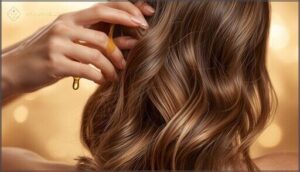
Want shiny, manageable hair without the heavy residue? Using argan oil as a leave-in treatment gives you maximum frizz control with minimal effort.
Here’s how to nail the application:
- Towel-dry your hair until it’s damp, not dripping
- Warm 1–3 drops between your palms (fine hair needs less!)
- Work through mid-lengths and ends, skipping roots
- Style as usual—the oil creates a heat-protective barrier
Deep Conditioning Treatments
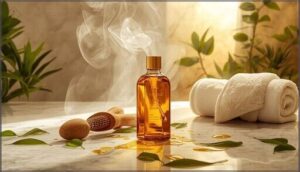
Think of deep conditioning as a spa day for stressed strands—argan oil treatment masks penetrate the cortex to rebuild damaged keratin. Here’s what the science shows:
| Treatment Time | Temperature | Expected Outcome |
|---|---|---|
| 10–15 minutes | Room temp | Basic hair moisturizing |
| 15–20 minutes | Warm towel wrap | Enhanced oil blending for hair repair |
| 20–30 minutes | Heat cap | Deep hair restoration |
| Overnight | Cool | Maximum moisture retention |
Weekly argan oil hair masks deliver cumulative improvements—you’ll notice reduced breakage and easier combing within a month.
Scalp Massage Techniques

Boost scalp health by warming a few drops of argan oil between your palms, then working it through your roots with a gentle circular motion technique. This scalp stimulation increases blood flow for better hair follicle care and argan oil absorption.
Here’s your scalp treatment routine:
- Section your hair into quadrants for even coverage
- Apply medium pressure in small circles across each zone
- Massage for 3–5 minutes to optimize massage oil benefits and nutrient delivery
Pre-Styling and Finishing Uses
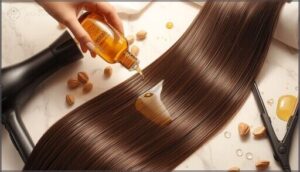
After your scalp work, argan oil shines as a heat protectant and styling aid. Apply 1–2 pumps to damp hair before blow-drying—it forms a protective film that reduces heat damage while improving manageability.
As a finishing touch, warm a pea-sized amount between your palms and smooth over dry ends for instant frizz reduction and hair shine without that greasy look.
Argan Oil for Different Hair Types
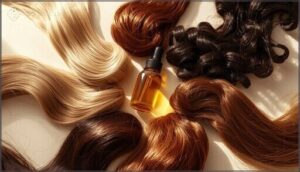
Your hair type matters regarding getting the most out of argan oil. What works for thick, curly strands won’t necessarily work the same way for fine or oily hair.
Here’s how to tailor argan oil to your specific needs and avoid common mistakes that can weigh hair down or leave it looking greasy.
Best Practices for Dry and Damaged Hair
Restoration of brittle strands starts with argan oil’s fatty acids and Vitamin E, which replenish lipids in your hair shaft and improve elasticity. Use it as a leave-in conditioner or lightweight treatment to lock in moisture balance and reduce breakage.
For deep moisturization, apply a small amount to damp hair—studies show regular use enhances scalp health, smooths cuticles, and aids lasting damage repair without weighing strands down.
Using Argan Oil on Curly or Textured Hair
Curly hair care gets easier when you understand how argan oil’s oleic and linoleic acids seal moisture into textured strands. It reduces frizz by forming a protective layer and boosts curl definition techniques without weighing down your natural hair texture.
- High-porosity curls: Apply sparingly on damp hair—they absorb quickly
- Low-porosity textures: Use a tiny amount to lock in hair hydration without clogging
- Focus on mid-lengths to ends where damage lives
- Pair with gels or mousses for defined, shiny curls
Tips for Fine or Oily Hair
Fine Hair needs a lighter hand with argan oil to maintain Oil Balance and avoid flatness. Start with just 1–2 drops on damp ends—skip your roots entirely if you’re prone to oiliness.
This approach to Scalp Care prevents buildup while delivering Hair Hydration where you need it.
When Product Layering, mix a drop into your Leave-In Conditioner for a diluted formula that won’t overwhelm your Hair Texture.
Considerations for Color-Treated Hair
Color-treated strands need extra attention—dye can shift your Hair Porosity, making it absorb Argan Oil faster. The good news? Argan Oil won’t trigger Color Fade when you choose the right Oil Formulations.
- Wait 24–48 hours post-coloring before applying oil to prevent Dye Interaction
- Choose 100% pure argan without silicones or alcohols for best Color Retention
- Apply small amounts to ends only on high-porosity color-treated hair
- Look for UV-filter formulas designed for Natural Hair Care
- Test new products on a hidden section first for Hair Damage Prevention
These Hair Care Tips keep your color vibrant while delivering deep nourishment.
Safety Tips and Precautions

Argan oil is generally safe for most people, but there are a few things you should know before you start using it. Like any cosmetic ingredient, it can cause reactions in some individuals—especially if you have sensitivities or use too much.
Let’s walk through the key precautions to keep your hair care routine both effective and worry-free.
Performing a Patch Test
Before you commit to argan oil, you’ll want to run a quick patch test—it’s your safety net against unwanted skin irritation. Apply a drop or two to your inner forearm, wait 24-48 hours, and watch for redness or itching. This simple allergen identification step helps with reaction prevention and keeps your scalp health on track!
| Test Site | Observation Period | Reaction Signs |
|---|---|---|
| Inner forearm or behind ear | 24-48 hours (up to 72 for delayed reactions) | Redness, itching, swelling, or rash |
| Clean, intact skin only | Monitor continuously | Document any symptoms for future reference |
| Use 1-2 drops of pure oil | Wash area if reaction occurs | Negative = proceed; positive = avoid |
How to Do Your Patch Test:
Start with 100% pure, cold-pressed argan oil to minimize processing-related irritants. Rub a small amount between your fingers to warm it, then dab it onto your inner forearm or behind your ear—areas that won’t interfere with your daily routine. Leave it alone for at least a day, resisting the urge to wash it off early. If you notice any discomfort within 24 hours, wash the area with mild soap and water immediately. Some reactions take longer to show up, so extending your watch to 72 hours gives you the full picture.
If your skin stays calm and happy, you’re likely good to go with broader application as part of your hair care tips and natural remedies routine. But if you see redness or feel itching, that’s your body waving a red flag—skip the argan oil or try a more refined version. People with nut allergies or tree pollen sensitivities should be extra cautious due to potential cross-reactivity. When in doubt, test interpretation matters: repeat with a different batch or consult a dermatologist, especially if you’re dealing with hair loss concerns or reactive scalp conditions. This small investment of time can save you from a world of discomfort later!
Potential Allergic Reactions
Allergic reactions to argan oil are rare, but they can throw a wrench in your hair health benefits journey—especially if you have nut allergies or sensitive skin. While most people enjoy improved scalp health without issues, you’ll want to watch for these warning signs:
- Skin irritation and dermatitis – Redness, itching, or contact dermatitis may appear where the oil touches your skin, requiring dermatitis treatment.
- Respiratory or facial swelling – Hives, lip swelling, or breathing difficulty signal serious allergy symptoms.
- Anaphylaxis risk – Though exceedingly rare, severe systemic reactions have been documented and need immediate medical attention.
If you notice any allergic reactions, stop using argan oil right away and consult a healthcare provider to protect your skin health!
Recommended Usage Amounts
Getting your argan oil dosage right is like finding your perfect coffee ratio—too little won’t work wonders, and too much leaves you greasy. Your daily dosage depends on hair type and thickness, so these measurement guides will keep your hair care routine on track!
| Hair Type | Leave-In Conditioner | Deep Treatment |
|---|---|---|
| Fine/Oily | 1-2 drops | Mix 1:4 oil ratio with conditioner |
| Medium | 1-3 pumps (0.5-1.5 mL) | 1:3 oil ratios for 10-20 minutes |
| Thick/Coarse | 3-6 drops (0.5-2 mL) | 1-2 teaspoons for scalp massage |
Application Tips for Maximum Hair Nourishment:
Start small—you can always add more for hair growth benefits! Warm the argan oil between your palms before applying, and adjust usage frequency based on how your hair reacts to this nourishment powerhouse.
Avoiding Common Mistakes
Even pure argan oil won’t work miracles if you’re making rookie mistakes! Always perform allergy testing with a patch test before adding this to your hair care routine.
Store your bottle in a cool, dark spot to preserve hair nutrition. Check product authentication through organic certifications, and remember—overuse prevention is key.
For application timing, fine hair needs leave-in conditioner amounts (1-2 drops), while avoiding hair damage from excessive product buildup.
Frequently Asked Questions (FAQs)
How long does it take for argan oil to work on hair?
Most people see shine and frizz control within one to two weeks of regular use.
Deeper benefits like improved elasticity and strengthened follicles become noticeable after four to six weeks of consistent application.
Can argan oil be used on color-treated hair?
You can safely reach for this golden oil after your salon visit! Argan oil provides color protection and moisture balance without stripping hair dye.
It’s color safe and helps with fading prevention while nourishing treated strands beautifully.
Is argan oil safe for pregnant women?
Yes, argan oil is generally safe for topical use during pregnancy. However, patch testing is recommended to check for allergic reactions, and consulting your healthcare provider ensures alignment with your prenatal care routine.
Can argan oil be used on children?
Most parents assume argan oil is too strong for kids, but this gentle moisturizer works beautifully as a natural conditioner and leave-in treatment.
Just patch-test first and use kid-friendly products sparingly for safe, pediatric skin-approved haircare.
What are the side effects of using argan oil on hair?
Allergic reactions, skin irritation, and scalp sensitivity can occur in some people. Rare cases include folliculitis near hair follicles or interactions with styling products.
Always patch test before use to avoid complications.
Can argan oil help with dandruff or flakiness?
Think of dandruff as your scalp crying out for balance.
While argan oil’s fatty acids soothe dryness and calm irritation, it won’t tackle yeast-driven flakiness alone—pair it with medicated shampoos for real dandruff relief.
How long does argan oil last once opened?
Once opened, argan oil usually lasts 12 to 24 months when stored properly in opaque, airtight containers away from heat and light.
Watch for sour or metallic smells—that signals it’s time to toss it.
Does argan oil work on hair extensions or wigs?
Yes, argan oil works on human hair extensions when applied sparingly to mid-lengths and ends.
For synthetic hair or wigs, use minimal amounts as a finishing touch to avoid greasy buildup or fiber damage.
Can you mix argan oil with other hair oils?
Argan oil blends beautifully with coconut, jojoba, or castor oil—creating custom hair oil cocktails that boost benefits.
Mix carrier oils freely, but add essential oils sparingly (2-3 drops per tablespoon) for safe, effective natural haircare.
Will argan oil weigh down thin hair strands?
When applied sparingly—just 2 drops warmed between palms—argan oil won’t weigh down thin hair strands.
Over-application creates oily buildup that flattens roots, so quantity and avoiding the scalp matter most.
Conclusion
Think of argan oil for hair as your strand’s shield and elixir rolled into one—protecting from heat while flooding each fiber with moisture.
You’ve learned the science, the application tricks, and how to match it to your hair type.
Now comes the rewarding part: watching frizz surrender, damage reverse, and shine return. Start with a few drops tonight. Your hair’s been waiting for something this life-changing, and you finally know how to deliver it.