This site is supported by our readers. We may earn a commission, at no cost to you, if you purchase through links. This content is for general informational and educational purposes only and is not a substitute for professional medical, dermatological, or nutritional advice.

Most guys toss a razor after five shaves, convinced it’s dead. Truth is, you probably killed it yourself—with hot water storage, rough drying, or letting it soak in soap scum. A quality cartridge can deliver 15-20 clean shaves if you treat it right.
The blade isn’t the problem. Neglect is.
The best ways to extend razor blade life come down to five habits: clean it, dry it, store it smart, shave with control, and maintain the edge between uses. Master those, and you’ll cut your razor budget while getting sharper, smoother shaves for weeks longer.
Table Of Contents
- Key Takeaways
- Clean Razor Blades After Every Shave
- Dry Razor Blades to Prevent Rust
- Protect Blades With Proper Storage
- Extend Blade Life With Better Shaving Technique
- Maintain The Blade Edge Between Uses
- Frequently Asked Questions (FAQs)
- How to make razor blade last longer?
- How do professional barbers maintain razor sharpness?
- Is there a way to make shaving last longer?
- Why do razor blades dull so quickly?
- How to keep razors sharp longer?
- Why do razor blades go dull so fast?
- How to prolong the life of a razor blade?
- How do I make my razors last longer?
- How to increase razor life?
- How long should a good razor blade last?
- Conclusion
Key Takeaways
- Rinse your blade after every pass with warm water, then dry it fully—towel pat, air-dry, or cool hair dryer—since trapped moisture, not the blade itself, is what usually kills it early.
- Store your razor upright in a dry, low-humidity spot away from shower spray and aerosol cans to stop rust and corrosion before they start.
- Shave with light pressure and the grain, letting the razor’s own weight do the work, since pressing too hard can cut blade life nearly in half.
- Strop your blade on denim or leather between shaves and add a light coat of mineral oil to realign the edge and fend off rust, replacing it only once you feel real pulling or drag.
Clean Razor Blades After Every Shave
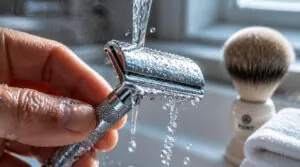
Your razor takes a beating every time it touches your face. Leftover hair, soap, and skin cells build up fast, and that buildup dulls blades before their time. Here’s exactly how to clean yours the right way, step by step.
A quick rinse under hot water after each pass helps, but pairing that habit with sharp, quality hardware makes the biggest difference—check out these top-rated safety razor blade picks to keep your shave smooth for longer.
Rinse Away Hair Buildup
Rinse under warm water, 100-110°F, right after you finish. That temp softens hair and buildup without stiffening lubricating strips.
Rinse after every stroke, not just at the end. Point the cartridge downward so gravity pulls debris out.
Consistent rinsing extends blade life:
- Cuts cleaning time 60%
- Boosts lifespan 25%
- Prevents calcification
- Stops product bonding
- Eases hair removal
Proper rinsing technique is essential for maintaining razor blade hygiene.
Remove Soap and Skin Residue
Water alone won’t cut it. Soap builds a film that traps skin cells against the metal, so grab a soft toothbrush and work small circles across each edge for 15 seconds.
| Method | Time | Best For |
|---|---|---|
| Toothbrush scrub | 15 sec | Daily buildup |
| Vinegar soak | 10 min | Mineral deposits |
| Blade gap focus | 20 sec | Trapped residue |
Tap Gently, Never Bang
That toothbrush scrub loosens debris, but knocking your razor against the sink undoes the work. Tap gently, never bang — a light tap against the edge distributes force safely.
Hard strikes cause micro-fractures and misalign the edge. Use a fingertip tap, check alignment after, and confirm no rattle. Gentle habits mean proper cleaning without damage.
Scrub With Soft Toothbrush
An old, soft toothbrush is your best cleaning tool. Soft bristles remove over 92% of buildup in under 15 seconds without scratching steel. Angle it 30 degrees into the pivot joint, use light pressure, and brush under cool water. Skip medium or hard bristles — they roughen the surface and invite future grime. This quick habit adds real blade life.
Clear Gaps Between Blades
Between each blade sits a tiny gap, and that gap is doing more work than you’d think. Hair and soap residue clog it fast, so rinsing frequency matters.
If you’re also fine-tuning blade exposure to match your gap width, this guide to choosing the right safety razor breaks down how the two settings work together.
After scrubbing, run a quick gap inspection, check blade alignment, and confirm the frame tolerance stays tight. Clear gaps restore glide and stop tugging, keeping your blade edge angle sharp and true.
Dry Razor Blades to Prevent Rust
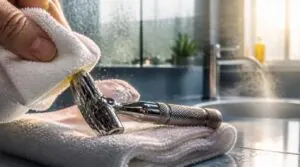
Water is rust’s best friend, and your razor’s worst enemy. A clean blade still needs one more step before it’s safe to put away. Here’s how to get it bone dry, every single time.
Shake Off Excess Water
Gravity’s your best friend here. After rinsing, give the razor a firm shake toward the drain, blade angled down, for 2-5 seconds.
That controlled motion guides water out of the gaps fast. Skip wild flicks, though — they bend cartridges. This small habit builds proper cleaning, cuts rinsing frequency issues, and preps blades for real moisture removal before you dry your razor.
Pat Dry With Towel
Once shaken, grab a towel and pat, don’t rub. Light pressure wicks water away without pushing debris into the grooves.
Towel texture matters — soft and clean, never scratchy or linty. Keep a dedicated towel just for shaving gear.
Pat until droplets stop transferring, timing matters before storage. Skip re-wetting the blade afterward — that undoes your work instantly.
Air-Dry Before Storage
Towel gets you close, but air finishes the job. Give blades 15-20 minutes on a clean, dry surface before storage.
- Space blades apart—no stacking
- Keep away from heat vents
- Choose low-humidity spots
- Check for surface moisture
- Confirm complete drying before sealing
Skip storing blades in alcohol; plain air does the work without added moisture control fuss.
Use Cool Hair Dryer
Got a hair dryer handy? Switch it to cool shot and give your razor a quick blast.
Cool air speeds up moisture control without adding heat that promotes corrosion. Point the nozzle close, run it 20-30 seconds, and rotate the head for even coverage.
This trick extends razor blade life between full air-dry sessions, especially when you’re in a rush.
Avoid Humid Shower Storage
That steamy shower stall is rust’s best friend. Every shower blasts your razor with hot spray and thick steam, keeping blades wet long after you rinse off.
Move storage away from direct shower spray. Pick a water-resistant storage spot—cabinet or drawer—so humid air can’t linger on the blade edge and quietly eat away your shave.
Protect Blades With Proper Storage
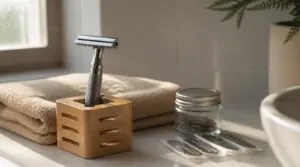
Once your blade is clean and dry, where you put it matters just as much. The right storage spot keeps moisture and air from undoing all your hard work. Here’s how to set your razor up for a long, sharp life.
Store Upright for Airflow
Gravity is your razor’s best friend. Store it upright and air circulates freely between blades, sweeping away trapped moisture before rust gets a foothold.
- Elevates edges off damp counters
- Speeds evaporation between shaves
- Cuts corrosion risk a lot
A simple stand does the job. This one habit adds real blade longevity without costing you a dime.
Keep Away From Spray
A stand keeps your blade dry, but what’s sitting next to it matters too. Deodorant sprays and air fresheners coat blades in aerosol residue, inviting corrosion. These propellants ignite near heat and rupture under pressure. Keep razors clear of spray zones entirely.
Your medicine cabinet shouldn’t double as a spray station. Give your blade its own dry corner, away from every can.
Use Dry Cabinet Storage
A dry cabinet takes moisture control further than any bathroom corner can. Set relative humidity between 35 and 50 percent, the same range camera gear uses to dodge corrosion.
Space blades upright, leave gaps for airflow, and check seals stay tight. Good circulation stops microclimates from forming, protecting blade longevity far better than open-air storage ever could.
Add Silica Gel Packets
Want backup for that dry cabinet? Toss in a few silica gel packets.
These little pouches pull moisture from the air, keeping humidity low around your blades. A 10-gram packet soaks up roughly 1.5 to 3.5 grams of water. Keep them separate from the blade itself, never opened, and swap them out once they feel damp or saturated.
Seal Against Bathroom Humidity
Beyond the cabinet, look at the room itself. Cracked caulk lets steam seep behind tile, wrecking humidity control where you store gear.
- Pick silicone or hybrid sealant types for flexible, watertight joints
- Choose mold resistance formulas for steamy showers
- Do proper surface prep—clean, dry, dust-free
- Follow application tips: 40-90°F, under 80% humidity
This helps with real razor blade preservation and corrosion prevention.
Extend Blade Life With Better Shaving Technique
Cleaning and storage only get you so far. How you actually shave plays a huge role in how long your blade stays sharp. Here’s what to change in your routine to make every edge last longer.
Soften Hair Before Shaving

Tough hair snaps blades fast. A hot shower for five minutes makes hair 25% more pliable and cuts required force from 3.5 to 2.8 grams.
Follow with warm towel steam, then 3-4 drops of pre-shave oil two minutes before shaving. Brush hair backward to lift follicles 2-3mm. Softer hair means less blade strain, longer edge life.
Use Quality Shaving Cream
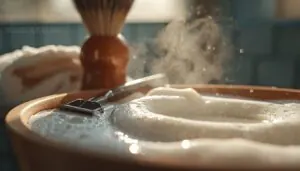
Cheap foam skips skin preparation and dries fast, forcing the blade to drag through stubble.
A rich cream builds thick lather with real glide enhancement, letting the razor float instead of scrape. Glycerin locks in skin hydration, aloe calms freshly-cut skin, and steady lather consistency means less blade sharpness lost per pass. Better cream, longer blade longevity, simple as that.
Shave With Light Pressure

Let the razor’s own weight do the cutting, not your arm.
Dermatologists peg the ideal at two to three ounces, roughly what a safety razor already weighs. Push harder and you stretch pores, invite razor burn, and bend the blade’s edge—cutting its life to 3-4 shaves instead of 5-7.
Press too hard and you’ll bend the blade’s edge, cutting its life nearly in half
Use short 1-2 inch strokes. Light touch, longer blade life, simple as that.
Rinse Between Passes

Soap doesn’t just sit there between passes—it dries into gritty little particles that scratch your edge like sandpaper.
Rinse after every pass, using warm water around 100-110°F. Swoosh the blade heel to toe, clearing trapped hair before it drags on the next stroke.
Skip this step and you’re shaving with a clogged, dulling cartridge.
Avoid Repeated Rough Passes
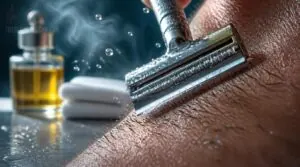
Going over the same patch again grinds your edge down fast, like sanding wood after it’s smooth.
Grain-direction shaving with light pressure gets it right the first time. Try this:
- Apply pre-shave oil
- Pull skin taut
- Shave with the grain
- Rinse blade cold
Fewer passes mean less wear and a sharper blade, longer.
Maintain The Blade Edge Between Uses
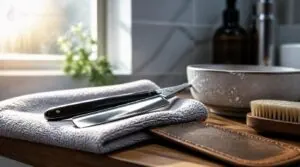
A clean, dry blade still needs one more thing: an edge that stays sharp. Between shaves, a few small habits keep that edge lined up and ready to cut clean. Here’s how to maintain it right, step by step.
Strop on Denim Carefully
Denim stropping is quick, free razor care. Strop your blade backward on denim at a 15-20 degree angle, light pressure only.
Run an "X" pattern, 20-30 strokes, heel to tip. Stretch fabric taut first. Excess pressure rounds your edge fast—denim forgives less than leather. Done right, this simple habit sharpens your blade maintenance routine between real strops.
Use Leather Strop Properly
Denim works in a pinch, but a real leather strop or belt gives your edge the best treatment.
- Keep a consistent 30-degree angle
- Alternate strokes, 15 per side
- Condition leather occasionally to keep it supple
This isn’t honing your blades—it’s realignment. Wipe compound residue clean, then store your strop flat and dry between sessions.
Apply Protective Blade Oil
Once your strop work’s done, oil is your next line of defense. Wipe the blade clean, then coat it with food-grade mineral oil for a stable, non-sticky film.
This barrier blocks moisture and slows corrosion. Reapply every few uses, especially in humid bathrooms, and check the film before each shave—if it looks dull, refresh it.
Wipe Oil Before Shaving
That protective oil coating is great for storage, but it’s the wrong texture for shaving. Wipe the blade clean before your first stroke, in one direction only, to strip excess film without dulling the edge.
Leftover oil traps skin flakes and hair, causing drag instead of glide. A quick, consistent wipe keeps lubrication balanced and cutting contact sharp from stroke one.
Replace When Pulling Starts
Even great maintenance has limits. When stropping and oiling stop restoring glide, that’s your cue.
Watch for blade sharpness degradation: tugging, uneven cuts, or nicks despite proper care. This mirrors blade replacement timing on any tool with wear parts—like checking starter rope inspection, pawl wear assessment, or recoil spring tension on an engine. Once resistance builds, replace the blade. That’s true razor blade life extension.
Frequently Asked Questions (FAQs)
How to make razor blade last longer?
Rinse after every shave, dry your razor fully, and store it upright in a dry cabinet or bag with silica gel. Oil the blade weekly, strop on denim to realign the edge, and swap it once pulling starts.
How do professional barbers maintain razor sharpness?
What’s their secret to that razor-sharp edge? Barbers strop before every client for micro-angle removal, run controlled honing sessions on fine stones, and test the edge on a stubble field to confirm true sharpness.
Is there a way to make shaving last longer?
Yes: dry your razor fully, strop it on denim for edge realignment, add a light oil for blade lubrication, and store it upright with silica gel to fight grit and moisture buildup between shaves.
Why do razor blades dull so quickly?
Every stroke is a tiny war: hair fights back like steel on steel. Hair hardness, moisture-driven oxidation, and friction loss chip away at the edge, exploiting microscopic blade flaws until sharpness fades fast.
How to keep razors sharp longer?
Sharpness comes down to habit: clear away hair and soap after each pass, dry the blade fully before storage, and keep it in a low-humidity spot. Skip corrosion by wiping gently, never dragging cloth across the edge.
Why do razor blades go dull so fast?
Hair bends it, moisture corrodes it, buildup abrades it. Edge wear, blade corrosion, and daily debris chip away at sharpness fast, especially against coarse, hard beard hair that stresses thin edge geometry with every stroke.
How to prolong the life of a razor blade?
Rinse under hot water, dry completely, and store in low-humidity conditions. Clean gaps with a toothpick, coat with oil, and shave with lighter pressure. These small habits keep your blade sharp far longer.
How do I make my razors last longer?
Funny thing: most guys blame dull blades on bad luck, not habits. Real fix? Rinse and dry after each shave, strop on denim for edge maintenance, oil lightly for rust prevention, store upright, and retire it once pulling starts.
How to increase razor life?
Treat your blade like a sword: rinse it thoroughly after every shave, dry it fully, store it away from humidity, and skip the sink-tapping. Small habits like these stretch blade lifespan far longer than you’d expect.
How long should a good razor blade last?
No blade lasts forever, no matter what the box promises. Expect 5-7 shaves from a quality cartridge, though hair coarseness, shave frequency, and technique all shift that number, sometimes stretching it, sometimes cutting it short fast.
Conclusion
Picture your razor as Excalibur—care is your magic. The best ways to extend razor blade life aren’t ancient secrets; they’re everyday moves: rinse, dry, store, shave, and maintain. Your blade’s edge is a mirror of your routine. Don’t let rust or gunk dull your results. Treat your cartridge with the same respect you’d give a prized tool, and you’ll enjoy weeks of sharp, smooth shaves. Master these habits, and your mornings will thank you.