This site is supported by our readers. We may earn a commission, at no cost to you, if you purchase through links. This content is for general informational and educational purposes only and is not a substitute for professional medical, dermatological, or nutritional advice.
Your hair has the potential to turn heads, but only if the color actually complements you instead of fighting against your natural features. That shade of ash blonde your friend rocks might turn brassy orange on you, while the copper tones you adore could wash out your complexion completely.
Choosing and maintaining the right color isn’t about following trends—it’s about understanding your unique skin tone, hair porosity, and texture, then giving your strands what they need to stay vibrant between salon visits.
Whether you’re going bold with a dramatic change or enhancing your current hue, mastering a few professional techniques will keep your colored hair looking salon-fresh instead of faded and fried.
Table Of Contents
- Key Takeaways
- Choosing The Right Hair Color
- Preparing Your Hair for Coloring
- Best Practices for Coloring Hair at Home
- Maintaining Colored Hair Vibrancy
- Preventing Damage and Fading in Colored Hair
- Frequently Asked Questions (FAQs)
- Do and don’ts after hair color?
- What not to do with colored hair?
- Can I color my hair at home?
- How do I choose the right hair color?
- How do I maintain my hair color?
- How do you get a better hair color?
- Can You color your hair all over your head?
- What color hair color is right for You?
- What is the most popular hair color?
- What is the best hair Colour to cover grey?
- Conclusion
Key Takeaways
- Your skin’s undertones dictate which hair colors actually flatter you—cool skin needs ash and platinum while warm skin glows with copper and gold, so matching this beats chasing trends every time.
- High-porosity hair grabs color fast but loses it faster too, which means you need porosity equalizers before dyeing and cool rinses after to seal the cuticle and lock pigment in for weeks longer.
- Sulfate shampoos and daily heat styling are quietly destroying your color investment by stripping dye molecules and opening cuticles, so switching to sulfate-free products and limiting heat cuts fade by up to 40 percent.
- Timing your dye application by section instead of guessing prevents the patchy disasters and overprocessing that kill vibrancy—most formulas need 25-45 minutes max, and porous hair needs even less.
Choosing The Right Hair Color
Picking the right hair color isn’t just about what looks cool on Instagram. Your skin tone, eye color, hair texture, and base porosity all play into whether that shade will pop or fall flat.
If you’re working with shorter cuts, check out these hair color ideas for short hair that bring out dimension without overwhelming your length.
Let’s break down what actually matters when you’re choosing your next color.
Matching Hair Color to Skin Tone
Skin tone analysis changes everything. Your undertones dictate which shades make you glow or wash you out completely. Here’s your tailored palette:
- Cool undertones pair best with platinum blonde or ash brown for harmony.
- Warm undertones shine with golden blonde, caramel, or copper tones.
- Neutral undertones handle copper to neutral blonde without clashing.
- Check your veins—blue suggests cool, green suggests warm.
- Go two levels lighter or darker for dimension without fighting your natural tone.
For more guidance, see how.
That’s how you nail the color result every time.
Considering Eye Color and Hair Texture
Your eye color and hair texture shape your color strategy just as much as skin tone. Blue or gray eyes pop with cool silvers and ash browns, while brown or hazel eyes pair perfectly with warm caramels and golden undertones.
Fine hair grabs color fast and shows it brighter. Coarse or curly hair needs extra processing time for even color absorption and facial framing highlights that accentuate your natural features.
Selecting Permanent Vs. Semi-Permanent Dye
Once you’ve nailed those features, it’s time to pick your dye type. Permanent hair color lifts natural pigment and lasts through future growth, giving you serious color lift and fade prevention for gray coverage. Semi permanent color deposits surface pigment without ammonia, fading gently over 4 to 12 washes.
Your hair porosity affects how each dye type grabs and holds, so strand test first.
Understanding Base Color and Porosity
Before you open that box, test your hair’s base color and porosity. Base Color Theory explains why lifting toward a pale canvas delivers truer tones—your underlying shade shifts when you process.
Porosity Testing shows how fast your cuticles grab pigment. Drop a strand in water: quick sinking means high porosity and fast Color Absorption, so adjust processing time to lock pigment in without frying your Hair Type.
Preparing Your Hair for Coloring
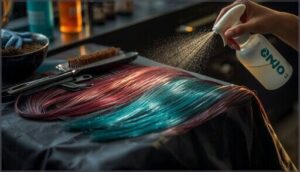
Think of prepping your hair like you’d prep a canvas before painting a masterpiece. Skip this step and you’re gambling with patchy color, scalp irritation, and a whole lot of regret.
The trick is finding that sweet spot—clean enough to avoid buildup, but not so fresh that you strip away your scalp’s natural oils, and understanding whether dirty or clean hair works best for dye can make all the difference.
Skip the prep and you’re gambling with patchy color, scalp irritation, and a whole lot of regret
Here’s exactly what you need to do before that dye touches your strands.
Pre-Dye Hair Treatments and Clarifying
You wouldn’t paint over a dirty canvas, so don’t dye over buildup. Clarifying shampoos strip minerals and residue 3 to 5 days before coloring, letting dye grab evenly. Here’s your pre-color power move:
- Clarify first – Remove calcium deposits that block peroxide processing
- Apply bond repair – Reduce breakage by 20 percent with amino acid pre-treatment masks
- Test porosity – Adjust timing so color refreshers penetrate uniformly without patchiness
Protecting Scalp and Hairline
A barrier along your hairline stops irritation before it starts. Spread petroleum jelly 2 to 3 millimeters from the hairline for lasting scalp shielding during processing. Wipe spills immediately with a damp cloth for dye stain prevention.
Choose gentle coloring formulas with ceramides for scalp comfort and hair health.
This simple hairline care protects skin while keeping color protection strong and color-safe products effective.
Performing a Strand Test
Isolate a quarter-inch section behind your ear to test how your hair reacts to color. Saturate the piece evenly, wrap it in foil, and wait the recommended time. Rinse and check the result under natural light.
This strand test shows real processing times and validates your formula before you commit. If it’s off, tweak your mix now—not after your whole head’s done. It’s vital to perform a strand test to reduce the risk of unwanted results, as explained in this.
Sectioning and Detangling Hair
Clean sectioning and detangling tips set you up for impeccable color placement. Before you touch a bottle, map narrow vertical panels across your head—usually four to six sections from crown to nape. Then detangle with a wide-tooth comb, working ends to roots. This hair sectioning strategy protects your scalp, speeds processing, and locks in uniform pigment.
- Use a tail comb to create clean part lines and prevent tangling
- Small subsections around hairline help control precise color placement
- Detangling spray or conditioner loosens knots without damaging the cuticle
- Always detangle damp hair with conditioner to reduce stretching and breakage
Best Practices for Coloring Hair at Home
You’ve prepped your hair and picked your perfect shade. Now it’s time to actually apply the color without turning your bathroom into a crime scene or your hair into a patchy disaster.
Here’s what you need to know to pull off salon-quality results from your own sink.
Mixing and Applying Dye Evenly
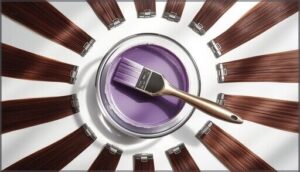
Getting smooth, even hair color starts with the mix. Stick to the manufacturer’s ratio and blend until you hit that creamy, no-streak consistency.
Divide your hair into four to six sections and use a brush or foam applicator for better color distribution than fingers alone. Start mid-lengths, then tackle roots. Small strokes beat big globs every time.
Timing and Processing Tips
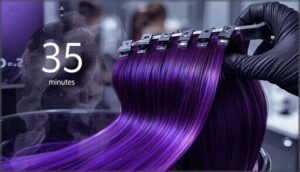
Timing is everything in hair coloring. Most at-home dyes need 25 to 45 minutes to process, but heat activation can shave off five to 10 minutes. Set a timer for each section instead of guessing.
Porous hair absorbs color faster, so you might need shorter processing times. Never push past the max time on the box—overprocessing kills vibrancy and invites breakage.
Covering Roots and Grays Effectively
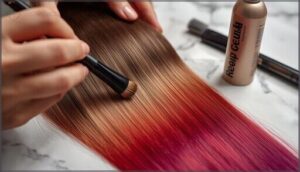
Roots and grays need a different game plan than all-over color. Use semi-permanent dye close to your natural shade for smooth gray coverage. Apply product only to regrowth—skipping mid-lengths prevents buildup.
Root concealers and touch-up sprays work fast for regrowth management between full dye sessions. Hold the spray six to eight inches from your scalp for natural color blending without streaks or root flaw disasters.
Avoiding Common At-Home Coloring Mistakes

At-home hair coloring mistakes can wreck your color goals fast. Watch out for these major slip-ups:
- Skipping the strand test before full application
- Overlapping dye on previously colored sections
- Using hot water rinses that cause fade prevention nightmares
- Applying toner without neutralizing brassiness first
- Exceeding processing time and risking color damage
Root mistakes and dye overlap create uneven tones. Follow timing rules for impeccable at-home hair coloring results.
Maintaining Colored Hair Vibrancy
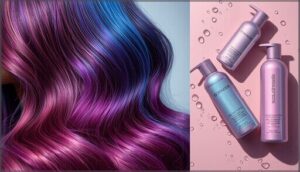
You didn’t come this far just to watch your color wash down the drain after two weeks. Keeping that vibrant shade locked in takes more than wishful thinking—it’s about smart moves with the right products and a few simple habits.
Here’s how to make your color work for you instead of fading into oblivion.
Using Color-Safe Shampoos and Conditioners
Your colored hair needs a gentle cleansing routine that locks in color and keeps moisture balance intact. Switch to sulfate-free shampoo and conditioners designed for color preservation—they use mild surfactants that won’t strip pigment.
Look for ColorSafe products with UV filters and color enhancers to maintain vibrancy. These formulas protect your investment while keeping strands healthy between touch-ups.
Limiting Heat Styling and Sun Exposure
Heat styling and UV rays can zap your color vibrancy by 40 percent in just four weeks. Swap daily flat irons for air-drying to cut heat exposure by 60 percent, and keep styling temps at 350°F or below.
Rock a wide-brim hat during peak sun hours and layer on UV protective sprays—they block up to 90 percent of harsh rays while you conquer your day.
Incorporating Deep Conditioning Masks
Deep conditioning masks give you advanced moisture locking and color preservation—seal your cuticles, boost elasticity, and defend against fade. Use them weekly to keep your shade fierce and your strands silky.
- Apply mid-lengths to ends on damp hair for 5 to 20 minutes
- Wrap with a warm towel to boost penetration
- Rinse cool to lock everything in tight
Choose color-safe formulas with UV blockers to shield your investment from fading and hair damage prevention.
Scheduling Regular Root Touch-Ups
Root excellence demands a solid regrowth scheduling strategy. Your touch-up frequency hinges on your hair porosity, growth rate, and how fast grays appear—usually every 4 to 6 weeks keeps things smooth.
Consistent hair maintenance locks in color preservation and prevents jarring root lines that scream neglect.
| Hair Type | Touch Up Frequency |
|---|---|
| Permanent dye | Every 4–6 weeks |
| Semi-permanent | Every 3–4 weeks |
| Gray coverage | Every 2–4 weeks |
| Highlights/balayage | Every 6–8 weeks |
| Shadow root | Every 5–7 weeks |
Preventing Damage and Fading in Colored Hair
You didn’t spend all that time and effort on your color just to watch it fade or fry. Protecting your investment means knowing which products to skip and which ones actually work.
Here’s how to keep your color locked in and your hair healthy.
Avoiding Sulfates and Harsh Ingredients
Your shampoo might be quietly sabotaging your color every time you lather up. Sulfates and other harsh ingredients strip dye molecules faster than you’d think, leaving your hard-won shade dull and lifeless. Switch to sulfate-free alternatives and gentle surfactants like cocamidopropyl betaine to lock in vibrancy.
Colored Hair Care starts with smarter hair care products:
- Choose formulas without sodium lauryl sulfate or isopropyl alcohol
- Look for moisture retention strategies that support color-treated hair maintenance
- Prioritize color protection methods over cheap clarifying shampoos
These tweaks prevent hair damage issues before they start.
Using Leave-in UV and Heat Protectants
Your color deserves armor against the elements. Leave-in conditioner with UV protection tips blocks up to 40 percent of fade-causing rays, while heat protectants create a shield against styling tools up to 450F.
Spray evenly from mid-length to ends before blow-drying, then mist roots lightly. This product application guide locks in vibrancy and prevents hair damage—your color preservation secret weapon.
Managing Porosity for Longer-Lasting Color
Think your dye fades too fast? Porosity testing reveals why. High porosity hair absorbs color quickly but releases it faster, while tight cuticles resist saturation.
Use a porosity equalizer on porous ends before color to balance absorption and extend color longevity. Seal with cool rinses and lightweight leave-ins to lock pigment in.
Control your hair cuticle, control your vibrancy.
Incorporating Protein and Moisture Treatments
Damaged strands can’t hold pigment—that’s science. Protein treatments strengthen weakened hair by replenishing keratin bonds, reducing breakage by up to 25 percent after one application. Pair with moisture balance through deep conditioning masks to restore flexibility and prevent brittleness.
Use protein every 2 to 4 weeks and moisture weekly for color retention that lasts. Treatment timing matters: alternate protein benefits with hydration to avoid buildup.
This dual approach keeps color-treated hair maintenance simple while preventing hair damage and boosting hair health and growth.
Frequently Asked Questions (FAQs)
Do and don’ts after hair color?
Wait 24 to 48 hours before washing to lock color in. Use lukewarm water and color safe shampoo. Skip hot tools without heat protectant. Deep condition weekly and protect from UV exposure.
What not to do with colored hair?
Skip sulfate-loaded shampoos and daily heat styling—both accelerate Color Damage and fade. Heat Abuse and Color Neglect strip vibrancy fast.
Avoid Over Bleaching or layering harsh chemicals without Colored Hair Care routines.
Can I color my hair at home?
You totally can rock at-home hair coloring with the right prep and products.
Just follow DIY coloring tips carefully—strand tests, proper sectioning, and mixing ratios prevent color correction disasters later.
How do I choose the right hair color?
Start with skin tone and hair analysis to build your tailored palette. Match undertones using color theory—warm, cool, or neutral—then factor in eye color, base level, porosity, and texture for perfect shade matching.
How do I maintain my hair color?
Your hair color is like fresh paint—stunning at first, but it needs the right care to stay that way.
Use color safe products, wash less often, and protect from heat to keep vibrancy alive.
How do you get a better hair color?
Pair shades with your undertones using color theory—warm skin loves caramel, cool rocks ash.
Prep with clarifying, test strands first, and use bond protectants during dye penetration for tonal balance that lasts.
Can You color your hair all over your head?
Go big or go home—yes, you can absolutely color your hair all over your head using permanent or semi-permanent hair dye for full head coloring.
Complete color saturation delivers uniform all-over toning from roots to ends.
What color hair color is right for You?
Your undertones decide everything. Cool skin loves ash and platinum, while warm tones glow in copper and gold.
Match eyes too—green pops with deep shades, brown shines in rose gold.
What is the most popular hair color?
Warm blonde tones with honey and caramel highlights top salon requests nationwide. Rich brunettes stay timeless, while reds and silvers keep climbing.
Your vibe matters more than trends when choosing hair color inspiration.
What is the best hair Colour to cover grey?
Choose ash blonde or cool brown for silver undertones, warm beige to golden brown for balanced skin, or rich chocolate with highlights for medium tones.
Grey coverage tips depend on matching your natural base for smooth blending.
Conclusion
An ounce of prevention beats a pound of correction for colored hair. You’ve got the colored hair advice you need to keep your color vibrant and your strands healthy.
Now it’s about consistency—using the right products, protecting against damage, and maintaining your routine. Skip the shortcuts that promise miracle fixes.
Your hair rewards patience and proper care with color that stays true and texture that stays strong. That’s how you own your look instead of chasing it.