This site is supported by our readers. We may earn a commission, at no cost to you, if you purchase through links. This content is for general informational and educational purposes only and is not a substitute for professional medical, dermatological, or nutritional advice.

Detangling natural hair shouldn’t feel like a battle—but for millions of us, wash day turns into a hours-long struggle that ends with more hair in the comb than on our heads.
Here’s what most people miss: the damage usually happens before you ever pick up a tool. Dry strands, skipped sessions, and the wrong products set the stage for breakage long before detangling day arrives.
The good news? A solid routine changes everything—less shedding, better moisture, longer retention, and curls that actually bounce back.
This guide covers every step, every tool, and every product worth knowing.
Table Of Contents
- Key Takeaways
- Why Detangling Natural Hair Matters
- What Causes Tangles and Knots
- Wet, Damp, or Dry Detangling
- Best Tools for Gentle Detangling
- Choose The Right Detangler
- Step-by-Step Detangling Routine
- Detangle Matted Hair Safely
- How Often Should You Detangle
- Prevent Tangles Between Wash Days
- Top 9 Detanglers for Natural Hair
- 1. Carol Daughter Detangling Conditioner
- 2. Kinky Curly Knot Today Leave In Conditioner
- 3. Oribe Detangling Hair Primer
- 4. Mane Choice Soft As Can Be 3in1 Conditioner
- 5. Oyin Handmade Avocado Aloe Detangler Spray
- 6. Not Your Mother Tahitian Gardenia Detangler
- 7. Bumble and bumble Hairdressers Invisible Oil
- 8. Soultanicals Knot Sauce Detangler
- 9. Design Essentials Almond Avocado Leave In Conditioner
- Frequently Asked Questions (FAQs)
- Conclusion
Key Takeaways
- Most breakage happens before you touch a comb — dry hair, split ends, and wrong products set the damage in motion.
- Always detangle wet or damp, never dry — moisture makes the strands bend instead of snapping.
- Finger-detangle first, wide-tooth comb second, and always work from ends to roots — not the other way around.
- Protective styles, satin at night, and consistent moisture between wash days keep next week’s detangling from being a nightmare.
Why Detangling Natural Hair Matters
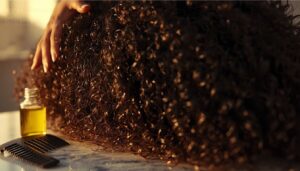
Detangling isn’t just a chore—it’s how you protect everything you’ve grown. Done right, it’s the difference between hair that thrives and hair that breaks off in your hands.
Mastering the art of finger combing for gentle detangling keeps your strands intact while letting your hair’s natural strength shine through.
Here’s why making it a priority changes everything for your natural hair.
Reduce Breakage and Split Ends
Skipping a proper detangling technique doesn’t just cost you a few strands—it costs you length. Every forced tug through a knot snaps the shaft, turning healthy hair into split ends that travel upward fast.
Use a slip product, section your hair, and practice low-friction handling.
Add regular trims and protective nightwear, and breakage doesn’t stand a chance. Consistent regular trims reduce split ends by up to 50%.
Improve Moisture Retention
Detangling does more than fighting knots — it opens the door for moisture to actually penetrate your strands. Tangled hair blocks everything.
- Use moisture-locking sprays and a leave-in conditioner before combing
- Follow with sealant oils to lock hydration in
- Try hydrating hair masks weekly to deep condition and restore elasticity
Nighttime hydration and humidity-adaptive products keep that moisture working around the clock.
Boost Curl Definition
Once your moisture is locked in, your curls can actually do their thing. Proper wet detangling and sectioning, along with slip product usage, gives each strand room to form its natural pattern.
Layered product application—leave-in, then curl cream, then gel—builds definition from the inside out. Finger detangling versus combs and brushes matters here too, as fingers preserve clumps and minimize disruption.
Support Length Retention
Gentle detangling, slip agents, and low-tension styling work together to keep strands intact from root to tip, minimizing breakage. These methods form the foundation of a hair care routine focused on preserving length and strength.
Pair this approach with a nighttime hair wrap, consistent moisture retention, and protective styling, and your hair gains every advantage to thrive. These complementary habits reinforce the initial efforts, creating a holistic system for hair health.
Hair breakage prevention isn’t one move—it’s a daily habit.
Prevent Unnecessary Shedding
Every strand you lose to breakage is one that didn’t have to go. Knowing the difference between hair shedding vs breakage changes everything — shedding is natural, breakage is preventable. Preventing breakage and shedding in natural hair means being intentional daily.
Shedding is natural, but breakage is preventable — and that difference is everything
- Practice Gentle Handling and Low‑Tension Updos to reduce stress on strands
- Use Balanced Oil Use to seal moisture without buildup
- Try Scalp Exfoliation to clear follicles and support healthy regrowth
- Schedule Regular Trims to stop split ends before they travel up
What Causes Tangles and Knots
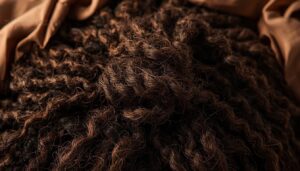
Tangles don’t just appear out of nowhere — your hair is reacting to something.
A few common culprits keep showing up again and again, and once you know them, you can actually do something about it. Here’s what’s working against you.
Dry Hair and Friction
Dry hair is essentially a friction machine. When cuticles’ roughness increases, strands catch on each other instead of sliding smoothly. Combined with low humidity or synthetic fabric friction from scarves and hats, static electricity takes over — sending flyaways everywhere.
| Dry Hair Problem | What It Causes |
|---|---|
| Lifted cuticles | Snagging and knots |
| Low humidity | Static buildup |
| Heat-induced friction | Breakage during dry detangling |
Skip handling dry hair. Oil-based slip and proper friction reduction are non-negotiable for achieving smooth glide and preventing damage.
Product Buildup on Strands
Layering products without clarifying is one of the sneakiest causes of tangles. Silicone Residue, Wax Layering, and Hard Water Deposits coat your strands — blocking slip agents and locking knots in tight.
- Hair stops absorbing moisture
- Curls clump unevenly
- Detangling feels impossible
Low Porosity Buildup makes this worse. Switch to silicone-free, sulfate-free formulas and add Clarifying Treatments monthly.
Shrinkage and Coil Overlap
Your shrinkage ratio tells a real story. Tight coils can shrink up to 75%, pulling strands into a dense bundle where coil density transforms harmless curls into overlapping knots. Understanding hair shrinkage and tangling helps you fight back smart.
Use moisture layering to keep coils flexible, and lean on stretching techniques like twists or braids for overlap prevention before tangles even start.
Skipping Detangling Sessions
Skipping one session feels harmless — until it isn’t.
Shed hairs stay trapped, coil around nearby strands, and knots multiply fast. Without a consistent detangling schedule, you’re inviting serious Breakage Escalation and Hair Thinning over time.
Here’s what skipping actually costs you:
- Knot Complication worsens with every missed day
- Moisture Loss accelerates as tangles block product absorption
- Wash-Day Difficulty spikes when mats lock in shed hair
- Frequency guidelines for natural hair detangling get harder to catch up on
- Detangling routine consistency collapses, stalling long-term length goals
Sleeping Without Satin Protection
Your pillowcase might be your hair’s worst enemy at night. Cotton Pillow Friction roughs up your cuticle while you sleep, causing Curl Shape Distortion and Morning Knot Build-up by sunrise. It also triggers Overnight Moisture Drain, leaving strands brittle and prone to breakage.
If your pillowcase damage has already left you noticing extra shedding, this guide on why 4C hair sheds so much breaks down what’s normal and what’s fixable.
| Cotton Pillow | Satin Pillowcase |
|---|---|
| Absorbs moisture | Retains moisture |
| Increases friction | Reduces friction |
| Shortens Style Longevity Reduction | Preserves protective styles |
A simple nighttime hair protection swap prevents dry detangling struggles tomorrow.
Wet, Damp, or Dry Detangling
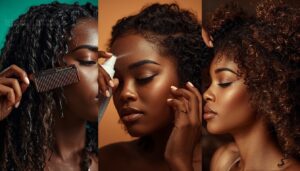
Not all detangling methods work the same way — and the wrong one can cost you a lot of hair. Your curl pattern, hair density, and even the day of the week can change which approach actually makes sense.
Here’s how wet, damp, and dry detangling each stack up.
Wet Detangling Benefits
Wet detangling is your best defense against breakage. Water makes each strand pliable, so knots loosen instead of snapping. Add conditioner slip or an oil-based slip product, and your comb practically glides through hair. This glide ensures cuticle smoothing happens naturally, reducing friction and minimizing frizz later.
Wet hair handling demands patience, but the results are worth it: defined curls, less shedding, and healthier lengths. By working with pliable strands and reducing resistance, you preserve hair integrity while styling.
Damp Detangling Advantages
Damp hair hits that sweet spot most people miss. It’s strong enough to handle manipulation—about 40 grams of stress before breaking—yet soft enough for finger detangling to actually work. The result is a product absorption boost without over-saturating strands, while knot visibility clarity improves, eliminating guesswork about tension points.
This balance delivers a serious frizz reduction effect and strength retention gain, naturally.
Dry Detangling Risks
Now, dry detangling? That’s where things go sideways fast. Without moisture, your strands are brittle — and every pull risks snapping. Watch for the Pop Noise Indicator: that audible crack during combing means real damage is happening.
Dry hair handling also triggers:
- Cuticle Erosion that roughens strands and locks in future knots
- Matted Knot Growth that doubles overnight
- Scalp Inflammation from aggressive pulling
- Moisture Depletion that accelerates breakage cycle-wide
Best Option for Tight Curls
For tight curls, damp detangling wins every time. Your coils stay pliable without the strand-weakening risk of full saturation.
Start with the Microsection Method—work 1-inch sections to prevent knots. Mist with Aloe Slip Spray, add a Low-Porosity Moisturizer, then use finger detangling first, wide-tooth comb after. This combo protects moisture absorption while keeping your routine stress-free.
When Each Method Works Best
Pick your method based on what your hair just went through. Post-exercise? Damp detangling requires moisture, not force, to address sweat buildup. Travel-friendly dry detangling manages small snags quickly. For a sensitive scalp, wet detangling after conditioning provides maximum slip with minimal tension. Morning sessions suit low-maintenance styles, while night detangling before protective styling prevents morning chaos.
Best Tools for Gentle Detangling

Your tools can make or break your detangling session. The wrong ones pull, snag, and leave you with a handful of hair you didn’t plan to lose.
Here’s what actually works for gentle, breakage-free detangling.
Finger Detangling First
Your hands are your best first tool — no debate. Before you reach for any comb, finger-detangle to feel exactly what’s going on up there.
- Use Sensory Feedback to detect knots before tools snag them
- Apply a slip agent for smooth Hand Glide through each section
- Practice Pressure Control — gentle outward pulls only
- Section hair first for real breakage prevention
Trust your fingers.
Wide-tooth Combs
Once your fingers have done the heavy lifting, reach for a wide-tooth comb — your curls’ best ally.
| Feature | Why It Matters | Best For |
|---|---|---|
| Tooth Spacing | Reduces snagging and pulling | Coily, thick textures |
| Material Options | Wood glides smoother, less static | Sensitive scalps |
| Scalp Comfort | Rounded tips massage gently | Regular detangling sessions |
It distributes slip products evenly, boosts volume, and prevents breakage — the right tool selection for natural hair detangling done right.
Flexible Detangling Brushes
A good detangling brush changes everything. Tools like the EZ Detangler brush and Tangle Teezer are built for natural hair — and here’s why they work:
- Adjustable Brush Frame bends to your head shape, cutting tension on coils
- Heat Resistant Bristles handle styling up to 180°C
- Ergonomic Grip Design keeps control on wet, slippery hair
- Scalp Massage Benefits boost circulation and length retention
Plus, Eco Friendly Materials mean sustainable tool selection for natural hair detangling — smart and responsible.
Sectioning Clips and Hair Ties
Alligator clip benefits include a curved grip that holds thick sections without slipping. Duckbill clips provide shine during wet styling — metal versions resist rust. Butterfly clip tips: use them for serious volume.
Coated elastic ties and spiral tie advantages? Less snagging, zero creasing.
Sectioning hair to prevent breakage starts here.
Spray Bottles for Moisture Control
A spray bottle isn’t just a bottle — it’s your detangling secret weapon.
A fine mist nozzle covers more hair at a 60-degree angle, ensuring moisture lands evenly.
Look for LDPE or stainless steel builds; these materials handle leave-in conditioner without breaking down.
Pre-compression pumps deliver consistent performance stroke after stroke.
Clean the filter regularly — clogs kill your mist pattern fast.
Choose The Right Detangler
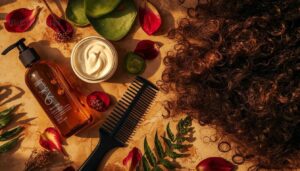
Not every detangler works for every head of hair — and grabbing the wrong one can actually make detangling harder. The right product comes down to knowing your hair type, porosity, and what ingredients actually deliver slip.
Here’s what to look for before you buy.
Match Hair Type and Porosity
Understanding hair porosity changes everything. Not all detanglers work the same for every head. Low porosity hair needs lightweight, water-based formulas — heavy creams just sit on top. Medium porosity hair manages balanced product weight well. High porosity hair craves richer conditioners.
Texture compatibility also matters. Fine strands require less product, while coarse strands need more. Always match your hair type first, then choose products accordingly.
Look for Slip-enhancing Ingredients
Once you’ve matched your formula to your porosity, look at what’s actually inside it. Quaternary Conditioners like behentrimonium methosulfate coat each strand for serious slip, while Fatty Alcohols smooth raised cuticles.
Plant Gels — think aloe vera or flaxseed — hydrate while releasing knots, and Silicone Polymers cut combing force considerably.
Hydrolyzed Proteins fill shaft gaps, and Oil-based slip agents like coconut oil and vegetable glycerin benefit your moisture game too.
Leave-in Versus Spray Detanglers
Now that you know what to look for inside the bottle, picking between a leave-in conditioner and a detangling spray comes down to what your hair actually needs right now.
- Application Timing — Leave-ins work best post-wash; detangling sprays handle dry hair knots fast.
- Texture Feel — Leave-ins feel richer; sprays stay light and fluid.
- Slip Efficiency — Sprays win for stubborn knots; leave-ins build softness over time.
- Product Longevity — Leave-ins protect all day; sprays are a quick fix.
Lightweight Versus Rich Formulas
Formula weight matters more than most people think. Fine or wavy hair? A lightweight formula keeps curls bouncy — never flat. Conversely, thick, coily, or high-porosity hair thrives with rich creams, such as SheaMoisture Raw Shea Butter Deep Moisturizing Detangler.
Climate-based choices also play a role — go light in summer, richer in winter. Matching density-friendly formulas to seasonal shifts ensures detangling becomes easier effortlessly.
Ingredients to Avoid
Some ingredients quietly wreck your detangling game. Sulfate cleansers strip natural oils, leaving hair dry and knotty. Drying alcohols reduce slip fast. Heavy silicones and waxy occlusives — like mineral oil — build up over time, making knots worse. Fragrance additives irritate sensitive scalps. Parabens? Skip them too.
Prioritize silicone-free formulas with clean ingredient lists. Product ingredient safety isn’t optional — it’s everything.
Step-by-Step Detangling Routine
Getting the routine right makes all the difference between a smooth session and a frustrating one. It’s not complicated — just a few intentional steps done in the right order.
Here’s exactly how to work through your hair without breakage.
Section Hair Into Manageable Parts
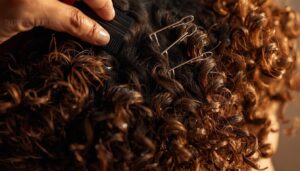
Don’t skip this step — sectioning is where breakage gets stopped before it starts. Precision partings give you control, so you’re never wrestling with the whole head at once. Work to detangle in sections, following a clear section order from the back to the front.
- Use a rat-tail comb for clean part lines
- Match your section size to your curl density
- Clip securing each finished section prevents re-tangling
Section-by-section hair management makes everything easier.
Dampen With Warm Water

Warm water is your secret weapon here. Fill your spray bottle with water at around 90°F — that sweet spot triggers cuticle-lifting, so strands open and drink in moisture fast. This heat-softening process cuts the force needed to work through knots almost in half.
Mist each section evenly, then wait two to three minutes. This timing is crucial — don’t rush it.
Apply Leave-in or Slip Product
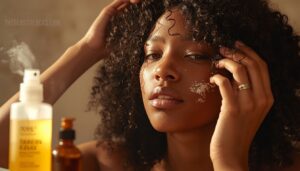
Now your hair is damp—this is where slip saves everything. Reach for your leave-in conditioner and start with a dime-sized dose. Apply it, focusing on mid-lengths first, then working toward the ends. Avoiding the scalp keeps roots from getting weighed down.
- Use pre-styling slip to coat every strand
- Layer a detangling spray over leave-in for extra glide
- Add moisturizing oils for coily hair on stubborn sections
- Misting with a spray distributes oil-based slip evenly
- Focus extra product on your driest ends
Finger Detangle Larger Knots

Your fingers are your best first tool — always. Before any comb touches your hair, work through larger knots using end-first handling: start at the tips, gently teasing outward.
Practice hand tension control by holding the section taut with one hand while the other works.
Spot single strand knots early and release them slowly.
Section size strategy matters — smaller sections mean better control and less breakage.
Comb From Ends to Roots

Now grab your wide-tooth comb. This is where tip-to-root glide takes over from your fingers.
- Start at the ends — upward comb progression only, never root-down.
- Use gravity detangling: let the section hang naturally for progressive knot release.
- Trust your sectioning and slip product usage to protect each zone.
Root protection technique is simple — never force it.
Reapply Product as Needed
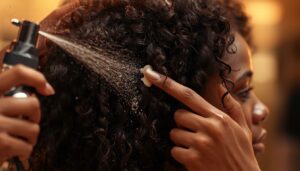
Your comb catching? That’s a moisture cue detection moment — stop and reapply immediately. Quickly reapply with a product with slip to save strands before damage occurs.
Layered product application works best: mist the section first, then add conditioner. Section misting keeps timing signals clear — rough or grabby hair means add more. Slip agents in hair products are your protection.
Never push through dry hair.
Clip Finished Sections Away
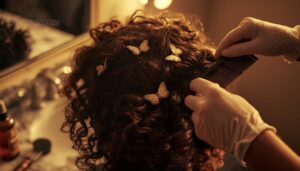
Once a section is smooth, clip it and move on. This keeps your visual workflow clean — you’ll always know exactly where you left off.
- Clip placement matters: secure at the root so ends stay tucked.
- Grip strength keeps thick curls locked without snagging.
- Clip material (satin-lined wins) acts as a moisture shield between sections.
Section-by-section hair management is your detangling routine consistency revolution.
Detangle Matted Hair Safely
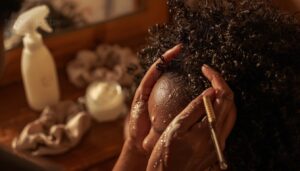
Matted hair needs patience — rushing is how you lose length you worked hard to keep. The good news is that even the worst mats can be worked through with the right approach.
Here’s exactly how to do it safely.
Soften Hair Before Starting
Matted hair needs a soft start — never rush it. A warm steam treatment or pre-poo treatment opens the cuticle and makes everything easier.
Massage in an oil-based slip like jojoba or olive oil for a protein boost and flexibility.
Moisturizing hair before combing is non-negotiable. Start with dampened hair, use an oil, apply a lightweight misting, and let silicone-free slip products do the heavy lifting first.
Saturate With Conditioner and Water
Once your hair is softened, full hair saturation is your next move. Drench each section — not soaking wet, but thoroughly damp. Apply a rinsing conditioner from mid-length down for ideal mid-length conditioning and even product distribution.
- Mix water and conditioner for the right water ratio
- Focus on ends first
- Work upward slowly
- Coat every strand fully
- Let it sit two minutes
Separate Mats With Fingers
Fingers first — always. Use the Knot Isolation Technique: pinch the mat at its base, hold it steady, then gently peel strands outward. That’s Mat Chunk Reduction in action.
| Move | Why It Works |
|---|---|
| Gentle Side-Pull Method | Opens knots without tightening them |
| Finger Pressure Control | Stops you before breakage happens |
| Ends-first finger detangling | Releases smaller knots traveling upward |
Feel resistance? Stop immediately.
Work in Very Small Sections
The smaller, the better — that’s your golden rule here. Micro-Section Planning means you’re not fighting the whole head at once.
Pinning Mini Segments keeps finished work safe while you rotate through using the Section Rotation Method.
Check each piece for dryness before starting — your Section Dryness Check and Section Slip Ratio determine how smoothly things go.
Smart sectioning of hair to prevent breakage is the backbone of every solid breakage prevention strategy.
Know When to Seek Professional Help
Sometimes, the mat wins — and that’s okay. If you’ve been at it for hours and your hair still won’t budge, stop.
Persistent pain in your scalp or daily life impacting your confidence means it’s time to call a pro.
A professional hairstylist’s advice on detangling extremely matted hair safely beats forcing it. Breakage prevention starts with knowing your limits.
How Often Should You Detangle

There’s no one-size-fits-all answer regarding how often you should detangle your natural hair.
Your curl pattern, density, and lifestyle all play a role in figuring out the right schedule. Here’s what you need to know to find your rhythm.
Weekly Detangling Guidelines
Once a week is your sweet spot. A consistent detangling schedule — aligned with your wash day every 7 to 10 days — keeps shed hairs from nesting deep in your coils. Session timing matters: pair prewash and postwash detangling strategies together for best results.
Use slip products to minimize hair damage, and your routine review will show less breakage over time.
Adjust for Curl Pattern and Density
Not every curl operates on the same schedule. Curl pattern and hair density call the shots. Tight coils with high density require smaller, section-by-section hair management and more frequent sessions—think every 5 to 7 days.
Low-density hair? Space it out. Match your tailored product weight and pressure-optimized detangling approach to what your strands actually need, not a one-size rule.
Detangling During Pre-poo
Pre-poo timing is your secret weapon. Apply a prewash oil treatment—jojoba or olive work great—to dry hair before shampoo strips everything away. Slip ratio matters here: more oil means fingers glide, less means snagging.
Use section-by-section hair management, keeping your section count between four and eight. Hair responds better to warmth, so temperature effects are real—work in a warm space.
Detangling During Conditioning
Conditioning is where the real magic happens. Conditioning is where the real magic happens. Let it sit 10–20 minutes so the multi-phase formula fully softens each strand. Deep conditioning as a detangling aid works even better with heat-assisted conditioning under a hooded dryer.
- Apply generous conditioner from ends to roots
- Detangle section-by-section while product is still in
- Rinse only after knots release completely
Signs You Need to Detangle Sooner
Your hair will tell you when it’s had enough. Watch for these signs:
| Warning Sign | What It Means |
|---|---|
| Comb resistance | Tangled strands need attention now |
| Frequent shedding | Breakage is building up fast |
| Tight clumps | Knots are blocking moisture |
| Scalp tension | Shed hair is trapped at roots |
Uneven curls and split ends management issues? Don’t wait for wash day.
Prevent Tangles Between Wash Days
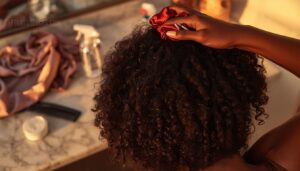
Detangling on wash day is only half the battle. What you do in between sessions determines how much work you’ll have next time.
These simple habits will keep knots from taking over before you even reach the sink.
Keep Hair Moisturized Regularly
Dry strands tangle easily — moisture is your first defense. Keep curls hydrated daily using the LCO Layering Method: liquid, leave-in conditioner, then sealant oils like jojoba to lock everything in.
A simple Nighttime Refresh spritz of water plus leave-in before bed makes a real difference. Try these moisture-based hair detangling methods between wash days:
- Humectant Boost: Apply glycerin or aloe vera for lasting hydration for curls
- Oil-based slip: Seal each section with lightweight oil to reduce friction
- Seasonal Moisture: Add extra product in winter; increase frequency in summer
Use Protective Styles
Moisture sets the foundation — but protective styles lock in the work. Styles with Low‑Tension Braids, twists, and buns keep Ends Tucking away from daily friction. That means less detangling later.
Prioritize Scalp Access so you can cleanse between installs. Use Style Variety to avoid overworking one area.
Mind your Wear‑Time Limits — leaving styles too long undoes everything.
Sleep With Satin or Silk
Your nighttime routine is quietly ruining — or saving — your curls. Cotton pillowcases steal moisture and rough up your cuticle while you sleep. Satin and silk change that.
- Friction Reduction: Satin accessories for nighttime protection cut friction by up to 43% vs. cotton
- Moisture Retention: Fabric choice keeps overnight products on your strands, not your pillow
- Frizz Control: A satin bonnet contains curls and reduces morning puffiness
- Hair Coverage: Satin hair accessories protect ends fully — bonnets beat pillowcases for restless sleepers
Nighttime hair care for tangle-free curls starts here.
Pre-detangle Before Washing
Before you even turn on the shower, your detangling work should already be done. A pre-poo treatment — just 15–30 minutes of oil or conditioner — softens strands and delivers heat-free conditioning that makes everything easier.
Use pre-wash and post-wash detangling strategies: finger detangling first, then detangle with a wide-tooth comb. Your sectioning ratio matters — four to six sections.
Pre-wash slip protects your scalp and cuts knot severity fast.
Prevent Re-tangling After Styling
Once you’ve detangled, protect that work. Seal ends daily with a light oil to stop snags before they start. Swap cotton for a satin bonnet — your nighttime routine is your best defense.
Low manipulation tips apply here too: skip the constant fluffing. Protective styling to reduce tangles keeps strands sectioned and calm.
Sectioned sleep protection plus a simple style refresh routine means less work on next wash day.
Top 9 Detanglers for Natural Hair
The right detangler can make or break your whole routine. With so many options out there, it helps to know which ones actually deliver slip, moisture, and results for natural hair.
Nine worth keeping on your radar—here are the top contenders that promise to transform your haircare experience.
1. Carol Daughter Detangling Conditioner

Carol’s Daughter Wash Day Delight is a detangling conditioner designed for curls that resist styling. Its jelly-to-cream formula transforms as you work it through hair, thanks to the Tangle-Melting Technology.
Glycerin and rose water lock in moisture, allowing fingers to glide through knots effortlessly.
The product is vegan, paraben-free, and free of mineral oil, aligning with clean beauty standards.
It’s a great fit for anyone exploring options in this guide to the best deep conditioners for locs, where detangling and strand strength are top priorities.
Note: The rose scent is strong. At $13.99, it’s a solid choice for curl types 3A through 4C.
| Best For | People with curly, wavy, or coily hair (types 3A–4C) who struggle with tangles, dryness, or breakage on wash day. |
|---|---|
| Price | $56.00 |
| Volume | 20 oz |
| Hair Types | Curly, wavy, coily |
| Format | Jar cream |
| Paraben-Free | Yes |
| Breakage Reduction | Yes |
| Additional Features |
|
- The jelly-to-cream formula melts through knots fast, cutting down detangling time and reducing breakage.
- Glycerin and rose water keep hair moisturized and soft without a greasy or heavy feel.
- Vegan, paraben-free, and free of mineral oil — a solid clean beauty pick.
- The rose fragrance is strong and might be a dealbreaker if you’re scent-sensitive.
- Too much glycerin too often can backfire — overuse may actually cause frizz or dryness.
- The jar lid is slippery with wet hands, and at $56 for 20 oz, it’s a bit of an investment.
2. Kinky Curly Knot Today Leave In Conditioner
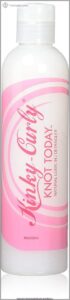
Kinky Curly Knot Today is a community favorite for good reason. This creamy, herbal leave-in is packed with slippery elm and marshmallow root — two botanicals that give it serious slip.
Apply it after washing, then work a wide-tooth comb from ends to roots. It works on curly, wavy, and thick textured hair without weighing strands down.
At $14.99 for 8 oz, it’s paraben-free and CG-method-friendly.
Perfect for wet combing sessions or revitalizing hair post-braids.
| Best For | Anyone with curly, wavy, or thick textured hair who struggles with knots and tangles — especially great for kids with long hair or adults with coarse, high-porosity strands. |
|---|---|
| Price | $14.99 |
| Volume | 8 oz |
| Hair Types | Curly, wavy, thick |
| Format | Squeeze bottle |
| Paraben-Free | Not stated |
| Breakage Reduction | Yes |
| Additional Features |
|
- Seriously good slip from slippery elm and marshmallow root — detangles without the pulling or breakage
- Works as both a leave-in and rinse-out conditioner, so you get two products in one
- Leaves hair soft and moisturized without that heavy, greasy feeling
- The fragrance can be a bit much if you’re sensitive to scents
- Too much product on thick hair can weigh it down or build up at the scalp
- At $14.99 for 8 oz, it’s pricier than your average drugstore conditioner
3. Oribe Detangling Hair Primer
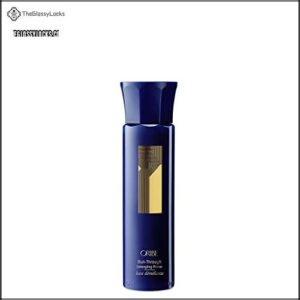
Oribe Run-Through Detangling Primer is the luxury pick—and it earns that price tag. At $39 for 5.9 oz, it’s not cheap, but the lightweight mist works fast.
Spray it root to end, comb through, and knots release without heavy residue. It seals the cuticle, adds shine, and protects against heat damage. The formula also works on relaxed, wavy, and straight hair.
Just don’t overdo it—a few sprays are enough.
| Best For | Anyone with fine, relaxed, or heat-styled hair who wants a fast-working detangler that doubles as a shine booster and heat protectant. |
|---|---|
| Price | $39.00 |
| Volume | 5.9 oz |
| Hair Types | All types, relaxed |
| Format | Spray bottle |
| Paraben-Free | Not stated |
| Breakage Reduction | Yes |
| Additional Features |
|
- Instantly releases knots on wet or dry hair with just a few sprays—no tugging, no breakage
- Lightweight formula that won’t weigh down fine or thin hair while still sealing the cuticle for real shine
- Pulls triple duty as a detangler, daily moisturizer, and heat protectant in one bottle
- At $39 for 5.9 oz, it’s a tough sell when drugstore options exist
- The spray nozzle can be uneven and flimsy, making it easy to over-apply and end up with residue
- The scent is polarizing—some find it too strong or egg-like, especially in newer batches
4. Mane Choice Soft As Can Be 3in1 Conditioner
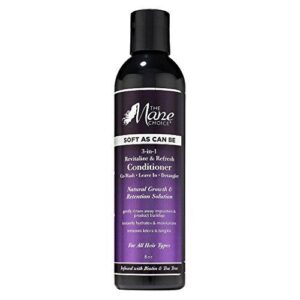
Meet the Mane Choice Soft As Can Be 3-in-1 Conditioner—a multitasking hero for wash day. This single product replaces your co-wash, leave-in, and detangler, streamlining your routine. Tight coils especially love this one, as its creamy formula transforms knot-filled strands into manageable sections.
Packed with glycerin, aloe vera, and coconut oil, the conditioner ensures fingers and combs glide right through tangled hair. Its sulfate-free, paraben-free, and silicone-free formula prioritizes scalp and hair health while delivering intense hydration.
For best results, work it into sections and watch knots surrender effortlessly. This all-in-one solution is a game-changer for simplifying your haircare regimen.
| Best For | Anyone with curly, wavy, or kinky hair who wants to simplify wash day by replacing multiple products with one. |
|---|---|
| Price | Not listed |
| Volume | 8 oz |
| Hair Types | Curly, wavy, kinky |
| Format | Squeeze bottle |
| Paraben-Free | Not stated |
| Breakage Reduction | Yes |
| Additional Features |
|
- Does three jobs at once—co-wash, leave-in, and detangler—so your routine gets a lot shorter
- Biotin and tea tree oil work together to support stronger, healthier hair growth over time
- Adds serious slip for detangling, which means less breakage and less frustration
- The scent is strong and not for everyone, especially if you’re sensitive to fragrance
- Can feel stiff or sticky as a leave-in, particularly on tighter 4C curl patterns
- A bit pricier than similar options, and growth results aren’t guaranteed for every hair type
5. Oyin Handmade Avocado Aloe Detangler Spray
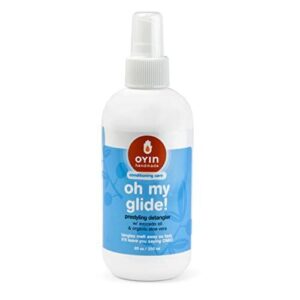
Oyin Handmade’s Avocado Aloe Detangler Spray manages everything between wash days, complementing the Mane Choice’s coverage. Built on organic aloe leaf juice and avocado oil, it delivers real slip without silicones, sulfates, or parabens.
Spray it on dry or damp hair, work in sections, and let your fingers do the first pass. It’s especially clutch for 4A and 4C hair types.
At $15.99 for 8 oz, opt for the liter refill pouch to stretch your dollar.
| Best For | Anyone with tightly coiled, thick, or curly hair — especially parents managing kids’ hair and anyone rocking protective styles like braids or twists. |
|---|---|
| Price | $15.99 |
| Volume | 8 oz |
| Hair Types | All types, coily |
| Format | Spray bottle |
| Paraben-Free | Not stated |
| Breakage Reduction | Yes |
| Additional Features |
|
- Avocado oil and organic aloe vera give real moisture and slip without silicones or sulfates
- Works as a leave-in or pre-shampoo detangler, so it pulls double duty
- Safe around the face — great before pool or beach days
- The spray nozzle shoots a stream, not a mist, which makes even application a bit of a hassle
- At $15.99 for just 8 oz, it can feel pricey — especially if you’re using it daily on thick hair
- The citrus scent is nice for most, but a dealbreaker if you’re sensitive to fragrance
6. Not Your Mother Tahitian Gardenia Detangler
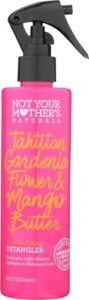
If Oyin is your budget pick, Not Your Mother’s Tahitian Gardenia Detangler is your everyday workhorse. At 8 oz, this spray packs 98% naturally derived ingredients — mango butter, Tahitian gardenia flower, and glycerin — into a lightweight, milky formula that won’t weigh curls down. It’s silicone-free, paraben-free, and safe for color-treated hair.
Spritz onto damp sections, finger-detangle first, then comb from ends to roots. The formula leaves curls softer, bouncier, and defined.
Watch the trigger spray — some users report it failing.
| Best For | Curl-focused folks who want a clean, everyday detangler that defines without the weight. |
|---|---|
| Price | Not listed |
| Volume | 8 oz |
| Hair Types | Curly, straight, fine |
| Format | Spray bottle |
| Paraben-Free | Yes |
| Breakage Reduction | Yes |
| Additional Features |
|
- 98% naturally derived ingredients — mango butter, gardenia flower, glycerin — that actually nourish while they detangle
- Lightweight, milky spray that leaves curls soft, bouncy, and defined without any greasy finish
- Works on kids and adults, straight or curly — genuinely versatile
- Some users notice a greasy residue on hands, and too much product can make hair look oily
- The spray trigger has a reputation for failing, which means you might end up transferring it to another bottle
- Hard to find in stores, so you’ll likely have to order online and stock up
7. Bumble and bumble Hairdressers Invisible Oil
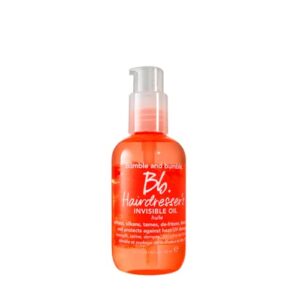
Bumble and bumble Hairdresser’s Invisible Oil is a lightweight 6-oil blend—featuring coconut, argan, grapeseed, macadamia, sweet almond, and safflower oils—that absorbs quickly without leaving a greasy residue.
This multitasking formula detangles, controls frizz, adds shine, and protects against heat up to 450°F. It also includes UV filters to guard against sun damage.
Apply a small amount to damp hair before combing; a little goes far.
Priced at $47, it’s an investment—but it earns it.
| Best For | Anyone who wants a no-fuss, lightweight oil that tames frizz and protects hair from heat and sun without weighing it down. |
|---|---|
| Price | $47.00 |
| Volume | 3.4 oz |
| Hair Types | Straight, wavy, curly |
| Format | Pump bottle |
| Paraben-Free | Not stated |
| Breakage Reduction | Yes |
| Additional Features |
|
- Absorbs fast and leaves zero greasy residue — just smooth, shiny hair
- Pulls double duty as both a heat protectant (up to 450°F) and a UV shield
- A little goes a long way, so that $47 bottle lasts longer than you’d expect
- The price tag stings — there are cheaper oils out there that do a similar job
- Fine hair needs a careful hand here; too much and you’ll look like you skipped wash day
- If you’re sensitive to fragrance, the scent might be a dealbreaker even though it’s on the lighter side
8. Soultanicals Knot Sauce Detangler
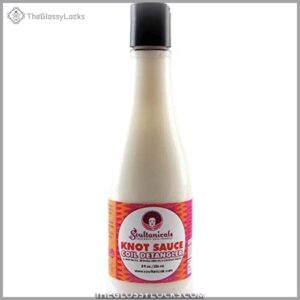
Soultanicals Knot Sauce is made for your most stubborn knots. It smells like cake batter and vanilla — but don’t let that fool you. This creamy formula is serious work.
Blue malva, aloe, coconut oil, and marshmallow root team up to soften even the tightest 4C coils. Apply it section by section: finger-detangle first, then follow with a wide-tooth comb from ends to roots.
Users report saving up to an hour per session. Small bottle, big results.
| Best For | People with high-porosity, coily, or 4C hair who struggle with stubborn knots and want a lightweight detangler that saves serious time. |
|---|---|
| Price | Not listed |
| Volume | 4.16 oz |
| Hair Types | Natural, coily, 4C |
| Format | Squeeze bottle |
| Paraben-Free | Not stated |
| Breakage Reduction | Yes |
| Additional Features |
|
- Blue malva, broccoli seed oil, and coconut nectar work together to soften tight coils and add slip without the greasy feel
- Users report cutting detangling time by up to an hour — a real game-changer for thick, coily textures
- Light enough to layer with other products and works great as a leave-in or post-wash treatment
- At just 4 oz, the bottle runs out fast — especially if you have a lot of hair or detangle often
- The packaging you receive may not match what’s shown online, which can feel a little misleading
- Results vary — some users don’t notice much added shine or moisture depending on their hair type
9. Design Essentials Almond Avocado Leave In Conditioner
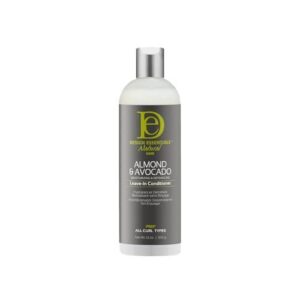
Design Essentials Almond & Avocado Leave-In Conditioner is the everyday workhorse your wash day has been missing.
At $13.47 for 12 oz, it won’t break the bank — and it won’t weigh your curls down either. Sweet almond oil softens, avocado strengthens, and glycerin pulls in moisture where you need it most.
It’s cruelty-free, paraben-free, and works on every curl type from 2A to 4C.
Apply to damp hair, comb through, and style. No rinsing needed.
| Best For | Anyone with wavy, curly, or coily hair — especially those who want a lightweight, affordable daily leave-in that works for the whole family. |
|---|---|
| Price | $13.47 |
| Volume | 12 oz |
| Hair Types | Wavy, curly, coily, kinky |
| Format | Squeeze bottle |
| Paraben-Free | Yes |
| Breakage Reduction | Yes |
| Additional Features |
|
- Lightweight formula with almond, avocado, and coconut milk that moisturizes without leaving hair greasy or weighed down
- Works on all curl types, including color-treated and chemically relaxed hair — no rinsing needed
- Cruelty-free and free of parabens, mineral oil, and petrolatum at a wallet-friendly $13.47
- The fragrance is hit or miss — some people love it, others really don’t
- May not provide enough slip or deep conditioning for very dry or high-porosity hair
- At only 12 oz, heavy daily users might find themselves repurchasing pretty often
Frequently Asked Questions (FAQs)
What deficiency causes knotty hair?
Iron deficiency tops the list. Low iron leaves your hair dry and brittle, so strands catch and knot easily.
Low levels of zinc, protein, vitamin D, and biotin can exacerbate the condition rapidly.
Can detangling help with scalp health issues?
Yes — and your scalp will thank you. Gentle detangling lifts buildup, reduces irritation, and helps distribute natural oils evenly. A cleaner scalp means healthier roots and better growth.
How does humidity affect natural hair tangling?
Humid air makes your cuticle swell and lift, so strands snag on each other fast. High-porosity hair reacts hardest. Add slip before touching your hair on muggy days.
Should you detangle before or after trimming?
Always detangle before trimming. Tangled hair hides split ends and knots. Your stylist can’t cut a clean line through a mess. Detangle first, trim second, then smooth again before styling.
Can diet and hydration impact hair tangles?
What you eat and drink shows up in your hair. Low protein, iron, or water intake weakens strands, raises friction, and makes tangles worse. Hydrated, well-fed hair detangles easier.
If your strands are especially stubborn, this guide on managing coarse, wiry brillo pad hair pairs perfectly with a protein-rich diet to speed up results.
Is detangling safe during a protective style?
Detangling inside a protective style isn’t ideal. It can cause frizz, unraveling, and extra breakage.
Wait until takedown. That’s when your hair is fully accessible and you can work safely through each section.
Conclusion
Funny how the hair that fights you hardest loves you most—it just needs the right approach. Learning to detangle natural hair without breakage isn’t about working harder. It’s about working smarter: more slip, less force, better timing.
Start with moisture. Finish from ends to roots. Protect overnight. Every small step compounds into real retention and healthier strands.
Your curl pattern was never the problem. Now you’ve got the tools to prove it.