This site is supported by our readers. We may earn a commission, at no cost to you, if you purchase through links. This content is for general informational and educational purposes only and is not a substitute for professional medical, dermatological, or nutritional advice.
Your bathroom cabinet probably has three products fighting the same oil, and none of them winning. Foaming cleanser strips your skin, so your sebaceous glands panic and produce more oil to compensate. It’s a cycle, and store shelves keep selling you the next "solution" instead of breaking it.
Here’s the good news: your kitchen already holds better answers. Jojoba oil, bentonite clay, and plain oatmeal work with your skin’s chemistry instead of against it, no harsh sulfates required.
This guide walks you through diy natural skincare for oily skin, from mixing your first toner to building a full morning-to-night routine that actually balances instead of battles.
Table Of Contents
- Key Takeaways
- Best Natural Ingredients for Oily Skin
- DIY Cleansers, Toners, and Moisturizers
- Homemade Face Masks for Oily Skin
- Gentle DIY Exfoliants for Oily Skin
- Step-by-Step DIY Oily Skin Routine
- Frequently Asked Questions (FAQs)
- What is a good homemade skincare routine for oily skin?
- How do I treat oily skin naturally?
- Which vitamin deficiency causes oily face?
- Which natural ingredient is good for oily skin?
- How do you make homemade skin care for oily skin?
- How can I clear my skin in 7 days for oily skin?
- How do I stop my face from being so oily naturally?
- How do you make homemade skincare for oily skin?
- What is the best natural remedy for oily skin?
- What skincare routine should I have if I have oily skin?
- Conclusion
Key Takeaways
- Stripping your skin with harsh cleansers actually backfires, since it triggers your sebaceous glands to produce even more oil in response.
- Jojoba oil works because it closely mimics your skin’s natural sebum, so it hydrates and calms oil production instead of clogging pores.
- Bentonite clay absorbs excess oil effectively when used 2-3 times weekly, but overdoing it strips your barrier and triggers a rebound oil surge.
- Gentle, consistent care wins over harsh treatments, so finer exfoliants like oatmeal, proper patch-testing, and daily SPF matter more than aggressive scrubbing.
Best Natural Ingredients for Oily Skin
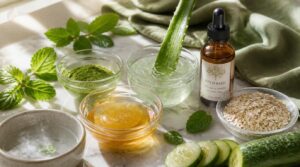
Your kitchen already holds everything oily skin craves, no lab required. Certain natural ingredients work with your sebaceous activity instead of against it, balancing oil without stripping your skin dry. Here are five you’ll want to get familiar with.
If you’re building a full pantry-based routine, these homemade anti-aging masks pair nicely with oil-balancing ingredients for a well-rounded skincare approach.
Jojoba Oil for Lightweight Moisture
A paradox worth knowing: an oil that calms oily skin. Jojoba mimics your natural sebum, so pores accept it fast and skip the greasy aftermath. It’s noncomedogenic, lightweight, and built for daily hydration. This is largely because its close resemblance to human sebum allows it to fit in seamlessly with skin without clogging pores.
Why it earns its spot:
- Absorbs quickly, no residue
- Balances oil without stripping
- Helps your skin barrier
- Delivers hydration without grease
- Works for daily use, morning and night
Bentonite Clay for Excess Oil
If jojoba teaches your skin to trust oil again, bentonite clay controls the excess. Its platy grains create serious surface area for oil absorption and pore cleansing.
| Bentonite Fact | Why It Matters |
|---|---|
| Swells 8x in water | Draws out grime |
| Negatively charged surface | Pulls oil, bacteria |
| Used 2-3x weekly | Prevents overdrying |
| 20-minute set time | Deep sebum regulation |
| Paste consistency | Signals it’s working |
Weekly use keeps acne in check without stripping your barrier.
Aloe Vera for Soothing Hydration
Clay draws out, but your skin still needs hydration for oily skin without heaviness. That’s where aloe vera gel shines, nearly 97% water, so it soothes skin irritation and repairs your skin barrier without clogging pores.
- Calms redness after clay masks
- Cools sunburn and razor bumps
- Leaves skin dewy, never greasy
Scoop gel straight from the leaf and apply.
Honey for Blemish-Prone Skin
Aloe calms, but breakouts need a fighter. Enter honey, nature’s antibacterial powerhouse.
Raw honey’s bioactives target acne-causing bacteria directly. Dab a drop on blemishes as a spot treatment, or use it as a mask base.
It moisturizes too, no dryness trade-off. Always patch test first: small area, 20 minutes, watch for irritation. Skip it if you’re allergic to bee products.
Oatmeal for Gentle Cleansing
Old-fashioned grains hold a secret: mild surfactants that lift oil without stripping it. That’s the heart of Oatmeal Cleansing Benefits.
If you’re ready to try one, our roundup of the best natural body wash picks for sensitive skin highlights oat-based formulas that put this gentle cleansing power to work.
Grind oats fine, mix with warm water, and you’ve got a homemade face wash that soothes while it cleans. No harsh chemicals, just gentle exfoliation and calm, balanced skin.
DIY Cleansers, Toners, and Moisturizers
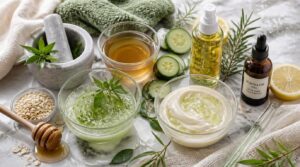
Now that you know your ingredient lineup, it’s time to put them to work. Building your own cleanser, toner, and moisturizer means you control exactly what touches your skin. Here’s how to mix each one at home.
Mix a Gentle Oatmeal Cleanser
Ever wonder why your face wash still leaves you tight and shiny? Try oatmeal. Grind old-fashioned oats into a fine powder, mix with warm water into a paste, and you’ve got a gentle oatmeal cleanser that lifts oil without stripping your skin barrier.
Massage in circles, rinse well. Simple, soothing, effective.
Brew a Green Tea Toner
Since your skin already fights excess oil, why not fight back with antioxidants? Steep one green tea bag in hot water for 2 to 3 minutes, then let it cool completely before use.
Pour into a spray bottle for easy misting. Want extra astringent power? Stir in witch hazel once cooled.
Store your toner in the fridge for a cooling, oil-fighting mist.
Prepare an Aloe Herbal Toner
Nature’s water balancer, that’s what gel brings to the table.
Mix 1 part aloe vera gel with 2 parts herbal water base (steeped sage or witch hazel). Add 20-30 drops essential oil if you’d like. Bottle it, refrigerate, shake before each use.
- Cotton pad, 5-6 drops
- Smooth over face and neck
- Skip rinsing
- Twice daily
This keeps your skin pH balanced naturally.
Moisturize With Jojoba Oil
Sounds counterintuitive, right? Oil on oily skin. But jojoba oil mimics sebum so closely, your skin calms production instead of ramping it up.
It’s noncomedogenic, rich in vitamin E, and works for every skin type. Smooth 3-4 drops onto damp skin post-cleanse, morning and night. Want extra glow? Mix a drop into your oil-free moisturizer.
Store Homemade Products Safely
That green tea toner won’t last if it’s sitting in a dirty jar. Use glass storage jars, sanitize by boiling 5 minutes, and label with the date. Keep containers away from heat and light.
- Amber glass for light-sensitive oils
- Wide-mouth jars for thicker masks
- Pump bottles for toners and cleansers
Same rules apply to DIY makeup remover, lip balm, or foot cream.
Homemade Face Masks for Oily Skin

Your skin just leveled up its cleansing game, so now it’s time to give it something even more targeted. Masks let you treat specific concerns, whether that’s excess shine, clogged pores, or that tight, irritated feeling. Here are five you can whip up tonight, straight from your kitchen.
Mix a Bentonite Clay Mask
Grab a non-metal bowl and mix 1 part bentonite clay to 1 part liquid (water or rose water) into a smooth paste.
Spread evenly, avoiding eyes and mouth, then let it dry 10-15 minutes. Sensitive skin? Rinse at 5 minutes.
Warm water and a washcloth lift it off, curbing sebum production without clogging pores.
Apply a Honey Oatmeal Mask
Ready for something gentler? Grind rolled oats fine, add hot water, let it cool, then stir in honey until smooth. Massage on with clean fingers, upward strokes, covering forehead to jaw while skipping eyes and mouth.
Let it sit 15-20 minutes, then rinse with warm water and a soft cloth for balanced, moisturized skin.
Make a Yogurt Cucumber Mask
Oats calmed things down. Now let’s cool them off. Peel and puree half a cucumber, then fold it into a few tablespoons of plain Greek yogurt until fully combined, about 15 seconds of mixing does it.
The lactic acid gently exfoliates while cucumber hydrates and soothes, a balancing duo for oily, blemish-prone skin.
Try an Aloe Green Tea Mask
Cucumber cooled things down, now green tea steps in to refresh. Steep two tea bags in hot water for five minutes, cool completely, then stir in a tablespoon of aloe vera gel.
Spread evenly, avoiding eyes. This duo soothes inflammation while moisturizing, ideal for oily, breakout-prone skin craving calm.
Prevent Overdrying After Masks
Masks work best with limits. Cap clay treatments at 8-10 minutes, pulling them off while skin still feels pliable, not cracked.
Rinse with lukewarm water, then apply an oil-free moisturizer within two minutes to curb the rebound effect where stripped skin overproduces sebum. Look for glycerin or panthenol, both non-comedogenic, for real skin barrier repair.
Gentle DIY Exfoliants for Oily Skin
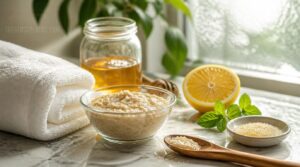
Exfoliating oily skin is a balancing act, and you’ll want to sweep away dead cells without stripping your natural oils. Gentle is the name of the game here, no harsh scrubbing required. Here’s how to exfoliate smart, starting with what to mix up and how often to use it.
Prepare an Oatmeal Honey Exfoliant
Kitchen staples make surprisingly effective gentle exfoliation. Mix 2 tbsp finely ground oatmeal with 1 tbsp honey, add warm water until it forms a paste.
- Apply to damp skin, massage 1 minute
- Let sit 4 minutes
- Rinse with a warm washcloth
Fine grounds prevent harsh scrubbing while honey locks in moisture, smoother texture, minimal irritation.
Try a Yogurt Oatmeal Treatment
Once your skin craves something calmer, reach for plain yogurt. Mix 2 tbsp yogurt with 1 tbsp ground oatmeal.
| Benefit | Effect |
|---|---|
| Lactic acid | Gentle exfoliation |
| Zinc | Reduces inflammation |
| Probiotics | Balances skin bacteria |
| Oatmeal | Absorbs excess oil |
| Texture | Calms redness fast |
Apply 15 minutes, rinse cool. Simple, soothing, effective.
Choose The Right Exfoliation Frequency
More isn’t better here, it’s just irritating. Oily skin can often handle 3 times a week, dry patches want just 1-2.
- Oily/acne-prone: 3x weekly
- Combination: 2-3x weekly
- Dry/sensitive: 1-2x weekly
- Chemical acids: alternate nights
- Physical scrubs: fewer sessions
Start low, watch your skin’s response, then adjust. Your face will tell you what it needs.
Avoid Harsh Sugar Scrubs
That grainy sugar scrub in your pantry? It’s doing more harm than good.
Regular sugar crystals run five times larger than safe exfoliation size, causing micro-tears and spiking sebum production by 22%.
Oversized sugar crystals tear delicate skin, spiking sebum production by 22 percent
| Exfoliant | Particle Size | Barrier Risk |
|---|---|---|
| White sugar | 0.5mm | High |
| Brown sugar | Finer | Moderate |
| Oatmeal | 0.1mm | Low |
Choose noncomedogenic, enzyme-based alternatives instead.
Stop if Irritation Develops
Your skin talks. Listen to it.
Burning, spreading redness, swelling, or a rash means stop immediately. Rinse with lukewarm water, no scrubbing, then skip actives for a few days.
Always patch-test new DIY natural skincare for oily skin on your inner arm for a week first. This protects sebum production and prevents breakout triggers.
Severe or spreading symptoms? Call a clinician.
Step-by-Step DIY Oily Skin Routine
You’ve learned the ingredients and mastered the masks, so now it’s time to put it all together. A routine only works when each step happens in the right order, morning and night. Here’s exactly how to structure your days for calmer, balanced skin.
Follow a Simple Morning Routine
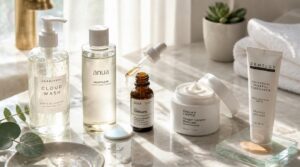
Mornings set the tone for oil control all day. Start with a gentle morning cleanse: gel cleanser, 0.5% salicylic acid, thirty seconds max. Follow with a balancing toner, niacinamide-based, then a lightweight serum. Finish with an oil-free moisturizer and mineral SPF 30+. Five steps, five minutes. That’s your DIY natural skincare foundation for oily skin, done right.
Build a Balanced Night Routine

Nighttime’s when repair happens, so make it count. Double-cleanse with your salicylic wash, swipe on witch hazel toner, then apply an oil balancing treatment two nights weekly, think tea tree oil or a clay mask.
Add calming pre-sleep habits: dim lights, journal, sip tea. Finish with aloe vera gel for hydration. Keep your bedroom cool and consistent sleep timing locked in.
Apply SPF 30 Every Morning

All that clay and honey work still needs a shield. Apply SPF 30 every morning, broad-spectrum, mineral if your skin’s reactive. A nickel-sized dollop, 15 minutes before you step out, spread evenly, not dabbed.
Reapply every two hours outdoors. Daily SPF usage keeps oily, acne-prone skin balanced and protected, rain or shine.
Patch-Test Every DIY Recipe
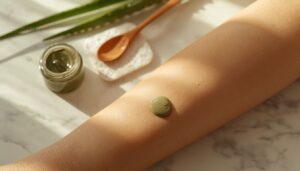
Before that new clay mask goes on your whole face, give it a trial run. Dab a quarter-sized amount on your inner forearm, thick as you’d normally apply it, twice daily for 7 to 10 days.
Watch for redness. New irritation means skip that batch. Use a fresh spot for each recipe, that’s how you catch reactions before your skin does.
Adjust for Acne and Sensitivity

If breakouts and sensitivity crash your oily-skin party, don’t ditch this routine, just tweak it. Swap your cleanser for a pH-balanced, non-alkaline formula (4.5-5.5), keep every product noncomedogenic, and layer moisturizer before actives to protect your barrier.
Try:
- Niacinamide for oil control
- Azelaic acid for antibacterial calm
- Low-dose salicylic acid (0.5-1%)
Gentle wins.
Frequently Asked Questions (FAQs)
What is a good homemade skincare routine for oily skin?
Simple ingredients, serious results. A good routine balances Cleansing, Toning, Moisturizing, Exfoliating, and Sun Protection, using oatmeal cleansers, witch hazel toner, oilfree moisturizer, weekly clay masks, and daily SPF 30 for real acne control.
How do I treat oily skin naturally?
Balance oil, don’t fight it. Cleanse gently, tone with witch hazel, moisturize with jojoba oil, and mask weekly using bentonite clay and aloe vera. Exfoliate lightly, stay consistent, and your skin learns to self-regulate over time.
Which vitamin deficiency causes oily face?
Vitamin B6 deficiency is the culprit, triggering a seborrheic eruption on your face, scalp, and neck. This cutaneous B-vitamin sign mimics facial oiliness, so pair jojoba oil, bentonite clay, aloe vera, and honey with a checkup if shine persists.
Which natural ingredient is good for oily skin?
Ever notice how wax candles resist melting in heat? That’s jojoba oil’s trick. It mimics your sebum, tricking skin into producing less. Add bentonite clay, aloe vera, and honey, and you’ve got a balanced, non-comedogenic combo.
How do you make homemade skin care for oily skin?
Mix kitchen staples like honey, oatmeal, yogurt, and bentonite clay into masks, cleansers, and toners. You’ll unclog pores, calm inflammation, and control shine, using ratios and timeframes that actually match your skin’s needs.
How can I clear my skin in 7 days for oily skin?
Rome wasn’t built in a day, but your skin can calm down fast. Cleanse twice daily, run a Mask Rotation Plan with clay masks, follow the Gentle Exfoliation Guide, and moisturize for real breakout prevention.
How do I stop my face from being so oily naturally?
Calm those overactive sebaceous glands with consistency, not harsh stripping. Try jojoba oil to balance sebum, bentonite clay to absorb excess shine, and green tea for its sebum-control catechins.
Hydrate daily, since dry skin often overproduces oil to compensate.
How do you make homemade skincare for oily skin?
You’ll pick natural ingredients that match your skin’s needs: honey for antibacterial properties, bentonite clay for oil control, oatmeal for gentle cleansing. Mix simple recipes into homemade masks and cleansers, then apply consistently for real skin balancing results.
What is the best natural remedy for oily skin?
Funny enough, oilier skin often needs more oil, not less. Jojoba oil trains overactive glands to ease up on sebum, while honey’s antibacterial power calms breakouts and locks in moisture, no harsh stripping required.
What skincare routine should I have if I have oily skin?
Wash twice daily with a salicylic acid cleanser, then apply a witch hazel toner. Exfoliate 2-3 times weekly, moisturize damp skin, and always finish mornings with SPF 30. Simple, consistent, effective.
Conclusion
Ready to trade three fighting products for three that actually work? That’s the real shift here.
Your kitchen already proved it: jojoba balances, clay clarifies, oatmeal soothes, all without stripping your skin raw. This is the heart of diy natural skincare for oily skin, working with your sebaceous glands instead of against them.
Start small, patch-test everything, and give your skin two full weeks to adjust. It’ll thank you, staying calm, balanced, and finally settled.