This site is supported by our readers. We may earn a commission, at no cost to you, if you purchase through links. This content is for general informational and educational purposes only and is not a substitute for professional medical, dermatological, or nutritional advice.
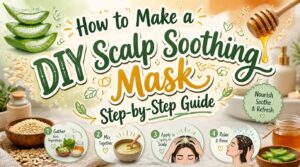
Your scalp itches, flakes, or feels tight, and your first instinct is to scratch. That reaction feels good for a second, then makes everything worse: more irritation, more flaking, more frustration at the mirror.
Here’s the good news. Your kitchen already holds what you need to calm things down. A DIY scalp soothing mask made from aloe vera, oatmeal, or honey can ease redness and itch without harsh chemicals or a trip to the salon.
Ready to mix up real relief? Let’s walk through the ingredients, recipes, and application steps that bring your scalp back to comfort.
Table Of Contents
- Key Takeaways
- Best Ingredients for DIY Scalp Masks
- DIY Scalp Soothing Mask Recipes
- How to Make Your Scalp Mask
- How to Apply a Scalp Mask
- How Often to Use Scalp Masks
- Frequently Asked Questions (FAQs)
- What is the best homemade hair mask for itchy scalp?
- What is a scalp hydrating mask?
- How do you make a super hydrating hair mask?
- Can scalp masks cause allergic reactions or sensitivity?
- How long should masks stay on scalp?
- Do scalp masks work on color-treated hair?
- What storage methods keep homemade masks fresh?
- Can a scalp mask help with dandruff specifically?
- Is it safe to use daily during flare-ups?
- What causes a scalp to feel itchy?
- Conclusion
Key Takeaways
- Simple kitchen ingredients like aloe vera, oatmeal, honey, jojoba oil, and diluted tea tree oil can calm an itchy, irritated scalp without harsh chemicals.
- Always patch test any new mask behind your ear or on your forearm and wait 24 hours before applying it to your scalp, since even natural ingredients can trigger a reaction.
- How often you use a mask depends on your scalp type: oily scalps handle clarifying treatments once or twice a week, while dry or sensitive scalps need much longer gaps between uses.
- Stop treatment right away if you notice hives, spreading rash, burning, or irritation that lasts more than five uses, and check with a dermatologist if symptoms continue.
Best Ingredients for DIY Scalp Masks
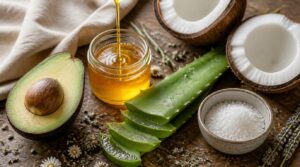
Your kitchen already holds most of what your scalp needs to feel calm again. A handful of simple, gentle ingredients can soothe irritation, add moisture, and clear away buildup, all without harsh chemicals. Here are five you’ll want to keep on hand.
If you want to take it further, calendula and chamomile-infused organic hair care for sensitive scalp can ease redness while restoring everyday comfort.
Your kitchen already holds most of what your scalp needs to feel calm again
Aloe Vera for Cooling Relief
Relief starts with a leaf. Aloe vera’s cooling effect comes from its 99% water content, making it one of the best natural ingredients for calming an irritated scalp.
Its gel offers real natural inflammation relief, soothing:
- Redness
- Itchiness
- Tightness
- Minor irritation
- Dryness
A moisture-rich aloe vera gel forms the base for many hydrating aloe masks, giving your scalp gentle, cooling relief fast. Research also indicates that topical aloe gel may speed burn healing, highlighting its broader soothing potential for irritated skin.
Oatmeal for Gentle Soothing
If aloe cools things down, oatmeal calms things further. This kitchen staple contains avenanthramides, compounds that ease itching almost instantly while fighting inflammation at the source.
| Oatmeal Benefit | What It Does |
|---|---|
| Anti-inflammatory | Calms redness fast |
| Moisture retention | Locks in hydration |
| Fine particles | Exfoliates gently |
| Antioxidants | Protects scalp cells |
It also helps maintain a balanced microbiome, keeping flare-ups away.
Honey for Moisture Support
Oatmeal calms, and honey seals that calm in. It’s a natural humectant, pulling moisture into damp skin and holding it there.
- Draws and locks in hydration
- Thick texture coats scalp evenly
- Naturally acidic, skin-friendly pH
- Pairs well with coconut oil
- Rinses clean after 15–20 minutes
Apply honey to slightly damp hair for your DIY scalp soothing mask, so it has water to grab onto.
If you’re also battling flyaways, this simple DIY hair mask for frizz pairs well with the honey treatment for smoother, calmer strands.
Jojoba Oil for Dryness
Your scalp actually makes an oil close to jojoba oil, which is why it soaks in fast instead of sitting greasy. That’s real sebum similarity, and it means serious moisture retention for tight, dry patches.
Add a few drops straight into your DIY scalp soothing mask. This jojoba oil scalp trick gives lightweight application and steady dry scalp hydration, no heavy residue involved.
Diluted Tea Tree Oil
When dandruff or itchiness won’t quit, tea tree oil earns its spot in your DIY scalp soothing mask. Its main compound, terpinen-4-ol, brings real antimicrobial properties against dandruff-causing yeast.
Always dilute it first, just 1% to 5% in your carrier oil, since undiluted drops irritate skin fast. Run a patch test beforehand, store your mix away from light, and you’ll get gentle scalp soothing effects without the sting.
DIY Scalp Soothing Mask Recipes
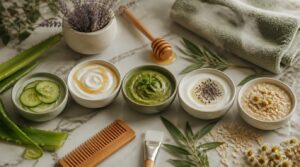
Now that you know the key ingredients, it’s time to put them to work. Below are five simple recipes, each one built for a different scalp need, from cooling irritation to deep hydration. Pick the one that matches what your scalp is asking for and get mixing.
Cooling Aloe Oatmeal Mask
Two ingredients, zero fuss: that’s the magic behind this Aloe Oatmeal Soothing Mask. Grind oats fine, mix with fresh aloe vera gel to form a spreadable paste, then let it sit a few minutes so the oats soak up moisture.
This gentle exfoliation mix offers real natural scalp relief for dry, irritated skin, using only natural ingredients your scalp will thank you for.
Hydrating Honey Coconut Mask
When dryness has you reaching for anything creamy, this duo delivers. Melt a tablespoon of coconut oil until soft, then stir in a tablespoon of honey, a simple 1:1 honey coconut ratio for balanced hydration.
Apply to damp scalp, massaging gently. Leave on 15–20 minutes for real moisture lock benefits, then rinse thoroughly and shampoo twice to clear residue completely.
Calming Aloe Jojoba Mask
Think of this one as a peace treaty between hot, irritated skin and a dry, tight scalp.
Mix 2 tablespoons aloe vera with 1 tablespoon jojoba oil until smooth. This ingredient mix pairs aloe’s cooling, water-binding power with jojoba’s sebum-mimicking moisture. Massage in, cover with a shower cap, leave 20 minutes. Store leftovers refrigerated, up to 5 days.
Diluted Tea Tree Mask
Got flakes and a scalp that won’t quit itching? Mix 3-5 drops tea tree oil per tablespoon coconut oil, never apply undiluted. Patch test on your forearm first, wait 24 hours.
Massage in, leave 15-20 minutes, rinse well. Refrigerate leftovers in dark glass, use within 7-10 days for a truly effective DIY scalp soothing mask.
Gentle Aloe Clarifying Mask
This one’s your reset button. Mix 2 tbsp aloe vera gel, 1 tsp apple cider vinegar (diluted), 1 tbsp fine sugar, 1 tsp honey, and 1 tbsp coconut oil.
Sugar lifts buildup, vinegar restores pH balance, and aloe cools irritation. Massage in for 2-3 minutes, leave 15-20 minutes, rinse well. Use weekly for a clean, hydrated scalp.
How to Make Your Scalp Mask
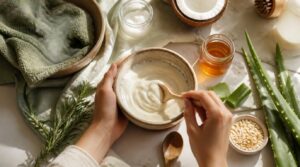
Once you’ve picked your recipe, the real work starts in your kitchen. Making a scalp mask isn’t complicated, but a few small habits keep it safe and effective. Here’s exactly how to go from ingredients to a ready-to-use mask.
Gather and Sanitize Supplies
Before mixing anything, wash your containers with warm water and mild soap, then rinse well. Soak them in a 10% bleach solution for 30 minutes, rinse with rubbing alcohol, and air dry upside down 24 hours. Store sealed and labeled with the date.
Clean tools matter as much as your aloe, honey, or tea tree oil.
Measure Ingredients Carefully
With sanitized containers ready, grab your measuring tools. Use a liquid measuring cup for aloe vera, read at eye level, and level dry oatmeal or sugar with a straight edge. Honey and coconut oil measure best by spoon. Weight beats volume for consistent batch ratios.
Always patch test before applying anything new.
Mix Until Smooth
With measurements set, grab a fork or whisk. Start with your soft base, add liquids, then oils last, folding in honey or tea tree oil at the end. Mix at medium speed 30-60 seconds until glossy and streak-free.
- Silky texture, no gritty bits
- Coats a spoon evenly
- Uniform color throughout
- Clean trail when finger-tested
- No separation or clumps
Adjust Texture for Application
Now check the feel of your mix. Oily scalps do best with a thin, gel-like texture, so add water a few drops at a time.
Dry or coarse hair wants a thicker paste, so stir in more oatmeal, honey, or coconut oil.
Room temperature keeps consistency steady, and fingertips work best for thin blends.
Store Leftovers Safely
If your mask makes more than you need, don’t let it go to waste. Refrigerate promptly in an airtight glass container, label and date it, and use within 3 to 5 days.
Once mixed with liquid, henna’s active dye starts breaking down quickly, so if you’re curious how long it stays potent, check out this guide on how long mixed henna paste lasts before it expires.
Freezing works too, good for up to six months. Safe thawing means the fridge, never the counter, keeping your scalp soothing ingredients fresh and effective.
How to Apply a Scalp Mask
Once your mask is mixed and ready, how you apply it matters just as much as what’s in it. A few simple steps protect your scalp and help the ingredients actually do their job. Here’s exactly how to put your mask on, from start to rinse.
Patch Test Before Use
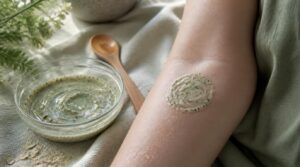
Skip this step and you risk turning a soothing treatment into an irritating one. Even natural ingredients can trigger a reaction.
- Dab a small amount inside your elbow
- Apply as thick as you’d use it normally
- Leave undisturbed for 24–48 hours
- Check for redness, itching, or swelling
No reaction? You’re clear to apply your scalp soothing mask.
Section Damp Hair
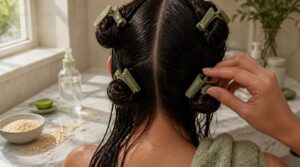
Grab a spray bottle and give your hair a light misting, damp but not dripping. Squeeze gently with a microfiber towel to avoid friction damage.
Now part your hair into four sections, two front and two back, clipping each one up. This keeps your scalp mask application organized so oatmeal or aloe vera reaches every inch evenly.
Massage Without Scratching
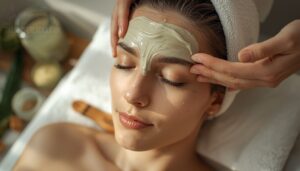
Time to work that mask in, but gently. Use circular motion massage from your forehead back to the nape, light fingertips only, never nails.
For sensitive scalp care, switch to a tapping method instead of circles. Watch for redness or tingling: that’s pressure level monitoring in action, and it’s your cue to lighten up immediately.
Leave on 15–30 Minutes

Now comes the waiting game, and it matters more than you’d think.
Give your scalp mask 15 to 30 minutes to work. Aloe vera and honey need that time to soak in fully, while coconut oil craves the full 30 for its fatty acids to absorb. A warm towel speeds things along nicely.
Fine hair? Stick to 15. Never push past 30, that’s when irritation creeps in.
Rinse and Shampoo Thoroughly

Warm or cool water only, since hot water strips your scalp’s natural moisture. Wet hair fully, then rinse thoroughly with fingers combing through strands until water runs clear.
If it still feels slick, keep rinsing. Thick masks often need a second shampoo.
Finish with a cooler final rinse. It seals the cuticle and leaves real shine.
How Often to Use Scalp Masks
Your scalp type calls the shots on how often you should reach for that mask. What works for your friend’s oily roots might leave your dry scalp feeling tight and stripped. Here’s how to figure out the right rhythm for you.
Oily or Buildup-Prone Scalps
An oil-slicked scalp calls for a firmer hand with your routine. Sebum mixes with sweat and product residue fast, so clarifying masks 1-2 times weekly help with sebum regulation and buildup control. Try:
- Diluted tea tree mask
- Aloe clarifying mask
- Gentle exfoliating scalp treatment
Watch for tightness signaling over-exfoliation, and adjust based on how quickly oil returns.
Dry and Tight Scalps
If your scalp feels tight after washing, ease off. Dry, tight scalps do best with exfoliation every 2-4 weeks, paired with moisture retention techniques instead of scrubbing.
Skip clarifying masks. Reach for aloe vera, oatmeal, honey, and coconut oil to restore scalp hydration and calm that pulled feeling. Tight hairstyles worsen dryness too, so loosen braids and ponytails between treatments.
Sensitive or Irritated Scalps
Tight isn’t the only warning sign. Burning, tingling, or redness means your scalp needs a lighter touch, once monthly at most.
Stick to gentle soothing blends: diluted aloe vera, a touch of honey, nothing acidic or fragrant. Always patch test first, since sensitive scalps react to triggers that shouldn’t bother anyone else, including stress and weather shifts.
Signs of Overuse
Your scalp will tell you when a mask has overstayed its welcome. Watch for lingering tenderness, puffiness around the crown or part lines, or a scalp that feels touchy the next morning.
Discomfort that fades then returns after washing or sweating is a recurring pattern, not a fluke. That cycle, paired with reduced tolerance to normal touch, means it’s time to scale back.
When to Stop Treatment
Some signs mean stop now, not later. Hives, spreading rash, or burning call for an immediate rinse, since these point to an allergic reaction, not simple sensitivity.
Increased shedding, open sores, or irritation lasting past five uses also mean it’s time to quit. So does greasy buildup or tightness that won’t ease. When in doubt, rinse and check with a dermatologist.
Frequently Asked Questions (FAQs)
What is the best homemade hair mask for itchy scalp?
A cooling aloe base blended with oatmeal, honey, and a touch of jojoba oil soothes best. This combo calms itchy scalp relief naturally, using gentle, moisturizing ingredients your skin will actually thank you for.
For persistent plaques or hairline flaking, explore natural remedies for scalp psoriasis alongside gentle daily care.
What is a scalp hydrating mask?
Think of it as a thirsty-skin rescue, not just another beauty step. This moisturizing scalp treatment blends aloe vera, coconut oil, and honey, applied to damp hair so nutrients sink in deep, easing dryness and restoring comfortable, balanced scalp hydration.
How do you make a super hydrating hair mask?
Warm two tablespoons coconut oil, then mix in mashed avocado, a spoonful of honey, and cooked oatmeal. Massage in, cover, wait thirty minutes, rinse well. This combo layers humectant benefits with oil sealants for deep, lasting hydration.
Can scalp masks cause allergic reactions or sensitivity?
Yes, natural ingredients can still trigger allergic contact dermatitis or irritation. Even gentle, plant-based recipes carry ingredient allergy risks, so always patch test behind your ear 24 hours before applying anything to your scalp.
How long should masks stay on scalp?
Goldilocks had it right: not too long, not too short. Your best leave duration is 15-30 minutes, whether it’s oatmeal or coconut oil. Always patch test first for true scalp nourishment.
Do scalp masks work on color-treated hair?
Absolutely, and your color can stay vibrant while you get relief. Stick with gentle formulas like aloe or honey, skip sulfates and salt, and you’ll support scalp comfort and moisture retention without fading your fresh dye job.
What storage methods keep homemade masks fresh?
Keep your mask fresh in a clean glass jar with a tight lid, refrigerated three to five days max. Label it with the date, and toss it if you notice odd smell, color, or texture.
Can a scalp mask help with dandruff specifically?
Wondering if flakes and itch can actually calm down without a medicated bottle? It can, to a point. A tea tree oil mask with anti-inflammatory scalp care ingredients helps, though stubborn dandruff often needs a dermatologist’s input too.
Is it safe to use daily during flare-ups?
Daily use isn’t ideal during flare-ups. Stick to mild cases only, with duration limits of 10-15 minutes, diluted natural ingredients, and a cool water rinse after. Moderate to severe irritation needs every-other-day scalp irritation relief instead.
What causes a scalp to feel itchy?
Several things can trigger it: dry skin flaking, product irritation, or inflammatory conditions like psoriasis and eczema. Lice and microbial imbalance play a role too. Natural, anti-inflammatory scalp care often brings relief when the cause stays unclear.
Conclusion
Nearly 50% of adults face scalp irritation each year, yet most reach for harsh chemical treatments instead of simple, natural fixes. Your kitchen shelf holds real answers.
A consistent diy scalp soothing mask routine calms redness, eases itch, and restores balance without stripping your scalp’s natural defenses. Start small, watch closely how your scalp responds, and adjust ingredients as needed.
Healthy skin starts at the root, and yours truly deserves gentle, lasting care every single day.