This site is supported by our readers. We may earn a commission, at no cost to you, if you purchase through links. This content is for general informational and educational purposes only and is not a substitute for professional medical, dermatological, or nutritional advice.
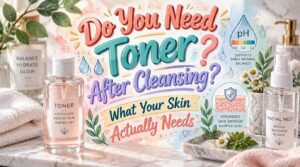
Most cleansers leave your skin at a pH of 6 to 8. Your barrier enzymes need it closer to 4.5 to produce ceramides, and that rebalancing process takes six to eight hours without help. That’s a long window for your skin to work at a disadvantage.
Whether you need toner after cleansing depends on what your skin is doing and what your routine already includes. The right formula removes residual hard water minerals, preps a damp surface that pulls serums in evenly, and restores the conditions your barrier actually runs on.
Here’s how to figure out what your skin needs.
Table Of Contents
- Key Takeaways
- Do You Need Toner After Cleansing?
- What Does Modern Toner Actually Do?
- Which Toner Best Suits Your Skin?
- How Should You Apply Toner Safely?
- When Should You Skip Toner?
- Frequently Asked Questions (FAQs)
- Why do I need a toner after cleansing?
- Are toners actually necessary?
- How long do I let toner sit on my face?
- Can I skip toner in skin care?
- Can toner expire or lose its effectiveness over time?
- Is toner safe to use during pregnancy?
- Can toner cause skin purging or breakouts?
- Does climate or season affect how toner works?
- How long should toner dry before applying serum?
- Conclusion
Key Takeaways
- Cleansing raises your skin’s pH above what your barrier enzymes need, and without a toner it takes up to eight hours to naturally rebalance—long enough to slow ceramide production and weaken your barrier.
- Toner earns its place only when it solves a real problem: use it if your skin feels tight or stripped after washing, your water is hard, or you want serums to absorb more evenly on a prepped, damp surface.
- Your skin type dictates your formula—dry or sensitive skin benefits from glycerin- or hyaluronic acid-based options, while oily or acne-prone skin responds better to a low-frequency salicylic acid toner over alcohol-heavy astringents.
- Skip toner on days you’re already using exfoliants or retinoids, when your barrier is visibly compromised, or if the formula stings on contact—more actives don’t equal more benefit.
Do You Need Toner After Cleansing?

How you feel right after rinsing your cleanser is the clearest signal of whether toner after cleansing is something your routine actually needs. Tight, rough, or dry skin tells you that your cleanser has disturbed your skin hydration levels, and in that case a toner becomes a functional corrective step rather than an optional extra.
Choosing the right formula matters too—finding a toner suited to your skin type ensures it corrects without tipping the balance in the opposite direction.
If your skin feels comfortable and balanced after washing, the honest answer to do I need a toner in my skincare routine is: not necessarily. Toner doesn’t earn its place in a skincare routine by default. It earns it by solving a real problem your cleanser creates, whether that’s restoring skin pH balance, adding hydration, or resetting the surface so your next products apply better.
What Does Modern Toner Actually Do?

Once you understand why toner earns its place, it helps to know exactly what it’s doing to your skin. Cleansing raises your skin’s pH, and while your skin naturally rebalances skin pH, that process takes six to eight hours. A toner cuts that window immediately, restoring the acidic surface your barrier enzymes need to produce ceramides.
Cleansing raises your skin’s pH, and a toner restores it immediately—before six hours of damage is done
Beyond skin pH balance, toner removes residual impurities that even a thorough cleanser misses, including hard water minerals and trace makeup. Leftover debris limits how well your next products work.
If you’ve asked yourself do I need a toner in my skincare routine, this is the answer: modern toners also drive active ingredient penetration, priming a slightly damp surface so serums absorb more evenly. This technique, known as wet layering skin method, ensures serums penetrate more effectively when applied to a slightly damp surface prepared by toner.
Which Toner Best Suits Your Skin?

Not every toner works for every skin type, so choosing the right formula matters. Your skin’s needs should drive that decision, whether you’re dealing with dryness, breakouts, or something in between. Here’s what to look for based on your specific concerns.
For a more complete routine, pairing the right toner with the best razor for men ensures your skin stays balanced from shave to finish.
Dry and Sensitive Skin
A client once asked if skipping toner would damage her dry sensitive skin. It won’t. If cleansing leaves your skin comfortable, toner isn’t necessary.
But when post-cleanse tightness is the issue, a fragrance-free hydrating toner with glycerin or hyaluronic acid provides light hydration and helps skin barrier repair. Avoid alcohol and exfoliating acids; they reliably trigger irritation on sensitive skin.
Oily and Acne-prone Skin
calls for a different approach: a targeted exfoliating toner helps with sebum control and helps with pore clarity.
For a deeper look at how these formulas differ, facial toner vs. astringent: what your skin type actually needs breaks down why exfoliating acids outperform harsh alcohols for long-term pore clarity.
- Choose a salicylic acid treatment formula over high-alcohol options
- Limit use to two or three times weekly
- Apply right after cleansing, not over active serums
- Avoid layering multiple exfoliants the same day
- Watch for pore minimization, not increased irritation
Ingredients to Seek or Avoid
Whether your skin is dry or oily, the ingredient list matters more than the label. You’ll want to skip alcohol-based formulas and strong fragrance, since both raise irritation risk on freshly cleansed skin.
Look for barrier-friendly humectants like glycerin or panthenol. If you need exfoliation, a pH-balanced salicylic acid toner works well, but limit active ingredients to one per step.
If you’re unsure whether your current routine is doing more harm than good, understanding why skin feels raw after exfoliating can help you spot barrier damage before it escalates.
Liquids, Pads, and Sprays
Toner comes in three formats, each behaving differently in postcleansing care:
- Liquid toners spread evenly on damp skin and give you precise dose control.
- Toner pads deliver consistent saturation but add friction, which can irritate a compromised barrier.
- Toner spray feels lighter but often misses areas depending on face angle and distance.
Pick the format that’s best for your skin.
How Should You Apply Toner Safely?
Picture your skin just after cleansing: slightly damp, pores open, and ready to receive. That narrow window is exactly when toner’s most effective, so timing matters. Applying it to fully dry skin limits how evenly it’ll spread.
- Dragging a cotton pad across raw skin can sting and weaken your moisture barrier
- Dipping a used pad back into the bottle contaminates the formula over time
- Over-saturating your face leaves a tacky film that pills under the next layer
For postcleansing care, pat gently using a reusable cotton pad or clean hands. If you prefer a toner spray, hold it at a consistent distance and press lightly instead of rubbing. That choice alone does a lot to reduce skin sensitivity after cleansing.
When Should You Skip Toner?

Skin that feels tight, stripped, or sensitive the moment you rinse tells you something important before you reach for anything else.
If your skin barrier is compromised, toner adds more stress, not more benefit. Applying any active, even a gentle acid, on top of irritated skin compounds dryness, irritation, and inflammation fast. Skip toner on days your routine already includes gentle exfoliation or retinoids, since layering those actives raises your total exposure without a clear payoff.
Skip it after any resurfacing procedure that disrupts the barrier, whether at-home or professional. And if your toner stings on contact, that’s your skin type telling you it isn’t ready.
Prioritize hydration first. Your barrier recovers faster when you give it room to breathe.
Frequently Asked Questions (FAQs)
Why do I need a toner after cleansing?
Ever wonder why your skin feels tight and a little dry right after cleansing? It’s because a toner after cleansing restores hydration, helps balance the skin’s pH, and preps your skin type for improved absorption.
Are toners actually necessary?
Not necessarily. If your cleanser leaves your skin clean and comfortable, you don’t need to add toner after cleansing. Your skin type and the active ingredients a given toner offers should guide your skincare routine.
How long do I let toner sit on my face?
Less time than you think: most toners applied after cleansing are leave-on formulas, so you’re waiting for absorption, not a set timer. For AHA/BHA exfoliating toners, always check your label. Layering too soon causes pilling.
Can I skip toner in skin care?
Roughly half of regular skincare users don’t use toner after cleansing, and their routines work just fine. If your cleanser and hydration steps already cover your skin type’s needs well enough, you can skip it.
Can toner expire or lose its effectiveness over time?
A toner left open near a sunny window for six months may smell fine but still deliver far less active benefit. Yes, toners do expire. Heat, light, and air degrade actives and preservatives over time.
Is toner safe to use during pregnancy?
Many clients find that their skin becomes noticeably more reactive during pregnancy. Hydrating, fragrance-free toners are generally safe, but avoid high-strength acids and alcohol-heavy formulas, which can easily trigger irritation when your skin barrier’s compromised.
Can toner cause skin purging or breakouts?
Picture tiny whiteheads pushing steadily to the surface like sediment disturbed in still water.
Exfoliating toners can accelerate that purging phase. Alcohol-based toners trigger true breakouts, and overexfoliation quickly worsens skin irritation on sensitive skin.
Does climate or season affect how toner works?
Your skin behaves like a sponge. Dry, cold air tightens and stresses your skin barrier, making humectant toners feel more essential, while summer heat and sweat make clarifying toners more effective at clearing surface debris.
How long should toner dry before applying serum?
Like paint drying before a second coat, your toner needs to feel tack-free, not dripping wet, before your serum goes on. You’ll usually wait 30 to 60 seconds, depending on how much product you applied.
Conclusion
Think of your skin barrier like a lock that only opens at the right combination. Cleansing shifts those numbers every time.
Do you need toner after cleansing? That depends entirely on what your skin shows you in the minutes after rinsing: how it feels, how it drinks serum, and what your water leaves behind. If it’s tight, dull, or pulling, toner isn’t optional. It’s the step that resets your skin’s conditions for everything that follows.