This site is supported by our readers. We may earn a commission, at no cost to you, if you purchase through links. This content is for general informational and educational purposes only and is not a substitute for professional medical, dermatological, or nutritional advice.
You’ve seen the advice on forums and maybe even from a well-meaning relative: paint clear nail polish over that ring-shaped rash and starve it of air. It sounds logical, almost satisfying, like sealing a jar to keep bugs out.
But does clear nail polish help ringworm? No, and the science explains why fairly clearly. Ringworm is a fungal infection, not a wound that heals by exposure to air, and trapping moisture under a polish film actually gives the fungus a warmer, damper place to multiply.
Below, you’ll find what really happens when you seal a fungal rash, the risks you’re taking on, and the treatments dermatologists actually recommend to clear it fast.
Table Of Contents
- Key Takeaways
- Does Clear Nail Polish Help Ringworm? No
- Why Clear Nail Polish May Worsen Ringworm
- What to Do After Applying Nail Polish
- Proven Treatments for Ringworm
- Prevent Ringworm Spread and Recurrence
- Frequently Asked Questions (FAQs)
- Will putting clear nail polish on ringworm kill it?
- What dries up ringworm fast?
- Does Dawn dish soap kill ringworm?
- How long does ringworm live on bed sheets?
- Does clear nail polish get rid of fungus?
- Does fingernail polish help ringworm?
- Is it safe to put clear nail polish on rings?
- Can I put nail polish over fungus?
- Can clear nail polish be used on children?
- How long does it take to see results?
- Conclusion
Key Takeaways
- Clear nail polish has no antifungal properties, so it won’t kill ringworm—instead, sealing the rash traps moisture and creates a warm, damp environment that helps the fungus multiply faster.
- Beyond being ineffective, nail polish can actively harm your skin by causing contact dermatitis, allergic reactions, and irritation, while also masking symptoms that would otherwise signal worsening infection.
- Proven antifungal treatments like clotrimazole, miconazole, and terbinafine clear 70-100% of ringworm cases within 2-4 weeks when applied correctly to the rash and slightly beyond its edges.
- Preventing reinfection means keeping skin dry, washing towels and clothing in hot water, avoiding shared personal items like combs or hats, and checking pets for symptoms since they can carry ringworm too.
Does Clear Nail Polish Help Ringworm? No
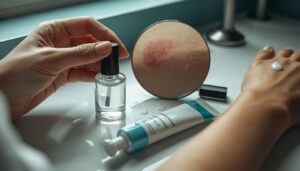
You’ve probably seen the advice online: paint on clear nail polish, and it’ll suffocate the fungus causing your ringworm. It sounds simple, but your skin doesn’t work that way. Here’s what the evidence actually shows, and why you shouldn’t reach for that bottle.
No Proven Antifungal Effect
Reaching for that bottle of clear polish? Skip it. There’s zero proven effectiveness here, no clinical evidence, no antifungal properties to speak of.
If your nail fungus story includes irritation-prone skin, it’s worth reading about safer at-home acne treatments like hydrogen peroxide before trying any DIY remedy that risks similar burns.
- Contains no antifungal agents
- No randomized controlled trials support it
- Expert opinions reject it as treatment
- Medical consensus stands firmly against use
- Proven antifungal medication works differently entirely
Trust actual antifungal treatment, not cosmetic guesswork. In fact, oral antifungal medications like terbinafine and itraconazole show much higher cure rates than any topical or cosmetic approach.
Why Suffocating Fungus Fails
The "suffocation" idea sounds logical, but it backfires. Sealing skin creates an occlusive barrier, trapping moisture and triggering the oxygen deprivation paradox: starved fungi shift to anaerobic resistance, thickening cell walls instead of dying.
| Mechanism | Expected Effect | Actual Result |
|---|---|---|
| Oxygen block | Fungus dies | Anaerobic resistance |
| Moisture trap | Skin dries | Faster fungal growth |
| Polish film | Barrier | Medication barrier block |
Skin Ringworm Versus Nail Fungus
Ringworm on skin, or tinea corporis, looks nothing like nail fungus, or tinea unguium. Skin shows a red, scaly, circular rash. Nails thicken, discolor, and crumble. Different tissue, different fungal foothold, different treatment approach.
That’s why clear polish, aimed at nails, does nothing for a skin rash, and a topical cream won’t penetrate a thickened nail plate the way it treats skin.
Anecdotes Versus Medical Evidence
You’ll find plenty of forum posts claiming clear nail polish cured someone’s rash. That’s anecdotal evidence, a personal story, not a formal study. Two people can report opposite results and both be telling the truth.
Medical decisions need more than word of mouth. Proven antifungal treatments carry clinical trial data behind them. Anecdotal reports simply don’t.
Why Clear Nail Polish May Worsen Ringworm
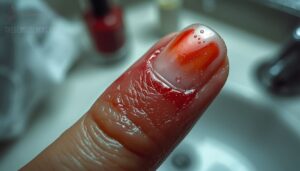
Sealing your skin with clear nail polish doesn’t just fail to help—it can actively backfire. Here’s what happens when you trap a fungal infection under a layer of chemicals instead of treating it. Let’s break down the five ways this "quick fix" can leave your skin worse off than before.
Trapped Moisture Encourages Fungal Growth
Painting on a sealed layer doesn’t dry out the rash, it does the opposite. Polish blocks airflow, so sweat and residue stay put against your skin. Dermatophytes thrive in that damp microclimate, and relative humidity above 70% is enough to fuel germination. You’re not treating the infection. You’re incubating it.
Sealing skin with polish doesn’t dry out ringworm, it traps moisture and turns the rash into a breeding ground for fungus
Skin Irritation and Dermatitis
Sealing your skin with polish doesn’t just trap moisture, it strips your acid mantle. That pH shift invites contact dermatitis, showing up as redness, swelling, or burning within 24-48 hours.
If you’re prone to reactions, switching to an organic self-tanner free of synthetic azo dyes can help keep your acid mantle intact.
Chemical solvents damage your barrier lipids directly, and irritant reactions can worsen fast on already-inflamed skin. If burning develops, stop immediately and let your barrier recover.
Allergic Reactions to Ingredients
Even beyond irritation, nail polish carries hidden allergens you can’t see on the label. Fragrance and preservative ingredients trigger reactions in sensitized skin, while resins and solvents compound the risk. Watch for:
- Swelling or hives spreading past the rash
- Persistent itching that worsens with reapplication
- Delayed reactions appearing 24+ hours later
Stop use immediately if any occur.
Masked or Worsening Symptoms
A shiny coat doesn’t just cover skin, it covers evidence. Once polish seals the rash, you lose the ability to track masked rash progression, and worsened inflammation or hidden bacterial risk can develop underneath, unnoticed.
| Sign | Visible Without Polish | Hidden Under Polish |
|---|---|---|
| Redness spread | Easy to spot | Delayed treatment awareness |
| Pus or swelling | Caught early | Hidden bacterial risk |
| Increased discomfort | Prompts action | Diagnosis hindrance |
Delayed Antifungal Treatment
Every day you spend on nail polish is a day the fungus keeps feeding.
Early intervention clears ringworm faster, while delayed therapy lets it spread outward, deepen, and infect others through towels or contact. Proven antifungal treatments like terbinafine start working within days.
Don’t gamble with delayed treatment, prompt antifungal use prevents recurrence and stops fungal spread before it worsens.
What to Do After Applying Nail Polish
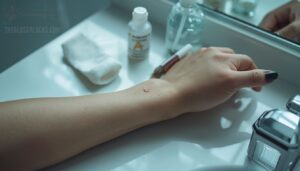
Already put clear nail polish on your rash? Don’t panic, but don’t leave it on either. Here’s exactly what to do next, step by step.
Remove The Polish Carefully
Stripping off clear polish takes patience, not scrubbing. Soak a lint-free cotton round in acetone, press it against the nail for 40-60 seconds, then lift gently, no rubbing near the rash.
- Irritated, angry skin
- Torn or damaged nail beds
- Fungal spread from friction
- Delayed healing from harsh removal
Foil or clips hold the cotton in place, keeping acetone off healthy skin.
Wash and Dry Skin
Once the polish is off, wash with lukewarm water and antifungal soap containing miconazole or clotrimazole, scrubbing 20 seconds. Rinse fully, then air-dry or pat with a clean towel, no rubbing.
| Step | Why It Matters |
|---|---|
| Wash | Removes residue |
| Dry | Blocks moisture entrapment |
| Wait | Preps skin for treatment |
Check for Irritation
Give your skin a close look before moving on. Check for redness spreading beyond the original border, itching rated 7 or higher, or burning that lingers past 30 minutes.
Watch for peeling, blistering, or hives too. These signs point to skin irritation or an allergic reaction, not healing, so don’t ignore them.
Avoid Reapplying Nail Polish
Once irritation shows up, resist the urge to reapply. Another coat won’t fix ringworm, it just adds more moisture buildup and skin barrier disruption on top of existing damage.
Skip reapplication if you notice:
- Redness that hasn’t fully cleared
- Any lingering itch or burn
- Signs of an allergic reaction
Continuing polish only delays antifungal treatment and risks spreading the infection further.
Begin Proven Treatment
Once the polish is gone and skin looks calm, start treatment early. Waiting only gives the fungus more time to spread.
| Option | Active Ingredient | Duration |
|---|---|---|
| Lotrimin AF | Clotrimazole 1% | 2-4 weeks |
| Terbinafine cream | Terbinafine | 1-2 weeks |
| Terrasil | Clotrimazole 1% | Days for itch relief |
Apply beyond the rash edge, wash hands regularly, and follow the full course.
Proven Treatments for Ringworm
Skip the nail polish and reach for what actually works. Real antifungal treatments clear ringworm faster, with far less guesswork. Here’s what you need to know to treat it right.
Over-the-Counter Antifungal Creams
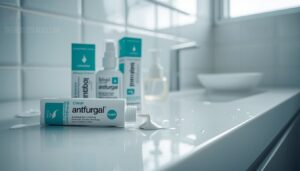
Skip the polish aisle and head to antifungals instead. Look for clotrimazole, miconazole, or terbinafine on the label, active ingredients proven to kill ringworm fungus. Options include:
- Clotrimazole cream
- Miconazole cream
- Terbinafine cream
- Antifungal sprays
- Antifungal liquids
Creams offer targeted coverage; sprays suit larger areas. Read label directions carefully, and see a doctor if symptoms persist.
Correct Antifungal Application
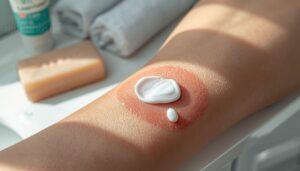
Cream alone won’t work if your application technique is sloppy. Wash the area with mild soap, dry it fully, then apply cream to rash border, covering healthy skin about 2cm past the edge.
Use a thin even layer, rubbed in gently. Apply twice daily consistently, morning and night, and always wash hands after application to avoid spreading the skin infection.
Recommended Treatment Duration
Two to four weeks covers most cases of skin ringworm, but don’t stop the moment the rash fades. Minimum effective duration means treating a full week past visible clearing.
Widespread infections need extended therapy, six to twelve weeks. Immunocompromised patients often require longer courses too.
This recurrence prevention timeline protects you from relapse, so patience with your topical antifungal beats rushing back to clear nail polish.
Prescription Antifungal Medications

When over-the-counter creams don’t clear things up, your dermatologist has stronger tools.
- Oral antifungals like fluconazole or itraconazole for stubborn cases
- Topical prescription creams with higher potency than drugstore versions
- Systemic treatment for widespread or resistant infections
These prescription medications require monitoring since they carry more side effects than milder options, and you should always take them exactly as directed.
Why Natural Remedies Fall Short

Tea tree oil, garlic, and other home remedies sound harmless, but clinical studies rarely back them up. Inconsistent potency and narrow antifungal spectrum mean they can’t reliably kill ringworm’s fungi.
| Remedy | Proven Against Ringworm? | Main Flaw |
|---|---|---|
| Tea tree oil | No | Narrow spectrum |
| Coconut oil | No | Poor penetration |
| ACV | No | Skin irritation |
Skip guesswork, choose proven antifungal treatments instead.
Prevent Ringworm Spread and Recurrence

Clearing up ringworm is only half the job—keeping it from coming back matters just as much. Fungi spread easily through damp skin, shared items, and even household pets, so a few smart habits go a long way. Here’s what you need to do to stop this infection in its tracks.
Keep The Rash Dry
Fungus thrives on dampness, so your job is simple: starve it dry. Sweat, humidity, and trapped moisture all feed the rash.
- Use a fan or AC to boost airflow
- Let skin air dry 10-15 minutes before dressing
- Keep indoor humidity below 60%
- Try a cool hair dryer on stubborn folds
Dry skin heals faster and resists reinfection.
Wash Clothing and Towels
Once you’re dry, your laundry habits matter too. Wash towels and clothing separately, using hot water when fabric allows. Use detergent as directed, pretreat any stained spots, and always run a full drying cycle.
Leftover moisture in fabric lets fungus survive, undoing your progress and inviting reinfection right back onto healed skin.
Avoid Sharing Personal Items
Clean laundry won’t help if you’re still sharing infected items. Ringworm is contagious fungus that spreads easily through everyday objects.
- Combs and brushes hold spores up to 20 months
- Makeup and lip gloss stay contaminated for weeks
- Hats and hair ties carry spores up to a year
- Phones and headphones harbor spores up to 20 months
- Nail clippers stay infectious for 3-6 weeks
Disinfect or replace these items promptly.
Check Pets for Ringworm
Your pets can carry ringworm too, sometimes without a single visible sign. Spot lesions early by checking for circular bald patches or scaly skin.
| Pet Sign | Action | Why |
|---|---|---|
| Bald patches | Isolate infected pets | Stops zoonotic disease spread |
| No symptoms | Monitor asymptomatic carriers | Fungi still transmit |
| Any lesion | Schedule vet checks | Confirms animal transmission |
Clean shared surfaces regularly.
When to Seek Medical Care
Checking your pets matters, but so does watching yourself. See a dermatologist if the rash shows spread beyond patch borders, worsening symptoms, or no improvement after two weeks of over-the-counter antifungal creams.
- Face or scalp rash (needs prescription medications)
- Signs of immune risk or weakened defenses
- Diagnosis hindrance from unclear symptoms
- Pain, swelling, or pus developing
When in doubt, get medical advice promptly.
Frequently Asked Questions (FAQs)
Will putting clear nail polish on ringworm kill it?
Zero. Antifungal creams clear 70-100% of cases in 2-4 weeks; clear nail polish has no such data. It won’t kill the fungus, and trapped moisture can actually worsen your infection instead.
What dries up ringworm fast?
Keep the area dry, use antifungal powder, and wear breathable fabrics or moisture-wicking clothing. Apply topical antifungal creams as directed, avoid trapping sweat, and stick with your full treatment duration to clear the skin infection and prevent spread.
Does Dawn dish soap kill ringworm?
Something that cleans your dishes can’t clean out a fungal infection. Dawn removes surface spores but has no antifungal effectiveness against ringworm. It carries real skin irritation risk, so stick with proven topical antifungals instead.
How long does ringworm live on bed sheets?
Fungal spores can survive on sheets for weeks to several months, longer in warm, damp conditions with skin cells present. Wash bedding on hot, dry fully, and change it often to cut indirect transmission risk during treatment.
Does clear nail polish get rid of fungus?
You can’t judge a book by its cover, and you can’t judge fungus by its shine. Clear nail polish has no antifungal action; it traps moisture, disrupts the skin barrier, and won’t reduce recurrence like proper over-the-counter antifungal creams do.
Does fingernail polish help ringworm?
No. Fingernail polish won’t clear a fungal infection. It lacks antifungal properties, raises moisture retention issues, and can damage your skin barrier. Skip it and start proven antifungal treatments like clotrimazole instead, applied consistently for the full treatment duration.
Is it safe to put clear nail polish on rings?
Picture your favorite ring dulled, cracked, and cloudy within days. Not safe long-term: polish causes chemical skin irritation, traps moisture, and damages gemstones.
Try hypoallergenic plating or anti-tarnish sprays instead, both safer than DIY fixes borrowed from ringworm remedies.
Can I put nail polish over fungus?
Don’t. Covering a fungal infection with polish traps moisture underneath, feeding the very organism you’re trying to eliminate. Skip the cosmetic fix and start a proven topical treatment instead, one formulated to actually kill fungus, not hide it.
Can clear nail polish be used on children?
Painting a toddler’s nail in glossy fungus armor sounds harmless, until you realize it isn’t. Skip it: child skin sensitivity raises irritation and allergic risks. Use pediatric-safe over-the-counter antifungal creams instead, and confirm dosing with your doctor.
How long does it take to see results?
With proper antifungal creams, expect itching relief within 3-7 days and flattening edges by week one. Skip the polish, it won’t speed healing, and full clearance still takes 2-4 weeks of consistent treatment.
Conclusion
Picture a teenager who sealed a scaly patch under polish for two weeks, watching it spread from a coin-sized spot to nearly her whole forearm before seeing a doctor. That’s what happens when you trust a home hack over real medicine.
So, does clear nail polish help ringworm? No, it only buys the fungus time to grow. Reach for an antifungal cream instead, use it correctly, and you’ll watch that rash fade within weeks, not months.