This site is supported by our readers. We may earn a commission, at no cost to you, if you purchase through links. This content is for general informational and educational purposes only and is not a substitute for professional medical, dermatological, or nutritional advice.
That brown patch on your cheekbone didn’t appear overnight. It formed over 20 summers of car rides, gardening, and forgotten sunscreen, and it’s your skin’s permanent receipt for every hour spent unprotected.
The good news: most sunspots respond to treatment, but the timeline matters. Hydroquinone can fade a spot in 4 to 8 weeks, while gentler options like vitamin C take up to 12. Rush the process or skip patch testing, and you risk irritation that makes spots look worse before they look better.
Get the order right, and you’ll know exactly how to get rid of sun spots safely, from your first patch test to your last dermatologist visit.
Table Of Contents
- Key Takeaways
- How to Get Rid of Sun Spots Safely
- Over-the-Counter Treatments for Sunspots
- Natural Sunspot Remedies: Safety and Evidence
- Dermatologist Treatments for Stubborn Sunspots
- Prevent Sunspots and Protect Results
- Frequently Asked Questions (FAQs)
- How do you get rid of sunspots?
- How do you lighten dark sunspots?
- How do I get rid of sun spots on my face?
- What is the best treatment for sun spots?
- Can sun spots be prevented?
- How can a dermatologist remove sun spots?
- Is it possible to get rid of sunspots?
- How do Koreans get rid of sunspots?
- How long does it take for sun spots to fade?
- Can sun spots be healed?
- Conclusion
Key Takeaways
- Daily broad-spectrum SPF 30+ is the foundation of any sunspot treatment—without it, no fading product will work and your progress can reverse.
- Confirm you’re actually dealing with a sunspot before treating it, since uneven borders, clashing colors, or fast-changing spots need a dermatologist’s eyes first, not a home remedy.
- Pick one active ingredient (like hydroquinone, retinol, or vitamin C), patch test it for 7-10 days before applying it to your face, and expect real results only after 8-12 weeks of consistent use.
- When creams stall, dermatologist procedures like laser therapy, IPL, or chemical peels offer faster, more reliable fading than anything you’ll find on a store shelf.
How to Get Rid of Sun Spots Safely

Getting rid of sunspots takes patience, not guesswork. A safe approach follows a clear order, from confirming what you’re treating to protecting your results long-term. Here’s how to work through each step, one at a time.
Fading sunspots safely means following a clear order, not guessing your way through treatment
Confirm They Are Sunspots
Before treating anything, play detective. True sunspots are flat or slightly raised, brown to gray, with fairly defined edges, showing up where sun hits most: face, hands, shoulders. Check your sun exposure history and compare new spots to old ones.
If you’re weighing gentler options before anything more intensive, this guide on using turmeric and apple cider vinegar for dark spots breaks down how these natural remedies may help fade sunspots over time.
If borders look uneven, colors clash, or a spot changes fast, skip home remedies and get a dermatologist’s skin cancer screening first.
Begin With Daily Sunscreen
No fading product works if you skip this step. Apply broad-spectrum SPF 30+ every morning, 15 minutes before sun exposure, covering face, neck, and hands.
- Choose broad-spectrum, SPF 30 or higher
- Apply 15 minutes before going outside
- Reapply every 2 hours outdoors
- Pair with long sleeves or a hat
- Use daily, not just on sunny days
Most people only apply a fraction of the recommended amount, so using enough product matters as much as choosing the right SPF.
Consistent UV protection lets existing spots fade and protects your skin barrier.
Select One Fading Ingredient
Sunscreen alone won’t erase existing spots, so pick one active ingredient to pair with it. Hydroquinone shows results in 4-8 weeks by blocking melanin production. Retinol speeds skin renewal; glycolic acid exfoliates dead cells; kojic acid lightens naturally; vitamin C adds antioxidant protection.
| Ingredient | Timeline | Strength |
|---|---|---|
| Hydroquinone | 4-8 wks | 2-4% |
| Retinol | 8-12 wks | 0.3-1% |
| Kojic Acid | 8-12 wks | 1-4% |
| Vitamin C | 4-12 wks | 10-20% |
Patch Test Before Full Use
Before applying any new ingredient to your face, test it first. Pick a small spot on your inner arm, apply a quarter-sized amount twice daily for 7 to 10 days, and watch closely.
- Redness that won’t quit
- Burning or itching
- Swelling around the site
Any of these means stop. Clear skin after 10 days means you’re ready to proceed.
Track Results for Several Months
Patience matters here. Photograph your sunspots monthly, same lighting, same distance, same angle, to track true fading versus daily variation.
Since consistency shapes results in skincare more broadly, this guide on reducing forehead wrinkles through daily habits offers a similar mindset worth applying to sunspot fading.
Most hyperpigmentation needs 8-12 weeks before you’ll see real change. If nothing shifts by month three, reassess your routine. Note irritation alongside sun protection habits. Spots worsening or changing shape warrant a dermatologist consultation.
Over-the-Counter Treatments for Sunspots
Your drugstore aisle has more real options than you might think. Several ingredients are backed by solid evidence for fading sunspots, and each one works a little differently on your skin. Here’s what to look for on the label, and how to use it right.
Retinol and Retinal Products
Vitamin A is the workhorse here. Retinol converts through several steps into active retinoids; retinaldehyde converts faster since it sits closer in that pathway, often working quicker but similarly tolerated.
Start low: apply a thin layer every other day for two weeks, avoiding eyes and mouth, then follow with a noncomedogenic moisturizer. This is safe retinol use, without the irritation prescription tretinoin or adapalene can cause.
Vitamin C Brightening Serums
Why does an antioxidant serum earn a spot in your routine? Vitamin C, listed as L-ascorbic acid, blocks tyrosinase to slow pigment production and brighten skin. Choose a 10% to 20% concentration in dark or tinted packaging.
Apply a few drops each morning after cleansing, before sunscreen. Sensitive skin should patch test first and start on the lower end.
Glycolic Acid Exfoliants
Glycolic acid, the smallest alpha hydroxy acid, penetrates deep to speed epidermal turnover. Look for concentrations under 20% with a pH near 4; buffered formulas cause less irritation than free acid.
Start with weekly use, patch test first, then increase slowly. Always apply to clean, dry skin, and pair with sunscreen since exfoliation raises sun sensitivity.
Azelaic and Kojic Acids
Both come from unlikely sources: azelaic acid from yeast, kojic acid from fermented rice. Azelaic acid (5%-20%) works by tyrosinase inhibition, slowing pigment production, and doubles as an anti-inflammatory for acne-related dark spots.
Kojic acid (1%-4%) targets hyperpigmentation similarly. Apply once or twice daily; expect visible fading in 4-8 weeks. Stop if stinging or redness develops.
Safe Product Layering Order
Order matters as much as ingredients. Water before oil, always, since oil blocks absorption. Wait 60 seconds between layers. Cap actives at three serums.
Morning: vitamin C, then sunscreen last.
Evening: topical retinoid after cleansing.
Patch test new products behind the ear for 24 hours before treating hyperpigmentation directly on sunspots.
Natural Sunspot Remedies: Safety and Evidence

Not every sunspot fix needs to come from a bottle with a drugstore label. Kitchen and garden ingredients get a lot of attention online, but not all of them earn a place on your skin. Here’s what actually holds up, and what to leave in the fridge.
Aloe Vera Products
Choosing an aloe vera gel isn’t as simple as grabbing any bottle off the shelf. Look for 99% purity, IASC certification, and aloin under 0.1 ppm for safety.
- Check the label for purity percentage
- Confirm IASC or USDA Organic seals
- Verify aloin content below 0.1 ppm
- Apply a thin layer for 20-30 minutes
- Use fresh gel within 4 hours
Licorice Extract Products
Licorice root extract works differently than aloe. Its active compound, glabridin, blocks tyrosinase, the enzyme driving melanin production.
| Compound | Source | Function |
|---|---|---|
| Glabridin | Root | Brightening |
| Glycyrrhizin | Root | Oral risk only |
| Glabridin-40 | Standardized | Concentrated dose |
Topical use carries different safety concerns than oral licorice, so follow label directions.
Topical Vitamin E Considerations
Vitamin E works through a different route than glabridin. As a fat-soluble antioxidant, it scavenges free radicals from UV exposure.
Start with low concentrations around 0.1%, and watch for irritation, especially if you’re acne-prone. It helps with moisturization and pairs well with daily sunscreen, but it won’t replace SPF for hyperpigmentation treatment.
Why Lemon Juice Can Backfire
Skip lemon juice on sunspots. Its pH sits around 2.2, well below your skin’s natural 5.5, so it breaks down your skin barrier fast.
Worse, citrus furocoumarins cause phototoxic burns when UV hits treated skin, sometimes within hours.
You’ll risk photosensitivity, blistering, even chemical leukoderma (permanent white patches).
Diluting doesn’t eliminate the danger.
Avoid Harsh DIY Acids
Kitchen-cabinet acid mixes feel harmless, but apple cider vinegar and undiluted lemon juice cause unpredictable burns since strength varies batch to batch.
- Redness or blistering lasting days
- Increased sun sensitivity afterward
- Patchy, uneven fading
- Barrier damage that slows healing
Choose standardized OTC formulas instead, like 1%-4% kojic acid or sub-20% glycolic acid, for gradual fading without the guesswork.
Dermatologist Treatments for Stubborn Sunspots
Sometimes home remedies and OTC creams just don’t cut it, and that’s okay. Stubborn sunspots often respond better to procedures only a dermatologist can perform. Here’s what those options look like, from prescription-strength creams to in-office treatments.
Prescription Retinoids and Hydroquinone
Hydroquinone blocks the tyrosinase enzyme, cutting melanin production, while tretinoin speeds cell turnover and collagen renewal. Together they outperform either drug alone.
Apply hydroquinone in the morning, tretinoin at night, always with SPF 30+. Both increase photosensitivity and are contraindicated in pregnancy.
Expect visible fading in 4-6 weeks, full results by 12, with tolerance breaks every 3 months.
IPL and Laser Therapy

When creams stall, light-based devices step in. IPL delivers broad-spectrum light absorbed by melanin, treating sunspots, redness, and capillaries in one 15-30 minute session, no anesthesia needed. Clearance rates hit 74-90% on the face, 90% on hands, across 3-5 sessions. Fitzpatrick I-III skin responds best.
Laser resurfacing (CO2, Erbium) offers precision with fewer sessions, but picosecond lasers suit darker skin safely.
Cryotherapy for Isolated Spots

Freezing works fast. Your dermatologist applies liquid nitrogen or a cryopen device (-89°C, 5 seconds) directly to the spot, often same-day. The spot darkens, crusts within 2-3 days, then lifts off within 1-2 weeks, revealing lighter skin. Expect mild stinging, minimal scarring, and no damage to surrounding tissue, faster than creams, gentler than lasers.
Chemical Peels and Microdermabrasion
Peel depth selection matters most. Superficial peels use glycolic or salicylic acid; medium peels use trichloroacetic acid for deeper penetration. Microdermabrasion relies on aluminum oxide or sodium bicarbonate crystals to buff away pigment.
Frequency depends on depth: superficial peels every 2-4 weeks, medium peels every 3-6 months. Follow aftercare protocols closely, and review contraindications with your dermatologist first.
Results, Recovery, and Risks

What can you expect once treatment is done? Timelines vary by procedure, but laser and IPL often show visible fading within one to three sessions, with full results by three to six months.
Expect pink, warm skin initially, then flaking by day 4-7. Watch for temporary skin darkening. See your dermatologist if scarring or blistering develops during downtime.
Prevent Sunspots and Protect Results
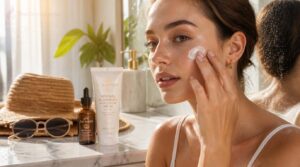
Fading sunspots takes real effort, so don’t let sun exposure undo your progress. Prevention works best as a daily habit, not an occasional afterthought. Here’s what to build into your routine.
Apply Broad-Spectrum SPF 30+
One product does more for sunspots than any cream on your shelf: broad-spectrum SPF 30+, applied 30 minutes before you head outdoors.
Look for these on the label:
- Broad-spectrum coverage (blocks UVA and UVB)
- SPF 30 or higher (filters ~97% of UVB rays)
- Water-resistant rating matching your activity
Use about one ounce, a shot glass full, for your body. This is photoprotection done right.
Reapply Sunscreen Every Two Hours
That morning application wears off faster than you’d think. Reapply every two hours you’re outdoors, sooner if you’re swimming, sweating, or towel drying skin dry. Water resistance buys time, not immunity. Don’t skip your ears, hairline, or hands. Set a phone timer if needed.
Consistent reapplication protects the fading progress you’re working so hard for.
Wear Hats and UPF Clothing
Sunscreen can’t reach skin it never touches, so cover up. Choose a wide brim hat, at least 3 inches, plus tightly woven, dark-colored UPF 50+ clothing.
- Ball caps skip neck and ear coverage
- Tight weave blocks more UV than loose straw
- Darker synthetics outperform white cotton
- Dry hats fast; damp fabric weakens UPF
Avoid Tanning Beds
Covering skin only goes so far if you still book tanning sessions. Tanning beds deliver concentrated UV rays, raising melanoma risk a lot, especially before age 35. Choose sunless spray tans with DHA instead.
| Method | UV Exposure | Skin Cancer Risk |
|---|---|---|
| Tanning bed | High | Increased |
| Sunless spray | None | No added risk |
| Sun avoidance | Minimal | Lowered |
Check New or Changing Spots
Why keep watching after treatment works? Because new spots can still form, and old ones can change. Pick one date monthly for a self-exam, and photograph anything questionable.
See your dermatologist promptly if a spot:
- Appears suddenly
- Changes shape or color
- Bleeds or won’t heal
Rapid evolution signals trouble, not just sun damage repair.
Frequently Asked Questions (FAQs)
How do you get rid of sunspots?
Fade sunspots with a topical retinoid, vitamin C, or glycolic acid at home for gradual melanin reduction. For faster results, ask your dermatologist about a chemical peel, laser resurfacing, or cryotherapy, then protect gains with daily SPF 30+.
How do you lighten dark sunspots?
Pick one fading agent, a topical retinoid, vitamin C, or azelaic acid, and apply nightly. Pair with daily SPF. For stubborn spots, ask about a chemical peel or laser resurfacing to speed melanin reduction.
How do I get rid of sun spots on my face?
Those unwelcome facial markers respond best to layered care. Start with spot fading creams or vitamin C, add sunscreen daily, try aloe vera patch tests weekly, and consider microneedling benefits for stubborn sunspots resisting topical antioxidants alone.
What is the best treatment for sun spots?
For stubborn sunspots, laser therapy and chemical peels deliver the most dependable results. IPL targets melanin directly, and prescription-strength hydroquinone (up to 4%) offers reliable, dermatologist-recommended lightening when paired with daily sunscreen.
Can sun spots be prevented?
Yes. Daily broad-spectrum SPF 30+, reapplied every two hours, blocks UVA and UVB rays. Pair sunscreen with shade during peak midday hours, sun-protective clothing, wide-brimmed hats, and tanning bed avoidance for lasting prevention.
How can a dermatologist remove sun spots?
Think of it as a targeted demolition crew for pigment. A dermatologist offers laser resurfacing, chemical peels, cryotherapy, and IPL, each destroying or exfoliating pigmented cells to fade sunspots, chosen by severity, location, and skin type.
Is it possible to get rid of sunspots?
Fading hyperpigmentation is realistic with the right approach. Options range from dermatologist recommended retinoids and vitamin C serums to laser therapy and chemical peels, but daily broad-spectrum sunscreen determines whether results last or new UV damage undoes your progress.
How do Koreans get rid of sunspots?
Skin brightening, Korean style, leans on patience over harsh action. Daily broad spectrum SPF, niacinamide and vitamin C derivatives, gentle AHA/BHA exfoliation, and rotated, patch-tested products, tracked over months rather than days.
How long does it take for sun spots to fade?
Expect early brightening in 4 to 8 weeks, with deeper fading around 3 to 4 months. Older, established spots may take 6 to 12 months, since sunscreen alone won’t fade pigment already there.
Can sun spots be healed?
Not fully. Sunspots don’t "heal" like a wound, since the pigment change is lasting. But dermatologist recommended treatments can fade them noticeably by inhibiting melanin production, and consistent sun protection maintains those results long-term.
Conclusion
Rome wasn’t built in a day, and your skin won’t clear overnight either. Learning how to get rid of sun spots takes patience: the right ingredient, a proper patch test, and months of steady tracking. Start gentle, escalate only when needed, and call your dermatologist if a spot won’t budge.
Your skin keeps a permanent receipt of every unprotected hour, but starting today writes a new entry, one built on protection instead of regret.