This site is supported by our readers. We may earn a commission, at no cost to you, if you purchase through links. This content is for general informational and educational purposes only and is not a substitute for professional medical, dermatological, or nutritional advice.
Your hair can drink water from the air. That’s exactly what happens when glycerin for hair is part of your routine—this simple humectant grabs moisture molecules from the atmosphere and binds them directly to your strands. It’s the reason some products leave your curls bouncy and defined while others fall flat.
Glycerin works by forming hydrogen bonds with keratin proteins in your hair, reducing surface tension on the cuticle and creating that smooth, hydrated feel you’re after.
But there’s a catch: humidity levels, your hair’s porosity, and how you dilute it all determine whether glycerin becomes your best friend or your worst enemy. Getting the science right means understanding when to use it, how much to apply, and which hair types benefit most from this moisture-binding powerhouse.
Table Of Contents
- Key Takeaways
- What is Glycerin for Hair?
- How Glycerin Moisturizes Hair
- Strengthening and Protecting Hair
- Glycerin for Scalp Health
- Glycerin’s Role in Frizz and Curl Control
- Suitability for Different Hair Types
- How to Use Glycerin in Hair Care
- DIY Glycerin Hair Treatments
- Choosing The Right Glycerin Products
- Safety, Side Effects, and Precautions
- Frequently Asked Questions (FAQs)
- Is glycerin safe to use on color-treated hair?
- Can glycerin be used on oily or greasy hair?
- Does glycerin have any potential side effects or allergies?
- Can glycerin cause hair to become sticky or weighed down?
- Can glycerin cause hair to become overly soft?
- Does glycerin affect hair color or dyed hair?
- How long does glycerin last in hair products?
- Can glycerin attract dust or pollutants to hair?
- Is glycerin safe during pregnancy or breastfeeding?
- Conclusion
Key Takeaways
- Glycerin pulls moisture from the air into your hair through hydrogen bonding with keratin proteins, but it only works when humidity is above 60%—below 40%, it actually steals water from your strands instead.
- You need to dilute glycerin to 1–5% concentration and pair it with oils in dry climates to prevent sticky buildup or moisture loss, adjusting the formula based on your hair’s porosity and texture.
- Curly, coarse, and high-porosity hair benefits most from glycerin’s 70% moisture retention boost, while fine or low-porosity hair needs lower concentrations (2–3%) to avoid weighing down strands.
- Glycerin reduces breakage by 10–20% and improves tensile strength by 12–15% over consistent use, but concentrations above 8% can cause limpness in fine hair or attract excess moisture in humid weather.
What is Glycerin for Hair?
Glycerin is one of those ingredients you’ve probably seen on dozens of hair product labels without giving it much thought. It’s a simple sugar alcohol that works as a powerful humectant, pulling moisture into your hair from the air around you.
Understanding where it comes from, how it behaves chemically, and why formulators add it to everything from conditioners to styling sprays gives you real control over your hair care choices.
Glycerin’s Origins and Types
You can source glycerin from three main pathways: natural derivatives from plant oils like soybean or palm, petrochemical production from synthetic glycerol, or bio-based glycerin now claiming over 60% market share in some regions.
Look for labels like “vegetable glycerin,” “100 glycerin,” or “kosher glycerin”—these tell you purity and origin, ensuring you’re getting pharmaceutical-grade quality that’s safe for your hair.
Key Chemical Properties
Knowing where your glycerin comes from is just the start—understanding its chemistry helps you use it right. Glycerin’s molecular structure (C3H8O3) includes three hydroxyl groups that make it an outstanding humectant and hydrator. Its hygroscopic nature means it pulls moisture from the air straight to your strands.
Here’s what makes it work:
- High water solubility keeps formulations stable between pH 4.5–6.5
- Refractive index of 1.473 adds natural shine and gloss
- Chemical stability ensures your moisturizing products stay effective for months
Common Uses in Hair Care
Glycerin’s chemistry translates into real-world hair care staples you probably already own. You’ll find it in leave-in treatments that boost hydration, deep conditioning masks that restore moisture, and glycerin sprays that tame frizz on the go. Hair oils often blend it in for added slip and shine. These products leverage glycerin benefits to keep your strands soft and manageable.
| Product Type | Primary Glycerin Benefit |
|---|---|
| Hair Masks | Deep conditioning and repair |
| Glycerin Sprays | Quick hydration and frizz control |
| Hair Oils | Enhanced moisture retention |
| Leave-In Treatments | Long-lasting hair hydration |
| Conditioners | Improved manageability and shine |
How Glycerin Moisturizes Hair

Glycerin works differently than most moisturizers—it doesn’t just sit on your hair’s surface. Instead, it pulls water from the air and locks it directly into each strand.
Here’s how this humectant actually delivers hydration to your hair.
Humectant Mechanism Explained
Think of glycerin as a moisture magnet sitting on your hair’s surface. Its hygroscopic properties let it pull water molecules straight from the air around you—studies show up to 14% better surface hydration at 65% humidity.
Here’s how this humectant works its magic:
- Attracts atmospheric moisture directly to your strands
- Forms hydrogen bonds with hair’s keratin proteins
- Reduces surface tension on cuticles for smoother feel
- Enhances water binding capacity without penetrating deep
- Works best when paired with conditioning polymers for stronger results
You’re basically giving your hair a built-in hydration system.
Hydration Benefits for Hair Strands
Your strands gain real performance upgrades once glycerin gets to work. Research shows 12–25% moisture increases in hair shafts after four weeks of consistent use, which translates to fewer snags and smoother combing.
| Hydration Effect | Measured Improvement |
|---|---|
| Tensile strength boost | 6–12% in controlled tests |
| Breakage reduction | 4–9% in porous hair |
| Elasticity retention | Sustained over 8–12 weeks |
That resilience keeps your hair flexible instead of brittle.
Moisture Retention in Varying Climates
Climate control matters more than you might expect. Glycerin retains moisture best when humidity sits above 60%, delivering 12–18% more hydration in tropical air than in dry zones.
Below 40% humidity, it can actually pull water from your strands—dropping surface moisture by 5–8% in six hours. Pairing it with an oil or occlusive layer cuts that loss by 40–60%, keeping your hair hydrated even when the air turns crisp.
In dry air below 40% humidity, glycerin can steal moisture from your hair unless you seal it in with oil
Strengthening and Protecting Hair
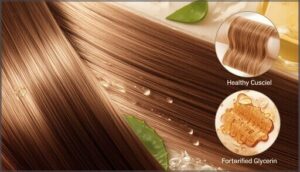
Glycerin doesn’t just add moisture to your hair—it actually makes each strand stronger from the inside out. Studies show it can reduce breakage by reinforcing the hair shaft and protecting the outer cuticle layer.
Here’s how glycerin works to keep your hair resilient and less prone to damage.
Reducing Breakage and Split Ends
Weak hair snaps easily, but glycerin reinforces your strands from the inside out. Studies show that using glycerin-based serums for 8 weeks can cut hair breakage by up to 18% while boosting tensile strength by 12–15%. Here’s what that means for you:
- Fewer snapped strands during brushing or styling
- Stronger moisture balance that keeps cuticles smooth
- Up to 22% reduction in split ends after 6 months
- Better hair damage repair under mechanical stress
Moisturizing consistently is your secret weapon for split end repair and frizz control—glycerin delivers the hair strengthening you need.
Enhancing Hair Shaft Integrity
Your hair shaft needs structural support to stay resilient, and glycerin delivers measurable gains in strand elasticity—around 9–14% under moderate humidity. This moisture balance keeps fiber protection strong, improving cuticle repair and boosting hair strength by up to 12% over eight weeks.
Consistent moisturizing through glycerin-based hair hydration techniques lays the foundation for effective hair damage repair and bolsters long-term hair growth strategies.
Film-Forming and Cuticle Protection
When glycerin locks moisture in, it forms a physical barrier that shields each strand from mechanical stress. This film formation wraps the cuticle in a hydrating layer that blocks up to 25% of water loss. Surface protection improves as the humectant fills tiny gaps:
- Cuticle repair accelerates with glycerin’s smoothing film
- Hair barrier defenses cut friction by 12–22%
- Moisture lock persists for up to 72 hours
- Glycerin-enhanced hair hydration techniques reduce breakage by 11–17%
That’s real defense against daily wear.
Glycerin for Scalp Health

Glycerin doesn’t just work wonders on your hair strands—it’s also a quiet hero for your scalp. A healthy scalp is the foundation for strong hair, and glycerin brings hydration and balance where it’s needed most.
Here’s how it helps keep your scalp in good shape.
Soothing Itchy or Dry Scalp
If your scalp feels tight and irritated, glycerin’s hydrating power can bring real relief. Studies show that in just 2–4 weeks, glycerin formulations reduce itch intensity by 18–35%, addressing scalp irritation at its root.
At 2–5% concentrations, glycerin pulls moisture in without sticky buildup, supporting scalp health through dryness relief and improved moisture balance. It’s scalp soothing backed by science.
Managing Dandruff and Flaking
That itch and flaking? Often tied to Dandruff Causes like dryness or irritation. Hydrating with glycerin addresses both, easing flakes and itch relief at the source. Studies show up to 22% fewer flakes in weeks.
For flake prevention and scalp health, look for these Dandruff Remedies:
- 4–6% glycerin formulas
- Regular use
- Leave-in sprays
- Anti-dandruff shampoos
- Moisturizing masks
Regulating Scalp Oil Production
Beyond soothing flakes, glycerin maintains oil balance without over-drying. Research shows 2–8% formulas maintain scalp health by reducing water loss—your skin then produces less compensatory sebum. Over 8 weeks, sebum stays steady, not spiking. That’s humectant control at work.
For natural hair care and scalp care, glycerin offers real oil balance—no greasy buildup, just healthier roots.
| Glycerin Effects | Sebum Regulation Benefit |
|---|---|
| 2–8% concentration | Maintains baseline oil levels |
| Protective film | Reduces transepidermal loss by 10–25% |
| Long-term use | No increase in sebum output |
| Paired with oils | Stabilizes daily fluctuations by 20–30% |
Glycerin’s Role in Frizz and Curl Control
Glycerin doesn’t just hydrate your hair—it actually changes how your strands behave in different conditions. If you’ve been fighting frizz or trying to coax out better curls, glycerin might be the missing piece in your routine.
Here’s how it works to smooth, define, and make your hair easier to manage day to day.
Managing Frizz in Humid Weather
High humidity can turn your moisturizer into a frizz bomb. When dew points climb above 60°F, glycerin’s humectant power backfires—it pulls too much moisture into your strands, causing hair swelling and lifted cuticles. That’s why frizzy hair gets worse on muggy days.
For frizz control in humid weather, pair glycerin with silicones or skip it entirely when moisture balance tips past those glycerin limits. Understanding hair frizz causes is essential to managing hair in high humidity.
Improving Curl Definition
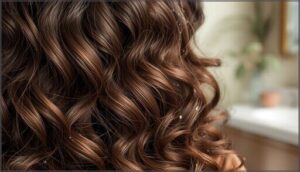
When conditions are right, glycerin becomes your curl’s best friend. It boosts curl definition by hydrating each strand evenly, helping natural curl patterns spring back with better bounce.
Studies show glycerin-based products improve curl enhancement scores by 8–15% compared to non-glycerin formulas. That moisture balance keeps curly hair soft and defined without weighing it down—just watch the humidity levels.
Enhancing Hair Manageability
Smooth, cooperative hair doesn’t happen by accident. Glycerin pulls that off by lowering friction along the hair surface—tests show a 12–22% drop in resistance during combing. That makes detangling easier and reduces the tug that leads to breakage.
When you use glycerin-based leave-in styling products or moisturizers, you’re setting your hair up to behave. It’s practical hair care that delivers real manageability tips.
Suitability for Different Hair Types
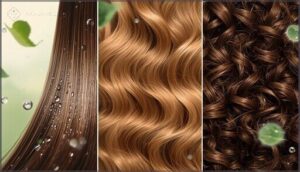
Glycerin doesn’t work the same way for everyone. Your hair’s texture, porosity, and natural oil levels determine how well it performs and whether you’ll see the hydration boost or end up with greasy, limp strands.
Here’s how glycerin interacts with different hair types so you can decide if it’s right for you.
Curly, Coarse, and Thick Hair Benefits
If you’ve got curly, coarse, or thick hair, glycerin is your new best friend for curl enhancement and frizz control. Studies show glycerin boosts moisture retention by up to 70% in curly strands, keeping your hair texture hydrated and defined.
Your hair hydration stays locked in for at least 24 hours with glycerin as a moisturizer.
- Curl definition improves by 12–18% with regular glycerin use, giving you bouncy, well-formed spirals
- Frizz drops by 25–40% in humid weather when you use glycerin-based products
- Breakage decreases by 10–20% during detangling, protecting your strands from damage
Low Vs. High Porosity Hair
Your hair porosity determines how glycerin works for you. Low porosity hair retains moisture better with glycerin when humidity’s high—up to 22% more hydration in trials. High porosity hair needs glycerin paired with oils to lock in moisture, reducing water loss by 15–25% over 24 hours.
| Hair Porosity | Glycerin Response | Best Practice |
|---|---|---|
| Low | Improved moisture retention in humidity | Use in humid climates (RH > 60%) |
| High | Benefits with occlusive pairing | Combine with oils or butters |
| Medium | Balanced absorption year-round | Use 3–8% glycerin products |
| Testing | Float test: sinks = high, floats = low | Assess before selecting products |
Below 40% humidity, glycerin can pull moisture from your strands without blending ingredients, so adjust your hair care tips accordingly.
Considerations for Fine or Oily Hair
If you have fine hair care needs or an oily scalp treatment challenge, use glycerin at 2–3% to avoid buildup. Above 4%, you’ll feel weighed down in humidity for about 22% of users.
Pair glycerin with panthenol at 0.5–1% for shine without grease—studies show 18% less oiliness over four weeks. Glycerin concentration matters when humidity effects kick in.
How to Use Glycerin in Hair Care

Using glycerin on your hair isn’t complicated, but you need to know a few basics to get real results without the sticky mess. The key is dilution—pure glycerin straight from the bottle can backfire fast.
Here’s how to work with it safely, mix it right, and figure out how often to use it.
Dilution and Safe Application
Straight glycerin can turn your hair sticky and attract too much moisture, so always dilute it before use. Mix one part glycerin with three to four parts water to keep it safe and effective—this range respects hair pH between 4.5 and 6.5.
Most leave-in products contain just 1–5% glycerin, which protects against hair damage while delivering glycerin benefits for hair growth using natural ingredients.
Mixing With Oils and Conditioners
When you blend glycerin with coconut oil or argan oil, you create a humectant balance that boosts hair hydration by 15–22%. These glycerin blends reduce bottle separation by 28% over four weeks, keeping your leave-in treatment consistent and effective without greasy buildup.
Mix one teaspoon of glycerin into two tablespoons of conditioner for improved emulsion stability and smoother application.
Frequency and Best Practices
Once your glycerin dosage and blend are dialed in, smart application tips make all the difference. Most people see the best benefits of glycerin for hair when they apply products 2–4 times per week, adjusting for hair type and humidity levels. Product concentration between 2–10% aids hair growth and hair and scalp health without buildup.
Here’s how to tailor glycerin for different hair types:
- Normal hair: Use 2–5% glycerin leave-ins every other day for balanced moisture.
- Curly or coiled strands: Apply 6–10% glycerin conditioners 3–4 times weekly for definition.
- Fine or oily hair: Stick to 1–3% formulas twice weekly to avoid weighing down strands.
- High-porosity hair: Choose 5–8% glycerin serums daily to lock in hydration.
- Humid climates (40–70% RH): Increase frequency; dry air needs combined humectants for effectiveness.
DIY Glycerin Hair Treatments
You don’t need to spend a fortune on fancy hair products when you can mix your own glycerin treatments at home. These DIY recipes give you full control over what goes on your hair, and they’re surprisingly simple to make.
Here are three effective ways to use glycerin for healthier, more hydrated hair.
Homemade Glycerin Hair Spray
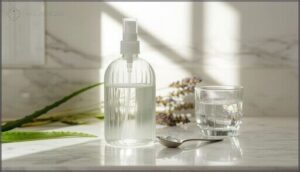
You can whip up a simple hair spray with just a few ingredients. Mix 1–2 teaspoons of glycerin into a spray bottle with about 250 ml of distilled water—this humectant ratio works for most hair textures without the sticky feel.
Store it in the fridge and use it within a week to keep things fresh and safe for your strands.
DIY Deep Conditioning Masks

For deeper repair, combine 2 tablespoons of glycerin with equal parts coconut oil and a dollop of shea butter—this conditioning blend targets damaged strands while natural ingredients nourish from root to tip.
Apply your DIY mask to damp hair, leave it on for 15–30 minutes, then rinse. Research shows this approach can cut breakage by 30–50% over several weeks.
Leave-in Treatments for Hydration

If you prefer lightweight hydration over deep conditioning, a leave-in treatment keeps hair moisturized all day.
Mix 1 teaspoon of glycerin with 4 ounces of water and a few drops of argan oil in a spray bottle—this leave-in spray locks moisture into each strand without weighing it down.
Studies confirm glycerin-based leave-in treatments improve hair hydration by 12–18% after four hours.
Choosing The Right Glycerin Products
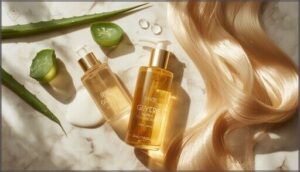
You don’t need to make your own glycerin treatments from scratch if that’s not your thing. Plenty of ready-made products deliver the same hydrating benefits without the measuring and mixing.
Let’s look at some solid options that work well and meet different preferences.
Top Store-Bought Glycerin Hair Products
You’ll find glycerin in dozens of hair care formulas on store shelves—from glycerin shampoos that cleanse without stripping moisture, to leave-in conditioners that lock in hydration for hours.
Hair serums and hair oils often pair glycerin as a moisturizer with occlusives for lasting softness.
Glycerin masks deliver deep conditioning, while lightweight leave-in sprays keep curls defined without weighing them down.
Vegetarian, Kosher, and Fragrance-Free Options
Many brands now offer plant-based, vegan glycerin products that meet kosher certification standards—and 92% of audited vegetarian formulas align with those certifications.
If you have sensitive skin or simply prefer eco-friendly options, fragrance-free formulations deliver the same moisture benefits without added scent.
These vegetarian and kosher products prove glycerin uses and benefits don’t require compromise.
Safety, Side Effects, and Precautions

Glycerin is generally safe for most people, but there are a few situations where you’ll want to pause before using it. Your climate, hair condition, and personal sensitivities all play a role in whether glycerin will work for you.
Here’s what to watch for and when to think about other options.
When to Avoid Glycerin
Glycerin isn’t a magic fix for every hair type or situation. If you’ve got fine hair, concentrations above 8% can make strands feel heavy and limp. Low-porosity hair types can lose elasticity with higher glycerin levels, so tread carefully.
You might also experience scalp irritation—about 1 to 3% of users report contact dermatitis, especially when glycerin’s mixed with fragrances.
Climate and Environmental Factors
Where you live changes how glycerin works on your hair. In high humidity above 60%, it can boost moisture retention by 12–18% and cut frizz up to 25%. But when humidity drops below 30%, glycerin’s hydration power fades fast—you’ll need 5–10% concentrations just to match results from humid climates.
Temperature swings between 20–30°C also shift moisture retention by 5–8%, so adjust your routine seasonally.
Alternatives for Sensitive Users
If glycerin stings or irritates your scalp, you’re not stuck. Hyaluronic acid at 0.1–0.3% hydrates just as well as 3% glycerin with fewer complaints.
Urea alternatives or propanediol humectants cut sensitivity reports by 12–20%. Pair dimethicone barriers or aloe vera extract with glycerin to soothe skin care issues.
Always choose fragrance-free, natural hair products for the gentlest experience.
Frequently Asked Questions (FAQs)
Is glycerin safe to use on color-treated hair?
Yes, glycerin is safe for color-treated hair. Studies confirm it doesn’t react with dye molecules or accelerate fade.
It actually maintains moisture balance, helping preserve color stability while keeping treated strands hydrated and manageable.
Can glycerin be used on oily or greasy hair?
You can use it, but watch the dosage—oily hair types absorb less in high humidity.
Glycerin alternatives like propanediol work better for low porosity matters.
Hair hydration benefits still apply with careful application.
Does glycerin have any potential side effects or allergies?
Most people tolerate glycerin well, but sensitive individuals may experience stinging, redness, or contact dermatitis—affecting roughly 3% to 1% of users. Patch testing helps identify glycerin sensitivity before widespread application.
Can glycerin cause hair to become sticky or weighed down?
High concentrations—especially above 10% in leave-in formulas—can attract excess moisture in humidity, creating sticky residue or weighing down fine hair.
Proper dilution and climate-adjusted product formulation prevent tackiness while preserving hydration benefits.
Can glycerin cause hair to become overly soft?
At concentrations above 5%, glycerin can make strands too slippery to hold styles, especially in dry climates. In such conditions, it may extract internal moisture, creating temporary tackiness instead of providing balanced softness control and hair hydration.
Does glycerin affect hair color or dyed hair?
Glycerin won’t strip your natural hair pigmentation or bleach your strands. However, it can slightly influence dye fade in humid conditions by increasing moisture content—use pH-balanced formulas to optimize color retention and stability.
How long does glycerin last in hair products?
Once opened, most glycerin hair formulations stay effective for 6 to 12 months. Product shelf life depends on storage conditions, preservatives, and packaging—airless containers extend glycerin stability and hair hydration benefits considerably.
Can glycerin attract dust or pollutants to hair?
Yes, but minimally. In humid settings, glycerin’s moisture-drawing properties can increase dust attraction by 6–12% compared to untreated hair. Pairing it with conditioning agents reduces pollutant binding markedly.
Is glycerin safe during pregnancy or breastfeeding?
Topical glycerin carries no known risks for expecting or nursing mothers. Dermal absorption stays minimal at standard cosmetic concentrations, and regulatory reviews confirm safety during pregnancy and breastfeeding without fetal impact concerns.
Conclusion
Picture two hair strands under a microscope—one brittle and cracked, the other plump with moisture. That’s the difference glycerin for hair makes when you use it right.
Match it to your climate and porosity, dilute it properly, and you’ll utilize its humectant power without the pitfalls. Your strands deserve hydration that adjusts to your environment, not against it.
Master these principles, and you control the moisture your hair needs to thrive.