This site is supported by our readers. We may earn a commission, at no cost to you, if you purchase through links. This content is for general informational and educational purposes only and is not a substitute for professional medical, dermatological, or nutritional advice.

Your hair grows roughly half an inch a month, same as everyone else’s. So why does it feel like yours stalls out at your shoulders while your relaxed cousin’s swings past hers? The answer isn’t growth rate at all. It’s retention.
Retention is the real game—and if you’re ready to commit, understanding how a full grow-out actually unfolds over 18 to 36 months can make the whole journey feel a lot less discouraging.
Keeping your ends healthy matters just as much as growth, so understanding when and how often to trim can make the difference between retaining length and watching it snap off.
Coily and kinky strands twist at every bend along the shaft, and each twist is a spot where breakage can strike before length ever shows. Hair growth for Black women hinges less on speeding up the follicle and more on protecting what you’ve already grown, through moisture, gentle styling, and a scalp that’s actually thriving.
Get those fundamentals right, and the length you’ve been chasing starts showing up on its own.
Table Of Contents
- Key Takeaways
- Hair Growth Basics for Black Women
- Moisture and Length Retention Tips
- Protective Styling Without Hair Loss
- Top 10 Hair Growth Products
- 1. SheaMoisture Manuka Honey Intensive Hydration Conditioner
- 2. Black Vanilla Leave In Conditioner
- 3. SheaMoisture Jamaican Black Castor Oil Masque
- 4. Shea Butter Aloe Leave In Conditioner
- 5. Aunt Jackies Curls and Coils Leave-In Conditioner
- 6. SheaMoisture Manuka Honey Hair Masque
- 7. Black Edge Control Gel with Argan Oil
- 8. Mielle Rosemary and Mint Edge Gel
- 9. Tinted Fiber Edge Control Gel
- 10. Yanibest Adjustable Satin Sleeping Bonnet
- Scalp and Nutrition Growth Support
- Frequently Asked Questions (FAQs)
- Can hair growth vitamins cause hormonal imbalances?
- How do I choose between oils and serums?
- Whats the best age to start taking supplements?
- Are there any side effects from biotin?
- Can I use multiple hair products together?
- Does hair grow faster in warmer summer months?
- Can stress or hormonal changes cause hair loss?
- Is postpartum hair shedding normal for new mothers?
- Do wigs and weaves slow natural hair growth?
- How does water quality affect hair health overall?
- Conclusion
Key Takeaways
- Hair growth for Black women depends far more on length retention—preventing breakage at each curl bend—than on speeding up follicle growth, which stays roughly 0.3–0.5 inches monthly regardless of styling.
- Knowing your hair’s porosity, how well cuticles absorb and hold moisture, is essential for choosing the right products and building an effective moisture-protein balance.
- Consistent care habits—weekly deep conditioning, protein treatments every 4-8 weeks based on porosity, and clarifying every 2-4 weeks—protect strands from breakage far better than occasional intensive treatments.
- Protective styling only supports growth when done with low tension, regular scalp cleansing every 7-10 days, and nighttime satin protection, since tight styles and friction cause traction alopecia that mimics stalled growth.
Hair Growth Basics for Black Women
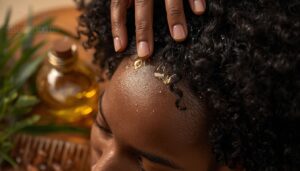
Your hair’s growth journey starts with understanding what’s actually happening beneath the surface, not just what you see in the mirror.
Each strand’s growth cycle is influenced by factors like scalp health, nutrition, and hormones, which this guide to hair growth and maintenance breaks down in detail.
Curl pattern, porosity, and scalp health all work together, and knowing how they interact changes how you care for your strands.
Let’s break down the basics you need before building any real growth routine.
Curl Pattern and Growth
Your curl pattern starts at the follicle, the tiny pocket where each strand originates—tilted follicles create tighter coils, while straighter ones yield looser texture.
Disulfide bonds within the shaft add to that twist and bend.
- Genetics sets the blueprint
- Hormones can shift patterns over time
- Shrinkage isn’t lost length
Uneven curls across your scalp? Normal, not neglect.
Low Versus High Porosity
Porosity determines how your strands drink and hold water, and knowing yours changes everything about product choice.
Low porosity hair keeps cuticles sealed tight, resisting moisture and building product residue on the surface. High porosity hair absorbs fast through lifted cuticles, then loses it just as quick.
Even so, with the right prep steps and patience, getting henna to fully cover gray hair with low porosity is still very much achievable.
That rapid moisture loss in high porosity strands is often what triggers flash drying after a wash-day routine, leaving hair brittle before it even fully absorbs product.
Test with a water bowl—strand sinks slow or fast—and build your moisture-protein balance accordingly. Understanding your hair cuticle structure is essential for effective hydration.
Breakage Versus Slow Growth
Blunt, frizzy ends signal breakage, not slow growth—run strands between your fingers and feel for roughness instead of a smooth taper.
Check hair elasticity by stretching a wet strand; snapping means damage, not dormant follicles. Track short hairs near your part: tapered ones mean new growth, uniform blunt ones mean hair breakage eating your length retention through poor moisture-protein balance.
If your color turned out darker than planned, porosity and processing time are often the culprits, so it’s worth reading about how to fix hair dye that’s too dark before your next touch-up.
Sebum and Moisture Challenges
Sebum production works against you here. The curve in your strands stops natural oils from traveling down the shaft, leaving ends dry while roots stay oily—disrupting moisture-protein balance.
Heat and pollution worsen this: warmth increases oiliness, pollution strips moisture, and over-washing triggers rebound oil production. Result? A scalp microbiome thrown off, weakening your lipid barrier and stalling real retention.
Realistic Growth Timelines
Twelve weeks tells the real story, not the mirror. Length retention matters more than raw hair growth speed when you’re measuring monthly inches, since Black hair grows roughly 0.3–0.5 inches monthly regardless of styling.
Tracking breakage patterns over a 3-month window—then reassessing at 6 and 9 months—reveals whether you’re managing growth expectations accurately or just evaluating routine efficacy against unrealistic timelines.
Moisture and Length Retention Tips
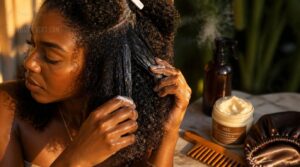
Length retention starts with keeping moisture locked into every strand, since Black hair’s curved shape makes it naturally harder for hydration to travel down the shaft.
You don’t need a complicated routine, just a consistent one built around a few key habits that actually work with your hair’s structure.
Here are five moisture and retention essentials worth building into your regular routine.
LOC and LCO Methods
Order matters here. LOC (liquid, oil, cream) seals early with a lightweight oil like castor before your leave-in conditioner adds slip, while LCO (liquid, cream, oil) hydrates first, letting cream build your moisture barrier before oil locks it in.
Apply each layer thin. Overloading strands causes buildup and weighs down your curl pattern instead of supporting real moisture retention.
Weekly Deep Conditioning
Deep conditioning weekly softens strands and restores slip, making detangling far easier than on dry, brittle hair. Section hair, saturate ends first, and use a wide-tooth comb gently upward.
Apply low heat or a steam cap for 20-30 minutes, this opens cuticles for better absorption. Rinse with cool water to seal moisture, locking in strength before your next protein treatment.
Monthly Protein Treatments
Protein and moisture work as partners, not rivals. Keratin strength rebuilds structural integrity that heat and chemical processing strip away, so schedule treatments every 4-6 weeks based on your porosity—low porosity stretches to 6-8 weeks, high porosity needs closer monitoring.
Watch for protein overload: stiffness, straw-like texture, snapping instead of stretching. Test elasticity after conditioning—healthy strands stretch and bounce back, signaling balanced strength and moisture retention.
Clarifying Product Buildup
Your curls can’t spring back if they’re buried under residue. Silicone residue buildup, styling creams, and hard water minerals coat strands, causing itching and flattened definition.
Clarifying frequency guide:
- Light activity: every 4 weeks
- Heavy product use: every 2 weeks
- Hard water areas: consider chelating rinses
- Post-protective style: always clarify first
Choose sulfate-free clarifying formulas—they protect scalp health without stripping your moisture-protein balance.
Trimming Split Ends
Split ends won’t heal—they only travel upward until breakage takes over. Dusting (trimming 1/4 to 1/2 inch) takes care of minor splitting, while severe damage needs more length removed.
Section dry hair, use sharp shears, and catch only frayed tips. Trim every 6-8 weeks, adjusting for heat or friction.
This is length retention in action: preventing shaft splitting before it steals your progress.
Protective Styling Without Hair Loss
Protective styling can either save your strands or quietly sabotage them, and the difference comes down to technique, not the style itself. Braids, twists, and buns only work in your favor when tension, cleanliness, and nighttime care are handled with intention.
Here’s what separates growth-friendly protective styling from the habits that lead to breakage and traction alopecia.
Low-tension Braids and Twists
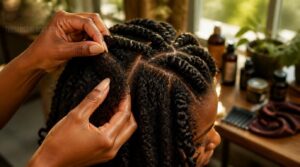
Root tension management starts with your section size: bigger, looser twists spread pressure across the scalp instead of pinching tiny points along your part lines, protecting follicles from mechanical damage.
Choose soft, flexible braiding hair that blends easily and won’t rub your scalp raw. Keep parts uniform, install low-manipulation styles loosely, and check weekly—loosening early prevents traction alopecia before tenderness turns into real breakage.
Avoid Tight Edge Pulling

Your edges deserve better than that snatched, laid-down look if it’s pulling your hairline into submission. That tight tension is textbook traction alopecia in progress.
That snatched, laid-down edge look is often just traction alopecia in progress
Watch for:
- Bumps or redness along your part
- Itching or tenderness at the hairline
- Thinning baby hairs near your temples
- Headaches from your install
Loosen up, detangle gently, and protect your crown—not sacrifice it.
Cleanse Scalp Between Styles
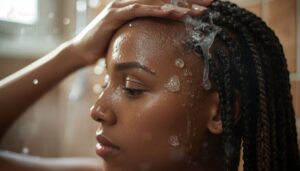
Cleanse your scalp every 7–10 days, even mid-style, since sweat, oils, and edge control build up fast and cause itching.
Use diluted, sulfate-free foam cleansers or co-wash between installs—gentle enough to preserve your style, strong enough to clear residue. Hard water worsens buildup, so rinse thoroughly.
Watch for flaking or coated roots—signs your scalp needs hydration and attention, not neglect.
Satin Bonnet Nighttime Care

Nighttime friction is where all that scalp work gets undone, since cotton pillowcases pull moisture right out of your strands while you sleep. A satin or silk bonnet cuts that friction, sealing in your leave-in and protecting edges from constant rubbing.
Fit matters more than fabric—too tight compresses curls, too loose slips and rubs. Wash your bonnet weekly; buildup transfers straight to your hairline.
Reduce Heat Styling Damage

Heat tools shouldn’t be your enemy, but skipping heat protectant turns every flat iron pass into unnecessary risk. Always style fully dry hair on the lowest effective setting, ceramic plates distribute heat more evenly, reducing hot spots.
Limit sessions to twice monthly, keep passes minimal, and let low-manipulation styles stretch the time between heat exposures altogether.
Top 10 Hair Growth Products
Low porosity strands need lightweight hydration while high porosity hair craves heavier creams that seal moisture in, so picking blindly off the shelf works against you.
We’ve narrowed the field to ten products worth your money, covering everything from deep conditioners to edge control and nighttime protection. Here’s where to start building your shelf.
1. SheaMoisture Manuka Honey Intensive Hydration Conditioner
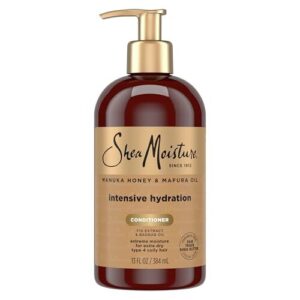
Manuka honey pulls double duty here as a humectant, drawing moisture into the shaft while mafura oil smooths the cuticle for softer strands. Baobab oil and fairtrade shea butter round out the rinse-out cream, making it ideal for type 4 and coily textures dealing with dryness or damage.
Sulfate-free and paraben-free, it detangles without stripping natural oils. Best paired with the matching shampoo for full moisture penetration—apply mid-length to ends, focusing on your most porous areas.
| Best For | People with coily, type 4, or curly hair dealing with dryness, damage, or frizz-prone, color-treated strands who want a deeply nourishing rinse-out conditioner. |
|---|---|
| Form | Cream |
| Hair Type | Coily/Type 4 |
| Key Oil | Mafura/Baobab |
| Sulfate Free | Yes |
| Primary Benefit | Deep Moisture |
| Use Frequency | Regular |
| Additional Features |
|
- Manuka honey, mafura oil, and baobab oil combine to deliver deep hydration and softer, more manageable hair
- Sulfate-free, paraben-free, phthalate-free, and mineral oil-free formula detangles gently without stripping natural oils
- Versatile enough to use on hair, beards, or even as a shaving aid, with added shine for color-treated hair
- Can feel heavy on finer hair types if you use too much
- Some users have noticed it can cause frizz
- Works best when paired with the matching shampoo, so results may be less impressive used on its own
2. Black Vanilla Leave In Conditioner
Carol’s Daughter Black Vanilla Leave-In brings wheat protein and pro-vitamin B5 into a silicone-free, weightless formula built for daily use across curl types 2A through 4C.
It hydrates without buildup, easing detangling on wavy and coily strands while locking in moisture that would otherwise evaporate by midday.
Layer it under an oil for extra shine, and refresh second-day curls on wet or dry hair alike—no rinsing required, just consistent moisture that keeps split ends and brittleness at bay.
| Best For | People with wavy, coily, or curly hair (2A–4C) who deal with dryness, tangles, or dull-looking strands and want a lightweight, daily leave-in that won’t weigh hair down. |
|---|---|
| Form | Spray |
| Hair Type | 2A-4C |
| Key Oil | N/A |
| Sulfate Free | Not Specified |
| Primary Benefit | Detangling |
| Use Frequency | Daily |
| Additional Features |
|
- Hydrates dry, brittle hair and split ends with Soy Protein and Vitamin B5
- Weightless formula suitable for everyday use without product buildup
- Works on all curl types (2A to 4C) and can refresh styles on wet or dry hair
- Leave-in formula must stay in and can’t be rinsed out
- Best results require pairing with a full hair care routine, not standalone use
- Packaging may differ from what’s shown in product images
3. SheaMoisture Jamaican Black Castor Oil Masque
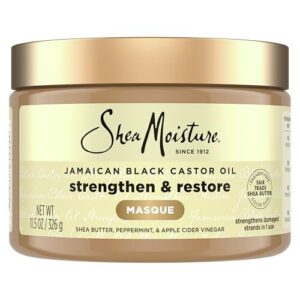
Think of this masque as an intensive repair session for strands weakened by color, heat, or chemical processing. The mix of Jamaican Black Castor Oil and shea butter coats each strand while avocado and coconut oil work into the shaft, restoring elasticity that’s been stripped away.
Peppermint extract adds a cooling scalp sensation during rinse-out application. Used weekly, it strengthens porous, breakage-prone hair without silicones, sulfates, or parabens weighing curls down.
| Best For | People with dry, damaged, or chemically processed hair—especially curls that need extra strength, moisture, and elasticity. |
|---|---|
| Form | Cream |
| Hair Type | Curly/Coily |
| Key Oil | Castor Oil |
| Sulfate Free | Yes |
| Primary Benefit | Repair Damage |
| Use Frequency | Regular |
| Additional Features |
|
- Deeply hydrates and strengthens hair using Jamaican Black Castor Oil and Shea Butter
- Free from silicones, sulfates, parabens, phthalates, and petrolatum
- Sustainably produced and cruelty-free formula
- Best suited for dry or damaged hair, so it may not benefit all hair types
- Requires consistent, regular use to see lasting results on chemically treated hair
- May be too rich or heavy for fine or low-porosity hair
4. Shea Butter Aloe Leave In Conditioner
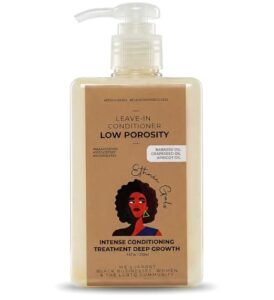
Low porosity strands need moisture that doesn’t just sit on top. This lightweight, water-based formula absorbs fully, leaving no flakes or crunch behind, since heavy creams often just coat closed cuticles rather than penetrate them.
Shea butter and aloe deliver hydration your ends can actually use, supporting wash-and-gos, twist-outs, and braids alike. At 9.5 fl oz, it’s built for daily routines, though drier strands may still want a sealing oil layered on top for lasting moisture retention.
| Best For | People with low porosity curly or coily hair who need a lightweight, water-based leave-in that hydrates without buildup or crunch. |
|---|---|
| Form | Cream |
| Hair Type | Low Porosity |
| Key Oil | N/A |
| Sulfate Free | Not Specified |
| Primary Benefit | Hydration |
| Use Frequency | Daily |
| Additional Features |
|
- Absorbs fully into strands, leaving no flakes or crunchy residue
- Shea butter and aloe deliver deep, lasting moisture for soft, bouncy curls
- Versatile enough for wash-and-gos, twist-outs, braids, and daily use
- No printed instructions or application guidance on the packaging
- Drier hair types may need a sealing oil layered on top for full hydration
- Can leave residue on hairbrushes if used on dry hair
5. Aunt Jackies Curls and Coils Leave-In Conditioner
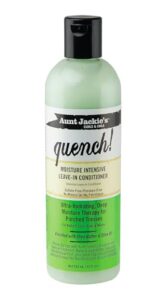
Slip is the whole point here, and this formula delivers it in spades for coily, tightly coiled strands that snag and snap under a dry comb.
Marshmallow root and shea butter coat each strand so detangling sessions stop feeling like combat. Olive oil seals it all in without weighing curls down or leaving that waxy film some heavier creams create.
Use it fresh out the shower on soaking-wet sections, and you’ll cut breakage from mechanical stress dramatically.
| Best For | People with coily, curly, or wavy natural hair who struggle with tangles and need extra slip for gentle, low-breakage detangling. |
|---|---|
| Form | Cream |
| Hair Type | Natural Textures |
| Key Oil | Olive Oil |
| Sulfate Free | No |
| Primary Benefit | Frizz Control |
| Use Frequency | As Needed |
| Additional Features |
|
- Shea butter, olive oil, and marshmallow root combine to deeply hydrate dry curls and coils
- High-slip formula makes detangling easier and reduces breakage from combing
- Lightweight, non-greasy feel that won’t leave hair looking waxy or weighed down
- Contains sulfates, which may be a drawback for those avoiding them
- Can leave a light residue on hands after use
- May clash with certain hair sprays, leading to a sticky texture
6. SheaMoisture Manuka Honey Hair Masque
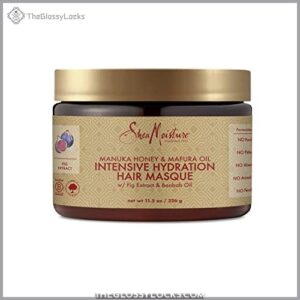
Manuka honey works as a humectant, drawing moisture straight into the hair shaft, which makes this masque a step up from your leave-in when strands feel bone-dry or over-processed.
Mafura oil and shea butter lock that hydration in, cutting friction during detangling and easing breakage. Baobab oil rounds out the fatty acid profile, supporting the seal.
Apply to soaking-wet hair, roots to ends, and give it 5 minutes minimum—longer under a plastic cap if your porosity runs low.
| Best For | People with dry, damaged, over-processed, or curly hair who need an intense deep-conditioning boost beyond their regular leave-in. |
|---|---|
| Form | Cream |
| Hair Type | Curly |
| Key Oil | Mafura/Baobab |
| Sulfate Free | Yes |
| Primary Benefit | Deep Hydration |
| Use Frequency | Weekly |
| Additional Features |
|
- Blends organic Shea Butter, Honey, Mafura, and Baobab oils to hydrate and strengthen strands while reducing frizz
- Free from sulfates, parabens, phthalates, mineral oil, and petrolatum, plus ethically traded and cruelty-free
- Contains antioxidant-rich African Rock Fig to help fortify follicles and support overall hair health
- Needs a minimum 5-minute leave-in time, so it’s not a quick, on-the-go treatment
- Best results may require extra heat or a plastic cap, adding time and steps to the routine
- Product instructions are only in Spanish, which could be inconvenient for non-Spanish speakers
7. Black Edge Control Gel with Argan Oil
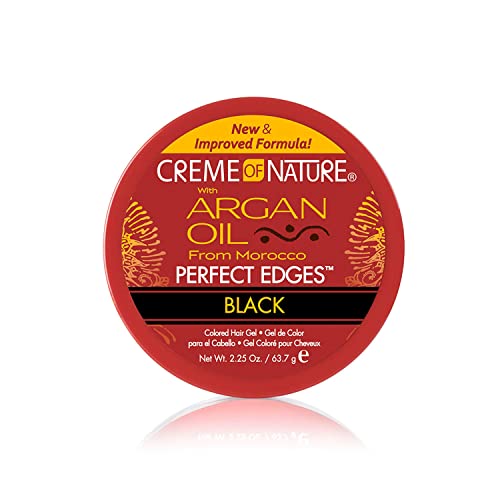
Once your masque work is done, edges need their own strategy. This gel delivers a 24-hour firm hold using true-black pigment that blends seamlessly with dark hair, camouflaging gray strands and thinning hairlines along your part.
Argan oil keeps the formula from drying out delicate edge hair, a common breakage zone from daily manipulation. It’s non-flaking and humidity-resistant, so you won’t fight chalky residue by day’s end.
Apply sparingly with a toothbrush for control—edges are fragile enough without heavy-handed styling.
| Best For | People with dark hair who want to cover gray roots, fill in thinning hairlines, and lay down smooth, defined edges that last all day. |
|---|---|
| Form | Stick |
| Hair Type | Dark Hair |
| Key Oil | Argan Oil |
| Sulfate Free | Not Specified |
| Primary Benefit | Gray Coverage |
| Use Frequency | As Needed |
| Additional Features |
|
- Delivers a 24-hour firm hold without flaking or turning greasy
- Argan oil helps nourish and protect fragile edge hair from breakage
- Tinted black formula doubles as gray coverage while styling
- Only suited for dark hair, since the black pigment won’t work for lighter shades
- Requires manual application with fingertips, a brush, or a toothbrush, which takes more time than spray or stick formulas
- Sparing application is needed for precision, so it may take practice to avoid overdoing it
8. Mielle Rosemary and Mint Edge Gel
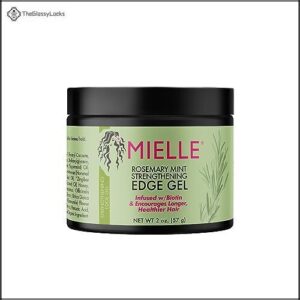
If you want strength over sheer pigment, this one’s your pick. Biotin, coconut oil, and babassu seed oil work together to hydrate fragile edges while supporting strand strength, rather than just sealing them down.
Rosemary and mint deliver scalp stimulation and a cooling finish along your hairline. Expect medium-to-strong hold without flaking or buildup, applied with fingertips or a brush for daily wear that still lets your edges breathe and repair.
| Best For | Anyone with delicate, natural, or textured edges who wants strong hold and hair strengthening without sacrificing scalp health. |
|---|---|
| Form | Gel |
| Hair Type | Curls/Coils |
| Key Oil | Coconut/Babassu |
| Sulfate Free | Not Specified |
| Primary Benefit | Edge Hold |
| Use Frequency | Daily |
| Additional Features |
|
- Strong, long-lasting hold with no flaking or buildup
- Nourishing blend of biotin, coconut oil, and babassu seed oil supports hair strength and growth
- Rosemary and mint offer a cooling, scalp-stimulating finish
- Requires careful, gentle application to avoid pulling fragile edges
- Only works effectively on clean, dry hair, limiting quick touch-ups
- Small 2-ounce size may not last long with frequent use
9. Tinted Fiber Edge Control Gel
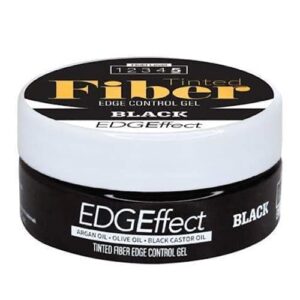
Camouflage over stimulation is the goal here, and that’s a fair trade-off when your priority is coverage, not follicle activity. Micro tinted fibers mix with dark strands to visually thicken thinning edges, while keratin, tea tree, and jojoba oils keep hair from drying out underneath the pigment.
Hold sits around a 5 on a 1–5 scale, but it can rub off without a hairspray set. Fair warning: the tint stains skin and fabric if you’re not careful during application.
| Best For | Anyone with thinning edges or fine hair who wants an instant, camouflaging touch-up with a nourishing, high-shine finish rather than heavy hold. |
|---|---|
| Form | Powder |
| Hair Type | Thinning Hair |
| Key Oil | Jojoba Oil |
| Sulfate Free | Not Specified |
| Primary Benefit | Thickening |
| Use Frequency | As Needed |
| Additional Features |
|
- Micro tinted fibers blend seamlessly with hair to visually camouflage thinning areas
- Enriched with keratin, tea tree, and jojoba oil to nourish strands while styling
- Delivers a high-shine, non-flaking finish for sleek, defined edges
- Hold strength is low on its own and often needs a base edge gel for lasting definition
- Can rub off if not set with hairspray
- Risk of scalp staining or skin irritation for some users
10. Yanibest Adjustable Satin Sleeping Bonnet
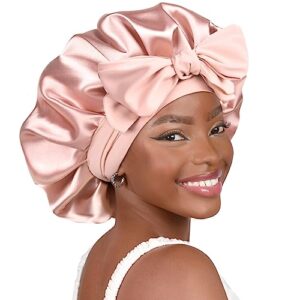
Every product on this list works overnight while you sleep, and this bonnet is the piece of equipment making sure that time isn’t wasted. Double-layer satin cuts friction that causes tangles and breakage, while the 58-inch stretchy band adjusts to fit securely without leaving forehead marks.
At 2.8 inches wide, the band holds curls and braids in place through restless nights. Reversible design means two colors, one bonnet—no compromise on your morning routine or your protective style’s lifespan.
| Best For | Anyone with natural, textured, or long hair looking for an affordable overnight solution to reduce frizz, tangles, and breakage while preserving curls, braids, or other protective styles. |
|---|---|
| Form | Fabric |
| Hair Type | All Types |
| Key Oil | N/A |
| Sulfate Free | N/A |
| Primary Benefit | Overnight Protection |
| Use Frequency | Nightly |
| Additional Features |
|
- Double-layer "butter-satin" construction minimizes friction, helping retain moisture and prevent tangling overnight
- Long, wide elastic band (58 inches, stretching to 75) offers a customizable, non-slip fit for different head sizes
- Versatile enough for sleeping, workouts, yoga, wig security, or even use as a sleep mask
- Tying it too tightly can leave slight marks on the forehead
- The stitching may cause irritation or friction for those with sensitive skin
- Getting the right fit can take some trial and error, and the material isn’t as premium as genuine silk
Scalp and Nutrition Growth Support
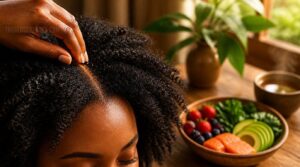
Real growth starts beneath the surface, at the follicle level, where blood flow and nutrition do the heavy lifting that products alone can’t. Your scalp and your plate work together, and neither one gets a pass if you’re serious about length retention. Here’s what your daily routine and your diet should actually include.
Daily Scalp Massage Routine
Five to ten minutes daily builds real scalp circulation, waking up sluggish follicles without demanding a huge time investment. Use light, circular fingertip pressure—never nails—starting at the hairline and sweeping toward the crown.
For product glide, a dab of leave-in reduces friction.
- Boosts blood flow
- Calms tension
- Softens buildup
- Strengthens habit
Skip massage on irritated or sore scalps.
Rosemary and Mint Oils
Rosemary oil brings receipts. Its antioxidant and anti-inflammatory compounds support scalp comfort, while mint delivers that tingling, cooling wake-up call from menthol. Always dilute in a carrier oil—undiluted use risks burning.
| Oil | Benefit |
|---|---|
| Rosemary | Anti-inflammatory |
| Mint | Tingling stimulation |
| Carrier | Even distribution |
| Mix | Fresh scalp feel |
Patch test first; essential oil allergies happen even with natural ingredients.
Biotin and Zinc Intake
Your follicles need building blocks, not magic bullets. Biotin absorbs through your small intestine and fuels keratin production, while zinc helps with protein synthesis for the hair growth cycle.
- Watch for deficiency overlap: thinning and skin changes can signal either shortage
- Excess zinc disrupts copper balance—don’t stack supplements carelessly
- Biotin can cause lab interference, so mention supplements before bloodwork
A balanced multivitamin often beats guessing.
Omega-3 Rich Foods
Fatty fish should hit your plate at least twice weekly—salmon delivers roughly 4.5g combined EPA and DHA per 3 oz, sardines pack 982mg per serving. Can’t do fish? Walnuts, flaxseed, and chia provide ALA, which your body converts to usable omega-3s, though less efficiently.
These fats support your hair growth cycle and thickness directly, reducing inflammation that stalls follicle function. A quality multivitamin fills remaining gaps.
When to See Dermatologists
Know when DIY stops working. Sudden bald patches, persistent scalp rashes, or hair loss that won’t quit after 6-8 weeks of consistent care means it’s dermatologist time, not more product-hopping.
Watch for:
- Sudden bald patches or widening thin spots
- Scalp inflammation signs like redness, itching, or scaling
- Changing mole appearance near your hairline
- Acne scarring risks from inflamed scalp bumps
Dermatologist-recommended treatments protect follicle health long-term.
Frequently Asked Questions (FAQs)
Can hair growth vitamins cause hormonal imbalances?
Yes, but usually indirectly: excessive vitamin intake disrupts mineral balance and creates nutrient-hormone interactions, while high-dose biotin causes lab test interference, masking real thyroid issues.
Choose a clinically proven, liposomal formula supplying only essential nutrients for hair, not extra hormonal disruption.
How do I choose between oils and serums?
Think of it as sealing versus finishing: oils lock moisture into thirsty lengths, while serums smooth the surface for shine. Match natural oils to porosity absorption rates, and reach for growth serum only when frizz, not dryness, is your battle.
Whats the best age to start taking supplements?
There’s no single "best age"—it depends on life stage needs and lab results. Pregnancy planning, post-menopause B12/D drops, or confirmed deficiencies signal timing.
Avoid guessing; get labs checked, since unnecessary multivitamin stacking risks vitamin toxicity without boosting regrowth.
Are there any side effects from biotin?
Biotin’s bark can bite: allergic reactions (hives, facial swelling, breathing trouble) and digestive upset like nausea or cramps happen occasionally.
It also skews lab test results, so always disclose supplement use before bloodwork, especially with diabetes or chronic conditions.
Can I use multiple hair products together?
Layering works, but order matters: leave-in first, then protein or moisture treatments, sealing oils last. Watch for buildup, scalp irritation, or protein-moisture imbalance—test new combos on a small section before committing your whole routine.
Does hair grow faster in warmer summer months?
Summer’s like sunshine feeding a garden: seasonal follicle cycles shift more strands into active growth, boosted by vitamin D and circulation. Humidity adds moisture and flexibility, but sweat and UV exposure demand diligent scalp care and protection.
Can stress or hormonal changes cause hair loss?
Yes — cortisol from chronic stress disrupts follicle signaling, triggering telogen effluvium. Postpartum shedding, thyroid imbalance, and increased androgen sensitivity also push follicles into resting phase early, causing diffuse shedding rather than patchy hair loss.
Is postpartum hair shedding normal for new mothers?
That sudden shedding is completely normal—it’s telogen effluvium triggered by an estrogen level drop, causing diffuse thinning rather than bald patches. Regrowth fine hairs usually appear within 6-12 months as postpartum recovery stress eases and hormones stabilize naturally.
Do wigs and weaves slow natural hair growth?
Protecting your strands can also harm them: wigs and weaves themselves don’t slow hair growth, but poor wig fit, tight tension, and traction alopecia cause breakage that mimics stalled progress—a length retention illusion, not stopped biology.
How does water quality affect hair health overall?
Your shower water shapes your hydration barrier more than you’d think: hard water minerals coat strands, chlorine oil stripping dries scalps, and pH balance disruption roughens cuticles, worsening both low porosity buildup and high porosity moisture loss.
Conclusion
Your strands are a rope, not a single thread: sever one fiber and the rope still holds, but neglect every fiber and it frays apart. That’s length retention fundamentally.
Hair growth for Black women isn’t about outrunning your follicle’s clock, it’s about protecting each twist, coil, and cuticle along the way.
Moisturize weekly, style gently, feed your scalp consistently. Do that, and your edges, ends, and confidence grow together, unbroken.