This site is supported by our readers. We may earn a commission, at no cost to you, if you purchase through links. This content is for general informational and educational purposes only and is not a substitute for professional medical, dermatological, or nutritional advice.
Your moisturizer stings. The serum you’ve used for months suddenly burns, your cheeks feel tight by 10 a.m., and flaking shows up no matter how much cream you layer on. That’s your skin barrier sending a distress signal, and the question on your mind is likely the same one my patients ask daily: how long does skin barrier take to heal?
The answer depends on damage severity, your age, your environment, and how quickly you stop the habits causing harm. Mild damage can resolve in 2 to 4 weeks, while severe cases need 6 to 12 weeks of consistent care.
The timelines, warning signs, and repair strategies below will help you heal faster and know exactly when to call a dermatologist.
Table Of Contents
- Key Takeaways
- How Long Does Skin Barrier Repair Take?
- How Can You Identify Skin Barrier Damage?
- What Affects Your Skin Barrier’s Healing Time?
- How Can You Support Faster Skin Barrier Repair?
- How Do You Know Your Barrier is Healing?
- When Does Skin Barrier Damage Need Professional Help?
- Frequently Asked Questions (FAQs)
- How do I know if my skin barrier is healing?
- What is the fastest way to heal a skin barrier?
- How long does it take to fix your skin barrier?
- Will a damaged skin barrier repair itself?
- Can makeup be worn during barrier healing?
- Do barrier repair products expire faster than others?
- Is skin purging a sign of barrier damage?
- Are baby skincare products suitable for damaged barriers?
- Can sun exposure undo barrier repair progress?
- Conclusion
Key Takeaways
- Your skin barrier usually heals in 2 to 4 weeks for mild damage, but severe damage can take 6 to 12 weeks, so consistency matters more than intensity.
- You’ll spot damage when products that never bothered you start to sting or burn and tightness and flaking persist despite moisturizer, because moisture is escaping faster than your skin can hold it.
- You’ll heal faster by pausing retinoids, acids, and alcohol toners, using a gentle cleanser, layering a ceramide-rich moisturizer, and wearing SPF 30+ daily, while age, dry air, UV exposure, and stress can slow your progress.
- You’ll know it’s working when stinging, redness, and flaking fade, and you should see a dermatologist if symptoms last beyond 6 weeks or you notice severe burning, spreading redness, or signs of infection, since conditions like eczema or rosacea can mimic barrier damage.
How Long Does Skin Barrier Repair Take?
Your skin barrier heals on its own schedule, and that schedule depends on how much damage you’re dealing with. Knowing where you fall helps you set realistic expectations and stay consistent with your routine. Here’s what recovery usually looks like at each level, from mild to severe.
If you’re not sure what set your skin off in the first place, this guide to what causes sensitive skin breaks down the usual suspects so you can address the root of the problem.
Mild Skin Barrier Damage
When you catch mild barrier damage early, you’re in luck. Most cases settle in 2 to 4 weeks, and you’ll often feel less tightness and stinging within 48 hours. If you’re unsure whether what you’re feeling counts as mild damage, the signs of a damaged skin barrier, like tightness after cleansing and stinging from once-gentle products, can help you pinpoint it.
Pause your acids and retinol, switch to a gentle cleanser, and moisturize with ceramides twice daily. That simple skin barrier repair routine does the heavy lifting.
Recovery speed also depends on how long the discomfort has lasted, since longer-standing barrier issues can need 4 to 8 weeks or more to feel healthy again.
Moderate Skin Barrier Damage
Mild damage is a quick fix; moderate barrier damage asks for more patience. Expect 2 to 4 weeks of consistent care, sometimes 4 to 8 if irritation dragged on.
The good news? Comfort and hydration often improve within 3 to 5 days of a ceramide-rich routine.
Stay strict: no actives, gentle cleansing, twice-daily moisturizer, and daily SPF. Elevated stress hormones slow lipid synthesis, so rest counts too.
If you want a fuller breakdown of what actually works over time, this guide to the best way to fade acne scars walks through the options.
Severe or Persistent Barrier Damage
If mild damage is a quick fix and moderate damage takes weeks, severe barrier damage demands real commitment. Expect 4 to 8 weeks for noticeable improvement, and 6 to 12 weeks for full barrier function restoration when damage runs deep.
Here’s what’s happening: your lipid matrix regeneration slows dramatically, and transepidermal water loss (TEWL) climbs. Skin feels leathery, tight, and nearly everything stings.
Your job: strip your routine to a gentle cleanser, ceramide-rich moisturizer, and mineral SPF 30+. Stop all actives, add a humidifier, and lower stress, since cortisol directly stalls skin barrier repair.
No improvement after 8 to 12 weeks? See a dermatologist. Eczema or psoriasis may need prescription backup.
How Can You Identify Skin Barrier Damage?
Before you can fix the problem, you have to spot it. Skin barrier damage announces itself in predictable ways, and the earlier you catch it, the faster your barrier repair goes. A good skin barrier repair guide walks you through exactly what to do next, from the products to pause to the timeline for healing.
Watch for these telltale signs:
- Stinging or burning from products that never bothered you before
- Tightness, flaking, or rough texture that moisturizer doesn’t fix
- Redness or irritation without a visible rash
- Itch, tenderness, or a prickling feeling after cleansing
- Worsening reactions to exfoliating acids or retinoids
The root cause is increased transepidermal water loss (TEWL): when barrier lipids are depleted, moisture escapes faster than you can replace it, leaving skin dull and parched.
Mild damage looks like occasional tightness. Moderate damage brings persistent flaking and reactivity. Severe damage shows cracks, peeling, or inflamed patches. One caveat: a damaged barrier can mimic eczema, so your eyes alone can’t confirm the diagnosis.
What Affects Your Skin Barrier’s Healing Time?

Why does one person’s skin barrier repair take a week while another’s stretches past two months? Your timeline depends on several converging factors.
Age matters most. Barrier repair in adults over 50 runs about 1.5 times slower than in those under 30, because ceramide synthesis and cell turnover decline. Menopause adds further delay.
| Factor | Impact on Healing |
|---|---|
| Age 50+ | Repair takes ~1.5x longer |
| Low humidity | Raises transepidermal water loss (TEWL) |
| Harsh routines | Reset progress each use |
Your environment works against you, too. Dry air, pollution, and UV exposure slow skin barrier repair by stressing newly forming lipids.
Existing conditions like eczema or rosacea weaken your repair capacity intrinsically, demanding targeted care beyond gentle cleansing. Finally, damage depth sets your baseline: superficial irritation heals in days, while deep injury can take eight to twelve weeks.
How Can You Support Faster Skin Barrier Repair?

Think of barrier repair as a partnership: your skin does the rebuilding, and you supply the materials. Here’s where to focus:
- Layer strategically. Apply a hydrating serum with niacinamide and panthenol to damp skin, then lock it in with a ceramide-rich moisturizer. Ceramides replenish lipids topically while niacinamide signals your skin to produce more of its own.
- Remove the disruptors. Pause retinoids, acids, and alcohol-based toners, and switch to a gentle pH-balanced cleanser. Every irritation you avoid gives healing a head start.
- Protect what you rebuild. Morning SPF 30+ and antioxidants shield against UV-driven transepidermal water loss (TEWL) and pollution damage.
Stay consistent for 8–12 weeks, hydrate well, eat omega-3-rich foods, manage stress, and use a humidifier in dry air. Barrier repair rewards patience, not intensity.
If you struggle to get enough through diet alone, a quality omega-3 fish oil supplement can help support skin hydration and barrier lipids from within.
With consistency, hydration, and low stress over 8–12 weeks, barrier repair rewards patience rather than intensity
How Do You Know Your Barrier is Healing?
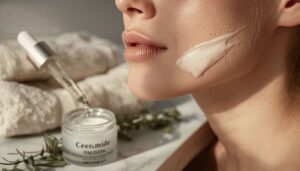
Think back to week one of your barrier repair routine, when your moisturizer stung on contact. Fast forward two weeks: it glides on silently. That quiet shift is your cue.
Here’s what recovery actually looks like:
- Products stop stinging, even actives feel comfortable again
- Redness fades from angry to faint
- Skin hydration lasts; your face stays supple hours after moisturizing
- Flaking and tightness disappear by morning
- Transepidermal water loss (TEWL) drops, so skin no longer feels dry an hour after cleansing
That last point matters most. When ceramides rebuild and your lipid matrix seals itself, moisture stays put instead of escaping. Even mild damage follows this arc, and tracking these markers tells you your routine is working.
When Does Skin Barrier Damage Need Professional Help?
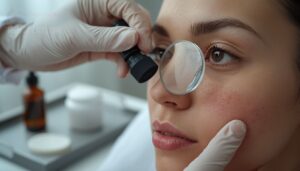
You might think pushing through with more products will fix it, but stubborn barrier damage is your skin asking for backup, not another serum.
If symptoms persist beyond 6 weeks of consistent gentle care, book a dermatologist consultation. Conditions like eczema, rosacea, or psoriasis often masquerade as treatment-resistant damage and need prescription management. Watch for red flags: severe burning, spreading redness, or signs of infection demand immediate attention.
Other escalation cues include stinging when water touches your face, transepidermal water loss above 25 g/m²/hr on barrier function assays, or no improvement after 4-6 weeks of ceramide-rich barrier repair. New papules, pustules, or recurring flare-ups also warrant evaluation.
Don’t guess with severe damage. A professional can identify triggers through testing and prescribe medical-grade options that finally move the needle.
Frequently Asked Questions (FAQs)
How do I know if my skin barrier is healing?
Watch for skin sensitivity reduction: less stinging during cleansing, fewer new irritated patches, and redness that fades between applications. Improved hydration and lower transepidermal water loss (TEWL) signal genuine barrier repair.
What is the fastest way to heal a skin barrier?
The fastest path? Strip to a gentle pH-balanced cleanser and a ceramide-rich moisturizer, pause all actives, and layer humectants for lipid replenishment. That consistency drives true barrier repair acceleration, often within days.
How long does it take to fix your skin barrier?
Faster than you’d think, honestly. Mild damage heals in 7–14 days, moderate damage takes 2–4 weeks, and severe damage can need 4–8 weeks or longer. Your consistency determines everything.
Will a damaged skin barrier repair itself?
Yes, a mildly damaged skin barrier can repair itself. Remove irritants, and your skin resumes lipid synthesis and cellular regeneration, lowering transepidermal water loss TEWL, often recovering measurably within days.
Can makeup be worn during barrier healing?
Yes, you can wear makeup during barrier healing. Choose fragrance-free, mineral-based formulas, apply with clean brushes using light pressing motions, remove with gentle cleansing, and skip makeup if skin stings.
Do barrier repair products expire faster than others?
Yes. Barrier repair products expire faster because their ceramides and fatty acids oxidize sooner, especially in jars or heat. You’ll get 6-12 months after opening, while petrolatum ointments stay stable far longer.
Is skin purging a sign of barrier damage?
Picture a renovation site: dust flying as old clutter clears, or walls actually crumbling. Purging is the former. True purging stays in your usual breakout zones, while barrier damage means burning, stinging, and flaking everywhere.
Are baby skincare products suitable for damaged barriers?
Is the theory true that gentler means better? Partly. Baby products are mild, but they rarely supply the ceramide-rich moisturizer a damaged barrier needs. They suit mild damage, not repair.
Can sun exposure undo barrier repair progress?
Wondering if a sunny afternoon wrecks your progress? Yes. UV radiation exposure inflames skin, raises transepidermal water loss, and strains your barrier lipid matrix. Protect it with an occlusive moisturizer, sunscreen, and gradual active reintroduction.
Conclusion
Your skin renews itself roughly every 28 days, which is why patience pays off here. So when you wonder how long does skin barrier take to heal, remember the answer is in your hands: simplify your routine, protect your moisture, and give your skin time to rebuild.
Track your progress, not the calendar. Comfort returns first, then calm, then glow. If weeks pass without relief, call your dermatologist. Healing isn’t a race, it’s a rebuild.