
This site is supported by our readers. We may earn a commission, at no cost to you, if you purchase through links.
Your scalp has a natural pH between 4.5 and 5.5—slightly acidic to protect against bacteria and keep hair cuticles sealed flat. When that balance tips alkaline, you’re left with itching, flaking, frizz that won’t quit, and hair that breaks easier than it should.
Most shampoos, treatments, and tap water push your scalp in the wrong direction without you realizing it.
The good news is you don’t need lab-grade products to restore that protective acid mantle. Simple kitchen staples like apple cider vinegar and aloe vera can reset your scalp’s pH in weeks, giving you healthier roots and smoother strands without harsh chemicals or guesswork.
Table Of Contents
Key Takeaways
- Your scalp’s natural pH sits between 4.5 and 5.5, and when it shifts alkaline from harsh shampoos or hard water, you’ll see itching, flaking, frizz, and breakage that won’t quit.
- Apple cider vinegar rinses (1-2 tablespoons per cup of water) and aloe vera gel restore your scalp’s protective acid barrier in weeks without expensive products or guesswork.
- Sulfates and alkaline soaps push your scalp pH above 9, stripping natural oils and triggering irritation—switching to pH-balanced, sulfate-free formulas between 4.5 and 5.5 protects your barrier.
- Testing your scalp pH at home with drugstore strips (quarterly when stable, weekly during flare-ups) gives you the data you need to adjust your routine before damage accumulates.
Why Scalp PH Balance is Important
Your scalp’s pH isn’t just a random number—it’s the foundation of everything from how your hair looks to whether your scalp feels comfortable or inflamed. When that balance shifts even slightly, you’ll notice the consequences in ways that go beyond a bad hair day.
That’s why choosing the right shampoo and conditioner combination matters—formulas designed to match your scalp’s natural pH keep irritation at bay and hair healthy.
Your scalp’s pH balance controls how your hair looks, feels, and responds to inflammation—not just cosmetics
Here’s what you need to understand about why this matters and how to recognize when things have gone off track.
Role of PH in Scalp Health
Your scalp’s natural acidic balance—hovering around pH 5.5—isn’t just a number. It’s the foundation of scalp health and pH homeostasis that keeps your barrier strong and your hair cuticle smooth.
That’s why using body wash as shampoo can backfire—most body washes sit around pH 6 to 7, which can lift the cuticle and leave hair rough.
This acidic environment limits friction, locks in moisture, and nourishes the microbes that protect you.
When scalp pH levels drift too high, you’re inviting dryness, irritation, and frizz—problems natural remedies can help you reclaim control over.
Natural ingredients like aloe vera and tea tree oil work gently to restore balance, especially when you’re dealing with itchy scalp products that target pH-related discomfort.
Effects of Imbalanced PH on Hair and Skin
When your pH balance goes wrong, the fallout hits both skin barrier and hair cuticles hard. An alkaline shift weakens your scalp’s natural defenses, opening the door to scalp infections and microbiome imbalance that fuel inflammation and itch.
Here’s what pH imbalance does to your scalp health and hair pH levels:
- Raises cuticles, causing friction, tangling, and breakage
- Slows barrier repair, increasing water loss and dryness
- Encourages harmful bacteria like Staph aureus to thrive
- Triggers protease activation, amplifying irritation and discomfort
- Erodes hair structure over time, leaving strands dull and weak
Restoring scalp acidity reverses hair damage and reclaims your comfort.
Pair this approach with proven scalp massage techniques that stimulate circulation and support your hair’s natural repair process.
Signs Your Scalp PH is Off
Your scalp sends clear signals when pH balance goes awry. Persistent itching that won’t quit? That’s elevated pH disrupting your acid mantle and allowing irritants to penetrate deeper. Visible flaking and redness indicate barrier breakdown, while excessive oiliness or sudden hair breakage reveal weakened cuticles and follicle stress.
| Physical Signs | What’s Happending |
|---|---|
| White/gray flakes, dry patches | Moisture retention fails; Malassezia thrives |
| Red, tender, burning scalp | Barrier damaged; inflammation active |
| Greasy roots, brittle ends | Sebum overproduction; cuticle lifting |
Watch for combinations—itching paired with flaking or scalp irritation alongside hair breakage usually confirm your scalp acidity has shifted out of range.
Common Causes of Scalp PH Imbalance
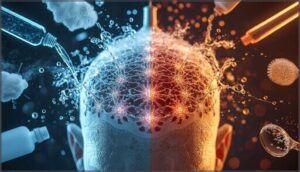
Your scalp’s pH doesn’t just shift on its own. Several everyday habits and products can throw it off balance without you realizing it.
Let’s look at the main culprits that disrupt your scalp’s natural acidity.
Many common products contain harsh sulfates or alkaline ingredients that strip away your scalp’s protective barrier—choosing pH-balanced shampoos designed for your hair type helps restore that balance naturally.
Chemical Hair Treatments
When you bleach, relax, or color your hair, you’re basically picking a fight with your scalp’s natural defenses. Here’s what happens:
- Perm Treatments and Hair Relaxers temporarily spike scalp pH with alkaline residues, weakening your skin’s protective barrier.
- Ammonia Effects from color deposits disrupt your acid mantle during application, inviting irritation.
- Chemical Damage accumulates with repeated processing, making pH balance harder to restore.
- Acidic shampoo or LowpH Shampoo post-treatment helps pull your hair pH and scalp pH back toward their natural mildly acidic range.
Harsh or Alkaline Hair Products
Everyday shampoos can sabotage your scalp without you realizing it. Alkaline shampoos with a pH above 5.5 lift hair cuticles, triggering hair fiber damage and frizz. Sulfate-heavy formulas strip natural oils, worsening scalp irritation and pH imbalance.
Even if a product foams beautifully, it might be too harsh. Swap to pH-balanced products or an acidic shampoo to keep your scalp pH stable and your hair protected.
Environmental and Lifestyle Factors
Beyond the products you choose, your environment quietly shapes scalp pH balance. Climate impact from humidity shifts sebum production, while pollution effects introduce particles that disrupt your scalp’s barrier. Hard water quality alters how shampoos perform at your scalp surface.
Lifestyle choices matter too—cigarette smoke creates oxidative stress, and dietary influence from acidic foods can support natural remedies for dandruff and overall scalp health and acidity.
How to Test Your Scalp PH at Home
You don’t need fancy equipment to check your scalp’s pH level. A simple at-home test can give you real answers about what’s happening on your scalp right now.
Here’s how to do it and what those numbers actually mean for your hair health.
Using PH Test Strips
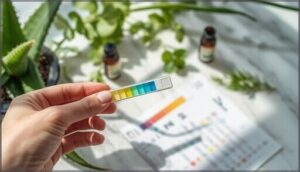
You can check your scalp’s pH balance at home with simple test strips from most drugstores. Wet a clean strip with water, press it gently against your scalp for about 30 seconds, then compare the color coding to the reference chart.
Home testing gives you pH levels within 0.5 unit accuracy—enough for practical scalp health decisions without expensive lab work.
Interpreting Results and Next Steps

Your scalp pH test results reveal whether your hair care routine is helping or harming. A reading between 4.5 and 5.5 means you’re in the healthy zone—your scalp’s natural defenses are working as they should.
Here’s what your pH levels actually mean:
- Below 4.5: Your scalp analysis shows excess acidity, often from overusing acidic rinses or treatments
- 4.5 to 5.5: Perfect scalp health range—no treatment planning needed unless you have other symptoms
- Above 5.5: Alkaline territory, usually caused by harsh shampoos disrupting your pH balance
If your scalp pH sits outside the normal range, don’t panic. Test again over three consecutive days for accurate hair diagnostic data—single readings can be misleading. Consistent results outside 4.5–5.5 signal it’s time to adjust your routine with natural methods like apple cider vinegar rinses or pH-balanced products.
Track your follow-up care by retesting monthly. If readings stay abnormal despite switching to gentler products, consult a trichologist to rule out underlying scalp conditions.
Natural Methods to Balance Scalp PH

You don’t need expensive products or salon treatments to bring your scalp back into balance. A few simple ingredients from your kitchen can work wonders when used correctly.
Here are four proven natural methods that help restore your scalp’s ideal pH range.
Apple Cider Vinegar Rinse
You’ve likely heard apple cider vinegar can save your scalp—and science backs it up. Mix 1–2 tablespoons of apple cider vinegar in one cup of water for an acidic rinse that lowers scalp pH to around 4–5.
This vinegar benefits your cuticles by tightening them and helps hair clarify buildup. Apply after shampooing to pH restore balance and scalp soothe irritation, then rinse thoroughly.
Aloe Vera Juice or Gel
Aloe vera gel or aloe juice acts as a gentle scalp soother with a pH near 4.5—right in your hair’s sweet spot. The vera properties include polysaccharides that support moisture and anti-inflammatory effects to calm irritation.
Apply pure aloe vera directly to your scalp, massage gently, then rinse after 10 minutes. This natural hair care step helps pH balance while addressing dryness and itch.
Lemon Juice as a Clarifying Pre-Wash (Use Sparingly)
Lemon juice offers acidic rinse benefits with a pH around 2-3, but it’s a double-edged sword. Dilute it heavily—one tablespoon per cup of water—to minimize scalp irritation risks from concentrated citric acid effects.
Apply as a quick pre-wash, rinse thoroughly, and follow with conditioner. This natural hair care clarifier can temporarily tighten cuticles, but overuse increases porosity.
Use sparingly and patch-test first.
Rye Flour Hair Masks
While lemon’s acidity works fast, rye flour benefits your hair pH through a gentler route. This natural cleanser sits around 5–6, matching your scalp pH closely. Mix one to two tablespoons with water into a smooth paste, massage it in, then rinse well.
- High fiber content may support healthy scalp microbiome
- Lifts oil without harsh stripping
- Best used once weekly as a hair mask
Sift first to avoid residue.
Choosing PH-Balanced Natural Hair Products
Reading ingredient labels gives you real control over what touches your scalp. The right natural products maintain your scalp’s acidic environment without stripping away its protective barrier.
Here’s what you need to know to pick products that actually support healthy pH levels.
What to Look for on Ingredient Labels
The back of a shampoo bottle can feel like a foreign language, but you only need to scan for a few key things to protect your scalp’s pH. Look for phrases like “pH balanced” or “acidic scalp care” on the front label—these are your green lights. Check for natural preservatives instead of harsh sulfates, and seek out certification marks that verify ingredient quality.
| What to Spot | Good Signs | Red Flags |
|---|---|---|
| pH Level Indicators | “pH balanced,” “acidic formula,” 4.5-5.5 range | No pH mention, “deep cleansing” only |
| Natural Ingredients | Plant extracts, aloe, oils | Sodium lauryl sulfate, synthetic fragrance |
| Label Claims | Dermatologist-tested, certified organic | Vague “natural” without certification marks |
Recommended Natural Shampoos and Conditioners
Now that you know what to hunt for, here are four pH balanced products that actually deliver. Your scalp deserves this level of care:
- Vanicream Shampoo – pH balanced, sulfate free, and stripped of fragrances and dyes for ultra-sensitive scalps
- DANI Naturals Sulfate Free Shampoo – coconut-derived cleansers with organic aloe vera
- Eucalyptus Scalp Balance Shampoo – pure aloe and camellia oil for gentle daily use
- Carina Organics Daily Moisturizing Conditioner – minimal plant-based ingredients, fragrance free
These natural shampoos and gentle conditioners maintain healthy scalp pH without compromise.
Avoiding Sulfates and Alkaline Soaps
Your scalp’s acid mantle can’t survive sulfates and alkaline soaps. Sodium lauryl sulfate strips protective oils and pushes pH above 9, triggering irritation and breakage. Switch to sulfate-free shampoos with pH-balanced cleansers between 4.5 and 5.5.
| Avoid | Choose Instead |
|---|---|
| Sodium lauryl sulfate (SLS) | Coco betaine surfactants |
| Traditional bar soaps (pH 9-10) | pH-balanced cleansers |
| Sodium laureth sulfate (SLES) | Glucoside-based formulas |
| Harsh anionic surfactants | Gentle hair care alternatives |
This switch protects your scalp pH and preserves the natural barrier function.
Daily Habits for Maintaining Healthy Scalp PH

Balancing your scalp pH isn’t just about the products you use—it’s about what you do every day. Small, consistent habits protect your scalp’s natural acidity and keep problems from creeping back in.
Here are three simple practices that make a real difference when you stick with them.
Scalp Massage and Exfoliation
Regular scalp massage boosts blood flow to your hair follicles, delivering oxygen and nutrients that support a balanced scalp pH. Use your fingertips in gentle circular motions for 3 to 5 minutes several times weekly.
Pair this with weekly exfoliation using a soft silicone brush or pH-balanced scrub to clear buildup and dead cells. This combo enhances scalp detoxification without stripping your natural protective barrier.
Balanced Diet and Hydration
What you eat and drink influences your scalp’s pH from the inside out, making nutrition a powerful tool for long-term balance. Focus on these essentials:
- Hydration tips: Drink 8 glasses of water daily to flush toxins and maintain your scalp’s natural pH balance.
- Nutrient-rich foods: Load up on healthy fats like salmon and avocados for moisture and resilience.
- Acidic diets: Add berries and leafy greens to support hair health from within using natural ingredients.
Consistent, Gentle Hair Care Routine
Think of your hair care routine like brushing your teeth—consistency beats intensity every single time. Gentle shampooing, daily conditioning, and regular hair brushing maintain scalp pH without shock to your system.
Here’s your weekly blueprint:
| Hair Care Step | Frequency |
|---|---|
| Gentle Shampooing | 2-3 times weekly |
| Daily Conditioning | After every wash |
| Hair Oiling | Once weekly |
| Scalp Exfoliation | Every 7-10 days |
| Hair Brushing | Daily (morning/night) |
This hair routine protects your natural hair products‘ effectiveness while keeping hair pH balance in check.
Frequently Asked Questions (FAQs)
Can hard water affect my scalp pH levels?
You’ve heard “the devil’s in the details”—and with hard water, those details are calcium and magnesium.
These minerals raise water pH, disrupt your scalp’s natural acidity, trigger irritation, and leave stubborn buildup behind.
How often should I test my scalp pH?
You don’t need constant pH monitoring—test quarterly when your scalp feels stable.
After trying natural remedies or new treatments, check pH levels within two weeks.
If irritation strikes, test weekly until hair balance returns.
Does scalp pH change with age or hormones?
Yes, your scalp pH shifts with hormonal fluctuations during puberty and menopause. Age-related changes also affect your scalp microbiome and pH levels, though individual variation is significant.
Can scalp pH imbalance cause hair loss?
Chronic scalp inflammation—often a red flag your pH balance is off—can trigger telogen shedding.
Hair follicle health suffers when your scalp’s protective barrier breaks down, creating an environment where hair growth stalls and strands weaken.
Are there supplements that support scalp pH balance?
Direct scalp pH supplements lack strong evidence, but omega fatty acids and minerals like zinc support your skin barrier—which indirectly helps scalp health.
Probiotics show mixed results for pH balance despite some benefits for inflammation.
Conclusion
You hold the reins regarding scalp health—no expensive appointments or lab tests required. Learning how to balance scalp pH naturally puts you back in control with ingredients already sitting in your kitchen.
Start with an apple cider vinegar rinse twice a week, skip the sulfates, and watch your scalp stop throwing tantrums. Healthy hair grows from a balanced foundation, and you just built yours.
- https://www.ncbi.nlm.nih.gov/pmc/articles/PMC4158629/
- https://www.dovepress.com/evaluation-of-scalp-hydration-and-ph-values-in-hijab-wearing-and-non-h-peer-reviewed-fulltext-article-IJWH
- https://www.thrivehairbar.com/thb-blog/rooted-in-balance-how-ph-shapes-your-hair-health
- https://onlinelibrary.wiley.com/doi/10.1111/ics.12842
- https://www.ijord.com/index.php/ijord/article/view/2020