This site is supported by our readers. We may earn a commission, at no cost to you, if you purchase through links. This content is for general informational and educational purposes only and is not a substitute for professional medical, dermatological, or nutritional advice.

You colored your hair two days ago, and now you want it gone. Maybe the shade pulled too dark, or the tone looked completely different under natural light than it did on the box. Whatever the reason, you’re not stuck.
Semi-permanent dye sits on the cuticle surface rather than penetrating the cortex, which means it responds faster to removal methods than permanent color does. Your hair’s porosity, how recently you applied the dye, and how saturated the color is will all shape how much you can lift in a single day.
Here’s exactly how to remove semi-permanent hair dye in one day without wrecking your hair.
Table Of Contents
Key Takeaways
- Semi-permanent dye sits on the hair’s surface rather than penetrating deeply, which makes it easier to remove than permanent color—though complete removal in a single day isn’t always guaranteed.
- Always do a strand test before applying any removal method to your full head, so you can catch uneven fading or damage before it becomes a bigger problem.
- Work through removal methods in order: start with clarifying shampoo, then try a vitamin C and shampoo mix or a dedicated color remover, and condition your hair after every single step.
- If your hair feels gummy, your scalp stays red, or you notice chemical burns, stop immediately and see a professional rather than pushing through with more treatments.
Can You Remove Semi-Permanent Hair Dye in One Day?

Expect some fading in a single day, but complete removal isn’t guaranteed with semipermanent hair dye. Unlike permanent color, semipermanent dye sits on the cuticle’s surface rather than deep in the cortex, so it does release more readily with washing. How much fades in one day depends on a few variables.
For inspiration on shades that tend to hold color longer, browsing top-rated lavender hair dye options can help you choose a deeper, richer hue that resists fast fading.
Hair dye removal effectiveness comes down to color saturation, how recently you applied the dye, and your hair’s porosity. More porous hair releases deposited pigment faster with each wash, which works in your favor here.
Targeted hair dye removal home remedies can accelerate fading well beyond washing alone. That said, hair dye removal safety matters as much as speed, so pace your treatments carefully to avoid stressing your hair.
Prepare Your Hair and Do a Strand Test
Before jumping into any removal method, do a strand test first. Pick a thin, hidden section near your nape and apply your chosen product with the same amount and timing you’d use on your full head.
Here’s what to track:
- Note the color change level and any dryness or unevenness
- After hair washing, rinse the strand thoroughly at the timed window
- Try light hair conditioning if the strand feels dry or frizzy
- Skip heat tools during the test since warmth skews results
- Stop if hair feels unexpectedly rough or looks patchy
Hair sectioning matters too. Split your hair into small subsections, working from the back to the front, so each area gets even product contact. Keep hair saturation consistent throughout. Flat-toothed hair sectioning clips for dyeing hold each subsection firmly in place without creating dents that disrupt your final color result.
For even better results, pairing consistent sectioning with perm-safe wrapping techniques for bleached hair helps preserve elasticity and prevent uneven curl patterns.
Start With Clarifying Shampoo to Fade The Dye

Once your strand test gives the green light, clarifying shampoo is your first move. It uses surfactants to lift semi-permanent dye off the hair’s surface, and it’s gentler than chemical removers. If clarifying shampoo alone isn’t cutting it, methods for removing semi-permanent dye from hair can walk you through stronger alternatives worth trying.
Warm water matters here. It opens the cuticle slightly, which speeds up hair color fading. Wet your hair, work the shampoo in, and let it sit three to five minutes before rinsing. After each hair washing round, press a white towel against your hair: less color transfer means it’s working.
For deeper insight into why this works, understanding how toner interacts with brown hair helps you choose the right shampoo and get the most from every wash.
Short, repeated rounds beat one long soak. Let your hair dry fully between each session.
| Wash Round | Fade Level | Key Action |
|---|---|---|
| First | Light | Warm water, 5-min contact |
| Second | Moderate | Let hair dry first |
| Third | Visible | Use hair conditioning after |
Which At-Home Treatments Can Fade Stubborn Color?
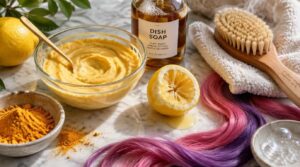
If clarifying shampoo isn’t cutting it, you’ve got a couple of solid at-home options worth trying. These methods work by breaking down dye molecules or lifting pigment from the cuticle without harsh chemicals. Here are two treatments that can make a real difference on stubborn semi-permanent color.
For a broader look at what actually works, natural hair color removal methods cover everything from oil treatments to vitamin C masks that gently coax stubborn pigment out.
Vitamin C and Shampoo
Vitamin C acts like a key, unlocking hair dye molecule breakdown and noticeable hair color fading.
Crush vitamin C tablets or mix ascorbic acid powder into your clarifying shampoo. It’s ready to apply when it’s fully dissolved.
- Apply to damp hair evenly
- Leave on for 30 minutes
- Rinse out, then condition
- Repeat if color’s still strong
- Follow with deep conditioner
Baking Soda and Vinegar Cautions
Before adding baking soda to your clarifying shampoo, always do a strand test.
Baking soda raises your hair’s pH, which lifts the cuticle and pulls out some color, but it also causes dryness and roughness.
For hair damage prevention, skip the apple cider vinegar rinse right afterward. It’ll close the cuticle back down, counteracting the fading you just worked for.
Use a Suitable Color Remover and Condition Afterward
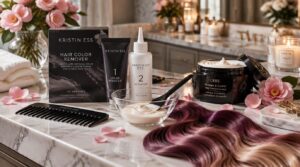
Reach for a color remover formulated for semipermanent dye, not a clarifying shampoo. These products chemically lift pigment from the hair cuticle rather than simply fading it, so you’ll see a more significant shift in one session. Check the label to confirm it’s safe for your hair type before you begin. For a deeper breakdown of which removers work best for specific dye brands and hair types, how to get semi-permanent dye out of hair walks through the options in practical detail.
Follow the timing instructions exactly. Leaving a remover on longer than directed won’t accelerate hair dye removal; it’ll disrupt the hair cuticle and leave color looking patchy and uneven. If the label allows repeat use, a second short session lifts more uniformly than one extended application.
Longer isn’t better—exceeding remover timing disrupts the cuticle and leaves color patchy
Condition immediately after rinsing. Use a conditioner made for chemically processed hair to restore slip and help any remaining pigment look more even.
Frequently Asked Questions (FAQs)
Will Dawn dish soap remove hair dye?
Yes, Dawn dish soap can help fade semipermanent dye, but it’s not a guaranteed hair dye removal solution. Its strong degreasing formula slowly strips pigment, so don’t expect full color removal in just one wash.
How soon after dyeing should removal begin?
Think of fresh dye like wet paint: it needs time to set.
Start removal 24-48 hours after dyeing for the best results. If your hair is damaged or porous, act closer to the 24-hour mark.
Keep in mind that hair porosity and color intensity influence how quickly semi-permanent dye fades, usually after 6–12 washes.
Can semi-permanent dye stain skin or scalp?
Semi-permanent doesn’t mean stain-free. Pigment deposits directly on your skin and scalp, particularly along the hairline, ears, and neck, and darker shades make skin staining most visible. It’s completely temporary, though, and fades with washing.
Will hair be damaged after full removal?
Picture straw instead of smooth silk. Multiple stripping steps in one day can raise hair porosity, trigger elasticity loss, and cause hair damage.
You’ll protect moisture retention and prevent breakage by conditioning deeply right after.
When should you see a professional instead?
Up to 30% of at-home color removal attempts lead to some form of unintended damage. If your hair goes gummy or rubbery, chemical burns appear, or your scalp stays red after rinsing, see a professional.
Conclusion
Semi-permanent color sits on your strand like a coat, not a tattoo, and that’s exactly what makes it reversible.
Knowing how to remove semi-permanent hair dye in one day starts with patience and the right products, in the right order. Clarify first, treat second, and condition every single time. Your hair is more resilient than you think. By tonight, you can walk away with a cleaner slate and a much sharper plan for next time.