This site is supported by our readers. We may earn a commission, at no cost to you, if you purchase through links. This content is for general informational and educational purposes only and is not a substitute for professional medical, dermatological, or nutritional advice.

Vaseline doesn’t rinse out. Water beads off its petroleum base, so a shower can spread the grease further down your strands instead of lifting it. That’s why one slick patch can survive three washes.
The fix isn’t more shampoo. It’s blotting, an absorbent powder, and a clarifying wash in the right order, done on mostly dry hair so the jelly doesn’t melt deeper into your cuticle. Skip the order and you’ll grind oil into your scalp.
Here’s how to get vaseline out of hair its easy, step by step, with backup methods for stubborn residue.
Table Of Contents
- Key Takeaways
- Why is Vaseline Hard to Remove?
- What You Need Before Removing Vaseline
- How to Get Vaseline Out of Hair
- Which Backup Methods Remove Vaseline?
- How Can You Prevent Hair Damage?
- Will Vaseline Come Out Completely?
- Frequently Asked Questions (FAQs)
- What breaks down Vaseline in hair?
- How long does it take for Vaseline to get out of your hair?
- Does Dawn dish soap get Vaseline out of hair?
- How to get Vaseline out of hair without washing?
- How can you get Vaseline out of your hair?
- What is the easiest way to remove Vaseline?
- What happens if Vaseline gets in hair?
- Will Dawn dish soap get Vaseline out of your hair?
- What are alternatives to Vaseline for hair care?
- How often should Vaseline be used on hair?
- Conclusion
Key Takeaways
- Vaseline won’t rinse out because it’s water-insoluble, so washing early just spreads the film—blot excess with paper towels first, on mostly dry hair, without rubbing.
- After blotting, apply an absorbent powder like cornstarch or baking soda to soak up the remaining film, then comb it out before any washing.
- Wash with clarifying shampoo (or dish soap as a backup, max twice) in warm—not hot—water, then condition mid-lengths to ends, since clarifying products strip natural oils.
- Vaseline doesn’t damage or bond to hair, so it comes out completely with the right sequence—blot, powder, clarify, condition—typically within two to three wash cycles.
Why is Vaseline Hard to Remove?
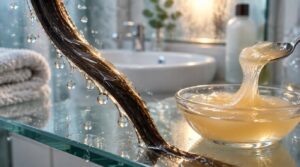
Understand why Vaseline resists washing before you start. Petroleum jelly is not water-soluble, so plain rinsing just redistributes residue instead of dissolving it. It forms an occlusive film over each strand, blocking water from reaching the coating underneath.
This is why a full guide on how to get Vaseline out of your hair recommends oil-based methods rather than repeated washing.
Because Vaseline isn’t water-soluble, rinsing just redistributes its occlusive film instead of dissolving it
That film clings through hydrophobic interactions with your hair’s lipid and protein-rich surface. The longer it sits, the more continuous the coating becomes, and it traps sebum and other styling products, making the mixture harder to break apart.
Removing it requires surfactant action, not extra water. Mild shampoos often can’t emulsify such a heavy oily film, which is why you may still feel a coated texture after washing. Effective oil removal depends on strong surfactants or grease dissolving agents that lift the softened film off your strands.
What You Need Before Removing Vaseline
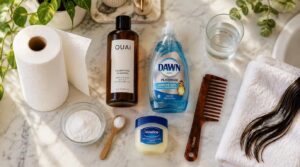
Since water alone won’t break that film, gather your supplies before you touch your hair. Working on mostly dry strands keeps the petroleum jelly from spreading, so set everything within reach first.
- Paper towels for blotting excess product
- An absorbent powder, such as baking soda or cornstarch
- Clarifying shampoo, not a gentle or moisturizing formula
- Liquid dish soap as a backup degreaser
- A clean towel and a wide-tooth comb
Keep your water temperature moderate; heat softens the jelly and pushes it deeper into your strands. If your scalp is sensitive, skip harsh degreasers initially and test products on a small section. Curly or coily hair needs extra pre-wash attention, so plan for longer contact time.
How to Get Vaseline Out of Hair
Vaseline doesn’t rinse out with water alone, so you’ll need a step-by-step approach. Each stage builds on the last, from removing the bulk to washing out what’s left. Follow the four steps below in order for the cleanest result.
If you’re worried about stripping moisture from your ends while you work, a scalp-and-ends moisturizing routine can help you protect the lengths during the process.
Blot Excess Vaseline First
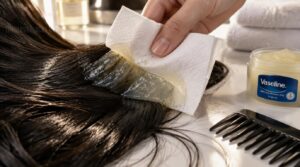
Picture a paper towel pressing into a slick, glossy patch of Vaseline and peeling away gray with every lift. That’s your first move before any washing.
Blot, don’t rub. Press a paper towel or clean cloth against each section, working from the outside toward the center. Use light pressure so you don’t push residue toward your roots.
Swap to a fresh towel section after each blot. Reusing a saturated spot just smears petrolatum back onto clean strands. A wide-tooth comb helps separate clumps so every coated strand gets contact.
Skip the shampoo and warm water for now. Water-based products can’t cut through this film, and washing early spreads it thinner. Expect multiple blot cycles on thick buildup; you’re removing bulk, not every trace.
Apply Absorbent Powder
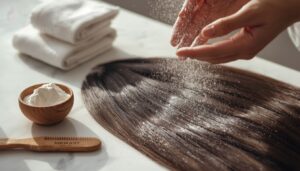
Blotting removes the bulk, but a slick film stays behind. Now trap it with powder.
Choose cornstarch or baking soda; both adsorb petrolatum well. A cornmeal powder works too. Apply to dry hair only, coating the greasiest sections generously.
Massage lightly so grains contact every coated strand. Wait two to three minutes, then comb out thoroughly with paper towels nearby to catch dusty residue.
Wash With Clarifying Shampoo

Saturate your hair with warm water first, then work clarifying shampoo through the coated sections. Massage with your fingertips, not just your scalp, so the surfactants reach the Vaseline film. Let it sit two minutes, then rinse. Repeat once if strands still feel slick.
This hair washing technique lifts product buildup better than one quick pass.
Rinse and Condition Thoroughly

Thoroughness decides whether Vaseline leaves your hair or lingers as a waxy film. Follow this order:
- Rinse with warm water for 2–3 minutes, massaging your scalp.
- Apply a small amount of clarifying shampoo, lather, then rinse until runoff runs clear.
- Condition mid-lengths to ends with moisturizing conditioner, wait 2 minutes, then rinse with cool water.
Check the ends. If hair still feels slick, repeat the wash before conditioning again.
Which Backup Methods Remove Vaseline?
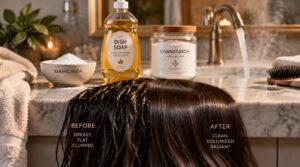
If shampoo alone doesn’t lift all the petroleum jelly, don’t panic. You have three reliable backup methods that break down stubborn residue when the standard routine falls short. Follow the steps below in order, and stop once your hair feels clean.
For a full walkthrough with photos of each technique, this guide on how to get Vaseline out of your hair covers every step in detail.
Dish Soap for Stubborn Residue
Dish soap cuts grease better than most shampoos, so it’s your strongest backup for stubborn Vaseline. Use a pea-sized amount to start.
- Wet hair with warm water.
- Massage dish soap into the coated sections for 60 seconds.
- Rinse fully, then repeat once if residue remains.
Don’t repeat more than twice; dish soap strips natural oils and can dry your scalp quickly.
Oil-Based Removal Method
Picture Vaseline like a sticker on glass: pulling it dry tears and smears, but pressing a sticker against another sticky surface lifts it clean. That’s the logic here.
Petroleum jelly dissolves in its own kind, so oil-based solvents work well. Warm 2 tablespoons of olive or coconut oil, massage through the coated section for 2 minutes, then use blotting with a paper towel to lift the loosened Vaseline before shampooing.
Diluted Vinegar Rinse
Vaseline resists water, but a diluted vinegar rinse can loosen its grip before your final wash.
- Mix 1 part vinegar with 3 parts warm water.
- Pour over clean, blotted hair.
- Let it sit 3 to 5 minutes.
- Rinse with cool water.
Avoid broken scalp skin; acid stings. Follow immediately with clarifying shampoo, then condition, since vinegar dries hair.
How Can You Prevent Hair Damage?
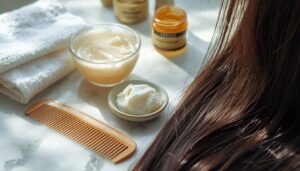
The removal process can be harder on your hair than the Vaseline itself. Protect your strands with these habits:
- Blot with paper towels instead of rubbing, so you don’t grind oil into the cuticle
- Detangle with a wide-tooth comb, starting at the ends and working up
- Keep water warm, not hot, to protect moisture retention
Limit clarifying shampoo to this one session. Frequent use strips natural oils and roughs up your cuticles, which works against hair breakage prevention. After rinsing, apply conditioner from mid-length to ends and let it sit for two to three minutes before rinsing with cool water.
Skip heat styling for 24 hours. Your hair care routine should focus on lubrication right now, because hydrated strands flex instead of snap. That’s the heart of natural hair care and long-term hair damage prevention.
If you’re rebuilding your routine after this, a step-by-step guide to building a hair care routine can help you match washing and conditioning habits to your hair type.
Will Vaseline Come Out Completely?
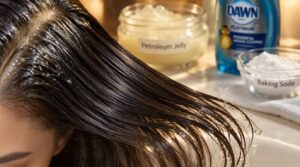
Yes, Vaseline comes out completely. It doesn’t bond to or chemically alter your hair shaft, so nothing permanent is left behind. What you’re fighting is its water-insoluble film, not damage.
Thin coatings usually clear in one or two clarifying shampoo washes. Large or dried-on amounts may take several cycles. If you still feel waxy residue after drying, check the roots, hairline, and undersides, where petroleum jelly hides in dense sections.
For stubborn spots, work in liquid dish soap or a baking soda paste, then rewash. Never reach for gasoline or paint thinner; they’re unsafe for your scalp.
You’re done when strands no longer clump or feel slippery. If greasiness persists after repeated washing, see a professional.
Frequently Asked Questions (FAQs)
What breaks down Vaseline in hair?
Surfactants break it down. Clarifying shampoo and dish soap surround petroleum jelly’s oily film so warm water rinses it away. Baking soda absorbs grease first, and blotting removes the excess before washing.
How long does it take for Vaseline to get out of your hair?
Expect 10 to 20 minutes of active effort. Blot first, then plan on two to three full shampoo cycles. Thick layers or porous hair may need an extra wash, since microscopic residue lingers after visible grease lifts.
Does Dawn dish soap get Vaseline out of hair?
You might worry dish soap will wreck your hair, but it won’t if you condition after. Dawn works as a strong degreaser that emulsifies petroleum jelly. Lather once, rinse, then condition deeply.
How to get Vaseline out of hair without washing?
Skip the water. Blot excess with a paper towel, don’t rub. Dust cornstarch or baking soda on sticky spots, wait two minutes, then brush out clumps. Follow with a drop of oil if residue remains.
How can you get Vaseline out of your hair?
Picture a slick, waxy film clinging to each strand. Blot the excess with a dry towel, dust on baking soda, brush it out, then wash with clarifying shampoo. Rinse, condition, repeat if needed.
What is the easiest way to remove Vaseline?
Nothing strips Vaseline faster than this: blot with paper towels, dust on cornstarch for oil absorption, then massage clarifying shampoo into warm water-softened hair. Rinse, repeat once, and condition immediately after.
What happens if Vaseline gets in hair?
Vaseline coats each strand with a water-resistant, oily film. It repels water, resists normal hair cleansing, and builds up in layers. Your hair feels greasy and weighed down until you remove the residue.
Will Dawn dish soap get Vaseline out of your hair?
Yes, Dawn dish soap removes Vaseline from your hair. Its surfactants emulsify petroleum jelly so warm water rinses it away. Apply directly to dry hair, repeat two to three times, then deep condition immediately to replace stripped oils.
What are alternatives to Vaseline for hair care?
Want shine without the grease? Skip petroleum jelly and use silicone serums, jojoba oil, or almond oil for light moisture. Try coconut oil or olive oil pre-wash, plus water-based gels.
How often should Vaseline be used on hair?
Picture a thin plastic wrap coating each strand.
Use Vaseline sparingly: apply small amounts for brief, intentional styling or sebum control, not daily reapplication. Frequent layering worsens product buildup and complicates hair cleansing between your normal hair washing frequency.
Conclusion
A client once washed her hair four times after a Vaseline mishap and lost more moisture than grease. That’s the trap: repetition without method.
Knowing how to get vaseline out of hair its easy comes down to sequence, not force. Blot first, powder second, clarify third, condition last. Follow that order and even stubborn patches release. Your hair won’t just look clean again. It’ll feel like the Vaseline was never there.