This site is supported by our readers. We may earn a commission, at no cost to you, if you purchase through links. This content is for general informational and educational purposes only and is not a substitute for professional medical, dermatological, or nutritional advice.
Most shaving cuts start before the razor touches your skin. A dull blade, dry whiskers, or one rushed pass across a jawline can turn a clean shave into a sting that lasts all day.
Learning how to shave without cuts comes down to control, not fancy gear. Clean skin keeps grit out of the blade. Warm water softens stubborn hair, and a sharp razor needs far less pressure than most people use.
Take a few extra minutes to prep, follow your hair growth, and treat tight spots with patience. Your skin will tell the difference after the smooth, irritation-free shave.
Table Of Contents
- Key Takeaways
- How to Prepare Skin for a Cut-Free Shave
- How to Choose a Safe Razor and Lubricant
- How to Shave Without Cuts Step by Step
- How to Shave Sensitive Areas Safely
- Post-Shave Care and Cut Treatment
- Frequently Asked Questions (FAQs)
- How to shave properly without cuts?
- Should I remove testicle hair?
- How do people shave their privates so smoothly?
- Should you shave your butt hair?
- How to shave without cutting yourself?
- Should you shave while shaving?
- Can You Cut Your Skin while shaving?
- What should I do if I get a cut while shaving?
- How to prevent cuts when shaving your face?
- Can you get cut while shaving your legs?
- Conclusion
Key Takeaways
- Prepare first by cleansing, trimming long hair, softening it with warm water for 30–60 seconds, and applying shaving cream or gel.
- Use a clean, sharp razor, replace it as soon as it tugs, and rinse it every few strokes to prevent drag and clogged blades.
- Shave slowly with the direction of hair growth, using light pressure and short strokes while keeping loose skin taut around curves and sensitive areas.
- Finish with cool water, alcohol-free balm, and fragrance-free moisturizer; treat small nicks with steady pressure or styptic, and keep the razor clean and dry.
How to Prepare Skin for a Cut-Free Shave

Good prep is what separates a clean shave from a painful one. Before the razor ever touches your skin, a few simple steps make all the difference. Here’s how to get your skin ready the right way.
For reactive complexions, follow a sensitive skin shaving preparation routine that cleanses gently without stripping natural moisture.
Cleanse Skin With Gentle Wash
Cleanse with gentle face wash before you do anything else. First, wash your hands, then apply a fragrance-free liquid cleanser. Work it in gently, rinse with lukewarm water, and pat dry.
- Wash hands before touching your face
- Choose a fragrance-free liquid cleanser
- Work cleanser across skin in circles
- Rinse thoroughly with lukewarm water
- Pat skin dry with a soft towel
Exfoliate Without Irritating Skin
Once your skin is clean, exfoliate with a bristled brush or an exfoliating scrub. This lifts dead skin cells so your razor can glide cleaner and catch less resistance.
Keep strokes light and circular, about 30 seconds. Use lukewarm water, not hot, to cut down on irritation.
Stick to once or twice a week. Sensitive skin does better with less.
Trim Longer Hair Before Shaving
Your skin is now clean and well prepped. Trim longer hair before shaving if it’s more than a few millimeters long. A razor cuts stubble, not long strands. Skipping this step causes drag. Trimming first helps prevent blade clogging and dulling, keeping each pass cleaner and more effective. Use an electric trimmer:
- Prevents the blade from catching multiple hairs
- Reduces drag on skin
- Lowers your irritation risk
- Helps maintain blade sharpness
- Makes each pass smoother
Soften Hair With Warm Water
With trimming out of the way, it’s time for warm water therapy. Wetting your hair with hot water might seem logical, but you want warm, around 95 to 105°F.
Warm water to soften hair opens the cuticle. Hair softening reduces how much resistance your razor meets. Soften your whiskers for 30 to 60 seconds before picking up the razor blade.
Map Your Hair Growth Direction
Before picking up the razor, map your hair growth direction first. Run dry fingers through each zone – the easier path is your grain.
- Feel for resistance
- Check crown, sides, and nape
- Note any cowlicks
Hair follicle direction shifts zone to zone. Shave with the grain – shaving in the direction of hair growth keeps the blade gliding and prevents irritation.
For extra comfort, follow these sensitive skin shaving tips for smooth legs to minimize razor burn.
How to Choose a Safe Razor and Lubricant

The right razor and lubricant do more work than most people realize — they’re what stand between a clean shave and a face full of nicks. Getting these two basics right comes down to knowing what your skin actually needs. Here’s what to look for before you pick up the blade.
Match Razor Type to Skin
Not every razor works for every face. If you have sensitive skin, a single blade safety razor gives you better pressure control and cuts down on razor burn.
A cartridge razor suits quick, efficient shaving, especially if it has a moisturizing strip. Skip cream entirely? An electric razor keeps things simple and low-risk.
Match the tool to your skin first.
Check Blade Sharpness and Damage
Before it touches your face, a dull blade gives itself away. Hold it to bright light and look along the edge. A shiny white line where the cutting edge sits means it’s no longer sharp.
A sharp quality razor cuts paper cleanly without drag. Tearing or snagging is a clear sign the edge is done. Check sharpness before every shave.
Replace Blades Before They Tug
The tugging sensation is your warning sign. When a blade drags instead of glides, it’s already past its prime.
Replace blades every 5 to 10 shaves, or sooner if you feel resistance. Daily shavers need a fresh blade weekly. A sharp quality razor needs no extra pressure. Sticking to a blade replacement schedule keeps your proper shaving technique on track.
Use Shaving Cream or Gel
Don’t shave on bare skin. Lubrication during shave is non-negotiable.
- Apply a liberal amount of shaving cream or gel to wet facial skin
- Use shaving cream for dry or sensitive skin
- Shaving cream lather cushions and softens hair
- Using shaving cream gives a richer, moisturizing feel
- Gel lets you see exactly where you’ve shaved
Both create a protective blade path.
Add Oil for Extra Glide
Pre-shave oil is the extra step most people skip. Apply 2-3 drops to damp skin, wait 30 seconds, then layer your glycerin-based shave cream on top. The shaving cream lather locks it in. Together, they lubricate your skin better than cream alone. That razor glide smoothness means fewer nicks. Natural oil moisturizers like jojoba also protect your skin throughout.
How to Shave Without Cuts Step by Step
Good preparation gets you to the razor. Now it’s time to actually use it — and how you move the blade matters more than anything else. These five technique habits are what separate a clean shave from a painful one.
Shave With The Grain
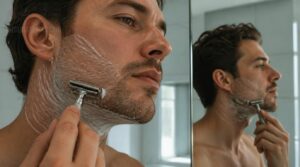
Knowing your hair growth direction changes everything about how you shave. On cheeks, hair usually grows downward. The neck can grow sideways, diagonally, or in swirls.
Check these three zones:
- Cheeks: usually downward
- Jawline: diagonal or angled
- Neck: varies by spot
Shaving with the grain, using a sharp, quality razor, avoids excessive pressure and keeps skin calm.
Use Light, Short Strokes

Once you’ve got grain direction locked in, it’s time to think carefully about stroke length optimization. Light, short strokes of about 2cm keep your blade angle and pressure steady.
Pressure control means the razor does the work, not your hand. Shorter passes also improve razor hygiene by limiting hair and cream buildup, so each stroke glides cleanly across the skin.
Let The Razor Glide Slowly

Speed works against you here. Let the razor do the work by keeping your hand relaxed and your pace deliberately slow.
- Go slowly while shaving to give the blade time to cut clean
- Use short strokes and avoid excessive pressure
- Rinse the razor off every few strokes to keep the blade moving freely
That slow pace is where control lives.
Rinse Blades Every Few Strokes

A clogged blade drags instead of cuts. Rinse the razor off every few strokes under warm water to flush hair and cream before buildup starts pulling at your skin. Don’t skip this.
| Rinse Timing | Why It Matters |
|---|---|
| Every 2-3 strokes | Clears cream and hair buildup |
| After each pass | Restores clean blade contact |
| Under warm water | Loosens debris quickly |
| Before switching areas | Prevents cross-contamination |
| End of shave | Completes your razor hygiene |
That’s the heart of rinsing the blade frequently, and it’s part of maintaining your razor between passes. A quick shake after each rinse clears the excess water.
Avoid Repeated Razor Passes

Each extra stroke is one too many. Avoid repeated razor passes. They irritate your skin fast. Light short strokes get the job done right the first time. Skip the repeat passes with these habits:
- Stretch skin taut before each stroke
- One clean pass per section
- Rinse then check again
- Avoid excessive pressure
Short strokes will guarantee that you have control.
How to Shave Sensitive Areas Safely

Sensitive areas like the neck, bikini line, and jawline demand more care than the rest of your shave. The skin is looser, the curves are tighter, and one wrong move can mean a nick or serious irritation. Here’s exactly how to handle them without the drama.
Hold Loose Skin Taut
Loose skin is a razor’s worst enemy. Hold loose skin taut before each stroke to keep the surface flat and even.
| Body Area | Tension Technique | Why It Helps |
|---|---|---|
| Neck | Pull skin downward | Flattens folds |
| Jaw | Puff cheek out | Smooths surface |
| Underarm | Raise arm fully | Removes wrinkles |
Use light short strokes with sharp quality tools. Avoid excessive pressure and master gentle technique to stay cut-free.
Navigate Curves With Small Strokes
Moving through curved areas like the jawline and chin demands patience. Short strokes will give you control as skin shifts direction.
For contour area shaving, hold a 30-degree angle and follow the flattest part of each curve. Pressure control is key. Light short strokes glide over bumps without catching.
Shaving sensitive areas near your nose or lips? Go smaller.
Shave Acne-Prone Skin Carefully
Breakouts need a lighter touch, not a rougher shave. Start with cleansing with gentle face wash, then use warm water and a non-comedogenic gel.
Use sharp quality tools, shave with the grain, and allow the weight of the razor to do the work. Don’t shave directly through inflamed acne. Finish with moisturizing for skin barrier support. If skin breaks, use a trimmer until it settles fully.
Let a sharp razor’s weight do the work, avoid inflamed acne, and use a trimmer until broken skin heals
Avoid Cuts Around Existing Bumps
Keep the razor on flat skin beside the bump, never over its highest point. Use short strokes that move away from the raised area, with only light contact. This gives you better shaving pressure control and lowers the chance of a sudden nick.
Rinse when drag starts. Avoiding repeated passes helps with skin irritation reduction. If a bump resists a close shave technique, leave it alone.
Skip Against-the-Grain Shaving
Against-the-grain shaving can turn sensitive skin into a trouble spot. Shave with the grain, shaving in the direction of hair growth, especially around the neck, jaw, bumps, and acne.
Use sharp quality tools, then make one controlled pass. Skip the repeat passes. Avoiding repeated passes limits friction, ingrown hairs, and surprise nicks. A less-close shave is usually safer.
Post-Shave Care and Cut Treatment

A clean finish matters as much as a careful shave. The right steps calm your skin, handle small nicks, and keep your tools ready for next time. Follow this post-shave routine once you put the razor down.
Rinse Skin With Cool Water
Splash away leftover cream with cool or lukewarm water. Rinse until your skin feels clean, especially around the jaw, neck, and under the nose. Hot water can cause flushing and irritation after shaving.
Use open hands, not a washcloth, and don’t scrub. This postshave care step helps with skin preparation, pressure control, and razor maintenance by leaving skin calmer for the next shave.
Apply Alcohol-Free Aftershave Balm
With your skin still slightly damp, use an Alcohol-Free Aftershave Balm. Put a dime-size amount in your palm, rub your hands together, then massage it across every shaved area.
- Avoids alcohol sting
- Helps Skin Irritation Reduction
- Helps Razor Burn Avoidance
- Spreads evenly on damp skin
- Starts Moisturizing for Skin Barrier
This Postshave Care step calms fresh-shaved skin without soaking it.
Moisturize The Shaved Area
Follow your balm with a fragrance-free moisturizer while your skin is still slightly damp. This locks in skin hydration after shaving and helps replace moisture and oils lost during the shave.
Choose humectants like glycerin or hyaluronic acid, plus ceramides or squalane for skin barrier protection. Use a moisturizer with SPF on exposed areas during the day. This postshave skincare step reduces tightness without leaving greasy residue.
Stop Bleeding With Styptic
If a small nick appears, rinse it with cool water, then apply styptic powder directly to the spot. Press gently but steadily for 10 to 15 seconds. It tightens tissue and slows bleeding.
Use it only on shallow shaving cuts, never deep wounds or burns. A sharp razor remains your best nick prevention tool. Proper aftercare also helps skin irritation reduction.
Clean, Dry, and Store Razors
Once you finish, rinse hair and cream from the razor under warm running water, including between the blades. Dry your razor with a clean towel instead of leaving moisture trapped.
For razor storage hygiene, find an upright dry spot away from shower spray, using a stand or cup. Cleanse with gentle face wash before shaving. Replace blades when they tug.
Frequently Asked Questions (FAQs)
How to shave properly without cuts?
Use sharp quality tools, shave with the grain, and use short strokes for control. Avoid excessive pressure. Keep skin wet with cream, and rinse it in pipinghot water every few strokes to prevent clogging.
Should I remove testicle hair?
Removing testicle hair is optional. For lower risk, trim instead of shaving. If shaving, shave with the grain; short strokes will help you maintain control. Use sharp tools, avoid repeated passes, and prioritize moisturizing for skin barrier.
How do people shave their privates so smoothly?
It isn’t about shaving closer. Soften your whiskers, use sharp quality tools, shave with the grain, and avoid excessive pressure. Stretch skin gently, make short strokes, then follow up with proper aftercare.
Should you shave your butt hair?
Butt hair removal is optional. For comfort, try shaving in the direction of hair growth. Short strokes help you stay in control while using sharp quality tools, avoiding excessive pressure, and moisturizing for skin barrier.
How to shave without cutting yourself?
Prep with warm water and shaving cream. Make sure that your razor is sharp. Shaving in the direction of hair growth, use light pressure. Short strokes will make sure that you have control, avoiding repeated passes and nicks.
Should you shave while shaving?
Jordan, shaving twice, is redundant. Prepare first. Using razors with 45 blades, Shaving in the angle of hair growth, Short strokes will make sure that you have control. Replace the blades. Rinse it in pipinghot water.
Can You Cut Your Skin while shaving?
Yes. Poor shaving angle, dull razor blade sharpness, long strokes, skipping shaving cream, and repeated passes can cut skin. Keep strokes short, let the razor glide, and replace blades before they tug.
What should I do if I get a cut while shaving?
Apply firm pressure with clean tissue for 30 seconds, then rinse with cool water. Use a styptic pencil if needed. Once dry, avoid applying aftershave, shaving cream, shaving gel, or conditioner until healed.
How to prevent cuts when shaving your face?
Use warm water and shaving cream to soften hair. Keep blades sharp and clean. Shave with the grain using light pressure. Short strokes give control. Rinse often, move slowly, and avoid repeated passes.
Can you get cut while shaving your legs?
Legs can get nicks and cuts, especially around ankles and knees. Fit a new razor blade, shave toward hair growth, and use light strokes. Short strokes will help you have control, avoiding repeated passes.
Conclusion
A good shave is built like a clean line: steady, deliberate, and never forced. When you prep your skin, use a sharp blade, and shave with the grain, you give the razor less work and your skin more protection.
That’s how to shave without cuts, even around difficult curves. Slow down when needed. Light pressure prevents most mistakes, while calm post-shave care lets skin recover.
Make these steps routine, and each shave becomes safer.