This site is supported by our readers. We may earn a commission, at no cost to you, if you purchase through links. This content is for general informational and educational purposes only and is not a substitute for professional medical, dermatological, or nutritional advice.
Bright teeth and even skin tone rank among the most requested cosmetic goals I see in my practice—and most people are surprised to learn that safe, noticeable results don’t always require an expensive procedure.
The whitening industry generates billions annually, yet a significant portion of patients arrive with sensitivity flare-ups from skipping one critical step: proper preparation.
Whether you’re targeting coffee-stained enamel or uneven skin tone, the approach matters as much as the product. From peroxide strips to papaya masks, knowing which method suits your starting point—and your sensitivity threshold—separates results that last from ones that sting.
Table Of Contents
- Key Takeaways
- Start With Safe Whitening Basics
- Whiten Teeth at Home
- Choose Professional Teeth Whitening
- Brighten Skin Safely at Home
- Maintain Whiter Results Longer
- Frequently Asked Questions (FAQs)
- What is the fastest way to whiten?
- Can yellow teeth become white again?
- How to whiten skin fast?
- How to whiten yellow teeth in 3 minutes?
- How can I get my teeth whitened quickly?
- How can I whiten faster?
- What is the best thing to whiten teeth?
- Can teeth whitening affect existing dental work?
- Are there age restrictions for teeth whitening treatments?
- How long do professional teeth whitening results last?
- Conclusion
Key Takeaways
- Prep work is everything — checking your sensitivity and patch-testing before using any whitening product protects you from painful setbacks and wasted effort.
- Your starting point determines your method: surface stains from coffee or tea respond well to peroxide strips and baking soda, while deeper discoloration from aging or antibiotics needs professional treatment.
- Keeping results means daily habits — SPF 30 every morning, staying hydrated, limiting staining drinks, and gentle cleansing do more for long-term brightness than any single treatment.
- Natural kitchen ingredients like papaya, rice flour, and lactic acid from milk can brighten skin safely over time, but only when used consistently and followed by moisturizer.
Start With Safe Whitening Basics
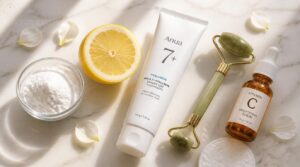
Before you reach for any whitening product, a few smart basics can save you a lot of frustration — and protect your skin or teeth in the process. Knowing where to start makes the whole thing feel a lot less overwhelming. Here’s what to check off before anything else.
If natural options appeal to you, five evidence-backed natural remedies for skin whitening are a solid place to begin before reaching for anything harsher.
Identify Teeth or Skin
Before you grab a whitening strip or mix a DIY remedy, take a moment to figure out what you’re actually working with. Teeth and skin whiten differently — and knowing which one needs attention changes everything.
Your tooth color comes from two layers: the outer enamel and the dentin beneath it, while uneven skin tone usually traces back to melanin distribution patterns. The enamel layer is primarily composed of an inorganic matrix structure.
Check Sensitivity First
Once you know whether you’re working on teeth or skin, the next step is simple: check your sensitivity first. If your teeth ache when you sip something cold, that’s a signal worth respecting.
Exposed dentin or thin enamel makes whitening agents hit harder — and gum irritation can flare up fast if peroxide contacts soft tissue.
Patch Test Remedies
Before you reach for any remedy — whether it’s a baking soda paste or a papaya mask — do a quick patch test first. Apply a small amount to your inner wrist or behind your ear, then wait 24 to 48 hours.
If your skin passes the test, a gentle daily moisturizer like the Olay Micro Sculpting Cream fragrance-free formula makes a great next step for sensitive skin.
Redness, itching, or swelling means stop. A dermatologist can help build an allergy avoidance plan if reactions keep showing up.
Set Realistic Shade Goals
Once you’ve patch-tested your remedies, it’s time to get honest about what whitening can actually do for you. Your initial color assessment matters more than people expect — naturally yellow teeth often respond well, while grayish tooth discoloration from antibiotics or aging is harder to shift.
Set your shade goal around what your teeth can realistically reach, not a magazine photo.
Whiten Teeth at Home
Good news: you don’t need a dental office to start seeing brighter teeth. A few simple habits done consistently at home can make a real difference over time. Here’s where to begin.
Brush and Floss First
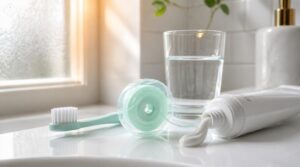
Think of your teeth as a canvas — whitening works best on a clean one.
Floss before brushing to lift plaque and food from between teeth, then brush gently for two minutes using a soft-bristled toothbrush. This pre-whitening preparation clears debris so whitening products reach your enamel evenly, giving you noticeably better, more consistent results.
Try Whitening Strips

Whitening strips are one of the easiest ways to take control of your smile. Each strip is coated with a peroxide-based whitening gel that breaks down stain molecules right on your enamel.
For a gentler, wallet-friendly alternative, these natural skin care remedies using kitchen ingredients can complement your whitening routine without harsh chemicals.
- Press firmly for even strip adhesion
- Stick to the recommended wear time — usually 30 minutes
- Stop immediately if sensitivity becomes painful
Use Peroxide Mouthwash

Swishing with peroxide mouthwash is a simple step that can quietly lift surface stains over time. Mix equal parts 3% hydrogen peroxide and lukewarm distilled water, then swish and gargle for one minute before rinsing thoroughly.
Don’t push past that time — longer contact can irritate gum tissue or weaken enamel. Twice daily works well for most people without overdoing it.
Brush With Baking Soda
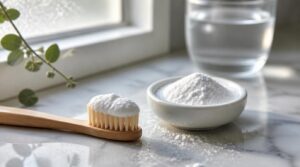
Baking soda is one of those quiet overachievers hiding in your kitchen cabinet. As sodium bicarbonate, it works through mild abrasion to lift surface stains without bleaching your enamel.
- Dip a soft-bristle brush into a small baking soda paste
- Brush gently for two minutes, using light pressure
- Rinse thoroughly, then repeat two to three times weekly
Limit Staining Drinks

What you drink between whitening sessions can undo all your hard work. Tea, coffee, and red wine all contain tannins that cling to enamel and slowly build up visible stains. Cola doubles the damage — its dark pigments plus acid soften enamel, letting color sink deeper.
Use a straw, rinse with water after, and cut back on tobacco to protect your results.
Choose Professional Teeth Whitening
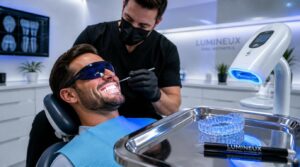
Sometimes home kits just don’t cut it, and that’s exactly when a professional steps in. Your dentist has options that go far beyond what you’ll find on a drugstore shelf, from custom-fitted trays to treatments that can brighten your smile in a single visit. Here’s what’s available when you’re ready to take things to the next level.
Custom Trays and Gels
Think of custom trays as the precision tool that strips and generic options simply can’t match.
Your dentist takes an impression of your dental arch, then fabricates a custom whitening gel tray that fits your teeth exactly — minimizing gel leakage and protecting your gums. This tight seal means the carbamide peroxide whitening gel stays where it belongs, delivering more even, consistent results session after session.
In-office Whitening Treatments
Custom trays are great for home use, but sometimes you want faster, more dramatic results — that’s where in-office whitening takes over.
Your dentist starts by measuring your current tooth shade, then places a gingival barrier to protect your gums before applying a high-concentration peroxide gel. An LED light system can activate the gel, accelerating the process within a single visit.
Laser Whitening Options
If in-office whitening left you wanting an extra edge, laser whitening takes that same concept further.
Your dentist applies a concentrated peroxide gel directly to your teeth, then uses focused laser light to trigger rapid peroxide activation — speeding up the whitening reaction considerably. Most sessions wrap up in under one hour, with the laser moving across sections of your teeth in short, controlled intervals.
- The laser targets specific wavelength effects to break down stain molecules faster
- A protective barrier shields your gums throughout, so gum protection stays consistent
- Sensitivity is common; your dentist adjusts gel concentration and duration to your comfort level
- Results depend on whether stains are surface-level or deeper inside the enamel
- Some patients need repeat sessions to hit their target shade goal
This is a step beyond standard professional tooth whitening treatment — precise, fast, and dentist-controlled.
Veneers for Permanent Coverage
When laser whitening still can’t touch deep discoloration, porcelain veneers give you a permanent reset.
Your dentist removes a thin layer of enamel — using enamel preservation techniques to keep as much natural tooth as possible — then bonds a custom shell using resin cement curing to lock it in place. Incisal edge coverage and a precise gingival margin fit keep everything looking smooth and natural.
Compare Costs and Sensitivity
Veneers solve the look, but they come with a price. Dental veneer costs average around $19,200 for a full set — a significant investment.
Meanwhile, in-office whitening treatments cost less upfront but may trigger short-term tooth sensitivity. At-home options like a custom whitening gel tray are gentler on your wallet, though results take longer and enamel erosion remains a real risk if overused.
Brighten Skin Safely at Home
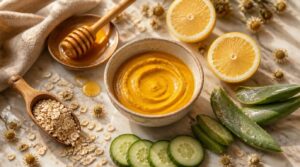
Your kitchen might already hold everything you need for brighter, healthier-looking skin. These simple masks use everyday ingredients that have worked for generations — no complicated routines, no harsh chemicals. Here are five easy options to try at home.
Milk and Tomato Mask
Think of this mask as your kitchen’s quiet secret for brighter skin. Tomato delivers lycopene antioxidants and mild acids that gently loosen dull surface cells, while milk’s lactic acid softens as it exfoliates.
Mix 3 tbsp tomato juice with 3 tbsp milk, then apply evenly, avoiding your eyes. Leave it on for 15–20 minutes, then rinse with cool water.
Rice Flour Saffron Paste
Saffron has been lighting up complexions for centuries, and paired with rice flour, it becomes a surprisingly powerful brightening duo. Before mixing, bloom 3–4 saffron strands in warm milk for five minutes — this unlocks the golden pigment evenly. Then follow these steps:
- Combine 2 tbsp rice flour with the saffron-infused milk into a smooth paste.
- Apply evenly using clean fingertips, avoiding broken or irritated skin.
- Leave on for 20 minutes, then rinse thoroughly with cool water.
Patch test first if you have sensitive skin. Use this mask two to three times weekly for gradual natural lighteners results, and always moisturize afterward to keep your complexion calm and balanced.
Papaya and Lemon Mask
Ripe papaya is your skin’s quiet best friend. It contains papain enzyme, which gently dissolves dead cells sitting on your skin’s surface.
Mash half a cup of soft papaya, stir in 1 teaspoon of lemon juice for its vitamin C boost, and apply evenly — avoiding your eyes. Rinse after 10–15 minutes.
Always patch test first, and skip sun exposure right after.
Multani Mitti Mask
Meet Multani Mitti — also sold as Fuller’s earth — a clay that acts like a sponge for your skin. It pulls out excess oil, lifts dirt from pores, and leaves skin visibly cleaner.
Mix it with rose water until smooth, apply an even layer, and leave it on for 15–20 minutes. Rinse with lukewarm water once it feels tight.
Moisturize After Rinsing
After rinsing off any facial mask — whether Multani Mitti or a yogurt and honey mask — your skin is temporarily more vulnerable. Apply on damp skin within three minutes, while a thin layer of moisture remains.
Choose a lightweight lotion for oily skin or a cream for drier patches. Look for barrier ingredients like ceramides, glycerin, or hyaluronic acid to lock hydration in and keep your skincare routine working.
Maintain Whiter Results Longer
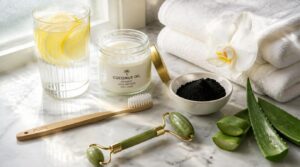
Getting results is one thing — keeping them is where most people slip up. The good news is that a few consistent habits go a long way toward protecting everything you’ve worked for. Here’s what actually helps your skin and smile stay brighter over time.
Wear SPF 30 Daily
Think of sunscreen as the shield guarding every whitening result you’ve worked for. UV rays accelerate hyperpigmentation, quietly undoing brighter skin tone even on cloudy days. Apply a broad-spectrum SPF 30 every morning after moisturizer, and reapply every two hours outdoors.
- Reapply after swimming, sweating, or towel-drying
- Cover easy-to-miss spots like ears and hairline
- Use SPF sticks for quick touch-ups over makeup
Cleanse Skin Gently
Sunscreen locks in your skin’s brightness — but what you wash with can either protect or undo that work. Use a gentle, sulfate-free cleanser twice daily with lukewarm water to lift dirt without stripping your skin’s natural moisture.
| Cleansing Step | Why It Matters |
|---|---|
| Lukewarm water | Prevents barrier damage |
| Gentle cleanser | Preserves natural lipids |
| Fingertip massage | Reduces friction and redness |
| Thorough rinsing | Removes residue near hairline |
| Pat dry, moisturize | Seals in hydration immediately |
Massage in soft circular motions, rinse until skin feels smooth, then pat dry and apply a ceramide moisturizer right away.
Exfoliate Two Weekly
Once you’ve cleansed, exfoliating twice weekly keeps dead skin from dimming your glow. It’s a simple step, but the timing matters.
- Use AHAs for dry or rough skin
- Try BHAs if pores clog easily
- Always moisturize right after
- Skip exfoliation if skin feels tight or red
Give your skin recovery time between sessions — consistency beats intensity every time.
Schedule Dental Checkups
Your skin routine is running like clockwork — now keep your smile on the same schedule.
Most healthy adults need a dental checkup every six months, but that’s not a fixed rule. Your dentist adjusts your recall interval based on your risk level, lifestyle, and oral history. Tobacco use, gum disease, or pregnancy can shift visits to every three to four months.
Hydrate and Sleep Well
Your smile and your skin both run on the same quiet fuel: water and rest.
Aim for 2 to 3 liters of water daily — spread across the day, not all at once at night. Staying hydrated keeps saliva flowing, which naturally buffers acids and strengthens enamel. For skin, good hydration reduces dullness and keeps your barrier strong. After cleansing, lock that moisture in fast — reach for aloe vera or rose water before it evaporates.
Drink 2 to 3 liters of water daily to keep skin bright and enamel strong
Seven to nine hours of sleep gives your skin and tissues overnight recovery time. Low sleep spikes stress hormones, and stressed skin shows it. Keep your bedroom humidity comfortable to prevent dry mouth, which raises your cavity risk. A cool, moist room is a small change with a quietly powerful payoff.
Frequently Asked Questions (FAQs)
What is the fastest way to whiten?
The faster you want results, the less control you often have. In-office professional bleaching wins for speed — one visit, high-concentration peroxide, LED activation, done.
Can yellow teeth become white again?
Yes, yellow teeth can whiten again. Surface stains from coffee, tea, or tobacco respond well to peroxide-based whitening agents. Results vary, but most people gain several noticeably brighter shades with consistent treatment.
How to whiten skin fast?
Funny how the right ingredients were sitting in your kitchen all along. Quick skin lightening starts with gentle exfoliation, natural ingredients like turmeric and vitamin C, daily hydration, and consistent SPF protection.
How to whiten yellow teeth in 3 minutes?
Yellow teeth in 3 minutes isn’t a full fix, but a quick hydrogen peroxide rinse, whitening toothpaste, or three-minute strips can visibly lift surface stains fast when used correctly.
How can I get my teeth whitened quickly?
Time is money." For quick teeth whitening, a professional in-office session using LED light activation and high-concentration hydrogen peroxide delivers visible results fast — often in one visit.
How can I whiten faster?
Boost whitening speed by being consistent. Use whitening strips daily, try hydrogen peroxide mouthwash before brushing, and cut staining drinks. Small, steady habits move the needle faster than any single hack.
What is the best thing to whiten teeth?
The short answer? Peroxide-based products win every time. Hydrogen peroxide bleaches tooth color chemically — no enamel scraping needed. For fast results, whitening strips or a professional whitening gel are your strongest starting point.
Can teeth whitening affect existing dental work?
Yes, teeth whitening affects only natural enamel — not crowns, veneers, or fillings. This can cause restoration color mismatch. Always consult a dental professional before whitening if you have existing dental work.
Are there age restrictions for teeth whitening treatments?
Age 18 is the general threshold for teeth whitening in the UK, as developing enamel makes teens more sensitive to peroxide. Dentists may allow exceptions for medical reasons only.
How long do professional teeth whitening results last?
Professional teeth whitening results usually last 6 months to 3 years, depending on your habits. Avoiding coffee, tea, and tobacco — and scheduling regular touch-ups — keeps that brightness holding strong.
Conclusion
A single coffee cup won’t ruin your results—but years of skipping prep steps, ignoring sensitivity, and consistently underestimating daily SPF absolutely will.
Now that you know how to whiten teeth and skin the right way, you hold something most people never bother to find: a truly sustainable routine built on actual science, not wishful thinking. Stick to the steps, respect your body’s signals, and the mirror will start telling you a very different story.