This site is supported by our readers. We may earn a commission, at no cost to you, if you purchase through links.

Your hair shaft contains over 95% protein, and roughly 5% of that protein is built from sulphur-containing amino acids that form the cross-links holding each strand together. When these bonds break down—whether from heat styling, chemical treatments, or nutritional gaps—your hair loses its natural strength and resilience.
Sulphur isn’t just another wellness buzzword; it’s a structural necessity that determines whether your strands bend without breaking or snap under stress.
While your body can’t produce sulphur on its own, you can obtain it through specific foods, supplements like MSM, and targeted topical treatments that work directly on your scalp. Understanding how sulphur functions at the molecular level helps you make informed choices about strengthening your hair from the inside out.
Table Of Contents
Key Takeaways
- Sulphur is essential for strong, elastic hair because it forms the disulfide bonds that hold keratin fibers together.
- You can boost your hair’s sulphur supply through protein-rich foods, MSM supplements, and topical treatments like selenium sulfide shampoos.
- Signs of sulphur deficiency often show up as brittle hair, dry skin, and fragile nails, especially if your diet lacks animal proteins or key amino acids.
- Overuse or sensitivity to sulphur-based products can cause scalp irritation, dryness, or allergic reactions, so patch testing and following instructions are important.
Is Sulphur Good for Hair?

Why does your hair seem dull or prone to breakage despite trying countless products? The answer might lie in sulphur, the third most abundant mineral in your body after calcium and phosphorus. Sulphur plays a critical role in hair health because it’s essential for building keratin, the protein that makes up your hair shaft. Without adequate sulphur, your hair can’t form the strong disulfide bonds that give it resilience and elasticity.
Sulphur, your body’s third most abundant mineral, builds the disulfide bonds that give hair its strength and resilience
The importance of sulphur extends beyond structure—it aids collagen production and scalp health too. While preliminary studies suggest sulphur benefits for hair texture and regrowth, especially through MSM supplements, the evidence remains limited. Supplements containing MSM may improve hair appearance, according to some studies.
Signs of sulphur deficiency include brittle strands and increased breakage, but before adding sulphur supplements, you’ll want to understand both the potential hair growth advantages and safety considerations.
How Does Sulphur Benefit Hair Health?

Sulphur doesn’t just sit in your body doing nothing—it actively works to keep your hair strong, flexible, and growing at its best. From building the proteins that form each strand to keeping your scalp calm and healthy, this mineral plays several distinct roles.
Let’s look at the specific ways sulphur aids your hair health.
Strengthening Hair Structure
Fundamentally, your hair’s resilience depends on disulfide bonds—covalent crosslinks between sulfur atoms in keratin chains that give each strand its mechanical strength.
Sulfur supply directly affects keratin integrity, since cysteine, a sulfur-rich amino acid, forms the amino acid cystine units that stabilize fiber morphology. These sulfur-based connections bolster damage resistance, protecting your hair structure from everyday stress.
These treatments can help to restore broken bonds.
Improving Hair Elasticity
Beyond strength alone, your strands need flexibility to survive daily brushing and styling. Sulphur bonds between amino acids create the elastic “spring” in each fiber, allowing hair to stretch and bounce back without snapping. When water retention is balanced and mechanical damage is limited, these sulfur crosslinks maintain hair elasticity—the difference between resilient locks and breakage-prone ends.
- Disulfide bridges let fibers bend without permanent deformation
- Adequate sulfur preserves cuticle integrity for moisture balance
- Intact bonds absorb styling stress while recovering shape
- Elasticity support reduces fracture under everyday tension
Protecting these networks is key to improving hair health.
Supporting Keratin and Collagen Production
Those sulfur crosslinks don’t appear from nowhere—your body builds them from amino acids like cysteine and methionine, which fuel both keratin and collagen synthesis pathways. Human hair is roughly 65–95% keratin by weight, with cysteine residues forming the disulfide bond strength that holds each fiber together.
Meanwhile, collagen—making up 70–80% of your dermis—anchors follicles in the dermal matrix. MSM supplementation provides sulfur to support both hair protein networks and the collagen framework beneath, linking amino acid intake directly to strand resilience and scalp structure.
Promoting Scalp Health
When dandruff or itching disrupts your scalp, sulfur’s antibacterial properties can restore microbial balance by targeting Malassezia overgrowth that drives flaking and inflammation.
Clinical studies show selenium sulfide reduces dandruff scores by 78% after four weeks, calming irritation while regulating sebum production in oily areas.
By promoting flake reduction and inflammation relief, sulfur-based shampoos support overall hair and scalp health—though product safety requires following labeled use directions.
Can Sulphur Promote Hair Growth?
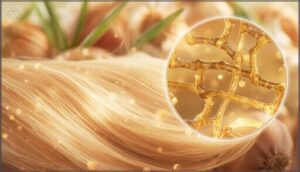
When your hair isn’t growing as quickly or as thickly as you’d like, you might wonder if sulphur can make a real difference. The good news is that sulphur does play a measurable role in hair growth, though it works through specific biological mechanisms rather than magic.
Let’s break down exactly how sulphur influences your hair’s growth cycle, strength, and overall thickness.
Extending The Hair Growth Phase
Your hair growth cycle moves through distinct phases: anagen (growing), catagen (resting), and telogen (shedding). Sulforaphane effects in mice shortened the resting period and accelerated entry into the growth phase, improving hair coverage.
Similarly, minoxidil sulfation within follicles extends the anagen phase duration, with around 30–40% of users seeing visible regrowth after six months. Of importance, aspirin interaction can reduce this effect by blocking follicular sulfotransferase activity.
Reducing Hair Breakage and Thinning
When keratin strands lack disulfide bonds, your hair snaps easily under stress. MSM supplementation provides sulfur that reinforces these bonds, improving tensile hair strength and reducing breakage.
A 2019 study with 63 participants found that:
- Oral MSM at 1 g or 3 g daily for four months enhanced hair condition
- The 3 g group experienced more pronounced improvements in hair quality
- Sulfur-enriched keratin cross-linking improved structural resilience
- Hair shaft diameter appeared sturdier with consistent MSM use
- No serious adverse events occurred during the supplementation period
However, current trials remain small, so evidence for preventing thinning hair through MSM alone is still emerging.
Stimulating Hair Follicles
Your follicles won’t wake up without the right biochemical signals. Minoxidil requires conversion to its active sulfate form by the SULT1A1 enzyme inside hair roots—about 40% of men using 5% topical minoxidil see meaningful growth thanks to sufficient sulfotransferase activity.
If you take aspirin regularly, it can interfere with follicle stimulation by blocking this enzyme, reducing minoxidil response rates and limiting hair regrowth.
What Are The Signs of Sulphur Deficiency?

Sulphur deficiency isn’t something most people think about, but your body has a way of sending signals when it’s running low.
These signs often show up in your hair, skin, and nails before you realize there’s a nutritional gap.
Here’s what to watch for if you suspect your sulphur levels might be off.
Brittle or Weak Hair
When your hair snaps easily or feels weak, a sulfur deficiency might be disrupting the disulfide bonds that hold each strand together. These sulfur-based crosslinks give your hair its strength and resilience against daily wear.
- Reduced cystine content weakens hair structure, making strands prone to fracture
- Weakened keratin from low sulfur amino acids increases breakage during styling
- Oxidative stress damages sulfur-rich proteins, leaving hair mechanically fragile
Brittle hair often signals that your body needs more sulfur to support healthy hair structure.
Dry Skin and Fragile Nails
Your skin and nails tell a story about what’s happening inside. Dry, flaky skin alongside fragile nails that crack or peel often signals inadequate sulfur status.
Clinical indicators like nail fragility and poor skin hydration may reflect low levels of sulfur-containing amino acids—essential for keratin formation in both skin health and nail health.
MSM benefits extend to improving skin hydration and supporting nutritional status in these sulfur-dependent tissues.
Dietary Causes and Risk Factors
Protein deficiency sits at the root of most sulfur shortages affecting hair health. Vegan diets that skip fortified foods, restrictive dieting with low calorie intake, and eating disorders all reduce your access to sulfur-rich foods like meat and eggs.
When your diet lacks these methionine sources, your body prioritizes organs over hair—leaving strands weak and prone to thinning.
How to Increase Sulphur Intake for Hair?
If you’ve noticed signs of sulphur deficiency affecting your hair, the good news is that boosting your intake doesn’t require drastic changes.
You can increase sulphur through dietary adjustments, targeted supplements, or topical treatments applied directly to the scalp.
Let’s look at three practical approaches to help your hair get the sulphur it needs.
Sulphur-Rich Foods to Eat

Your diet plays a major role in hair health, and sulfur-rich foods can help you get the nutrients you need for healthy hair. When you eat a variety of sulfur-rich foods, you’re giving your body the building blocks it uses to maintain strong, vibrant strands.
- Cruciferous sources: Broccoli, Brussels sprouts, and cabbage provide organosulfur compounds that contribute nearly 40% of dietary sulfur in some diets
- Allium vegetables: Garlic, onions, and leeks deliver unique sulfinates and sulfides, accounting for up to 7% of your daily sulfur intake
- Animal proteins: Beef, poultry, and fish supply methionine and cysteine—the two essential sulfur-containing amino acids your hair needs
- Eggs & dairy: Cheese, milk, and eggs offer concentrated cysteine and methionine to support hair structure
- Plant sources: Nuts, seeds, lentils, chickpeas, and whole grains round out your sulfur intake, especially important for vegetarian diets
MSM and Sulphur Supplements

If you’re not getting enough sulfur from food alone, MSM supplements offer a concentrated option. Clinical evidence shows that 3 grams daily for 16 weeks improved hair shine and volume in human trials, though you won’t see new growth overnight.
The safety profile at 1–3 grams is solid, with minimal side effects—mostly mild GI discomfort. Just remember that supplement interactions can happen, so check with your doctor before starting any dietary supplement, especially if you’re taking medications.
Topical Sulphur Treatments and Oils

Beyond supplements, topical sulfur treatments address scalp health directly. Selenium sulfide shampoos (1–2.5%) reduce dandruff by 78% after four weeks and calm fungal overgrowth—just lather, wait 2–3 minutes, rinse thoroughly, and use twice weekly to start. Sulfur-infused oils work differently, allowing slower scalp absorption without the rinse requirement. Product safety profiles show good tolerability when you follow labeled regimens, rotate formulas, and watch for irritation.
Treatment regimen options:
- Medicated shampoos twice weekly for active flaking
- Maintenance cycles once weekly after symptom control
- Short contact time (2–3 minutes) to limit irritation
- Alternating with non-medicated washes between treatments
- Leave-on oils for overnight scalp nourishment
Are There Risks to Using Sulphur for Hair?
While sulphur offers real benefits for hair, it’s not without potential downsides. Overconsumption, allergic reactions, and misuse of sulphur-based products can lead to unwanted side effects. Understanding these risks helps you use sulphur safely and effectively for your hair health.
Potential Side Effects and Overconsumption
Topical irritation from sulfur-based hair treatments affects up to 65% of users—you might notice dryness, peeling, or even an unpleasant odor that makes sticking with the treatment difficult. Hair discoloration can occur, especially in chemically treated or blond hair, when you exceed dosage limits.
Oral supplements like MSM may cause nausea or bloating at higher doses, while cumulative effects from overuse can worsen scalp health and potentially contribute to hair loss.
Allergies and Sensitivities
You mightn’t realize that sulfur-related allergies differ from general sensitivities—sulfite reactions affect roughly 3% of patch-tested patients, often causing scalp irritation, facial dermatitis, or inflammation when you use hair products containing sodium sulfite or metabisulfite.
If you have sensitive skin, you’re at higher risk, though cross-reactivity with sulfa drugs remains rare. Watch for redness, itching, or peeling after applying sulfur-based treatments.
Safe Usage of Sulphur-Based Hair Products
When using sulfur for hair care, start with concentrations around 2–5% and apply topical treatments once or twice weekly. Patch testing on your scalp helps you catch adverse reactions like redness or burning before widespread use.
Follow product instructions carefully, limit contact time, and rinse thoroughly. If you have dry or treated hair, pair sulfur-based products with gentle conditioners to maintain hair and scalp health while managing concerns.
Frequently Asked Questions (FAQs)
Which foods contain the highest sulphur levels?
Animal proteins like beef, poultry, duck, eggs, and shellfish contain the highest sulphur levels per serving.
Allium vegetables such as garlic and onions, along with cruciferous sources like broccoli, provide excellent plant-based options.
How long until sulphur improves hair health?
Your follicles won’t transform overnight—early cosmetic changes like shine generally emerge within four weeks, while structural improvements and reduced shedding require eight to twelve weeks.
Long-term maintenance promotes healthy hair through consistent hair growth supplements and scalp-related timelines.
Can sulphur reverse hair loss or balding?
Sulphur shows limited evidence for reversing hair loss or androgenetic alopecia. While MSM supplements improved hair density in 82% of participants after 120 days, no large trials confirm sulphur alone reverses balding processes.
Does cooking reduce sulphur content in foods?
Yes, cooking can lower sulphur content in foods. Heat degrades sulfur amino acids in meats, while boiling vegetables like broccoli causes significant glucosinolate leaching into water—steaming better preserves sulfur-rich compounds.
Whats the recommended daily sulphur intake amount?
There’s no official sulfur RDA, but your body generally needs around 13 mg of sulfur amino acids per kilogram daily.
Most people meet this through a balanced diet rich in protein without needing supplements.
Conclusion
Your hair’s resilience hinges on something as simple—and as powerful—as the sulphur you consume daily. Whether through protein-rich meals, MSM supplementation, or targeted topical treatments, the question of whether sulphur is good for hair becomes less of a question and more of a clinical certainty.
By addressing deficiencies and applying sulphur strategically, you’re not just hoping for stronger strands—you’re rebuilding them at the molecular level, one disulfide bond at a time.
- https://www.elisirlife.it/en/blog/l-cysteine-and-l-methionine-for-strong-hair/
- https://pmc.ncbi.nlm.nih.gov/articles/PMC9292726/
- https://www.naturalmedicinejournal.com/journal/beauty-from-within
- https://hairstory.com/blogs/news/sulfates-in-shampoo-are-they-bad-for-your-hair
- https://www.healthline.com/health/msm-for-hair-growth