This site is supported by our readers. We may earn a commission, at no cost to you, if you purchase through links. This content is for general informational and educational purposes only and is not a substitute for professional medical, dermatological, or nutritional advice.

Your moisturizer worked fine in June. Now it’s July, the AC runs nonstop, and your skin still feels like paper by 3 PM. That’s not bad luck—it’s chemistry. Lotions sit on top of skin, but oils slip into the lipid matrix and patch the actual gaps letting water escape.
I see this in clinic constantly: patients cycling through pricey creams while ignoring natural oils for extremely dry skin that cost less and work with their skin’s own structure. Argan, jojoba, tamanu—each brings a distinct fatty acid profile suited to different problems, from flaking to inflammation.
Get the match right, and you’ll stop guessing at the drugstore shelf for good.
Table Of Contents
- Key Takeaways
- Best Natural Oils for Extremely Dry Skin
- Choosing Oils for Sensitive or Eczema-Prone Skin
- How Fatty Acids Restore The Skin Barrier
- How to Apply Face Oils for Maximum Hydration
- Choosing and Storing High-Quality Skin Oils
- Frequently Asked Questions (FAQs)
- Which oil is best for super dry skin?
- What is the best oil for old dry skin?
- What is the best thing to put on extremely dry skin?
- Which oil penetrates deep into the skin?
- What is the best oil for severely dry skin?
- What is the best remedy for extremely dry skin?
- Which natural oil is hydrating?
- How often should I apply natural oils?
- Can natural oils cause allergic reactions?
- Should I patch test oils before use?
- Conclusion
Key Takeaways
- Oils outperform lotions for extreme dryness because their fatty acids slip into skin’s lipid matrix to patch gaps, while lotions only sit on the surface.
- Different oils suit different needs: oleic acid (avocado, argan) penetrates deep for intense hydration, linoleic acid (sunflower, rosehip) boosts ceramide production and suits sensitive skin, and GLA (borage) targets inflammation.
- For best results, apply oil to damp skin to trap moisture, layer it after serums, and always patch test first to avoid irritation.
- Store oils in dark glass bottles away from heat and light, and favor cold-pressed varieties to prevent oxidation and preserve their skin-repairing compounds.
Best Natural Oils for Extremely Dry Skin
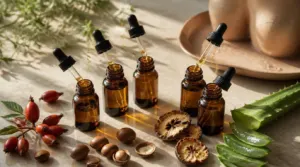
Extremely dry skin needs more than a basic lotion, it needs oils that actually rebuild your barrier from the inside out. Not every oil works the same way, so picking the right one matters more than you’d think. Here are five that consistently deliver results in my practice.
If you’re layering these oils into your routine, pairing them with a water-in-oil emulsion for smoother skin can lock in that extra barrier support overnight.
Avocado Oil for Dry Patches
When flaky, tight skin won’t budge, avocado oil earns its "nature’s liquid gold" reputation fast. It builds an occlusive film that cuts water loss within 30 minutes.
- Oleic acid moisturizes deeply
- Palmitoleic acid helps with protection
- Phytosterols calm redness
- Vitamin E stabilizes formula
- Soothes itchy, irritated patches
This oil provides antioxidant protection to help fight free radical damage.
Result: replenished lipids and genuine barrier repair, no greasy aftermath.
Argan Oil Barrier Repair
Where avocado oil seals, argan oil rebuilds. Pressed from Moroccan kernel extraction, it delivers oleic acid (45-47%) for deep omega-9 penetration depth alongside linoleic acid (31-35%), fueling acylceramide production that organizes your lipid bilayer.
High tocopherol antioxidant levels (600-700 mg/kg) guard against oxidative stress.
Result: genuine skin barrier repair, less trans-epidermal water loss, and lasting moisture retention—without clogging pores.
Shea Butter for Deep Nourishment
Shea butter works differently—it doesn’t penetrate as much as it coats. That’s the point. Rich in oleic, stearic, and palmitic acids, it forms a protective emollient barrier that locks in moisture and softens rough patches fast.
Vitamin E adds antioxidant defense. For extremely dehydrated, irritated skin, shea delivers lipid replenishment that’s hard to beat.
Jojoba Oil for Sebum Balance
Here’s a curveball: jojoba isn’t technically an oil. It’s a liquid wax ester, structurally close to your own sebum. That sebum mimicry lets it regulate oil production, hydrating dry patches while calming greasy zones.
It’s non-comedogenic and carries mild antimicrobial action, making it smart for balancing oily patches without clogging pores or disrupting your skin barrier’s moisture balance.
Rosehip Oil for Skin Regeneration
Rebuilding damaged skin? Rosehip oil earns its "nature’s liquid gold" reputation here. Rich in vitamin A, it aids cell turnover and scar tissue healing, fading acne scars and stretch marks over time.
Pair a few drops with your nightly routine, or explore these homemade skin toner recipes for a glowing complexion to boost absorption and soothe your skin barrier even further.
Its linoleic and oleic acids strengthen your barrier, while carotenoids and vitamins C and E deliver serious antioxidant protection. Result: smoother texture, better regeneration, and skin that actually looks nourished, not just coated.
Choosing Oils for Sensitive or Eczema-Prone Skin
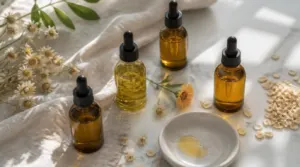
Sensitive and eczema-prone skin plays by different rules. You need oils that calm redness and support your barrier without triggering a flare-up. Here are four gentle options worth knowing about.
Borage Seed Oil Benefits
Borage seed oil packs one of the highest natural concentrations of GLA, an omega-6 fatty acid your skin uses to calm inflammation and rebuild its lipid barrier. That makes it a go-to for eczema-prone skin craving relief.
Just watch storage: this oil oxidizes fast. Keep it capped, cool, and dark to preserve its fatty acid punch and nourishment benefits.
Calendula Oil for Irritation
Think of calendula as the flower version of a warm compress. Its anti-inflammatory flavonoids target redness and dry patches while antioxidants support cellular repair.
If you’re allergic to daisies, ragweed, or chrysanthemums, skip it—cross-reactivity is common.
Patch test first on your inner wrist. If you notice burning or swelling, discontinue use right away.
Tamanu Oil Anti-Inflammatory Effects
Tamanu oil works on multiple fronts at once, which makes it a heavy hitter for irritated skin:
- Calophyllolide calms redness and swelling
- Lipoxygenase inhibition blocks leukotriene-driven flare-ups
- Proteinase K reduction limits inflammatory damage
- Cytokine rebalancing lowers IL-6 and TNF-α while raising IL-10
Its antioxidant action neutralizes oxidative stress too, giving your skin barrier real support for repair.
Sunflower Oil for Gentle Hydration
Sometimes the gentlest option is the smartest one. Sunflower oil is rich in linoleic acid, which slots right into your skin’s barrier lipids to fight dryness and reduce transepidermal water loss.
Its lightweight emollient texture absorbs fast, feels non-greasy, and suits sensitive or eczema-prone skin beautifully.
Non-comedogenic and mild, it’s a dependable pick among natural oils for extremely dry skin needing steady, no-fuss hydration.
How Fatty Acids Restore The Skin Barrier
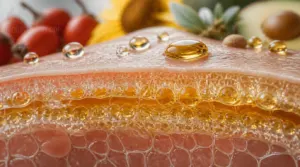
Your skin barrier isn’t just one thing, it’s a mix of fatty acids all doing different jobs. Some rebuild, some soften, some calm things down, and the ratios matter more than you’d think. Here’s what’s actually happening under the surface when these oils go to work.
Your skin barrier is a mix of fatty acids, each rebuilding, softening, or calming in its own way
Linoleic Acid and Ceramide Production
Your body can’t make linoleic acid on its own, so every bit must come from diet or oils you apply. Once absorbed, epidermal enzymes break it down, feeding ceramide synthesis pathways in the stratum corneum. Studies show supplementation raises total ceramide levels by a lot.
This lipid remodeling strengthens stratum corneum integrity, cutting trans-epidermal water loss and rebuilding barrier function from the inside out.
Oleic Acid Penetration Benefits
Unlike linoleic acid, oleic acid slips through your skin’s lipid layers, acting as a permeability enhancer. It fluidizes the stratum corneum, opening space for deeper transport of actives. That means avocado oil or olive oil won’t just hydrate—they help other compounds penetrate.
The tradeoff: you get more hydration, but risk barrier integrity if the balance isn’t right.
GLA for Reducing Inflammation
GLA doesn’t just calm skin—it works from the inside out. Once absorbed, GLA converts into DGLA, competing with arachidonic acid for shared enzymes. This shift lowers prostaglandin E2 and leukotriene output while boosting anti-inflammatory PGE1.
- Suppresses TNF-alpha and interleukin-1
- Blocks leukotriene B4 formation
- Eases chronic inflammation in eczema, psoriasis, joint pain
- Helps maintain essential fatty acid balance
- Aids long-term skin barrier repair
Oleic-to-Linoleic Acid Ratio
Once GLA finishes calming inflammation, your skin’s long-term health comes down to lipid profile balance—specifically, the oleic-to-linoleic acid ratio.
| Ratio Effect | Higher Oleic | Higher Linoleic |
|---|---|---|
| Oxidative stability | Better | Lower |
| Barrier feel | Richer | Lighter |
Fatty acid variability across oils (driven by desaturase enzyme activity) shapes which one truly repairs your lipid barrier.
How to Apply Face Oils for Maximum Hydration
The right oil only works if you apply it the right way. Timing, layering, and technique all affect how much hydration actually reaches your skin. Here’s exactly how to build an application routine that gets results.
Applying Oils on Damp Skin

Timing is everything here: apply your oil while skin is still damp, not dripping, and you’ll trap water that would otherwise evaporate. This creates an occlusive film that blocks transepidermal water loss.
Pat skin gently, leave a little moisture behind, then massage oil in with upward strokes. That’s how natural oils for extremely dry skin actually work for you.
Layering Oils With Serums
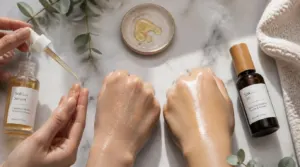
Layering oils with serums works best in a specific order: serum first, oil last. Water-based actives need direct skin contact before any occlusive layer seals things in.
Wait 60 seconds for pilling prevention, then apply oil. Pairs beautifully with hyaluronic acid.
- Apply serum
- Let it set
- Seal with oil
Keep oil thin—thick layers block proper absorption and occlusion timing.
Patch Testing for Sensitive Skin

Ever skip this step because you’re impatient to see results? Don’t. Dab a dime-sized amount behind your ear or along your jawline, then leave it alone for 24 hours.
Delayed hypersensitivity reactions don’t always show up immediately—redness can surface hours later. Watch for itching or bumps, and avoid testing on already irritated skin.
Morning and Night Routine Tips

Rarely does the same oil suit both morning and night. In the AM, go light: a few drops, pressed gently, then wait for full morning absorption before sunscreen—no pilling, no interference.
At night, layer more generously for nighttime occlusion. Focus on tight, flaky spots rather than your whole face—localized application works better. Stick with it daily; routine consistency rebuilds your barrier faster than switching products constantly.
Choosing and Storing High-Quality Skin Oils

Buying the right oil is only half the job. How you store it decides whether those fatty acids stay potent or break down before they ever touch your skin. Here’s what actually protects your investment.
Cold-Pressed Extraction Benefits
Not all extraction is equal. Cold pressing uses mechanical pressure alone, no chemical solvents, which means less heat damage and better nutrient retention.
You keep more tocopherols, polyphenols, and other phytochemicals that support skin barrier repair. That’s why cold-pressed oils often smell and look more "alive," natural aroma intact.
For skin hydration that actually lasts, this cleaner processing matters more than the label suggests.
Dark Glass Bottle Storage
That amber bottle on your shelf isn’t just for looks—it’s doing real work. UV light protection slows photooxidation, keeping fatty acids and pigments stable longer.
Amber glass filters blue and ultraviolet wavelengths far better than clear containers, which also means protecting aroma compounds and minimizing volatile loss.
For natural plant oils feeding your skin barrier, that packaging choice directly helps maintain lasting skin hydration.
Preventing Oil Oxidation
Rancid oil does nothing for your skin barrier—it actively harms it.
Oxygen, heat, and light all speed up free radical formation in unsaturated fats. Protect your investment:
- Keep bottles tightly sealed
- Store away from stovetops and windowsills
- Avoid metal utensils; use glass or plastic droppers
- Choose oils blended with vitamin E or rosemary extract for antioxidant protection
Dropper Applicators Vs Fingers
Once you’ve picked a stable, well-preserved oil, how you apply it matters too.
Droppers give you dosing precision—count the drops, repeat the routine. They also improve hygiene, since fingers never touch the bottle. For targeted application on flaky patches, dot the oil directly, then massage in for better transfer efficiency. Fingers work fine for larger areas, but droppers win for control and cleanliness.
Frequently Asked Questions (FAQs)
Which oil is best for super dry skin?
Avocado oil wins for super dry skin, packed with vitamins A, D, and E. Its rich fatty acid profile delivers deep nourishment, restores elasticity, and reinforces your barrier, making it a top emollient choice for parched, thirsty skin.
What is the best oil for old dry skin?
For age-related dryness, reach for high-oleic acid oils like avocado or shea butter. They deliver deep hydration and lipid barrier restoration mature skin craves, boosting emollient properties and softness where thinning skin loses moisture fastest.
What is the best thing to put on extremely dry skin?
Pair a rich emollient oil with an occlusive layer sealed onto damp skin. This combo delivers true lipid barrier repair, curbs flaky patches, and locks in hydration far better than any single product used alone.
Which oil penetrates deep into the skin?
Think of skin’s surface as a gate, not a wall: oleic acid transport slips through easily. Its molecular mobility and lipid compatibility let it reach deeper layers, unlike stiffer saturated fats, delivering true dermal hydration where dryness lives.
What is the best oil for severely dry skin?
For severely dry skin, reach for argan oil—its vitamin E and fatty acids restore barrier function. Coconut oil excels at occlusion, locking in moisture and softening rough patches. Try layering these for maximum hydration and repair.
What is the best remedy for extremely dry skin?
Imagine your skin as a drought-stricken field—layering petrolatum after bathing seals in moisture, glycerin draws water to thirsty cells, and squalane absorbs quickly. Apply oils like avocado on damp skin, then rehydrate nightly for best results.
Which natural oil is hydrating?
Jojoba oil hydrates by mimicking your skin’s sebum, creating a lightweight, non-greasy layer. Sweet almond oil delivers lasting comfort with vitamins A and E. For deeper moisture, coconut oil acts as an occlusive emollient.
How often should I apply natural oils?
Apply natural oils once or twice daily, morning and night, on damp skin. Reapply after washing or when skin feels tight. If you notice breakouts or irritation, reduce frequency to every other day until your skin calms.
Can natural oils cause allergic reactions?
Yes, natural oils can cause allergic reactions—especially essential oils like tea tree, lemongrass, or clove. Dilute oils before use, patch-test on sensitive skin, and watch for redness or itching. Atopic dermatitis increases your risk.
Even so, when properly diluted, lemongrass oil’s scalp-soothing and hair growth benefits often outweigh the mild irritation risk for most people.
Should I patch test oils before use?
Funny thing: even oils marketed as gentle can spark skin irritation in sensitive skin. Always dab diluted carrier oil on your inner forearm, wait 24-48 hours, and watch for redness before trusting any natural oils near your face.
Conclusion
Your skin barrier works like roof shingles: overlap them correctly, and water stays where it belongs. That’s the real promise behind natural oils for extremely dry skin—they don’t sit on top, they slot into gaps lotions can’t reach.
Match the oil to your skin’s actual need, whether that’s linoleic acid for oil-prone skin or oleic acid for deep dryness. Apply consistently, store properly, and give it six weeks. Your skin will tell you it’s working.