This site is supported by our readers. We may earn a commission, at no cost to you, if you purchase through links. This content is for general informational and educational purposes only and is not a substitute for professional medical, dermatological, or nutritional advice.
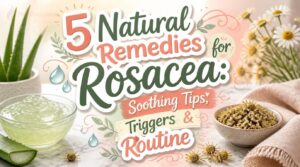
Your cheeks flush over a cup of coffee, and by the time you’ve finished it, your face feels hot enough to fry an egg on. Sound familiar? Rosacea has a way of turning ordinary moments, hot tea, a workout, a stressful meeting, into visible flare-ups you can’t hide.
The good news: you don’t need a medicine cabinet full of prescriptions to find relief. Natural remedies for rosacea can calm redness, ease burning, and support your skin barrier when you use them consistently and correctly.
From aloe vera to chamomile compresses, the right combination might become your skin’s new best friend.
Table Of Contents
- Key Takeaways
- Can Natural Remedies Help Rosacea?
- Five Natural Remedies for Rosacea Relief
- Build a Gentle Rosacea Skincare Routine
- Reduce Rosacea Flare-Ups Naturally
- Use Natural Rosacea Remedies Safely
- Frequently Asked Questions (FAQs)
- How did I heal my rosacea naturally?
- What clears rosacea fast?
- What mineral deficiency causes rosacea?
- How do Japanese treat rosacea?
- What clears up rosacea fast?
- What is the best herb for rosacea?
- What calms rosacea down?
- What foods clear up rosacea?
- What essential oil calms rosacea?
- Can probiotics help in reducing rosacea symptoms?
- Conclusion
Key Takeaways
- Natural remedies like aloe vera, cooled green tea, chamomile, oatmeal, and raw honey can ease rosacea redness and irritation, but they work gradually and won’t cure the condition outright.
- Identifying and avoiding your personal triggers, like hot drinks, spicy food, alcohol, stress, and heat, matters just as much as any topical remedy you apply.
- A gentle daily routine (fragrance-free cleansing, barrier-repairing moisturizer, and daily mineral sunscreen) creates the foundation these natural treatments need to actually work.
- Always patch test new remedies, dilute essential oils properly, watch for interactions with medications, and see a dermatologist if redness persists for weeks.
Can Natural Remedies Help Rosacea?
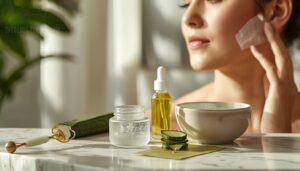
If your skin flares up at the worst times, you’re probably wondering whether natural remedies can actually help, or if you’re just chasing false hope. The honest answer is yes, with some real caveats worth understanding first.
Before you reach for another cortisone cream, it’s worth exploring this guide to natural remedies for skin inflammation, which breaks down what’s actually backed by evidence.
Let’s look at what these remedies can soothe, what often triggers flare-ups, and where the limits are before you try anything.
Symptoms Remedies May Soothe
When flareups hit, you want relief fast, and natural remedies can help with several symptoms at once.
Redness relief often comes first, followed by swelling reduction, calmer burning sensation, better dryness improvement, and smoother texture softening.
These gentle, soothing skincare options won’t cure rosacea, but they can ease skin inflammation between flareups, giving your face a breather while you figure out what’s really triggering it.
Common Rosacea Triggers
Soothing your skin only gets you so far if you keep feeding the flare. Common culprits include hot beverages, spicy foods, alcohol, temperature extremes, and emotional stress, each triggering flushing through different mechanisms.
Red wine, sriracha-level heat, steaming coffee, hot showers, even a tense meeting can set your face ablaze. Trigger identification, often through a simple diary, is your first real step toward control.
Realistic Results and Limits
Once you know your triggers, patience matters more than product choice. Expect gradual improvement, not overnight fixes, and accept some day-to-day fluctuation.
Natural remedies soothe surface irritation and support skin barrier repair through anti-inflammatory action, but they rarely erase your tendency to flare. Track changes honestly. If redness, swelling, or discomfort persist despite weeks of gentle, consistent care, that’s real information, not failure.
Remedies Versus Medical Treatment
So how do natural treatments stack up against prescriptions? Differently, and that’s the point.
Clinical options like metronidazole or doxycycline hit harder and faster on inflammatory lesions. Natural remedies offer gentler long-term skin barrier repair with fewer side effects, better cost effectiveness, and real anti-inflammatory properties, just at a slower pace. Many patients prefer combining both for balanced, sustainable management.
Five Natural Remedies for Rosacea Relief
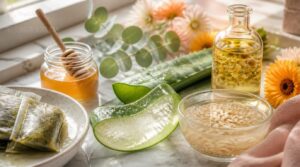
Now that you know what these remedies can and can’t do, let’s get into the ones actually worth your time. You don’t need a cabinet full of products, just a handful of ingredients with real evidence behind them. Here are five that consistently show up in the research and in my patients’ routines.
Seven Minerals Aloe Vera Gel
Plain aloe won’t cut it if you want real mineral support. Look for a 99% pure aloe vera gel blended with zinc, magnesium, copper, selenium, and potassium, fragrance-free and non-comedogenic.
Zinc reinforces your skin barrier, magnesium locks in moisture, and copper helps with collagen synthesis. Apply a pea-sized layer twice daily for lasting hydration and calming, anti-inflammatory relief.
If acne scarring is also a concern, pairing this routine with a properly diluted tea tree oil treatment for acne scars can boost your skin’s healing and clarity.
Colloidal Oatmeal Masks
When your skin feels tight and irritated, oats might be the pantry staple you need. Colloidal oatmeal disperses in water, forming a protective, moisturizing film.
Mix one tablespoon with warm water into a paste, apply to clean skin for 10-20 minutes, then rinse thoroughly.
- Reduces irritation
- Calms redness
- Locks in moisture
Patch test first since even gentle remedies can occasionally backfire.
Colloidal oatmeal helps restore the skin’s natural moisture barrier skin barrier repair
Cooled Green Tea Compresses
There’s something almost ritualistic about brewing a cup of green tea, then chilling it just for your skin. Steep one bag in hot water, cool to 4°C for 30 minutes, then press a soaked cotton pad onto irritated skin for 10 minutes, twice daily.
Catechins bring genuine anti-inflammatory and antioxidant properties, calming redness without fragrance or fuss.
Raw Honey Face Masks
Sweet, sticky, and surprisingly skin-friendly: raw honey brings real anti-inflammatory properties to irritated skin.
Manuka or kanuka honey work best; their enzymes and antioxidants support your skin’s microbiome.
- Apply a thin layer to clean skin
- Leave on 10-20 minutes
- Rinse with lukewarm water
- Moisturize after patting dry
Results vary, but many notice calmer, less reactive skin within days.
Chamomile Skin Compresses
There’s something almost old-fashioned about brewing tea to calm your skin, yet chamomile’s anti-inflammatory properties hold up.
Steep a tablespoon per cup, cool to 30°C, soak a clean cloth, and press onto skin for 10-15 minutes.
Apigenin and bisabolol drive the soothing effect, boosting hydration by 12%.
Always patch-test first, especially with ragweed allergies.
Build a Gentle Rosacea Skincare Routine
Natural remedies work best when your everyday routine backs them up, not fights against them. Rosacea-prone skin needs a steady hand, one that favors gentleness over harsh habits at every step. Here’s how to build a routine your skin will actually thank you for.
Cleanse Without Scrubbing
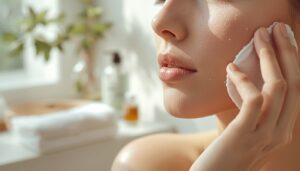
Think of cleansing as a handshake, not a scrub. Rosacea skin needs gentle, fragrance-free products with pH-balanced formulas.
Try these:
- Micellar water on a cotton pad
- Oil cleansing with jojoba oil
- Enzyme cleansers 2-3x weekly
- Gentle foam cleanser, lukewarm rinse
Follow with a thermal water spritz. Always choose noncomedogenic options that support barrier function.
Moisturize The Skin Barrier
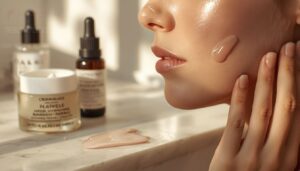
Once your face is clean, lock that moisture in fast. Look for ceramide enriched moisturizers with humectant ingredients like hyaluronic acid, plus occlusive sealants such as petrolatum to cut water loss by up to 70%.
pH balanced formulas near 5.5 protect your acid mantle. This barrier repair combo helps hydration and calms redness over time.
Consider Soothing Niacinamide
Once your barrier’s sealed, niacinamide (vitamin B3, sometimes called nicotinamide) is worth layering in. It helps calmer, more even-looking skin and aids hydration, both handy for redness-prone faces.
Stick to gentle formulas around 4-5%, applied after cleansing, before moisturizer. Patch test first, since flare-prone skin can react unpredictably even to soothing actives.
Apply Mineral Sunscreen Daily
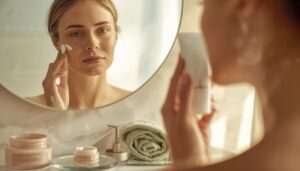
Sun exposure ranks among the biggest rosacea triggers, so this step isn’t optional. Use a mineral sunscreen with broad spectrum coverage and SPF 30 daily, containing zinc oxide or titanium dioxide.
Apply a nickel-sized amount to your face and neck every morning:
- Choose water-resistant formulas for workouts
- Reapply every two hours outdoors
- Cover ears and hairline
- Layer over moisturizer, under makeup
Reduce Rosacea Flare-Ups Naturally

Remedies can calm your skin, but flare-ups often come down to what’s happening around you, not just on you. Your triggers are personal, so the real work is learning your own patterns and adjusting your daily habits accordingly. Here are five practical ways to keep flare-ups in check.
Identify Personal Triggers
Every flare-up leaves a clue. Track stress levels, sleep patterns, weather changes, and daily activity in a simple diary, noting temperature, humidity, and sleep hours.
Rate stress each morning and evening, log workouts by intensity, and jot down anything unusual. Patterns emerge fast, heat or a sleepless night often precedes redness. That’s your roadmap for avoiding triggers before they avoid you.
Limit Trigger Foods
Some meals just aren’t worth the flush. Spicy dishes, red wine, and hot coffee top the list of common offenders, alongside histamine-rich foods like aged cheese and cured meats.
Cutting back on sugar and alcohol, even one drink at a time, calms flare frequency noticeably. Keep a food diary, favor anti-inflammatory choices like leafy greens, and you’ll spot your personal culprits fast.
Manage Stress Daily
Rarely does stress get the credit it deserves for triggering flares. Deep breathing for five minutes drops cortisol nearly 20%. Try box breathing, four counts in, hold, out, hold, three rounds calms things fast.
Mindfulness meditation, just ten minutes daily, eases inflammatory markers and cuts face-touching urges. Progressive muscle relaxation before triggers like hot showers, plus yoga, rounds out a routine that actually works.
Avoid Heat and Overheating
Since heat dilates blood vessels fast, facial flushing follows close behind. Swap hot showers for lukewarm water, skip steam and saunas, and choose indoor workouts over midday sun.
- Cool compresses after exercise
- Lukewarm shower water
- Low heat hair styling
- Shade during outdoor time
- Breathable workout clothing
Temperature regulation matters as much as what you apply topically.
Keep a Symptom Diary
Your skin remembers what your brain forgets, so keep a symptom diary to track patterns clearly.
Your skin remembers what your brain forgets, so keep a diary to track its patterns
Log trigger exposures, rate daily severity on a consistent scale, and note treatment responses each time. Record the time symptoms start, peak, and fade.
Fill it out daily, not just during flares. Bring it to your dermatologist. Patterns emerge fast, and stress management becomes easier once you see your rosacea triggers avoidance actually working.
Use Natural Rosacea Remedies Safely
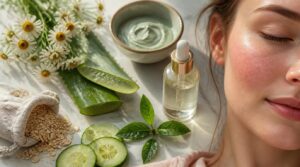
Natural doesn’t automatically mean safe, especially on skin that’s already reactive and easily irritated. Before you reach for any remedy, it helps to know a few ground rules that keep you from trading one problem for another. Here’s what to check before adding anything new to your routine.
Patch Test New Remedies
Before trying any remedy on your face, test it on your forearm for 24 hours, then check a discreet facial test site below your ear. Watch closely during the first two hours, the real observation time frame runs a full 48. Mild pink fading fast is fine; lingering redness or burning isn’t. Document everything before committing.
Dilute Essential Oils Properly
Undiluted essential oils are far too potent for rosacea-prone skin. Keep facial blends between 0.2% and 1%, roughly 1 to 6 drops per ounce of jojoba or another gentle carrier oil. Tea tree oil needs this same caution.
Mix thoroughly, apply sparingly, and stop immediately if burning or redness appears, your skin’s sensitivity threshold matters more than any recipe.
Avoid Irritating DIY Ingredients
Getting the ratio right matters, but so does what goes into the mixture in the first place. Fragrance oils top the list of reported triggers, and citrus oils bring phototoxic risk under sun exposure.
Skip alcohol denat (it stings), sodium lauryl sulfate (it strips your barrier), and gritty exfoliants like walnut shell, which create micro-tears rosacea skin can’t afford.
Check Treatment Interactions
Ingredients aren’t the only thing that can clash. Green tea’s catechins can dial down oral contraceptive effectiveness by 15%, and oral niacin mixed with blood thinners raises fibrinogen levels.
- Green tea + birth control pills
- Oral niacin + blood thinners
- Vitamin C + iron supplements
If you take daily medication, ask your pharmacist before layering in new natural treatments.
Consult a Dermatologist
A pharmacist can flag interactions, but a dermatological consultation catches what home remedies can’t fix alone. See a dermatologist if redness lingers past a few weeks, or before starting anything new.
Bring your symptom diary and product list. Expect a face exam, possibly photos, and follow-ups every three months. Ask about ingredient efficacy for your subtype, and don’t skip patch testing first.
Frequently Asked Questions (FAQs)
How did I heal my rosacea naturally?
Let’s just say my angry, sunburnt-looking skin finally calmed down. Daily aloe vera, cooled green tea compresses, and chamomile pads cut my redness dramatically, while trigger avoidance and gentle habits kept flare-ups from coming back.
What clears rosacea fast?
For fast relief, chilled aloe vera, cooled green tea compresses, or a manuka honey mask work quickest, easing redness within twenty minutes.
Oatmeal and chamomile calm irritation soon after, though full healing still takes consistent, gentle care over days.
What mineral deficiency causes rosacea?
Your minerals might be the missing piece. Zinc deficiency weakens skin repair, while low copper hampers collagen and low selenium reduces antioxidant defense. Magnesium and iron gaps fuel inflammation and poor oxygen flow, worsening redness and flushing.
How do Japanese treat rosacea?
Japanese clinics often combine a Kampo herbal formula with a histamine-free diet, alongside a green tea serum, rice bran ferment mask, and mineral aloe gel, calming redness through consistent, layered skincare rather than one single fix.
What clears up rosacea fast?
For fast-acting rosacea relief, cooled compresses win. Chilled green tea or chamomile applied for 5-10 minutes brings quick redness reduction within minutes, while aloe vera, oatmeal, and raw honey offer immediate soothing without irritating sensitive skin.
What is the best herb for rosacea?
Think of your skin as a garden needing the gentlest hand: green tea and chamomile lead the pack, with feverfew, licorice, and oatmeal offering calming backup for redness-prone, sensitive complexions.
What calms rosacea down?
Cooling, anti-inflammatory ingredients calm rosacea fastest: chilled Green Tea Compress, Oatmeal Masks, Chamomile Soothe, Aloe Vera Gel, or a Honey Mask. Pair these with a gentle cleanser to ease redness without stripping your skin barrier.
What foods clear up rosacea?
Sarah swapped fried snacks for salmon and kale, noticing calmer skin within weeks.
Omega-3s (mackerel, walnuts), zinc-rich foods (pumpkin seeds, lentils), and probiotics (kefir, sauerkraut) support gut-skin balance, while antioxidant produce like blueberries curbs inflammation naturally.
What essential oil calms rosacea?
Lavender and chamomile oils offer the gentlest calming effects, easing redness through their anti-inflammatory properties. Tea tree oil helps too, but dilute it well in a carrier oil first, since undiluted application often irritates sensitive, rosacea-prone skin.
Can probiotics help in reducing rosacea symptoms?
Yes. The gut-skin axis explains why oral probiotics (10 billion CFU daily) and topical strains like Lactobacillus plantarum support microbiome balance, lower IL-6 inflammation, and improve barrier function, alongside fermented foods and fiber, though benefits plateau near 12 weeks.
Conclusion
You might think plant-based ingredients can’t compete with prescription creams, but consistency changes that equation.
Natural remedies for rosacea won’t truly erase your diagnosis, yet they can quiet redness, ease burning, and give your barrier room to heal.
Start small: one soothing compress, one gentle cleanser, one trigger removed. Track what works, skip what stings, and let your skin set the pace.
Calm, resilient skin isn’t luck. It’s built session by session, choice by choice.