This site is supported by our readers. We may earn a commission, at no cost to you, if you purchase through links. This content is for general informational and educational purposes only and is not a substitute for professional medical, dermatological, or nutritional advice.
That red, stinging patch on your jaw after shaving? It’s not bad luck. It’s usually a sign your skin never got the right prep before the blade touched it.
Sensitive skin doesn’t forgive shortcuts. Skip a step, rush through cold water, or grab a scented cream, and you’ll pay for it with bumps, razor burn, or that raw feeling that lingers all day. The good news: most irritation is preventable with the right routine, done in the right order.
Get the prep right, and the shave itself becomes the easy part.
Table Of Contents
- Key Takeaways
- How to Prep Sensitive Skin Before Shaving
- Choose and Maintain a Sensitive-Skin Razor
- Select Shaving Cream for Sensitive Skin
- Shave Sensitive Skin Without Irritation
- Soothe and Protect Skin After Shaving
- Frequently Asked Questions (FAQs)
- What is the best thing to shave with for sensitive skin?
- Should I remove testicle hair?
- What do dermatologists recommend for shaving?
- How to prepare your skin before shaving?
- How to shave with extremely sensitive skin?
- Is it better to shave wet or dry for sensitive skin?
- How do you avoid possible sensitivity while shaving?
- What is the 3 pass shaving technique?
- How do you shave a sensitive skin?
- What is good for severe skin sensitivity?
- Conclusion
Key Takeaways
- Prep matters more than product—cleanse with a fragrance-free wash, exfoliate the day before (not the same day), then shave right after a warm shower when your pores are open and hair is softest.
- Your razor and blade choice makes a real difference, so look for hypoallergenic stainless steel blades, inspect them before every shave, and swap them out every five shaves to avoid tugging and irritation.
- Technique is where most irritation actually gets won or lost, so shave with the grain using light, short strokes, rinse after every stroke, and skip repeated passes over the same spot.
- The five minutes after you shave count too—rinse with cool water, pat (don’t rub) dry, apply an alcohol-free soothing balm, and moisturize right away to lock in hydration and rebuild your skin’s barrier.
How to Prep Sensitive Skin Before Shaving

Good shaves start well before the razor touches your skin. Think of prep as laying the groundwork so irritation never gets a foothold. Here are five simple steps to get your skin ready.
Protecting your skin during other routines matters too — especially if you use UV exposure, so understanding how to use a tanning bed safely can help you avoid cumulative damage that makes shaving irritation worse.
For a deeper dive into pre-shave essentials, check out this guide on what to use before shaving cream to soften stubble and prime your skin properly.
Cleanse With Fragrance-Free Wash
Start clean, literally. A fragrance-free wash lifts oil and grime without triggering redness, cutting irritation risk by up to 80%.
Use lukewarm water and gentle massage, not hard scrubbing. Then check the ingredient list, not just the label. Some "fragrance free" products hide allergens like limonene. For heavy makeup or sunscreen, choosing a fragrance-free face wash may call for a double cleanse to fully clear residue.
Rinse fully. Skin should feel clean, never tight.
Exfoliate 24 Hours Before
Clean skin’s ready, but don’t shave yet. Exfoliate the day before, not the same day. Doing both at once doubles up on friction and can leave sensitive skin raw.
Go gentle: a soft washcloth or mild chemical exfoliant, light pressure only. Breaking out or seeing redness? Stop and let skin recover. That 24-hour gap protects your skin barrier before the razor touches it.
Soften Hair With Warm Water
Once your skin’s exfoliated and calm, give your facial hair a little warm-up. A damp, warm towel for 2-3 minutes (around 95-105°F) opens the hair cuticle and boosts hair pliability. Softer hair means less resistance, so your razor glides instead of tugging. That’s a real pre-shave hydration step, not just a nice-to-have.
Shave After a Warm Shower
Timing matters just as much as technique. Shaving right at the end of a warm shower is your best bet, when steam has fully opened pores and skin is at peak hydration.
Why it works:
- Pores open, so the blade glides closer
- Steam lifts oil and dead skin for a cleaner surface
- Warm skin means less drag, fewer nicks
Hydrate Damp Skin Before Shaving
Once you’ve stepped out of that warm shower, don’t reach straight for the razor. Pat your face lightly so it’s damp, not dripping, then apply a hyaluronic acid serum or lightweight moisturizer. This locks in hydration, swells the hair shaft for easier cutting, and builds a cushiony barrier. Give it a moment to absorb before lathering up.
Choose and Maintain a Sensitive-Skin Razor

Your razor matters just as much as your prep work. The right tool can mean the difference between smooth skin and an angry red rash. Here’s what to look for, and how to keep it working in your favor.
Compare Safety and Electric Razors
Safety or electric, which wins for sensitive skin? Safety razors use one exposed blade for close cutting but need a shallow angle and gentle strokes.
Electric shavers lift hair with foil or rotary heads, cutting without direct blade exposure, which is why they often mean less irritation for reactive skin.
Choose Hypoallergenic Stainless Steel Blades
Metal matters more than you’d think. Look for hypoallergenic stainless steel blades, often surgical-grade 316L, which keep nickel content low and resist corrosion.
That corrosion resistance really counts when you’re navigating tricky growth patterns, which is why picking the best safety razor for thick, coarse hair can make shaving against the grain far less punishing.
That means:
- Fewer allergic reactions
- Less metal breakdown
- Smoother glide
- Longer-lasting sharpness
- Optimized edge geometry
Sharp blades with consistent bevels cut cleanly, not tug, so gentle strokes actually feel gentle.
Inspect Blades Before Shaving
Would you grab a dull, rusty knife for dinner prep? Same logic here. Before every shave, run a quick Blade Edge Inspection under good light, check for rust, confirm guard alignment, and wipe away residue. Sharp blades glide with gentle strokes and minimal pressure, giving your skin real protection.
You wouldn’t cook with a dull, rusty knife, so don’t shave without inspecting your blade first
| Check | What to Look For |
|---|---|
| Edge | Nicks, straightness |
| Rust | Spots, discoloration |
| Exposure | Even on both sides |
| Residue | Clogged buildup |
| Seat | Flush, no gaps |
Replace Blades Every Five Shaves
Five shaves. That’s your number, and it’s not random.
Blade sharpness fades fast under moisture and friction. Watch for tugging, extra pressure, or dragging, all dull blade signs.
If you’re noticing these warning signs often, switching to a razor blade designed to prevent cuts can make shaving feel smooth again.
- Costs about $0.34 per shave
- Prevents razor burn and bumps
- Keeps strokes smooth and light
- Protects sensitive skin fully
Skip a swap, risk irritation. Fresh blades mean gentle strokes and real skin protection.
Keep Razors Clean and Dry
A dirty blade drags. That’s the enemy of gentle strokes.
Rinse every few strokes, front to back, so buildup won’t dull your edge. Brush away stubborn hair and soap scum, then dry completely, since moisture invites rust and bacteria. Store your razor in a dry, ventilated spot, away from shower spray. A little rubbing alcohol soak now and then keeps things sanitized and skin protection intact.
Select Shaving Cream for Sensitive Skin
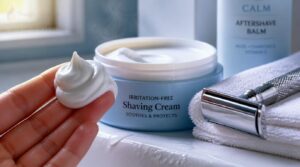
Your razor’s only half the battle—what you put on your skin matters just as much. The right shaving cream can mean the difference between smooth sailing and an angry red rash. Here’s what to look for on that label.
Choose Fragrance-Free Shaving Cream
Grab your tube and actually read the ingredient list before it hits your face. "Fragrance-free" beats "unscented" every time, since unscented products can still hide masking chemicals.
Verify fragrance-free on the label, not just the front claim. Look for aloe vera or glycerin, skip essential oils and parfum, and your sensitive skin will thank you.
Avoid Menthol, Alcohol, and Dyes
That fragrance-free label is only half the battle. Flip the tube over and scan for menthol, alcohol, and dyes too, since all three can sting freshly shaved, sensitive skin.
Menthol-free and alcohol-free matters most right after shaving. Skip colorants too. Look for hypoallergenic, pH-balanced, non-comedogenic formulas instead. Your skin’s barrier will recover faster without the extra irritants.
Look for Skin-Soothing Ingredients
Once your cream is fragrancefree, check the ingredient list for actual soothing power. Aloe vera cools on contact. Oat extract calms itchy, reactive patches. Panthenol pulls in moisture, while ceramides shore up your skin’s barrier function. Centella asiatica (cica) helps healing too. These skin calming ingredients work as a team, so the more you spot, the better.
Use Creams With Cushioning Slip
Ingredients matter, but texture is what your razor actually feels. Cushioning slip formulas create a protective film between blade and skin, cutting friction on contact.
Look for:
- Glycerin or saccharide isomerate (humectant slip agents)
- Shea or kokum butter-based cushioning
- Brush lather method for denser coverage
- Whipped, low-foam texture over thin gel
Let Shaving Cream Soften Hair
Patience pays off here. Let cream sit 1-2 minutes before your razor touches skin, that’s your lather dwell time working.
Humectants pull moisture into hair, softening it for an easier cut.
| Wait Time | Effect |
|---|---|
| 0-30 sec | Minimal softening |
| 1-2 min | Full hair softening |
| 3+ min | Cream dries out |
Combined with warm water penetration, this reduces cutting force and friction dramatically.
Shave Sensitive Skin Without Irritation
Prep and product only get you so far—technique is where the real irritation battle is won or lost. Your razor doesn’t care how fancy your cream is if you’re moving it the wrong way. Here’s exactly how to guide it across your skin.
Map Your Hair Growth Direction

Ever notice how your jawline hair seems to grow one way while your neck says otherwise? That’s a whorl at work. Whorls aren’t the only quirk your strands are hiding—if your hair also soaks up or resists product unpredictably, running a quick hair porosity test to match your care routine can round out the picture.
Before you shave, check direction with:
- Visual scan in natural light
- Gentle fingertip test near roots
- A comb pulled from base to tip
Wet hair shows its true lay best, so map crown, sides, and hairline separately.
Shave With The Grain

Now that you’ve mapped the grain, put that map to work. Shave with the grain, always, since fighting it invites razor burn.
Hold your razor at 20-25 degrees, riding the cap low. Let sharp blades do the cutting, not your muscle. Minimal pressure, rinse often, and your skin stays protected.
Use Light, Short Strokes

Think toothpick, not tug-of-war. That’s about how much pressure your razor needs.
- Keep strokes 1-3 centimeters, roughly two fingers wide
- Hold a 30-degree blade angle
- Shorten strokes near your jawline and Adam’s apple
- Pull skin taut first for consistent cutting
- Adjust angle with your wrist, not extra force
Light, short strokes cut cleanly. Less friction means real skin comfort.
Rinse After Every Stroke

A clogged blade is basically shaving with a dirty comb. Rinse after every stroke, warm water for blade lubrication, cool water between passes to refresh the edge.
| Rinse Habit | What It Fixes | Result |
|---|---|---|
| After each stroke | Hair and cream buildup | Fewer nicks |
| Warm water | Dissolves oils | Sharper glide |
| Reapply cream | Dry patches | Less friction |
Avoid Repeated Shaving Passes

More passes doesn’t mean a better shave. It just means more friction on skin that’s already reactive.
- Use a sharp blade
- Apply minimal pressure
- Shave with the grain
- Rinse to prevent clogging
Single-pass technique keeps skin contact low and razor glide smooth, cutting redness fast. If a spot’s rough, don’t rework it. Reset your angle instead.
Soothe and Protect Skin After Shaving

Your shave isn’t done just because the razor is put away. What you do in the next five minutes matters just as much as any step before it. Here’s how to calm your skin and lock in that protection.
Before slathering on any new post-shave product, it’s worth doing a small patch test, and this guide to using baking soda safely on sensitive skin walks you through spotting irritation early.
Rinse Skin With Cool Water
Right after your last stroke, reach for cool water, not hot. A cool water rinse triggers a gentle skin tightening effect, cuts puffiness, and locks in moisture retention better than heat ever could.
| Water Type | Effect on Skin |
|---|---|
| Hot | Strips oils, dries skin |
| Cool | Retains hydration, calms redness |
This gentle cleansing method protects your barrier while sensitive skin recovers.
Pat Dry Without Rubbing
Once you’ve rinsed, grab a soft, clean towel and pat, don’t wipe. Gentle drying motion protects your protective shaving barrier from fresh abrasion.
Press lightly until skin feels damp, not dry. That damp layer boosts skin hydration and moisture retention, prepping you perfectly for the soothing balm next.
If you’re unsure which alcohol-free formula suits your skin, this guide to applying aftershave balm walks you through choosing and layering products the right way.
Apply Alcohol-Free Soothing Balm
Now for the good stuff. Reach for an alcohol-free aftershave balm with aloe, oat extract, or allantoin, and smooth it on while skin’s still damp.
Alcohol dries and stings, the opposite of what irritated skin needs. This step gives real barrier repair support, calming redness fast for a soothing shaving experience your face will thank you for.
Moisturize Within Five Minutes
Balm’s in. Now comes the real timing trick: moisturize within five minutes, while pores stay open and absorption peaks.
- Use fragrance-free lotions with glycerin
- Pat, don’t rub, onto damp skin
- One or two pumps is plenty
- Let it sit 2-3 minutes
- Reapply if skin feels tight
This window locks in hydration and rebuilds your protective barrier before it closes.
Avoid Friction, Heat, and Sun
Once your skin’s moisturized, protect that work. Reduce friction exposure by skipping tight collars or rough towels for an hour. Steer clear of saunas or hot workouts, since heat buildup reopens pores you just closed.
Sun protection matters too. Limit direct sun exposure and apply SPF before heading out. Cool water rinses and gentle pat-drying earlier already gave your barrier a head start, don’t undo it now.
Frequently Asked Questions (FAQs)
What is the best thing to shave with for sensitive skin?
Think there’s one magic razor? There isn’t. Your best bet pairs a sensitive skin razor, sharp stainless steel blades, with an alcohol-free, fragrance-free shaving cream. Electric shavers work too, cutting redness by roughly 43%.
Should I remove testicle hair?
Totally your call. That skin is thin and wrinkly, so go gentler than usual: trim first, use light strokes, and moisturize within five minutes. If irritation keeps happening, try a trimmer instead of a razor.
What do dermatologists recommend for shaving?
Making peace with your razor starts with a few golden rules. Dermatologist recommended steps: fragrance-free products, sharp clean blades, shaving with the grain, and gentle post-shave soothing to dodge razor burn and irritation for good.
How to prepare your skin before shaving?
Start with a fragrance-free wash and warm water to lift dirt and oil. Follow with gentle exfoliation and a warm shower before shaving, since warmth softens hair and preps sensitive skin for a smoother, calmer shave.
For more detail on technique, back shaving tips that minimize irritation can help you get cleaner results with every pass.
How to shave with extremely sensitive skin?
Like a knight easing armor onto tender skin, go slow. Rinse with cool water, map hair growth direction, shave with light short strokes using sensitive skin razors, then apply alcohol-free balm for lasting hydration.
Is it better to shave wet or dry for sensitive skin?
Wet wins, hands down. Warm water softens hair and hydrates skin, letting the razor glide instead of drag. Dry shaving skips this cushion, raising friction, redness, and razor burn risk for sensitive skin.
How do you avoid possible sensitivity while shaving?
Funny thing: touchy skin toughens up once you baby it right. Stick to a skin prep routine, sharp blades, fragrance-free cream, gentle with-grain strokes, and fast post-shave hydration with soothing, alcohol-free ingredients.
What is the 3 pass shaving technique?
Three razor passes, done in sequence: with the grain, across the grain, then against it. Each pass uses light pressure and re-lathering, gradually reducing hair for a close, comfortable shave without harsh irritation.
How do you shave a sensitive skin?
Razor burn hits nearly half of sensitive-skin shavers using rough technique, so slow down.
Cleanse gently, soften hair with warmth, glide with the grain in short, light strokes, rinse often, then cool water and fragrance-free moisturizer to lock in barrier repair.
What is good for severe skin sensitivity?
Go single-blade, keep it fragrance-free, and shave gently with the grain. Right after, seal in barrier support with a ceramide cream. That combo, gentle cleansing plus soothing ingredients, is basically your dermatologist-recommended routine for calming reactive skin fast.
Conclusion
Smooth skin starts with smart sequencing, not fancy products.
Shaving prep for sensitive skin comes down to five habits: cleanse gently, soften hair, pick the right blade, glide with the grain, and soothe afterward. Skip a step and your face will remind you fast.
Follow the order, though, and razor burn becomes a rare visitor instead of a weekly guest. Your jaw will thank you, one calm shave at a time.