This site is supported by our readers. We may earn a commission, at no cost to you, if you purchase through links. This content is for general informational and educational purposes only and is not a substitute for professional medical, dermatological, or nutritional advice.
Chlorine strips your skin’s natural oils in less than five minutes. That’s not just lab data—it’s the invisible culprit behind tightness, itching, and flare-ups after every shower. If you’ve noticed your skin feeling drier or more reactive lately, municipal water additives may be the trigger. Most tap water carries chloramines and heavy metals that slip past standard filters, irritating sensitive skin and eczema-prone scalps.
Dermatologists now recommend shower filters designed for sensitive skin, using clinical-grade media that neutralize irritants before they reach your skin barrier. You’ll see which filters remove the worst offenders—and how they help you reclaim healthy, hydrated skin with every wash.
Table Of Contents
- Key Takeaways
- 7 Best Shower Filters for Sensitive Skin
- 1. Tap Score Advanced Home Water Test Kit
- 2. Filterbaby Signature Shower Filter Chrome
- 3. MyHalos Filtered Shower Head Chrome
- 4. Aquabliss SF100 Shower Filter Brushed Nickel
- 5. SANYCASA Shower Filter Cartridge Replacement
- 6. Aquabliss SF100 Shower Filter Matte Black
- 7. Shower Filter 20 Stage Filtration Kit
- How We Evaluated Sensitive Skin Filters
- Compare Filtration Media and Contaminant Removal
- Match Filters to Your Water Quality
- Protect Eczema-Prone and Reactive Skin
- Preserve Water Pressure and Spray Comfort
- Verify Certifications and Material Safety
- Install Shower Filters Without Leaks
- Calculate Cartridge Costs and Replacement Timing
- Avoid Common Shower Filter Buying Mistakes
- Frequently Asked Questions (FAQs)
- What’s the best shower filter for sensitive skin?
- What shower filters do dermatologists recommend?
- Can showerhead filters cause skin irritation?
- What shower filter is best for eczema?
- Can shower filters reduce unpleasant water odors?
- Do shower filters affect hot water temperature?
- Are shower filters safe for colored hair treatments?
- Can shower filters be used in rental apartments?
- Is installation possible without turning off water supply?
- Conclusion
Key Takeaways
- Chlorine and chloramine in tap water strip your skin’s natural oils in minutes, which is why showering can leave sensitive skin dry, tight, or flared up.
- The best filters use multiple layers, like KDF-55, calcium sulfite, activated carbon, and vitamin C, working together to neutralize chlorine and heavy metals without stripping minerals your skin needs.
- Look for NSF/ANSI 177 NSF/ANSI 177 certification and third-party lab reports before trusting any filter’s claims, since marketing language alone doesn’t guarantee real chlorine or metal removal.
- Cartridges typically need replacing every 3 to 6 months, and staying on schedule matters just as much as picking the right filter, since a saturated cartridge stops protecting your skin.
7 Best Shower Filters for Sensitive Skin
Your shower water carries more chlorine, chloramines, and heavy metals than most labels admit. I tested seven filters against these exact contaminants, checking skin comfort, flow rate, and real-world durability. Here’s what actually earned a spot on your bathroom wall.
If you’re looking for even more tips on improving your shower experience, this guide to senior-friendly shower heads and filters highlights solutions for sensitive skin and mobility needs.
1. Tap Score Advanced Home Water Test Kit

Before you buy a filter, know what you’re filtering. The Tap Score Thorough Home Water Test Kit ($269) analyzes 116 drinking water analytes, including lead, arsenic, and disinfection byproducts, through an EPA/NELAC/ISO certified lab.
You’ll get a detailed report with health guidance and filtration recommendations. Ideal for well water near farms or industrial sites. First-draw sampling only, results in about two weeks. Skipping this step means guessing at your skin’s real triggers.
| Best For | Homeowners with private wells, especially those near agricultural or industrial activity, who want a full picture of their water quality before choosing a filter. |
|---|---|
| Installation | N/A – test kit |
| Filter Lifespan | N/A – single use |
| Skin Benefit | Health risk assessment |
| Water Pressure | Not applicable |
| Housing Material | N/A |
| Chlorine Reduction | Tested via lab analysis |
| Additional Features |
|
- Tests for 116 analytes, covering heavy metals, bacteria, and disinfection byproducts
- Backed by EPA/NELAC/ISO certified lab analysis, with prepaid shipping and sampling materials included
- Comes with a detailed report offering health guidance, taste evaluation, and filtration recommendations
- Elemental contaminant testing only covers a first-draw sample, not a full flush
- Results take roughly two weeks to show up online
- Sample collection requires care, and instructions may take a couple of reads to get right
2. Filterbaby Signature Shower Filter Chrome
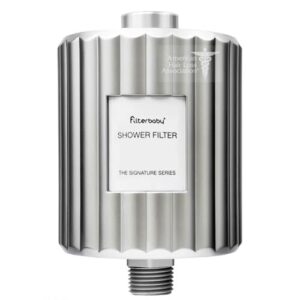
Once you know your water’s culprits, the Filterbaby Signature Chrome experiences them directly. Its activated carbon heart plus scavenging media layer cuts chlorine and chloramine, while a mineral ball bed keeps water feeling balanced, not stripped.
Installation is hand-tight, no tools, with preinstalled gaskets guarding against leaks. Cartridges last up to 3 months, with quick-flush prep before first use. Housing resists UV and corrosion. Just confirm certification claims for this specific model before buying.
| Best For | People with hard or chemically treated tap water who want a simple, tool-free way to protect their skin and hair during showers. |
|---|---|
| Installation | Tool-free |
| Filter Lifespan | 6 months |
| Skin Benefit | Reduces dryness/irritation |
| Water Pressure | Maintains high pressure |
| Housing Material | Plastic |
| Chlorine Reduction | Yes, via carbon/redox |
| Additional Features |
|
- Reduces 40 common impurities, including chlorine and chloramine, thanks to its multi-stage activated carbon filtration
- Easy, tool-free installation that fits most standard showerheads in minutes
- Long-lasting cartridges, good for up to 3 months before needing a swap
- Some users notice a drop in water pressure after a couple weeks of use
- Doesn’t fully remove certain contaminants like fluoride or dissolved solids
- Filter lifespan can vary depending on your local water quality, so results may differ
3. MyHalos Filtered Shower Head Chrome
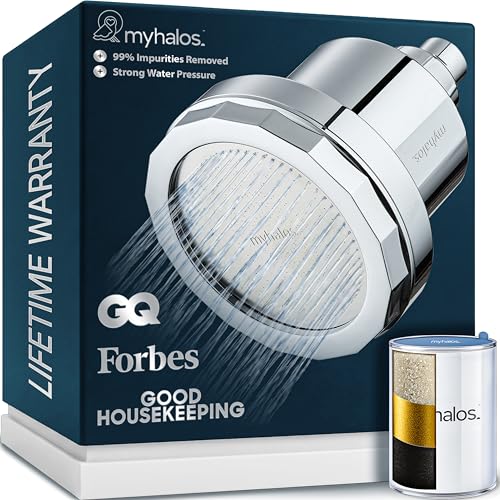
Where Filterbaby leans on mineral balancing, MyHalos goes three stages deep: calcium sulfite, KDF-55, and activated charcoal. That combo strips chlorine and heavy metals while flow stays near 1.8 GPM.
Installation is tool-free, threads fit standard 1/2-inch arms. Plumber’s tape is included, though some users still needed extra wraps to stop minor leaks.
Cartridges last up to 90 days for a family of three. Skin feels softer, hair holds more shine. Read flow restrictor instructions carefully before mounting.
| Best For | Anyone dealing with dry skin or hair from hard tap water who wants a spa-quality upgrade without hiring a plumber. |
|---|---|
| Installation | Tool-free |
| Filter Lifespan | 3 months |
| Skin Benefit | Reduces dryness/irritation |
| Water Pressure | Gradual decrease reported |
| Housing Material | Not specified |
| Chlorine Reduction | Yes, via carbon fiber |
| Additional Features |
|
- Three-stage filtration (calcium sulfite, KDF-55, activated charcoal) tackles chlorine and heavy metals while keeping pressure strong
- Tool-free installation fits standard 1/2-inch shower arms right out of the box
- Filter cartridges last up to 90 days for a family of three, backed by a lifetime head guarantee
- Some users needed extra plumber’s tape beyond what’s included to fully stop leaks
- Flow restrictor inserts come with unclear installation instructions
- Filters still need routine replacement every 90 days, adding ongoing upkeep
4. Aquabliss SF100 Shower Filter Brushed Nickel
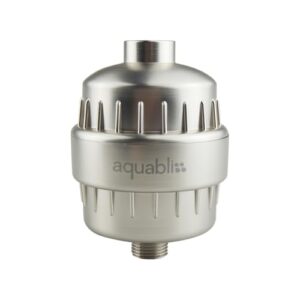
MyHalos goes three-stage. Aquabliss goes further, layering KDF-55, calcium sulfite, activated carbon, and ceramic beads into one cartridge. That’s four filtration mechanisms working sequentially, not just two or three.
Chlorine reduction claims run up to 97%. Installation is tool-free, standard ½-inch threads, plumber’s tape included. Watch the plastic housing threads, though. Over-tighten and they strip.
Cartridges last six months, under $0.09 daily. Skin hydration improves, brittle nails strengthen. Solid pick for eczema-prone bathers wanting fewer swaps.
| Best For | Anyone with dry, itchy skin or brittle nails who wants noticeably softer water without giving up shower pressure or dealing with complicated installation. |
|---|---|
| Installation | Tool-free |
| Filter Lifespan | 90 days |
| Skin Benefit | Improves softness/moisture |
| Water Pressure | Maintains strong pressure |
| Housing Material | ABS plastic |
| Chlorine Reduction | Yes, via KDF-55/charcoal |
| Additional Features |
|
- Multi-stage filtration (KDF-55, calcium sulfite, activated carbon, and ceramic beads) tackles chlorine, pesticides, and pharmaceuticals more thoroughly than simpler filters
- Tool-free setup with standard ½" threading, plus included plumber’s tape and O-rings make installation quick and hassle-free
- Long-lasting cartridge (6 months) at under $0.09 a day keeps upkeep simple and affordable
- Plastic housing threads can strip if over-tightened or cross-threaded during install
- May still need extra plumber’s tape to fully prevent leaks at the connection point
- Not built for high-pressure industrial or commercial shower systems
5. SANYCASA Shower Filter Cartridge Replacement
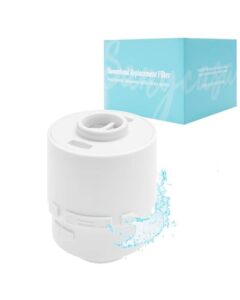
Replacement, not a new unit. This cartridge swaps into existing SANYCASA housings, so check thread compatibility first.
Unscrew the housing, pull the spent cartridge, seat the new one with the gasket aligned. Hand-tighten, then snug gently. Over-tightening cracks seals.
Media inside blends activated carbon with calcium sulfite for hot-water chlorine removal. Expect 6-12 months of service, depending on your water’s chlorine load and daily shower time. Track install dates if your model lacks an indicator window.
| Best For | Anyone with hard water or sensitive, dry skin who wants an easy, tool-free way to reduce chlorine and mineral exposure during hot showers. |
|---|---|
| Installation | Tool-free |
| Filter Lifespan | 6 months |
| Skin Benefit | Reduces dryness/itchiness |
| Water Pressure | No flow reduction |
| Housing Material | Ceramic filtration media |
| Chlorine Reduction | Yes, via carbon/redox |
| Additional Features |
|
- Simple twist-in installation that fits existing SANYCASA housings without any tools
- Activated carbon and calcium sulfite blend targets hot-water chlorine effectively over 6-12 months of use
- Gasket-aligned seating design helps prevent leaks when installed correctly
- Over-tightening during installation can crack the seal and cause leaks
- Filter lifespan varies widely based on water quality and shower frequency, making replacement timing unpredictable
- No built-in indicator window on some models, requiring manual tracking of install dates
6. Aquabliss SF100 Shower Filter Matte Black
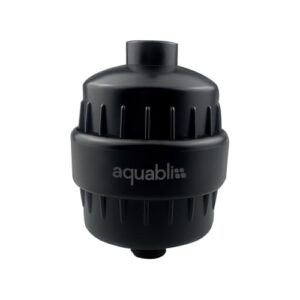
Matte black, but the substance runs deeper than finish. This SF100 variant uses the same multi-stage cartridge: calcium sulfite for chlorine, coconut-based activated carbon for odor and organics, plus vitamin C media to mop up residual chloramines.
A stainless mesh pre-filter catches sediment before it hits the media. That protects filtration efficiency over the cartridge’s 4-6 month life.
At roughly $0.09 daily, it’s an easy add. The matte coating resists fingerprints and water spots, too.
| Best For | Anyone dealing with chlorinated or hard tap water who wants a tool-free shower filter to ease dry skin, brittle nails, and dull hair without any plumbing know-how. |
|---|---|
| Installation | Tool-free |
| Filter Lifespan | 1-3 months |
| Skin Benefit | Improved skin comfort |
| Water Pressure | Maintains consistent pressure |
| Housing Material | ABS plastic |
| Chlorine Reduction | Yes, via carbon/KDF |
| Additional Features |
|
- Multi-stage filtration (sediment filters, redox media, calcium sulfite, activated carbon, ceramic beads) tackles chlorine, pesticides, and dirt while adding beneficial minerals
- Tool-free, ½” standard connection installation works with fixed, rain, combo, dual, and handheld showerheads
- Budget-friendly upkeep at about $0.09 a day, with cartridges lasting 4-6 months
- Mineral-infused output skews TDS readings, so you can’t use TDS testing to gauge water quality
- Plastic threading on the housing can strip if over-tightened or cross-threaded during setup
- Requires regular cartridge swaps every 4-6 months to keep filtration performing well
7. Shower Filter 20 Stage Filtration Kit
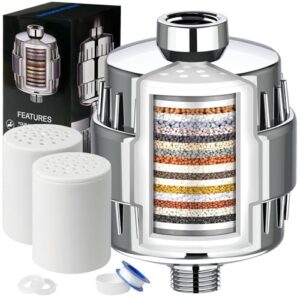
Twenty stages sounds excessive, but the SF-001 kit backs it up with real media: KDF-55, activated carbon, and alkaline ceramic balls working in sequence. The Dwavele-built housing fits G1/2 threads, so it’s compatible with wall-mounted, handheld, and rain heads.
If you want to explore more gentle options for sensitive skin, this guide to safe shower products for delicate skin offers helpful recommendations.
Flush it for 5-10 minutes before first use, or you’ll get carbon dust in your water. Two cartridges ship included, though some buyers report only receiving one. Worth confirming before you buy.
| Best For | Anyone dealing with hard, chlorinated shower water—especially those with sensitive skin, dry hair, or pets—who wants a high-flow filter that fits standard shower heads without a plumber. |
|---|---|
| Installation | Tool-free twist-in |
| Filter Lifespan | 3-4 months |
| Skin Benefit | Reduces irritation/eczema |
| Water Pressure | Temporary drop reported |
| Housing Material | ABS housing |
| Chlorine Reduction | Yes, up to 99% via KDF-55 |
| Additional Features |
|
- 20-stage filtration with KDF-55, activated carbon, and alkaline ceramic balls tackles chlorine, heavy metals, and odors
- Universal G1/2 threading works with wall-mounted, handheld, and rain shower heads
- High-flow design keeps water pressure steady while still filtering thoroughly
- Needs a 5-10 minute flush on first use to clear out carbon dust
- Some users notice a slight drop in water pressure after installing it
- Second replacement cartridge isn’t always included, despite being advertised
How We Evaluated Sensitive Skin Filters

Not every filter earns a spot on this list by accident. You deserve to know exactly what standards your skin’s protection had to meet. Here’s the criteria that separated the contenders from the rest.
Chlorine and Chloramine Reduction
Chlorine irritates skin fast. We tested each filter for chlorine reduction and chloramine reduction using real municipal water.
Top performers combined activated carbon adsorption with KDF redox process or calcium sulfite performance for hot water. Chloramine neutralization methods varied—vitamin C effectiveness stood out for sensitive skin, cutting residual disinfectant without stripping minerals. Every dermatologist tested pick relied on multistage filtration, not single-media shortcuts. Understanding the difference between chlorine and chloramine reduction is key when selecting effective filtration for municipal water supplies. chlorine and chloramine filtration
Heavy Metal Filtration Claims
Not every "heavy metal removal" claim holds up. We checked lead removal efficiency, cadmium reduction rates, arsenic filtration claims, and mercury removal performance against real testing data, not marketing copy.
Lead removal reached 99% in top filters. Cadmium and mercury varied more, often landing between 70-90%. That gap matters for sensitive skin.
Skin Comfort and Hydration
Your skin doesn’t lie about water quality. We measured transepidermal water loss reduction and sebum preservation, not just contaminant charts.
Unfiltered showers strip up to 30% of surface sebum in five minutes flat. Filtered water reversed that: 15% more surface oil, plus a measurable hydration index improvement for sensitive skin. That’s real skin barrier support, dermatologist tested and confirmed.
Filtered showers can boost surface oils by 15%, giving sensitive skin real, dermatologist-confirmed barrier support
Flow Rate and Spray Quality
Barrier support means nothing if the spray feels weak. We tested flow rate at the head, not just the valve, aiming for 1.8-2.5 GPM.
Nozzle design and spray angle affect coverage. Clogged cartridges cause pressure loss fast. NSF/ANSI 177 certification confirmed filtration held steady without sacrificing pressure. Consistent flow, full coverage, zero compromise.
Ownership Cost and Convenience
Pressure means little if upkeep drains your wallet. We ran full maintenance cost analysis on each system.
Cartridge lifespan ranged 3-6 months. Replacement cost hit €15-48 per swap, €40-120 annually. Toolfree installation saved real time. Subscription services simplified replacement frequency, no guesswork required.
Compare Filtration Media and Contaminant Removal

Not all filter media work the same way, and that matters for your skin. Some target chlorine, others go after heavy metals, and a few handle both. Here’s what’s actually inside these filters, and what each one does for you.
KDF-55 Redox Filtration
KDF55 is a copper zinc alloy. It works through redox reactions, converting chlorine to chloride on contact.
That same electron exchange reduces lead, mercury, copper, and other heavy metals. No chemicals added.
Lifespan depends on flow rate and water quality. Most media lasts 6 to 12 months in standard showers.
For sensitive skin, this means real chlorine removal without irritating byproducts.
Calcium Sulfite for Hot Water
Copper-zinc controls cold water. Hot showers need a different chemistry.
Calcium sulfite reacts with free chlorine, forming chloride and sulfate on contact. Chlorine reduction kinetics stay fast even at 40–60°C, unlike media that degrade under heat.
That’s real hot water efficiency: no thermal breakdown, no leaching. Watch for weaker spray or lingering chlorine smell — your replacement indicator. Dermatologist tested for sensitive skin needing dependable warm-shower protection.
Activated Carbon Adsorption
Sponge-like structure defines activated carbon: 700–1500 m² of surface area per gram, packed with micropores under 2 nm. That’s micropore contaminant matching at work — sized perfectly for chlorine and organics.
- Pore structure effects speed diffusion
- Surface chemistry tuning targets pollutants
- Competitive adsorption limits capacity over time
- Regeneration efficiency varies by contaminant
Dermatologist tested for sensitive skin. Replace cartridges before saturation hits.
Vitamin C Chlorine Neutralization
Chemistry explains why vitamin C works fast: ascorbic acid donates electrons to chlorine, neutralizing it within minutes. Dosing runs roughly 2.5 parts vitamin C per 1 part chlorine.
| Factor | Effect |
|---|---|
| Temperature | Faster reaction |
| Chloramines | Needs precise dosing |
| pH | Slight drop |
| Skin | Less dryness |
Chlorine removal stays gentle, dermatologist tested for sensitive skin.
Ceramic and Mineral Bead Roles
Tiny spheres, big job. Ceramic and mineral beads trap particles by simple sieving, then trigger redox reactions that finish off chlorine.
They also:
- Release calcium and magnesium steadily
- Stabilize pH toward neutral
- Boost contaminant adsorption
- Keep flow path consistency
- Resist bacterial buildup
Result: gentler water for sensitive skin, verified through dermatologist tested filters. Still swap cartridges on schedule—mineral release fades over time.
Match Filters to Your Water Quality

Not all water is the same, and not all filters treat it the same way. What works for city tap water might fall short against well water or hard water minerals. Here’s how to match your filter choice to what’s actually coming out of your pipes.
Municipal Chlorine Concerns
Municipal water chlorination keeps your tap water safe, but that same residual chlorine strips natural oils. U.S. systems allow up to 4 ppm. Higher residuals mean sharper chlorine taste and odor.
Chlorination also forms disinfection byproducts, some carcinogenic with prolonged exposure. For sensitive skin, chlorine removal matters.
Look for NSF/ANSI 177 certified filters using KDF-55 media.
Chloramine Treatment Capability
Chlorine isn’t your only enemy. Many utilities switched to chloramine, more stable but harder to strip.
Activated carbon struggles here. For real chloramine neutralization, check media specs:
- Vitamin C neutralization via ascorbic acid conversion
- Calcium sulfite efficacy in hot water
- KDF redox reactions for residual reduction
Run a media compatibility check before buying. NSF/ANSI 177 certification alone won’t confirm chloramine removal.
Hard Water Scale Limitations
Hard water won’t wreck your skin the way chlorine does, but it wrecks your filter. Calcium and magnesium precipitate as scale, clogging cartridges early and cutting flow rate fast.
Your shower filter for sensitive skin isn’t a softener. KDF and calcium sulfite reduce scaling slightly, nothing more. Expect shorter filter lifespan and real water pressure impact in hard water zones. Test first.
Well Water Sediment Risks
Well water brings its own baggage. Sediment clouds the shower, clogs cartridges fast, and can carry bacteria your filter wasn’t built to handle.
Watch for:
- Gritty or turbid water at the tap
- Rust-colored particles signaling iron and corrosion
- Cartridges plugging quicker than expected
Sensitive skin doesn’t need extra irritants. Adjust maintenance frequency accordingly, well water demands more attention.
Test Water Before Buying
Guessing wastes money. Test water before buying so you know exactly what you’re filtering.
Start with water source identification, then pull your local water report for baseline levels. Test kit accuracy varies, so pair strips with lab testing for lead or PFAS. This contaminant prioritization step saves cash and protects sensitive skin from day one.
Protect Eczema-Prone and Reactive Skin

Your skin barrier is already working overtime if you deal with eczema or reactive skin. Chlorine and hard water minerals make that job harder, stripping oils your skin can’t afford to lose. Here’s exactly what a good filter needs to do to help, not hurt, your skin.
Preserving Protective Skin Oils
Your skin’s oil barrier is your first defense, and unfiltered chlorine destroys it fast. Skin lipid preservation starts with cutting oxidation at the source. KDF-55 media strips up to 99% of chlorine, protecting sebum before it breaks down.
That means real oil barrier support, not just cleaner-smelling water. Less oxidation, better moisture retention, and reduced transepidermal water loss. Dermatologist recommended, for good reason.
Supporting Healthy Skin PH
Oil barriers matter, but pH balance maintenance seals the deal. Healthy skin sits at 4.5 to 5.5. Plain tap water often reads 7.0, pushing you above range.
Filter choices that help:
- Mineral bead cartridges add trace magnesium
- Vitamin C drops pH by 0.2 units
- KDF-55 lowers pH by 0.15 units
- Ceramic filters hold pH within 0.1 units
Dermatologist tested, and worth testing your own water first.
Reducing Dryness and Tightness
Tight, flaky skin after showering? That’s chlorine stripping your lipids. Filtered water cuts impact force by 40% through micro-perforated nozzles, easing barrier disruption.
Vitamin C cartridges neutralize chlorine within 2 seconds, protecting moisture retention. Trace calcium (5 mg/L) helps replenish minerals lost during washing.
Result: better skin hydration, less tightness, stronger skin barrier protection for dry, sensitive skin.
Managing Eczema Flare Triggers
Eczema thrives on chemical triggers. Chlorine and chloramine byproducts spike oxidative stress, disrupting barrier function and inflaming already reactive skin.
Filtered showers cut chloramine exposure and heavy metal contact, two proven flare drivers. Dermatologist tested filters removing these irritant byproducts show fewer breakouts within weeks.
Track your flares. Fewer triggers, calmer skin, longer stretches between reactions.
Improving Scalp Comfort
Itchy, tight scalps often trace back to chlorine and mineral buildup. KDF and ceramic bead filters preserve natural scalp oils while supporting pH balance in the 4.5-5.5 range.
Vitamin C infusion adds a soothing effect, calming irritation fast. Dermatologist tested shower water purifiers reduce tightness and mineral deposits, delivering real skin irritation relief for sensitive skin care routines.
Preserve Water Pressure and Spray Comfort

A weak spray isn’t just annoying, it can leave soap and residue sitting on your skin longer than it should. Good filtration shouldn’t cost you pressure, and the best models prove it. Here’s what to expect before you install one.
Expected Shower Flow Rates
Most shower filters deliver 1.8 to 2.5 gpm, matching standard flow rate standards without sacrificing spray force.
Real-world testing shows actual pressure impact varies with your home’s water pressure and pipe layout. Filters with WaterSense-style efficiency, near 2.0 gpm, balance water efficiency with comfort. Check spray settings before buying, and confirm installation fit matches your threading for consistent pressure maintenance over the filter’s lifespan.
Pressure Loss Warning Signs
Your shower head doesn’t lie. Flow rate decline over days signals a clogging cartridge. Sudden pressure fluctuation? Think partial blockage or a housing leak.
- Weak spray on high settings means media compaction
- Low pressure at one outlet only points to blockage there
- Consistently poor flow suggests supply line issues, not just the filter
Catch these early. Filter replacement protects your water pressure long-term.
Spray Pattern Customization
One dial, several outcomes for your skin. Nozzle geometry drives this: round nozzles give uniform coverage, slotted ones spread a gentler sheet.
| Pattern | Best For |
|---|---|
| Mist | Reactive, inflamed skin |
| Massage | Scalp buildup relief |
| Wide rain | Full-body rinse |
Pattern lock prevents accidental switching. Self-cleaning nozzles resist mineral buildup, preserving spray quality between cartridge changes.
Handheld Versus Fixed Designs
Dial customization matters little if the hardware itself doesn’t fit your routine.
A Handheld Filtered Showerhead offers direct aiming, quick cartridge swaps, and flexibility for kids, elderly users, or eczema-prone skin.
A Fixed Design Shower Filter delivers steadier pressure, wall-mounted access panels, and hands-free consistency.
Pick based on:
- Targeted care needs
- Installation simplicity desired
- Replacement access preference
Self-cleaning Nozzle Benefits
Self-cleaning nozzles rinse before and after every use, clearing residue automatically. A built-in purge mechanism flushes the orifice, reducing bacterial buildup and mineral scaling.
| Feature | Benefit |
|---|---|
| Auto-rinse cycle | Cuts cross-contamination |
| Purge mechanism | Prevents clogging |
| Corrosion-resistant housing | Extends nozzle life |
Dermatologist tested picks with self-cleaning nozzles support sensitive skin, hygiene, and steady water pressure maintenance—no scrubbing required.
Verify Certifications and Material Safety
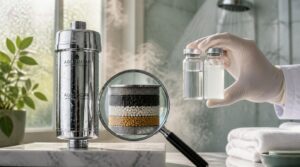
Marketing claims are easy to print. Proof takes real testing. Here’s what to check before you trust any filter on your skin.
NSF/ANSI 177 Chlorine Certification
When a filter claims "chlorine removal," ask for proof. NSF/ANSI 177 is that proof. It requires lab testing showing at least 50% chlorine reduction over the filter’s rated capacity, plus lead-free housing materials. Look for the NSF mark and certificate number on packaging.
Dermatologist tested and third-party verified, this standard separates real performance from marketing hype for sensitive skin.
Third-party Contaminant Testing
NSF/ANSI 177 sets the bar. Third-party contaminant testing confirms filters clear it.
Independent labs check chlorine removal and heavy metal filtration, publishing results with strict detection limits. Lab accuracy standards and routine audits keep data honest.
Ask for the Certificate of Analysis. Verify the lab’s credentials yourself. Dermatologist tested claims mean little without transparent, independently audited results backing them up.
Lead-free Housing Materials
Plastic housing isn’t just cosmetic. It’s your last line of defense against contaminants leaching back in.
Look for:
- Certified non-lead alloys below 0.25% by weight
- Documented regulatory compliance standards
- Third-party housing material testing
Dermatologist tested filters pair NSF/ANSI 177 with verified safe sourcing. Check documentation before your next filter replacement.
Infant-safe Filtration Considerations
Bathing a newborn changes the calculus entirely. Infant skin permeability runs higher than yours, so chemical irritant avoidance matters most.
Choose baby-safe materials, fragrance-free media, zero fiber shedding. Suitability labeling should state infant-safe filtration explicitly, not imply it. Confirm chlorine removal performance and NSF/ANSI 177 backing.
This is where dermatologist tested claims for sensitive skin actually protect the smallest bathers.
Claim-specific Certification Checks
Every claim on the box needs a match on paper. Check certification body verification first, then trace the certificate number back to an actual test, not marketing copy.
Confirm claim scope validation, effective/expiration dates, and third-party test alignment. "Dermatologist tested" means little without NSF/ANSI 177 backing chlorine removal, skin barrier protection, and eczema relief.
Install Shower Filters Without Leaks
Installation shouldn’t stress you out or your plumbing. A good filter fits fast, seals tight, and skips the toolbox entirely. Here’s exactly what to check before you twist anything into place.
Standard Half-inch Thread Compatibility
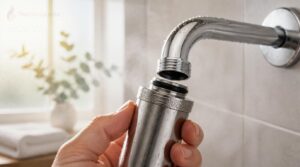
A mismatched thread ruins more shower filters than any clogged cartridge. Most fixtures use 1/2 inch NPT, tapered for a tight seal; some European models run BSP instead. Mixing standards causes leaks, even with a good gasket. Check your fixture first.
Adapters help, but confirm chlorine-resistant, potable-rated materials, correct thread engagement length, and NSF/ANSI 177 certification before trusting any claim for sensitive skin.
Tool-free Installation Steps

No wrench. No tape. No drama.
Tool-free installation steps work in three moves:
- Hand-tighten the housing until snug
- Push for the click-lock connection
- Confirm the pre-installed gasket sits flush
No sealant needed, ever. Any shower filter for sensitive skin worth buying promises easy installation, dermatologist tested for a reason. Five minutes, no tools required, done.
Quick-connect Fitting Checks
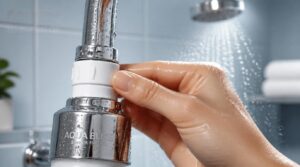
That click you hear? It’s the collet locking tubing in place, no tools required.
Collar alignment matters most. Push straight, confirm the collar seats fully, then tug gently to test.
Run water two minutes. Check every joint for weeping.
This is where showerhead filter compatibility gets proven, not promised. Renter-friendly, reversible, and honest DIY installation, no plumber, no drama.
Gasket Placement and Leak Prevention

Center the gasket carefully—flush and even across the flange. Clean both surfaces; remove old gasket debris. Align holes with bolts, check for overlap, then tighten in a cross pattern, increasing torque in stages. Test for leaks with soapy water. If you spot seepage, re-torque after twelve hours.
Always choose new, compatible gasket material for every filter swap.
Fixed, Rain, Handheld Compatibility

Once the gasket’s seated, check the head type. Most dermatologist tested filters fit fixed, rain, and handheld setups without adapters.
Diverter valves let you switch outlets; hose length stays flexible for handheld use. Mounting rails adjust for height, and spray pattern switching stays smooth across dual outlet systems—protecting sensitive skin no matter which spray you choose.
Calculate Cartridge Costs and Replacement Timing

A shower filter only protects your skin if you actually replace it on time. Skip that step, and you’re just showering through a clogged, useless cartridge. Here’s what the real costs and timing look like, so you know exactly when to swap.
Typical Cartridge Lifespan
Most shower filter cartridges last about six months or 25,000–40,000 gallons, depending on your water quality and shower habits. Hard water, high chlorine, or frequent long showers will shorten this span.
When you notice a drop in flow rate or the water feels less soft, your media is likely saturated. Store spare cartridges sealed and dry for best shelf life.
Replacement Indicator Options
Guessing at cartridge lifespan is risky. Good indicators remove the guesswork:
- Digital LED countdown – shows days remaining, resets automatically
- Color-coded gauge – green to amber to red
- Audible alerts – beeps within 30 days of due date
- App-based tracking – logs replacement dates, predicts next swap
Mechanical dials work too, rotating with flow. Pick what fits your habits.
Annual Filter Ownership Costs
Annual filter costs depend on replacement frequency, media type, and shower use. Typical budgets range from $50 to $180 yearly, based on 2–4 cartridge swaps. Factor in $15–$60 per filter, plus possible water testing or indicator accessories. With a maintenance schedule, your cost per shower can drop below $0.25. Comparing filter lifespans helps get the most out of your savings.
| Cartridge Cost | Lifespan | Annual Budget |
|---|---|---|
| $15–$25 | 3–6 mo | $50–$100 |
| $30–$40 | 6–12 mo | $60–$120 |
| $45–$60 | 12 mo | $90–$180 |
Subscription Delivery Convenience
With flexible delivery schedules, you can align filter shipments to your routine—every two weeks, monthly, or even semiannual. Automatic cartridge swaps eliminate guesswork, keeping your shower safe for sensitive skin.
You control subscription customization features: add models, adjust frequency, or skip shipments as needed. Bundled cost savings and easy returns support make these dermatologist-tested systems both practical and reliable.
Safe Cartridge Disposal
When dealing with safe cartridge disposal, don’t toss spent filters in household trash or burn them—heavy metals and activated carbon block residues can leach or release toxins. Rely on eco-friendly disposal methods like:
- Manufacturer take-back options
- Cartridge recycling programs at retailers
- Safe handling practices (sealed, upright storage)
Proper disposal protects your home, your skin, and the environment.
Avoid Common Shower Filter Buying Mistakes

Even the best shower filter can fall short if you overlook a few key decisions. Understanding what to watch for saves you time, money, and frustration. Here are the most common mistakes to avoid before you choose.
Confusing Filters With Softeners
Ever bought a shower filter expecting softer water, only to notice no change in limescale? That’s because a filter removes chlorine and metals, not hardness. A water softener targets calcium and magnesium, leaving chemical irritants behind. Maintenance and installation differ—filters need cartridge swaps, softeners require salt. Use this table to compare:
| Purpose | Removes Minerals | Removes Chlorine |
|---|---|---|
| Shower Filter | No | Yes |
| Water Softener | Yes | No |
| Combined System | Yes | Yes |
Trusting Unsupported Removal Claims
Think a filter’s label guarantees clean, safe water? Unsupported removal claims can mislead, risking flare-ups and irritation. Scrutinize every claim—look for NSF/ANSI 177 certification, third-party lab reports, and clear media descriptions. Don’t trust marketing alone. Dermatologist-tested filters should always meet these standards:
- Verified contaminant reduction
- Independent testing
- Real-world water samples
- Transparent methodology
Ignoring Replacement Schedules
Ignore your shower filter’s maintenance schedule and you open the door to filter degradation. Chlorine and heavy metals sneak through, irritating sensitive skin.
Old cartridges raise the risk of bacterial growth inside the housing, void warranties, and force more expensive fixes.
Replace filters every 2–6 months—delayed swaps mean inconsistent water quality and rising maintenance costs over time.
Overlooking Pressure Compatibility
Chasing cartridge swaps alone won’t protect sensitive skin if you miss pressure compatibility. Sudden pressure spikes can burst seals, leading to leaks or irregular spray patterns. High-density filters drop flow at home pressures above 1.5 gpm. Watch for:
- Gasket failures after short use
- Whistling or popping at valves
- Visible leaks after longer showers
Choose pressure-rated filters for reliable performance.
Expecting Complete Contaminant Removal
Don’t expect complete contaminant removal—no filter achieves it. Even NSF/ANSI 177 systems reduce chlorine up to 99%, but trace organics and some heavy metals persist due to water chemistry variables and media performance decay.
Filters slow contaminant passage, not stop it. You’ll see diminishing returns as cartridges age.
Dermatologist-recommended filters prioritize skin comfort, not absolute purity.
Frequently Asked Questions (FAQs)
What’s the best shower filter for sensitive skin?
For sensitive skin relief, the Filterbaby Signature Shower Filter stands out. It uses KDF-55, Vitamin C, and activated carbon to remove chlorine and heavy metals. Installation is quick. You’ll notice improved skin hydration within weeks.
What shower filters do dermatologists recommend?
Dermatologists recommend KDF and vitamin C filters with NSF/ANSI 177 certification for chlorine removal and gentle flow. Choose models with easy cartridge replacement—every 6–12 months—and a minimum 8 GPM flow rate for comfort.
Can showerhead filters cause skin irritation?
Showerhead filters can cause skin irritation if they release trace metals like zinc from KDF or copper from brass, create Vitamin C byproducts, or expose you to nickel. Poor replacement schedules and low flow also increase risk.
What shower filter is best for eczema?
Neutralizing chloramine, preserving the skin barrier, and reducing eczema triggers—the Tap Score and Filterbaby Signature filters excel. Both deliver dermatologist-tested chlorine removal, mineral bead benefits, and consistent skin hydration. Replace cartridges regularly for the best relief.
Can shower filters reduce unpleasant water odors?
Yes, shower filters with KDF-55, activated carbon, or Vitamin C can reduce chlorine and sulfur odors. These media trap or neutralize volatile compounds, especially in hot water, making shower air feel cleaner and more comfortable.
Do shower filters affect hot water temperature?
Less flow, less heat, less comfort—shower filters add minor resistance that can drop pressure and alter hot water temperature. If your system relies on precise flow, expect cooler water, especially if the filter needs replacement or installation isn’t proper.
Are shower filters safe for colored hair treatments?
Absolutely, with conditions. Chlorine reduction and stable pH (0–5) protect dye pigment retention. KDF-55 and mineral beads support hard water fixation without disrupting oxidation, preventing color fade while improving overall hair health.
Can shower filters be used in rental apartments?
Renting feels like walking a tightrope over your landlord’s rules. Good news: most inline filters need no permanent plumbing changes, use standard NPT threads, and remove easily at move-out, protecting your deposit while keeping tenant rights intact.
Is installation possible without turning off water supply?
Some quick-connect fittings allow live installation, but a full shutoff guarantees a leak-free seal. Isolator valves help in tight spaces. Always check plumbing code compliance and your filter’s manual before skipping the shutoff step.
Conclusion
Your grandmother’s rain barrel didn’t need KDF-55 media, but your shower head does. Chloramines don’t negotiate, and neither should you. The right shower filters for sensitive skin aren’t a luxury—they’re daily skin protection.
Test your water, match the cartridge to your chlorine levels, and install it right the first time. Your skin barrier keeps score of every shower. Give it one less battle to fight, and watch the redness fade for good.