This site is supported by our readers. We may earn a commission, at no cost to you, if you purchase through links. This content is for general informational and educational purposes only and is not a substitute for professional medical, dermatological, or nutritional advice.

Most people starting a skin care routine make the same mistake: they buy too much, too fast.
A shelf full of serums, toners, and treatments sounds impressive, but it’s a recipe for irritated skin and wasted money.
Your skin doesn’t need a 10-step regimen—it needs consistency with the right basics.
A simple skin care routine for beginners comes down to five core steps that protect your barrier, lock in moisture, and shield you from daily damage.
Get those right, and everything else becomes optional.
Table Of Contents
- Key Takeaways
- Essential Steps for Beginners’ Skincare Routine
- Morning Vs. Evening Skincare Routine Differences
- 5 Best Products for Simple Skincare Routine
- Key Ingredients for Effective Beginner Skincare
- Common Mistakes to Avoid in Skincare
- Frequently Asked Questions (FAQs)
- What skincare does Sali Hughes use?
- What is a beginner’s basic skincare routine?
- How do you start a skincare routine?
- What is a skin-care routine?
- What makes a good skincare routine?
- What is a good first-time skin care routine?
- Should you have a skincare routine?
- What is a basic skin care routine for beginners?
- What is the 4 2 4 rule in skincare?
- What should I start my skin care routine with?
- Conclusion
Key Takeaways
- You don’t need a ten-step routine to get real results — a gentle cleanser, hydrating serum, moisturizer, sunscreen, and weekly exfoliation are all your skin actually needs to stay healthy and protected.
- Morning and evening routines serve completely different purposes: your AM routine shields your skin from UV damage and environmental stress, while your PM routine focuses on repair, cell renewal, and deep hydration, while you sleep.
- Ingredients like hyaluronic acid, ceramides, niacinamide, and vitamin C do the heavy lifting in any beginner routine — understanding what each one does helps you shop smarter and skip products you don’t need.
- The most common beginner mistakes — over-cleansing, skipping SPF, layering too many actives at once, and stopping your routine at the jawline — quietly work against your skin over time, so keeping things simple and consistent is always the smarter move.
Essential Steps for Beginners’ Skincare Routine
Building a skincare routine doesn’t have to be complicated, especially when you know exactly where to start. A few consistent steps, done daily, can make a bigger difference than a full shelf of products you only use sometimes.
If breakouts are part of your skin story, checking out effective acne treatments tailored for men can help you build a routine that actually addresses what’s going on.
Here’s what every beginner’s routine should cover.
Cleanse Face Twice Daily

Think of cleansing as your skin’s daily reset button. When you cleanse twice daily — once in the morning and once at night — you’re clearing away everything that works against healthy skin: overnight oil buildup, sweat, daily pollution, and leftover sunscreen. Skipping even one session lets all of that sit on your skin and quietly clog pores. This practice removes accumulated dirt, keeping pores clear.
Here’s what consistent face cleansing actually does for you:
- Morning cleanse removes oils and residue that accumulate while you sleep.
- Evening cleanse lifts away daily grime so skin can breathe overnight.
- pH balanced cleanser protects your skin’s natural barrier from irritation.
- Pat dry technique reduces friction, keeping sensitive skin calm after washing.
Use a gentle cleanser with lukewarm water, spend about 30–60 seconds on massage duration, and always pat dry — never rub.
Apply Hydrating Serum

Once cleansing is done, your skin is primed and ready — this is exactly when a hydrating serum does its best work. Apply a pea-sized amount using the patting technique onto damp skin for better serum absorption. Hyaluronic acid serums pull moisture into the skin quickly, so always avoid the eye area. Wait about 30 seconds before layering anything on top.
| Step | What To Do | Why It Matters |
|---|---|---|
| Damp Skin Application | Apply right after cleansing | Humectants bond with surface water |
| Pea-sized Amount | Warm between fingertips first | Prevents product buildup |
| Patting Technique | Press gently into skin | Reduces friction and irritation |
| Serum Absorption Wait | Pause 30 seconds | Allows settling before next layer |
| Avoid Eye Area | Stop short of eye contour | Prevents sensitivity reactions |
Moisturize to Lock in Hydration
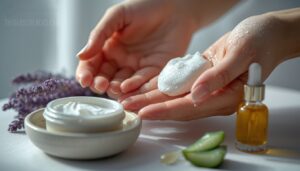
Your serum just delivered a flood of hydration — now your moisturizer holds it all in place. Damp skin application matters here, because layering moisturizer while your skin is still slightly damp helps trap that surface water before it evaporates. That’s your humectant pairing strategy working in real time.
Here’s what a good moisturizer does for you:
- Occlusive ingredients like petrolatum or dimethicone form a film that slows water escaping from your skin
- Emollient benefits from squalane or shea butter fill gaps between skin cells, leaving skin softer and smoother
- Barrier lipid boost from ceramide moisturizer ingredients restores the lipid layers that hold your skin together
- Noncomedogenic formulas keep pores clear while still delivering all that protection
A simple skincare routine built around hyaluronic acid and ceramides works because these ingredients address hydration from two angles — pulling water in, then locking it down.
Use Sunscreen Every Morning

Once your moisturizer has settled, sunscreen every morning is your next non-negotiable step. UV rays don’t take days off — even through windows, UVA exposure quietly adds up, contributing to dark spots and early wrinkles. For proper SPF selection, reach for broad spectrum SPF 30+. Nail your application timing by applying it 15–20 minutes before heading out, using about ¼ teaspoon as your proper amount.
| Factor | What To Know | Why It Matters |
|---|---|---|
| SPF Selection | Broad spectrum, SPF 30+ | Blocks both UVA and UVB rays |
| Proper Amount | ~¼ teaspoon for face and neck | Ensures labeled protection is delivered |
| Coverage Areas | Face, neck, ears, hairline | Commonly missed spots age faster |
| Application Timing | 15–20 minutes before sun exposure | Allows full absorption before UV hits |
| Reapplication Frequency | Every two hours outdoors | Protection fades through the day |
For your morning skin care routine, sunscreen is always the final step before makeup — sealing everything underneath while standing guard against sun protection concerns all day.
Incorporate Gentle Exfoliation Weekly

Even after sunscreen is locked in, gentle exfoliation once weekly gives your skin that fresh-start feeling it can’t get from cleansing alone.
Following solid exfoliation guidelines for beginners means choosing the right approach for your skin:
- Exfoliant Types: A chemical exfoliator like an AHA or BHA dissolves dead cells; a physical exfoliator like a konjac sponge buffs gently without tearing skin.
- Pre-Exfoliation Prep: Always cleanse first on damp skin.
- Post-Exfoliation Care: Moisturize immediately after to lock hydration in.
Skin Type Adjustments and Frequency Guidelines matter too — dry or sensitive skin does best every one to two weeks, while oily skin tolerates two to three times weekly.
If you’re unsure where your skin falls on that spectrum, understanding how skin type affects shaving prep can help you fine-tune your routine before picking a schedule.
Morning Vs. Evening Skincare Routine Differences

Your morning and evening routines aren’t just the same steps repeated at different times — they actually serve two very different purposes for your skin.
Once you understand why they differ, building a routine that actually works becomes a lot less confusing. Here’s a closer look at what sets them apart.
AM Focus on Protection
Your morning skincare routine is your first line of defense — and it deserves the same intentional care as locking your front door before you leave the house. UV rays don’t take days off, even when it’s cloudy, so UV Shielding starts the moment you wake up.
Think of it in three layers: an Antioxidant Boost from a vitamin C serum, a barrier‑strengthening moisturizer, and broad‑spectrum SPF 30 sunscreen as your Physical Barriers against daily environmental damage. Together, they create a complete sun protection system.
| Step | Product Type | Key Benefit |
|---|---|---|
| 1 | Vitamin C Serum | Antioxidant Boost against free radicals |
| 2 | Ceramide Moisturizer | Physical Barriers, locks in hydration |
| 3 | Broad‑spectrum SPF 30 | UV protection, prevents premature aging |
SPF Reapplication every two hours outdoors keeps that protection working throughout the day. That’s the heart of every effective morning skincare routine.
PM Focus on Repair and Renewal
While your AM routine protects, your PM routine rebuilds — and that difference matters more than most beginners realize. Sleep-Boosted Renewal is real: your skin’s cell turnover peaks overnight, making this the perfect window for targeted repair. That’s why Nighttime Barrier Repair is worth taking seriously.
| PM Step | What It Does |
|---|---|
| Overnight Hydration Serum (hyaluronic acid) | Draws moisture deep into skin |
| Retinoid (Retinol Scheduling 2–3x weekly) | Promotes cellular renewal |
| Night cream with ceramides | Locks in Post-Cleansing Calm |
Adding an antioxidant serum before your night cream gives your skin extra overnight support.
Adjusting Routine for Sleep Benefits
Your skin doesn’t clock out when you do — and that’s the whole point of a smart nighttime skincare routine. While you sleep, cell turnover accelerates, cortisol drops, and blood flow increases, delivering nutrients right where they’re needed. That’s why your bedtime skincare choices genuinely matter.
While you sleep, your skin gets to work — cell turnover accelerates, cortisol drops, and renewal begins
Light exposure timing during the day helps your circadian rhythm, so pair that with a screen‑free buffer of 30–60 minutes before bed and dimmed lights to boost melatonin naturally. Temperature regulation in your bedroom also helps your skin settle into deeper repair cycles.
| Sleep Phase | Skin Activity | Nighttime Skincare Routine Steps |
|---|---|---|
| Early Sleep | Cortisol decreases | Apply night cream with ceramides |
| Deep Sleep | Collagen production peaks | Evening hydration serum absorbs fully |
| REM Cycles | Cell turnover accelerates | Retinol works at maximum efficiency |
| Growth Hormone Surge | Skin repair activates | Peptides support skin barrier repair |
| Late Sleep | Blood flow increases | Moisturizer locks in overnight renewal |
Beauty sleep isn’t a myth — it’s your best skincare tool.
5 Best Products for Simple Skincare Routine
Walking into a store with a hundred options can feel overwhelming, especially when you’re just getting started. The good news is that you don’t need to spend a fortune or try everything to build a routine that actually works.
Here are five beginner-friendly products worth keeping on your radar.
1. La Roche Posay Toleriane Double Repair Moisturizer
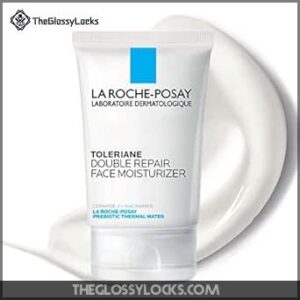
If you’re just building your routine and don’t know where to start, the La Roche-Posay Toleriane Double Repair Moisturizer is one of the easiest wins you can get. It’s fragrance-free, non-comedogenic, and works for oily, dry, and sensitive skin types — which makes it genuinely beginner-friendly.
The formula combines ceramide-3, niacinamide, and glycerin to reinforce your skin barrier, calm redness, and hold moisture in place for up to 48 hours.
What’s especially reassuring is that it absorbs quickly without leaving a greasy finish, so it layers well under sunscreen in the morning.
At $24.99 for 3.2 oz, it’s a solid, dermatologist-recommended option that keeps things simple without cutting corners.
| Best For | Anyone starting a skincare routine — especially those with sensitive, oily, dry, or rosacea-prone skin who want a simple, no-fuss daily moisturizer. |
|---|---|
| Skin Type | Sensitive, Oily, Dry |
| Fragrance-Free | Yes |
| Non-Comedogenic | Yes |
| Key Ingredient | Ceramide-3, Niacinamide |
| Product Type | Moisturizer |
| Oil-Free | Yes |
| Additional Features |
|
- Repairs the skin barrier fast and keeps skin hydrated for up to 48 hours with ceramide-3, niacinamide, and glycerin.
- Lightweight and oil-free — absorbs quickly without greasiness, so it layers cleanly under makeup or sunscreen.
- Fragrance-free and non-comedogenic, making it a safe pick for sensitive or reactive skin.
- At $24.99 for 3.2 oz, it’s a bit pricey for the quantity you’re getting.
- Applying too much can cause pilling, especially when layered with other creams.
- No anti-aging or wrinkle-fighting benefits — it’s purely a moisturizer and barrier support product.
2. Neutrogena Hydro Boost Face Moisturizer
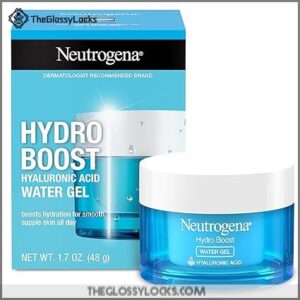
Think of the Neutrogena Hydro Boost Face Moisturizer as a tall glass of water for your skin — light, invigorating, and exactly what you need without any heaviness. The water-gel texture absorbs almost instantly, so you’re not sitting around waiting for it to sink in before reaching for your sunscreen or makeup.
What makes it worth mentioning here is the hyaluronic acid in its essence. It draws moisture into the skin and holds it there for up to 24 hours, leaving your face feeling plump and comfortable rather than tight or dry. The formula is oil-free and non-comedogenic, so it won’t clog your pores or create that dreaded midday shine.
One thing to keep in mind — it does contain a light fragrance, so if your skin runs sensitive, check the fragrance-free version instead before committing.
| Best For | People with normal, oily, or combination skin who want lightweight, long-lasting hydration without clogged pores or a greasy feel. |
|---|---|
| Skin Type | Normal, Oily, Combination |
| Fragrance-Free | No |
| Non-Comedogenic | Yes |
| Key Ingredient | Hyaluronic Acid |
| Product Type | Moisturizer |
| Oil-Free | Yes |
| Additional Features |
|
- The water-gel texture absorbs fast and sits comfortably under makeup or SPF — no waiting around.
- Hyaluronic acid keeps skin hydrated for up to 24 hours, so your face stays plump without feeling heavy.
- Oil-free and non-comedogenic, making it a solid pick for acne-prone or breakout-sensitive skin.
- Contains a light fragrance, which can be a dealbreaker if your skin is easily irritated.
- The 6.56 oz jar goes quickly with twice-daily use, so you’ll be repurchasing more often than you’d expect.
- It’s priced higher than most drugstore moisturizers, and it’s not built for very dry or eczema-prone skin.
3. EltaMD AM Restore Face Moisturizer
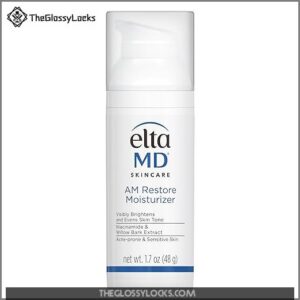
If Hydro Boost feels a little too minimal for your skin, the EltaMD AM Restore Moisturizer might be the step up you’re looking for. It’s still lightweight and absorbs quickly, but the formula works a bit harder — pairing hyaluronic acid for surface hydration with niacinamide to calm redness and support your barrier over time.
What makes it stand out for beginners is how clean the formulation is. It’s oil-free, fragrance-free, and non-comedogenic, so sensitive or acne-prone skin can use it daily without worry. The pump bottle keeps application easy and mess-free, which matters more than you’d think when you’re just getting into a consistent routine.
At $48 for 1.7 oz, it’s an investment — but the ingredient quality backs up the price.
| Best For | People with sensitive, dry, or acne-prone skin who want a clean, hardworking daily moisturizer that layers well under SPF or makeup. |
|---|---|
| Skin Type | Sensitive, Dry, Acne-Prone |
| Fragrance-Free | Yes |
| Non-Comedogenic | Yes |
| Key Ingredient | Hyaluronic Acid, Niacinamide |
| Product Type | Moisturizer |
| Oil-Free | Yes |
| Additional Features |
|
- Hyaluronic acid and niacinamide work together to hydrate and calm skin over time
- Oil-free, fragrance-free, and non-comedogenic — great for sensitive and breakout-prone skin
- Pump bottle makes it easy to use and travel-friendly at TSA-approved size
- At $48 for 1.7 oz, you’ll go through it faster than you’d like for the price
- No SPF, so you still need a separate sunscreen in the morning
- The glow effect is subtle compared to the PM version, and some packaging has arrived damaged
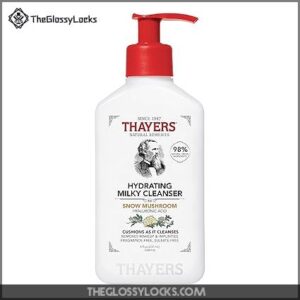
4. Thayers Milky Face Cleanser Snow Mushroom
great moisturizer only does half the job if your cleanser is quietly undoing your barrier every morning and night. That’s where the Thayers Milky Face Cleanser Snow Mushroom earns its place in a beginner’s routine.
It’s a non-foaming, milky cleanser that actually feels good to use — not that tight, stripped sensation you get from harsh formulas. The Tremella mushroom extract and sodium hyaluronate work together to attract moisture while you cleanse, so your skin feels soft and balanced afterward, not squeaky or dry. Glycerin adds another layer of hydration support, which matters especially if your skin leans dry or sensitive.
It’s also fragrance-free and alcohol-free, which keeps irritation risk low. For light makeup and daily impurities, it manages the job in one step. Apply it to damp skin, massage gently, rinse with lukewarm water, and you’re ready for whatever comes next.
| Best For | Anyone with dry, sensitive, or reactive skin who wants a gentle daily cleanser that cleans without stripping — especially beginners building a simple routine. |
|---|---|
| Skin Type | Dry, Sensitive, Reactive |
| Fragrance-Free | Yes |
| Non-Comedogenic | Not Stated |
| Key Ingredient | Snow Mushroom, Hyaluronate |
| Product Type | Cleanser |
| Oil-Free | Not Stated |
| Additional Features |
|
- Milky, non-foaming formula leaves skin soft and balanced, not tight or squeaky
- Snow mushroom extract and hyaluronate actively hydrate while you cleanse
- Fragrance-free and alcohol-free, so it plays nice with even reactive skin
- Doesn’t cut through heavy or waterproof makeup — you’d need a separate remover first
- The milky texture isn’t for everyone, especially if you’re used to that "clean" foam feeling
- Tremella mushroom is a trendy ingredient, but results can vary depending on your skin type
5. Thayers Milky Face Toner Snow Mushroom
Once your skin is clean, a good toner can make everything that follows work better. The Thayers Milky Face Toner with Snow Mushroom is worth adding here because it’s not stripping anything away — it’s putting hydration back in.
The snow mushroom extract, or Tremella fuciformis, acts as a humectant much like hyaluronic acid, drawing moisture to the skin’s surface and helping it stay there for up to 48 hours. Paired with sodium hyaluronate and elderflower water, it leaves skin feeling plump and prepped rather than tight. It’s fragrance-free and alcohol-free, which means sensitive skin won’t react.
Pat it onto clean skin before your serum, and you’re building a solid hydration foundation.
| Best For | Anyone with dry, sensitive, or rosacea-prone skin who wants a gentle, hydrating toner that preps skin without irritation. |
|---|---|
| Skin Type | Dry, Sensitive, Rosacea-Prone |
| Fragrance-Free | Yes |
| Non-Comedogenic | Yes |
| Key Ingredient | Snow Mushroom, Hyaluronic Acid |
| Product Type | Cleanser |
| Oil-Free | Yes |
| Additional Features |
|
- Snow mushroom and hyaluronic acid pull moisture into the skin and help it stick around — great if your skin tends to feel tight after cleansing
- Fragrance-free, alcohol-free, and dermatologist-tested, so it plays well with even the most reactive skin
- Leaves a soft, dewy finish that makes serums and moisturizers absorb better
- Won’t cut through heavy or waterproof makeup on its own — you’d need a separate cleansing step first
- The milky, low-foam texture takes some getting used to if you’re used to traditional toners
- At just under 10 oz, frequent users may find themselves restocking more often than they’d like
Key Ingredients for Effective Beginner Skincare

Once you understand the steps, the next question is: what’s actually in those products, and why does it matter? The right ingredients do the heavy lifting — hydrating, protecting, and renewing your skin while you go about your day.
Here are five beginner-friendly ingredients worth knowing before you shop.
If redness-prone skin is your main concern, this guide to affordable acne treatments for redness breaks down which of these actives tends to work best.
Hyaluronic Acid for Hydration
If you’re building a basic skincare routine, hyaluronic acid is one ingredient you genuinely don’t want to skip. It works through a humectant mechanism — meaning it attracts and binds water, holding up to 1,000 times its weight in moisture. That’s not marketing fluff; that’s science you can actually feel.
Here’s what makes it work so well for beginners:
- Damp skin application boosts absorption — apply your hydrating serum right after cleansing, while your face is still slightly wet.
- Molecular weight effects matter — lighter molecules hydrate deeper, while heavier ones reinforce the moisture barrier at the surface.
- Moisturizer pairing seals everything in, preventing water from evaporating throughout the day.
- Sensitive skin compatibility is excellent — it’s fragrance‑free, friendly, and rarely causes reactions.
For a simple skincare routine for beginners, this one ingredient pulls serious weight.
Niacinamide for Pore Refinement
Niacinamide is one of those ingredients that quietly does a lot. It works through sebum regulation, which means your pores are less likely to fill up with excess oil and look enlarged. That’s where the pore minimization effect really comes from. It also helps barrier strengthening and calms redness, making your complexion look smoother and more even overall.
For a simple skincare routine or basic skincare routine, look for a noncomedogenic formula around 2–5%, and it layers well with active pairing too.
Vitamin C for Brightening
If you want one ingredient that punches above its weight in a simple skincare routine, vitamin C is it. As an antioxidant serum, it works by inhibiting tyrosinase — the enzyme responsible for melanin production — which is exactly how it fades dark spots and evens your tone over time.
L-ascorbic acid is the most researched form, though derivative stability and pH levels matter: formulas below 3.5 can irritate sensitive skin. Here’s what a beginner-friendly skincare routine gets from vitamin C:
- Brightening of uneven tone and hyperpigmentation
- Neutralizing free radicals from daily pollution exposure
- Supporting collagen production for firmer-looking skin
- Oxidation prevention when stored away from light and heat
Sunscreen pairing is non-negotiable — vitamin C and SPF together protect and maintain your results far better than either alone.
Retinol for Anti-aging
Think of retinol as your skin’s personal renovation crew. As one of the most trusted antiaging ingredients available, it works by boosting Cell Turnover and promoting Collagen Boost over time, which translates to real Wrinkle Reduction with consistent use.
Irritation Management, start once weekly at a low Retinol Strength — around 0.1% — applying it after moisturizer to cushion your skin barrier. Gradually increase frequency as your skin adjusts, and always follow with sunscreen in the morning.
Ceramides for Barrier Repair
Your skin barrier works like a brick wall — ceramides are the mortar holding everything together. When that structure weakens, moisture escapes and irritation creeps in. Barrier repair with ceramides replenishes the lipid matrix, making them essential in any simple skincare routine.
Here’s what ceramides do for your skin:
- Lipid Matrix Restoration — refills gaps between skin cells
- Barrier Seal Strengthening — locks in hydration and blocks irritants
- Ceramide Type Benefits — formulas using multiple types (NP, EOP, AP) better mimic your skin’s natural mix
- Gentle Formulation Choice — pair with a fragrance-free moisturizer and follow Application Timing Rules by applying after cleansing on slightly damp skin
Common Mistakes to Avoid in Skincare

Even the best intentions can quietly work against your skin if a few key habits are off. Most beginners don’t realize how much the small stuff adds up over time.
Here are the most common skincare mistakes worth knowing before they become hard to reverse.
Over-cleansing and Stripping Natural Oils
Over-cleansing is one of the easiest mistakes to make, especially when your skin feels oily or congested. Washing too often — or using a cleanser that’s too harsh — causes barrier lipid loss, leaving your skin vulnerable to tight, dry feeling, irritation, redness, and microbiome disruption.
Your skin then fights back with rebound oil production, making things worse.
Stick to a nonirritating cleanser twice daily, and skip unnecessary double cleansing.
Skipping Sunscreen
Skipping sunscreen is one of the most damaging habits you can quietly develop. UV damage doesn’t take days off — even cloudy skies let through enough UV rays to trigger sunburn inflammation, accelerated photoaging, and dark spot risk over time.
Daily sun protection with broad-spectrum SPF 30 is non‑negotiable.
- UV exposure accelerates photoaging, causing wrinkles and lost firmness faster than almost anything else
- Skin cancer risk rises steadily with each unprotected day outdoors
- Dark spots and uneven tone deepen with repeated UV exposure, even during short commutes
- Sunburn inflammation can develop from brief outdoor exposure, especially on sensitive or unprotected skin
Using Harsh Exfoliants
Just as sunscreen shields you daily, your exfoliation habits need equal care. Overuse causes barrier disruption, microtear risks, and inflammation triggers that leave skin raw and reactive.
Pigmentation concerns can follow repeated irritation, making uneven tone harder to correct.
- Choose chemical exfoliants like AHAs or BHAs over abrasive scrubs
- Follow pacing guidelines: once or twice weekly maximum
- Stop immediately if redness or burning appears
Exfoliation guidelines for beginners exist for good reason—gentler is always smarter.
Neglecting Neck and Décolletage
Most people stop their routine at the jawline — and that’s where the real damage quietly builds. The neck and décolletage have thinner skin, produce less natural oil, and can’t defend themselves the way your face can.
Without consistent Décolletage Hydration and Neck Sun Protection, you’re leaving an area wide open to Uneven Pigmentation, Crepey Texture Prevention failures, and loss of elasticity.
That Thinner Skin Sensitivity means irritation and dryness show up fast.
Extend your moisturizer, collagen synthesis serum, and sun protection down past your chin every single morning.
Your skin barrier doesn’t end at your face, and neither should your routine.
Mixing Too Many Active Ingredients
Extending your routine past your jawline is a great first step — but don’t undo that progress by piling on too many actives at once. Ingredient compatibility matters more than most beginners realize. Mixing retinol with chemical exfoliants, for example, creates serious overlap irritation risk because both are resurfacing your skin simultaneously.
Follow a simple patch test protocol for each new product, introduce actives one at a time, and give your barrier sensitivity the respect it deserves.
Frequently Asked Questions (FAQs)
What skincare does Sali Hughes use?
Sali Hughes relies on the Clinique Balm to cleanse; a vitamin C, hyaluronic acid, and niacinamide serum each morning; Cream Drench moisturizer, sunscreen.
At night, Intensive Night Repair, Darphin Nectar, and Clarins Toner.
What is a beginner’s basic skincare routine?
A basic skincare routine starts with three things: a gentle cleanser, a moisturizer, and sunscreen. Master these first, and you’ve already built a solid, skin-type-matched foundation that actually works.
How do you start a skincare routine?
Start with three non-negotiables: a gentle cleanser, a moisturizer, and SPF 30+ sunscreen every morning. Identify your skin type first, then build your routine gradually — one product at a time.
What is a skin-care routine?
Think of it as a daily ritual with real purpose.
A skin-care routine is your consistent sequence of cleansing, hydrating, and protecting steps, adapted through skin type matching and product layering to keep your skin genuinely healthy.
What makes a good skincare routine?
A good routine comes down to non-negotiable basics: cleansing, moisturizing, and sunscreen.
Consistency matters more than expensive products — your skin barrier needs daily, reliable care to stay balanced and healthy.
What is a good first-time skin care routine?
Just like knights suited up in layers before battle, your skin needs that same kind of intentional protection. Cleanse, moisturize, and apply SPF 30+ every morning — simple, consistent, and genuinely effective.
Should you have a skincare routine?
Yes, you absolutely should.
A consistent daily routine keeps your skin barrier healthy, slows visible aging, and prevents buildup that leads to breakouts — even a simple cleanse, moisturize, and protect approach makes a real difference.
What is a basic skin care routine for beginners?
A basic skin care routine for beginners needs just three core steps: cleanse, moisturize, and apply SPF 30+ sunscreen every morning.
Master these basic skincare steps — cleansing, moisturizing, sunscreen — and your skin will thank you.
What is the 4 2 4 rule in skincare?
The 4-2-4 rule is a structured double-cleanse method: four minutes of oil emulsification on dry skin, two minutes with a water-based cleanser, then a four-minute rinse shifting from lukewarm to cold water.
What should I start my skin care routine with?
Start with a gentle, pH balanced cleanser and lukewarm water. It removes overnight oil and dead skin without disrupting your barrier, setting the stage for everything you apply after.
Conclusion
Think of your skin as a relationship—it rewards consistency, not grand gestures.
A simple skin care routine for beginners doesn’t demand ideal or an overwhelming product haul; it asks for five steady steps, repeated daily.
Cleanse, hydrate, moisturize, protect, and exfoliate gently once a week.
That’s genuinely all you need to build healthy, resilient skin over time.
Start small, stay consistent, and trust that your skin is already responding to every good choice you make.