This site is supported by our readers. We may earn a commission, at no cost to you, if you purchase through links. This content is for general informational and educational purposes only and is not a substitute for professional medical, dermatological, or nutritional advice.
A mustache does something a haircut can’t—it changes the entire story your face tells. The right one reads as commanding authority; the wrong one reads as a dare. What separates them isn’t luck or genetics, but knowing which of the many types of mustaches actually suits your face, your style, and how much grooming commitment you’re willing to make.
From the thick, no-nonsense chevron to the theatrical Dali with its waxed, skyward tips, the options range from boardroom-ready to full costume. Your upper lip has more range than you think.
Table Of Contents
- Key Takeaways
- Classic Mustache Styles: Timeless and Sophisticated
- Modern Mustache Trends: Contemporary and Stylish
- Unique Mustache Variations: Stand Out From The Crowd
- Choosing The Right Mustache for Your Face Shape
- Grooming Techniques for Different Types of Mustaches
- Mustache Maintenance: Keep Your Facial Hair Looking Sharp
- Mustache Styles Throughout History: a Cultural Journey
- Hybrid Mustache-Beard Combinations: Best of Both Worlds
- Mustache Competitions and Events: Celebrating Facial Hair
- Celebrity-Inspired Mustache Types: From Screen to Reality
- Frequently Asked Questions (FAQs)
- What are the types of moustaches?
- Can a beard cause sinus problems?
- What are the different types of mustache styles?
- How to choose different types of fake mustaches?
- What is a classic mustache?
- What is a thick mustache?
- How does mustache style reflect personality?
- What are mustache trends in 2024?
- How do mustaches impact social perceptions?
- Which mustache styles suit younger individuals?
- Conclusion
Key Takeaways
- Your face shape is the cheat code — round faces need vertical styles like the chevron, square faces soften with a walrus, and oval faces can pull off almost anything.
- The difference between a sharp mustache and a disaster is consistency: clean it two to three times a week, trim every few days, and always start with dry hair before cutting.
- Every style sends a signal before you open your mouth — a handlebar says creative confidence, a pencil whispers precision, and a walrus just doesn’t care what you think.
- Wax is non-negotiable for curled styles like the handlebar or Dalí, but fuller natural styles like the walrus and chevron actually look better when you leave the product alone.
Classic Mustache Styles: Timeless and Sophisticated
Classic mustache styles have been around for generations, and they’re classic for a reason — they just work. Whether you want something bold and bushy or clean and refined, there’s a timeless style that fits your face and personality.
If you want to go truly bold, the Fu Manchu mustache’s dramatic history and styling tips show just how much personality a single style can carry.
Here are five classics worth knowing.
Chevron Mustache

The Chevron mustache is about as no-nonsense as facial hair gets — thick, full, and sitting clean across your upper lip. It’s the style Freddie Mercury made iconic, and it works because it’s bold without trying too hard.
Four to six weeks of growth gets you there. Light mustache wax, a trimmer, and a comb are your only grooming tools needed.
To achieve this style, mastering beard care techniques is essential for maintaining a healthy and well-groomed Chevron mustache.
English Mustache
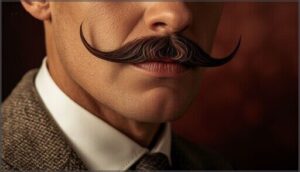
The English Mustache is the quiet rebel of facial hair styles — sharp, narrow, and parted clean at the center. English grooming culture practically invented this vintage style, and it still turns heads today.
Three things that define it:
- Parted at the middle, lip kept fully clear
- Mustache wax holds the side sections controlled
- Outer hairs grow longer than the center
Classic masculinity, no noise required. To achieve a well-groomed look, consider learning about moustache maintenance.
Handlebar Mustache
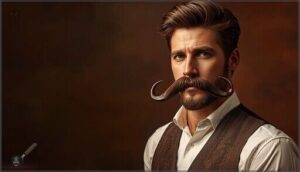
Where the English kept things quiet, the Handlebar Mustache turns up the volume. This style’s been bold since 1887 — cyclists wore it, cowboys claimed it, and Rollie Fingers brought it to baseball diamonds.
Three ways to nail it:
- Grow 6–12 weeks minimum before shaping
- Apply mustache wax outward from center, then twist tips upward
- Comb daily to train the curl
Classic facial hair, zero apologies.
Walrus Mustache

From twirled tips, we go full wilderness. The Walrus Mustache is thick, bushy, and completely covers your upper lip — no tricks, no wax architecture required. Theodore Roosevelt wore it. Mark Twain owned it. It’s one of those mustache styles that does the talking for you.
Walrus maintenance is straightforward: daily combing, beard oil, light thick trimming on the edges. Skip heavy mustache waxing — this facial hair thrives on natural volume, not control.
Fu Manchu Mustache
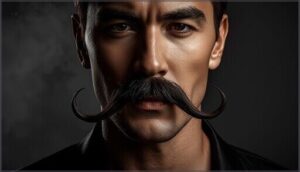
Next up is the Fu Manchu — the renegade of classic mustache styles. Born from fiction, this style grows thick at the upper lip, then tapers into two long tendrils past the chin. Facial hair growth takes 3–6 weeks minimum.
- Shave cheeks and chin completely clean
- Taper the tendril tips for definition
- Use wax sparingly — let the length speak
Bold, dramatic, unapologetically theatrical.
Modern Mustache Trends: Contemporary and Stylish
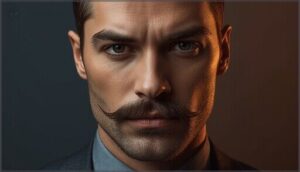
Facial hair trends in 2025–2026 aren’t playing it safe — and honestly, good. Modern mustache styles for men have split into two clear camps: clean and minimal, or thick and unapologetic.
Some guys are skipping the mustache altogether — and beard styles without mustache have quietly become one of the sharpest moves of the year.
The shadow stache keeps things low-key — a sharp, thin line above the lip that pairs well with fitted suits and short hair. Grooming essentials here are simple: a precision trimmer and light beard oil every few days.
The bold retro look goes the other way, thick and high-contrast, closer to what Henry Cavill’s been sporting. Mustache waxing keeps those stray hairs in check without the greasy finish.
Both are legit mustache styles for men who want their facial hair trends doing some real work.
Unique Mustache Variations: Stand Out From The Crowd

Some mustaches don’t follow the rules — and that’s exactly the point. If you’re done playing it safe, these unique styles are built for the bold, the creative, and the ones who want their face to start the conversation.
Here are five standout variations worth knowing.
Dali Mustache
Salvador Dalí started with a neat, trimmed mustache in the late 1920s — then spent decades weaponizing it into something closer to performance art. By the 1950s, those waxed tips stretched to 25 centimeters, pointing skyward like antennae tuned to a surrealist frequency.
For this iconic look, mustache wax is non-negotiable. Comb the center flat, leave the corners long, twist upward, and hold. It’s one of those mustache styles that doesn’t whisper — it announces.
Imperial Mustache
The Imperial mustache plays by different rules than a standard Handlebar Mustache — it pulls cheek hair into the mix, building thick, upward-curling ends that feel less bicycle, more throne room. Named after Kaiser Wilhelm II, it’s legitimately old-world power on your face.
You’ll need dense upper lip and cheek hair, plus mustache wax to train those curls skyward. Facial hair this bold doesn’t ask for permission.
Pyramidal Mustache
Think geometry class meets grooming rebellion — the Pyramidal mustache is all triangles and sharp edges, tapering from a wide base along the lip to a clean point under your nose. This facial hair style peaked between the 1920s and 1940s, and it’s overdue for a comeback. Nail the symmetry tips, and this mustache style hits different.
- Base spans roughly 2–3 inches across your lip line
- Geometric trimming keeps slopes mirrored on both sides
- Mustache growth takes 6–10 weeks before shaping
- Pyramidal style suits heart, oval, and round faces
- Daily edge work with a precision trimmer locks in symmetry
Toothbrush Mustache
Few mustache styles carry as much quiet weight as the toothbrush. Charlie Chaplin claimed it in 1914 — and it’s never really left. That tight rectangular block, just 1–1.5 inches wide and centered on your philtrum, is pure Mustache History distilled into geometry.
| Feature | Detail | Styling Tips |
|---|---|---|
| Width | 1–1.5 inches | Match to nose width |
| Height | 0.25–0.5 inches | Trim weekly with scissors |
| Grooming Tools | Fine-tooth comb + Mustache Wax | Comb daily, wax to hold |
Mustache Care is simple: clean it, shape it, own it.
Lampshade Mustache
Where the toothbrush leans minimalist, the lampshade goes structured. It’s a trapezoid shape — widest at the mouth corners, hugging the upper lip without crossing it. Think cop mustache energy with a vintage barbershop edge, and you’ve got it.
- No Mustache Wax needed — just clean lines and regular trims
- Pairs sharper than a Chevron Mustache or classic Handlebar Mustache on square faces
- Your Grooming Tools: trimmer, razor, fine-tooth comb
Choosing The Right Mustache for Your Face Shape
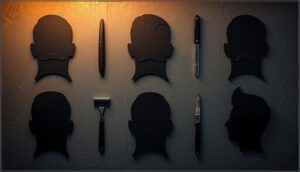
Not every mustache works on every face — and that’s not a bad thing. The right style can sharpen your look, balance your features, or just make you feel like yourself.
Here’s how to match your mustache to your face shape, your vibe, and your personality.
Face Shapes for Mustaches
Your face shape is the foundation of any solid grooming and style decision. Face shape analysis isn’t complicated — it just means reading your jawline styles, cheekbone structure, and overall proportions before committing to facial hair.
Oval faces win the lottery here; nearly every mustache works. Round faces need elongating styles, and square faces benefit from mustache symmetry that softens those angles.
Best Styles by Face
Once you know your shape, matching mustache proportions gets way easier. Here’s a quick cheat sheet:
- Round faces — A chevron or horseshoe mustache adds jawline accentuation and vertical length.
- Oval faces — Handlebar mustache styles thrive here; almost any facial hair works.
- Square faces — A walrus softens strong angles without fighting your natural structure.
Nose-mustache balance matters too. Keep everything proportional.
Personal Style and Mustache
Face shape gets you started — personal style seals the deal. Your facial hair says something before you open your mouth, so make it count.
- Pick mustache styles that match your vibe — bold handlebar mustache for swagger, pencil for old Hollywood cool.
- Use mustache wax daily; grooming is masculine identity in action.
- Own your style expression — mustache confidence is personal branding you wear on your face.
Grooming Techniques for Different Types of Mustaches
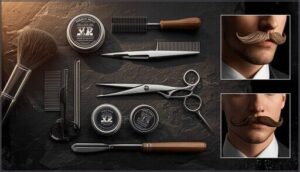
Every mustache style plays by its own rules — and your grooming approach needs to match. Handlebar wearers require mustache waxing, a non-negotiable step. Warm a pea-sized amount of firm-hold mustache wax between your fingers, then work it outward from the center before curling the tips. That wax keeps the shape locked for hours. Chevron and lampshade styles need less product — a light balm softens the hair without stiffening it.
Your trimming tools matter more than most guys realize. Sharp scissors beat a trimmer for detail work, especially on pencil or Dalí styles where one bad pass ruins the whole line. For walrus mustaches, trim only the hair that seriously blocks your mouth.
One universal grooming tip: always start with clean, dry facial hair. Wet strands look shorter than they are, which leads to over-cutting. Comb downward first — that’s your honest measuring line.
Mustache Maintenance: Keep Your Facial Hair Looking Sharp
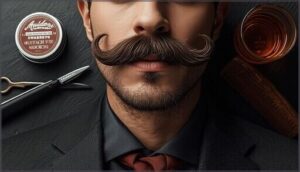
A great mustache doesn’t maintain itself — that part’s on you. The good news is keeping it sharp comes down to just a few habits done consistently. Here’s what actually matters.
Daily Cleaning and Conditioning
Your mustache is only as good as what you put into it — and that starts with keeping it clean. Mustache washing two to three times a week hits the sweet spot for daily maintenance; more than that strips the natural oils that keep facial hair soft.
Stick to gentle cleansing with a dedicated beard wash rather than regular shampoo. After washing, work in a little conditioner or beard oil so the skin underneath stays hydrated. Consistent facial hair care makes every other step easier.
Trimming and Shaping
Sharp tools make the job easy. For trimming and shaping, a quality trimmer with adjustable guards and a pair of beard trimming scissors are your two non-negotiables. Comb your facial hair straight down before you start — wet hair lies longer and leads to overcutting.
Good mustache maintenance comes down to three moves:
- Trim every three to five days for clean edge refining under the nose and lip corners
- Apply mustache waxing techniques from center to tips for shaping techniques that hold
- Check symmetry by combing both sides out and comparing in a mirror
Mustache styling isn’t complicated — it just rewards consistency.
Dealing With Mustache Growth Issues
Growth isn’t always a straight line. Patchy growth often comes down to genetics or hormone balance — not laziness. Slow regrowth frustrates most guys around weeks three and four, but density usually fills in by week eight to twelve.
- Spot-treat patchy areas with topical minoxidil — consistent use shows real results around 16 weeks
- Address ingrown hairs with gentle exfoliation before shaving
- Check for skin conditions like seborrheic dermatitis breaking up coverage
- Support hair growth and care through diet — biotin, zinc, and vitamin D matter
Mustache Styles Throughout History: a Cultural Journey

Your upper lip has been a canvas for power, rebellion, and identity for thousands of years. Long before Instagram made mustaches an aesthetic statement, Mesopotamian rulers wore carefully styled upper-lip hair to signal authority, and Celtic warriors grew theirs as a badge of tribal toughness.
Before Instagram existed, rulers and warriors wore mustaches as statements of power and identity
Historic mustache trends shifted dramatically across centuries. Handlebar mustaches became the calling card of 19th-century cavalry officers — disciplined, waxed, and unmistakably commanding. The walrus style carried intellectual weight on faces like Mark Twain’s and Otto von Bismarck’s. Hollywood then rewrote the rules, with the English mustache and pencil styles giving silver-screen leading men an uncomplicated cool. The Fu Manchu carved out its own complex cultural significance. Movember gave mustache history yet another chapter — this time charitable.
Ancient influences, vintage styles, iconic mustaches — your face is basically a timeline.
Hybrid Mustache-Beard Combinations: Best of Both Worlds
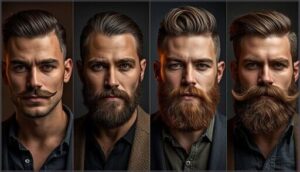
Why pick one when you can have both? Pairing a mustache with a beard opens up a whole new range of looks — some sharp and polished, others rugged and lived-in.
Here are four combinations worth knowing about.
Beardstache
The beardstache is one of those facial hair moves that just works. You keep the beard trimmed short — think 2 to 5 millimeters of clean stubble — while letting the mustache grow full and dominant.
It’s a grooming tips favorite because the contrast does the heavy lifting. A little mustache wax, consistent beard maintenance, and sharp neckline edges keep the whole thing looking intentional.
Van Dyke
The Van Dyke takes everything clean and makes it deliberate. Named after 17th-century painter Anthony van Dyck, this combo pairs a disconnected mustache with a pointed chin beard — cheeks fully shaved — for a look that’s part history, part statement.
- Keep edges tight with a precision trimmer
- Use beard oil to soften both sections
- Symmetry matters more here than with a Chevron or Handlebar Mustache
Grooming essentials make or break it.
Ducktail With Mustache
The Ducktail with mustache is where facial hair stops playing it safe. The chin tapers to a sharp point — think 2 to 4 inches of sculpted length — while a short, tidy mustache anchors the top.
Among ducktail styles, this one rewards patience and consistent beard trimming. Pair it with a handlebar mustache for maximum personality.
Circle Beard With Mustache
The circle beard takes things in a cleaner direction. Where the ducktail goes long and dramatic, this style keeps everything tight — mustache and goatee connected in one unbroken loop around the mouth. It’s simple, but sharp. Most guys need just 2–3 weeks of growth to pull it off.
- Trim both mustache and chin hair to the same length (5–10 mm works well)
- Shave cheeks completely clean to let the circle do the talking
- A little beard oil keeps the edges looking intentional, not accidental
Mustache Competitions and Events: Celebrating Facial Hair
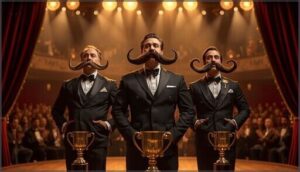
Yes, there are actual mustache competitions — and they’re exactly as glorious as you’d imagine.
The World Beard and Moustache Championships is the big one, happening biennially and landing in Pittsburgh in July 2025. Competitors show up with their best handlebar mustache, walrus, Dali, and beyond, battling across categories judged on grooming, symmetry, thickness, and originality. Seven judges score each entry secretly, so no politicking your way to the top.
Mustache styles and facial hair trends evolve through these events too — what wins often shapes what shows up in barbershops the following year. Beard Championships at the regional level, like Alberta’s annual event or the Carolina BAM competition, also raise serious money for charity, turning facial hair into fundraising fuel.
So whether you’re chasing a trophy or just want to watch, these events prove one thing: a well-kept mustache commands respect.
Celebrity-Inspired Mustache Types: From Screen to Reality
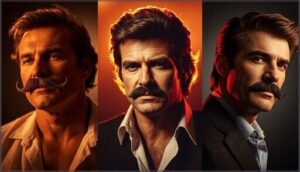
Few things in grooming history hit harder than famous facial hair worn by the right man at the right moment.
Tom Selleck’s thick chevron in *Magnum P.I.
- basically launched the Tom Selleck Mustache as its own category — full, dense, and covering the upper lip completely. Freddie Mercury paired his iconic mustache with sideburns for maximum stage presence. Burt Reynolds kept his neatly trimmed chevron as a signature movie star style through the ’80s.
These looks didn’t stay on screen. They became red carpet trends and barbershop requests overnight — proof that celebrity influence runs deep.
- Selleck’s chevron says quiet confidence without trying too hard
- Mercury’s bold choice made facial hair feel rebellious and free
- Reynolds showed that a pencil-neat trim is its own kind of power
Frequently Asked Questions (FAQs)
What are the types of moustaches?
From the bold Chevron and Walrus Mustache to the refined Pencil Mustache and iconic Handlebar Mustache, facial hair options run deep — each style its own statement.
Can a beard cause sinus problems?
Ironically, that rugged beard boosting your confidence might be quietly wrecking your sinuses.
Poor beard hygiene allows allergen trapping, harboring bacteria and pollen dangerously close to nasal passages, raising real facial hair risks for respiratory issues and sinus infections.
What are the different types of mustache styles?
Mustache evolution spans centuries of facial hair reinvention. From the thick Chevron Mustache to the wiry Pencil Mustache, each style carries its own attitude — and the right one says everything without a word.
How to choose different types of fake mustaches?
When selecting a fake mustache, consider your face shape, the occasion, and comfort. Synthetic options are ideal for humid conditions, while human hair provides a natural blend.
Handlebar and chevron styles are versatile, suiting most faces. Ensure the adhesive matches your skin type for a secure and comfortable fit.
What is a classic mustache?
A classic mustache is a neat strip of facial hair running across the upper lip, corner to corner. It’s timeless, proportionate, and works across nearly every face shape and setting.
What is a thick mustache?
A thick mustache is full, dense, and covers your entire upper lip from corner to corner. Think Tom Selleck — bold, confident, zero apologies.
It’s facial hair that does the talking for you.
How does mustache style reflect personality?
Your mustache is a silent handshake. Mustache Psychology is real — your style reflects personality before you say a word.
A bold Handlebar Mustache signals creative confidence, while a sharp Pencil Mustache whispers precision.
What are mustache trends in 2024?
In 2024, mustache trends lean clean and intentional. The Chevron leads the pack, while Handlebars go softer, and the Beardstache keeps things effortlessly sharp — grooming tips matter more than ever.
How do mustaches impact social perceptions?
Your mustache sends a message before you say a word. It signals maturity, dominance, and trustworthiness — making it one of the most underrated tools in men’s style and personal grooming tips.
Which mustache styles suit younger individuals?
For young guys just getting started with facial hair, you don’t need to go big. A Pencil Mustache or light Chevron keeps things sharp without the drama.
Stubble Styles work great too — hiding patchiness while still looking intentional.
Conclusion
The right choice has been in front of you this whole time—hiding in plain sight on your own face. Every type of mustache covered here carries a different signal, a different story.
Some command a room. Some start conversations. Some dare people to look twice.
Now you have the full map. Pick the style that matches who you actually are, commit to the grooming, and let your upper lip do the talking.