This site is supported by our readers. We may earn a commission, at no cost to you, if you purchase through links.
You step into the shower expecting a clean slate, but your hair tells another story: weighed down, limp, or dulled by mineral buildup no shampoo can conquer. For many, hard tap water quietly sabotages shine, tangling every strand in a residue that feels impossible to escape.
That’s where washing hair with distilled water flips the script—removing invisible barriers between you and healthier, springier hair. Whether your curls crave definition, or your scalp aches for gentler care, distilled water offers a way to restore your hair’s natural brilliance and bring true softness within reach.
Table Of Contents
- Key Takeaways
- What is Distilled Water and How is It Made?
- Benefits of Washing Hair With Distilled Water
- How Distilled Water Differs From Tap Water
- How to Wash Hair With Distilled Water
- Creating Natural Shampoo With Distilled Water
- Top 3 Distilled Water Products for Hair Care
- Potential Side Effects and Precautions
- Additional Tips for Improving Hair Quality
- Frequently Asked Questions (FAQs)
- How often should I wash my hair with distilled water?
- Can I mix distilled water with other hair care products?
- Can I use distilled water for coloring or bleaching my hair?
- Can distilled water remove product buildup from hair?
- Is distilled water safe for color-treated hair?
- Will using distilled water affect scalp health?
- How long should I wash with distilled water?
- Can children benefit from distilled water hair rinses?
- Conclusion
Key Takeaways
- Distilled water removes mineral buildup and chlorine that accumulate from tap water, restoring natural shine and preventing the dullness, breakage, and scalp irritation caused by hard water deposits.
- Washing with distilled water preserves your hair’s natural oils and moisture balance while reducing frizz and enhancing curl definition, particularly beneficial for high-porosity or chemically-treated hair.
- You can make distilled water at home through a simple boiling and condensation process, or use it between washes as a mineral-free mist to maintain hydration without stripping protective oils.
- Most hair types benefit from washing with distilled water every 2-4 days rather than daily, as this frequency balances scalp health with the mineral-removal benefits while avoiding potential electrolyte depletion.
What is Distilled Water and How is It Made?
Distilled water is surprisingly simple, but its purity sets it apart from regular tap water. Understanding what makes it unique and how it’s produced can help you decide if it belongs in your hair care routine.
Let’s break down the basics before getting into the different ways you can use it.
The Distillation Process Explained
Distillation methods transform ordinary water into purified water by harnessing a thermal process—first boiling, then collecting steam as it cools. This classic approach strips away chemicals, minerals, and impurities, ensuring water purification down to laboratory testing standards.
The result? Distilled water free of mineral build up, prized for both chemical removal and consistent quality in home and professional water distillation.
Key Characteristics of Distilled Water
Once impurities are left behind, you’re left with distilled water: nearly zero mineral content, electrical conductivity well below 2 µS/cm, and water purity that’s hard to match.
This type of purified water carries a pH close to neutral, skips mineral build up, and offers water quality you can trust—especially if controlling what touches your hair truly matters.
How to Make Distilled Water at Home
Curious about enjoying mineral-free, purified water at home? This simple home distillation method transforms tap water into pure, distilled water—offering the hair and scalp benefits you want from water purification without frills.
Fill a stainless steel pot with tap water—use a smaller pot inside to catch drips. As steam rises, it hits the cool lid, creating condensation that trickles down.
Benefits of Washing Hair With Distilled Water
There’s more to clean water than meets the eye, especially regarding caring for your hair. Using distilled water offers unique advantages that go far beyond just keeping strands clean.
Here’s what you can expect when you make the switch.
Eliminates Mineral Buildup and Chlorine
Think of your hair as a magnet for minerals and chlorine lurking in water—causing buildup, dullness, and irritation over time.
Switching to distilled water flips the script: it’s Chlorine Free, stripping away lingering residues and supporting true Scalp Health.
With regular use, distilled water’s Mineral Removal leads to noticeable Hair Clarifying benefits you can actually feel.
Prevents Damage and Dullness
Damage control for your hair starts with what touches it every wash. Distilled water minimizes abrasion and frizz, cuts down on hair breakage, and aids hair hydration. You’ll notice less dryness, fewer split ends, and greater color preservation. Here’s how your hair benefits:
Distilled water gently protects your hair from damage by reducing frizz, breakage, and dryness while preserving its natural color and hydration
- Hair Breakage drops
- Frizz Reduction
- Color Preservation
- Less daily friction
- Hair Damage Prevention
Promotes Shinier and Healthier Hair
Radiance isn’t just a dream—it’s the result of smart choices. Distilled water rinses can give you that Hair Shine Boost by reducing mineral residue, smoothing the cuticle, and letting your hair’s natural gloss show through.
For glossy locks and balanced scalp health, trading tap for distilled water is a practical shift that fosters true hair health and shine enhancement.
Maintains Natural Oils and Moisture
Moisture balance gives your scalp and hair the resilience to thrive—distilled water quietly aids this. Your natural oils aren’t stripped away, so hair hydration and oil retention stay intact. With this switch, you’ll notice:
- Improved scalp health
- Boosted hair nourishment
- Less protein loss during washing
- Enhanced natural shine
This gentle approach helps preserve your hair’s moisture.
Helps With Curl Pattern and Definition
Curls thrive when mineral-free water nourishes their structure—distilled water enhances curl pattern definition by improving elasticity and reducing frizz. You’ll see better curl enhancement, easier detangling, and consistent hair texture as mineral buildup disappears.
This moisture balance promotes scalp health while natural shampoo formulas work more effectively. These hair care benefits make distilled water a smart choice for frizz reduction and maintaining your natural curl pattern.
How Distilled Water Differs From Tap Water
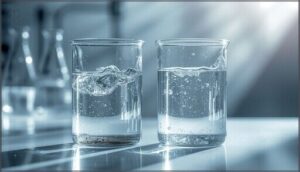
The water that flows from your tap isn’t the same as what comes from a distillation process, and those differences matter for your hair. Tap water carries minerals, chemicals, and varying pH levels that can affect how your hair looks and feels over time.
Understanding what sets distilled water apart will help you make informed choices about your hair care routine.
Mineral Content and PH Levels
What sets distilled water apart from tap water? The mineral content. Distilled water contains virtually no dissolved minerals—usually below 1 mg/L—while tap water often exceeds 120 mg/L calcium carbonate equivalent.
This mineral-free water maintains pH stability near neutral, avoiding the ionic levels that cause mineral buildup on your hair. Tap water’s variable pH (6.5–8.5) can trigger acidic effects or mineral deposits, compromising water quality and water purity over time.
How Hard Water Affects Your Hair
Hard water deposits calcium and magnesium onto your hair shaft, creating a coating that steals shine and softness. Hair porosity increases by up to 8% under chronic hard water exposure, making strands brittle and prone to breakage. Chlorine amplifies this damage, triggering oxidative stress that weakens protein bonds. That’s why mineral buildup reduction matters—it’s your first line of defense against dullness, scalp irritation, and compromised water quality impact.
- Hard water leaves behind stubborn mineral buildup that blocks moisture absorption
- Elevated water pH levels disrupt your hair’s natural acidity, weakening the cuticle
- Calcium deposits cause hair mineral damage, making color fade faster
- Chlorine compounds increase hair porosity, leading to dry, brittle strands
- Scalp irritation rises by roughly 25% when hard water replaces gentler options
Why Distilled Water is Purer
Unlike filtered tap water, distilled water undergoes a distillation process that strips away lingering minerals, salts, and impurities, delivering true purity. This level of mineral removal means nothing latches onto your hair, so you dodge mineral buildup entirely.
That’s why, when water quality really matters, distilled water’s purification methods offer peerless purity levels—it’s the benchmark among all water purification methods. Using a water treatment with fluoride removal systems can provide additional benefits for hair care.
How to Wash Hair With Distilled Water
Getting the most out of distilled water means knowing how to use it at every step of your hair routine.
Here’s what you’ll need to keep in mind before getting started. The key points below will walk you through the process from start to finish.
Determining The Amount of Distilled Water Needed
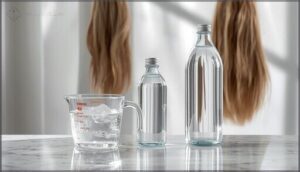
Every head of hair tells a different story, and Water Quantity should match your Hair Length and Washing Frequency.
For shoulder-length hair, aim for 500–750 mL of Distilled Water per wash—enough for scalp coverage and hydration.
Adjust these Distilled Ratios up or down based on thickness or length, keeping Water Quality and Hair Care at the center.
Warming Distilled Water for Hair Washing
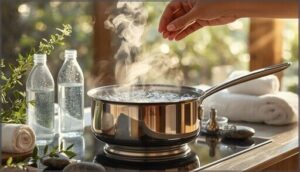
Water temperature control is the unsung hero in hair washing techniques. Lukewarm distilled water soothes scalp sensitivity, helps open hair cuticles, and maximizes distilled water benefits—especially if you have high hair porosity.
For best water quality and hair care, follow these steps:
- Pour distilled water into a clean pan.
- Warm gently, never boil.
- Check temperature before use.
Step-by-Step Instructions for Washing and Rinsing
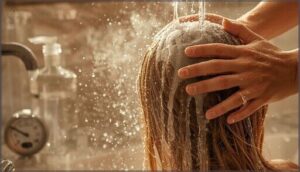
Start with untangled, dry hair, warmed distilled water, and a gentle touch. Wet strands section by section, massage your scalp well, and rinse for 60–90 seconds to flush out minerals. This Rinse Technique boosts Hair Hydration and reduces buildup.
| Step | Purpose | Pro Tip |
|---|---|---|
| Warm Water | Opens cuticle | 38–40°C best for shine |
| Scalp Massage | Boosts health | Use fingertips, not nails |
| 90s Rinse | Removes residue | Focus on Hair Porosity |
Using Distilled Water Between Washes
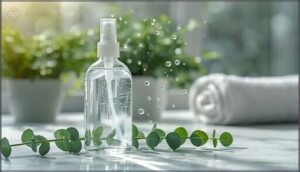
Occasionally, a mineral-free hair mist can work wonders for daily spritzing and curl refresh. Use distilled water as a tailored hydration tip—fill a spray bottle and lightly mist scalp or ends between washes.
This simple hair care trick boosts hair moisture, aids frizz control, and keeps your routine rooted in effective, science-backed hair hydration techniques.
Creating Natural Shampoo With Distilled Water
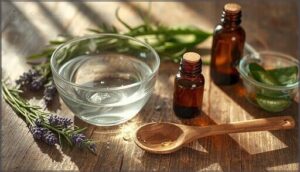
You don’t need store-bought products to take advantage of distilled water’s benefits for your hair. Making your own natural shampoo at home gives you full control over what touches your scalp and strands.
Here’s how to create an effective, gentle formula using distilled water as your base.
Recipe for Homemade Natural Shampoo
You can craft a simple natural shampoo by mixing half a cup of distilled water with half a cup of castile soap—this DIY method eliminates harsh chemicals while maintaining purity. Add one teaspoon of jojoba oil and half a teaspoon of your preferred essential oil, then shake thoroughly before each use.
- Half cup distilled water
- Half cup castile soap
- One teaspoon jojoba oil
- Half teaspoon essential oil
- Optional: half cup aloe vera gel
Benefits of Using Natural Shampoo
Purity lies at the heart of natural shampoo’s appeal—you’re choosing sulfate-free, eco-friendly formulas that promote gentle cleansing without stripping your hair’s protective oils.
Natural ingredients support hair health and hair growth, while distilled water ensures no mineral interference with your natural hair products.
This combination delivers effective hair care that respects your scalp’s delicate balance and environmental values.
Ingredients and Preparation Tips
Your homemade Natural Shampoo starts with precision—half a cup of Distilled Water mixed with equal parts castile soap forms the gentle base. Here’s what transforms this into salon-worthy Hair Care Tips:
- Add one teaspoon jojoba oil for slip
- Include half a teaspoon Essential Oil Blends
- Mix half cup aloe vera gel for Sensitive Scalp relief
- Shake vigorously before each use
- Patch test 24 hours before application
Top 3 Distilled Water Products for Hair Care
You don’t need specialized products to wash your hair with distilled water, but having the right supply on hand makes the process easier. Most people find that standard gallon bottles work perfectly for hair care routines.
Here are three reliable distilled water options that you can use for your hair washing routine.
1. Distilled Water For Cpap Machines
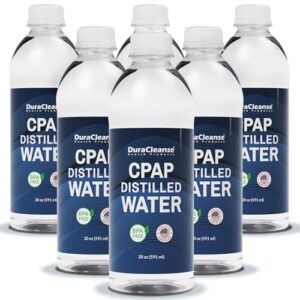
Did you know using distilled water in your CPAP machine is a breakthrough for both performance and hygiene? By choosing mineral-free, purified water over tap water, you slash mineral buildup and help your humidifier chamber stay cleaner much longer.
Regular use also aids quieter operation, reduces bacterial growth, and protects sensitive components.
Think of it as a long-term investment in both your sleep comfort and device lifespan—a practical, science-backed trick that makes CPAP machine maintenance much simpler.
Best For: Sleep apnea users who want purified, travel-ready water for hassle-free CPAP humidifier maintenance and maximum machine longevity.
- Clinically purified to reduce mineral buildup and bacterial growth in humidifier chambers.
- Convenient wide-mouth, BPA-free bottles with leakproof caps make travel and bedside use easy.
- Helps extend time between cleanings and filter changes, keeping CPAP performance consistent.
- Pricier than buying larger distilled water jugs locally.
- Mixed feedback on overall value for money.
- Not the most economical solution if you don’t need travel-friendly bottles.
2. Distilled Water For Cpap Travel
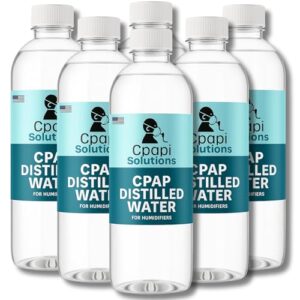
Ever find yourself wrestling with water quality during travel? For CPAP users, portable distilled water solutions stand out—these mineral-free bottles reduce scale buildup and sidestep the surprises tap water can bring.
You’ll notice easier CPAP machine maintenance, fewer odors, and smoother humidifier cleaning, even after long flights or road trips. Most airports now stock these purified water options, making it simple to stay prepared.
Regarding water, not all options are created equal—your device will thank you.
Best For: Frequent travelers who use CPAP machines and need a reliable, portable source of distilled water.
- Prevents mineral buildup and helps keep CPAP humidifiers clean.
- Convenient for travel and easy to pack in checked luggage.
- Reduces risk of irritating additives and microbial contamination compared to tap or non-distilled water.
- More expensive per ounce than buying distilled water in bulk.
- Smaller bottles may run out quickly during long trips.
- Not cost-effective for users who need large quantities regularly.
3. Pure Distilled Water Bottles Pack
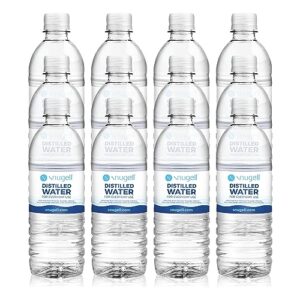
Straightforward and reliable, pure distilled water bottle packs offer exceptional water purity for your hair care routine. With packaging options like 12- or 24-packs of 16.9-ounce bottles, you’re equipped for any routine—at home or on the move.
Most brands highlight BPA-free plastic and consistent mineral-free content, and you’ll spot refill programs on select labels.
If you’re weighing brand comparisons, look for certifications and user ratings. When the goal is distilled water advantages without hassle, bottled water keeps things simple.
Best For: People who want ultra-pure, travel-ready distilled water for home, medical, or beauty routines.
- Ultra-filtered, mineral-free, and safe for sensitive uses like CPAP, baby formula, or facial care
- BPA-free, resealable bottles made in the USA with quality certifications
- Convenient multi-pack options perfect for travel or stocking up
- Generates more plastic waste compared to home distillation systems
- Limited size and pack options may not suit every need
- Can cost significantly more than using filtered tap water over time
Potential Side Effects and Precautions
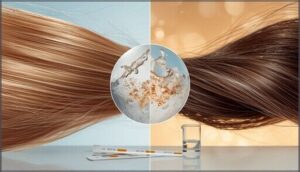
Before you switch up your routine, it’s good to know there are a few things to look out for with distilled water. Not every hair type responds the same way, and balance is important here.
Let’s walk through what to think about before making the change.
When Distilled Water May Not Be Suitable
Discernment matters—distilled water, praised for purity, isn’t ideal for everyone. If you grapple with sensitive hair, scalp irritation, or notice hair dryness, your Mineral Balance may be affected. Electrolyte loss and minor purity concerns can arise, especially compared to hard or tap water. Take a look:
| Scenario | Distilled Water | Hard/Tap Water |
|---|---|---|
| Mineral Free | Yes | No |
| Hair Dryness | Possible | Less likely |
| Scalp Irritation | Increased chance | Variable |
| Electrolyte Loss | Slight risk | Lower risk |
| Purity Concerns | Minimal | Higher |
Using Distilled Water in Moderation
Finding your Mineral Balance often means keeping an eye on how often you use distilled water versus hard or tap water.
Sticking to a Distilled Frequency of one to two washes per week, or alternating with a Water Ratio that favors mineral-enriched sources, helps protect Hair Porosity while enjoying the purification methods that make distilled water such a unique tool in hair care.
Consulting With a Hair Care Professional
If you notice ongoing hair loss, scalp discomfort, or stubborn texture issues after moderating your distilled-water routine, Professional Guidance becomes critical. A Hair Care Professional can perform Scalp Evaluation and Hair Analysis to identify underlying causes—mineral deficiency, chemical damage, or medical conditions—that water type alone won’t fix.
Trichology Consultation delivers Tailored Advice on Hair Treatment and Hair Care Product Selection, ensuring your Hair Health strategy tackles the real problem, not just surface symptoms.
Additional Tips for Improving Hair Quality

While distilled water can work wonders for your hair, it’s just one piece of the puzzle. Your overall hair care routine, lifestyle choices, and daily habits play an equally important role in maintaining healthy, vibrant strands.
Here are some additional strategies you can use to boost your hair quality from the inside out.
Nutritional Support for Healthy Hair
Your hair follicles rely on targeted hair nutrition to thrive from within. Support hair growth promotion and overall hair health benefits by prioritizing:
- Vitamin balance — Biotin, vitamin E, and vitamin D strengthen strands and boost hair growth
- Omega rich foods — Salmon, flaxseeds, and walnuts nourish follicles and reduce inflammation
- Mineral supplements — Iron and zinc improve hair health when dietary fiber alone isn’t enough
Minimizing Heat Styling and Chemical Treatments
Limit your blow-dryers, flat irons, and curling wands to twice weekly—excessive heat can fracture your hair shaft and stall hair growth promotion. Use heat protection sprays when styling and choose gentle styling methods.
Chemical-free alternatives like air-drying paired with distilled water rinses boost damage repair naturally. Weekly hair masks restore moisture for sensitive hair care, supporting long-term hair health tips without harsh interventions.
Protecting Hair While Sleeping
Consistency in your sleep hygiene acts as a silent partner in your hair care routine. Choosing satin or silk pillowcase materials slashes hair friction and reduces breakage, while gentle nighttime styling—like a loose braid or bun—helps maintain shape.
Managing overnight humidity helps prevent frizz, supporting hair health and growth, and routine scalp care overnight limits long-term hair damage.
Regular Trimming and Maintenance
Think of regular trimming as hitting the reset button on your hair care routine. By cutting away split ends, you’re directly preventing hair breakage and keeping growth on track.
Try this five-step maintenance checklist:
- Schedule trims every 8-12 weeks
- Use sharp, clean scissors
- Focus on split end repair
- Combine with scalp care
- Stick to consistent, gentle grooming
Frequently Asked Questions (FAQs)
How often should I wash my hair with distilled water?
Does daily washing really foster hair growth, or does it disrupt scalp health?
For most hair types, a Washing Frequency of every 2–4 days with Distilled Water helps balance Hair Maintenance, managing porosity and promoting overall Hair Health.
Can I mix distilled water with other hair care products?
Yes, you can mix distilled water with other hair care products. It helps balance mineral content in cosmetic products, promotes smoother product interactions, and allows for formula adjustments that suit different hair porosity or scalp sensitivity in beauty routines.
Can I use distilled water for coloring or bleaching my hair?
Ever wondered how your color protection routine could be simpler? Distilled water offers bleach safety by minimizing mineral effects, lending stability to dye formulation, and supporting hair color preservation—especially if your hair porosity or treatment options leave strands prone to fading.
Can distilled water remove product buildup from hair?
Distilled water benefits your routine by supporting product buildup removal and hair residue reduction, thanks to mineral-free rinsing. While it won’t erase every trace, this gentle hair cleansing method minimizes buildup—ideal for sensitive scalps and healthy hair treatment options.
Is distilled water safe for color-treated hair?
Color-treated hair thrives with mineral-free water. Distilled water aids color retention by preventing mineral deposits that strip hair dye, promoting fading prevention and color safety.
This treated haircare approach minimizes hair damage repair needs while preserving vibrant hair color longer.
Will using distilled water affect scalp health?
Using distilled water won’t harm your scalp. It actually reduces mineral-induced irritation and flaking, especially if you have scalp sensitivity.
The near-neutral pH levels support hair follicles without disrupting mineral balance or hair growth.
How long should I wash with distilled water?
Here’s the wash-and-learn: rinse duration with distilled water usually runs 2–3 minutes for most hair types, though scalp sensitivity and wash frequency may warrant extending to 3–4 minutes when addressing mineral buildup or promoting hair growth.
Can children benefit from distilled water hair rinses?
Yes, children can benefit from distilled water hair rinses, especially if they have sensitive scalps or skin conditions like eczema.
Pediatric hair care experts recommend gentle rinsing methods using distilled water to minimize irritation and support healthy hair growth.
Conclusion
Your hair’s transformation won’t happen overnight, but every rinse with distilled water chips away at the buildup that’s been stealing your shine. As minerals fade and natural oils reclaim their balance, you’ll notice strands that move freely, reflect light differently, and respond to styling with newfound cooperation.
Washing hair with distilled water isn’t a cure-all, but it’s a reset button—one that gives your hair permission to be its healthiest, most authentic self again.