
This site is supported by our readers. We may earn a commission, at no cost to you, if you purchase through links. This content is for general informational and educational purposes only and is not a substitute for professional medical, dermatological, or nutritional advice.

Ten inches of hair can look like three. That’s not a trick of the mirror, it’s 4C hair doing what it does best: coiling so tightly that most of its length hides inside itself.
So what is 4C hair, exactly? It sits at the tightest end of the Type 4 range, with dense coils that often read as a soft cloud rather than distinct curls. Shrinkage can swallow 70 to 80 percent of your length, and that tight pattern leaves strands prone to dryness and snapping.
Here’s what separates 4C from 4A and 4B, plus the care habits, styles, and tools that keep it healthy.
Table Of Contents
Key Takeaways
- 4C hair has the tightest coils in the Type 4 range, so it often looks like a dense cloud, and shrinkage can hide 70 to 80 percent of your true length.
- Your scalp oils struggle to travel down such tight coils, so dryness and breakage are the main challenges, and the fix is consistent moisture: washing every one to two weeks, deep conditioning, and layering liquid, oil, and cream.
- Gentle habits protect your length: detangle on damp, conditioned hair with your fingers first, keep styles low-manipulation, wear satin at night, and go easy on heat and relaxers, which can cause permanent damage.
- Your hair does grow, about half an inch a month, so retaining that length with regular trims and low-handling care matters more than any single product.
What 4C Means in Hair Typing

Why does a number and a letter matter so much for your hair? Because they give you a shared language for texture, and that makes shopping and styling less of a guessing game.
Once you know your type, this guide to styling different hair textures shows how to treat each section of your head with the right products and techniques.
The Andre Walker hair typing system sorts hair into four types. Type 4 hair covers kinky and coily textures. The letter then narrows things down, and C marks the tightest curl pattern in that group. Here’s a wry footnote: Walker’s original chart never included 4C hair. Natural hair communities added it later to describe coils tighter than 4B.
So treat it as a label, not a rulebook. Your strands can differ from one section to another, and that’s normal. Use it to guide choices, never to judge. Walker developed the system in the 1990s as a consumer hair care guide, meant to help people identify suitable products rather than to rank textures as better or worse.
Recognizing 4C Hair’s Appearance and Shrinkage
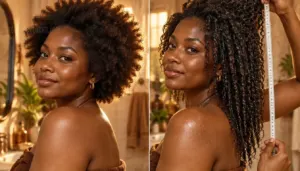
So what does 4C hair actually look like? When it’s dry and unstretched, it often reads as a soft, dense cloud. You won’t always spot individual coils. Up close, you might see tiny zigzags or compressed bends, depending on the section and the light.
Wet it, and the picture changes. Water weighs the strands down, and small coils become easier to see.
Then there’s shrinkage, which is the big surprise. 4C hair can shrink to 70 to 80 percent of its true length. Ten inches might look like two or three. That isn’t slow growth. It’s spring.
Coily hair can look several inches shorter than it truly is, so what seems like stunted growth is simply the strands curling tightly
Shrinkage also varies across your head. Your crown, nape and edges may contract differently. To see your real length, try a twist-out or braid-out.
4C Hair Compared With 4A and 4B
Once you’ve seen your shrinkage, the next question is usually how your hair stacks up against its neighbors, 4A and 4B.
Think of it as a spectrum of compression. 4A has small, springy S-shaped coils you can often spot dry. 4B bends in sharp Z-shaped angles, and shrinkage runs very high. 4C sits at the far end, with the tightest coils and the most extreme shrinkage.
Here’s what that means for you:
- 4C hair shows the least definition without styling.
- Your coils are packed closest together.
- Shrinkage is the highest of the three.
- Scalp oils struggle to travel down the strand.
- You’ll likely need more product and more frequent moisture.
None of this makes 4C hair worse. It just asks for a different routine.
Caring for 4C Hair Without Breakage

Breakage is the thing most of us fight with 4C hair, and it’s rarely caused by one big mistake. It usually comes from small habits that add up, which is good news, because small habits are easy to change.
Since the length you grow only counts if it stays, these practical tips for helping your hair grow faster pair well with fixing your brushing, tying, and drying habits.
Below, you’ll find three practical care steps to follow, starting with how you wash and ending with how you detangle.
Cleansing and Scalp Care
Picture a Sunday wash day that went sideways: you shampooed, felt squeaky clean, and by Tuesday your hair felt like straw. That’s usually over-washing talking. Most Type 4C Hair does well with a wash every one to two weeks, depending on sweat and porosity. Since porosity affects how often your hair needs washing, a float test for hair porosity can help you find a schedule that suits your strands.
Use a sulfate-free shampoo, work in sections, and massage your scalp with your fingertips. Clarify occasionally for buildup.
Moisturizing and Conditioning
The truth about 4C hair is that it dries out fast, so moisture needs a plan. Wash with a moisturizing conditioner or co-wash, then apply a deep conditioner on damp hair.
Layer products using the LOC method: liquid, oil, cream. Do this in four sections for even coverage. Honestly, good hair moisture retention comes from regular habits, not fancy jars.
Gentle Detangling and Knot Prevention
Start with your fingers on damp, conditioned hair, working in small sections. You’ll feel knots before you see them, and you can ease them apart without tugging. Twist each section loosely to keep it from re-tangling.
Then use a wide-tooth comb, starting at the ends and moving up. If it snags, add more slip and moisture. Snip stubborn knots just above.
Styling 4C Hair With Less Manipulation

Imagine this: you spend four hours on a Sunday installing neat twists, then redo the front two sections every Wednesday because they’ve gone fuzzy. By week three, your ends are tangled and your scalp is itchy. That’s too much fiddling for too little payoff.
The fix is simpler than it sounds. Low manipulation styling means picking a look and leaving it alone. Two-strand twists and flat twists hold up for one to two weeks, while cornrows can stretch to three if you keep your scalp clean.
Before you start, seal your ends with butter and apply a water-based leave-in to each section. Keep tension light at the edges. Soreness or bumps mean the style is too tight.
Midweek, mist lightly and redo only the fuzzy bits. Cover your hair with satin at night.
5 Oils and Accessories for 4C Hair
Your 4C hair doesn’t need a 12-step routine, just a few tools that actually work with its tight coils. The five picks below mix an oil, a wig, a brush, a bonnet, and a scarf. Each one helps you hold onto moisture, cut down on breakage, or give your strands a break.
1. Aunt Jackies Argan Hair Oil Blend

Your scalp oils rarely make it down a 4C strand, so dryness is the default. This lightweight oil, enriched with Jamaican black castor, helps fill that gap. It’s meant to prevent breakage, ease thinning and shedding, soften dry hair, treat split ends, and restore luster.
Here’s the catch. Customers disagree on how thick it feels, so test a small amount first. It ranks 377 in Hair Treatment Oils, which is only middling, but at $8.74 the risk is really small.
| Best For | People with dry, coily, or textured hair (especially 4C) who want a lightweight, budget-friendly castor oil treatment to soften hair and help prevent breakage. |
|---|---|
| Weight | 0.07 ounces |
| Dimensions | 1.75 x 1.75 x 6.25 inches |
| Product Type | Hair oil treatment |
| Main Material | Jamaican black castor oil |
| Key Benefit | Prevents breakage and damage |
| Main Drawback | Inconsistent thickness feedback |
| Additional Features |
|
- Lightweight oil enriched with Jamaican black castor that helps prevent damage and breakage
- Helps reduce thinning and shedding while treating split ends and restoring luster
- Moisturizes dry hair and leaves it feeling soft, at a low price of $8.74
- Customers disagree on how thick the product feels, so it may not suit everyone
- Ranked only 377 in Hair Treatment Oils, which is middling popularity
- Comes in a small size (0.07 ounces), so it may not last long with regular use
2. Flybut Water Wave Human Hair Lace Wig
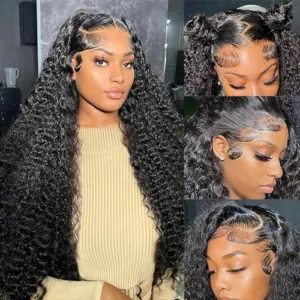
Want the look of a wash-and-go without the daily wrestling match? A lace wig can help you skip the styling for a while and give your own strands a break.
This one uses 100% unprocessed Brazilian virgin human hair at 180% density, with a 13×4 HD transparent Swiss lace front for a natural hairline. It’s glueless, with adjustable straps and combs, and the breathable lace keeps things comfortable. Sizing matters: the medium cap fits 22 to 22.5 inches. Treat the bleached knots gently, and expect to give it normal care.
| Best For | Anyone who wants a natural-looking, glueless water wave wig they can style, dye, and wear comfortably without daily styling work, as long as their head measures 22 to 22.5 inches around. |
|---|---|
| Weight | 9.14 ounces |
| Dimensions | N/A |
| Product Type | Lace front wig |
| Main Material | Brazilian virgin human hair |
| Key Benefit | Natural hairline and soft texture |
| Main Drawback | Requires careful handling |
| Additional Features |
|
- Made from 100% unprocessed Brazilian virgin human hair at 180% density, so it can be washed, dyed, bleached, permed, straightened, or curled
- The 13×4 HD transparent Swiss lace front gives a natural hairline, and the lace is breathable for comfortable wear
- The glueless design with adjustable straps and combs makes it easy to put on and take off
- The medium cap only fits head circumferences of 22 to 22.5 inches, so it won’t work for everyone
- The invisible bleached knots need careful handling to keep the natural look
- It needs normal care to keep its style and last a long time
3. Detangling Brush For Curly Hair
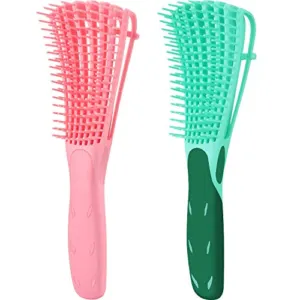
Detangling is where 4C hair gets tested, and this brush takes the job seriously. It detangles 4A hair well, and users say it defines curls too. Since 4C strands can hold knots, go gentle and work on wet, conditioned hair.
The speed helps. Most people finish a full head in under 15 minutes. It weighs 7.05 ounces and measures 10.24 inches long, so it’s easy to handle.
Be honest with yourself, though. Some users report pain, durability reviews are mixed, and a few say bristles snapped off. Check it often.
If this one doesn’t convince you, this roundup of beginner-friendly shaving brushes offers easier, more forgiving options worth comparing.
| Best For | People with 4A curly hair who want a quick way to detangle and define their curls. |
|---|---|
| Weight | 7.05 ounces |
| Dimensions | 10.24 x 4.72 x 2.17 inches |
| Product Type | Detangling brush |
| Main Material | N/A |
| Key Benefit | Detangles curls effectively |
| Main Drawback | Pain and durability issues |
| Additional Features |
|
- Effectively detangles 4A hair
- Defines curls, according to user feedback
- Brushes a full head in under 15 minutes
- Some users report pain during use
- Mixed feedback on durability
- Reports of bristles or parts snapping off
4. Satin Silk Hair Bonnet
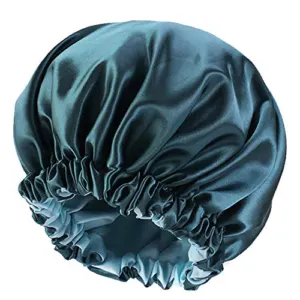
Once the brush has done its work, protect the result overnight. Friction against a cotton pillowcase is rough on dry, fragile 4C strands, and this bonnet is built to cut it down.
It’s made from smooth satin fabric, so it feels soft on your scalp. The 13 inch diameter leaves room for twists or puffs, and the double layer reverses for two colors. It also keeps hair covered during skincare and makeup.
Fit gets mixed reviews. Some find it tight, others find it large.
| Best For | People with textured or fragile hair, like 4C strands, who want a soft satin bonnet to protect their hair overnight and keep it covered during skincare and makeup routines. |
|---|---|
| Weight | 1.41 ounces |
| Dimensions | 1.97 x 1.97 x 1.97 inches |
| Product Type | Satin sleep bonnet |
| Main Material | Smooth satin fabric |
| Key Benefit | Reduces friction and frizz |
| Main Drawback | Inconsistent fit and sizing |
| Additional Features |
|
- Smooth satin fabric feels soft on the scalp and reduces friction that causes frizz and breakage
- Roomy 13 inch diameter fits a range of hairstyles, including twists and puffs
- Double layer design reverses for two color options
- Fit gets mixed reviews, so sizing can be hit or miss
- Some users find it runs too tight
- Some users find it runs large despite the roomy design
5. Tony And Candice Silk Scarf Square

If the bonnet runs tight or loose on you, a silk scarf is a handy backup. This one is 100% mulberry silk in an 8-momme charmeuse satin weave, 33 inches square, so there’s plenty of fabric to wrap your hair at night.
It’s light too, just 2.3 ounces. Care is simple: hand wash below 30°C.
Two catches. Some buyers report fraying at the ends, and others say it slips during sleep. Tie it snugly.
It also works as a scarf, shawl, or hijab.
| Best For | People who want a lightweight, versatile silk square for wrapping their hair at night, wearing as a scarf, shawl, or hijab, or giving as a gift. |
|---|---|
| Weight | 2.3 ounces |
| Dimensions | 33 x 33 inches |
| Product Type | Silk scarf |
| Main Material | 100% mulberry silk |
| Key Benefit | Wraps hair at night |
| Main Drawback | Fraying and slipping reports |
| Additional Features |
|
- Made of 100% mulberry silk with an 8-momme charmeuse satin weave
- Generous 33-inch square size, light at just 2.3 ounces
- Works as a scarf, shawl, or hijab, and can even be framed as home decor
- Some customers report fraying at the ends
- Some say it does not stay securely in place during nighttime use
- Care is more involved, requiring hand washing below 30°C or dry cleaning
Frequently Asked Questions (FAQs)
Can 4C hair grow long and how fast?
Most people see their 4C hair stay the same length for months and assume it isn’t growing. It is. Expect about half an inch monthly, roughly six inches yearly, and length retention decides how much you keep.
How often should 4C hair be trimmed?
Plan on a trim every three to four months, or when you notice split ends and tangles. Your hair trimming frequency depends on how gently you handle it. Protective styling stretches that gap and helps with length retention.
Can heat styling permanently damage 4C coils?
Hair starts converting to weaker keratin above 300°F, so heat styling can permanently damage your coils.
You’ll notice straightened sections that won’t revert after washing, plus hair breakage. Use protectant, lower temperatures, and heatless stretching.
Is protein treatment necessary for 4C hair?
Not always, but often. Your hair tells you. If strands feel mushy when wet, snap easily, or your curls look limp despite moisturizing, you probably need a protein treatment every few weeks.
Can chemical relaxers permanently damage 4C hair?
Picture a woman who relaxes her 4C hair every eight weeks and wonders why her ends keep snapping. Yes, relaxers can permanently damage it. Lanthionization can’t be reversed, and repeated overlapping thins the cortex.
Conclusion
Learn its pattern, respect its limits, and honor its strength. That’s the real answer to what is 4C hair: a fragile, fiercely beautiful texture that asks for patience more than product.
Moisturize often, detangle slowly, and protect your strands at night. Keep styles simple, because less handling means fewer broken ends. Shrinkage will keep fooling the ruler, and that’s fine.
Your length is there, tucked inside every coil. Give it gentle care, and it shows.