This site is supported by our readers. We may earn a commission, at no cost to you, if you purchase through links. This content is for general informational and educational purposes only and is not a substitute for professional medical, dermatological, or nutritional advice.
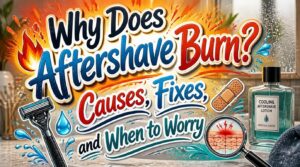
That sharp sting after you splash on aftershave isn’t your skin overreacting for no reason. It’s a precise chemical event: alcohol binds directly to heat receptors in your skin and convinces your nervous system that lukewarm water feels like a hot stove.
Add in the microscopic cuts a razor leaves behind, and you’ve got exposed nerve endings sitting in a pool of ethanol. That combination explains why does aftershave burn so consistently, even when your technique is solid and your blade is sharp.
Understanding the mechanism changes how you shave. Once you know what’s actually happening beneath the surface, you can tell the difference between normal, harmless sting and a sign your skin needs a different approach.
Table Of Contents
- Key Takeaways
- Why Does Aftershave Burn After Shaving?
- How Long Should Aftershave Burn?
- Alcohol-Based Versus Alcohol-Free Aftershave
- How to Prevent Aftershave From Burning
- When Does Aftershave Burning Signal Trouble?
- Frequently Asked Questions (FAQs)
- Can you use aftershave without shaving?
- Why does my aftershave burn?
- Why does aftershave hurt?
- How long does aftershave burn?
- Do aftershave lotions burn?
- What does aftershave do to your skin?
- Is it good if aftershave burns?
- Why do people slap on aftershave?
- How to fix aftershave burn?
- Why does aftershave burn?
- Conclusion
Key Takeaways
- That burning sting is alcohol activating heat receptors in your skin (TRPV1), tricking your nerves into reading normal temperature as a burn, not actual tissue damage.
- Shaving strips your skin’s protective barrier and creates microscopic cuts that expose nerve endings, which is why alcohol stings so much right after you shave.
- Normal aftershave burn fades within two to ten minutes as the alcohol evaporates, so anything lasting past fifteen minutes, or spreading redness, swelling, or pus, means you should see a dermatologist instead of switching products again.
- Switching to alcohol-free balms with ingredients like glycerin, aloe, or witch hazel gives you the same antiseptic and astringent benefits without the sting, proving that discomfort was never a sign the product was working.
Why Does Aftershave Burn After Shaving?
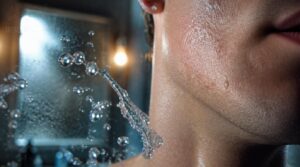
That burning sensation after aftershave isn’t in your head, and it isn’t really a burn either. Your skin, your razor, and the product itself are all playing a role in what you feel. Here’s what’s actually happening beneath the surface.
Alcohol, fragrance, and tiny nicks you can’t even see all team up to trigger that sting, and this breakdown of why aftershave lotion stings your skin walks through exactly how each factor contributes.
Alcohol Activates Heat Receptors
Since alcohol binds directly to TRPV1 heat receptors in your skin, it lowers their trigger point from 108°F to roughly 93°F, so ordinary skin temperature suddenly reads as burning.
This is concentration-dependent:
- Low ethanol levels barely register
- Higher percentages intensify nerve stimulation
- Sensitized skin amplifies the response
No tissue damage occurs, just a convincing alarm. Researchers studying this alcohol-induced burning sensation found that ethanol doesn’t activate the receptor directly but instead sensitizes it to fire at normal body temperature.
Shaving Weakens Skin’s Barrier
Every razor pass strips barrier lipids, ceramides, cholesterol, and fatty acids, that seal moisture in and irritants out. That’s why transepidermal water loss can double afterward. Daily shaving outpaces repair, leaving skin chronically dehydrated and alcohol-sensitive.
| Factor | Normal Skin | Post-Shave Skin |
|---|---|---|
| TEWL | 5-10 g/m²/h | Up to 20 g/m²/h |
| Barrier lipids | Intact | Reduced |
| Alcohol sensitivity | Low | Elevated |
Microcuts Expose Sensitive Nerves
Barrier loss is only half the story. Microtears sever nerve endings directly, including Meissner corpuscles just 80-150 micrometers deep, exposing them to alcohol instantly.
- Facial skin holds up to 3x more nerve density than your back
- Deeper cuts reach the papillary dermis, worsening the sting
- Regeneration takes 24-48 hours, so healing skin stays reactive
Fragrance and Menthol Intensify Stinging
Once nerve endings are exposed, added ingredients make things worse. Fragrance sensitivity varies by person, while menthol activates TRPM8 receptors, which overlap with pain pathways.
| Ingredient | Effect on Skin |
|---|---|
| Fragrance | Triggers irritation |
| Menthol | Cooling, then stinging |
| Combined | Amplified burn |
| Alcohol base | Faster penetration |
| High dose | More pain |
Fatty Alcohols Usually Don’t Burn
Not all alcohols deserve the blame here. Cetyl and stearyl alcohol have long carbon chains (C16-C18) with low volatility and a waxy texture, so they sit on skin rather than evaporate into it. This non-burning property actually helps skin barrier protection:
That’s why these fatty alcohols show up so often in moisturizers featured in a complete skin care routine for a healthy complexion, where locking in hydration matters as much as the actives you apply.
- Won’t activate TRPV1
- Resists evaporation
- Melts around 45-65°C
- Thickens formulas
- Boosts skin hydration
How Long Should Aftershave Burn?
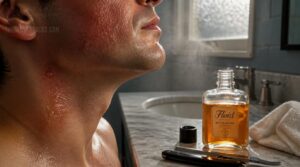
Knowing why aftershave burns is one thing, but knowing how long it should burn is what actually helps you tell normal from concerning. Timing matters here, since a fleeting sting and a lingering one point to very different causes. Here’s what shapes how long that burn should last.
Normal Two-to-Five-Minute Stinging
That mild sting isn’t damage, it’s your TRPV1 receptors briefly misreading alcohol as heat while evaporation runs its course over two to five minutes.
| Timeframe | What’s Happening | What You Feel |
|---|---|---|
| 0-30 sec | Alcohol contacts nerve endings | Sharp onset |
| 30-60 sec | Peak TRPV1 activation | Strongest sting (2-4/10) |
| 2-5 min | Alcohol evaporates | Gradual fade |
| 5-10 min | Barrier recovery begins | No residual sting |
Factors That Prolong Burning
Several variables push that five-minute window much further. Traditional aftershave lotions carry 60-75% denatured alcohol, far above the 2-5% in balms, which means stronger TRPV1 activation and deeper nerve endings exposure. Fragrance and menthol additives compound this inflammatory response, while a lack of hydrating ingredients leaves your skin barrier unable to recover, so applying immediately after shaving, before rinsing, only prolongs the sting.
Aftershave Burn Versus Razor Burn
Patients often confuse the two, but the mechanisms differ entirely. Razor burn stems from mechanical friction, producing uniform warmth over hours or days. Aftershave burn results from alcohol hitting exposed nerve endings, causing sharp, localized stinging that fades within minutes.
- Razor burn: friction-based, lasts days
- Aftershave burn: chemical, resolves in minutes
- Both signal compromised skin sensitivity
Recognizing which one you’re treating guides proper care.
Why Dehydrated Skin Burns Longer
Dehydrated skin lacks the water reserve needed to buffer irritation, so nerve endings sit closer to the surface with less cushioning. This water loss sensitivity doubles burn duration in many patients, since a compromised barrier can’t seal moisture or shield nerves.
Cooling before application and consistent moisturizing ingredients support skin barrier repair, restoring the lipid function that normally keeps stinging brief.
Sting Doesn’t Mean Effectiveness
Here’s a myth worth retiring: burning doesn’t equal disinfecting. A five-second splash can’t sustain the contact time antiseptics need, so that sting just means TRPV1 firing, not bacteria dying.
If that sting keeps showing up after every shave, the real fix usually starts with technique, like shaving in the direction of hair growth to prevent irritation.
That sting doesn’t mean it’s disinfecting your skin, it just means your nerves are firing
Witch hazel and tea tree oil clean skin without pain, proving antiseptic action doesn’t require suffering. Consider:
- Witch hazel tightens pores
- Tea tree oil fights microbes at 2%
- Chamomile soothes without stinging
- Glycerin buffers alcohol’s harshness
Comfort and effectiveness aren’t opposites.
Alcohol-Based Versus Alcohol-Free Aftershave
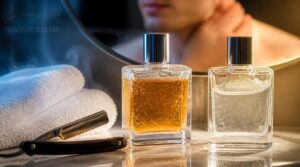
Not every aftershave treats your skin the same way, so knowing what’s in the bottle matters more than you might think. Some formulas rely on alcohol for its antiseptic punch, while others skip it entirely to protect your skin’s barrier. Here’s what separates the two approaches and how to tell which one fits your skin.
Drying Alcohols to Avoid
Check the ingredient list before your skin does. Alcohol Denat, SD Alcohol 40-B, and Isopropyl Alcohol ranking near the top signal trouble, since denaturants like t-butyl alcohol worsen irritation beyond what pure ethanol causes.
Concentration matters too: formulas above 80% drying alcohol spike TEWL by 40% within an hour. Compare that to fatty alcohols, cetyl or stearyl, which moisturize instead of burn.
Benefits of Alcohol-Free Balms
Once you skip drying alcohols, the goal shifts to skin barrier protection rather than sensation. Alcohol-free balms use glycerin, aloe, and fatty acids for real moisture retention, keeping transepidermal water loss low instead of spiking it.
You get skin soothing agents and pore-friendly hydration without stinging, plus ingredient transparency you can actually verify on the label. That’s postshave care that heals, not punishes.
Witch Hazel as Astringent
Not every astringent needs alcohol to work. Witch hazel, distilled from Hamamelis virginiana twigs and bark, delivers tannins that tighten tissue without triggering nerve endings the way ethanol does.
USP formulas keep 14% alcohol but still sting far less.
Three qualities matter:
- Tannin-rich astringent action
- Gentle skin compatibility
- Centuries of North American medicinal use
Hydrating Post-Shave Ingredients
Witch hazel closes pores, but your skin still needs water and lipids replaced after shaving. Humectants like glycerin and hyaluronic acid pull moisture into the outer layer, while jojoba oil softens texture as an emollient.
| Ingredient Type | Example | Function |
|---|---|---|
| Humectant | Hyaluronic acid | Draws water in |
| Emollient | Jojoba oil | Softens skin |
| Soothing | Aloe vera | Calms irritation |
Choosing for Your Skin Type
Since no two faces react alike, matching aftershave to your actual skin type matters more than chasing trends.
- Dry skin care: alcohol-free, glycerin-rich balms
- Oily skin balance: light, non-comedogenic formulas
- Combination skin tips: gentler zones on cheeks
- Normal skin maintenance: witch hazel tolerated well
Sensitive skin solutions mean avoiding alcohol entirely, since irritation and skin sensitivity often trace back to formula, not technique.
How to Prevent Aftershave From Burning
The good news is that most of this burning is preventable, since it comes down to how you treat your skin before, during, and after the razor touches it. Small changes to your routine can lower TRPV1 activation and reduce the microtrauma that makes alcohol sting in the first place. Here’s what actually works, step by step.
Soften Hair Before Shaving

Coarse, dry hair drags against a blade and worsens microtrauma, so soften it first.
Warm water prep opens the follicle; a hot towel compress (2-3 minutes) works when showering isn’t possible.
Follow with gentle exfoliation, then pre-shave oil massaged in for a minute or two.
Finish with shaving cream for true lubrication before the blade ever touches skin.
Use Proper Razor Technique
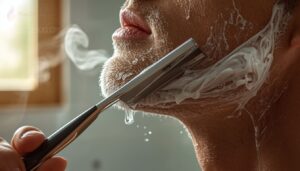
How you move the blade matters as much as what’s in the bottle. Razor angle control near 30 degrees, light pressure, short 1-3 cm strokes, and shaving with the grain all limit microscopic nicks.
- Hold the razor near 30 degrees
- Apply only 2-3 ounces of pressure
- Use short, controlled strokes
- Shave with the grain first
- Adjust angle on contours
Replace Blades Regularly
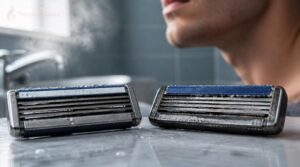
A dull blade drags instead of cutting, tearing hair follicles and causing microabrasions that intensify aftershave burn. Replace cartridges every 1-2 weeks, safety razor blades weekly with daily use. Watch for pulling or roughness, the American Academy of Dermatology’s real signal, since dull edges force more pressure and worsen irritation regardless of calendar timing.
Rinse Skin With Cool Water
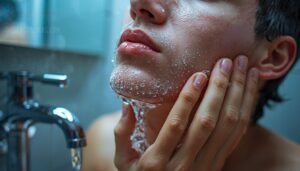
Cool water isn’t just comfort, it’s a temperature soothing effect on TRPV1 receptors already primed by shaving. Rinsing brings skin temperature down before aftershave touches raw nerve endings, blunting the burn.
This cooling rinse also calms postshave redness by narrowing blood vessels. A quick thirty-second splash before application gives skin healing time a head start.
Apply a Soothing Moisturizer
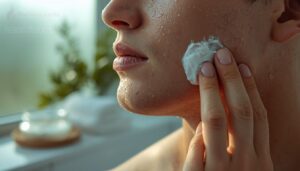
A fragrance-free moisturizer applied to damp skin does more for burning than any aftershave splash. Look for barrier-repair ingredients like ceramides or glycerin, and use gentle application, patting rather than rubbing.
Effects show within 30 minutes and last about 4 hours. Match the formula to your skin type for real skin recovery and lasting hydration.
When Does Aftershave Burning Signal Trouble?
A quick sting after shaving is normal, but not every burning sensation fits that pattern. Your skin has its own way of telling you when something’s gone beyond simple irritation. Here’s what separates an ordinary reaction from a sign you shouldn’t ignore.
Burning Lasting Over 15 Minutes
When should you actually worry? Once stinging crosses the 15-minute mark, that’s your skin barrier signaling ongoing nerve pain rather than normal TRPV1 activation from alcohol. Watch for:
- Spreading redness
- Swelling or blistering
- Heat radiating from skin
- Burning that worsens instead of fades
Environmental triggers or ingredient interactions can prolong things briefly, but true prolonged irritation causes warrant medical attention and skin barrier recovery support.
Contact Allergy Warning Signs
Immediate burning is chemistry, but a rash showing up two or three days later is your immune system reacting to something in the ingredient list, often fragrance or preservatives.
Look for itching with swelling, weeping skin, or patches that turn dry and cracked.
Since the rash appears exactly where the product touched your skin, this delayed reaction pattern warrants a dermatologist consultation.
Infection and Dermatitis Symptoms
Not every post-shave flareup is chemical. Bacterial folliculitis brings warm, tender bumps with pus by day two or three, usually from Staph aureus.
Fungal infections itch, scale, and linger 5-7 days.
Dermatitis shows uniform redness, tightness, even blisters.
Watch for fever or spreading redness, which is cellulitis, requiring immediate care rather than home treatment.
Rosacea and Reactive Skin
If burning shows up on the cheeks and nose without cuts or infection, think rosacea. This chronic inflammatory condition makes skin chronically reactive, so alcohol at even moderate concentration provokes flushing and stinging most people wouldn’t feel.
Sun, spicy food, and stress are common rosacea triggers, and shaving simply adds another. Reactive skin like this needs alcohol-free, fragrance-light products, full stop.
When to See a Dermatologist
So when does a sting become a signal? Trust your skin’s timeline: persistent burning beyond 15 minutes, spreading redness, or pus points to trouble, not tolerance.
Watch for:
- Fever or swollen lymph nodes
- Hives appearing hours later
- Ingrown hairs recurring monthly
Chronic razor burn or delayed reactions deserve a dermatologist’s evaluation, not another product swap.
Frequently Asked Questions (FAQs)
Can you use aftershave without shaving?
Reaching for that splash on a lazy, unshaved morning? Yes, you can use it, but expect topical sting without shaving’s usual buffer, since intact skin barrier protection still meets alcohol and fragrance sensitivity head-on.
Why does my aftershave burn?
That sting happens because alcohol triggers TRPV1 receptor activation in nerves exposed through fresh microcuts, basically tricking them into sensing heat that isn’t there. Fragrance and skin sensitivity can intensify the reaction further.
Why does aftershave hurt?
Pain comes from alcohol concentration meeting exposed nerve endings in razor microcuts. Freshly shaved skin loses hydration balance and barrier protection, so ingredients that would barely register on intact skin instead trigger a sharp, genuine burning response.
How long does aftershave burn?
That first jolt fades faster than you’d think. Most burning subsides within five to ten minutes as alcohol evaporates and skin adjusts, though burn duration factors like skin sensitivity and alcohol concentration can stretch or shorten that window considerably.
Do aftershave lotions burn?
Yes, most do. Denatured alcohol lowers your nerve sensitivity threshold, so freshly shaved skin reads normal temperature as burning.
Alcohol-free balms skip that reaction entirely, easing moisture loss while still calming razor burn and supporting skin barrier repair.
What does aftershave do to your skin?
Think of aftershave as a tiny skin sentinel: its antiseptic ingredients tighten pores and clear bacteria, offering barrier protection. But alcohol dries skin and disrupts hydration, while fragrances can trigger nerve response and irritation.
Is it good if aftershave burns?
No, that sting isn’t a sign your aftershave is "working." It’s TRPV1 activation from alcohol irritating skin sensitized by shaving, not proof of effectiveness. An alcohol-free aftershave offers the same antiseptic benefit without unnecessary discomfort.
Why do people slap on aftershave?
Picture a barber slapping bay rum onto a client’s jaw, a ritual passed down for generations. That brisk slapping motion spreads product evenly and delivers a bracing, confidence-boosting sensory jolt that feels like tradition itself.
How to fix aftershave burn?
A cold compress constricts blood vessels and calms nerve activity within minutes. Follow with aloe vera gel or a fragrance-free, alcohol-free balm to restore your skin’s hydration barrier, reduce inflammation, and prevent further irritation from ingredient penetration.
Why does aftershave burn?
Alcohol in your aftershave triggers TRPV1 heat receptors, the same ones capsaicin activates. Freshly shaved skin has microscopic nerve ending exposure from barrier disruption, so alcohol penetrates deeper, causing that sharp burning sensation and temporary skin irritation you feel on contact.
Conclusion
A million nerve endings aren’t actually screaming, but your face swears they’re.
Why does aftershave burn comes down to simple chemistry, not fragile skin. Alcohol excites heat receptors, microcuts expose nerves, and dehydration extends the sting. Fix the mechanism and you fix the burn: hydrate first, choose alcohol-free formulas, rinse with cool water. Two minutes of sting is normal. Fifteen minutes, swelling, or spreading redness isn’t. Know that line, and your skin will thank you.