This site is supported by our readers. We may earn a commission, at no cost to you, if you purchase through links.
I once had a client swear her curls were "misbehaving" because they looked different every wash day—tight ringlets on Monday, looser waves by Friday. Turns out, that’s classic 4a hair type behavior, not a bad hair day.
Your coils shrink up to 75% when they dry, then spring back into springy S-shapes that catch light beautifully. That volatility confuses a lot of people into misdiagnosing their curl pattern entirely.
Once you learn to read what your strands are actually telling you, moisture, definition, and shrinkage stop feeling like mysteries and start feeling like tools you can work with.
Table Of Contents
- Key Takeaways
- What is 4A Hair Type?
- How to Identify 4A Hair
- 4A Versus 4B and 4C Hair
- Best 4A Hair Care Routine
- Best Products and Styles for 4A Hair
- Frequently Asked Questions (FAQs)
- How to tell if your hair is 4A, 4B, or 4C?
- What hydrates hair the most?
- What does 4A hair look like?
- How often should I wash my hair type?
- Can 4A hair transition to different curl patterns over time?
- How does diet affect 4A hair growth and health?
- What seasonal adjustments should 4A hair care routines include?
- Are there genetic factors that determine 4A hair texture?
- How do hormonal changes impact 4A hair characteristics?
- How do you classify hair using the Andre Walker system?
- Conclusion
Key Takeaways
- 4A hair is defined by tight, springy S-shaped coils that shrink 50-75% when dry but bounce back with clear definition once moisturized.
- Compared to 4B’s angular zigzags and 4C’s dense, tightly packed coils, 4A has flatter cuticles that retain moisture better but still needs consistent care to avoid breakage at its coil bends.
- A solid routine—sulfate-free cleansing, regular co-washing, deep conditioning, and LOC/LCO layering—keeps coils hydrated and prevents the dryness that comes from slow moisture travel through tight strands.
- Protective habits like satin pillowcases, low-heat styling, and gentle protective styles (twist-outs, finger coils, Bantu knots) preserve curl definition and reduce breakage over time.
What is 4A Hair Type?

If you’ve ever wondered why your curls look different from your friend’s, your hair type holds the answer. 4A hair has its own personality, and once you know the signs, you’ll spot it right away. Let’s break down exactly what makes this texture what it is.
The telltale giveaway is a tight, well-defined S-pattern that springs back when you tug on a curl, a hallmark explained in this guide to identifying 4A hair.
Type 4 Hair Basics
Sit at the tightest end of the curl chart and you’ve found Type 4 hair — dense, voluminous, and rooted in asymmetrical follicle shape. Cuticles pack tightly, slowing natural oil movement down the shaft, so dryness creeps in fast. Shrinkage runs 50-75%, hiding true length.
Patterns range from soft S-coils to sharp zigzags, shaping how strands clump when you style them. This category is specifically known as type 4 coily hair within the Andre Walker system.
Tight S-Shaped Coils
Zoom into a single strand and that zigzag energy sharpens into something else — a spring. That’s the S-pattern, curling left then right in tight, ringlet-sized loops. Stretch it out and the shape shows clearly; let it go and it snaps back, feeding that signature shrinkage. This structural bend is what gives 4A its bounce, but also its breakage risk if moisture runs low.
The S-pattern gives 4A hair its bounce, stretching and snapping back like a spring—yet that same bend invites breakage without enough moisture
Soft Coily Texture
Run your fingers through 4A strands and you’ll notice something cushiony, not stiff — that’s the soft coil signature. Fine to medium strands keep friction low, so hair glides rather than snags.
- Bouncy, hydrated curls that feel alive under your palm
- Smooth cuticles that catch light instead of fighting it
- Easy detangling slip that saves your edges
- Fluffy volume without harsh, wiry resistance
- Balanced moisture that keeps coily hair thriving
Common 4A Hair Traits
Beyond softness, coil clumping patterns define your 4A hair type — strands group together for that full, defined look.
| Trait | What Happens | Why It Matters |
|---|---|---|
| Shrinkage impacted length | 50-60% shrink when wet | Hair looks shorter |
| Moisture travel speed | Slower through coils | Dryness happens fast |
| Springy coil elasticity | Stretches, bounces back | Signals healthy coily hair |
Watch mechanical stress points at each bend — that’s where breakage sneaks in.
How to Identify 4A Hair
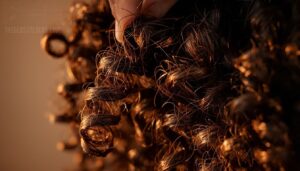
Not sure if your curls are actually 4A? You’re not alone, and the good news is your hair will tell you if you know what to look for. Here are the five signs that help you spot true 4A hair with confidence.
Coil Shape and Definition
Ever notice how each coil on your head seems to have a mind of its own? That’s independent strand curling in action — the hallmark of 4A hair.
Those tight S-shaped coils tend to clump together into defined springy sections, and this guide to type 4 hair breaks down how to work with that natural pattern instead of against it.
Spot the difference:
- Springy S-shaped curls
- Visible pattern springiness
- Softer than 4B zigzags
- Weaker than tighter 4C coils
Compared to other Type 4 textures, 4A holds natural coil definition without gel, though those S-bends create structural weak points prone to snapping.
Shrinkage and Volume
Watch your coils shrink up to 50-60% when wet — that’s normal, not damage.
| Wet State | Dry Result |
|---|---|
| Fully saturated | Maximum shrinkage |
| Air-dried slowly | Looser, fuller volume |
| Diffused/heat-set | Tighter, compact set |
| Stretched while damp | Reduced shrinkage |
| Heavy products | Weighed-down, less lift |
Humidity swells coils further, while lighter leave-ins encourage bounce over droop. Drying method matters more than you’d think.
Strand Thickness
Two 4A heads can share the same coil pattern yet feel totally different in your hands — that’s strand thickness at work.
- Fine: 50-70 microns
- Medium: 70-90 microns
- Coarse: 90-120 microns
Follicle size drives this. Thicker strands resist detangling but handle manipulation better; fine strands slip apart easily yet snap faster under tension.
Porosity and Moisture Needs
Porosity determines how thirsty your 4A coils really are. Since 4A already retains moisture better than 4B or 4C, cuticle condition tells the rest of the story.
| Porosity | Behavior | Strategy |
|---|---|---|
| Low | Resists absorption | Warmth, penetration |
| Medium | Balanced uptake | Standard LOC |
| High | Absorbs, then evaporates fast | Heavy sealing |
High porosity hair needs immediate sealing after moisturizing, or you’ll chase dryness all week.
Wet Versus Dry Appearance
Here’s a trick many stylists swear by: wet your coils and watch the whole story change. Water brings out a glossy wet shine with tighter curl clumping, while dry hair scatters light softly, revealing true shrinkage and texture. That moisture color contrast fades as strands separate.
For honest hair identification, always judge your curl pattern once fully dry.
4A Versus 4B and 4C Hair
Once you know your own coils, the next step is seeing how they stack up against their type 4 siblings. 4A, 4B, and 4C often get lumped together, but they behave pretty differently once you get hands-on with them. Here’s what actually sets them apart.
4A Curl Pattern
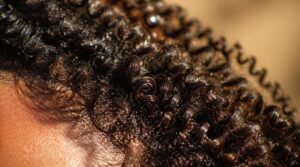
Picture a corkscrew — that’s your 4A. These strands form defined S-shaped coils, springy and spiral, holding their shape once moisturized.
- Fine to medium texture
- High density, full-looking volume
- Strong natural curl memory
Unlike other Type 4 textures, 4A keeps its spiral pattern intact even after washing, making curl definition easier to maintain and style.
4B Zigzag Texture
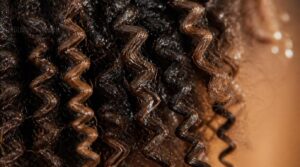
Now shift from spirals to sharp angles. 4B hair type shows a true zigzag pattern — strands bend at tight angles instead of curling smoothly, creating that broken, ziggy line instead of an S-shape.
This angular coil pattern shrinks hard, packing serious shrinkage volume at the roots. Moisture-driven definition matters even more here — dry strands mean frizz and lost shape fast.
4C Dense Coils
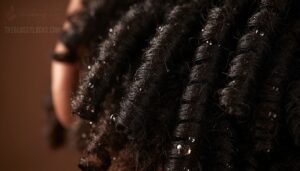
Now here’s where coils get packed tight. 4C hair type collapses close to the scalp, forming tight coils with extreme shrinkage—up to 75% dry. Expect Z-shaped coil geometry mixed with corkscrews, creating a cloudlike silhouette.
This high density management challenge means coily or kinky hair thrives with consistent moisture sealing techniques as part of your natural hair care and hair maintenance routine.
Moisture Retention Differences
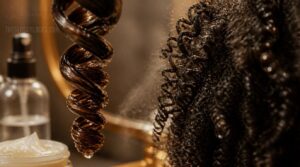
That cloudlike 4C density holds moisture differently than 4A’s looser coils. Hair porosity drives everything here—4A’s cuticle lies flatter, sealing water in longer, while 4B and 4C’s rougher cuticle layers let moisture escape faster.
Your moisturizing hair routine should match this: 4A needs lighter humectants, 4C craves heavier emulsifier sealants. Protein-moisture balance keeps every texture elastic, not mushy or brittle, no matter your coil pattern.
Breakage Risk by Type
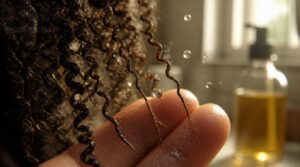
Moisture and breakage go hand in hand, so it’s no surprise each type carries its own risk. 4A’s finer strands offer less structural strength under tension, while dense 4C coils face more detangling friction. Porosity mismatch, rough drying, and tight manipulation all raise breakage odds. Gentle hair care routines protect elasticity across every texture.
Best 4A Hair Care Routine

Your 4A coils thrive on consistency, not complicated routines. Once you nail down the right order of steps, your hair holds moisture and bounces back stronger between washes. Here’s the routine I always walk my clients through.
Gentle Sulfate-Free Cleansing
Ever notice how your scalp feels tight after a harsh wash? That’s why gentle sulfate-free cleansing matters for 4A hair. You want shampoos packed with mild surfactants like cocamidopropyl betaine—these clean without stripping your oils. Look for:
- pH balanced formulas
- biodegradable ingredients
- humectant rich blends
- scalp oil preservation
Stick to sulfatefree hair care routines for lasting moisture.
Co-Washing Between Washes
Some weeks your coils feel oily before shampoo day even arrives—that’s your cue to co-wash instead. Skipping straight detergent lets scalp sebum stay put while conditioner lifts sweat and residue.
Aim for co-washing every few days between wash days, not daily, or product buildup creeps in. Done right, it boosts curl definition and keeps your natural hair regimen balanced without over-cleansing.
Deep Conditioning After Washing
Washing strips your coils, so deep conditioning right after is non-negotiable—not optional. Apply the mask to damp, detangled hair, working roots to ends for even coverage.
Sit for 20-30 minutes, ideally under a warm cap; heat opens the cuticle for deeper penetration. Rinse with cool water to seal moisture and prevent buildup that dulls your natural hair regimen.
LOC and LCO Methods
Think of LOC and LCO as your moisture-sealing order of operations. Both start with a water-based liquid, but LOC layers oil before cream, while LCO puts cream second and oil last. Higher-porosity coils often do better with LCO since oil seals last.
Apply each layer thin, section by section, so you get even distribution without weighing curls down.
Nighttime Hair Protection
Your coils do most of their damage while you’re asleep, not styling. Cotton pillowcases pull moisture straight out of your strands, but a satin pillowcase or silk bonnet lets hair glide instead of snag.
Loosely pineapple your curls, seal ends with oil, and cover your scalp too. This low-tension, moisture-sealing habit protects elasticity and cuts breakage—so you wake up with definition still intact.
Best Products and Styles for 4A Hair
Once your routine’s on point, the fun part is picking what actually shows off those coils. Your hair type responds best to specific products and styles, not just whatever’s trending. Here’s what I recommend keeping in your rotation.
Curl Moisturizing Leave-in Conditioner
Your coils crave hydration, and a good leave-in delivers it without weighing them down. Look for jojoba oil, panthenol, and silk amino acids for softness and slip.
- Smoother detangling
- Better curl definition
- Reduced frizz
- Lasting moisture
- Easier styling days
Apply on damp hair, mid-lengths to ends, then seal with oil for lasting hydration.
Curl Enhancing Hair Mousse
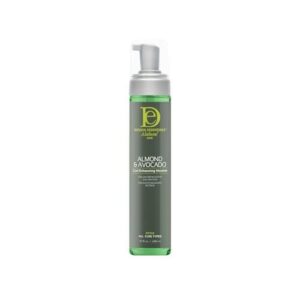
Once your leave-in locks in moisture, mousse takes definition further. A lightweight, quick-drying formula with polyquaternium polymers gives your coils flexible hold without stiffness or crunch.
Look for glycerin and panthenol, humectants that add shine and keep curls soft, never sticky. Apply to damp hair, scrunching upward from ends to roots.
This encourages clumping instead of flattening your pattern. It’s cruelty-free, paraben-free, and leaves zero residue behind — just bouncy, polished curl definition ready for diffusing.
- Lightweight, quick-drying formula that never feels greasy
- Enhances curl clumping and definition while cutting down on frizz
- Cruelty-free and free from parabens, paraffin, petrolatum, and mineral oil
- Offers a gentle hold rather than firm, all-day control
- Not built for heavy-duty styling needs
- May not provide enough hold for very loose curl patterns or humid conditions
Finger Coils and Twist-Outs
Once mousse sets your definition, it’s time for coiling techniques that actually show off your pattern. Finger coils wrap small sections for tight, springy curls, while twist-outs shake out into looser, elongated waves.
| Style | Best For |
|---|---|
| Finger Coils | Sharp, defined ringlets |
| Twist-Outs | Soft, voluminous curls |
| Both | Reviving coily hair between washes |
Dry fully before shaking out — patience protects your defined curls.
Protective Braids and Bantu Knots
Sometimes your curls need a break from daily manipulation, and that’s where protective braids and Bantu knots come in. Braids distribute tension across sections instead of your roots; Bantu knots coil hair into secure mini-buns.
Keep sections loose near edges to protect against breakage, moisturize your scalp regularly, and always take down styles gently, coil-by-coil, to preserve definition.
Low-Heat Styling Tips
Heat isn’t off-limits for 4A hair, but it works best in small doses. Cap your tool at 365-380°F, use short passes, and let sections cool before touching them.
- Air-dry with leave-in on damp hair
- Use lowest effective heat setting
- Avoid overlapping heat cycles
- Reduce friction with a microfiber towel
- Let coils cool fully before release
This prevents unnecessary breakage while keeping curl definition intact.
Frequently Asked Questions (FAQs)
How to tell if your hair is 4A, 4B, or 4C?
Check for springy S-shaped curls with visible separation (4A), angular Z-patterns that fluff up dry (4B), or tight coils needing manipulation for definition (4C). Wet strands and compare shrinkage—4A springs back clearest, while 4C shrinks most dramatically.
What hydrates hair the most?
Nothing hydrates like layering humectants with a sealant — think glycerin or honey pulling in water, then an emollient oil locking it down. That combo builds real moisture retention and healthier cuticle health over time.
What does 4A hair look like?
Picture tight S-shaped coils with soft definition, springing up dense at the root. Volume looks full, frizz shows at the surface, and shrinkage hides length—stretched strands reveal way more than they appear at first glance.
How often should I wash my hair type?
Once a week or every two weeks usually works best, since coily strands hold onto moisture and resist oil distribution. Watch for scalp irritation, sweat, or product buildup, and adjust your wash frequency to keep your scalp healthy.
Can 4A hair transition to different curl patterns over time?
Your coils can morph like weather patterns overnight! Heat damage, hormonal shifts, aging, and poor cuticle health all loosen or tighten your pattern. Nutrition and gentle care support elasticity, growth retention, and keep your natural texture thriving long-term.
How does diet affect 4A hair growth and health?
Your plate matters as much as your products. Protein builds keratin, iron fuels follicle oxygen, and zinc aids scalp recovery. Omega-3s calm inflammation, while vitamin deficiencies invite breakage—so eat well, and your coils will thank you.
What seasonal adjustments should 4A hair care routines include?
Switch to lighter creams and gel casts in humid months to fight frizz; in winter, seal with oils or butters and re-moisturize often. Adjust cleansing for buildup, protect from UV/wind, and keep your scalp hydrated year-round.
Are there genetic factors that determine 4A hair texture?
Yes—research shows genetic curl heritability plays a real role. Keratin protein variants and follicle shape influence cortical alignment, while ancestral texture lineages and dermal papilla signaling shape coil tightness passed down through generations.
How do hormonal changes impact 4A hair characteristics?
Hormonal shifts reshape your curls from the inside out: androgens can coarsen strands, estrogen drops trigger shedding, progesterone alters scalp oil, and thyroid imbalances dry hair out, raising breakage risks and changing elasticity.
How do you classify hair using the Andre Walker system?
Funny how a scale meant to simplify curls ended up spawning endless debates about "am I 3C or 4A?" The Andre Walker Hair Typing System uses visual assessment, numbering hair 1-4 by curl pattern, then adding letters A-C for subtype identification based on coil tightness.
Conclusion
Your curls could rewrite the laws of gravity and still land exactly where they mean to—that’s the wild magic of a 4A hair type.
Every spring, shrink, and coil is your hair speaking a language only you can master.
Stop chasing yesterday’s wash-day results and start trusting the pattern in front of you.
Moisture is loyalty; definition is the reward.
Learn your coils, and they’ll never misbehave again.
They’ll just be you, unapologetically.
- https://us.johnfrieda.com/blog/curly-hair/4a-hair-type-guide-what-is-it-and-how-to-care-for-it
- https://www.indiquehair.com/blogs/ultimate-blog/the-different-types-of-4a-4b-and-4c-hair-and-how-to-care-for-them
- https://www.vogue.com/article/4a-hair
- https://carolsdaughter.com/blogs/beauty-blog/type-4a-hair-how-to-care-for-4a-curls
- https://curlventurehair.com/coily-hair-4a-4c-definition-and-tips