This site is supported by our readers. We may earn a commission, at no cost to you, if you purchase through links. This content is for general informational and educational purposes only and is not a substitute for professional medical, dermatological, or nutritional advice.

Ten products crowded on your bathroom shelf won’t fix skin that’s confused about what happens next. Skin thrives on predictability, not on the newest serum you saw online. Give it the same cleanse, treat, moisturize, and protect order every morning, and it stops overreacting to change and starts doing its job.
That’s the real secret behind clear, calm skin: rhythm beats ingredients almost every time.
A solid daily morning skin care routine doesn’t need to be complicated to work. Six clear steps, built around your actual skin type, can take you from reactive and unpredictable to steady and in control.
Table Of Contents
- Key Takeaways
- Build Your Daily Morning Skin Care Routine
- Step One: Cleanse Without Over-Stripping
- Step Two: Tone or Exfoliate Carefully
- Step Three: Apply Antioxidant Serum
- Step Four: Treat Specific Skin Concerns
- Step Five: Moisturize and Support Skin
- Step Six: Finish With Sunscreen
- Customize Your Routine by Skin Type
- Top 10 Morning Skin Care Products
- 1. The Beauty of Dirty Skin Book
- 2. Vichy Normaderm Salicylic Acid Cleanser
- 3. Neutrogena Hydro Boost Hydrating Gel Cleanser
- 4. Dickinson’s Original Witch Hazel Toner
- 5. Pixi Glow Tonic Glycolic Acid Toner
- 6. Paulas Choice Clear Anti Redness Exfoliating Solution
- 7. Olay Super Serum Glow Facial Serum
- 8. Revitalift Hyaluronic Acid Vitamin C Serum
- 9. Roc Multi Correxion Eye Cream
- 10. Kiehl’s Ultra Facial Hydrating Cream
- Frequently Asked Questions (FAQs)
- What is a good skin care routine for the morning?
- What is a good morning skin care?
- Can skincare routines cause initial skin purging?
- Should pregnant women avoid certain morning ingredients?
- How often should skincare brushes be cleaned?
- Can you mix different skincare brands together?
- Whats the shelf life of opened products?
- Can I use makeup right after sunscreen application?
- How long should a full routine take daily?
- Is it okay to skip moisturizer some mornings?
- Conclusion
Key Takeaways
- Your skin thrives on consistency more than fancy products, so cleansing, treating, moisturizing, and protecting in the same order every morning trains it to stop overreacting and start functioning well.
- Layering matters just as much as the products themselves—apply from thinnest to thickest (serum before cream, damp skin before moisturizer) so each ingredient actually gets absorbed instead of blocked.
- Sunscreen is the step that makes everything else worth it, so finish every routine with a broad-spectrum SPF 30, applied generously and reapplied every two hours if you’re outdoors.
- Your routine should match your specific skin type and concerns, whether that’s oil control for acne-prone skin, humectants for dryness, or gentler formulas for sensitive and rosacea-prone skin.
Build Your Daily Morning Skin Care Routine
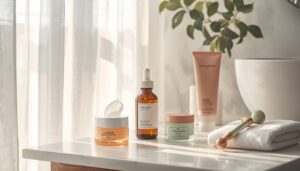
A great morning routine isn’t about doing more, it’s about doing the right things, in the right order, every single day. Before you touch a single product, a few ground rules make all the difference in how your skin responds. Here’s what to nail down first.
This step-by-step morning skin care routine guide breaks down exactly why layering products lightest to heaviest keeps your barrier happy and your skin glowing.
Identify Your Skin Type
Before buying a single product, identify your skin type using four quick checks: an oil production test, moisture retention check, pore size evaluation, and sensitivity reaction test.
Shine within 30 minutes signals oily skin; tightness or flaking suggests dry skin. Combination skin shows a shiny T-zone with matte cheeks. Knowing this shapes every step that follows.
Follow a Consistent Schedule
Once you know your skin type, stick to it. A consistent skincare schedule trains your skin to expect cleanse, treat, moisturize, sunscreen in that order, every morning.
This rhythm matters more than any single product. Tracking your morning habits helps you spot what’s working, and what’s causing trouble, before small irritations turn into real setbacks.
Keep Your Routine Simple
Consistency works best paired with simplicity. Most skin types do fine with three essential products — cleanser, moisturizer, sunscreen — and don’t need ten steps to look after themselves.
A multi-functional formula, like a moisturizer with SPF or a vitamin C serum that also hydrates, cuts decision fatigue fast. Keep everything in one tray, within arm’s reach, and mornings stay simple.
Step One: Cleanse Without Over-Stripping

Your face doesn’t need a full scrub-down every morning, just a smart, gentle reset. Your skin already worked hard overnight, so this step is about balance, not stripping it bare. Here’s exactly how to cleanse the right way, without undoing all that overnight repair.
Water-only Morning Cleansing
Why reach for cleanser when you already washed thoroughly last night? Water-only cleansing works for normal-to-dry skin, using 98–100°F water for 45–60 seconds with fingertip circles. Splash warm water first to soften oils, then pat dry within 30 seconds.
- Softens surface oils
- Gentle fingertip motion
- Preserves lipid barrier
- Prevents dehydration
- Nice final splash
Gel Cleansers for Excess Oil
Oily skin, meet your match. Oil control gels with salicylic acid dissolve clogged pores and help sebum regulation, while clay versions absorb shine on contact.
| Cleanser Type | Best For | Key Benefit |
|---|---|---|
| Salicylic Acid | Acne-prone | Unclogs pores |
| Clay-Based | Very oily | Mattifies skin |
| Gentle Surfactant | Sensitive/oily | Hydration in cleansers |
To maintain healthy skin barrier function, it’s important to choose cleansers with a physiological pH balance that helps natural protection.
Cleanse With Lukewarm Water
Temperature matters more than most people realize. Lukewarm water, around 98–100°F, dissolves sebum efficiently while preserving your skin’s lipid barrier and natural pH.
Too hot, and you strip protective oils; too cold, and pores stay shut. Lukewarm water gently opens pores, letting your morning cleanse actually reach trapped debris—setting the stage for real hydration.
Wash for Sixty Seconds
Sixty seconds feels long until you time it—most people rinse in ten. Use your fingers for a gentle cleansing massage, splitting your face into four quadrants at fifteen seconds each.
This isn’t about scrubbing. It’s contact time that softens debris and oil.
- Quadrant timing keeps coverage even
- Longer contact aids acne-prone skin
- Slow rubbing dissolves stubborn buildup
Pat Skin Gently Dry
Rubbing undoes what your gentle patting technique just achieved. Grab a soft, lint-free cotton towel, press lightly for five to ten seconds per zone, and let damp skin lock in hydration before moisturizer and SPF.
| Method | TEWL Impact | Best For |
|---|---|---|
| Patting | -15% | Sensitive skin |
| Rubbing | Higher | Not recommended |
| Air-dry | Neutral | Oily zones |
Step Two: Tone or Exfoliate Carefully
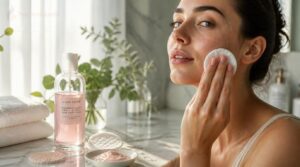
Once your skin is clean, you get to choose your next move: hydrate with a toner or resurface with an exfoliant. Both have real benefits, but using them the wrong way can backfire fast. Here’s what you need to know before adding either one to your morning lineup.
Hydrating Toner Benefits
Think of toner as a bridge between cleansing and treating your skin. A hydrating toner delivers glycerin or hyaluronic acid to attract water, restoring your skin’s natural pH near 5.0 to 5.5.
This soothes irritation, strengthens barrier function, and preps damp skin so serums absorb more evenly—setting up every product that follows in your morning routine.
Chemical Exfoliant Benefits
A chemical exfoliant does more heavy lifting than any scrub ever could. Glycolic and lactic acids dissolve dead cells, giving you improved texture and smoother skin within days. They boost enhanced absorption, so your next serum actually penetrates instead of sitting on the surface.
Regular use also means reduced hyperpigmentation, stimulated collagen, and balanced oil—a genuine upgrade for nearly every skin type.
Exfoliation Frequency Guidelines
More isn’t better here. Oily skin controls chemical exfoliants two to three times weekly; dry or sensitive skin needs just once every seven to ten days. Combination skin sits at twice weekly.
Winter demands you scale back; summer’s humidity allows more frequency.
Teens tolerate three sessions; skin over 55 often needs once every seven to ten days. Stronger formulas (10% glycolic) mean fewer applications.
Avoid Combining Harsh Actives
Frequency matters, but so does what you’re mixing. Layering two exfoliants, or pairing a strong acid with retinol, can double flaking in 70% of users and stretch redness from two days to five.
Morning routines get riskiest when vitamin C meets salicylic acid, causing stinging in roughly 25% of combination-skin users. Keep actives separate, and let pH settle before your next step.
Stop if Irritation Develops
Your skin talks—listen early. Redness within minutes, tingling past 10 seconds, or itching after cleansing means stop the routine now.
- Pause actives every other day
- Apply niacinamide or aloe to calm skin
- Patch test new products on your forearm for 48 hours
Track hydration recovery over three days before resuming, protecting your barrier while easing back toward your normal cleanse, moisturize, and sunscreen steps.
Step Three: Apply Antioxidant Serum

Once your skin is toned and prepped, it’s ready for some serious protection. This is where antioxidant serum comes in, shielding your skin from the free radicals it’ll face all day long. Here’s what you need to know before you reach for that bottle.
If you’re curious whether natural options measure up, this guide to using olive oil for acne treatment breaks down what it can (and can’t) realistically do for your skin.
Vitamin C Concentration Guide
Not all vitamin C is created equal, and picking the right strength matters more than grabbing the highest number on the shelf.
Start low at 10%, working up to 20% as your skin adjusts. Oily skin often tolerates L-ascorbic acid well; sensitive types do better with gentler derivatives.
Apply serum before layering other actives, keeping your morning routine simple yet effective.
Benefits of Antioxidant Protection
Think of your antioxidant serum as a bodyguard standing between your skin and the day’s damage. It works on several fronts at once:
- Free radical neutralization from UV exposure
- Collagen synthesis support for firmer skin
- Skin barrier reinforcement against water loss
Vitamin C also curbs aging signs over time. That said, it’s not a sunscreen substitute—SPF still finishes the job.
Apply Serum Before Creams
Order matters here. Applying cream first creates a barrier that blocks smaller serum molecules from ever reaching your skin.
Serum first, moisturizer second, always. Wait sixty to ninety seconds after cleansing, while skin’s still damp, then apply your vitamin C. That brief window lets active ingredients penetrate before you seal everything in with cream.
Layer Serums by Consistency
If you’re using more than one serum, texture becomes your roadmap. Layer thinnest to thickest: water-based first, gel in the middle, cream for a thicker finish, oil last to seal everything in.
Give each layer thirty seconds to settle before the next. Skipping that wait time causes pilling, leaving your morning routine patchy instead of smooth.
Step Four: Treat Specific Skin Concerns

Once your serum has settled in, it’s time to get specific. This is where you address what’s actually bothering you, whether that’s breakouts, dark spots, fine lines, or puffy eyes. Here’s how to target each concern without overloading your skin.
Salicylic Acid for Acne
Breakouts respond well to salicylic acid, a beta hydroxy acid that dissolves sebum and unclogs pores from within.
It also calms redness—cutting inflammation within 24-48 hours.
- 0.5-2%: daily cleansers
- 1%: toners
- 3%+: spot treatments
Pairs safely with benzoyl peroxide or niacinamide. Follow with moisturizer and sunscreen to protect newly treated skin.
Peptides for Fine Lines
Fine lines calling the shots? Peptides are chains of amino acids that signal skin to act younger. Short chains (3-6 acids) penetrate fastest; five-acid chains are most common in serums. Palmitoyl pentapeptide-4 boosts collagen up to 30%.
Apply peptide serum each morning to clean, dry skin, then layer moisturizer for added teamwork and lasting hydration.
Brighteners for Hyperpigmentation
Dark spots don’t fade on willpower alone. Vitamin C brightens tone and fights free radicals, while niacinamide blocks melanin transfer at 4-5%. Alpha arbutin, from bearberry, and licorice root extract both calm discoloration gently. Tranexamic acid treatment suits stubborn patches.
Apply pea-sized amounts to clean, dry skin, then always follow with sunscreen and moisturizer.
Caffeine for Eye Puffiness
Puffy eyes after a rough night? Caffeine constricts blood vessels, easing fluid buildup within 10–15 minutes. Look for 2% to 3% caffeine eye creams, gently tapped on within five minutes of cleansing.
- Pairs well with hyaluronic acid or niacinamide
- Effects peak around 20 minutes
- Reapply twice daily, max
- Patch-test if you have rosacea
Step Five: Moisturize and Support Skin
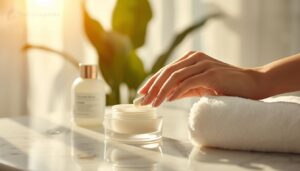
Once your treatments have soaked in, it’s time to lock everything into place. Moisturizer does more than add comfort here, it helps your skin barrier and keeps active ingredients working as intended. Here’s how to pick the right formula and apply it the right way.
Apply Moisturizer to Damp Skin
Timing is everything here: moisturizer works best on damp skin, not dry. Water left on your face after cleansing boosts absorption by up to 30%, so apply within three minutes.
| Skin State | Absorption |
|---|---|
| Damp | Up to 30% more |
| Dry (5+ min) | Reduced sealing |
Pat dry for ten seconds first, locking in hydration before it evaporates.
Gel Formulas for Oily Skin
If your skin leans oily, that damp layer needs to be a gel moisturizer, not a heavy cream. Gel formulas use water-like textures with humectants like hyaluronic acid and glycerin for lightweight hydration without clogging pores.
Look for niacinamide or salicylic acid gel to regulate sebum. Apply a pea-sized amount to your morning skin care routine, letting it absorb to a matte finish.
Cream Formulas for Dryness
Now flip that script for dry skin: you need cream formulas, thicker and richer, built for real hydration. Look for glycerin (a humectant that pulls moisture into skin) plus squalane or shea butter for emollient layering.
These ingredients replenish lipids and reduce water loss, giving your skin barrier the protection it needs to stay soft all morning.
Ceramides for Barrier Support
Your skin’s mortar is ceramides, the lipids holding cells together to lock in hydration.
- Restores barrier strength lost overnight
- Cuts moisture loss for lasting comfort
- Softens rough, tight-feeling patches
- Builds strength against daily stressors
Ceramide NP dominates naturally, so look for it alongside cholesterol. Apply within three minutes of cleansing—hydration jumps 35% in 24 hours, with barrier function improving steadily over weeks.
Choose Non-comedogenic Formulas
Read labels like a detective. Non-comedogenic products skip pore-clogging ingredients—coconut oil, lanolin, petrolatum—that trap sebum underneath your morning moisturizer and sunscreen.
Look for water-based formulas or oil-free moisturizers with silicone emollients like dimethicone; they hydrate without blocking follicles.
The term isn’t FDA-regulated, so also scan for "non-acnegenic" claims and match products to your actual skin type, not just marketing promises.
Step Six: Finish With Sunscreen
Every step you’ve taken this morning sets the stage for this final one, and skipping it undoes the work. Sunscreen isn’t optional, it’s the step that protects everything else you just applied. Here’s what you need to know to get it right.
Choose Broad-spectrum SPF 30

Every product you’ve layered on means nothing without this final shield.
Without sunscreen as the final shield, every skincare step before it means nothing
Broad-spectrum SPF 30 blocks about 97% of UVB rays and covers UVA wavelengths from 320-400 nanometers, guarding against premature aging and hyperpigmentation. Confirm "broad-spectrum" appears on the label.
Use roughly one teaspoon for full-face coverage, and reapply every two hours outdoors, since protection fades with time and sweat.
Mineral Versus Chemical Sunscreen
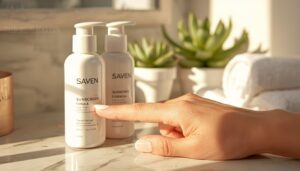
Not all SPF is created equal. Mineral sunscreen (zinc oxide, titanium dioxide) sits on skin, working immediately but often leaving a white cast. Chemical sunscreen absorbs UV rays, feels lighter, but needs 20 minutes to activate.
- Mineral: instant protection, thicker texture
- Chemical: fast-absorbing, delayed activation
- Both offer broad-spectrum coverage
- Non-nano mineral formulas are more environmentally friendly
Choose based on your skin’s needs daily.
Apply Enough Facial Sunscreen

Most people apply half the sunscreen they need. Dermatologists recommend a quarter teaspoon for your face alone, enough to actually hit the labeled SPF number on the bottle.
Skimping drops protection below 50%, no matter how good the formula is. Apply after your moisturizer has settled, pat gently to avoid disturbing layers underneath, and let it set before heading outdoors.
Protect Face Neck Ears

Your face isn’t the only thing catching sun. Sweep sunscreen down your neck and over both ears, spots most people forget entirely.
Mineral formulas with zinc oxide work well here, since they’re gentler on thin, sensitive skin. No sunscreen handy? A wide-brimmed hat or UPF-rated collar covers the gap. Afterward, a light moisturizer keeps neck skin hydrated and soothes any spots that got too much sun.
Reapply During Outdoor Exposure

One morning application won’t carry you all day. Reapply every two hours outdoors, sooner after swimming, sweating, or towel drying.
Water sports call for 30-minute touch-ups; hiking at altitude, every 60. Wind and UV reflection off water strip protection fast, so don’t skip midday reapplication just because you applied early.
Customize Your Routine by Skin Type
The six steps above give you a solid framework, but your skin has its own personality, and it deserves a routine that respects that. What works for oily skin can backfire on dry or sensitive skin, so a few tweaks go a long way. Here’s how to adjust each step based on what your skin actually needs.
Oily and Acne-prone Skin
When oil and breakouts run the show, sebum control becomes your morning priority. Use a gentle gel cleanser, then a salicylic acid toner to shrink pores and treat acne at the source. Follow with an oil-free, non-comedogenic moisturizer, since skipping hydration only triggers more oil. Finish with a lightweight, matte-finish sunscreen.
Dry and Dehydrated Skin
Tightness after cleansing hits 70% of dry-skin types within minutes, so humectant layering matters here. Follow a gentle cleanser with a hydrating serum, hyaluronic acid, and a ceramide moisturizer within three minutes to lock in 40% more water.
Add hydrating facial mists midday, and run a humidifier at night to cut overnight moisture loss by 18%.
Sensitive and Rosacea-prone Skin
Redness is data, not a flaw—track what sets your skin off. Skip fragrance and alcohol; both spike irritation in most sensitive users. Choose a gentle cleanser, then layer niacinamide to calm flushing and rebuild barrier strength.
- A cool, silky mist settling over flushed cheeks
- Zinc oxide sunscreen forming a shield before you step outside
- A ceramide moisturizer softening tight, reactive skin
Combination Skin Routine
Shiny T-zone, dry cheeks? Combination skin needs a dual cleansing technique: gel cleanser with salicylic acid on the forehead and nose, plain water on cheeks. Follow with gel moisturizer, applied damp for hydration balance.
| Zone | Care Focus |
|---|---|
| T-zone | Oil control, non-comedogenic gel |
| Cheeks | Extra hydration, gentle layering |
| Both | Serum, then sunscreen |
| Result | Balanced, calm skin |
Mature Skin Routine
Fine lines and slower cell turnover call for richer support. Layer a 10% copper peptide serum under a moisturizer with 2% retinol for firmness, then add hyaluronic acid for hydration.
Vitamin C brightens overnight damage, while broad-spectrum SPF 30 mineral sunscreen locks it in.
Nighttime repair matters just as much—your skin rebuilds while you sleep.
Top 10 Morning Skin Care Products
Knowing the steps is one thing, but picking the right products for each one is where most people get stuck. You don’t need a cabinet full of options, just a few reliable picks that actually work for your skin. Here are ten products worth adding to your morning lineup.
1. The Beauty of Dirty Skin Book
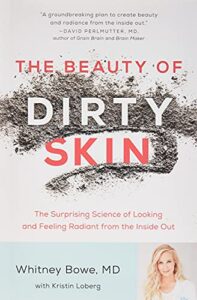
Your morning routine works better when you understand what’s happening beneath the surface, and that’s where The Beauty of Dirty Skin comes in. Written by a dermatologist, this book connects breakouts and dullness to gut health rather than just topical care.
Its 21-day program pairs skincare steps with diet and stress guidance, addressing acne, rosacea, and eczema from the inside out. Think of it as a manual for building routines that actually make sense for your skin.
| Best For | People dealing with acne, rosacea, psoriasis, or eczema who want to understand the root causes of their skin issues rather than just managing symptoms with topical products. |
|---|---|
| Product Type | Book |
| Skin Concern | Overall Skin Health |
| Fragrance Free | N/A |
| Cruelty Free | N/A |
| Dermatologist Tested | N/A |
| Time To Results | 21 Days |
| Additional Features |
|
- Explains the science behind the gut-brain-skin connection in an accessible way
- Provides a structured 21-day program that combines skincare, diet, and stress management
- Focuses on long-term, root-cause solutions instead of quick fixes
- Requires real commitment to a 21-day program, which may not suit those looking for instant results
- Doesn’t offer medical prescriptions, so it may not be enough for more severe skin conditions
- Should be paired with individualized medical advice rather than used as a standalone treatment plan
2. Vichy Normaderm Salicylic Acid Cleanser
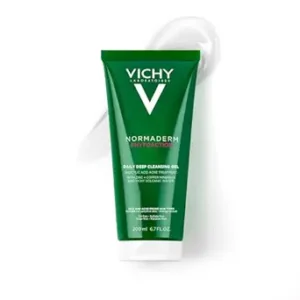
Oily, acne-prone skin needs a cleanser that clears pores without triggering a rebound in oil production, and Vichy’s Normaderm does exactly that. The 0.5% salicylic acid exfoliates inside the pore lining, helping prevent blackheads before they surface.
Zinc and copper minerals work alongside Vichy Volcanic Water to calm inflammation while supporting your skin’s barrier. Its gel texture lathers gently, cleansing without stripping. At $23.00, it’s a solid pick for adults managing breakouts who still want comfortable, non-drying skin.
| Best For | Adults with oily, acne-prone skin who want a gentle, non-drying cleanser to manage breakouts and improve skin texture over time. |
|---|---|
| Product Type | Cleanser |
| Skin Concern | Acne |
| Fragrance Free | No |
| Cruelty Free | N/A |
| Dermatologist Tested | Yes |
| Time To Results | Several Weeks |
| Additional Features |
|
- Contains 0.5% salicylic acid to exfoliate pores and reduce/prevent blemishes
- Soap, sulfate, paraben, and alcohol-free formula that’s dermatologist and allergy tested
- Gel texture lathers into a light foam that cleanses without over-drying skin
- Contains a light fragrance, which may not suit fragrance-sensitive users
- Formulated for oily skin, so it’s not ideal for dry skin types
- Requires consistent, ongoing use before improvements in tone and texture appear
3. Neutrogena Hydro Boost Hydrating Gel Cleanser
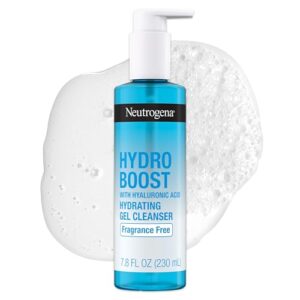
Skin that’s dry but breakout-prone puts you in a tricky spot, and that’s where Neutrogena’s Hydro Boost earns its reputation. Hyaluronic acid and glycerin bind moisture during cleansing, so skin doesn’t feel tight or stripped afterward.
BarrierCare Technology uses micelles to lift away oil and makeup without disrupting your barrier. It’s fragrance-free, non-comedogenic, and clinically shown to improve hydration within four weeks. For sensitive, eczema-prone, or acne-prone skin needing gentle daily cleansing, this gel-to-foam formula delivers reliable comfort.
| Best For | People with dry, sensitive, or acne-prone skin who want a gentle daily cleanser that hydrates without stripping the skin barrier. |
|---|---|
| Product Type | Cleanser |
| Skin Concern | Sensitivity |
| Fragrance Free | Yes |
| Cruelty Free | N/A |
| Dermatologist Tested | N/A |
| Time To Results | 4 Weeks |
| Additional Features |
|
- Hyaluronic acid and glycerin help maintain moisture even during cleansing
- BarrierCare Technology lifts away dirt, oil, and makeup without disrupting the skin barrier
- Free from parabens, sulfates, phthalates, alcohol, and fragrance, making it suitable for sensitive or eczema-prone skin
- Meant for daily use, so it may not be strong enough for occasional deep cleansing
- Best results depend on pairing it with other Hydro Boost products, which adds to the cost
- Full hydration benefits take about four weeks to become noticeable
4. Dickinson’s Original Witch Hazel Toner
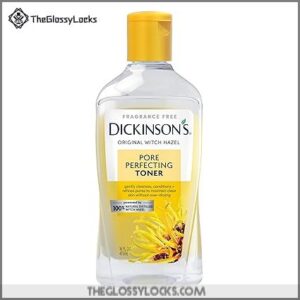
A drugstore staple since your grandmother’s medicine cabinet, this toner uses 100% distilled witch hazel to tighten pores without harsh chemicals. The plant-to-bottle formula skips dyes and unnecessary additives, making it gentle enough for sensitive skin and even expectant mothers.
It refines pores, balances oil, and soothes without that tight, overdried feeling some astringents leave behind. Dermatologist recommended and cruelty-free, it’s a trustworthy pick if you want simple, effective toning without ingredient overwhelm.
| Best For | Anyone with sensitive or acne-prone skin—including expectant mothers—who wants a gentle, no-frills toner to refine pores and balance oil without harsh chemicals. |
|---|---|
| Product Type | Toner |
| Skin Concern | Oiliness |
| Fragrance Free | N/A |
| Cruelty Free | Yes |
| Dermatologist Tested | Yes |
| Time To Results | Immediate |
| Additional Features |
|
- Made from 100% natural distilled witch hazel with no dyes or unnecessary additives
- Gentle enough for sensitive skin and safe for expectant mothers
- Dermatologist recommended and cruelty-free
- Only one bottle included per order
- Packaging design may vary from the images shown
- As a basic toner, it lacks added extras like fragrance or specialized actives found in pricier options
5. Pixi Glow Tonic Glycolic Acid Toner
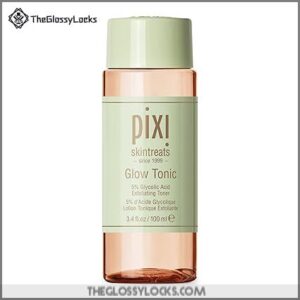
If witch hazel felt too gentle, this toner brings actual exfoliating power. Pixi’s Glow Tonic uses 5% glycolic acid to loosen dead cells and smooth texture, with aloe vera and ginseng added to soothe and invigorate the skin as it works.
For anyone just starting out, a beginner’s guide to facial exfoliators can help you work glycolic acid into your routine safely without over-stripping your skin.
It’s alcohol-free, won’t strip your barrier, and preps skin nicely for serum. Suitable for most skin types, though anyone new to acids should patch test first and watch for sensitivity before making it a daily habit.
| Best For | Anyone wanting a deeper exfoliating toner to smooth texture and brighten skin tone without the harshness of alcohol-based formulas. |
|---|---|
| Product Type | Toner |
| Skin Concern | Texture |
| Fragrance Free | Yes |
| Cruelty Free | Yes |
| Dermatologist Tested | N/A |
| Time To Results | Immediate |
| Additional Features |
|
- Contains 5% glycolic acid to accelerate cell renewal and improve texture
- Alcohol-free formula that soothes with aloe vera and ginseng instead of stripping skin
- Cruelty-free and versatile enough for face, neck, decolletage, or hands
- Contains active acids, so those new to exfoliants should patch test first
- Must avoid the eye area during application
- Requires a follow-up serum or moisturizer to complete the routine
6. Paulas Choice Clear Anti Redness Exfoliating Solution
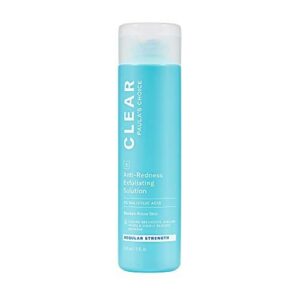
For breakout-prone skin, this leave-on solution swaps glycolic for 2% salicylic acid, a BHA that gets inside the pore lining to clear congestion where physical exfoliants can’t reach.
It’s fragrance-free and blended with soothing allantoin, so it targets post-acne redness without adding irritation. Apply a few drops on a cotton pad after cleansing, morning or night. Start slow though; purging can happen as it clears out impurities, so ease in a few times a week first.
| Best For | People with breakout-prone or sensitive skin dealing with post-acne redness who want a gentle, fragrance-free BHA exfoliant for daily use. |
|---|---|
| Product Type | Treatment |
| Skin Concern | Acne |
| Fragrance Free | Yes |
| Cruelty Free | N/A |
| Dermatologist Tested | N/A |
| Time To Results | Several Weeks |
| Additional Features |
|
- Contains 2% salicylic acid to clear congestion deep within the pore lining
- Fragrance-free formula with soothing allantoin helps calm redness without added irritation
- Lightweight, leave-on texture fits easily into a morning or night routine after cleansing
- Can cause temporary purging as impurities surface, especially when first starting out
- Bottle design is prone to leaking, so it needs extra care when traveling
- Requires consistent use over several weeks before visible improvements show up
7. Olay Super Serum Glow Facial Serum
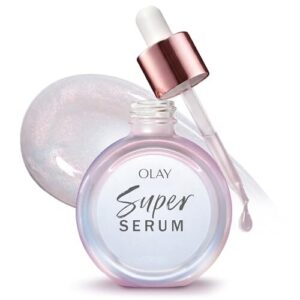
Once your skin calms down, a five-in-one serum like this one earns its spot in the routine.
It combines niacinamide, a stable vitamin C derivative, peptides, hyaluronate, and vitamin E, targeting tone, texture, and firmness at once. The lightweight gel-lotion absorbs fast, without pilling under moisturizer or sunscreen. Most people notice smoother texture within a week, more even tone by week two. Patch test first if you’re fragrance-sensitive.
| Best For | Anyone dealing with uneven tone, rough texture, or early signs of aging who wants one serum to handle brightening, hydration, and firmness instead of layering several products. |
|---|---|
| Product Type | Serum |
| Skin Concern | Aging |
| Fragrance Free | N/A |
| Cruelty Free | N/A |
| Dermatologist Tested | N/A |
| Time To Results | 1 Week |
| Additional Features |
|
- Multi-tasking formula tackles texture, tone, and firmness in a single step
- Lightweight, fast-absorbing feel that layers well under moisturizer or sunscreen
- Visible improvements in texture within a week and tone within two weeks
- Needs consistent daily use to see and maintain results
- Morning application requires pairing with sunscreen for full benefit
- Contains AHA and vitamin C, so those with sensitive skin should patch test first
8. Revitalift Hyaluronic Acid Vitamin C Serum
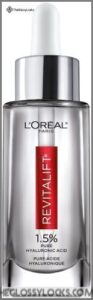
For a simpler two-ingredient approach, this serum pairs dual-weight hyaluronic acid with vitamin C in a lightweight gel that absorbs fast.
The 1.5% hyaluronic acid concentration pulls moisture into the skin’s surface, plumping fine lines while vitamin C works on radiance. It’s fragrance-free and dermatologist tested, making it a safe bet for sensitive or mature skin. A 6-week study backs the wrinkle-reduction claims, though your results depend on skin type. Use it as a hydrating primer under makeup, too.
| Best For | Anyone with dry, sensitive, or mature skin looking for a simple, fragrance-free serum that hydrates and helps soften fine lines. |
|---|---|
| Product Type | Serum |
| Skin Concern | Hydration |
| Fragrance Free | Yes |
| Cruelty Free | N/A |
| Dermatologist Tested | Yes |
| Time To Results | 6 Weeks |
| Additional Features |
|
- Dual-weight hyaluronic acid delivers hydration at multiple depths for a plumper, dewy look
- Fragrance-free, paraben-free formula that’s gentle enough for sensitive skin
- Doubles as a hydrating primer under makeup
- Wrinkle-reduction claims are based on a single 6-week study, so long-term results aren’t guaranteed
- Effectiveness can vary depending on individual skin type
- Radiance and plumping benefits take time to show, not instant results
9. Roc Multi Correxion Eye Cream
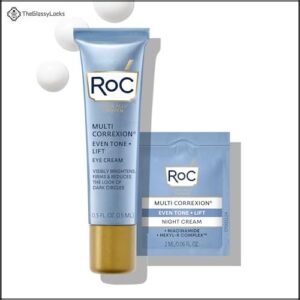
Puffiness and dark circles need targeted care, not just a swipe of your regular moisturizer. This formula leans on hyaluronic acid and sodium hyaluronate to plump the periorbital area, while dimethicone locks in that hydration without feeling heavy under concealer.
Caffeine offers a quick, temporary de-puffing effect, and the peptide combination, including palmitoyl tripeptide-1, works over time on crow’s feet. Apply a rice-grain amount with your ring finger, tapping gently rather than rubbing into this thin, delicate skin.
| Best For | Anyone dealing with puffiness, dark circles, and early crow’s feet who wants a gentle, dermatologist-tested eye cream that layers well under makeup. |
|---|---|
| Product Type | Eye Cream |
| Skin Concern | Aging |
| Fragrance Free | N/A |
| Cruelty Free | Yes |
| Dermatologist Tested | Yes |
| Time To Results | 2-3 Months |
| Additional Features |
|
- Clinically proven to visibly reduce crow’s feet and dark circles
- Non-comedogenic, hypoallergenic, and cruelty-free formula that’s gentle on sensitive skin
- Blends smoothly under concealer and sunscreen without feeling heavy
- Small 0.5 oz size only lasts about 2–3 months with regular AM/PM use
- Must be applied carefully (rice-grain amount) to avoid over-application
- Packaging may differ from what’s shown in product photos
10. Kiehl’s Ultra Facial Hydrating Cream
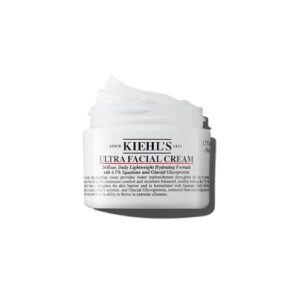
A rich cream doesn’t have to mean clogged pores, and this jar proves it. Squalane and glycerin deliver lightweight hydration lasting up to 24 hours, while apricot kernel oil and shea derivatives shore up your barrier.
The gel-to-cream texture absorbs fast, leaving skin dewy rather than greasy, so it layers well under sunscreen and makeup. Best suited for normal to dry skin, it’s a dependable finish to any six-step morning routine.
| Best For | This cream is best for anyone with dry or eczema-prone skin looking for long-lasting hydration and barrier repair without clogging pores. |
|---|---|
| Product Type | Moisturizer |
| Skin Concern | Barrier Repair |
| Fragrance Free | Yes |
| Cruelty Free | N/A |
| Dermatologist Tested | N/A |
| Time To Results | 1 Hour |
| Additional Features |
|
- Delivers deep hydration that lasts up to 72 hours, thanks to Pro-Ceramides and 4.5% Squalane
- Lightweight, fast-absorbing texture that’s non-comedogenic and fragrance-free
- Doubles as a smooth makeup primer, keeping foundation from settling into fine lines
- Richer texture than Kiehl’s Ultra Facial Moisturizer, so it may feel too heavy for oily skin
- Hydration claims are based on instrumental lab studies rather than everyday use
- Barrier repair takes about an hour, which may not suit those wanting instant relief
Frequently Asked Questions (FAQs)
What is a good skin care routine for the morning?
A good morning routine follows six steps: gentle cleansing, antioxidant serum, targeted treatment, moisturizer, and broad-spectrum SPF 30. Each step builds on the last, protecting your barrier while prepping skin for the day’s environmental stressors.
What is a good morning skin care?
Effective care starts with cleansing on damp skin, layering a vitamin C serum, then locking in hydration with ceramides and hyaluronic acid. Finish with broad-spectrum SPF 30, applied generously, to shield against UV damage and hyperpigmentation.
Can skincare routines cause initial skin purging?
Think of purging like spring cleaning: everything looks messier before it’s tidy. Yes, new actives such as retinoids or salicylic acid can trigger temporary breakouts within 7-14 days as skin cycles out trapped debris faster than usual.
Should pregnant women avoid certain morning ingredients?
Yes. Retinoids, salicylic acid over 2%, and hydroquinone are best skipped during pregnancy. Safer swaps include vitamin C up to 20%, azelaic acid, and peptides — check with your OB before adding any active to your routine.
How often should skincare brushes be cleaned?
Still using last week’s brush on today’s face? Powder brushes need cleaning once or twice weekly, while liquid and cream brushes require daily washing to curb bacteria buildup that clogs pores and triggers breakouts.
Can you mix different skincare brands together?
Mixing brands works fine as long as active ingredients don’t clash and you respect layering order. Patch test new combos first, introduce one product at a time, and check pH compatibility when pairing acids with vitamin C.
Whats the shelf life of opened products?
That half-used bottle judging you from the cabinet? It’s not immortal. Vitamin C serums oxidize within 3 to 6 months, moisturizers last 6 to 12, and sunscreen holds potency for up to 24 months—so check dates, not vibes.
Can I use makeup right after sunscreen application?
Give it two to three minutes before layering makeup. Applying too soon can cause pilling, where product balls up instead of blending smoothly, leaving uneven coverage in spots where sunscreen and foundation gathered together.
How long should a full routine take daily?
Think of your routine like a sunrise: it shouldn’t be rushed or dragged out. Aim for 5 to 7 minutes total, the sweet spot dermatologists say protects your barrier without wasting product or time.
Is it okay to skip moisturizer some mornings?
Yes, occasionally. If your skin feels comfortable, not tight or flaky, you can skip it. But in dry or low-humidity conditions, or if you have dry skin, moisturizer helps prevent that stripped, uncomfortable feeling by day’s end.
Conclusion
Your skin has waited a thousand mornings for someone to finally show up on time, every single time. That’s the whole secret.
A daily morning skin care routine isn’t glamorous, but it’s consistent, and consistency is what calms reactive skin into a steady, predictable rhythm.
Cleanse, treat, moisturize, protect: six steps, done right, beat ten random products every single time.
Master the order, stay patient, and your skin will finally learn to trust you back.