This site is supported by our readers. We may earn a commission, at no cost to you, if you purchase through links. This content is for general informational and educational purposes only and is not a substitute for professional medical, dermatological, or nutritional advice.

Hair on the shower floor. Thinning at the part line. Photos that look harsher than the mirror.
For many people, hair loss sneaks up, then starts to feel like it runs the day.
Pills and foams demand strict routines, and clinic treatments mean bills, travel, and time you lack.
Laser caps shift that pattern by moving medical‑grade light therapy onto your couch, your commute, your desk.
The right device can fit your schedule, your budget, and your goals.
Here’s how to find the best laser cap for hair loss while skipping weak gadgets that overpromise.
Table Of Contents
- What is a Laser Cap for Hair Loss?
- How Laser Therapy Stimulates Hair Growth
- Key Benefits of Laser Caps for Hair Loss
- Top 5 Best Laser Caps for Hair Loss
- Comparing Laser Cap Features and Technology
- Clinical Evidence and Effectiveness of Laser Caps
- How to Use a Laser Cap for Best Results
- Potential Side Effects and Safety Considerations
- Customer Reviews and Satisfaction Insights
- Choosing The Right Laser Cap for Your Needs
- Frequently Asked Questions (FAQs)
- Does laser therapy for hair loss really work?
- How long does it take to see results with LLLT?
- Are there any side effects to LLLT?
- Can I use LLLT with other hair loss treatments?
- What kinds of hair loss can LLLT treat?
- Do laser caps really help with hair loss?
- Can you get laser hair removal with Hashimoto’s?
- How long does laser hair growth treatment last?
- Is laser hair growth permanent?
- Do laser combs work for hair growth?
- Conclusion
What is a Laser Cap for Hair Loss?
A laser cap is a wearable device that uses light energy to stimulate your hair follicles and encourage regrowth.
For a deeper look at how these cap-style lasers fit into a full regrowth routine, explore expert-reviewed hair loss remedies and laser cap options for women.
It’s a hands-free, non-invasive option you can use at home without a prescription.
Here’s what you need to know about how they work, the technology behind them, and whether it’s right for you.
How Laser Caps Work
Laser caps use Low-Level Laser Therapy to send red light — at 650nm — into your scalp. Chromophore Absorption happens when follicle cells take in that light energy. This triggers Nitric Oxide Displacement inside the mitochondria, unlocking oxygen flow and boosting ATP. That’s Mitochondrial Activation at work.
Pulsed Light Mechanics keep heat out while Energy Density Distribution covers your full scalp evenly.
The 118 Laser Cap boosts circulation improves blood flow to the scalp, supporting follicle health.
Types of Laser Cap Technology
You know LLLT works through Photobiomodulation; now you need the main build types that run Low‑Level Laser Therapy using different laser diodes and LED setups:
- Single‑wavelength diodes at 650 nm for steady LLLT.
- Multi‑wavelength systems adding near‑infrared depth for deeper follicles.
- DOT‑matrix layouts for Power‑density optimization across your scalp.
- Flexible fabric beanies focusing coverage, comfort, and cooler sessions at home.
For best results, choose FDA‑cleared LLLT devices.
Who Should Use Laser Caps
From those device types, the best fit is adults with Early-stage thinning who still see scalp coverage.
You’re a match if you want a Drug‑free seekers path, prefer a hands‑off Laser Cap Hair Loss Solution, or use Laser Therapy for Hair Loss alongside topicals.
It also suits Postpartum shedding, Non‑scarring alopecia, and Photosensitivity safe under LowLevel Laser Therapy Baldness Treatment.
How Laser Therapy Stimulates Hair Growth

Now that you know what laser cap is, it helps to understand what the light is actually doing to your hair follicles.
In this next part, we’ll look at how low-level laser therapy works, how it affects follicle health, and how long results usually take. That way you know what to expect as you compare different laser cap options.
Low-Level Laser Therapy (LLLT) Explained
LLLT works by sending low-power red light — usually between 630 nm and 670 nm — directly into your scalp. Your laser cap delivers a safe power density of around 3 to 90 mW/cm², enough to trigger follicle stimulation without heat or damage.
FDA-cleared and backed by consistent safety standards, this laser hair therapy requires just three sessions weekly to keep your hair cycle moving forward.
Photobiomodulation and Hair Follicle Health
When you hear Photobiomodulation, think quiet Hair Follicle Stimulation inside your scalp.
Laser Caps act on mitochondria, raising Mitochondrial ATP so follicles work harder. That same light drives Stem Cell Activation, a Blood Flow Boost, and Inflammation Reduction.
Together, Laser Hair Growth Caps and similar Hair Growth Devices nudge Wnt Signaling to keep more follicles in growth for thicker coverage.
Expected Results Timeline
Early Shedding hits first — expect mild hair fall for 2 to 6 weeks. Don’t panic; it’s normal.
Stabilization Phase follows around weeks 4 to 8.
Initial Regrowth appears by month 3 to 6 as soft baby hairs.
Density Gains build through month 12.
Maintenance Timeline keeps those results.
Laser Hair Growth Caps work — but only if you stay consistent.
Key Benefits of Laser Caps for Hair Loss

Laser caps bring a lot to the table beyond just stimulating hair follicles. They fit into real life in ways that other treatments simply don’t.
Here’s what makes them worth your attention.
Non-Invasive Treatment Advantages
Think of Non‑Invasive Hair Growth as a calm, quiet fix in your Hair Loss Treatment Options.
Laser Hair Growth Caps give Pain‑Free Sessions with No Scalp Damage and Low Infection Risk, since the skin is never cut.
You treat at home for real Home Convenience.
FDA‑cleared designs, plus strong Laser Cap Reviews, also mean No Hormonal Effects to track closely.
Suitable Hair Loss Conditions
Laser caps work best for specific conditions. Androgenetic Alopecia — including Male Pattern Baldness — is the primary indication, especially during Early Thinning before follicles are lost.
Telogen Effluvium may respond with supportive use.
Traction Alopecia and Alopecia Areata are possible, but only as add-ons.
Among Alopecia Treatment Options and Hair Loss Treatment Options, don’t expect a Baldness Cure if scarring has already replaced your follicles.
Ease of Use and Comfort
You want Hair Growth Devices that feel simple, so most Laser Caps focus on Quick Session Start and calm Scalp Care.
- User‑Friendly Interface with one button and preset times.
- Adjustable Foam Pads for stable, soft fit.
- Battery‑Free Mobility on wired units; battery packs for walking.
- Silent Operation Mode for relaxed, non‑invasive therapy.
Product Reviews and Ratings often praise this ease.
Top 5 Best Laser Caps for Hair Loss
Now let’s look at the laser caps that stand out most in 2026. I’ll walk you through five leading options that real users and clinics rely on.
Here’s a quick overview of each so you can see which one fits you best.
1. Theradome PRO Laser Hair Growth Helmet
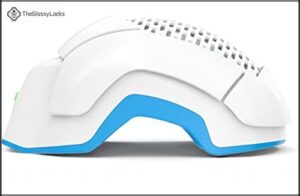
Theradome PRO LH80 isn’t cutting corners. It uses 80 medical-grade laser diodes — zero LEDs — each emitting light at exactly 678 nanometers to reach your follicle stem cells 3 to 5 millimeters deep.
Sessions run just 20 minutes, twice weekly, with automatic shutoff so you don’t have to watch the clock.
FDA-cleared since 2018, it fits 98% of adult heads and weighs under a pound.
At $995, it’s an investment — but one backed by 2,500 hair restoration clinics worldwide.
| Best For | Anyone dealing with hair loss or thinning who wants a clinically backed, hands-free solution they can use at home without frequent salon visits. |
|---|---|
| Therapy type | Advanced low-level laser therapy |
| FDA status | FDA-cleared hair device |
| Target users | Men and women |
| Power source | Rechargeable Li-ion battery |
| Primary concern | Hair loss and thinning |
| Usage setting | At-home hands-free use |
| Additional Features |
|
- 80 real laser diodes (no LEDs) means you’re getting actual medical-grade light therapy, not a watered-down version
- FDA-cleared and trusted by 2,500 hair restoration clinics — the credibility is there
- 20-minute sessions with auto shutoff make it genuinely easy to stick with
- $995 is a big ask upfront, especially when results take consistent, long-term use to show
- You have to commit to at least twice a week — skip sessions and you’re likely leaving results on the table
- Like any device, it can run into technical issues over time, and battery replacement adds to the long-term cost
2. iHelmet Laser Hair Growth System
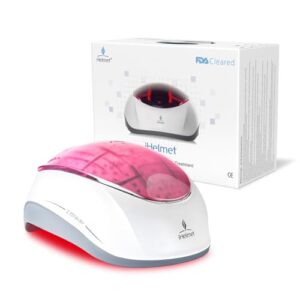
If budget is holding you back from the Theradome, the iHelmet delivers serious technology at a lower price point.
It runs 200 medical-grade laser diodes at 650nm — no LEDs, just pure laser energy reaching your follicles directly.
Sessions are 30 minutes, three times weekly.
The patented ASE system keeps energy output stable throughout each session.
At under 1.25 pounds, it’s genuinely lightweight.
A six-month money-back guarantee means you’re not taking a blind leap.
| Best For | Anyone looking for an affordable, FDA-cleared hair regrowth solution without committing to expensive treatments or implants. |
|---|---|
| Therapy type | Low-level laser therapy (LLLT) |
| FDA status | FDA-cleared hair device |
| Target users | Men and women |
| Power source | Rechargeable battery |
| Primary concern | Hair loss and thinning |
| Usage setting | At-home hands-free use |
| Additional Features |
|
- FDA cleared for hair regrowth, so it’s not just another gadget making empty promises
- Works for both men and women, and you can use it while going about your day
- Rechargeable with voice prompts and auto shut-off — pretty easy to build into a routine
- May not reach the temples or under thicker, longer hair very well
- The front button can be a bit tricky to use
- Results aren’t guaranteed — some people may not see much difference at all
3. PUPCA Medical Laser Hair Growth Cap
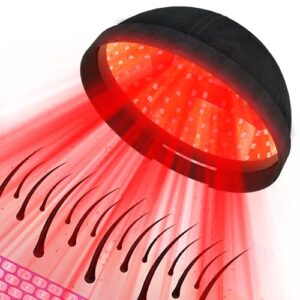
Step down in price, not in results.
The PUPCA cap runs 82 medical-grade laser diodes at 650nm — enough to cover your full scalp with distributed light.
Sessions are 30 minutes every other day, and the device shuts off automatically when your time’s up.
It’s FDA-cleared for androgenic alopecia in both men and women with skin phototypes I–IV.
A 6-month return policy is included.
At 2.12 pounds, you’ll barely notice it’s there.
| Best For | Men and women with early-to-moderate androgenic alopecia or thinning hair (skin phototypes I–IV) who want an FDA-cleared, full-coverage laser cap they can use at home on a set 30-minute schedule. |
|---|---|
| Therapy type | Low-level laser therapy (LLLT) |
| FDA status | FDA-cleared hair device |
| Target users | Men and women |
| Power source | Wired power only |
| Primary concern | Hair loss and thinning |
| Usage setting | At-home seated use |
| Additional Features |
|
- FDA-cleared low-level laser therapy with 82 medical-grade diodes at 650nm for full-scalp coverage.
- Simple routine (30-minute sessions, every other day) with automatic shutoff, so it’s easy to stay consistent.
- Designed for both men and women, with an adjustable fit and a 6-month return policy if it doesn’t work out.
- Must be plugged in during use (no battery option), which can limit where and how you use it.
- Needs long-term, consistent use over many weeks, and results can vary from person to person.
- Can get warm during sessions and is only indicated for skin phototypes I–IV, so it’s not ideal for everyone.
4. Aphrona FDA Cleared Laser Hair Growth Cap
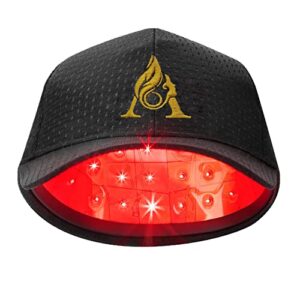
If you liked the PUPCA’s coverage, Aphrona pushes it further. This cap uses 272 true laser diodes at about 650 nm, spread across the whole shell for full‑scalp exposure.
You wear it 30 minutes, three times a week; it shuts off on its own.
It’s FDA‑cleared as a Class II device for men and women with pattern thinning, including postpartum shed.
A rechargeable battery pack, travel bag, and under‑hat fit keep your sessions hands‑free anywhere.
Set it and forget it.
| Best For | Men and women with thinning hair who want an easy, at‑home, hands‑free laser cap they can wear a few times a week while they go about their day. |
|---|---|
| Therapy type | Low-level laser therapy (LLLT) |
| FDA status | FDA-cleared hair device |
| Target users | Men and women |
| Power source | Rechargeable battery |
| Primary concern | Hair loss and thinning |
| Usage setting | At-home hands-free use |
| Additional Features |
|
- 81 lasers and full‑scalp coverage, plus an automatic timer, give you consistent, targeted treatment without having to think about it.
- Hands‑free, rechargeable, and portable design makes it simple to use while working, watching TV, reading, or relaxing.
- Non‑invasive, pain‑free, drug‑free, and FDA cleared, so it’s a low‑effort option for improving hair density and reducing shedding.
- You need to commit to using it three times a week for 30 minutes, and results usually take 12–24 weeks to show up.
- Doesn’t work for everyone, and some users report it stopped helping or had issues like battery or LED malfunctions over time.
- High upfront cost at around USD 449.00, which can feel steep given the mixed results and ongoing time commitment.
5. iRestore Professional Hair Growth Laser Cap
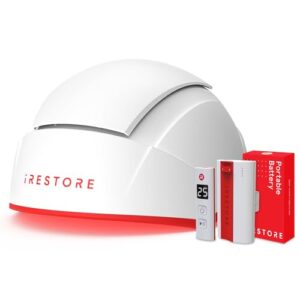
The iRestore Professional takes a different approach — combining 82 true lasers with 200 LEDs for 282 light sources total.
That hybrid setup delivers 1,410 milliwatts of output across your entire scalp, hitting the hairline, crown, and temples in one 25‑minute session every other day.
It’s FDA‑cleared, hands‑free, and fits most adult heads comfortably.
At $687.20, it’s an investment — but the six‑month money‑back guarantee means you’re not risking much to find out if it works for you.
| Best For | Men and women dealing with hair thinning or early-to-moderate hair loss who want a hands-free, at-home, FDA-cleared laser cap they can use consistently a few times a week. |
|---|---|
| Therapy type | Laser and LED light therapy |
| FDA status | FDA-cleared hair device |
| Target users | Men and women |
| Power source | Rechargeable battery pack |
| Primary concern | Hair loss and thinning |
| Usage setting | At-home hands-free use |
| Additional Features |
|
- 282 total light sources (82 lasers 200 LEDs) for full scalp coverage, including hairline, crown, and temples.
- Hands-free, comfortable, ventilated design with a rechargeable battery pack, so you can move around while treating.
- FDA-cleared and can be used alongside your existing hair care routine to support thicker, fuller-looking hair over time.
- Expensive at about USD 687.20, so it’s a big upfront investment.
- Results are slow and not guaranteed—can take 3–6 months to see changes and may not work for everyone.
- Some users report initial shedding, plus mixed experiences with customer service, refunds, and warranty claims.
Comparing Laser Cap Features and Technology
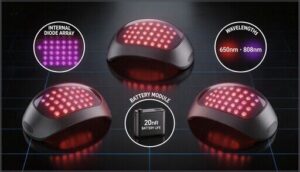
Not all laser caps are built the same, and the differences matter more than you’d think.
Three features in particular separate a cap that produces outcomes from one that just looks the part.
Here’s how the top models stack up.
Number of Laser Diodes
Diode density levels matter more than most people realize.
Entry-level laser caps carry 80–120 laser diodes, handling early thinning and scalp spot treatment well.
Mid-range hair growth devices offer 150–200 diodes for better coverage uniformity across moderate loss.
High-density caps with 250-plus diodes increase energy per diode distribution for full scalp hair regrowth.
Device cost scaling rises with diode count — more diodes means broader, more consistent hair loss treatment coverage.
Battery Life and Portability
Battery Capacity shapes how freely you can use laser caps day to day. Most wireless hair growth devices run 15–30 minute sessions on a single charge.
Strong Charging Speed means less downtime between uses. Travel-Friendly Design lets you keep up your routine anywhere.
Session Duration Flexibility matters — NonInvasive Hair Growth only works when you stay consistent with Laser Hair Growth Technology.
Comfort and Fit
When you wear Laser Caps daily, comfort matters for real use. Look for a Lightweight Shell with ventilation and Breathable Fabric to limit heat.
An Adjustable Headband and Secure Fit Straps help even Scalp Pressure Distribution and better scalp care.
In any Hair Growth Devices Review for NonInvasive Hair Restoration, you should check padding, size range, and liner feel first.
Clinical Evidence and Effectiveness of Laser Caps

The science behind laser caps isn’t just marketing — real clinical research backs it up. Knowing what the studies say helps you choose a device you can actually trust.
Here’s what the evidence shows.
Research Studies on Hair Regrowth
The clinical record behind laser caps is solid. Randomized comparative trials show LLLT and photobiomodulation consistently outperform sham treatment across meaningful sample sizes.
Clinical trials consistently prove laser caps and photobiomodulation outperform sham treatment across real, meaningful sample sizes
- Hair density increased ~41.9 hairs/cm² after 16 weeks of consistent use
- Statistical significance confirmed in multiple study designs favoring hair growth devices
- Long-term follow-up shows results plateau after months — sustained use matters
Your results depend on how reliably you show up.
FDA Clearance and Safety
FDA clearance isn’t just a sticker — it’s proof a device works and won’t harm you.
Every cleared laser cap passes the 510(k) process as a Class II device, meeting strict laser safety standards and ISO 13485 compliance.
| Feature | Detail |
|---|---|
| Device Classification | Class II, 21 CFR 890.5500 |
| Clearance Type | FDA-cleared 510(k) |
| Therapy Type | LLLT, non-invasive therapy |
| Contraindication Guidelines | Scalp cancer, active infections |
| Hair Loss Prevention Scope | Norwood IIa–V, Ludwig I–II |
How to Use a Laser Cap for Best Results
Getting the most from your laser cap comes down to how consistently you use it.
A few simple habits — like sticking to the right schedule and pairing it with other treatments — can make a real difference in your results.
Here’s what you need to know to get it right.
If you’re new to the technique, this guide to co-washing and how it works for your hair breaks down the basics in plain, practical terms.
For a deeper breakdown of which options are backed by real evidence, this guide to essential oils for faster hair growth covers the clinical research, including rosemary oil’s head-to-head results against minoxidil.
Skip the heavy wax and sticky gels, and instead pick a lightweight matte clay or sea salt spray to keep texture natural and washing out simple, especially if you’re rocking one of these medium-length hairstyles for men.
Treatment Frequency and Duration

Most laser caps work best with 3–4 weekly sessions during the early phase, each lasting 20–30 minutes.
Think of it like building a habit — consistency drives results.
After 3–6 months of LLLT, your maintenance phase drops to once or twice weekly.
Skipping sessions delays hair regrowth, so stick to your device’s schedule for laser hair restoration that actually holds.
Combining Laser Caps With Other Treatments
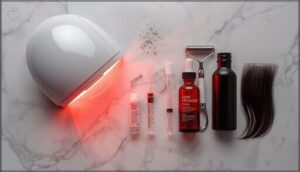
Consistency gets you started — but pairing your cap with other tools accelerates results.
Minoxidil Pairing is one of the most studied Hair Regrowth Solutions: combining topical 5% minoxidil with FDA‑cleared Red Light Therapy can boost density 15–25 hairs/cm² over 24 weeks.
Finasteride Integration targets DHT systemically while your cap works locally.
PRP Synergy, Microneedling Boost, and Shampoo Compatibility with ketoconazole all support Hair Growth Stimulation Techniques without conflict.
Maintenance for Ongoing Hair Growth

Once you’ve hit your regrowth goals, don’t stop — scale back.
Most laser caps users shift to one or two sessions weekly after six to twelve months.
Lock in Session Scheduling on fixed evenings for easy Compliance Tips.
Support Scalp Health with regular washing and Scalp Hydration.
Use Progress Monitoring photos every few weeks.
Pair this NonInvasive Therapy with steady Lifestyle Habits and your Hair Growth Stimulation results hold.
Potential Side Effects and Safety Considerations
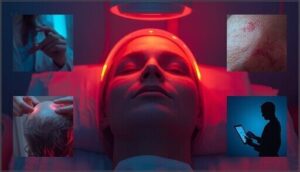
Laser caps are generally safe, but like any treatment, there are a few things worth knowing before you start. Most people tolerate them well — though some do experience minor reactions, and certain conditions make them a poor fit.
Here’s what to keep in mind.
Common Side Effects
Side effects with Laser Caps are usually mild. You may see brief scalp redness or warmth after a Scalp Treatment with LLLT or Light Therapy.
Temporary shedding often appears in the first weeks, then settles.
Some users notice Headache discomfort, Skin pigment changes, or Photosensitivity risks, especially with sensitive skin or Hair Loss drugs, so you should monitor your scalp.
Who Should Avoid Laser Caps
Not everyone is a good fit for laser caps.
If you have a Skin Cancer History on your scalp, active Seizure Disorders triggered by light, or Immune System Issues from chemotherapy or biologics, avoid these devices.
Pregnancy Contraindications apply too.
Photosensitivity Risks from certain medications also rule out use.
Always check FDA-cleared labeling for specific exclusions before starting any Hair Loss treatment.
When to Consult a Doctor
See a doctor if you notice Sudden Patchy Loss, circular bald patches, or rapid thinning — these may signal alopecia areata rather than Androgenetic Alopecia.
Scalp Irritation that lingers, Medication Interactions with photosensitizing drugs, or Pregnancy Contraindications all warrant medical clearance before using any FDA-cleared device.
If six months of consistent use brings no improvement, explore other Hair Restoration Methods with a specialist.
Customer Reviews and Satisfaction Insights

Real users have a lot to say about laser caps — and the numbers back them up.
From shipping speed to warranty support, satisfaction often varies more than you’d expect.
Here’s what customers across the top brands are actually reporting.
User Ratings Across Brands
Looking at Product Reviews and Ratings, you want clear patterns, not hype.
- Star Distribution shows Laser Caps are rarely perfect.
- Review Volume is highest for Hair Growth Products.
- Rating Consistency stays near 4–4.5 stars.
- Customer Demographics skew to adults fearing thinning.
- Feedback Themes in Independent Reviews cite steady gains over months with regular cap sessions.
Shipping and Delivery Experiences
Shipping and Delivery Options vary by brand. Most U.S. orders ship within 1–3 days. Express Shipping gets your cap fast. Standard Shipping takes 2–7 days. International Delays are common due to customs. Packaging Protection keeps devices safe in transit. Signature Requirements apply with some carriers. Independent Reviews, Product Reviews, and Ratings confirm that Return Logistics can include fees.
| Feature | Domestic | International |
|---|---|---|
| Shipping Speed | 1–7 business days | 7–14 business days |
| Shipping Cost | Often free | ~$55 USD |
| Return Logistics | Flat fee applies | Customer pays both ways |
After-Sales Support and Warranty
Strong after‑sales support protects your investment long after you buy the cap.
Check Warranty Registration steps, Coverage Duration, any Money‑Back Guarantee, and what a brand actually does for this FDAcleared, NonInvasive Treatment.
Confirm Support Channels, the Repair Process, and whether Shipping and Delivery Options like Express Shipping or Standard Shipping add extra costs or limit returns for you in the long term.
Choosing The Right Laser Cap for Your Needs

Now it’s time to find a laser cap that actually fits your life.
Below, you’ll see the key points to check before you buy. Use this as a quick guide as you compare the different options.
Factors to Consider Before Buying
Not all laser caps are built the same. Check the diode count — devices with 200+ diodes offer fuller scalp coverage.
Confirm the wavelength range sits between 630–680 nm for effective LLLT. Verify FDA-cleared status, fit adjustability, and battery capacity for your routine.
Choosing a non-invasive treatment backed by real specs means your light therapy investment actually works.
Budget and Warranty Options
Budget is your guardrail here, not an afterthought. Use a simple Price Tier Comparison: entry Laser Caps around 200–400 USD, mid‑range 500–1,200 USD, premium 1,500–3,000 USD for stubborn Hair Loss and Hair Regrowth goals.
- Check Warranty Length Variations and fine print.
- Confirm Money‑Back Guarantee Terms and fees.
- Weigh Extended Warranty Costs against repair risk.
- Factor Shipping Cost Impact, 5‑Star Express Shipping.
Where to Purchase Reputable Devices
Once your budget’s set, buy only from Official Brand Websites or Authorized Retailers.
Sites like irestorelaser.com and capillus.com protect your warranty and Hair Regrowth guarantee.
Many FDA-cleared Laser Caps qualify for HSA/FSA Eligibility through Truemed.
International Shipping is available via Capillus Australia and Theradome UK.
Avoid third-party sellers — Counterfeit Risks are real, with fake LLLT devices causing scalp burns and zero Hair Loss results.
Frequently Asked Questions (FAQs)
Does laser therapy for hair loss really work?
Yes, it does. LLLT and Red Light Therapy show real Hair Regrowth results — clinical success rates confirm increased hair density after consistent use. User adherence impact matters most.
How long does it take to see results with LLLT?
Most people notice less daily shedding within 4–8 weeks. The Early Shedding Phase and Stabilization Period come first.
Real Hair Regrowth shows at the Three‑Month point, with fuller results by Six‑Month Growth.
Are there any side effects to LLLT?
About 10% of users report Scalp tingling with LLLT and Red Light Therapy Laser Caps for Hair Regrowth Therapy and Hair Loss.
Effects include Headache risk, Photosensitivity reactions, Eye safety issues, and Contraindications needing review.
Can I use LLLT with other hair loss treatments?
Yes, you can. LLLT pairs well with minoxidil, finasteride, PRP integration, and microneedling pairing — each targeting hair restoration differently. Combined use usually improves results without added safety risks.
What kinds of hair loss can LLLT treat?
LLLT treats Androgenetic Alopecia and Male Pattern Baldness Solutions, can aid Telogen Effluvium, early Alopecia Areata, and Chemotherapy‑Induced Alopecia, offers limited help in Scarring Alopecia, and acts as a supportive Alopecia Treatment for Hair Loss.
Do laser caps really help with hair loss?
Laser caps do help with hair loss. Clinical efficacy data shows 10–20% hair density gains in 16–26 weeks. User adherence matters most. Consistent LLLT sessions drive real hair restoration results.
Can you get laser hair removal with Hashimoto’s?
laser hair removal
Like crossing a bridge, you have laser hair removal with Hashimoto’s if Thyroid Safety, Hormone Monitoring, Skin Sensitivity, Medication Interactions, and Treatment Scheduling are checked.
Hair Loss care
Hair Loss care includes Laser Caps, LLLT, Red Light Therapy, Laser Hair Growth.
How long does laser hair growth treatment last?
Results from laser hair growth treatment aren’t permanent.
Most people need 6–12 months of consistent LLLT to see real gains, then ongoing maintenance sessions to keep them. Stop and hair loss slowly returns.
Is laser hair growth permanent?
Can laser hair growth be permanent?
Laser Caps LLLT and Red Light Therapy improve result longevity, but dependency on ongoing use means Post‑Treatment Shedding and follicle revival limits, resulting in lower comparative permanence than hair restoration techniques.
Do laser combs work for hair growth?
Yes, they do work. LLLT combs stimulate hair growth using red light therapy, similar to laser caps. Clinical trials show a 20–26 hair per cm² increase after 26 weeks of consistent use.
Conclusion
Hair loss doesn’t have to keep shedding your confidence.
Finding the best laser cap for hair loss means matching diode count, session time, and budget to your actual routine—not someone else’s.
Consistent use matters more than brand loyalty.
Start with an FDA-cleared device, stick to the schedule, and track your progress monthly.
Real results grow quietly, the same way hair does—slowly, then undeniably.
You’ve got the tools. Now let them work.