This site is supported by our readers. We may earn a commission, at no cost to you, if you purchase through links. This content is for general informational and educational purposes only and is not a substitute for professional medical, dermatological, or nutritional advice.

Rosacea and scrubs don’t mix. Grab a walnut-shell scrub and you’re basically sanding a sunburn. Your skin flares, stings, and takes days to calm back down.
That’s where fruit enzymes come in. Papaya and pineapple contain natural enzymes that dissolve dead skin cells instead of scraping them off, so you get smooth skin without the friction. It’s the difference between coaxing a lock open and kicking down the door.
A good gentle enzyme exfoliator for rosacea clears buildup, boosts glow, and skips the redness rebound. Ahead, you’ll find nine dermatologist-reviewed picks that prove gentle and effective aren’t opposites.
Table Of Contents
- Key Takeaways
- Top 9 Rosacea Exfoliator Options Reviewed
- 1. Pharmagel Firma Derm Face Body Moisturizer
- 2. Cetaphil Redness Relieving Foaming Face Wash
- 3. DERMA E Gentle Enzyme Peel Brightening Exfoliator
- 4. Dermalogica Daily Microfoliant Brightening Powder
- 5. Paula’s Choice 2% BHA Liquid Exfoliant
- 6. Manuka Honey Exfoliating Facial Scrub
- 7. No7 Microdermabrasion Total Renewal Face Scrub
- 8. Cetaphil SA Gentle Exfoliating Face Wash
- 9. Sesderma AZELAC RU Liposomal Facial Serum
- How We Evaluated Rosacea Exfoliators
- Can Rosacea Skin Be Exfoliated?
- Enzyme, BHA, and Physical Exfoliants Compared
- Rosacea-Safe Ingredients to Seek and Avoid
- Choosing Your Gentle Enzyme Exfoliator
- How to Exfoliate Rosacea Safely
- Build a Barrier-Friendly Weekly Routine
- Frequently Asked Questions (FAQs)
- What is a good gentle exfoliator for a face with rosacea?
- What is a safe exfoliant for rosacea?
- What is the best enzyme exfoliant for the face?
- What do Koreans use for rosacea?
- How long should enzyme exfoliators sit before rinsing?
- Can I use retinol and enzyme exfoliants together?
- What time of day is best for exfoliating?
- How soon will redness improve after starting exfoliation?
- Are enzyme exfoliators safe during pregnancy or breastfeeding?
- Conclusion
Key Takeaways
- Fruit enzymes like papain (papaya) and bromelain (pineapple) dissolve dead skin cells gently, making them a much safer bet than gritty scrubs for rosacea-prone skin.
- Always patch test a new exfoliator on your inner arm first, then start with just once-weekly use and short 5-10 minute contact times before working up slowly.
- Skip exfoliating altogether if you have open wounds, a sunburn, active breakouts, or a compromised skin barrier, since these signs mean your skin needs rest, not more product.
- A solid rosacea routine pairs gentle enzyme exfoliation with barrier-supporting hydrators like hyaluronic acid and ceramides, plus daily SPF 30+ sunscreen to protect freshly treated skin.
Top 9 Rosacea Exfoliator Options Reviewed
Rosacea skin needs products that exfoliate without a fight. You don’t have to guess which ones actually play nice with sensitive, reactive skin. Here are nine options worth putting on your radar.
Pairing these gentle exfoliants with a well-chosen alcohol-free toner for sensitive skin can round out a rosacea-friendly routine that calms rather than provokes.
1. Pharmagel Firma Derm Face Body Moisturizer
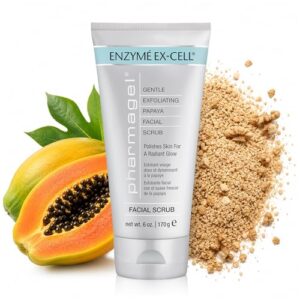
Reach for this one when your skin needs comfort, not just cleanup. Pharmagel Firma Derm blends aloe vera, vitamins A, C, and E, plus Ginkgo Biloba to hydrate face and body without stinging.
It’s not a scrub, it’s more of a gentle daily lotion that helps your skin barrier while calming redness. Apply to damp skin after showering. The antioxidants help fend off environmental stress, a nice bonus for reactive, rosacea-prone complexions craving softness and balance.
| Best For | People with dry or rosacea-prone skin who want a lightweight, hydrating lotion for both face and body. |
|---|---|
| Skin Type | Dry Skin |
| Fragrance | Unscented Claim Not Stated |
| Exfoliation Type | None |
| Format | Lotion |
| Cruelty-Free/Clean Claims | Not Stated |
| Key Concern Addressed | Hydration |
| Additional Features |
|
- Contains vitamins A, C, and E plus botanical ingredients to support skin health
- Absorbs quickly without leaving a greasy residue
- Lightweight formula that works well for dry skin types
- Some users notice the texture becoming drier or cement-like over time
- Envelope-style packaging can leak or get damaged during shipping
- The price has risen significantly, which may affect its overall value
2. Cetaphil Redness Relieving Foaming Face Wash
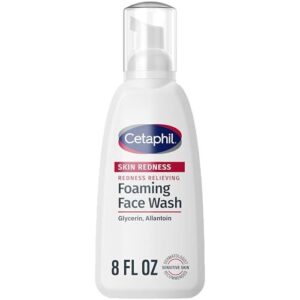
Once your skin has soaked up that moisture, it’s time to talk cleansing. Cetaphil Redness Relieving Foaming Face Wash uses a rich, fragrance-free foam to lift dirt and makeup without stripping skin. Glycerin hydrates while allantoin calms irritation as you wash.
It’s gentle enough for daily use, morning and night. Massage onto damp skin, rinse with lukewarm water. Some users report mixed results with redness, and the pump can stick, but the formula itself stays non-drying and non-comedogenic.
| Best For | This face wash is best for people with sensitive, redness-prone, or rosacea-prone skin who want a gentle daily cleanser that helps calm irritation. |
|---|---|
| Skin Type | Sensitive/Redness-Prone |
| Fragrance | Contains Fragrance |
| Exfoliation Type | None |
| Format | Foaming Cleanser |
| Cruelty-Free/Clean Claims | Dermatologist Tested |
| Key Concern Addressed | Redness |
| Additional Features |
|
- Formulated with licorice extract, allantoin, and caffeine to soothe redness
- Instant foaming action cleanses without over-drying
- Non-comedogenic and dermatologist tested for sensitive skin
- Contains fragrance that some users find unpleasant or irritating
- Pump mechanism may malfunction or stick after repeated use
- Mixed user reports on effectiveness for redness relief, with some noting dryness or breakouts
3. DERMA E Gentle Enzyme Peel Brightening Exfoliator
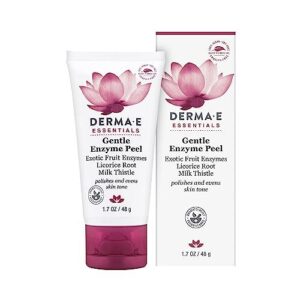
Once you’ve cleansed, it’s time for a deeper reset. DERMA E Gentle Enzyme Peel pairs papain and bromelain, enzymes from papaya and pineapple, to dissolve dead skin without scrubbing.
Licorice root and milk thistle work to brighten tone, while jojoba oil and hyaluronic acid keep skin hydrated. Apply a thin layer once weekly after cleansing, massage gently, rinse.
Texture can feel sticky for some users, and it works best on dry skin, not wet.
| Best For | Anyone looking to gently resurface dry, dull skin and even out their tone using a fruit-enzyme exfoliator instead of a harsh physical scrub. |
|---|---|
| Skin Type | Rosacea-Prone |
| Fragrance | Not Stated |
| Exfoliation Type | Enzyme |
| Format | Gel/Cream |
| Cruelty-Free/Clean Claims | Vegan/Cruelty-Free |
| Key Concern Addressed | Texture/Brightening |
| Additional Features |
|
- Papaya and pineapple enzymes dissolve dead skin cells without abrasive scrubbing
- Milk thistle and licorice root help brighten and even out skin tone
- Aloe, mint oils, and mugwort extract soothe skin and support the skin barrier
- Some users notice a sticky or gooey texture during application
- Works best on dry skin, so it’s less effective if applied to wet skin
- A few reports of inconsistent, chunky gel texture in older batches
4. Dermalogica Daily Microfoliant Brightening Powder
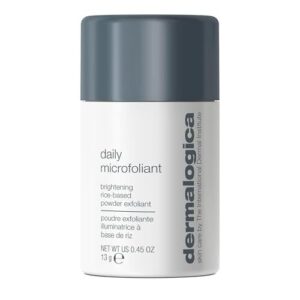
Powder exfoliants sound odd until you try one. Dermalogica’s Daily Microfoliant activates with water, turning into a creamy paste with papain and rice enzymes doing the work, plus a touch of salicylic acid for clogged pores.
Rice bran and licorice help even out tone over time. Massage a half teaspoon into wet hands for one minute, rinse well.
It’s marketed for daily use, but rosacea skin should start slower, maybe twice weekly, watching closely for any stinging or redness flare.
| Best For | Anyone dealing with dull skin, uneven tone, or occasional surface breakouts who wants a gentle daily exfoliant that also helps other skincare products absorb better. |
|---|---|
| Skin Type | Sensitive Skin |
| Fragrance | Mixed Fragrance Reviews |
| Exfoliation Type | Enzyme + Salicylic Acid |
| Format | Powder |
| Cruelty-Free/Clean Claims | Not Stated |
| Key Concern Addressed | Dullness/Acne |
| Additional Features |
|
- Powder-to-cream formula with papaya enzyme, salicylic acid, and rice bran works well for clogged pores and rough texture
- Gentle enough for daily use, with rice bran helping even out skin tone over time
- Boosts absorption of serums and moisturizers used afterward
- Pricier than typical drugstore exfoliants
- Packaging can leak during shipping
- Fragrance is polarizing—some users love it, others don’t
5. Paula’s Choice 2% BHA Liquid Exfoliant
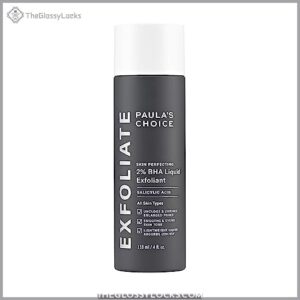
Two percent salicylic acid, one bottle, a whole different exfoliation approach. This BHA liquid works oil-soluble, slipping into pores to clear debris without any scrubbing at all.
It’s a leave-on formula, fragrance-free and paraben-free, applied once daily to start. Rosacea skin can react, so patience matters here.
Watch for tingling or dryness early on. If redness climbs, back off frequency. Sunscreen becomes non-negotiable with this one, since BHA raises sun sensitivity noticeably.
| Best For | Anyone dealing with clogged pores, blackheads, or uneven texture who wants a gentle, no-scrub way to exfoliate daily. |
|---|---|
| Skin Type | All/Sensitive Skin |
| Fragrance | Fragrance-Free |
| Exfoliation Type | Salicylic Acid (BHA) |
| Format | Serum/Solution |
| Cruelty-Free/Clean Claims | Paraben-Free |
| Key Concern Addressed | Pores/Texture |
| Additional Features |
|
- Clears pore-clogging debris without any physical scrubbing
- Gentle enough for daily use, with a fragrance-free and paraben-free formula
- Helps smooth texture, fade fine lines, and even out tone over time
- Can cause tingling, dryness, or purging when you’re first starting out
- Raises sun sensitivity, so daily sunscreen isn’t optional
- The bottle’s design makes it a bit fiddly to dispense product
6. Manuka Honey Exfoliating Facial Scrub
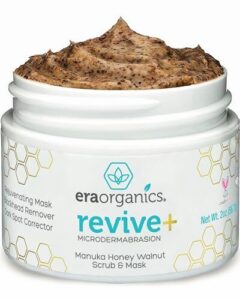
Sweetness meets skincare here. This scrub blends organic Manuka honey with fine walnut shell granules, gentle enough for daily texture concerns.
If daily texture concerns are new territory for you, pairing this scrub with an easy skin care routine for sensitive skin helps you ease in without overdoing it.
Honey works as a natural humectant, pulling moisture into skin while granules buff away dead cells. Aloe vera and Cehami extract calm redness as you go.
Some folks notice a sticky residue after rinsing, so a quick second cleanse helps. Use it once or twice weekly, and always patch test first.
| Best For | This scrub is best for people with sensitive, redness-prone, or keratosis pilaris–affected skin who want gentle weekly exfoliation without harsh irritation. |
|---|---|
| Skin Type | Sensitive Skin |
| Fragrance | Not Stated |
| Exfoliation Type | Physical (Walnut Shell) |
| Format | Scrub/Mask |
| Cruelty-Free/Clean Claims | Organic Ingredients |
| Key Concern Addressed | Dryness/KP |
| Additional Features |
|
- Combines organic Manuka honey with soothing aloe vera and Cehami extract to moisturize and calm skin
- Walnut shell granules provide effective physical exfoliation without being overly abrasive
- Gentle enough for sensitive skin types while still unclogging pores with regular use
- Can leave a sticky or greasy residue that may require a second cleanse to fully remove
- The 2-ounce container may feel small given the price point
- Exfoliating particle density can be inconsistent, so some users need to use more product for visible results
7. No7 Microdermabrasion Total Renewal Face Scrub
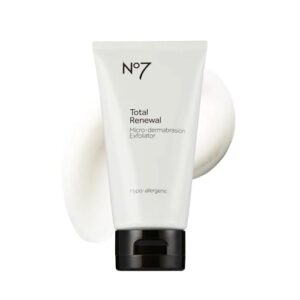
If enzymes feel too gentle for your taste, this one swings the other way. No7’s scrub uses aluminium oxide micro crystals, real physical exfoliation, not enzyme action.
Dot it onto damp skin and massage in circles for about a minute, then rinse well. It’s built for twice-weekly use only, and skip it entirely if skin feels sunburnt or raw.
This isn’t the gentlest pick here. Save it for tougher, more tolerant days.
| Best For | Those with tougher, more resilient skin who want a real physical exfoliation boost and aren’t afraid of a stronger scrub. |
|---|---|
| Skin Type | Sensitive Skin |
| Fragrance | Unscented |
| Exfoliation Type | Physical (Granules) |
| Format | Face Wash |
| Cruelty-Free/Clean Claims | Unscented Formula |
| Key Concern Addressed | Fine Lines |
| Additional Features |
|
- Uses aluminium oxide micro crystals for genuine physical exfoliation, not just enzymes
- Leaves skin feeling smoother and more radiant with regular use
- Simple to use — just massage onto damp skin for about a minute and rinse
- Too intense for sensitive, sunburnt, or irritated skin
- Limited to twice-weekly use, so results take patience
- Not suitable for those who prefer a gentler, low-irritation exfoliating routine
8. Cetaphil SA Gentle Exfoliating Face Wash
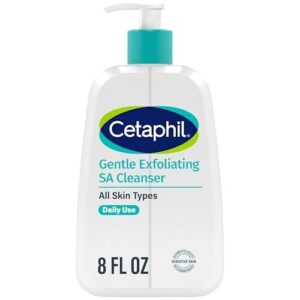
This one’s a bit of a triple threat. Cetaphil’s SA wash blends salicylic acid, mandelic acid, and gluconolactone, three gentle acids working together instead of one heavy hitter.
It foams up nicely, rinses clean, and won’t leave that tight, stripped feeling. Daily use is fine for most sensitive skin, which makes it an easy swap for your regular cleanser.
Massage onto damp skin, rinse with lukewarm water, then moisturize right after.
| Best For | People with sensitive or acne-prone skin who want a gentle, fragrance-free daily cleanser that supports the skin barrier while treating congestion. |
|---|---|
| Skin Type | Sensitive/Acne-Prone |
| Fragrance | Fragrance-Free |
| Exfoliation Type | Salicylic Acid |
| Format | Cleanser |
| Cruelty-Free/Clean Claims | Non-Comedogenic |
| Key Concern Addressed | Texture/Acne |
| Additional Features |
|
- Contains 0.5% salicylic acid for mild, effective chemical exfoliation
- Formulated with niacinamide, panthenol, and glycerin to help maintain skin barrier health
- Fragrance-free, paraben-free, and non-comedogenic, making it gentle enough for daily use
- Some users experience burning or irritation despite the sensitive-skin formula
- The pump dispenser may break or malfunction over time
- Not suitable for people with an aspirin allergy due to the salicylic acid content
9. Sesderma AZELAC RU Liposomal Facial Serum
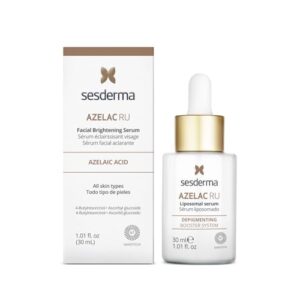
This serum steps outside the enzyme category, but it earns its spot here. Azelac RU pairs azelaic acid with retinol, tranexamic acid, and vitamin C, wrapped in liposomes that ferry actives deeper into skin without harsh friction.
It targets sun spots and stubborn hyperpigmentation, even on the upper lip. Expect some redness the first few days.
Use 3-4 drops nightly, always followed by sunscreen come morning. Rosacea-prone skin can tolerate it, but ease in slowly.
| Best For | Anyone dealing with sun spots, age spots, or stubborn hyperpigmentation—including sensitive or rosacea-prone skin—who wants a lightweight serum they can ease into a nightly routine. |
|---|---|
| Skin Type | Rosacea/Sensitive Skin |
| Fragrance | Not Stated |
| Exfoliation Type | Chemical (Azelaic/Retinol) |
| Format | Serum |
| Cruelty-Free/Clean Claims | Not Stated |
| Key Concern Addressed | Hyperpigmentation |
| Additional Features |
|
- Liposomal delivery gets azelaic acid and retinol deeper into skin without harsh friction
- Lightweight, fast-absorbing texture with no greasy residue
- Gentle enough for sensitive skin types, including rosacea and contact eczema, when paired with sunscreen
- Can cause temporary burning, redness, or peeling during the first few days of use
- Increases sun sensitivity, so daily sunscreen is non-negotiable
- Results aren’t guaranteed—some users see little to no improvement even with consistent use
How We Evaluated Rosacea Exfoliators
Rosacea skin doesn’t forgive a bad product choice, so I don’t pick these lightly. Every exfoliator on this list gets judged the same way, from how gentle it feels to what’s actually in the bottle. Here’s exactly what I looked at before letting anything make the cut.
Formula Gentleness
Gentleness is the whole ballgame here. We looked for a pH balanced formula, low enzyme concentration, and non-abrasive texture, nothing that scrubs or stings sensitive rosacea skin.
Fragrance-free formulation and a soothing ingredient mix mattered just as much. Hypoallergenic labels and pH balanced cleansers rounded out our picks for safe, gentle enzyme exfoliators that support enzymatic exfoliation without triggering flares.
Exfoliation Method
How a product exfoliates matters as much as what’s in it. We favored gentle enzyme action over scrubbing, rinse-off formulas with controlled contact time, and low friction textures.
A rinse-off powder that activates briefly, then washes away, beats leave-on liquids for daily comfort. Nonabrasive cleansing paired with a weekly schedule kept enzymatic exfoliation gentle and predictable for reactive skin. Ingredients like papaya and pumpkin enzymes are prized for enzyme-based exfoliation methods because they dissolve dead skin cells without abrasive particles.
Soothing and Hydrating Ingredients
Enzymes only get you halfway there. We looked for aloe vera soothing properties, licorice root calming, and allantoin skin repair alongside the exfoliation.
Hyaluronic acid hydrating support and ceramide barrier support mattered too, since dryness makes rosacea worse.
Bonus points for pH balanced cleansers and hypoallergenic labels, both signs a brand actually gets sensitive skin.
Potential Irritants
Good ingredients matter, but what’s left out matters more. We flagged fragrance triggers, alcohol sensitivity, and harsh surfactants like SLS, all common flareup culprits.
Essential oil risks (lavender, peppermint) got the same scrutiny. Physical abrasives were an automatic red flag.
Fragrancefree, alcohol-free formulas topped our list. Always patch test new products, it’s the golden rule of sensitive skin care routines.
Price, Size, and Value
Safe ingredients don’t mean much if the price tag hurts. Cost per ounce for our nine picks ran $0.75 to $2.50, with Cetaphil near $2 and DERMA E under $3.
Watch for value bundles (10-25% savings) and promo codes (5-20% off). Travel sizes ($3-6) are great for testing gentle enzyme exfoliators before committing.
Can Rosacea Skin Be Exfoliated?

Short answer: yes, but you have to be smart about it. Rosacea skin can absolutely handle exfoliation when you pick the right method and don’t overdo it. Let’s break down what "safe" actually looks like for you.
Why Rosacea Requires Extra Care
Think of rosacea skin as a short fuse: it reacts fast and holds a grudge. Everyday products labeled for "normal" skin can still spark flushing or burning.
Rosacea skin is a short fuse—quick to flush or burn even at products labeled gentle for normal skin
That’s why sensitive skin care means checking every ingredient list.
- Avoid alcohol and fragrance
- Skip sodium laurel sulfate
- Patch test before full use
Barrier protection basics matter here. When in doubt, ask your dermatologist.
Benefits of Gentle Exfoliation
Done right, exfoliation gives rosacea skin real perks. Gentle enzymatic exfoliators with papaya enzymes dissolve dead cells without scrubbing, leading to smoother skin texture and a brighter complexion.
Pores look smaller, products absorb better, and redness gets a break too. Paired with antiinflammatory skincare, it helps barrier repair while calming things down instead of stirring them up.
When Exfoliation is Unsafe
Before you reach for any exfoliator, check your skin’s current state. Skip exfoliating if you have:
- Open wounds or active breakouts
- Sunburned or recently sun-exposed skin
- A compromised skin barrier
- Any new irritation from a recent product
Overexfoliating stresses reactive skin further. Always patch test first, this simple step prevents flareups before they start.
Signs of Barrier Damage
Your skin talks to you, if you know what to listen for. Dry, flaky patches, a rough sandpaper texture, or a dull, tired look all point to trouble.
If those signs sound familiar, a hydrating mask can help, though how often you can safely use sheet masks matters, since overdoing it or layering acids underneath invites irritation.
Burning or stinging after cleansing? That’s a red flag. So is a persistent tight feeling that won’t quit. These signs mean transepidermal water loss is climbing and your barrier function needs rest, not more exfoliation.
When to Consult Dermatologists
Some signs mean it’s time to call in a pro, not just pause your routine.
Watch for these:
- Persistent redness past two weeks
- Painful or light-sensitive eyes (ocular symptoms)
- Firm bumps or skin thickening
- Treatment failure despite consistent care
Any of these? Book a dermatologist visit. Early prescription treatment prevents bigger flareups down the road.
Enzyme, BHA, and Physical Exfoliants Compared
Not all exfoliators treat your skin the same way. Enzymes, BHAs, and scrubs each work differently, and some are gentler than others. Here’s how they stack up, so you can pick what actually fits your skin.
Whichever exfoliator you choose, follow it with damp-skin moisturizing, and these affordable dry skin remedies can help keep your barrier comfortable and hydrated.
Gentle Fruit Enzyme Action

Fruit enzymes work like tiny scissors, snipping dead skin cells loose without scrubbing. Papaya’s papain breaks down surface proteins, while pineapple’s bromelain calms redness too. Both stay active within a narrow pH stability range and need just 5-10 minutes contact time.
This selective, gentle action protects deeper skin layers, making enzymatic exfoliators (papaya, bromelain, pumpkin) ideal for reactive, rosacea-prone faces.
BHA Benefits and Risks

Now let’s talk BHA, short for salicylic acid. Unlike enzymes, it’s oil soluble, so it slips right into pores and dissolves built-up sebum. That’s great for acne-prone skin, but rosacea-prone faces need caution.
- Burning or stinging sensations
- Increased sun sensitivity
- Redness flare-ups
- Barrier dryness
OTC strengths run 0.5% to 2%. Always patch test first.
Physical Scrub Irritation Risks
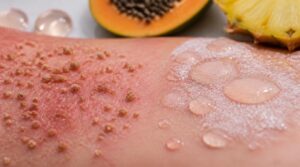
Physical scrubs work differently than BHA, and honestly, they’re riskier for rosacea. Particle shape matters a lot.
| Particle Type | Effect on Skin |
|---|---|
| Walnut shell | Microtears, higher TEWL |
| Sugar | Gentler, less disruption |
Aggressive scrubbing wounds skin fast. Skip anything abrasive, choose gentle enzymatic exfoliators instead for sensitive rosacea-prone skin.
Rinse-Off Versus Leave-on Formulas
Sugar over walnut shell is one call. Rinse-off versus leave-on is another.
Enzyme exfoliants like papaya enzyme or bromelain often come in rinse-off cleansers, washed away within a minute. Quick contact limits deeper penetration but protects your barrier.
Leave-on formulas stay put, delivering actives slowly over hours. Great for targeted redness relief, but riskier if you’re reactive. Introduce gradually.
Choosing Based on Tolerance
So how do you actually pick? Start with an honest tolerance level assessment.
Reactive skin does best with rinse-off papaya enzymes, patch tested first, once weekly. Calmer skin might handle a leave-on BHA. Either way, go slow, watch for redness within 48 hours, and adjust frequency based on what your skin tells you, not what the label promises.
Rosacea-Safe Ingredients to Seek and Avoid

Your skin doesn’t care about fancy ingredient lists, it just wants what works. Some ingredients calm rosacea, while others quietly stir up trouble. Here’s what to look for, and what to skip, when you’re scanning that label.
Papaya and Pineapple Enzymes
Papaya and pineapple aren’t just tasty, they’re nature’s little protein dissolvers. Papain (from papaya) and bromelain (from pineapple) gently break down dead skin proteins without scrubbing.
This natural exfoliation mechanism suits sensitive, rosacea-friendly products well. Protease activity levels stay mild in leave-on peels, making them a smart, low-drama choice for reactive skin that can’t handle grit.
Aloe, Licorice, and Allantoin
Three ingredients do a lot of quiet work in gentle exfoliators. Aloe vera is mostly water, but its remaining compounds calm and hydrate. Licorice root brings soothing plant compounds that ease redness. Allantoin repairs and protects, often hiding in the ingredient list unnoticed.
Together, they support enzymes like papain, buffering rosacea skin against irritation while exfoliation happens.
Barrier-Supporting Hydrators
While enzymes lift away dead cells, your skin still needs backup to stay comfortable. Look for:
- Hyaluronic acid for surface plumping
- Ceramides to patch the barrier
- Squalane to lock in moisture
- Glycerin for lasting hydration
Niacinamide and panthenol soothe too. Low-dose urea gently smooths without stripping. These hydrators keep exfoliation from tipping into dryness.
Fragrances and Harsh Surfactants
Scented products sound nice but often backfire on rosacea-prone skin. "Fragrance" on a label can hide dozens of ingredients, and only 26 allergens require disclosure. Even natural oils can irritate.
Skip sulfates too. They strip lipids, raise water loss, and pair badly with fragrance in high-pH formulas. Choose fragrance-free, pH-balanced cleansers with hypoallergenic, nonirritating formulas instead.
Abrasive Particles and Scrubs
Grit isn’t your friend here. Skip physical scrubs with jagged particles like fruit pits, they cause tiny tears in fragile skin.
If you want a physical exfoliant, choose water soluble abrasives like sugar, or biodegradable options like fine walnut shell. Avoid microdermabrasion grade particles entirely. Gentle physical exfoliation should feel smooth, never scratchy, and formulas should stay noncomedogenic to protect pores.
Choosing Your Gentle Enzyme Exfoliator
Not every gentle exfoliator fits every face. A few key details can point you to the right one for your skin. Here’s what to look for before you buy.
Skin Sensitivity Level
Not all rosacea skin reacts the same way. Sensitivity Testing helps: patch testing flags allergens in 21.5% of patients, so try any new enzyme exfoliator on your inner arm first.
Rate your Symptom Patterns honestly:
- Burning (affects 36.8%)
- Itching (29.6%)
- Persistent redness
- Stinging with temperature shifts
- Visible flare-ups
Choose fragrance-free, hypoallergenic formulas matching your reactivity level.
Formula PH Balance
Your skin likes things a little acidic. Healthy skin sits at a pH between 4.5 and 5.5, the skin acid mantle that keeps your barrier strong.
Good enzyme exfoliators match that pH level using buffer systems, like citric acid and sodium citrate. Look for pH-balanced cleansers and pH-balanced skincare with pH stability testing on the label for reliable, consistent results.
Enzyme Concentration
Numbers matter here too. Most rosacea-safe formulas use 0.1% to 1% papaya enzymes, which studies show works as well as 5% glycolic acid, minus the sting.
Below 0.1%, you won’t see results. Above 1%, irritation risk climbs.
- Calm, even-toned skin without the burn
- Confidence in trying something new
- Relief from guesswork
Patch test first. Full results build over 6-8 weeks with once-weekly use.
Product Texture and Format
Concentration matters, but so does how a product feels on your face. Gel vs cream texture makes a real difference: gels absorb fast, creams add hydration. Foam cleansers cut friction nicely.
A rinseoff powder suits weekly use, while a leaveon liquid needs slow introduction. Rich cream formulas often out-soothe any physical exfoliant.
How to Exfoliate Rosacea Safely
Picking the right product is only half the job. How you use it matters just as much for rosacea-prone skin. Here are five simple rules to keep your routine safe and effective.
Patch Test Before Application
Never skip this step. Pick a small test spot, like the inside of your elbow, apply your enzyme exfoliator thickly, and wait.
- Watch for burning or hives
- Note any swelling or stinging
- Check for lasting redness
If skin stays calm after a day or two, you’re likely good to try papaya enzymes on your face.
Start Once Weekly
Patience wins here. Once your patch test protocol gives the all-clear, keep it to once a week for at least four weeks before touching anything else.
Papaya enzymes work gently, but rosacea-prone skin still needs time to build tolerance. Apply at night, let your skin recover, and resist the urge to speed things up. Slow and steady really does calm the redness.
Follow Product Contact Times
Timing matters as much as the product itself. Most rinse-off enzyme formulas want just 5 minutes on your skin before rinsing, full stop.
- Set a timer, don’t guess
- Tingling? Rinse immediately
- Start short, increase gradually
- Watch skin for 30 minutes after
Skip overnight leave-on tricks. Short contact windows keep calming formulations effective without triggering flare-ups.
Moisturize After Exfoliating
Once you rinse, don’t leave skin bare. Pat dry, then reach for a moisturizer within a minute or two while skin’s still a little damp.
Look for glycerin or hyaluronic acid to pull in moisture, plus ceramides for real barrier repair. Skip anything with alcohol or fragrance. Your calmed-down skin will thank you.
Stop When Irritation Appears
Your skin talks. Listen to it. If you feel a burning sensation past a minute or two, increased flushing, soreness, or tight shiny skin, stop right there and rinse off.
Peeling that drags on for days, not hours, also means quit. Skin reactivity varies daily, so what worked last week might sting today. When in doubt, wash it off.
Build a Barrier-Friendly Weekly Routine

Picking the right product is only half the job. The real magic happens when you build a routine around it, one that gives your skin room to breathe and heal. Here’s how to put it all together, step by step.
Pairing that routine with the right tools matters too, so check out these beard health and wellness products that make daily upkeep feel effortless.
Start by understanding exactly what you’re working with — like what vitamin E serum does for your skin — so every step in your routine has a clear purpose behind it.
Use a Gentle Cleanser
Every good routine starts with a clean slate, literally. Wash with a pH-balanced cleanser using fingertips only, never a washcloth. Use lukewarm water, not hot.
- Check labels for mildness
- Skip fragrance-free myths, verify it
- Pat dry gently, don’t rub
Gentle cleansing protects your barrier before any exfoliation begins.
Schedule One Exfoliation Night
Pick one night, same night each week, and let your skin count on it. Start slowly: five minutes, rinse off, done.
| Week | Contact Time | Frequency |
|---|---|---|
| 1-2 | 5 min | Weekly |
| 3-4 | 8 min | Weekly |
| 5+ | 10 min | Adjust as tolerated |
Monitor skin response each morning before increasing time.
Add Recovery Days
That one exfoliation night works best with quiet days around it.
Recovery days give your barrier time to rebuild between sessions, no new products, no heat, just cleanser, moisturizer, and calm. Watch for stinging or extra redness the next morning. If it shows up, add another rest day.
Consistency, not intensity, is what keeps rosacea-prone skin steady long-term.
Apply Daily Sunscreen
Freshly exfoliated skin sunburns easier, so sunscreen isn’t optional.
Choose SPF 30 or higher, broad spectrum, and mineral formulas sit calmer on rosacea skin. Cover your face fully, including ears and hairline. Reapply every two hours outdoors.
Make it a daily use habit, rain or shine, right after your pH-balanced cleanser and hydrating moisturizer.
Track Redness and Triggers
Sunscreen protects your skin, but how do you know it’s actually working? Track your redness with an app like Skinframe or ScanSkinAI. These use dermatologist-style scales, not guesswork.
Apps like Nosacea flag trigger patterns, linking flare-ups to foods or weather. Give it three weeks. Patterns emerge, and suddenly your skin makes a lot more sense.
Frequently Asked Questions (FAQs)
What is a good gentle exfoliator for a face with rosacea?
Think of a soft rain washing dust off leaves, gentle, not a scrub brush. A good pick uses papaya or pineapple enzymes in a rinse-off formula with aloe and licorice, soothing while dissolving dead skin naturally.
What is a safe exfoliant for rosacea?
Safe options use gentle enzyme exfoliation with papaya or pineapple enzymes, soothing agents like licorice root and allantoin, and barrier support from aloe.
Patch test first, use once or twice weekly, and pair with pH balanced cleansers for calmer, healthier skin.
What is the best enzyme exfoliant for the face?
For rosacea-prone skin, DERMA E Gentle Enzyme Peel stands out. Papaya and pineapple enzymes offer gentle enzyme exfoliation, while licorice root and milk thistle work as soothing ingredients.
Weekly use with a pH-balanced cleanser keeps redness calm and texture smooth.
What do Koreans use for rosacea?
Korean routines favor fermented rice water, ceramide moisturizers, and azelaic acid serums for calming rosacea.
Gentle enzyme exfoliators and low pH cleansers round things out, keeping fragrance-free formulas that soothe redness while rebuilding a stronger skin barrier.
How long should enzyme exfoliators sit before rinsing?
Funny enough, most people over-rinse, not under-rinse. Ideal contact time runs just 5 to 10 minutes. Follow label directions closely for rosacea timing, avoid over-exposure, and rinse off once the pH-balanced enzymes finish working, then moisturize.
Can I use retinol and enzyme exfoliants together?
Better to keep them separate. Use your enzyme exfoliant one night and retinol on a different night to protect your skin barrier. Combining both raises irritation risk on rosacea-prone skin, even when each feels gentle alone.
What time of day is best for exfoliating?
Think of your skin like a garden that rests and rebuilds at night. Evening exfoliation fits that recovery window best. Apply right after a pH balanced cleanse, once a week, then moisturize. Morning works too, just pair it with sunscreen.
How soon will redness improve after starting exfoliation?
Some redness eases within hours if your skin tolerates the formula. Real redness reduction often shows up in one to two weeks with consistent, tolerance-based use. Lingering redness usually signals irritation, not barrier repair, so ease off and reassess.
Are enzyme exfoliators safe during pregnancy or breastfeeding?
Pregnancy changes your skin’s rulebook overnight. Generally yes: natural fruit enzymes act locally, not systemically. Stick to rinse-off formulas, patch test first, and always run new products by your OB for suited, pregnancy-safe skincare guidance.
Conclusion
Here’s the thing your skin has been waiting to hear: gentle care wins, every time. Skip the walnut scrubs. Skip the harsh acids that leave you red for days. A true gentle enzyme exfoliator for rosacea works quietly, dissolving buildup while your barrier stays intact. Papaya and pineapple do the heavy lifting, so you don’t have to suffer for smooth skin. Patch test, go slow, and moisturize after. Your calmest, clearest skin is closer than you think.