This site is supported by our readers. We may earn a commission, at no cost to you, if you purchase through links. This content is for general informational and educational purposes only and is not a substitute for professional medical, dermatological, or nutritional advice.
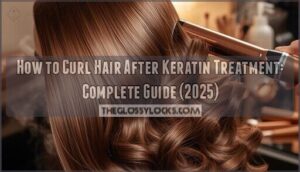
You just spent hundreds of dollars smoothing your hair to flawlessness. Now you’re staring at your keratin-treated locks wondering if you’ve accidentally locked yourself into months of stick-straight hair.
The good news? You absolutely can curl hair after keratin treatment without ruining your investment. The process requires some strategic timing and the right technique. Your treated hair responds differently to heat than it did before, but understanding these changes means you can achieve beautiful curls while keeping that frizz-free smoothness intact.
The key lies in knowing when to start curling and which methods protect both your style and your treatment.
Table Of Contents
- Key Takeaways
- What is a Keratin Treatment?
- Can You Curl Hair After Keratin Treatment?
- When to Curl Hair After Keratin Treatment
- Preparing Your Hair for Curling
- How to Curl Hair After Keratin Treatment
- Best Practices for Curling Keratin-Treated Hair
- Maintaining Curls on Keratin-Treated Hair
- How to Add Volume After Keratin Treatment
- Protecting Your Keratin Treatment While Curling
- Common Mistakes to Avoid When Curling
- Frequently Asked Questions (FAQs)
- Conclusion
Key Takeaways
- You can absolutely curl keratin-treated hair, but you must wait at least 72 hours after treatment to let the keratin bonds fully set before applying any heat styling.
- Always use heat protectant spray and keep your curling iron between 300-350°F—higher temperatures will break down the keratin coating faster and damage your investment.
- Ceramic or tourmaline curling irons work best because they distribute heat evenly and emit negative ions that seal the cuticle, helping curls hold without compromising the smoothness from your treatment.
- Let each curl cool completely before touching it (15-20 minutes pinned up) so the hydrogen bonds can reset and lock in the shape, otherwise your curls will fall flat within hours.
What is a Keratin Treatment?
A keratin treatment is one of those hair smoothing techniques that can feel like magic when you first see the results. It temporarily straightens your hair and cuts down on frizz using a formaldehyde-based formula that bonds your hair’s inner and outer layers together.
Before you decide to curl your treated hair, you’ll want to understand how the treatment actually works, how long it lasts, and what it does to different hair types.
How Keratin Treatments Work
Understanding keratin treatments starts with knowing what happens beneath the surface. Your hair gets coated with keratin protein mixed with formaldehyde or similar compounds. When heat activation occurs during flat ironing at around 450°F, the crosslinking mechanism kicks in. These new bonds reshape your hair structure, creating that smooth, straight look.
Here’s what happens during the treatment process:
- The formaldehyde exposure creates chemical bonds between the added keratin protein and your natural keratin hair
- Heat activation seals the treatment into your cuticle and outer cortex layers
- The crosslinking mechanism reinforces your existing hair structure with additional covalent bonds
- Your hair becomes temporarily straighter as the keratin treatment benefits take hold
- Understanding keratin treatments means knowing that treatment longevity usually lasts 3-5 months depending on your hair care routine. To prolong the treatment, it’s important to use sulfate-free shampoo.
Duration and Longevity of Results
Once those chemical bonds set in, you’re looking at 3 to 6 months of smoother hair. That’s your treatment lifespan. Washing frequency plays a huge role in prolonging treatment effects—stick to 2-3 times weekly with sulfate-free products. Formula differences matter too: traditional versions last longer than formaldehyde-free options. Many consumers now prefer safer alternatives for health reasons. You’ll notice your regrowth line around month 3, signaling retreatment timing. Proper posttreatment care and hair maintenance keep those results going strong.
| Factor | Impact on Longevity |
|---|---|
| Washing 2-3x/week | Extends to 4-6 months |
| Daily washing | Shortens to ~2 months |
| Formaldehyde-free formula | Lasts 2-4 months |
Effects on Different Hair Types
Your hair texture completely changes how keratin treatment affects curling hair after keratin treatment. Fine Hair gets smoother without losing all movement—lasting 3-5 months. Wavy Hair keeps some natural bend, making achieving desired curls easier on a frizz-free base. Curly Hair loosens but rarely goes pin-straight. Coarse Hair sees major frizz control with improved shine. Damaged Hair gains temporary strength through cuticle sealing, though proper keratin treatment hair care and hair texture management remain essential for lasting results.
- Fine straight strands show reduced porosity and better moisture retention
- Naturally wavy patterns retain bend while cutting frizz considerably
- Curly textures elongate and loosen without complete straightness
- Coarse or porous types benefit from stronger formulas and enhanced manageability
Can You Curl Hair After Keratin Treatment?
Yes, you can absolutely curl your hair after a keratin treatment. The treatment smooths your strands and reduces frizz, but it doesn’t lock your hair into one style forever.
Let’s look at why curling still works and what could go wrong if you rush it.
Why Curling is Still Possible
Your curls aren’t gone forever. Keratin treatments coat the cuticle and temporarily smooth frizz, but they don’t destroy the natural curl pattern living inside each strand. That means your hair still has the flexibility to wrap around a hot tool and hold a new shape. Think of it as taming texture, not erasing it—your hair’s memory for curl remains intact.
| Factor | How It Affects Curling | What You’ll Notice |
|---|---|---|
| Curl pattern persistence | Internal disulfide bonds stay mostly untouched | Hair retains underlying wave or coil structure |
| Heat-setting physics | Curling irons reshape keratin above temperature point | Smooth curls form when hair cools in coiled position |
| Treatment aging influence | Coating gradually fades with washing and time | Hair becomes more responsive to curling each week |
| Styling flexibility | Keratin allows for straight, wavy, and curled looks | You can switch styles without sacrificing smoothness |
| Temporary alteration | No permanent bond-breaking like relaxers | Natural texture slowly returns as treatment wears off |
What Happens if You Curl Too Soon
When you reach for a curling iron too early, you risk undoing the work you just paid for. Keratin needs at least 72 hours to lock into place. Before that window closes, heat styling can disrupt the bonding process and leave you with results you didn’t sign up for.
- Crease formation: Your iron can imprint unwanted bends into malleable strands that haven’t fully set.
- Reduced longevity: Early heat exposure breaks down the keratin coating weeks ahead of schedule.
- Structural damage: High temperatures combine with fresh processing to weaken hair’s elasticity and strength.
- Texture irregularities: Premature curling creates patchy smoothness—some sections stay straight while others hold exaggerated waves.
- Moisture balance disruption: Heat styling after keratin treatment drives out essential water, leaving hair dry and prone to breakage.
Hair damage prevention starts with patience. Wait the full week, then curl with a heat protectant and lower settings to protect both your style and your investment.
When to Curl Hair After Keratin Treatment
Timing matters more than you might think with curling after a keratin treatment. Rush it, and you could undo the smoothing results you just paid for.
Here’s what you need to know about when your hair is actually ready for heat styling.
Recommended Waiting Period
You’ll want to hold off on curling for at least 72 hours after your keratin treatment. This minimum wait time lets the keratin bonds fully set into your hair shaft.
Different treatment types and brand variations may recommend slightly shorter windows—some Brazilian blowouts say 48 hours—but sticking to three days protects your investment.
Wait until after your first sulfate-free wash for best curling results and keratin treatment longevity.
Signs Your Hair is Ready
Before you reach for your curling iron, check that your hair passes a simple stretch test—healthy strands should flex without snapping. Look for natural elasticity, reduced greasiness, and stable smoothness from root to tip.
When your hair shows consistent shine, improved manageability, and detangles easily, it’s ready for heat styling. These signs mean your keratin treatment has fully bonded and can withstand curling without hair breakage or heat damage.
Preparing Your Hair for Curling
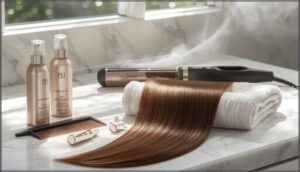
The right prep work makes all the difference when you’re curling keratin-treated hair. Skipping steps can lead to heat damage or curls that fall flat within an hour.
Here’s exactly what you need to do before you pick up that curling iron.
Washing and Drying Your Hair Properly
Before you pick up that curling iron, let’s talk about washing and drying your hair properly—because this step makes or breaks your curls. Always use sulfate-free shampoos to protect your keratin treatment and keep moisture locked in. Gently blot with a microfiber towel instead of rubbing.
When blow-drying, stick to low heat and medium airflow to avoid damaging the treatment layer.
Applying Heat Protectant
Heat protectant acts as a shield between your curling iron and keratin treatment, cutting heat damage by up to 50%. Spray it evenly from mid-lengths to ends on dry hair, combing through for complete coverage. Choose protein-based or silicone formulas that work up to 450°F.
Don’t skip this—reapply before every heat styling session to preserve your treatment and prevent breakage.
Sectioning Hair for Best Results
Think of sectioning like building a house—you need a solid framework before the details fall into place. Divide your hair into four quadrants using heat-resistant clips, then break each into 1-inch sections.
Smaller sections mean even heat distribution and better curl formation. This sectioning pattern protects your keratin treatment while giving you consistent, salon-quality results every time.
How to Curl Hair After Keratin Treatment
Now that your hair is prepped and ready, it’s time to put heat to hair. The key to successful curls lies in choosing the right tools and using proper technique.
Let’s walk through everything you need to know to create beautiful curls that work with your keratin treatment, not against it.
Choosing The Right Curling Iron
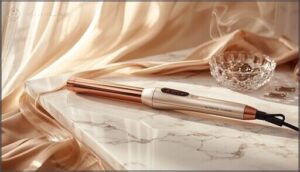
The right curling iron makes all the difference on keratin-treated hair. Here’s what to look for:
- Barrel material: Ceramic curling irons distribute heat evenly and reduce hot spots that can damage smooth strands—they account for over 60% of sales for good reason.
- Barrel size: Choose ¾–1 inch for defined curls or 1½–2 inches for loose waves.
- Technology features: Tourmaline-ceramic tools emit negative ions that flatten the cuticle and fight frizz.
- Different heat settings: Digital controls let you dial in safer temperatures for treated hair.
- Market trends: Multi-functional heat styling tools with sophisticated coatings now dominate because they’re gentler on chemically processed hair.
Setting The Correct Temperature
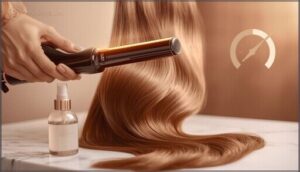
Once you’ve got your ceramic iron, temperature becomes your safety net. For keratin-treated hair, start low—between 250°F and 300°F works for most people. Fine or recently treated strands need even gentler heat, around 200°F to 250°F. Medium hair tolerates 300°F to 325°F, while thick textures may need up to 350°F.
Always pair heat protectants with appropriate heat settings to prevent keratin degradation and maintain your treatment’s longevity.
Step-by-Step Curling Technique
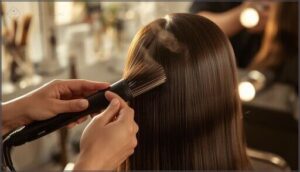
Now that your temperature’s dialed in, let’s walk through the actual curling process. Start your curl prep sequence by sectioning hair into four quadrants—clip each one away.
Work from the back, taking 1-inch sections. Your clamp technique matters: close the iron near mid-shaft, roll toward your scalp, and hold for 8–10 seconds. Timing and hold prevent damage while locking in shape.
Release gently, let each curl cool completely, then gently separate with your fingers when finishing curls for natural texture.
Creating Different Curl Styles
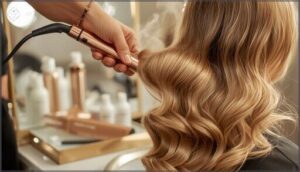
Once you’ve nailed the basics of curling hair after keratin treatment, you can explore different heat settings and styling techniques to achieve your desired curl. For beachy waves, use a 1.25–1.5 inch barrel at 300°F—leave the ends loose. Defined ringlets need smaller barrels around 19–25 mm.
Volume enhancement comes from alternating curl direction and over-directing sections at the roots. Product assistance with lightweight gels improves curl durability without weighing down your style.
Best Practices for Curling Keratin-Treated Hair
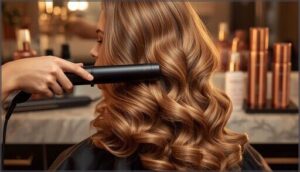
Curling keratin-treated hair isn’t complicated, but a few smart moves will protect your investment and give you better results. Think of these practices as your safety net—they keep your hair healthy while helping those curls actually hold.
Here are the key habits that’ll make all the difference.
Performing a Strand Test First
Before you bring the curling iron anywhere near your keratin-treated hair, test a hidden strand first. This simple step reveals whether your hair can handle the heat without breakage or damage.
Choose a 1-inch section from underneath, apply your heat protectant, and curl it at your planned temperature. If the strand feels brittle, rough, or stretches oddly, wait longer before styling.
Using Lower Heat Settings
After nailing your strand test, dial down the heat—your keratin treatment depends on it. Keep your curling iron between 300°F and 350°F to slow keratin breakdown speed and dodge heat damage risks. That temperature sweet spot protects the coating while still creating curls.
Fine hair needs the lower end; coarser textures can handle 350°F. Quality ceramic tools distribute heat evenly, so you won’t need cranking up the dial.
Limiting Heat Exposure Time
Once you’ve set the right temperature, keep each section on the iron for no more than 10 seconds—that’s the best contact time for keratin-treated hair. Holding it longer won’t improve your curl; it’ll just accelerate cumulative heat damage.
Pass the tool through once and move on. Repeated exposures push hair past temperature thresholds, causing breakage. Limiting heat exposure protects your investment and prevents long-term weakening.
Letting Curls Cool Before Styling
Here’s what makes cooling so powerful: hydrogen bonds in your hair reset as curls drop to room temperature, locking in your new shape. Skip this step, and your curls collapse within hours—it’s one of the biggest mistakes people make.
Skipping the cooling step is one of the biggest mistakes—your curls will collapse within hours as hydrogen bonds fail to lock in
Follow these cooling techniques for maximum curl longevity impact:
- Pin each curl immediately after removing it from the iron, holding it in a coiled shape flat against your scalp.
- Wait 15–20 minutes before releasing any section—full cooling ensures the hydrogen bond reset is complete.
- Use metal clips that won’t crease the hair shaft during the setting phase.
- Test by touch: curls should feel completely cool before you unpin or comb them.
- Apply light-hold spray after cooling to fight humidity interaction and extend wear time.
For keratin-treated hair, this cooling phase is non-negotiable. Your hair is more vulnerable to mechanical stress, so letting curls set without disturbance protects both your style and your treatment. It’s one of the best practices for curling that pays off all day.
Maintaining Curls on Keratin-Treated Hair
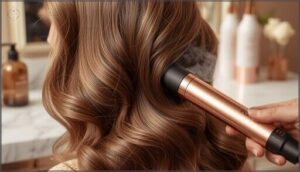
Getting your curls to stay put after a keratin treatment takes a bit of extra effort. The smoothness that makes your hair look sleek also makes it harder for curls to hold their shape.
Let’s look at three key strategies that’ll help your curls last all day without compromising your treatment.
Using Hairspray Effectively
Think of hairspray as your secret weapon for curling hair after a keratin treatment—it locks in every wave. Film-forming mechanisms create a flexible shield around each strand, and extra-strong aerosol formulas can extend curl life by over four hours.
Here’s how regulatory limits and safety considerations guide your choices:
| Hairspray Type | Best For |
|---|---|
| 55% VOC aerosol | Daily styling on treated hair |
| 80% VOC professional | Special occasions needing maximum hold |
| Lower-VOC formula | Frequent heat styling sessions |
| Hydrophobic resin spray | High-humidity environments |
Spray from 3–5 inches before curling to build hold strength, then mist again after your curls cool. Keep the can away from your hot curling iron—hairspray vapors are flammable and flash points sit around −87°C. Application parameters matter: light, even coverage beats heavy saturation every time. You’ll preserve your keratin treatment longer while your curls stay put through whatever your day throws at them.
Avoiding Humidity and Moisture
Humidity is your curls’ worst enemy after keratin treatment—it sneaks in and undoes your hard work in minutes. Use a shower cap on non-wash days to block steam exposure. Avoid chlorinated pools and saltwater for at least two weeks.
Choose sulfate-free, salt-free product choices that create a barrier against hair moisture. Stay indoors during rainstorms and consider protective styles outdoors.
These behavioral strategies keep you frizz-free longer.
Refreshing Curls Between Washes
Your curls need a midweek boost without full shampooing. Light misting with water or curl refresher sprays reactivates styling products already in your hair. Focus on mid-lengths and ends where dryness hits hardest.
Hydration methods for revival techniques between washes:
- Spray lightly with water—saturation isn’t necessary
- Add leave-in conditioner for extra moisture
- Scrunch gently to reform curl clumps
- Finger-coil any loose pieces
- Use sulfate-free products as protective measures
This refresh frequency keeps keratin treatment intact while maintaining frizz-free definition.
How to Add Volume After Keratin Treatment
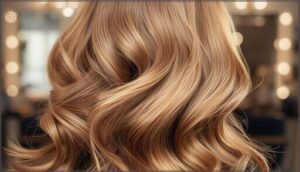
Keratin treatments can leave your hair looking sleek and smooth, but they sometimes flatten your natural volume. If you’re missing that bounce and body, don’t worry—there are simple ways to bring it back without compromising your treatment.
Here are three practical techniques to restore fullness and lift to keratin-treated hair.
Using Clarifying Shampoo
Over time, silicones and polymers weigh down keratin-treated hair. A clarifying shampoo cuts through that buildup with strong surfactants, restoring lightness and preparing strands for curling.
Use it once a month—not weekly—since frequent application accelerates keratin fading and strips natural oils. Follow with a sulfate-free shampoo for daily washes.
This pre-treatment prep strategy keeps your hair care after keratin treatment balanced and bouncy.
Blow Drying for Root Lift
After clarifying, your blow dryer becomes the best tool for reclaiming hair volume after keratin treatment. Strategic airflow technique and safe temperatures—between 200–300°F for treated strands—let you lift roots without accelerating heat damage or shortening your smoothing results.
- Rough-dry to 80% without a nozzle to fatten each shaft
- Apply root-lifting products from crown to back
- Finish with a round brush and concentrator to lock lift
Complete drying at the scalp prevents collapse and extends your style through the day.
Teasing and Texturizing Techniques
Once your roots have lift from blow drying, safer teasing and texturizing sprays can boost hair volume after keratin treatment without harsh breakage risks.
Work mid-shaft with a fine-tooth comb in small sections, then mist a light texturizing formula. Product selection matters—sulfate-free aftercare practices preserve your smoothing results while curling hair after keratin treatment or adding strategic texture for styles that last.
Protecting Your Keratin Treatment While Curling

You’ve put time and money into your keratin treatment. The last thing you want is to shorten its lifespan every time you reach for your curling iron.
A few smart habits can help you curl your hair while keeping that smooth, glossy result intact for months.
Minimizing Heat Styling Frequency
Think of your keratin treatment as a limited-edition investment—you don’t want to wear it out too fast. Reducing how often you reach for that curling iron is the smartest way to stretch both your treatment and your hair’s health. Here’s how to dial back styling frequency without sacrificing your look:
- Limit heat styling to 2–3 times per week to prevent cumulative cuticle damage and preserve keratin bonds
- Air-dry whenever possible instead of blow-drying before every curl session
- Use protective hairstyles like braids or buns between heat days to maintain shape
- Embrace heat-free methods such as foam rollers or overnight twists for texture
- Reduce touch-ups by making curls last longer with quality products
The goal isn’t flawlessness every single day. It’s keeping your hair strong enough to style beautifully when it counts.
Choosing Ceramic or Tourmaline Tools
Both ceramic and tourmaline tools offer even heat distribution. Ceramic varies less than 5°C across the plate, while tourmaline boosts negative ion output several times higher.
That ionic frizz control helps seal cuticles and reduce flyaways, key when curling hair after keratin treatment.
Choose solid plates over coatings for durability and consistent heat protection for hair, preventing damage through better heat distribution uniformity.
Common Mistakes to Avoid When Curling
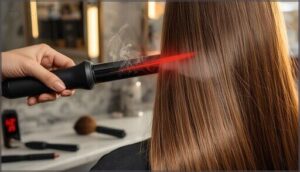
Even with the best intentions, it’s easy to slip up when curling keratin-treated hair. Small mistakes can chip away at your treatment’s longevity or leave your hair looking less than amazing.
Here are the most common pitfalls you’ll want to steer clear of.
Using Too Much Heat
Cranking your curling iron to 450°F might seem like the fast track to long-lasting curls, but it’s actually speeding up damage and shortening your keratin treatment’s life. Safe temperature ranges for post-keratin styling sit around 300–350°F—hot enough to set curls without frying that protective layer.
Temperature control importance can’t be overstated: cumulative heat effects mean every high-heat session chips away at smoothness, triggering heat damage signs like breakage and early frizz return.
Curling Damp or Dirty Hair
Grabbing your curling iron before your hair is completely dry invites serious Damp Hair Damage—wet strands heated above 125°C form steam bubbles inside the shaft, causing breakage and brittleness.
Dirty Hair Risks are just as real: Product Buildup and sebum create Uneven Heating and hot spots that fry your keratin-treated hair.
For effective Breakage Prevention, always complete your hair washing routine and make certain strands are 100% dry before heat styling techniques like curling hair after keratin treatment.
Skipping Heat Protection
Skipping heat protection for hair before curling hair after a keratin treatment accelerates Keratin Breakdown at temperatures above 149°C. Without a barrier, you risk Cuticle Damage, permanent Denaturation Risk, and Moisture Loss that raises Porosity Increase. Studies show unprotected strands lose structural integrity fast.
Always spray a protectant rated to 230°C—it’s your frontline hair damage prevention during heat styling precautions.
Tying Hair Back Immediately After Treatment
Pulling your hair into a ponytail right after a keratin treatment forces creases into the still-setting cuticle—those dents can last months. During the first 72 hours, hair malleability peaks, making any tension risky for treatment longevity.
Repeated tight styles raise traction alopecia risk, especially on chemically smoothed strands.
Safer alternatives? Wait at least 48 hours, then use soft fabric bands loosely to protect your investment.
Frequently Asked Questions (FAQs)
Does keratin treatment damage hair over time?
Yes. Repeated keratin treatment can progressively damage the cuticle layer over time. Formaldehyde exposure from traditional systems raises health concerns.
Treatment frequency and alternative systems impact long-term hair health and maintenance outcomes.
Are formaldehyde-free keratin treatments as effective?
Formaldehyde-free keratin treatments deliver comparable hair smoothing and frizz reduction, though they often fade slightly faster—usually within three to four months versus up to six with traditional formaldehyde-based systems.
Can you color hair after keratin treatment?
Think of your keratin treatment like fresh paint—coloring too soon can smudge the results.
Wait at least two weeks before applying permanent dye to protect keratin durability and minimize damage risks to your hair.
How often should you trim keratin-treated hair?
You should trim keratin-treated hair every 8 to 12 weeks. This trim frequency aids treatment longevity and controls split ends.
Hair type and treatment cycles influence scheduling, but most salon practices recommend trimming at least quarterly.
Conclusion
Picture Sarah’s relief when her first post-keratin curls held beautifully—proof that patience pays off. Your keratin investment doesn’t mean sacrificing versatility.
Wait the full 72 hours. Choose ceramic tools and lower heat settings. Apply quality heat protectant every single time.
When you curl hair after keratin treatment with these safeguards in place, you get the best of both worlds: smooth frizz-free texture with gorgeous waves whenever you want them.
- https://blogs.the-hospitalist.org/content/hidden-risks-formaldehyde-hair-straightening-products
- https://www.keramane.com/blogs/news/keratin-treatment-for-curly-hair-essential-dos-and-donts
- https://answrbeauty.com/blogs/haircare-1/what-is-keratin-smoothing-treatment-what-does-a-keratin-treatment-do-to-curly-hair