
This site is supported by our readers. We may earn a commission, at no cost to you, if you purchase through links. This content is for general informational and educational purposes only and is not a substitute for professional medical, dermatological, or nutritional advice.

A $40 online visit can get you the same essential answer as a $300 office appointment. That’s the part most people don’t know when their skin won’t cooperate.
Acne that keeps returning, redness that never fades, dark patches that linger for months: each one demands a different fix. Generic products guess. Custom skin care for skin conditions starts with a real diagnosis, then matches ingredients, strengths, and routines to your skin.
You don’t need a dermatologist’s waiting room to get there. Here’s how to get assessed, choose safe actives, and track whether your treatment works.
Table Of Contents
- Key Takeaways
- What is Customized Skin Care?
- Get Your Skin Condition Professionally Assessed
- Match Customized Treatments to Your Skin Condition
- Choose Safe Ingredients and Appropriate Prescription Options
- Compare Customized Skincare Services, Subscriptions, and Costs
- Build Your Routine and Monitor Treatment Results
- Frequently Asked Questions (FAQs)
- What is the best custom skin care?
- How can I get customized skin care products?
- Is there a website that identifies skin conditions?
- What is the 4 2 4 rule in skincare?
- Can customized skincare treat eczema or psoriasis effectively?
- How often should custom formulas be adjusted?
- Are custom products safe during pregnancy or breastfeeding?
- What happens if you experience allergic reactions?
- How long until I see visible skin improvements?
- Is customized skincare safe during pregnancy?
- Conclusion
Key Takeaways
- You’ll get better results when a dermatologist diagnoses your condition first, and an online visit at $40-80 can do that for far less than the $150-300 you’d pay in person.
- Your treatment should match your specific condition, since acne, rosacea, melasma, and eczema each need different ingredients and a different approach.
- You’re safest when you add one active at a time, start at a low strength, and check every ingredient with your doctor, especially if you’re pregnant or nursing, since retinoids and hydroquinone are off the table.
- You’ll know your routine is working if you track it with same-light photos and notes for 8-12 weeks, and you should call your dermatologist right away if you get burning, swelling, or blistering.
What is Customized Skin Care?

How do you know if a product is truly made for you? That’s the question Individualized Skin Care answers. It means adapting products or active ingredients to your skin’s traits, your concerns, and how well you tolerate treatment.
Instead of juggling several single-ingredient products, a suited formula can combine multiple actives in one. Sounds simple, right?
If you’re unsure which combinations suit your skin, this guide to effective acne treatment products for women shows how popular actives work together.
Here’s the catch: "custom" is a loose word. It can mean a quiz that picks a ready-made product, or a prescription formula written just for you. The label alone won’t tell you which one you’re getting.
So look closer. Individualized skincare should reflect your condition, not just your skin type. Tools like AI diagnostics or genetic analysis may inform some services, but they’re only one piece of the picture.
Get Your Skin Condition Professionally Assessed

Before you buy a single serum, you need to know what’s actually going on with your skin. A professional assessment is your starting point, and it’s easier to get than you might think. Here are the two main ways to get one, so you can pick the route that fits you.
Online Consultations and Skin Assessments
How does an online consultation actually work? Simpler than you’d think.
You complete an intake form, then upload clear photos taken in good light, with makeup-free skin.
During your virtual consultation, the dermatologist reviews your history and examines your skin on camera, sometimes using skin mapping technology to chart problem areas.
A skin type assessment shapes your suited skincare routine.
Teledermatology is also an affordable option, since virtual consultations typically cost $40-80 per visit compared to $150-300 for in-person appointments.
AI Tools Versus Dermatologist Diagnosis
Virtual consultations raise a fair question: can an app do the same job? AI diagnostics analyze photos only, struggle on darker skin tones, and can’t feel texture or ask about symptoms. Dermatologists can.
Pairing regular self-checks at home with professional screenings is the best way to catch changes early, and this guide to early skin cancer detection and prevention explains what to watch for.
Use AI for tracking changes, not diagnosing them. Let a dermatologist guide your suited skincare routine and dermatologist-developed skincare choices. Skin mapping technology helps, but expertise decides.
Match Customized Treatments to Your Skin Condition

You’ve had your assessment, so now it’s time to put that diagnosis to work. Not every skin concern reacts the same way, which is why custom treatments work best when they target one condition at a time. Here’s how acne, rosacea, melasma, and eczema each call for a different approach.
Acne and Recurring Breakouts
Think of acne as a smoke alarm: it signals trouble, but it can’t tell you the cause. Custom Skin Care starts with that cause.
Your best bets:
- Oily skin: salicylic acid cleanser, oil-free moisturizer
- Dry or sensitive skin: gentle, fragrance-free products
- Moderate acne: retinoid plus antibiotic
- Hormonal flares: spironolactone or oral contraceptives
Expect 8-12 weeks before judging results.
Rosacea and Persistent Redness
Many people with persistent redness blame their skin, but triggers like sun, stress, and heat usually deserve the blame. Rosacea management starts with a dermatologist consultation, where you’ll confirm your subtype and learn which treatments fit.
Why keep guessing? Your suited skincare routine should calm skin sensitivity, support skin barrier repair with a gentle moisturizer, and skip harsh physical scrubs.
Melasma and Post-Inflammatory Hyperpigmentation
Pigment problems aren’t all alike, so Custom Skin Care starts with knowing which one you have. Melasma is hormonal and sun-driven. Post-inflammatory marks follow irritation.
- Wear SPF 30+ with iron oxide daily.
- Ask about prescription-strength actives.
- Try azelaic acid for leftover marks.
- Add niacinamide gently.
- Track triggers weekly.
Patience matters. Hyperpigmentation treatment takes weeks.
Eczema and Skin Barrier Support
Think of your skin barrier as a brick wall. When the mortar crumbles, moisture escapes and irritants slip in. Custom Skin Care rebuilds that wall.
Your skin barrier is a brick wall, and custom skin care rebuilds the crumbling mortar so moisture stays in and irritants stay out
Does your eczema treatment include ceramide-rich moisturizers? They deliver real barrier repair and steady hydration support. Skip fragrance, alcohol, and dyes. Add colloidal oatmeal to calm itching. Then ask your dermatologist about prescription options today.
Choose Safe Ingredients and Appropriate Prescription Options
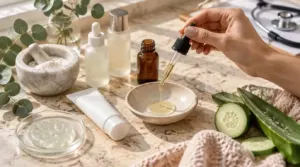
Strong doesn’t mean safe, and gentle doesn’t mean weak. Your goal is the middle ground: Safe Ingredients that work without wrecking your barrier.
Start with Ingredient Safety. Azelaic acid may sting at first, especially with rosacea, but that usually fades. It also pairs well with niacinamide and retinoids. Hydroquinone above 4% needs a doctor, and you should cycle it in three-month stretches to avoid ochronosis.
Prescription Options matter most for stubborn Skin Conditions. Azelaic acid at 15% or 20% requires a prescription, and so does tretinoin above 0.05%. Pregnant or nursing? Skip retinoids entirely.
Here’s what the right plan gives you:
- Calm skin you stop second-guessing
- Confidence that every ingredient has a reason
- Results you can finally trust
That’s Custom Skin Care done properly.
Compare Customized Skincare Services, Subscriptions, and Costs

Ever bought a "custom" product and wondered what you actually paid for? Custom Skin Care should come with clear answers, so let’s compare real numbers.
Prices vary a lot. Here’s what the data shows:
| Service | Cost |
|---|---|
| Curology | $30 per month |
| Prose (cleanser, moisturizer, serum) | $123.25 with subscription |
| PROVEN | $129.99 per set, about 2 months |
| Beauty Heroes | $58.95 per box |
Look past the sticker price. Ask whether the brand offers transparent pricing, and what a cancellation costs you.
Most subscription models save money, but only if you’ll use every product. A monthly subscription suits dermatologist-developed skincare you’ll keep for months. Skip boxes of random samples.
Build Your Routine and Monitor Treatment Results
Ever tried fixing five problems at once? Your skin hates it too.
Build your custom skincare routine in layers. Start with a gentle cleanser, a moisturizer, and daytime sunscreen. Apply products from thinnest to thickest, so watery treatments go on before creams.
Add one active at a time. That way, if irritation shows up, you’ll know the culprit. Retinoids and acids can sting, so start with lower strength or frequency.
Now track it. Take photos in the same lighting and angle, and jot down what you used and how your skin felt. Count breakouts or flares instead of guessing.
Give acne 6 to 8 weeks before judging. Burning, swelling, or blistering? Call your dermatologist right away for ongoing expert support.
Frequently Asked Questions (FAQs)
What is the best custom skin care?
Ironically, the best Individualized Skin Care isn’t the priciest jar. It’s dermatologistdeveloped skincare built on skin type analysis, full ingredient transparency, and a suited skincare routine you’ll actually follow. Your skin absolutely deserves nothing less.
How can I get customized skin care products?
Your skin could fill a library with its demands, so start with a pro. Book an online dermatology consultation, upload photos, and share your history. They’ll prescribe custom skin care, and you’ll refill it.
Is there a website that identifies skin conditions?
Yes, several exist. Google’s DermAssist tool and FirstDerm use digital dermatology to match your photos to likely conditions, and Aysa offers guidance too. They’re helpful for understanding, but skin condition diagnosis still belongs with a dermatologist.
What is the 4 2 4 rule in skincare?
Ever wondered how long you should really wash your face? The 4-2-4 rule says 4 minutes of oil cleansing, 2 minutes of a second cleanse, then 4 minutes of rinsing. It’s a double cleansing ritual, not a daily must.
Can customized skincare treat eczema or psoriasis effectively?
Yes, custom skincare can help, but it works best alongside medical care. Ceramide-rich barrier repair brings real eczema relief, and dermatologist recommended creams like tapinarof support psoriasis treatment. Ready to take control safely?
How often should custom formulas be adjusted?
A garden isn’t pruned daily, but never untended either. Give your formula six to eight weeks, then adjust.
Skin cycle tracking, seasonal skin changes, and formulation precision guide targeted concentrations in your suited skincare routine.
Are custom products safe during pregnancy or breastfeeding?
Yes, but only with a doctor’s sign-off. A custom skincare routine can be pregnancysafe skincare when it uses azelaic acid, niacinamide, or vitamin C. Skip retinoids and hydroquinone, and ask your OB-GYN first.
What happens if you experience allergic reactions?
Stop using the product right away. Wash gently, skip new actives, and check your allergen disclosure against your skin sensitivity profile. Mild redness usually settles in days. Swelling, hives, or trouble breathing? Get medical help immediately.
How long until I see visible skin improvements?
Picture Maya, who starts a retinoid on Monday and panics by week two. Skin cycle timing matters: expect visible improvement around weeks 4 to 8, with treatment adherence delivering clearer skin by 12 to
Is customized skincare safe during pregnancy?
Say your custom acne treatment arrives with tretinoin. Skip it. Individualized doesn’t mean pregnancy-safe, either. Antiaging, melasma, and rosacea formulas often hide risky actives too, so check every ingredient with your doctor before you start.
Conclusion
Still guessing at the drugstore shelf while your skin keeps sending mixed signals? You don’t have to. Custom skin care for skin conditions works because it starts with a diagnosis, not a hunch.
Get assessed, pick actives your skin can tolerate, and track your results for eight to twelve weeks. Take photos, note flare-ups, and bring that record to every follow-up. Small, steady adjustments beat dramatic overhauls every time.
Your skin is talking. Listen closely.