This site is supported by our readers. We may earn a commission, at no cost to you, if you purchase through links. This content is for general informational and educational purposes only and is not a substitute for professional medical, dermatological, or nutritional advice.
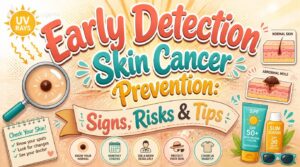
Stage 0 melanoma, caught before it spreads, carries a survival rate approaching 100%. Stage IV does not. That gap isn’t about luck. It’s about timing.
Skin cancer is the most common cancer in the United States, yet it remains one of the most treatable when found early. Your skin signals changes every day through new spots, shifting moles, and patches that don’t heal, and learning to read those signals is a skill worth having.
Early detection and skin cancer prevention work together as a system. What follows breaks that system down into steps you can act on starting today.
Table Of Contents
- Key Takeaways
- Why Early Skin Cancer Detection Matters
- Know Your Skin Cancer Risk Factors
- Recognize Early Skin Cancer Warning Signs
- Build a Skin Cancer Screening Routine
- Prevent Skin Cancer Every Day
- Frequently Asked Questions (FAQs)
- What age should skin exams begin?
- How often should dermatologist visits occur?
- Can children develop skin cancer early?
- Are certain medications increasing cancer risk?
- What technology improves early detection accuracy?
- How do dermatologists use AI to detect skin cancer?
- Is skin cancer more common in men or women?
- Can diet or nutrition lower your skin cancer risk?
- What emotional support is available for skin cancer patients?
- Conclusion
Key Takeaways
- Catching skin cancer at Stage 0 carries a near-100% survival rate, so early detection isn’t just reassuring—it’s the difference between a simple procedure and a life-changing treatment.
- Your skin tells you when something’s wrong through the ABCDE signs (Asymmetry, Border, Color, Diameter, Evolution), and learning to read those signals with monthly self-exams puts real power in your hands.
- Daily habits—broad-spectrum SPF 30, reapplying every two hours, UPF-rated clothing, and staying out of tanning beds—stack up over time to meaningfully lower your risk.
- Annual dermatologist visits catch what you can’t see yourself, and AI-assisted dermoscopy now helps identify early melanoma with over 90% sensitivity, making professional screening smarter than ever.
Why Early Skin Cancer Detection Matters
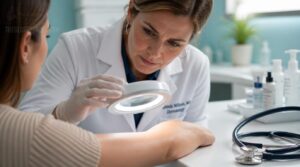
Catching skin cancer early isn’t just about peace of mind—it genuinely changes outcomes in ways that matter. The difference between a stage one diagnosis and a late-stage one can mean the difference between a minor procedure and a life-altering treatment plan. Here’s what early detection actually does for you.
Scheduling annual skin checks is one of the most straightforward steps you can take, and these dermatologist-recommended skin cancer prevention tips can help you build the habits that make early detection a realistic part of your routine.
Early skin cancer detection transforms outcomes—separating a minor procedure from a life-altering treatment plan
Benefits of Timely Diagnosis
Catching skin cancer early changes everything. When you schedule a routine skin cancer screening, you give yourself the best possible outcome before the disease has a chance to spread.
Early detection means simpler procedures, less scarring, and no disruption to daily life. Your skin exam today could keep a minor concern from becoming a major one.
Understanding the benefits of early diagnosis can help guide timely decisions about treatment and follow-up care.
Treatment Success in Early Stages
The numbers speak for themselves. Stage 0 melanoma has a survival rate approaching 100%, requiring only a simple excision. Stage I sits at 97-99%.
Early detection, whether through a professional skin exam or a personal selfexam using the ABCDE rule, means your dermatologist can treat the problem before it deepens, keeping the procedure and recovery manageable.
Risks of Delayed Evaluation
The risks of delayed evaluation are real and measurable. A mole that shifts in size, shape, or color, or a sore that won’t heal, can advance from a localized lesion to one requiring wider surgical removal and a longer recovery period.
Overlooking these warning signs gives a new, changing, or unusual growth time to deepen and, in some cases, spread.
Know Your Skin Cancer Risk Factors

Not everyone faces the same level of skin cancer risk, and knowing where you stand can make all the difference in how you protect yourself. Several key factors—some within your control, others simply part of who you are—shape your individual risk profile. Here’s what you should be aware of.
UV and Tanning Exposure
UV radiation doesn’t take days off. Whether overcast or sunny, your skin absorbs UV year-round, and that damage accumulates silently over decades.
Sunburn is a clear warning signal, each episode adding to your cumulative UV exposure. Tanning beds compound the problem by emitting artificial UV that raises your cancer risk. Sunscreen use and avoiding tanning beds are your baseline protection.
Skin Tone and Features
Fair skin offers less natural UV protection. If you have light eyes, red or blonde hair, or skin that burns before it tans, lower melanin levels mean more DNA-damaging radiation reaches your cells.
That’s why sun-protective habits matter even more for fair skin — and understanding how topical antioxidants like those covered in this guide to vitamin E oil benefits for skin can help neutralize free-radical damage before it compounds.
Fair skin and freckling really raise your skin cancer risk, so consistent sunscreen use and regular mole monitoring become essential habits, not optional ones.
Personal and Family History
If a parent or sibling has had melanoma, your risk nearly doubles. Your own prior skin cancer can raise it nine times over.
Family history and fair skin together call for real vigilance. During your monthly skin examination, watch for any mole that shifts in size, shape, or color, and use a physician finder to schedule professional follow-up.
Childhood Sunburn History
Sunburns before age 15 shape your childhood sunburn history and early detection priorities. A UK survey found 66% of people recalled being sunburnt as a child, with 65% reporting at least one severe blistering burn. That early damage compounds over time, raising skin cancer risk considerably.
Share this history with your dermatologist and flag changes during your monthly skin examination.
Immunosuppression and Genetic Conditions
Your immune system acts as a quiet gatekeeper against abnormal cells. When immunosuppression weakens that defense, whether from transplant medications or long-term autoimmune treatments, your skin cancer risk climbs sharply. Genetic conditions like xeroderma pigmentosum or atypical nevus syndrome raise it further still, as does a confirmed family history of melanoma. Always share all of these details with your dermatologist.
Recognize Early Skin Cancer Warning Signs
Your skin is always sending signals — the key is knowing which ones to take seriously. Catching skin cancer early often comes down to recognizing a handful of specific changes that are easy to spot once you know what you’re looking for. Here are the warning signs worth keeping on your radar.
ABCDE Rule for Melanoma
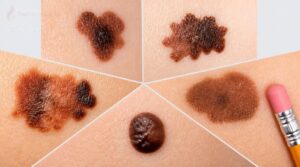
The ABCDE Rule for Melanoma gives you a structured way to evaluate any suspicious skin lesion. Each letter marks a warning sign: Asymmetry, Border irregularity, Color variation, Diameter over 6 millimeters, and Evolving changes.
A mole that shifts in size, shape, or color, or any new, changing, or unusual growth matching even one criterion, deserves a visit to your dermatologist.
New or Changing Moles

Any mole that shifts in size, shape, or color is a potential skin cancer signal. Watch for:
- Asymmetry developing over time
- Borders becoming jagged or uneven
- Multiple colors within one spot
- Diameter growing beyond 6 mm
- A new or changing unusual growth appearing in adulthood
Early detection gives you the best outcome. If anything evolves, see your dermatologist.
Sores That Do Not Heal

A sore that won’t heal deserves the same attention as a changing mole. When a wound lingers beyond three months, skin cancer early detection becomes the priority.
Don’t assume it’s minor. Your dermatologist can evaluate the site and, if needed, perform a biopsy to rule out malignancy. Sun protection matters too, since UV damage slows healing and raises your risk.
Pearly Bumps and Scaly Patches
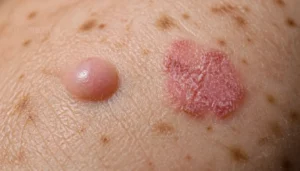
Not every warning sign is an open wound. Basal cell carcinoma often appears as a shiny, slow-growing bump on your face or scalp. Rough patches may also signal actinic keratosis or squamous cell carcinoma, where skin cancer early detection matters most.
- Pearly, skin-colored raised bumps
- Scaly patches on sun-exposed skin
- Lesions lasting beyond a few weeks
- Visible surface blood vessels
Itching, Bleeding, or Pain
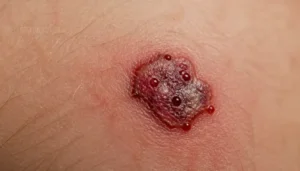
Texture and appearance tell part of the story, but sensation matters too. If a new, changing, or unusual growth starts to itch, bleed without injury, or feel tender, don’t ignore it. A sore that won’t heal after several weeks is a well-documented warning sign.
Itching, bleeding, or pain at a lesion site, even mild, warrants prompt professional evaluation.
Build a Skin Cancer Screening Routine

Building a consistent skin screening routine is one of the most proactive steps you can take for your long-term health. It doesn’t have to be complicated — a few simple habits, done regularly, can make all the difference in catching something early. Here’s exactly what that routine should look like.
Monthly Full-Body Self-Exams
Skin changes don’t announce themselves. Monthly full-body self-exams build the familiarity you need to catch any new, changing, or unusual growth early. During each check, watch for:
- A mole that shifts in size, shape, or color
- A sore that won’t heal within a few weeks
- Spots that itch, bleed, or crust unexpectedly
- Changes that persist despite consistent sun protection
Check Often-Missed Areas
Part your scalp with a comb and check for any new, changing, or unusual growth. The skin behind your ears, between your toes, and on the soles of your feet also deserves attention.
Even with sun protection, a sore that won’t heal or a mole that shifts in size, shape, or color in these spots warrants an annual dermatologist visit.
Use Mirrors and Body Maps
Combining a full-length mirror with a body map builds a dependable skin cancer early detection routine.
- Look for a mole that shifts in size, shape, or color from different mirror angles.
- Note any new, changing, or unusual growth on your map with its location and size.
- Flag any sore that won’t heal for dermatoscopy at your next clinical visit.
Track Changes With Photos
Photographing your skin each month creates a timestamped record that mirrors alone can’t reliably provide. When a mole that shifts in size, shape, or color appears beside last month’s image, the difference becomes undeniable, especially after significant UV radiation exposure. Pairing your monthly photo routine with a dermoscopy smartphone camera attachment brings magnified, clinical-quality detail to changes that standard photos might miss.
Flag any new, changing, or unusual growth or a sore that won’t heal promptly for dermoscopy at your next visit.
Schedule Professional Skin Exams
Self-exams have real limits. Schedule professional skin exams once a year, because a dermatologist spots what you miss.
Before your visit, note any:
- New, changing, or unusual growth
- A mole that shifts in size, shape, or color
- A sore that won’t heal
- Spots that itch, bleed, or feel different
- Areas hard to self-examine
Catching skin cancer early matters most.
Prevent Skin Cancer Every Day

Prevention isn’t complicated — it’s about building small habits that stack up over time. You don’t need to overhaul your whole routine to make a real difference. Here are the daily steps that can meaningfully lower your risk.
Apply Broad-Spectrum SPF 30
Sunscreen is your most reliable daily shield against ultraviolet radiation, and broad-spectrum SPF 30 is the minimum standard most dermatologists recommend for effective photoprotection. It covers both UVA and UVB rays, the combination most directly tied to skin cancer.
Apply roughly one full ounce across all your exposed skin, because using too little reduces the protection the label actually promises.
A broad spectrum SPF 50 sunscreen gives you extra breathing room on high-UV days when reapplication isn’t always possible.
Reapply Sunscreen Every Two Hours
That first coat won’t last. Reapply every two hours for consistent photoprotection against ultraviolet radiation and skin cancer:
- After swimming, even with water-resistant products
- After toweling off or heavy sweating
- To all exposed areas, ears and feet included
Sun Skin News and Prevention and Early Detection experts agree: most people skip this critical step.
Wear Sun-Protective Clothing
Clothing offers a layer of protection that sunscreen alone can’t always guarantee. Look for garments labeled with a UPF 50+ rating, which blocks roughly 98% of ultraviolet radiation.
Tightly woven fabrics, long sleeves, high collars, and enclosed shoes all reduce the skin you leave exposed. After swimming, change into dry clothes, since wet fabric loses much of its UV-blocking capability.
Seek Shade During Peak Hours
Even with the right clothing, seeking shade during peak hours gives your skin a meaningful buffer against UV radiation.
The sun’s intensity peaks between 10 a.m. and 4 p.m., making those the highest-risk hours for sunburn.
When you’re outdoors, choose spots under leafy trees where you can’t see open sky, since partial shade still lets significant UV reach your skin.
Avoid Indoor Tanning Devices
Shade protects you from the sun, but tanning beds offer no such buffer. They emit UVA and UVB radiation at levels that can exceed midday summer sun, intentionally increasing your melanoma and skin cancer risk with every session.
If you want a sun-kissed look, sunless tanning lotions and sprays deliver the color you’re after without any UV exposure at all.
Frequently Asked Questions (FAQs)
What age should skin exams begin?
There’s real wisdom in not waiting too long. Most adults should aim for a professional skin exam by age 25 to 30, though any mole that shifts in size, shape, or color warrants earlier attention.
How often should dermatologist visits occur?
For most adults, once a year is the standard interval for professional dermatologist visits. If you have a history of skin cancer or elevated risk factors, your doctor may recommend more frequent screening.
Can children develop skin cancer early?
Think childhood offers full protection from skin cancer? It doesn’t. Melanoma accounts for up to 3% of all pediatric cancers, and a child with fair complexion is especially vulnerable to new or changing skin growths.
Are certain medications increasing cancer risk?
Some medications, particularly those involving immunosuppressive therapy, can increase skin cancer risk by reducing immune surveillance. Photosensitivity is another concern, as certain drugs heighten UV sensitivity, compounding existing risk factors over time.
What technology improves early detection accuracy?
AI-assisted imaging identifies early melanoma with over 90% sensitivity in some controlled studies. AI-enhanced dermatoscopic examination, now routine in dermatology, aids early cancer detection the way a screening mammogram does, guiding your doctor’s biopsy decisions.
How do dermatologists use AI to detect skin cancer?
Dermatologists combine dermoscopy with AI image analysis to classify lesions by visual pattern, comparing results against clinical judgment before recommending a biopsy, using AI as a decision-support tool rather than a standalone diagnosis.
Is skin cancer more common in men or women?
Skin cancer is more common in men than in women. Men face higher rates of melanoma, basal cell carcinoma, and squamous cell carcinoma, largely due to less frequent sunscreen use and greater cumulative UV exposure.
Can diet or nutrition lower your skin cancer risk?
Diet alone can’t replace sunscreen, but antioxidant-rich foods and eating patterns such as the Mediterranean and DASH diets are associated with lower melanoma risk. Reducing alcohol and avoiding high-dose supplements rounds out a sensible approach.
What emotional support is available for skin cancer patients?
Who do you lean on when a skin cancer diagnosis first hits? Support groups, counseling, and coping toolkits, including mindfulness and journaling, are available for patients facing basal cell carcinoma, squamous cell carcinoma, or melanoma.
Conclusion
Think of your skin as a living archive, quietly recording every hour of sun, every burn, every change.
Early detection skin cancer prevention isn’t a single action but a rhythm, built from monthly checks, consistent SPF, and a willingness to act when something looks different. You don’t need to become an expert. You need to stay curious, stay consistent, and show up for that appointment.
Your skin has been keeping track. Now it’s your turn.