This site is supported by our readers. We may earn a commission, at no cost to you, if you purchase through links. This content is for general informational and educational purposes only and is not a substitute for professional medical, dermatological, or nutritional advice.
Few beard styles carry as much quiet confidence as one that ends in a deliberate, centered point. The ducktail beard borrows its name from exactly what it looks like — a full beard tapered on both sides until the chin hair meets in a clean V-shape, mimicking the underside of a duck’s tail feathers. It’s a specific silhouette, not just a long beard left to do whatever it wants.
Originally worn by greasers and post-war sailors in the 1950s, the style has since cycled through rock culture, skate scenes, and social media grooming communities to land firmly in 2026 as one of the most adaptable beard shapes a man can wear.
Whether you’re growing one from scratch or cleaning up what you already have, knowing the right length, tools, and trimming technique makes the difference between a sharp ducktail and a shapeless mess.
Table Of Contents
- Key Takeaways
- What is a Ducktail Beard?
- Ducktail Beard History and Rise
- Best Face Shapes for Ducktails
- How Long to Grow One
- How to Trim a Ducktail Beard
- Popular Ducktail Beard Styles
- Ducktail Beard Maintenance Routine
- Best Haircuts With Ducktails
- Frequently Asked Questions (FAQs)
- Is ducktail beard attractive?
- What is the 4 week beard rule?
- What is Keanu Reeves’ beard style?
- Is a ducktail beard always in style?
- How do you style a ducktail beard?
- What is a pointed ducktail beard?
- Is ducktail Beard oil good for a big beard?
- How to grow a ducktail beard?
- Why do you need a ducktail beard?
- What is a ducktail beard?
- Conclusion
Key Takeaways
- The ducktail beard gets its power from one thing — a centered, V-shaped chin point that frames your face and sharpens your jawline, so every trimming decision you make should protect that tip above all else.
- You need at least two inches of chin growth before you even pick up a trimmer, because shaping too early leaves you with a thin, uneven point that no amount of balm can fix.
- Round and square faces benefit most from a ducktail since the pointed chin pulls the eye downward, slimming the sides and adding the kind of vertical definition that other beard shapes can’t deliver.
- Keeping the style sharp long-term comes down to a weekly trim routine, daily beard oil, and knowing when to swap in balm — skip any of those, and the point softens fast.
What is a Ducktail Beard?
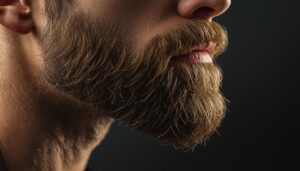
The ducktail beard is one of those styles that looks effortlessly sharp once you understand what makes it work. It’s a full beard shaped into a pointed tip at the chin, and every detail — from length to taper — plays a role in getting it right.
Think of it as architectural grooming — and if you’re working with coarser or curlier texture, these ducktail and other beard styles for Black men show exactly how the shape translates across different hair types.
Here’s what defines it.
Defining The Pointed Chin Shape
ducktail’s whole identity lives in one place: the chin point. centered peak forms where both lower beard edges converge along your face’s midline, sitting just below the natural chin crease.
Chin Point Alignment matters more than most guys realize — even a slight drift kills the look.
Cheek-to-Chin Gradient, Taper Angle Ratio, and Neckline Height Impact all work together to sharpen that jawline definition into something intentional.
Why It is Called a Ducktail
The name actually borrows from the ducktail haircut — that slicked-back, pointed style popular in the ’50s. Both share the same visual metaphor: hair tapering into a clean inverted triangle shape at the end.
That shape analogy transferred naturally into grooming culture, and the naming evolution stuck. When your chin point narrows to that distinctive V, barbers and anyone familiar with ducktail beard history instantly know what you’re going for.
Key Features That Set It Apart
What makes this style instantly recognizable comes down to a few non-negotiables.
The Sharp Chin Peak sits dead center, forming a clean Symmetrical V-Shape and inverted triangle shape that draws the eye downward. High Neckline Placement keeps bulk from muddying the silhouette.
Tapered sides funnel toward the point, defining your cheekbones along the way.
Texture Adaptability and Product Hold Strength keep the full ducktail locked in all day.
Typical Ducktail Beard Length
Length is where the magic either clicks or falls flat.
Short ducktail styles finish around 1–2 cm at the chin point, medium length ducktail cuts land between 2–3.5 cm, and long ducktail lengths push to 5 cm before losing their shape.
These Length Category Definitions and Point Height Guidelines keep Proportional Balance Ratios tight, so your style always reads intentional.
Difference Between Ducktail and Pointed Beards
Both styles look similar at first glance, but the chin tip geometry tells the whole story.
Here’s how they actually differ:
- Chin tip: Ducktail ends in a forked split; pointed beards end in one clean center tip
- Side taper width: Ducktails stay fuller through the cheeks before narrowing
- Neckline height: Ducktails ride higher at the throat center
- Visual symmetry: Ducktails require balancing two "wings"; pointed beards follow one centerline
- Styling versatility: Pointed beards suit more conservative looks; ducktails read bolder
Ducktail Beard History and Rise

The ducktail beard didn’t just appear out of nowhere — it has a real backstory worth knowing. Understanding where it came from helps explain why it looks the way it does and why so many guys keep coming back to it.
Here’s how the style evolved from its roots to where it stands today.
Early Origins in The 1950s
The classic Ducktail Beard didn’t come from a barbershop trend board — it came from the streets. Postwar sailor style and greaser subculture influence shaped its sharp chin point in 1950s Britain and America.
Rock n roll amplified the look, while 1950s magazine features spread it fast. Early barber techniques using finer razors made the full ducktail beard’s precise taper possible for the first time.
Modern Popularity Since The 2000s
The ducktail’s real comeback started when skate culture revival and alternative music pushed grittier, more defined looks into the mainstream. Suddenly, the pointed chin wasn’t just retro — it was sharp, intentional, and everywhere.
What accelerated it further:
- social media influence turned before-and-after shaping clips into grooming blueprints
- Influencer grooming trends made the modern Ducktail Beard instantly recognizable
- Barbershop terminology adoption standardized "ducktail" as a go-to client request
- Celebrity Ducktail Beard inspiration spread fast through photo-based feeds
- product market expansion put the right oils and trimmers in everyone’s hands
Classic Vs Modern Ducktail Interpretations
Two beards, same name — but they’re not really the same style.
| Feature | Classic Ducktail Beard | Modern Ducktail Beard |
|---|---|---|
| Side taper contrast | Even, short sides | Faded, blended sides |
| Point sharpness | Soft or rounded tip | Sharp, defined tip |
| Length preferences | Fuller, longer overall | Compact, tighter shape |
| Grooming finish | Polished, balanced | Strong edge work |
Your ducktail beard styling techniques and grooming finish choices ultimately define which era you’re channeling.
A minimum two inches of length at the base is needed before shaping the ducktail.
Why The Style Remains Popular
Some styles quietly earn their place, and the classic Ducktail Beard is one of them. It photographs well from every angle, making it a reliable Social Media Trend year after year.
Celebrity Ducktail Beard inspiration keeps it visible in men’s grooming trends 2026, while its Adaptable Pairings and Low-Complexity Maintenance mean you don’t need a barber on speed dial to pull it off.
Best Face Shapes for Ducktails

Not every beard style plays nice with every face, but the ducktail is surprisingly adaptable. The pointed chin works like a visual anchor, adding definition where some faces need it most.
The ducktail beard adapts to nearly any face, its pointed chin anchoring definition where it matters most
Here’s how it matches up with your face shape.
Why Round Faces Benefit Most
Round faces have the most to gain from a ducktail beard. pointed chin creates vertical elongation, pulling the eye downward instead of sideways.
That midline emphasis makes your face read more oval than circular.
Cheek slimming happens naturally as the sides taper inward, while jawline sharpening comes from the crisp neckline underneath.
For proportional balance, this is genuinely the ideal match in face shape analysis.
How It Sharpens Square Faces
Square faces carry strong jaw angles that can look block-like without the right beard shape. A ducktail beard changes that through chin projection, which pulls focus downward and away from the widest jaw edges.
Side taper trims the corners back while negative space under the cheekbones creates contour. Texture control keeps the jawline taper clean, so the shape reads sharp without adding bulk.
Oval and Diamond Face Compatibility
Oval and diamond faces both work well with a ducktail beard, though each needs slightly different handling.
Oval faces thrive with balanced cheek taper balance and chin point alignment — keep the point at chin level, not below.
Diamond faces need modest jawline width adjustment since wider cheekbones already dominate.
For both, symmetry centering and smart neckline positioning tie the whole shape together cleanly.
Adjustments for Heart and Triangle Faces
Heart and triangle face shapes need specific tweaks to make a ducktail beard work well.
For a heart face shape, chin length moderation matters — keep the point modest so a narrow chin doesn’t look stretched. Sideburn volume boost near the jaw adds width where it helps most.
For a triangle face shape, neckline height adjustment and cheek curve balancing reduce jaw heaviness, while mustache integration draws the eye upward.
When to Shorten The Chin Point
Beyond face shape adjustments, knowing when to actually shorten the chin point matters just as much. Seasonal growth spikes, humidity-induced puffiness, or patchy growth phases can push the chin peak past its clean "V" shape.
When brushing no longer holds the tip in place, or tip flare control fails with balm alone, small guard length tweaks and a careful trim technique restore the silhouette fast.
How Long to Grow One

Growing a ducktail beard is mostly a waiting game, and knowing what to expect makes the process a lot less frustrating. Your timeline depends on how long you want to go and how your hair naturally grows.
Here’s a breakdown of what the journey looks like from the first week to a full-length ducktail.
Average Beard Growth Per Month
Most men grow about half an inch of beard per month, but that number shifts based on Genetic Density, Hormonal Influence, Age Rates, and Seasonal Growth patterns.
- Nutrition Effects like protein and sleep quality, directly impact your beard growth timeline
- Testosterone levels drive facial hair growth cycle activity
- Younger men often see slower hair growth rate in their late teens
- Dense follicles speed up visible beard length management progress
- Winter shedding and stress can stall apparent beard growth
Minimum Length Before Shaping
Before you pick up a trimmer, your beard needs to clear a few growth milestones first. Most guides set the chin length threshold at 2 inches minimum — anything less and early shaping risks a thin, uneven point.
Side length balance matters too, so density needs to catch up across the cheeks and jaw. Think of it as letting the raw material build before the sculpting begins.
Timelines for Short, Medium, and Long Ducktails
ducktail beard variation follows its own patience timeline.
short ducktail needs 4–6 weeks to hit the 1–2 inch length benchmarks where shaping becomes possible. Medium styles demand 2–3 months before the chin point looks intentional. Long ducktail beard style targets 3–5 inches, which means 4–6 months of growth.
Trim frequency adjusts with each phase duration to keep the point clean.
What to Expect With Patchy Growth
Patchy growth is just the Initial Awkward Phase doing its thing — and almost everyone hits it. Your Patchiness Visibility Factors include skin tone, contrast, and where your follicles cycle in.
Skin Health Impact and Nutrient Influence matter too; low protein and poor sleep slow density. Managing patchy beard growth means waiting it out.
Your Density Improvement Timeline improves as surrounding hairs lengthen and visually close gaps naturally.
Growth Habits That Support Fuller Results
What you put into your body shows up in your beard. Protein Nutrition builds the keratin that makes each hair shaft strong, while Omega-3 Supplementation keeps the skin underneath healthy enough to support growth.
Sleep Hygiene matters just as much — poor rest spikes stress hormones that slow your beard growth timelines.
Stress Reduction, plus Gentle Brushing once or twice daily, round out a solid beard care routine.
How to Trim a Ducktail Beard
Trimming a ducktail isn’t complicated once you know the right order of steps.
Getting it wrong usually comes down to rushing past the basics — wrong tools, a skipped step, or trimming the point before the sides are set.
Here’s exactly what you need to do, from the first brush stroke to the final symmetry check.
Tools Needed Before Trimming
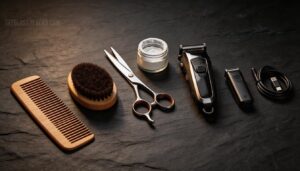
Before you touch a single hair, make sure toolkit is ready. You’ll need a wide-tooth beard comb, beard brush, adjustable guard clippers, precision trimmer, and barber shears or stainless steel scissors for fine detail work.
A solid mirror lighting setup is non-negotiable for spotting uneven edges.
Keep styptic powder kit nearby for nicks, and have your electric trimmer charged.
Brushing and Mapping The Shape
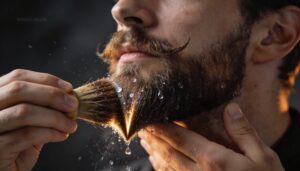
Once your tools are lined up, grab your beard brush and start with Bristle Direction Control — brush downward from chin to jaw to see how the hair naturally lies.
This Growth Zone Mapping reveals your longest center hairs, which anchor the point.
Use the Moisture Shaping Technique by lightly dampening the beard, then apply Iterative Trim Mapping and the Symmetry Check Method while combing both sides evenly.
Trimming The Neckline Correctly
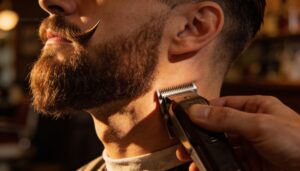
With your shape mapped, it’s time to trim your neckline. Place two fingers above your Adam’s apple — that Finger Width Reference sets your starting line. Use a Guard Adjustment Strategy, beginning longer, then stepping down. Apply Contour Pressure Control with light passes, following Growth Direction Alignment along your neck.
- Shave your neckline angle upward toward each jaw corner.
- Use a precision trimmer for neckline shaping near the edges.
- Always do Side Angle Verification after each pass to catch unevenness.
Cleaning The Cheek Line
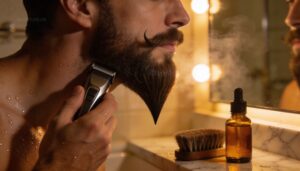
Once your neckline shaping is done, shift your focus upward.
Start with a Warm Water Rinse along the cheek line to loosen oils, then work in a Gentle Cheek Massage with your cleanser.
After drying with Low Heat Drying, use Boar Brush Direction strokes downward to settle hair.
Finish with Targeted Oil Application, and your precision trimmer and beard comb to clean up cheek line shaping precisely.
Tapering The Sides Into The Chin
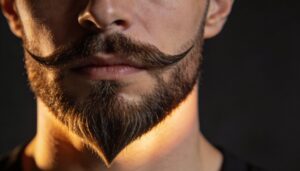
With your cheek line clean, it’s time to work the side taper down toward the chin. Use Guard Length Sequencing — longer guard at the jawline, shorter as you move inward — to nail the Side Taper Geometry gradually.
Apply Scissor Feather Blend where clipper lines look too sharp. Always trim dry; Dry Wet Trimming errors leave the taper shorter than intended.
Shaping and Refining The Point
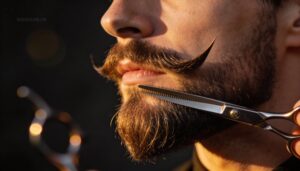
Once the taper meets the chin, Guide Line Placement becomes your best friend — mark a vertical center line so your pointed beard stays symmetrical.
From there, use Grain Direction Trimming with precision scissor work, always snipping in small passes with the Micro Trim Technique:
- Establish Tip Width Ratio — aim for roughly half your chin’s width
- Apply Dry Wet Trimming rules — always keep dry
- Use your beard shaping tool for final edge cleanup
Checking Symmetry From Every Angle

Catching asymmetry early saves you from trimming too far on one side.
Use Mirror Alignment at eye level first — check that both sides reach the chin point evenly. Then angle your Phone Camera in selfie mode for a consistent Side Profile Check.
Good Lighting Setup, ideally daylight, reveals jawline, cheekbones, and chin point imbalances that shadows hide, keeping your Jawline Contour and angular facial features sharp.
Popular Ducktail Beard Styles
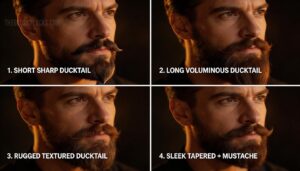
The ducktail isn’t a one-size-fits-all style — it comes in several distinct variations, each with its own look and level of upkeep. Your face shape, hair density, and personal taste all play a role in which version suits you best.
Here are the most popular ducktail beard styles worth knowing about.
Classic Ducktail Beard
The classic ducktail beard is the foundation every variation builds on. Sides taper cleanly into a defined chin point, giving your face sharp, balanced structure.
Here’s what makes it work:
- Chin tip kept between 2–4 inches
- Sides trimmed shorter to funnel toward the point
- Neckline cleaned just above the Adam’s apple
Master this, and everything else follows naturally.
Short Ducktail Beard
The short ducktail beard is proof that less really can do more. Keeping chin hair between 1–3 inches, you get a clean, sharp point without the bulk.
Weekly touch-ups are non‑negotiable here — even a few days of growth softens the tip fast. Apply beard oil daily, use balm for hold, and trim ducktail beard edges with precision scissors and a detail trimmer.
Full Ducktail Beard
The full ducktail beard is where the style really captures focus. You’re working with 4–6 inches of chin growth, so density across the cheeks matters — visible gaps break the taper.
Daily beard oil benefits your skin health prep and keeps coarse hair manageable.
For book a barber consultation early. Patchy growth solutions like strategic trimming and quality styling accessories make all the difference.
Faded Ducktail Beard
A faded ducktail beard is where sharp structure meets smooth shift. The tapering technique blends beard length gradually from the cheeks down, while the chin point stays long and defined. Here’s what shapes it:
- Guard Level Choices move from longer to shorter as you approach the neck.
- Clipper Blending Tips focus on soft passes, never a hard line.
- Neckline Cut Rules keep the cut above the Adam’s apple.
- Skin Fade Contrast makes the ducktail point pop cleanly.
- Fade Touch-Ups target cheeks and jaw every 3–4 days.
This ducktail with fade works best when the tapered ducktail beard sides stay shorter than the chin, letting the skin fade frame the point without swallowing it.
Rounded Vs Sharp Ducktail Tip
Where fade shapes the sides, the tip defines the finish. Your call between a rounded ducktail style and a ducktail with sharp lines changes everything about Tip Shape Impact — how your chin reads, how your beard grooming holds up daily, and how forgiving your beard shaping techniques stay over time.
| Factor | Rounded Tip | Sharp Tip |
|---|---|---|
| Visual Chin Lengthening | Softer, shorter effect | Stronger, elongated line |
| Weather Resilience | Holds shape through humidity | Stray hairs break the peak |
| Patchy Growth Tolerance | Hides gaps well | Exposes center unevenness |
| Trimming Precision | Wider endpoint, more forgiving | Narrow peak, needs a trimming guide |
| Best For | Wavy or coarse texture | Dense, straight hair |
Ducktail With Goatee Influence
The goatee-influenced ducktail centers everything on your chin. Your Goatee Blend Technique keeps the front fuller, tapering outward into the ducktail point rather than spreading wide across the cheeks. Cheek Line Definition stays cleaner here — sharper edges make that centered chin shape pop.
- Neckline Height Adjustment higher than a full beard to avoid a boxy jaw
- Balm Hold Strategies daily to keep flyaways from breaking the taper
- Texture Softening Tips — light beard balm smooths the goatee into the ducktail seamlessly
- Barber Tips for Perfect Ducktail Beard Shape: trim incrementally, never cut the point first
Your beard shaping techniques and consistent beard maintenance keep this intentional.
Ducktail With Mustache Pairings
Pairing a mustache with your ducktail changes the whole overall feel.
Mustache Blend Lines matter here — your Cheek Line Definition needs to connect the mustache to the beard without gaps. Density Matching keeps both areas balanced. Lip Boundary Care prevents overgrowth from crowding the frame.
Whether you’re working a ducktail with a handlebar mustache, a chevron mustache, a disconnected mustache, or a soul patch, Mustache Wax Hold keeps everything intentional.
Ducktail Beard Maintenance Routine
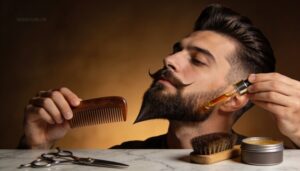
Getting the ducktail right doesn’t stop at the trim — how you care for it daily is what keeps that point sharp and your skin healthy underneath. A consistent routine makes all the difference between a beard that looks intentional and one that just looks long.
Here’s what your maintenance game should cover.
Daily Washing and Conditioning
Washing your ducktail isn’t complicated, but small habits make a real difference. Use a lukewarm rinse to keep hair flexible, then work a sulfate-free shampoo through the beard — especially under the chin where oil builds up.
Follow with a beard conditioner, leave it on for a few minutes, then rinse cool. Pat dry, never rub.
Start detangling from the ends upward using a wide-tooth comb.
When to Use Beard Oil
Beard oil is your ducktail’s daily lifeline — skip it, and even a perfectly shaped point starts looking rough. Apply 2–4 drops right after your post‑shower application, once the hair is slightly damp for even absorption. Add pre‑sleep hydration on dry or coarse beards for overnight recovery.
- Cold weather demands more frequent use for seasonal weather adjustments
- Oily skin types need less product, focused on hair only — smart skin type considerations
- Patchy growth management improves with consistent daily oiling
When Beard Balm Works Better
When oil just won’t cut it, beard balm steps in as your stronger move. It’s thicker, wax-based, and built for real control.
| Situation | Why Balm Wins |
|---|---|
| Post-Wash Restyling | Sets the ducktail point as hair dries |
| Winter Beard Shield | Seals moisture against cold, dry air |
| Coarse Beard Softening | Shea butter coats rough strands deeply |
That Edge Hold and Split End Control balm delivers, makes beard balm conditioning essential for any serious ducktail beard routine.
Brushing and Combing for Shape
Your Direction Control starts with the right tool order. Use a boar bristle brush first to distribute oils and smooth the hair, then switch to a beard comb for the Comb Rake Technique — pulling each side toward the center to build the point.
Moisture Timing matters: brush when hair is slightly damp for a cleaner Heatless Tip Set without flyaways.
Weekly and Biweekly Trim Schedule
Getting your Trim Timing right is what separates a sharp ducktail from one that slowly loses its shape.
Here’s how to build your beard maintenance schedule around what actually works:
- Weekly touchup: Clean neckline strays and check edge lines to trim your ducktail before overgrowth blurs the outline.
- Bulk Control: Light thinning every week keeps the chin point prominent without letting the sides go heavy.
- Guard Consistency: Use the same clipper guard each session — switch one size smaller biweekly for tighter taper refinement.
- Blade Sharpness: Dull blades snag and pull, so clean and dry your trimmer before every session.
- Hair Density Management: Biweekly trims handle noticeable shape corrections; weekly sessions handle the gradual drift.
A solid maintenance routine for ducktail beards isn’t complicated — it’s just consistent.
Preventing Beardruff and Split Ends
Dry skin under your beard doesn’t announce itself — it just flakes and itches until you fix the routine.
| Problem | Fix |
|---|---|
| Beardruff | Hydrating Beard Wash + beard conditioning |
| Split ends | Split End Micro‑Trimming every few weeks |
Pat‑dry drying after washing, low‑friction brushing through knots, and daily beard oil benefit your skin and tips equally.
A Silk Scarf Protection layer at night cuts friction fast.
Seasonal Grooming Adjustments
Your beard doesn’t care what the calendar says — but your routine should.
- Winter Oil Use: Apply beard oil after showering while hair is still slightly damp to lock in moisture.
- Cold Neckline Care: Keep your neckline trimmed to prevent collar friction and irritation.
- Summer Beard Wash: Cleanse more frequently to cut through sweat buildup.
- Seasonal Detangling: Detangle after workouts in summer; after oiling in winter.
Reduce heat styling frequency in warmer months, and increase beard balm usage when cold air tightens everything up. Small seasonal adjustments to beard care keep your ducktail point crisp year-round.
Best Haircuts With Ducktails
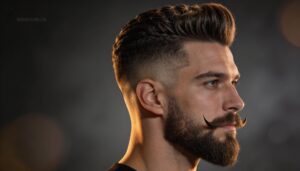
Your beard doesn’t exist in isolation — the haircut above it either makes the whole look or quietly kills it. Getting pairing right is simpler than most people think, once you know what works.
Here are the best haircuts to match your ducktail.
Bald Fade With Ducktail Beard
A bald fade haircut paired with a ducktail beard is one of the sharpest combinations you can wear.
The scalp exposure impact from a clean bald fade creates serious contrast enhancement, making your chin’s pointed tail the undeniable focal point.
When you visit your barber, clear communication about fade blending techniques — where the skin level starts and how it blends upward — ensures everything connects cleanly.
Buzz Cut and Shaved Head Pairings
A shaved head takes the contrast even further than a bald fade haircut. With full Scalp Visibility, your ducktail beard becomes the entire statement.
Here’s what shapes a clean pairing:
- Stubble Contrast sharpens the chin point against bare skin
- Fade Length around guard 1–2, keeps softness without competing
- Edge Definition along the neckline ties everything together
- Mustache Balance prevents the upper lip from stealing focus
- Buzz cut sides need consistent cheek trimming, so the taper reads clearly
Haircuts for Thinning or Receding Hair
Thinning or receding hair doesn’t mean you’re out of options — it actually makes the ducktail work harder for you.
A Textured Crop or Skin Fade keeps the top structured while your beard does the heavy lifting below.
A Forward Fringe can soften a receding hairline, while a Slick-Back Style or Crew Cut keeps everything proportional, letting your ducktail command full attention.
Clean Professional Styling Options
A polished office look demands consistency. Your professional grooming workflow should include these clean line maintenance habits:
- Select the right guard size for each beard zone.
- Apply a finish polishing technique along the neckline edges.
- Follow a styling consistency checklist before every appearance.
- Book a professional barber cut every two to three weeks.
- Use modern fade techniques to keep sides sharp.
Rugged Casual Styling Combinations
A rugged ducktail style lives and dies by what surrounds it.
Pair your beard with a Waxed Canvas Jacket, Plaid Flannel, or Henley Layering underneath, and the whole look clicks into place. Denim Jeans and Workwear Boots ground the silhouette naturally.
Add a ducktail with soul patch or ducktail with chevron mustache for extra edge — a messy quiff ties it all together.
When to See a Barber Instead of DIY
Some situations just call for a professional. If you’re dealing with uneven growth correction, struggling with neckline alignment, or can’t nail precise tip shaping on your own, a barbershop consultation saves weeks of frustration.
Barbers handle cheek area blending and event photo prep far better than guesswork at home. Their professional grooming advice and barber tips for perfect ducktail beard shape are genuinely worth it.
Frequently Asked Questions (FAQs)
Is ducktail beard attractive?
Yes — when the lines are crisp, the jawline reads sharp, and the chin point frames your face shape with intention, it signals masculine perception, visual sharpness, and serious photo presence.
What is the 4 week beard rule?
The 4 week beard rule means you hold off on heavy trimming for the first month.
It gives your hair one full growth cycle to come in, fill gaps, and show its real pattern.
What is Keanu Reeves’ beard style?
Keanu Reeves rocks a rugged aesthetic with a medium-length beard, defined chin point, and patchy texture that nails the John Wick vibe through minimalist grooming and cheek line precision.
Is a ducktail beard always in style?
Not quite. Fashion cycles shift, and so does cultural perception of beard shapes. Right now, mens grooming trends 2026 lean toward clean, shaped looks — which keeps the ducktail genuinely relevant.
How do you style a ducktail beard?
Getting the shape right comes down to working in layers — brush inward from the cheeks, comb the tip center, then lock it with beard wax or balm for a hold that lasts.
What is a pointed ducktail beard?
A pointed ducktail beard tapers the chin hair into a single, defined V-shaped tip. The sides stay shorter, drawing all attention down to that sharp center point.
Is ducktail Beard oil good for a big beard?
Yes, beard oil is great for a thick full ducktail beard.
It locks in moisture, softens coarse hair, and keeps the shape clean without grease — solid beard grooming in under a minute.
How to grow a ducktail beard?
Growing one starts with patience. Let your chin hair reach at least 2 inches before shaping. Support growth through nutrient intake, sleep quality, and hormone balance for the best results.
Why do you need a ducktail beard?
A sharper jawline changes how the world sees you.
The ducktail delivers facial slimming, cheekbone definition, and a confidence boost — all while sharpening your profile and reinforcing a personal brand that means business.
What is a ducktail beard?
A ducktail beard is a full beard trimmed so the chin tapers into a distinct point, creating a clean V-shaped silhouette with a shaped neckline and symmetrical, structured edges.
Conclusion
Nearly 40% of men who sport a beard opt for a ducktail beard, making it one of the most popular styles today. Given its rich history and flexible adaptability, it’s no wonder.
To achieve a sharp ducktail, focus on precise trimming and regular maintenance. A well-groomed ducktail beard exudes quiet confidence and sophistication.
By following these guidelines, you’ll master the art of growing and styling a ducktail beard that perfectly complements your face shape and personal style every day.