This site is supported by our readers. We may earn a commission, at no cost to you, if you purchase through links. This content is for general informational and educational purposes only and is not a substitute for professional medical, dermatological, or nutritional advice.
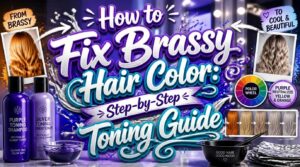
You lifted your hair out of the salon chair ash blonde, cool, exactly right. Two weeks later, the mirror shows something closer to warm copper than cool blonde. That shift isn’t random, and it isn’t damage in the traditional sense either.
Brassiness happens because color doesn’t fade evenly. Cool pigments go first, stripped away by UV exposure, heat tools, hard water, and every wash in between. What’s left underneath are the warm undertones your natural hair always carried, yellow in light blondes, orange in dark blondes, red and burgundy in brunettes.
The good news is that knowing how to fix brassy hair color is less guesswork than most people think. The right corrector, matched to your specific tone, takes care of most of this at home.
Table Of Contents
- Key Takeaways
- What Brassy Hair Color Looks Like
- Why Brassy Hair Color Develops
- Match Correctors to Brassy Tones
- Prepare Hair for Safe Toning
- Fix Brassy Hair Step by Step
- Top 3 Products for Brassy Hair
- Prevent Brassiness From Coming Back
- When to Visit a Colorist
- Frequently Asked Questions (FAQs)
- What color cancels out brassy hair?
- How can I fix my orange brassy hair at home?
- How to remove brassy color from hair?
- Why is my hair still brassy after toning?
- What color gets rid of brassy hair?
- How can I keep my hair from becoming white?
- How to get rid of brassy hair?
- How do you fix brassy hair in a salon?
- How do I remove the brassy color from my hair?
- What color cancels out brassy orange hair?
- Conclusion
Key Takeaways
- Cool pigments always fade first, leaving warm undertones — yellow, orange, or red — exposed, so matching your corrector to your specific tone (purple for yellow, blue for orange, green for red) is what actually fixes brassiness instead of masking it.
- Hard water minerals, UV exposure, heat tools, and sulfate shampoos all strip cool pigment faster than toning can restore it, meaning protecting your color between sessions matters just as much as the toning itself.
- Hair porosity controls how evenly toner absorbs and how long it holds, so always do a strand test and deep condition porous hair before applying any corrective treatment.
- If at-home toning keeps failing on the same patchy areas or your hair feels gummy and weak, that’s your signal to see a colorist — structural damage has to be addressed before color correction can actually work.
What Brassy Hair Color Looks Like
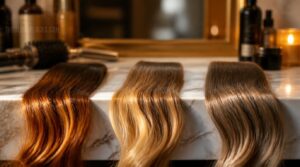
Brassy hair doesn’t look the same on everyone — the shade you’re dealing with depends on your starting color, your hair’s history, and how far the toning has faded. Knowing exactly what you’re looking at is the first step toward fixing it correctly. Here’s what to watch for across different hair types and conditions.
Once you’ve identified your specific shade of brassiness, how long to leave toner on brassy hair varies based on your hair’s condition and the product you’re using.
Yellow Tones in Light Blonde
Light blonde hair shows yellow brassiness as bright, warm reflections that push your color toward a pure sunshine hue. This happens fastest on porous hair, which absorbs warm pigment very quickly. Sunlight accelerates it, and mineral buildup from hard water intensifies the cast.
Purple shampoo is your first line of defense for toning yellow highlights and neutralizing warm reflections effectively.
Since hair porosity affects color retention, highly porous strands fade faster and may need toning touch-ups every 4–6 weeks to maintain your desired tone.
Orange Tones in Dark Blonde
Where yellow brassiness plagues lighter shades, dark blonde develops coppery orange tones through the mid lengths and ends. This often surfaces at level 7 to 8 during lightening, when root warm pigments are fully exposed. Porous hair absorbs warmth quickly, making the shift more obvious.
Under sunlight, that contrast is hard to miss. Blue demipermanent toner corrects orange brassiness most effectively.
Red Tones in Brunette Hair
Brunette hair develops burgundy undertones, mahogany shades, and wine tones rather than yellow. Copper reflections surface through mid-lengths and ends first. Red fading outpaces the brown base, making color correcting brassy hair feel urgent. Watch for:
- Crimson cast at the ends
- Wine warmth through mid-lengths
- Copper glint under direct sunlight
- Burgundy cast near regrowth lines
- Root-to-tip tone unevenness
Mixed Brassiness After Bleaching
Bleached hair rarely settles on just one problem tone. When yellow, orange, and red all surface together, you’re facing mixed brassiness, a layered challenge that single-formula toners can’t always fix on their own. A two-step toning process often yields the most balanced, cool result.
Always strand test first to see how corrective pigment behaves before committing to a full application.
Check Hair Porosity Levels
Hair porosity determines how well your hair holds toner and corrective pigments. To check it, drop a clean strand into room-temperature water and watch for 3 to 5 minutes. Sinks fast? High porosity. Still floating? Low.
High porosity hair absorbs purple shampoo fast but loses the pigment just as quickly, making color correction harder to sustain between regular toning treatments.
Why Brassy Hair Color Develops

Brassiness doesn’t appear by accident — your hair is reacting to a combination of factors that chip away at cool tone over time. Understanding the real causes gives you the power to stop them at the source, not just mask the results. Here’s what’s actually working against your color.
Brassiness isn’t random — it’s your hair reacting to forces quietly stripping cool tone over time
Warm Pigments Showing Through
Every strand carries warm undertones beneath its surface. When your dye loses strength, those pigments push through, shifting your color toward yellow brassiness or orange brassiness depending on your natural base.
Porous hair lets warm tones surface the fastest, and sunlit conditions make the pigment imbalance even more visible. Color correction works by counteracting these tones on the color wheel.
Hair Dye Oxidation and Fading
When oxidative dye first sets inside the cortex, hydrogen peroxide opens the cuticle and locks new color molecules in place.
Over time, UV exposure breaks those molecules down, heat styling accelerates their migration toward the surface, and repeated washing strips them away.
Porous hair loses pigment fastest, which is why using antioxidant-rich, sulfate-free shampoos protects color and slows brassy hair fading a lot.
Hard Water Mineral Buildup
Your showerhead might be quietly fueling your brassiness. Hard water minerals like calcium and magnesium form a stubborn, glassy film on every strand, blocking toning treatments and letting warm tones completely dominate.
Use a clarifying shampoo weekly to clear product buildup, an EDTA pre-wash for deeper mineral removal, and install a shower filter to stop the problem at the source.
UV, Chlorine, and Heat Damage
Sun, chlorine, and heat each strip cool pigments differently, but their real damage happens when they combine forces.
UV exposure breaks down dye molecules through photo-chemical reactions. Chlorine oxidation attacks the outer hair layer, and heat accelerates both processes. Hit the pool on a sunny afternoon, and brassiness builds up much faster than purple shampoo or toning treatments can correct.
Sulfates and Frequent Washing
Washing hair daily strips cool pigments faster than toning restores them. Sulfate shampoos with SLS or SLES are the top driver of brassy hair relapse.
- Sulfate-free shampoo slows color fading with gentler cleansing
- Washing less often keeps toning results intact longer
- Porous hair loses color fastest, so wash frequency matters
Space washes every 2-3 days to guard your toning process.
Match Correctors to Brassy Tones
Not every brassy tone reacts to the same corrector, so picking the right one matters more than people realize. The color wheel is your guide here — opposite hues cancel each other out when applied correctly. Here’s how each corrector maps to the specific tone you’re dealing with.
Purple Cancels Yellow Tones

On the color wheel, purple sits directly opposite yellow, which is exactly why violet pigment cancels brassy yellow tones on contact. That’s the science behind toning with purple shampoo: no lifting, no chemicals, just corrective pigment doing its job.
For a deeper look at how this works across different hair types, purple shampoo effects on brown, black, and blonde hair vary more than most people expect.
Understanding the full toning process is easier once you explore hair color correction techniques that show how pigment layering works across different base tones.
Apply it to damp hair and leave it for 3 to 5 minutes, adjusting based on how yellow your hair reads.
Blue Cancels Orange Tones
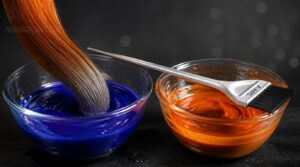
Orange tones follow the same color wheel logic. Blue sits directly opposite orange, so blue-based toners deposit corrective pigment that neutralizes copper warmth without lifting the hair.
For blue shampoo, repeated use builds the correction gradually. For toners, leave the product on for 5 to 15 minutes, adjusting based on how deep the orange reads after a strand test.
Green Helps Neutralize Red
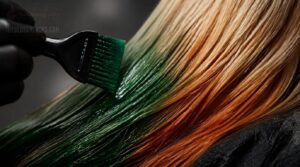
Green helps neutralize red the same way blue controls orange. For brassy hair with crimson warmth, green toner application deposits corrective pigment on levels 7 to 9 bases. Hair porosity impact shapes every toning session:
- Porous strands absorb green pigment faster
- Bleached hair needs shorter processing time
- Always strand-test first
- Keep green pigment concentration low
- Rinse cool to lock results
Toner Versus Gloss Treatments
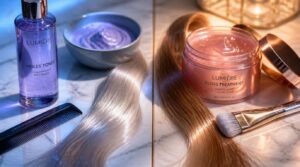
Once you know which corrective pigment your hair needs, choose how to deliver it.
Toner targets undertones directly after lightening, but fades in 2 to 4 weeks, meaning frequent reapplication.
A gloss treatment smooths the cuticle and boosts shine, lasting 4 to 6 weeks with minimal upkeep. Gloss suits all hair types; toner works best on lightened or bleached strands.
Why Toner Sometimes Fails
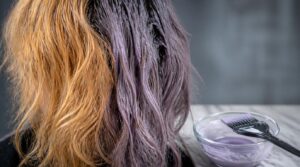
Toner doesn’t always deliver the cool, even result you expect, and the reason is usually one of four things: inconsistent hair porosity, leftover residue, formula issues, or application gaps.
If your hair has uneven porosity, some sections grab pigment fast while others barely absorb it, leaving patchy, unpredictable results.
Always porosity-test before toning.
Prepare Hair for Safe Toning
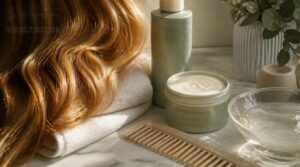
Toning works best when your hair is ready for it — not just clean, but truly prepped. Skipping this step is one of the most common reasons at-home toning falls flat or goes patchy. Before you reach for that purple shampoo or gloss, here’s what to check first.
Assess Existing Hair Damage
Before toning brassy hair, run three quick checks:
- Elasticity Test: Pull a strand. Snapping signals poor hair elasticity and low strand strength.
- Cuticle Inspection: Run fingers mid-shaft down. Roughness confirms cuticle damage.
- Porosity Check: Wet a strand. Fast absorption means high hair porosity and patchy toning.
Low heat tolerance signals that hair damage repair must come first.
Clarify Stubborn Product Residue
If your hair looks dull despite conditioning, product buildup is likely blocking toner from bonding evenly. Silicone-rich formulas leave a slippery coating that traps old pigment and distorts light reflection. Porous hair absorbs residue faster, since larger cuticle gaps pull in buildup more aggressively.
A quick clarifying treatment before toning lifts that film so corrective pigments can grip the shaft cleanly.
Remove Hard Water Minerals
Hard water deposits calcium, iron, and chlorine on your strands, creating a film that distorts tone.
Signs of mineral buildup:
- Hair feels rough or coated after washing
- Color looks dull despite conditioning
- Products sit on strands instead of rinsing clean
A vinegar rinse (one part to three) dissolves deposits quickly. Shower filters help cut chlorine and iron at the source.
Strand-test Corrective Treatments
Skip the guesswork and strand test first. Take a 1 to 2 centimeter section and apply your chosen corrector exactly as planned.
| Brassy Tone | Corrector |
|---|---|
| Yellow | Purple toner |
| Orange | Blue toner |
| Red | Green toner |
Use the correct developer volume, matching your full-head plan exactly. Process for 5 to 20 minutes, dry completely, and assess strand test results under natural light.
Deep-condition Porous Hair
Porous hair is like a sponge that soaks up product fast but struggles to hold onto moisture.
Before toning, apply a moisture-rich deep conditioner to damp strands and cap with a warm towel for 20 to 30 minutes. Heat-assisted absorption drives ingredients deeper into the open cuticle.
Finish with a leave-in sealing step to lock hydration in before you tone.
Fix Brassy Hair Step by Step
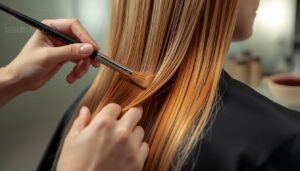
Once you’ve prepped your hair, the actual toning process is straightforward — it just takes the right order of steps. Rushing through or skipping one can mean uneven results or color that fades faster than it should. Here’s exactly how to work through it.
Wash With Color-correcting Shampoo
Start with the right match for your tone. A violet pigment shampoo like purple shampoo cancels yellow in light blonde, while blue shampoo grips orange in darker blonde shades.
If your blonde keeps turning warm no matter what you do, learning what brassy hair actually looks like helps you spot the problem early and pick the right toning shampoo.
Lather your color correcting shampoo into damp hair, from roots to ends.
Use a sulfate-free toning shampoo one to two times weekly to protect color and help limit mineral buildup.
Wait Three to Five Minutes
Once your purple shampoo is lathered in, set a timer right away. The color development window is 3 to 5 minutes, giving violet pigments time to cancel warmth.
- Three minutes noticeably reduces yellow tones
- Five minutes deepens orange neutralization
- Avoid all heat exposure during the wait
- Don’t exceed five minutes to prevent over-toning
- Use a timer each time for consistency
Apply Toner or Gloss Evenly
With timing nailed down, the next step is toner application, and technique matters here.
Work on damp hair in thin sections, using a non-porous applicator from root to tip. Focus extra product on mid-lengths and ends, where brassiness usually holds strongest. Comb through with a wide-tooth comb every two minutes to confirm even saturation before rinsing.
Rinse and Deep Condition
Once toner has processed, rinse your hair with cool water to seal the cuticle and lock in tone. Apply a deep conditioning mask for 10 minutes, combing from mid-lengths to ends for even distribution. Wring hair out so conditioner adheres evenly.
- Use a color-safe conditioner for color protection
- Secure hair up while it processes
- Rinse thoroughly to finish aftercare completely
Recheck Color After Drying
Color always looks slightly lighter once dry, and pigment settling can shift your tone noticeably. Step outside for a natural light check before judging results.
If yellow patches remain, cool air dry slows oxidation and helps the toner set accurately. Spot any leftover brassiness? A quick selective reapplication of purple shampoo targets those areas without overprocessing the rest.
Top 3 Products for Brassy Hair
Not every toning product works the same, and the wrong pick can leave your hair looking dull or over-processed. Luckily, a few standout options consistently deliver real results for brassy hair. Here are three worth keeping in your routine.
1. Matrix Brass Off Blue Shampoo
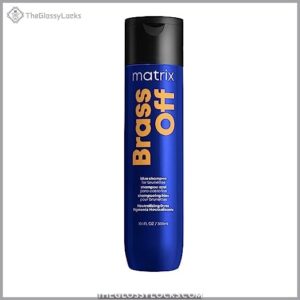
Matrix Brass Off Blue Shampoo is built specifically for lightened brunettes and dark blondes dealing with orange or copper brassiness.
Its blue-violet pigment formula sits on the hair surface, neutralizing warmth without shifting your base shade. Apply it to wet hair, lather well, and leave it on for 3 to 5 minutes before rinsing. For best results between salon visits, pair it with a sulfate-free conditioner formulated for colour-treated hair to seal the cuticle and extend your toner’s life.
Always wear gloves to avoid skin staining. For the best results, follow with the matching Brass Off Conditioner to seal in cooler tones and prevent dryness.
| Best For | Lightened brunettes and dark blondes who want to neutralize brassy orange or copper tones between salon visits. |
|---|---|
| Tone Target | Orange & copper tones |
| Hair Suitability | Color-treated & highlighted |
| Shampoo Size | 10.93 oz |
| Pigment Color | Blue-violet |
| Staining Risk | Skin staining if not rinsed |
| Dryness Risk | Yes, especially porous hair |
| Additional Features |
|
- Deposits blue-violet pigments that effectively cancel out unwanted warmth without altering your natural base color
- Flexible enough to use every other wash or 1–2 times a week, so you can dial in how much tone correction you need
- Leaves hair feeling soft and shiny, especially when paired with the matching Brass Off Conditioner
- Can stain skin during application, so gloves are a must and quick rinsing is important
- May be drying on porous or damaged hair, meaning you’ll likely need a deep conditioning treatment afterward
- Pigment can build up over time on overly porous sections, potentially requiring a clarifying shampoo or gentle bleach bath to reset
2. Amika Bust Your Brass Shampoo
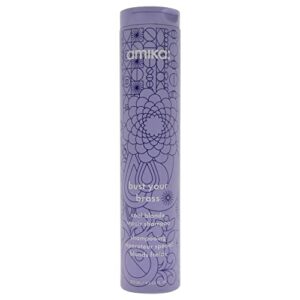
Where Amika’s Bust Your Brass stands apart is its ultra violet formula paired with nourishing ingredients most purple shampoos skip entirely.
Wild cherry bark extract brightens cool tones and adds visible shine, while hydrolyzed keratin, avocado oil, and sea buckthorn seed oil strengthen and soften your hair with each wash.
Leave it on for 2 to 3 minutes, no longer, or you risk a temporary purple tint.
Because it’s sulfate-free, your color fades more slowly between appointments.
| Best For | Anyone with blonde, silver, highlighted, or balayage hair looking to neutralize brassiness while actually nourishing their strands at the same time. |
|---|---|
| Tone Target | Yellow & brassy tones |
| Hair Suitability | Color-treated blonde, silver & gray |
| Shampoo Size | 10.1 fl oz |
| Pigment Color | Purple |
| Staining Risk | Temporary purple tint if overused |
| Dryness Risk | Yes, especially fine hair |
| Additional Features |
|
- Goes beyond color correction — wild cherry bark, hydrolyzed keratin, and avocado oil work together to strengthen, hydrate, and add real shine
- Sulfate-free formula helps color last longer between salon visits
- Clinically proven to tone, hydrate, and repair hair, not just strip brassiness
- Can leave fine or natural blonde hair feeling dry or stiff with regular use
- Timing matters — leave it on too long and you risk a temporary purple tint on your strands
- Pricey for a 10 oz bottle, especially if you need to use it frequently to maintain cool tones
3. Color Balance Shampoo and Conditioner Set
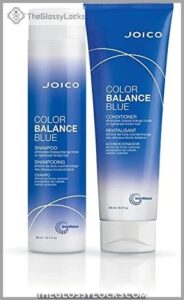
If you want one set that controls both yellow and orange brass simultaneously, this duo earns its place in your routine. The shampoo deposits violet pigments to cancel yellow tones, while the conditioner’s blue pigments target orange and copper undertones in darker shades. Together, they’re formulated to preserve 89% of your color for up to 18 washes.
Leave the shampoo on for up to two minutes, then follow with the conditioner from mid-lengths to ends. Sulfate-free and pH balanced, it’s a practical choice for color-treated brunettes and blondes alike.
| Best For | Color-treated brunettes and blondes who want to fight both yellow and orange brassiness while keeping their color vibrant between salon visits. |
|---|---|
| Tone Target | Brassy orange tones |
| Hair Suitability | Color-treated & highlighted brown |
| Shampoo Size | 10.1 oz |
| Pigment Color | Blue |
| Staining Risk | Blue staining on hands & surfaces |
| Dryness Risk | Limited conditioner moisture |
| Additional Features |
|
- Tackles yellow and orange tones at the same time with violet and blue pigments, so you’re not juggling two separate products
- Preserves 89% of hair color for up to 18 washes, making it a solid investment for anyone who colors their hair regularly
- Works as a toning treatment on dry or damp hair, giving you flexibility in how you use it
- Can temporarily stain hands and surfaces blue, so you’ll want to be careful during application
- May darken hair slightly, which could be a downside if you have very light blonde or white tones
- The conditioner isn’t the most moisturizing option for heavily bleach-damaged hair, so you may need a separate deep treatment
Prevent Brassiness From Coming Back
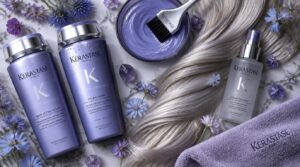
Toning your hair is only half the battle — keeping brassiness away is where the real work begins. A few consistent habits make the difference between color that lasts and color that turns warm within weeks. Here’s what to build into your routine.
Use Filtered Shower Water
Hard water works against your color every time you shower. Minerals like iron and calcium accelerate dye oxidation, making warm undertones more visible.
A showerhead filter reduces chlorine and iron deposits before they reach your hair. Look for NSF/ANSI 177-certified options rated specifically for shower use.
That single upgrade is one of the simplest long-term defenses against brassiness returning.
Shield Hair From UV and Heat
Sun and heat quietly degrade your color vibrancy. UV exposure breaks down cool pigments, making warm tones surface faster than you’d expect.
Before heading outside, mist your hair with a heat protectant or UV protection spray, then cover it with a wide-brimmed hat or scarf during peak hours. Damp hair absorbs heat damage more easily, so always dry it first.
Rinse Promptly After Swimming
Pool water is tougher on blonde hair than most people realize. Chlorine doesn’t just rinse off when you climb out — it starts bonding to your hair shaft within minutes, stripping moisture and accelerating color fading.
Rinse with clean water immediately after swimming. Even a quick shower-head rinse removes surface chlorine before it penetrates deeper and reacts with any copper minerals in the water.
Refresh Toner When Needed
Toner doesn’t last forever. Most refreshes hold for 2 to 6 weeks, depending on how often you shampoo and your hair’s porosity.
High-porosity hair fades faster, so you may need to re-tone every 1 to 3 weeks.
Watch for the first sign of yellow or orange warmth returning, and reach for your purple shampoo before brassiness takes hold.
When to Visit a Colorist
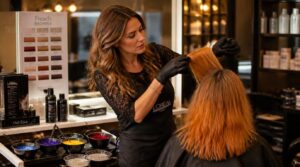
At-home toning goes a long way, but it does have its limits. Some situations call for a professional colorist — not because you’ve failed, but because the problem is bigger than a bottle of purple shampoo can solve. Here’s when it’s time to book that appointment.
Severe Orange or Red Tones
Vivid copper orange brassiness running through the mid-shaft isn’t something purple shampoo can handle on its own. These severe tones often appear after bleaching dark blonde or light brown hair, where warm pigments sit deep.
Permanent toner from a colorist reaches those stubborn layers correctly, especially on porous hair, which holds color unevenly and fades cool tones very fast.
Patchy or Banded Hair Color
Patchy brassiness tells a different story than even, all-over warmth. Uneven pigment deposit during a single session leaves visible light and dark bands, and inconsistent processing times mean some sections hold brassy tones while others don’t.
Hair porosity makes this worse. Porous sections absorb toner unevenly, creating banded hair color that at-home color correction can’t reliably fix.
Bleached Hair Feels Compromised
When bleached hair snaps during combing or feels gummy when wet, that’s structural weakness signaling real damage, not just dryness. Bleaching breaks internal bonds, causes cuticle loss, and increases porosity, making strands absorb toners unevenly and release moisture too fast.
Applying more product to compromised hair won’t fix brassiness. A colorist can assess bond integrity first and recommend repair before any color correction.
At-home Toner Repeatedly Fails
If your at-home toning keeps stalling on the same brassy patch, the issue often lies beneath the surface. Porous hair absorption pulls pigment unevenly, making uneven toner application almost inevitable.
Incorrect shade selection, wrong developer volume, or overprocessing compounds each attempt.
Even purple shampoo can’t hold hair color fading at bay when the real problem is structural. A colorist can.
Consider Lowlights for Balance
Depth is the real antidote to persistent brassiness. Lowlight placement introduces cooler, darker strands that visually push warm tones back, creating the dimension toning alone can’t deliver.
- Lowlights add depth, counteracting brassy areas
- Cool tone selection matches your skin undertones
- Fine strands through midlengths reduce orange prominence
- Selective placement keeps crown brightness intact
- Creates natural dimension, making color look intentional
Frequently Asked Questions (FAQs)
What color cancels out brassy hair?
The answer lives in the color wheel: purple cancels yellow, blue cancels orange, and green neutralizes red. Match the corrector to your specific tone for the best result.
How can I fix my orange brassy hair at home?
Wondering why that copper tone correction isn’t lasting? Start with a blue shampoo technique to fight orange brassiness head on. Always strand test first, apply your hair toner, then follow with a post-toning deep condition.
How to remove brassy color from hair?
To remove brassy color, use a purple or blue toning shampoo on damp hair for 3 to 5 minutes, then rinse. Repeat once or twice weekly until unwanted warm tones fade.
Why is my hair still brassy after toning?
Your hair can stay brassy after toning for several reasons: the undertone is mismatched, toner fades too fast, hair porosity creates uneven absorption, or mineral buildup and product residue block pigment from depositing properly.
What color gets rid of brassy hair?
Like paint mixing, color correction works on opposites. Purple cancels yellow, blue cancels orange, and green neutralizes red. Match the corrector to your specific brassy tone for targeted, effective results.
How can I keep my hair from becoming white?
White hair is largely genetic, but vitamin B12 deficiency, chronic stress, and smoking can speed it up a lot. Supporting melanin production through consistent nutrition, stress management, and quitting smoking helps preserve your natural color longer.
How to get rid of brassy hair?
Brassy hair is like a warm filter you never switched on. Purple shampoo and blue toner drive brassiness neutralization through color correction toning, while mineral buildup removal, UV protection, and deep conditioning complete your routine.
How do you fix brassy hair in a salon?
A colorist starts with a color correction assessment, then applies a custom pigment mix to neutralize your specific brassiness. Professional gloss application seals the cuticle and locks in cool tone, restoring clarity and lasting shine.
How do I remove the brassy color from my hair?
To pull unwanted warmth from your hair, match your corrector to the undertone. Purple shampoo neutralizes yellow brassiness, blue works on orange, and a color-depositing mask or toner application locks in cooler, more balanced results quickly.
What color cancels out brassy orange hair?
Blue cancels orange on the color wheel. Think of it like mixing paint: blue pigment neutralizes warm copper hues directly. That’s why blue shampoo targets brassy orange tones, not purple.
Conclusion
Like an alchemist reading fading parchment, knowing how to fix brassy hair color starts with reading exactly what your hair is telling you. Cool pigments fade first, always. What shows up warm isn’t failure, it’s just chemistry.
Purple cancels yellow. Blue cancels orange. Match the corrector, protect against heat, UV, and hard water, and refresh your toner every four to six weeks. Your color won’t drift again without you knowing how to pull it back.
- https://us.johnfrieda.com/blog/blonde-hair/how-to-correct-and-avoid-brassy-hairs
- https://www.lorealparisusa.com/beauty-magazine/hair-color/hair-color-application/what-color-covers-orange-hair
- https://www.hairbarnyc.pro/what-to-do-when-a-clients-color-turns-brassy-the-professional-stylists-guide-for-2026