
This site is supported by our readers. We may earn a commission, at no cost to you, if you purchase through links.
Winter’s chill isn’t the only thing that can turn your skin into parchment—cranking up the heat indoors or lingering in a steamy shower can strip away every drop of moisture you’ve got. If your skin feels tight or dull, you’re not alone.
The good news? Nature offers simple, effective ways to keep your skin soft and hydrated without resorting to harsh chemicals or complicated routines. With a few natural skin moisturizing tips and thoughtful daily habits, you can turn dry, thirsty skin into a canvas that glows with health.
Here’s how to nourish and protect your skin from the inside out.
Table Of Contents
Key Takeaways
- Natural oils like coconut, olive, and jojoba help lock in moisture and repair your skin’s barrier without clogging pores.
- Applying moisturizer within three minutes after showering can seal in up to half of your skin’s hydration.
- Drinking enough water and eating hydrating foods like fruits and leafy greens keep your skin supple from the inside out.
- Gentle cleansing, regular exfoliation, and using hypoallergenic products protect sensitive skin and boost the effectiveness of natural moisturizers.
Why Skin Needs Natural Moisturizing
Your skin’s craving for moisture is more than just a comfort issue—it’s about staying healthy, vibrant, and strong.
Your skin needs moisture not just for comfort, but to stay healthy, vibrant, and resilient every day
Wondering why dryness happens or how dehydration affects your complexion? Let’s take a closer look at what makes natural moisturizing so important.
Common Causes of Dry Skin
Dry skin isn’t just a nuisance—it’s your skin’s signal that something’s off balance. Think bone-dry winter air, indoor heating, or extra-hot showers—all steal moisture, leaving a tight, rough texture behind.
Harsh cleansers disrupt skin pH, while wind and cold weather chip away at hydration.
These factors make natural moisturizers and smart dry skin remedies absolute essentials for healthy, comfortable skin.
Effects of Dehydration on Skin Health
When your body’s water tank runs low, your skin pays the price. Dehydration effects show up as less skin elasticity and a drop in hydration levels—think dullness and roughness. You’ll notice:
- Reduced skin turgor
- Increased water loss
- Lower skin barrier strength
- Diminished brightness
- Slower water retention recovery
Hydrate your skin, keep it resilient.
Benefits of Natural Moisturizers
So, when your skin’s thirst isn’t quenched, natural moisturizers step up. Natural oils like jojoba and olive lock in hydration, while aloe vera and honey facial masks soothe and soften.
These moisturizer ingredients feed your skin nutrients, helping you maintain a natural skincare routine that actually works. Herbal remedies and gentle masks make moisturizing dry skin feel less like a chore.
Nourishing Oils and Natural Ingredients
For keeping your skin healthy, natural ingredients can make a real difference. Some oils and everyday kitchen staples offer gentle, nourishing benefits.
Here’s what you can use to help your skin stay soft and hydrated.
Coconut, Olive, and Jojoba Oil Benefits
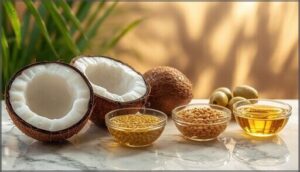
Ever wonder how a simple kitchen staple can transform your skin’s comfort? Coconut Oil, Olive Oil, and Jojoba Oil aren’t just Natural Emollients—they boost Skin Hydration, promote Skin Barrier Repair, and pass Oil Stability Tests with flying colors. Their Oil Absorption Rates make Moisturizer Combinations easy and safe for everyday use.
- Promotes smoother texture
- Locks in moisture
- Repairs barrier function
- Rarely clogs pores
Aloe Vera, Honey, and Green Tea Masks

Aloe Vera, Honey Masks, and Green Tea Extracts are your allies for natural skincare. These masks boost hydration, calm irritation, and protect with antioxidants. You’ll notice softer, smoother skin within weeks. Want to see how they compare? Here’s a quick glance:
| Natural Moisturizer | Key Benefit | Skin Hydration Tips |
|---|---|---|
| Aloe Vera | Soothes, heals | Use ≥0.5% gel |
| Honey | Locks in moisture | Dilute to 20–30% |
| Green Tea | Calms, protects | 0.5–2% EGCG extract |
Using Milk and Buttermilk for Hydration
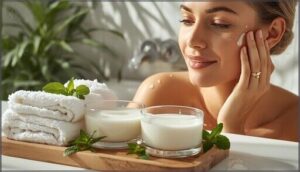
Curiosity leads many to try milk or buttermilk for Natural Hydration Methods. You’ll notice a quick, superficial boost—thanks to Milk Hydration Benefits and Lactic Acid Effects.
For safe, practical Buttermilk Skin Care, follow these Skin Hydration Tips:
- Use pasteurized milk.
- Rinse after 10–15 minutes.
- Avoid if sensitive or allergic.
- Moisturize skin right after.
Daily Habits for Moisturized Skin

Caring for your skin starts with the small things you do every day. Simple habits make all the difference for keeping your skin hydrated and healthy.
Let’s look at a few easy routines that can help your skin stay soft and smooth.
Drinking Enough Water
Think of water as your skin’s secret weapon—skip it, and you’ll see dry patches and a lost glow. Meeting your daily fluid needs (about 2.7–3.7 liters) boosts hydration levels, skin elasticity, and overall skin health.
Here’s a quick look at how hydration shapes healthy skin:
| Water Intake Benefits | Dehydration Effects |
|---|---|
| Hydrate Your Skin | Dull appearance |
| Skin Elasticity | Dryness |
| Moisturizing | Itching |
| Skin Health | Roughness |
| Healthy Skin | Wrinkle risk |
Using Gentle, Hypoallergenic Cleansers
Did you know gentle cleansing is the backbone of natural skin care? If you want to hydrate your skin and keep it healthy, choose gentle hypoallergenic soap or fragrance-free cleansers. They maintain your skin pH balance and reduce irritation, especially for sensitive skin care. Here’s what to look for:
- Soap-free formulas
- Hypoallergenic products
- Fragrance free
- pH-balanced cleansers
- Ceramide-enriched options
Applying Moisturizer After Showering
Did you know your shower routine can make or break your skin hydration? The best moisturizing tip I can give: apply your moisturizer within three minutes after bathing. This simple post-shower care step locks in up to 50% more moisture, giving your skin that natural glow.
For natural skin care, timing is everything—don’t let precious hydration slip away.
Protecting Skin From UV Rays
Sunlight’s warmth can be a double-edged sword for your skin. Want to keep your glow and avoid trouble? Daily UV Protection is key for Skin Health Benefits. Here’s what works:
- Use broad spectrum sunscreen for Photoaging Prevention
- Wear UPF clothing outdoors
- Seek shade during peak hours
- Try natural skincare products with zinc oxide
- Reapply sunscreen for full Sunscreen Benefits
Effective Moisturizing Techniques
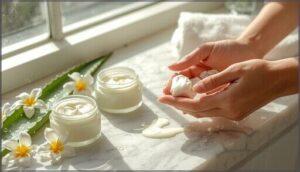
Getting the most out of your moisturizer isn’t just about what you use—it’s how you use it. A few simple techniques can make a big difference in how your skin looks and feels.
Here’s what you need to know to keep your skin at its best.
Choosing The Right Natural Moisturizer
Labels tell a story, but what matters is how Natural Skincare Products treat your skin’s pH balance. For instance, non-comedogenic oils like jojoba and squalane, blended with ceramides, can boost moisture retention by 28%. If you’re sensitive, fragrance-free Moisturizer Types reduce irritation. Use this guide to decode Natural Ingredients and DIY Moisturizers:
| Moisturizer Types | Skin pH Balance | Oil Blending |
|---|---|---|
| Ceramide-rich | Neutral | Jojoba + Squalane |
| Fragrance-free | Mildly acidic | Almond + Sunflower |
| Hyaluronic blend | Balanced | Olive + Coconut |
| DIY Moisturizers | Customizable | Aloe + Honey |
| Natural Products | Stable | Buttermilk + Oils |
Exfoliating to Boost Absorption
Once you’ve chosen a natural moisturizer, exfoliation methods can make all the difference. Gentle scrubbing—think jojoba beads or enzyme exfoliants—removes dead cells, boosting absorption by up to 60%.
This means your skin barrier welcomes hydration more easily, helping you moisturize skin and retain moisture longer. Exfoliate once or twice weekly for smoother, softer, and well-hydrated skin.
Using Humectants and Occlusives
Now that your skin’s prepped, let’s talk hydration strategies. Humectant benefits—think glycerin or hyaluronic acid—pull water into your skin, boosting moisture retention by up to 25%. Occlusive effects from shea butter or beeswax seal that hydration in, strengthening your skin barrier.
For dry days, layering both is one of my favorite moisturizing tips to hydrate your skin.
Overnight Moisturizing Methods
Once you’ve layered your humectants and occlusives, nighttime is when your hydration routines really shine. Night masks, rich overnight creams, or a simple skin serum can boost moisture by up to 20% while you sleep.
Try applying natural remedies like aloe vera or coconut oil as a final moisturizer layer—your skin will wake up softer, smoother, and deeply hydrated.
Preventing and Managing Dry Skin Naturally

Keeping your skin hydrated takes more than just a good moisturizer. It’s about daily choices and knowing what your skin needs as things change.
Here’s how you can naturally prevent and manage dry skin all year round.
Adjusting Skincare for Seasonal Changes
Ever notice how your skin feels tighter as the cold creeps in? That’s your cue for some Seasonal Skin Care.
Winter Moisturizing means switching to richer creams and layering occlusives for Dry Skin Relief. Humidity Control indoors helps hydrate your skin, while adapting to Skin Temperature shifts keeps Skin Moisture steady.
Environmental Adaptation is your secret weapon for soft, comfortable skin year-round.
Diet and Lifestyle Tips for Hydration
Honestly, healthy skin starts from within. If you want to hydrate your skin, focus on Water Intake and Hydration Foods—think juicy fruits, soups, and leafy greens. Balanced Diet choices rich in Skin Nutrition help lock in moisture.
Try these Healthy Habits:
- Sip water throughout the day
- Eat polyphenol-rich snacks
- Add essential fatty acids for Skin Health and Hydration
Avoiding Common Skin-Drying Habits
It’s easy to overlook the little things that dry out your skin. Hot showers, harsh soaps, and skipping Moisturizer Timing all chip away at hydration.
For Winter Skin Care, limit baths, try a humidifier, and reach for gentle exfoliation.
These Skin Care Tips help repair your skin barrier and keep you glowing—no matter the season or climate.
When to Seek Professional Advice
Noticing stubborn dry patches that won’t budge, even with your best tricks? Chronic dryness can signal something deeper—think eczema or allergies.
That’s where a Dermatologist Referral shines. Professional Guidance, like Skin Biopsy or Treatment Escalation, often reveals hidden Skin Conditions.
Dermatology offers customized Skin Care Advice and Dermatologist Recommendations, so you won’t have to guess what your skin truly needs.
Frequently Asked Questions (FAQs)
Can natural moisturizers help with sensitive skin?
Imagine your skin as a fragile silk scarf—one rough touch, and it frays.
Natural Remedies and Gentle Products, like aloe vera or ceramide-rich hypoallergenic moisturizers, soothe Sensitive Skin, support Skin Barrier Repair, and ease Skin Inflammation safely.
Are homemade moisturizers safe for all skin types?
Homemade moisturizers aren’t safe for every skin type. Skin Sensitivity and Allergic Reactions can occur, especially with DIY Skincare Products.
Always patch test Natural Ingredients, use Hypoallergenic Moisturizer, and watch for Skin Inflammation to minimize DIY Risks.
How often should oils be applied for best results?
Is it true that more is always better with oils? Not quite. For most, Oil Application Frequency of 1–2 times daily—especially in your evening routine—boosts Hydration Retention. Layering oils like Coconut Oil or Olive Oil under moisturizer works wonders.
Do natural moisturizers expire or lose effectiveness?
Yes, natural moisturizers do expire and lose effectiveness. Shelf life varies, but most natural beauty products last 6–24 months unopened. After opening, microbial growth, changes in texture, or fading scent signal it’s time to replace your moisturizing products.
Can natural ingredients cause allergic reactions?
Natural beauty products can trigger allergic reactions or skin irritation, especially in sensitive skin. Common natural allergens like tea tree, lavender, or aloe may cause dermatitis.
Sensitivity testing and allergy prevention are smart steps with new skincare ingredients.
Conclusion
Isn’t it striking how small, natural changes can transform the way your skin feels? By choosing gentle oils, hydrating ingredients, and mindful daily habits, you’re giving your skin the care it truly needs.
Natural skin moisturizing tips aren’t just about products—they’re about respecting your skin’s rhythm and responding with kindness. Let your skin tell its own story this season: soft, resilient, and comfortable in every sense. After all, healthy skin is always worth the extra thought.