This site is supported by our readers. We may earn a commission, at no cost to you, if you purchase through links. This content is for general informational and educational purposes only and is not a substitute for professional medical, dermatological, or nutritional advice.

That dark spot from last year’s breakout? It’s still there because your skin remembers injury longer than you do. Melanocytes overreact to sun, hormones, and inflammation alike, laying down pigment as a defense mechanism that outlasts whatever triggered it.
Clients often reach for lemon juice or harsh scrubs, hoping to fade spots fast. Instead, they end up with irritation, sometimes worse discoloration than before.
Natural skincare for skin discoloration works differently. Ingredients like niacinamide and licorice root target pigment production at the source, gently and without the burn. Ahead, you’ll find the science behind what actually fades spots, plus DIY recipes worth your kitchen shelf.
Table Of Contents
- Key Takeaways
- What Causes Skin Discoloration and Dark Spots?
- Best Natural Ingredients for Skin Brightening
- Safe DIY Remedies for Hyperpigmentation
- How to Build a Brightening Routine
- Preventing Discoloration and Getting Help
- Frequently Asked Questions (FAQs)
- How can I fix discolored skin naturally?
- What do Koreans use for hyperpigmentation?
- What fades hyperpigmentation quickly?
- What is the best skincare for discoloration?
- How do home remedies for pigmentation work?
- What are the top 10 home remedies for hyperpigmentation?
- What are the hyperpigmentation treatments at home?
- What is hyperpigmentation, and what are its causes?
- What are the benefits of a natural cure for hyperpigmentation?
- Is there any DIY face pack for hyperpigmentation home remedy?
- Conclusion
Key Takeaways
- Dark spots come from four main triggers—sun exposure, hormones, inflammation, and certain medications—so identifying your cause helps you treat it effectively.
- Niacinamide and licorice root fade discoloration by targeting pigment production at its source, with studies showing up to 68% and 70% reductions in melanin activity.
- Skip lemon juice and vinegar for spot treatment, since their low pH disrupts your skin barrier and can actually worsen discoloration.
- Real fading takes patience, with noticeable results starting around 4-8 weeks and full clearance often taking 6-12 months of consistent care and daily sunscreen.
What Causes Skin Discoloration and Dark Spots?

Dark spots don’t just appear out of nowhere. Your skin reacts to specific triggers, and knowing them helps you treat discoloration at the source. Let’s look at the four biggest culprits behind uneven tone.
Since melanin buildup often shows up as rough, dull patches before it darkens, working a glycolic acid exfoliant into your routine can help fade spots while smoothing overall texture.
Sun Exposure and UV Damage
Every time you step into sunlight unprotected, your skin fires up its own defense system, and dark spots are the receipt.
Unprotected sun exposure triggers your skin’s defenses, and dark spots are the receipt
- Melanocytes flood the area with pigment
- UVA (95% of rays) ages skin deeply
- UVB causes burns and worsens spots
UV index peaks 10 a.m.–4 p.m. Fight back with broad-spectrum SPF 30, shade-seeking, UPF clothing, and sunglasses. Prevention truly beats treatment here.
Hormonal Changes and Melasma
UV isn’t the only trigger. Hormones talk to your melanocytes too, and estrogen speaks loudest, sparking the classic "pregnancy mask." Progesterone shifts across your cycle, birth control, and hormone therapy can all flare it. Thyroid dysfunction sometimes joins in. Predisposed skin listens closely to these signals, especially when sun protection is skipped. Hormonal fluctuations during menopause may contribute to melasma onset or exacerbation hormonal triggers
Post-Inflammatory Hyperpigmentation
Hormones aren’t the only trigger — your skin also remembers injury. Acne, cuts, and burns spark inflammation that activates melanocytes, releasing melanin as skin heals.
- Affects up to 50% with moderate acne
- Deeper inflammation means darker spots
- Fades within 6 months, up to 12
- Darker skin types face longer healing
- Niacinamide, vitamin C, licorice speed fading
Medications and Health Conditions
Sometimes the cause isn’t hormones or healing, but what’s in your medicine cabinet. Hormonal melasma causes include estrogen-containing birth control, affecting up to 30% of users. Doxycycline triggers photosensitivity in 10-20% of patients, leaving brown-gray staining. Anticoagulant bruising discoloration shows up as slow-fading purple patches.
Health conditions matter too. Diabetes skin changes include velvety dark patches on the neck, affecting one in five type 2 patients. Thyroid imbalances alter pigmentation as well.
Best Natural Ingredients for Skin Brightening
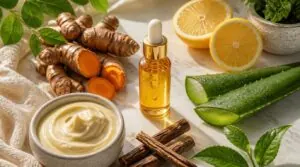
Now that you know what’s causing your discoloration, let’s talk about what actually fades it. Nature offers a handful of ingredients backed by real research on brightening skin and evening out tone. Here are five worth adding to your routine.
Niacinamide for Uneven Skin Tone
Think of niacinamide as your skin’s peacekeeper. It works by blocking melanosome transfer, cutting dark spot intensity by up to 68% in eight weeks. You’ll notice results in about four weeks.
It also strengthens your barrier, calms oil production, and boosts collagen—so uneven skin tone fades while your complexion gets tougher, smoother, and calmer overall.
Licorice Root for Dark Spots
Sweet root, serious science: licorice root extract fights dark spots through glabridin, a compound blocking tyrosinase by up to 70%.
While glutathione works from within to convert melanin, pairing it with surface-acting ingredients rounds out a full skin care routine for hyperpigmentation and dark spots.
- Reduces melanin synthesis by 35% in four weeks
- Pairs with niacinamide for 45% greater results
- Comparable to hydroquinone, fewer side effects
- Stable between pH 5.0–6.5
Patch-test first—licorice is gentle, but your skin deserves a proper introduction.
Vitamin C Antioxidant Protection
Beyond brightening, ascorbic acid is a powerhouse of antioxidant protection, neutralizing free radicals within seconds of contact.
Paired with ferulic acid, it gains serious Vitamin C stability, retaining 90% potency after eight hours of UV exposure. This combination also shields collagen from breakdown, supporting firmer, more resilient skin while fading discoloration.
Look for stable formulas—your skin’s defense and brightness both depend on it.
Turmeric and Tyrosinase Suppression
That golden spice in your kitchen does more than flavor curry—curcumin actually binds directly to tyrosinase’s active site, halting melanin production at its source.
Formulated at 2-5% concentration with penetration enhancers, turmeric suppresses enzyme activity by up to 70% in lab studies. Pair it with:
- Licorice extract (doubles suppression)
- Vitamin C (stabilizes curcumin)
- Green tea polyphenols
- Ferulic acid
- Honey enzymes
Apply consistently for 4-6 hours of inhibition.
Aloe Vera for Barrier Support
That plant on your windowsill is quietly rebuilding your skin barrier while you sleep. Aloe vera gel is 99% water, packed with vitamins A, C, and E plus zinc and magnesium. Its polysaccharides bind moisture for hours and calm inflammation, easing redness while supporting skin barrier repair.
It pairs beautifully with niacinamide and vitamin C, and supporting skin barrier repair without weakening results.
Safe DIY Remedies for Hyperpigmentation
Once you understand what’s causing your discoloration, you can start treating it at home with confidence. The right kitchen staples can gently fade dark spots without harsh chemicals or irritation. Here are five safe, effective remedies worth adding to your routine.
Yogurt Masks for Gentle Exfoliation

Your fridge holds a gentle exfoliator: plain yogurt. Its lactic acid (0.5–1.5%) softens keratin bonds, sloughing dead cells without micro-tears.
- Smoother cheeks catching morning light
- A calm, non-irritated flush
- Skin that feels dewy, not stripped
- Fine lines softening over weeks
Yogurt’s pH (4.5–4.8) matches skin’s own barrier, protecting your microbiome while brightening safely, twice weekly.
Turmeric and Honey Masks
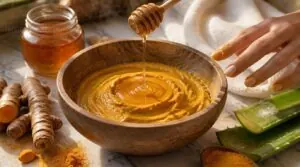
Turmeric and honey take your exfoliation routine a step further. Curcumin suppresses tyrosinase, cutting melanin production by up to 55%, while honey’s hydrogen peroxide fights bacteria and calms redness.
| Ingredient | Ratio |
|---|---|
| Turmeric powder | 1 tsp |
| Raw honey | 2 tsp |
| Aloe vera gel | 1 tsp |
| Curcumin content | 3%+ |
| Application time | 10–15 min |
Patch test first. Rinse gently, twice weekly, for brighter, calmer skin.
Rice Water Skin Rinses
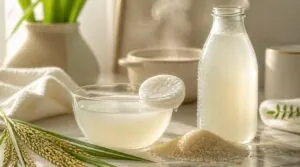
If the honey mask feels rich, rice water is its light, everyday counterpart. Simmer rice, strain, cool—that’s your gentle rinse ready.
Apply with a cotton pad, leave a few minutes, rinse cool.
- Soothes redness
- Helps even tone
- Balances pH
- Preps skin for moisturizer
Refrigerate 3–5 days max. Patch test first, since evidence for dramatic brightening stays limited despite the buzz.
Aloe Vera Soothing Treatments
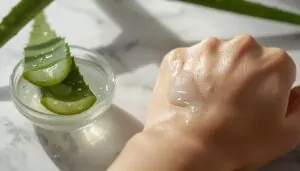
Rice water calms, but aloe vera gel takes soothing further. Its cooling effect eases irritation fast, while its moisturizing barrier locks in hydration.
Apply straight from the leaf or a pure gel to clean skin. Anti-inflammatory compounds reduce redness tied to hyperpigmentation.
Always patch test first—sensitive skin can react. Skip broken or infected areas entirely.
Why Avoid Lemon and Vinegar
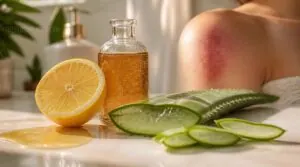
Aloe calms things down. Lemon juice and apple cider vinegar do the opposite.
Both sit at a pH near 2, well below your skin’s natural 4.5-5.5 range. That gap causes pH barrier disruption, triggers melanin overproduction, and raises your risk of phototoxic burns, contact dermatitis, staining, and inflammation. Old advice, not good advice. Skip both entirely.
How to Build a Brightening Routine
Knowing which ingredients work is only half the battle. The real results come from how you use them, morning and night, week after week. Here’s how to put it all together into a routine you can actually stick with.
Morning Skincare Routine
Your morning routine sets the tone for even skin all day. Start with a gentle cleanser, then apply a vitamin C or niacinamide serum while skin’s still damp. Follow with moisturizer, then finish with SPF 30 sunscreen—non-negotiable for preventing new spots.
Layering thin to thick keeps everything working. Small steps, done daily, build real consistency.
Evening Skincare Routine
While your skin repairs itself overnight, evenings deserve real attention. Double cleanse: oil-based cleanser first, then a gentle wash to clear sunscreen and grime.
Apply treatment masks 2-3 times weekly—yogurt or turmeric-honey work well. Layer night serums: vitamin C or niacinamide, then licorice extract, then aloe vera moisturizer.
Try a silk pillowcase—it reduces product transfer by 50% and cuts morning puffiness by 30%.
Treatment Frequency and Product Layering
Consistency beats intensity here. Start new actives every other day for two weeks, then daily if skin tolerates it well.
Layer thinnest to thickest: vitamin C, niacinamide, licorice, then aloe vera. Apply serums to slightly damp skin for better absorption.
Alternate actives by day to avoid irritation. Skip chemical exfoliants on serum days—separate them by 24 hours minimum.
Patch Testing DIY Ingredients
Never skip this step. Apply new ingredients to your inner forearm, wait 48 hours, and watch for:
- Redness lasting past 30 minutes
- Tingling that turns to burning
- Small bumps or hives
- Tight, swollen skin
Document everything—date, formulation, photos. If clear, retest the opposite arm before adding it to your routine.
Realistic Results and Consistency
Real fading follows a slow curve, not a switch. Expect a 10-15% reduction in spot darkness within a month, with full clearance taking 6-12 months.
| Timeframe | What to Expect |
|---|---|
| 4-8 weeks | Subtle lightening begins |
| 3 months | 20-30% fading, partial |
| 6-12 months | Deeper hyperpigmentation clears |
| Ongoing | Sunscreen locks in progress |
Consistency over intensity wins. Track weekly photos—it keeps motivation honest.
Preventing Discoloration and Getting Help
Brightening your skin is only half the job. The real win comes from keeping new dark spots from forming in the first place. Here’s what that takes, day in and day out.
Daily Broad-Spectrum Sun Protection
No brightening ingredient works if you skip this step. Daily broad-spectrum SPF 30 blocks 97% of UVB rays while guarding against UVA damage that reignites melanin.
- Apply 15-20 minutes before sun exposure
- Reapply every two hours outdoors
- Choose mineral filters (zinc oxide) for sensitive skin
- Store sunscreen away from heat
- Cover ears, neck, and feet fully
Diet and Hydration Support
Sunscreen protects from outside in. Diet and hydration work from the inside out.
Antioxidant-rich foods like blueberries and pomegranates fight free radicals that trigger melanin overproduction. Omega-3s from salmon calm inflammation before it becomes a dark spot.
Drink water consistently throughout your day. Proper hydration helps skin barrier function, helping nutrients reach melanocytes and keeping tone balanced from within.
Avoiding Irritation and Skin Trauma
Food and water feed your skin from within, but daily habits protect it from harm. Every scrub, pick, or hot shower is a chance to trigger new pigment.
- Cleanse gently, skip hot water above 30°C
- Skip abrasive scrubs; try a soft konjac sponge
- Never pick at blemishes
- Choose fragrance-free products
- Patch test new items for 48 hours first
Trauma prevention keeps existing spots from darkening further.
Preventing Recurring Dark Spots
One healed spot doesn’t mean you’re done. Fresh melanin can form the moment old habits creep back in.
Stick with daily SPF 30+, reapplying every two hours outdoors. Keep antioxidant layering consistent, stay hydrated, and eat omega-3s. Manage stress, since cortisol spikes can worsen pigmentation. Consistency, not intensity, is what keeps dark spots from returning.
When to See a Dermatologist
Consistency has limits. Persistent dark patches unchanged after 12 weeks need professional evaluation.
Watch for rapidly growing moles, severe acne, unexplained red bumps, or any skin cancer warning signs like bleeding lesions. A dermatologist distinguishes melasma from postinflammatory hyperpigmentation using a Wood’s lamp.
Schedule annual skin cancer screening after 40. When in doubt, get checked—early consultation prevents permanent damage.
Frequently Asked Questions (FAQs)
How can I fix discolored skin naturally?
Slow and steady wins the race: fade hyperpigmentation naturally with daily niacinamide or vitamin C, gentle exfoliation, barrier repair, and strict sun protection. Stay consistent for weeks, and dark spots gradually lighten without harsh, irritating shortcuts.
What do Koreans use for hyperpigmentation?
K-beauty routines lean on niacinamide, licorice arbutin combos, and TXA treatments, layered with vitamin C serums, rice water toners, and daily broad-spectrum sunscreen—brightening actives paired faithfully with sun protection to fade spots without provoking new ones.**
What fades hyperpigmentation quickly?
Like a gardener pruning fastest with sharp shears, not bare hands, pair actives for speed: niacinamide fast fading, vitamin C brightening, and licorice extract results paired with turmeric and daily sun protection outpace single-ingredient routines within weeks.
What is the best skincare for discoloration?
Your best routine pairs a niacinamide or vitamin C serum with licorice extract, gentle exfoliation, and a nighttime repair cream. Layer moisturizer over treatments, then lock in results with daily SPF reapplication—hyperpigmentation fades fastest when brightening and sun protection work together.
How do home remedies for pigmentation work?
Lactic acid exfoliation removes cells in 7-10 days.
Home remedies work through natural tyrosinase inhibitors, enzyme-based brightening, and antioxidant spot reduction, plus gentle barrier support—combining traditional remedies with whole-person skincare for gradual, measurable pigment correction.
What are the top 10 home remedies for hyperpigmentation?
Ten proven options: Turmeric Honey Mask, Honey Yogurt Mask, Aloe Vera Gel, Rice Water Rinse, Green Tea Compress, vitamin C serum, licorice extract, diluted lemon juice, tomato paste, and lactic acid exfoliation—each targeting melanin production or gently resurfacing dull, uneven skin.
What are the hyperpigmentation treatments at home?
Fading isn’t overnight magic, though many hope for it. Real progress means DIY serum applications with vitamin C, nightly niacinamide, soothing aloe vera gel, and turmeric masks—used consistently over weeks, not days, for gradual, lasting results.
What is hyperpigmentation, and what are its causes?
Your skin darkens when melanin overproduction outpaces normal turnover.
Triggers include UV radiation, hormonal changes, post-inflammatory response after acne, genetic factors, and certain medications—each pushing tyrosinase activity into overdrive and depositing excess pigment unevenly across your skin.
What are the benefits of a natural cure for hyperpigmentation?
Like a garden that thrives on patience, natural remedies work with your skin’s own rhythm. They offer gentle skin brightening, reduced irritation risk, gradual visible improvement, and real melanin reduction through tyrosinase inhibition.
Is there any DIY face pack for hyperpigmentation home remedy?
Absolutely — try a DIY turmeric honey mask with yogurt for lactic acid exfoliation, or an aloe vera soothing treatment blended with rosehip oil. Both gently fade dark spots without irritating skin.
Conclusion
Your skin keeps a diary written in pigment, like an old scribe recording every injury with quiet permanence. But diaries can be edited.
Natural skincare for skin discoloration isn’t about erasing history overnight; it’s about teaching melanocytes to calm down and behave. Niacinamide, licorice root, and daily SPF work slowly, rewriting the story one cycle at a time. Give it three months. Stay consistent. The spots that once felt permanent will fade, and so will the memory of ever doubting they could.