This site is supported by our readers. We may earn a commission, at no cost to you, if you purchase through links. This content is for general informational and educational purposes only and is not a substitute for professional medical, dermatological, or nutritional advice.

Your grandmother’s rice pot may hold a better haircare secret than half the bottles on your shelf. Japanese studies found that rice water reduced friction between hair strands and improved elasticity, two traits tied to less breakage.
Still, no large trial shows that rice water for hair growth works, and the research stays thin. What it may do is strengthen the hair you already have, which helps you keep length.
The method matters, though. Skip the wrong steps and you risk itchy scalp, protein overload, or a jar of spoiled starch. Here’s how to make it, use it, and store it safely.
If you enjoy simple kitchen-based beauty projects, this DIY lemon sugar body scrub recipe shows how fresh ingredients can be mixed and stored safely for smoother skin.
Table Of Contents
- Key Takeaways
- Does Rice Water Help Hair Growth?
- How to Make Rice Water for Hair
- How to Use Rice Water for Hair
- Adjusting Rice Water for Your Hair Type
- Rice Water Risks and Safe Storage
- Frequently Asked Questions (FAQs)
- How do you use rice water for hair growth?
- How long does rice water take to grow hair?
- What are the negatives of rice water for hair?
- Which is better for hair, rosemary or rice water?
- Can rice water prevent or reverse gray hair?
- Does rice type affect rice water effectiveness?
- Can rice water replace regular shampoo completely?
- Is rice water safe during pregnancy or breastfeeding?
- Does rice water work for hair loss conditions?
- Where did the rice water hair tradition originate?
- Conclusion
Key Takeaways
- Rice water won’t make your hair grow faster, since no large trials show it works, but it may strengthen the strands you have so you break less and keep more length.
- You can make it by soaking or boiling rice, then apply it to clean, damp hair for 15 to 20 minutes, rinse until the water runs clear, and use it once a week (twice at most for coarse or highly porous hair).
- Too much or too little rinsing can leave your hair stiff, dry, or irritated, so patch test first, dilute it, and stop right away if you feel burning or see a rash.
- Fermented rice water is the riskiest version, so stop at 24 hours, refrigerate it, use it within a week, and toss anything that looks slimy or moldy or smells sour.
Does Rice Water Help Hair Growth?

Why does rice water have such a loyal following? It may leave your hair smoother and stronger. Small Japanese studies suggest it improves friction and elasticity.
If your strands resist moisture, this guide to growing low porosity hair shows how rice water rinses can fit into a routine for stronger, more defined curls.
Still, hair growth isn’t proven. No large randomized controlled trials show it speeds growth, and scientific research doesn’t show it stimulates follicles.
Rice water may leave hair smoother, but no large trials prove it makes hair grow faster or wakes up follicles
What it may do is protect. Inositol, panthenol and amino acids like cysteine may reduce breakage, so you could keep more length. Claims about fermented rice water and antioxidants need more study.
How to Make Rice Water for Hair
You can make rice water at home with just rice, water, and a clean container. The methods below differ in time, effort, and how much care they need. Pick the one that fits your routine, and read the fermentation precautions before you try it.
Simple Soaking Method
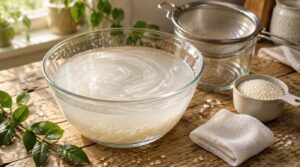
Rinse half a cup of uncooked rice, then soak it in two to three cups of room temperature water for 30 minutes. This rice water soak method may release starch, amino acids, and B vitamins. Its effect on hair growth needs more research.
- Strain through fine mesh.
- Don’t press the grains.
- Try cheesecloth, too.
- Use it promptly.
- Discard the grains.
Boiled Rice Water Method

The rice water boil method gives you a thicker, more concentrated liquid. Rinse one cup of rice, then simmer it in two to three cups of water until the grains are soft and the water turns cloudy.
If you’d like to compare both approaches before choosing one, this step-by-step rice water for hair guide explains how boiling and soaking differ in strength and results.
Strain it into a clean container and let it cool fully. Hot liquid can harm your scalp. Dilute it with plain water before use.
Fermented Rice Water Precautions

Fermented rice water needs more care than the other methods. Rice fermentation happens when you leave the liquid at room temperature, but warm air also helps bacteria and mold grow. Stop at 24 hours, then refrigerate it. Cloudiness with a film means mold.
Always dilute it, one part to two or three parts water. Undiluted liquid may cause scalp irritation or dermatitis.
How to Use Rice Water for Hair

Once your rice water is ready, the way you apply it matters as much as how you made it. Current research suggests that technique and timing may shape your results, though more studies are needed. Below, you’ll find how to apply and rinse it, plus how long and how often to use it.
Applying and Rinsing Rice Water
Rice water works best on a clean scalp. Research on hair growth is limited, but these step-by-step methods may help your DIY hair treatment:
- Shampoo first, then squeeze out excess water so your hair stays damp.
- Part your hair and pour rice water slowly over your scalp, then down your lengths.
- Massage with your fingertips for two to three minutes.
- Rinse with lukewarm water until the runoff runs clear.
Don’t skip that hair rinse. Leftover starch can leave strands stiff and dull. Finish cool, then condition.
Treatment Time and Frequency
A timer keeps this hair treatment safe. Whether you use the rice water soak method or the rice water boil method, leave it on for 15 to 20 minutes. Longer contact doesn’t help and may raise your risk of protein overload.
Limit use to once a week. If your hair is coarse or highly porous, twice a week is the maximum. More often may leave strands stiff.
Pause for one to two weeks each month. Check your hair’s elasticity as you go. Follow these step-by-step methods.
Adjusting Rice Water for Your Hair Type
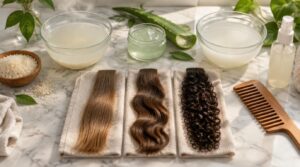
Say your friend has fine, straight hair, and hers feels stiff after every rice water treatment. Yours might do the same. Hair type changes how rice water behaves, so adjust it.
If your hair is fine or low porosity, try the Rice Water Soak Method, warmed slightly and diluted. Thicker, coiled hair may prefer the Rice Water Boil Method, which gives a stronger concentrate. Oily scalp? Keep it on your lengths.
Dry or damaged hair needs aloe and weekly limits. Evidence for hair growth, hair elasticity, and hair strength remains limited.
Rice Water Risks and Safe Storage

Rice water is generally mild, but research on its safety is limited, so it’s smart to know the downsides before you use it. The sections below cover what may go wrong with your scalp and strands, and how to store it safely. Read through each one so you can spot problems early and keep every batch safe to use.
Scalp Irritation Risks
Can something as gentle as rice water irritate your scalp? It can, and it may happen more often than you’d expect.
Rice protein can trigger itching, redness, or flaking on sensitive skin. Fermented versions are more acidic and may sting. Rare rice allergies can also cause hives or dermatitis.
Patch test first, dilute the mix, and stop at once if burning or a rash appears.
Buildup And Dryness
Rice water can leave hair stiff instead of silky. Research on its benefits is limited, and buildup may explain why some people feel worse afterward. Treat it like a scalp treatment, not a daily habit:
- Strain it well.
- Rinse until water runs clear.
- Clarify monthly.
- Follow with conditioner.
Nutrientrich water can still dry hair. Hair conditioner detangles and helps skin hydration.
Fermentation Safety
Could a jar of cloudy water hurt your scalp? It can.
Fermentation lets lactic acid lower pH, which may inhibit some microbes. It doesn’t guarantee safety.
With the Rice Water Fermented Method, keep your fermented rinse at room temperature 48 hours maximum.
| Sign | Meaning | Action |
|---|---|---|
| Slimy texture | Spoilage | Discard |
| Fuzzy mold | Unsafe | Toss |
Skip fermented hair tonic that smells rotten.
Refrigeration And Shelf Life
Cold slows microbes, so refrigerate after fermentation ends. Pour the rinse into a lidded bottle and keep it at 40°F or below.
- Plain rice water: 4 to 7 days.
- Fermented rice water: up to 1 week, as lactic acid keeps pH low.
- Versions with oils, herbs, or a gel formulation: 3 days.
Probiotics won’t guarantee safety. Freeze cubes: 3 months.
Signs Of Spoilage
Even chilled, rice water can spoil. Check it before every use, whether it came from white rice or brown rice, and discard it if you see mold.
| Sign | What it means |
|---|---|
| Black, green, or white spots | Mold |
| Slimy, stringy texture | Bacterial growth |
| Sour, rotten, or alcoholic smell | Overlong fermentation |
| Fizzing on opening | Active contamination |
Burning or itching means toss it immediately.
Frequently Asked Questions (FAQs)
How do you use rice water for hair growth?
Use rice water once weekly. In these stepbystep methods, shampoo first, pour it over roots, massage gently, wait 20 minutes, then rinse. It’s a natural conditioner for hair care, though hair growth claims lack proof.
How long does rice water take to grow hair?
Rice water won’t speed up your hair growth. Your hair still grows about half an inch a month. Most people notice softer texture in 4 to 8 weeks, but visible hair length takes several months.
What are the negatives of rice water for hair?
Picture a thin, stiff film settling over each strand, like dried paste on glass. That’s what too much starchy liquid can do. It may leave your scalp itchy and red, and your hair brittle, tangled, and fragile.
Which is better for hair, rosemary or rice water?
In one clinical study, rosemary oil raised hair count by 5% after six months, matching 2% minoxidil. Rice water has no such trials, so rosemary looks like the better choice for hair growth stimulation.
Can rice water prevent or reverse gray hair?
Rice water won’t turn your hair back to its first color, though it might make the gray look shinier. Scientific research shows no proof it delays graying. Its antioxidants and vitamin E are too weak to protect pigment cells.
Does rice type affect rice water effectiveness?
Choosing a rice is like picking a paintbrush before you’ve proven the paint works.
Brown rice is more nutrient-rich than white rice, yet rice water from either has no proven edge for your hair growth.
Can rice water replace regular shampoo completely?
Picture a greasy pan rinsed under plain water. The oil just beads and slides around. That’s your scalp with rice water alone. It can’t lift sebum, so rice water shampoo won’t replace regular cleansing.
Is rice water safe during pregnancy or breastfeeding?
Rice water, an alternative remedy for natural hair care, appears safe on your scalp during pregnancy or breastfeeding. It doesn’t reach your bloodstream or milk in measurable amounts. Patch test, and stop if irritation appears.
Does rice water work for hair loss conditions?
Heian-period Japanese women rinsed their hair with rice water. No trials show it restores hair growth, though.
It may smooth strands, but your hair follicle health won’t change. Scientific validation is missing for hair treatments.
Where did the rice water hair tradition originate?
Rice water hair care likely began in China. Yao women in Huangluo have used fermented rice water for centuries, and you’ll find it in their historical hair practice.
Similar rinses appear across traditional Asian beauty.
Conclusion
Yes, the research is thin, and that’s a fair reason to stay skeptical. But a skeptic can still test this safely. Rice water for hair growth remains unproven, yet it may strengthen strands and help you keep the length you’ve earned.
Start with a simple soak, rinse well, and watch how your scalp responds. Keep it cold, and toss it when it smells sour. Patience and caution will tell you more than any label promises.