
This site is supported by our readers. We may earn a commission, at no cost to you, if you purchase through links.

You’ve probably noticed how your hair looks fantastic after a beach day—full, textured, with that natural volume you can’t quite recreate at home. That’s not magic. Salt water physically alters your hair’s structure by lifting the cuticle scales and drawing moisture from each strand, creating measurable changes in texture and grip.
The same ionic forces that make ocean waves crash also roughen your hair’s surface, giving fine strands body and transforming limp locks into beachy excellence. But here’s the catch: while salt water can give body to hair like nothing else, it’s also stripping moisture with every spray.
Understanding how to control this texture-boosting power without destroying your strands means knowing exactly when to use it, how much is too much, and what your hair needs afterward.
Table Of Contents
- Key Takeaways
- How Salt Water Adds Body to Hair
- Benefits of Using Salt Water for Hair
- How to Use Salt Water for Hair Volume
- Precautions When Using Salt Water on Hair
- Protecting Hair From Salt Water Damage
- Effects of Salt Water on Different Hair Types
- Repairing Hair After Salt Water Exposure
- Frequently Asked Questions (FAQs)
- Can saltwater help with scalp conditions like dandruff?
- What are some natural alternatives to saltwater for achieving beachy waves?
- What are some recommended aftercare tips for hair that has been damaged by saltwater?
- Can salt water help with hair loss prevention?
- Is ocean water better than homemade salt spray?
- Does salt water affect hair growth rate?
- Can you use salt water on extensions?
- How does humidity affect salt water styling?
- Conclusion
Key Takeaways
- Salt water physically lifts your hair’s cuticle and draws out moisture through osmotic forces, creating the texture and volume you see after beach days—but this same process strips your strands dry with repeated exposure.
- You can replicate beachy volume at home with a simple DIY spray (1 cup water, 1/2-1 tsp sea salt, 1/2 tsp coconut oil), applying it to damp hair and scrunching upward for maximum lift without the salon price tag.
- Protect your hair from salt damage by coating strands with coconut oil or leave-in conditioner 15-30 minutes before exposure, rinsing within five minutes after, and using weekly deep conditioning treatments to rebuild moisture and strength.
- Fine hair gets major volume from salt water but faces higher breakage risk, while thick hair handles it better but fights frizz—limit use to once or twice weekly and cut it back to every 10-14 days for color-treated or already-dry strands.
How Salt Water Adds Body to Hair
You’ve probably noticed how hair gets that natural, full-bodied look after a day at the beach. That texture doesn’t happen by accident—salt water actually changes how your hair behaves on a physical level.
Here’s what’s really going on when salt hits your strands.
The Science Behind Salt and Hair Volume
Salt water’s volumizing magic comes down to ionic interactions at your hair’s surface. When sodium chloride meets your strands, it creates measurable changes in cuticle lift and electrostatic charge distribution. Here’s what happens:
Salt water lifts your hair’s cuticle and changes its charge, creating natural volume through chemistry
- Salt ions roughen the hair surface, increasing friction between fibers
- Osmotic forces draw moisture from strands, altering their swelling behavior
- Higher salt concentration correlates with greater textural grip
- Cuticle scales lift slightly, creating visible separation and body
This shifts your hair’s natural porosity temporarily, giving you that coveted beachy texture and serious volume.
Salt Crystals and Hair Texture
When crystals form on your strands, they create mechanical friction that lifts each fiber away from its neighbors. This mineral interaction tweaks cuticle alignment, making your hair feel rougher and adding serious texture enhancement.
Drier strands show the most dramatic shift in hair porosity and hair volume. That’s your secret weapon for sea salt styling—the crystals physically reshape how your hair care routine delivers body.
Why Salt Water Creates Beachy Waves
Beyond texture, those mineral deposits actually change how your hair bends. Higher salt concentration lowers friction between strands, letting them separate into natural wave formation. The minerals stiffen each fiber just enough to hold the bend—that’s your classic beachy hair style.
Factor in hair porosity and mineral balance, and you’ve got texturing effects that deliver real beach waves with serious hair volume.
Benefits of Using Salt Water for Hair

Salt water isn’t just about texture and waves—it actually does some serious work for your hair and scalp. Beyond the volume boost, you’re getting natural cleansing, stronger strands, and a healthier foundation for growth. Here’s what salt water brings to the table.
Natural Exfoliation and Oil Removal
Your scalp accumulates dead cells, product residue, and excess oil—that’s where salt water steps in as a natural exfoliator. The salt crystals physically lift away buildup from hair follicles while regulating sebum production through osmotic action. This hair purification process helps with scalp conditions and restores oil balance naturally.
- Salt draws moisture from dead skin cells, speeding up exfoliating and mineral removal
- Sebum regulation occurs as salt flushes away trapped oils near follicle openings
- Scalp exfoliation from saltwater improves between-wash cleanliness without harsh chemicals
Enhanced Shine and Strength
Mineral balance shifts when seawater ions interact with your hair’s protein structure—calcium and magnesium temporarily boost cuticle health and perceived strength.
You’ll notice shine restoration after conditioning, since salt removes buildup that dulls light reflection.
This natural remedy fosters hair elasticity and overall hair health when paired with moisture treatment. Think of it as a reset for your strands, priming them for better hair growth and vitality through improved protein interaction.
Scalp Health and Blood Flow Stimulation
Gentle rubbing with salt water doubles as a scalp massage. Research shows this mechanical stimulation increases microcirculation and triggers nitric oxide release, widening blood vessels.
Better vascular health means your hair follicles get more nutrients, which promotes hair growth over time. Regular use can improve overall scalp health by boosting blood flow to where your hair needs it most.
How to Use Salt Water for Hair Volume
You don’t need a fancy salon product to get that casual, textured look. A simple salt water spray works wonders for adding volume and body to your hair.
Here’s how to make it, apply it, and style your hair for maximum results.
DIY Salt Water Spray Recipe

You don’t need pricey products when you can craft your own salt spray at home. Here’s your recipe for texture and DIY hair care freedom:
- Mix 1 cup warm water with 1/2 to 1 teaspoon sea salt in a spray bottle
- Add 1/2 teaspoon coconut oil to prevent dryness
- Include 3 drops of lavender oil for scent
- Shake well before each use
- Store in a cool, dark place
This homemade sea salt mixture delivers spray bottle convenience and natural hair texture without the chemicals.
Step-by-Step Application Guide

Applying your DIY salt spray correctly transforms flat strands into textured rebellion. Start with damp hair—not soaking wet. Section your hair into manageable chunks, then spray 6-8 inches from roots, focusing on mid-lengths where you want volume.
Scrunch upward for beachy waves and root lift technique magic. Let it air-dry or use a diffuser on low heat. This application method delivers the hair texture improvement you’re after.
Styling Tips for Maximum Body

Want true hair volume enhancement that lasts? Strategic styling products and technique make all the difference. After applying your salt spray, follow these moves for root lift that defies gravity:
- Flip your head upside down while blow-drying—this creates instant volume at the crown
- Use a diffuser attachment to set beach waves without flattening your hair texture
- Scrunch sections repeatedly as they dry to lock in body maintenance
- Finish with a cool shot to seal the cuticle and hold your hair styling in place
Precautions When Using Salt Water on Hair

Salt water can work wonders for volume, but it’s not a free-for-all situation. If you’re not careful, you can end up with damage that outweighs any benefits.
Let’s break down what you need to watch out for so you can use salt water smartly without wrecking your hair.
Risks for Color-Treated and Dry Hair
Color-treated hair and dry strands need extra caution with salt water. The chloride ions can strip your dye, fading color unevenly, while minerals deposit and lift the cuticle. If your hair’s already parched, salt water accelerates moisture loss, ramping up porosity and inviting frizz control nightmares.
Salt exposure turns dryness prevention into a full-time battle.
| Hair Type | Primary Risk | What Happens |
|---|---|---|
| Color-Treated | Color fade | Pigment molecules break down; uneven tone appears |
| Bleached/Lightened | Accelerated damage | Compromised cuticle can’t defend against mineral buildup |
| Dry Hair | Severe dryness | Natural oils vanish; brittleness and hair breakage increase |
| Chemically Processed | Hair porosity spikes | Strands absorb excess minerals; texture turns rough and stiff |
| Previously Damaged | Cumulative harm | Split ends worsen; hair damage prevention becomes critical |
Signs of Overuse or Damage
Watch for these red flags that you’ve pushed saltwater too far. Your hair doesn’t hide damage—it broadcasts it.
- Hair Breakage multiplies: Strands snap under normal tension, leaving split ends and short broken pieces scattered
- Color Fade accelerates: Dye pigments lift unevenly, turning vibrant shades brassy or patchy
- Hair Dryness intensifies: Texture feels straw-like, with zero bounce or flexibility
- Cuticle Damage shows: Surface roughness increases; tangles form instantly
- Scalp Irritation flares: Itchiness, flakiness, or burning sensations emerge
Pull back immediately when these symptoms appear.
Frequency Recommendations for Safe Use
Once you spot damage, dial it back fast. Limit salt water exposure to once or twice weekly—that’s your safe interval for most hair types. Color-treated or dry strands? Push that to every 10-14 days.
Your hair needs recovery time between sessions to rebuild moisture and prevent cumulative hair damage. Consistent hair care routines and proper hair protection between treatments support healthy hair growth while keeping damage prevention front and center.
Protecting Hair From Salt Water Damage

Salt water can work wonders for volume, but it’s not exactly gentle on your strands. If you want the body without the breakage, you need to set up some defenses before, during, and after exposure.
Here’s how to protect your hair while still getting those beachy results.
Pre-Treatment With Oils or Leave-Ins
Coating your hair 15–30 minutes before salt water exposure locks in moisture and blocks damage. Coconut oil reduces protein loss, while dimethicone serums create a barrier that stops salt from penetrating the cuticle.
Apply leave-in conditioner or argan oil from mid-length to ends—just a small amount so your hair doesn’t feel heavy. These protective coatings keep your strands resilient.
Rinsing Techniques After Salt Exposure
Once you’re out of the water, rinse within five minutes to stop salt removal before crystals form. Use lukewarm water for 30–60 seconds to clear surface buildup without swelling the cuticle.
A second cool-water pass seals moisture balance and protects hair follicles.
This simple rinse timing prevents hair damage by reducing salt exposure on porous strands—no shampoo needed yet.
Recommended Aftercare Products
The right hair products rebuild what salt strips away. Pair a hydrating shampoo with a leave-in conditioner that locks in moisture, then rotate these weekly treatments:
- Clarifying rinse removes mineral buildup without over-drying
- Protein treatments patch weakened cuticles from saline damage
- Deep hair masks restore elasticity and shine
- Repair oils seal split ends and smooth rough texture
- UV protectants shield strands during styling or sun exposure
Effects of Salt Water on Different Hair Types
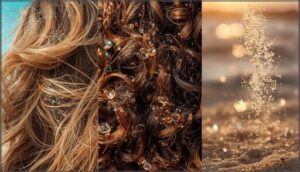
Not all hair types react to salt water the same way. What works wonders for one texture might leave another looking like a dried-out mess.
Here’s how different hair types handle salt water and what you need to adjust for your specific texture.
Fine Vs. Thick Hair Reactions
Your hair thickness determines how salt water shapes your style. Fine hair gets a serious volume boost from salt-induced swelling, but here’s the catch—it loses up to 12% of its strand strength and shows more cuticle lift. Thick hair holds moisture better yet fights increased frizz from mineral buildup.
| Hair Type | Volume Effect | Damage Risk |
|---|---|---|
| Fine | Major lift, noticeable body | Higher breakage, roughness |
| Thick | Subtle texture changes | Moderate frizz increase |
| Both | Enhanced hair texture | Reduced elasticity |
Salt water affects hair porosity differently based on thickness, making your approach matter.
Curly, Oily, and Dry Hair Considerations
Your curl definition shifts when salt water messes with moisture levels—tighter curls get temporary shape but risk frizz control nightmares without proper conditioning.
Oily scalps find relief through natural oil balance, yet dry hair faces serious hair damage from mineral buildup stripping protective oils.
Hair porosity matters here: curly and dry types lose elasticity fast, while oily strands gain texture but need chelating shampoos to prevent dullness and maintain healthy hair growth.
Adjusting The Method for Your Hair Type
Fine strands need less salt—cut concentration by half to prevent Hair Texture Analysis disasters and Scalp Sensitivity flare-ups. Your hair type dictates everything: lower wetting time for curls, target mid-lengths on thick hair, and match Product Customization to Hair Porosity levels.
Build tailored Routines around hair growth goals, not trends—protective conditioning stops hair damage prevention failures while boosting hair volume enhancement safely.
Repairing Hair After Salt Water Exposure

Salt water can leave your hair feeling like straw if you don’t take action quickly. The good news is that you can bring it back to life with the right repair strategy.
Here’s how to undo the damage and get your hair back to its healthy, hydrated state.
Deep Conditioning Treatments
Think of deep conditioning as your rescue mission after salt exposure. Apply a protein treatment or hair mask to damp strands within five minutes of rinsing—that’s when hair hydration really kicks in.
Wrap your head in a warm towel for 10–15 minutes to boost absorption. This hair nourishment routine slashes breakage by up to 22% and restores moisture like nothing else.
Restoring Moisture and Strength
You’re not just fixing surface dryness—you’re rebuilding from the inside out. After salt exposure, use intensive conditioning with cationic agents to restore moisture balance and tackle mineral-induced roughness.
Follow up with protein repair treatments to strengthen disulfide bonds and improve hair porosity.
Add humectants for deep hair hydration, supporting hair follicle stimulation and mineral replenishment. This approach prevents hair damage while maintaining ideal hair nutrition and hair growth.
Preventing Long-Term Damage
Repair helps—but long-term care keeps your hair from reaching crisis mode. Salt damage prevention means spacing out swims, using pre-treatments before every dip, and tracking your hair’s moisture index weekly.
Hair fiber protection routines with chelating rinses clear mineral buildup, while protective methods like swim caps shield strands. Monitor elasticity and breakage patterns—they’re your early warning system for lasting hair damage.
Frequently Asked Questions (FAQs)
Can saltwater help with scalp conditions like dandruff?
Saltwater therapy can temporarily ease dandruff by reducing scalp yeast and mechanically removing flakes. Its minerals support microbiome balance and scalp health.
However, repeated exposure may dry your scalp, worsening flaking—so follow up with moisture.
What are some natural alternatives to saltwater for achieving beachy waves?
You don’t need ocean water for beachy waves—texturizing mists with polymers, lightweight mousse, or clay powders create natural volume and grit without the drying effects, giving you seamless texture and hair thickening anytime.
What are some recommended aftercare tips for hair that has been damaged by saltwater?
Deep condition weekly to restore Hair Moisture Balance and tackle Salt Damage Repair.
Use sulfate-free shampoo, apply leave-in treatments, and skip heat styling.
These Hair Recovery Tips support Post Exposure Care while preventing further breakage.
Can salt water help with hair loss prevention?
About 50 million Americans experience hair loss, yet salt water therapy lacks clinical evidence for prevention. While it may temporarily improve scalp health benefits through mineral balance importance, it won’t stop genuine hair growth concerns or follicle miniaturization.
Understanding the importance of clear science information, such as clear science writing, is essential for evaluating the effectiveness of salt water therapy.
Is ocean water better than homemade salt spray?
Neither option wins outright—DIY salt spray offers precise mineral content and consistency for hair texture and volume enhancement, while ocean benefits include natural minerals.
Choose homemade for control over scalp health and predictable results.
Does salt water affect hair growth rate?
Salt water doesn’t speed up hair growth rate. Your hair follicle health depends on genetics, nutrition, and hormones—not mineral effects from ocean swims.
Scalp environment changes from salt exposure won’t regulate your hair cycle or promote natural hair growth.
Can you use salt water on extensions?
You can use salt water on hair extensions, but proceed carefully. Synthetic fibers dry out faster than human hair, while bonds weaken with repeated exposure. Rinse immediately and condition thoroughly for proper extension care.
How does humidity affect salt water styling?
Higher humidity slows evaporation, keeping your salt spray styling softer and less dry.
You’ll need lighter application and longer drying time to maintain hair texture and volume without limpness in moist air.
Conclusion
Salt water gives your hair body like scaffolding builds structure—temporary support that transforms the shape. You now control the texture boost without the damage trade-off.
Pre-treat before exposure, rinse thoroughly after, and deep condition regularly. Your hair doesn’t have to choose between volume and health.
Master the balance, respect your strand limits, and that beachy fullness becomes yours to create whenever you want it—minus the ocean’s destructive side effects.