This site is supported by our readers. We may earn a commission, at no cost to you, if you purchase through links. This content is for general informational and educational purposes only and is not a substitute for professional medical, dermatological, or nutritional advice.
I’ve watched more than one parent stand in the sunscreen aisle, turning bottles over like they’re defusing something, and honestly, I get it. Kids with sensitive or eczema-prone skin can turn a regular sunscreen into a red, itchy mess within an hour of application.
That’s not bad luck, it’s chemistry. Certain fragrances, alcohols, and chemical UV filters trigger reactions in skin that already struggles to hold onto moisture and fend off irritants.
Sun protection for kids’ sensitive skin doesn’t have to feel like a guessing game, though. The right mineral formulas, paired with a few smart habits, can keep your child protected without the tears, the redness, or the 2 a.m. Googling.
Table Of Contents
- Key Takeaways
- Mineral Sunscreen Safety Basics
- Sensitive Skin Ingredient Checklist
- Top 10 Kids Sensitive Skin Sunscreens
- 1. Bliss Baby Mineral SPF 50 Sunscreen
- 2. Australian Gold Little Joey Sunscreen
- 3. TruKid Eczema Mineral Sunscreen SPF 30
- 4. Babo Botanicals Sensitive Baby Sunscreen
- 5. Aveeno Baby Zinc Oxide Sunscreen
- 6. Aveeno Kids Zinc Oxide Sunscreen
- 7. Aveeno Kids Mineral Sunscreen Stick
- 8. Mineral Kids Face Sunscreen Moisturizer
- 9. Goongbe Waterful Mineral Sun Lotion
- 10. Beef Tallow Zinc Oxide Sunscreen
- Eczema-Prone Kids Sun Care
- Application Tips for Better Coverage
- Extra UV Protection for Kids
- Frequently Asked Questions (FAQs)
- What’s the best sunscreen for kids with sensitive skin?
- What sunscreen is good for kids with sensitive skin?
- What can I use if my child is allergic to sunscreen?
- What is the least harmful sunscreen for kids?
- What is the best sunscreen for kids with sensitive skin?
- What are non-toxic sunscreens for kids & babies?
- Does sunscreen damage kids’ skin?
- Do kids need sunscreen?
- What should you look for in a kids’ sunscreen?
- Are mineral sunscreens safe for children?
- Conclusion
Key Takeaways
- Mineral sunscreens with non-nano zinc oxide (and titanium dioxide) protect sensitive skin by reflecting UV rays on the surface instead of absorbing chemically, making them the safer choice for eczema-prone kids.
- Labels can be misleading, so parents need to check ingredient lists directly since "fragrance-free," "alcohol-free," "paraben-free," and "noncomedogenic" don’t always mean what they imply.
- Proper application technique—applying 15-30 minutes before sun exposure, using enough product, and reapplying every two hours or after swimming—matters as much as the sunscreen formula itself.
- Sunscreen should be paired with additional protection like UPF 50+ clothing, wide-brimmed hats, UV-blocking sunglasses, and shade during peak hours (10 AM-2 PM), especially since babies under six months shouldn’t wear sunscreen at all.
For step-by-step guidance, applying sunscreen correctly on your child’s face ensures that zinc oxide coverage is thorough enough to actually work.
Mineral Sunscreen Safety Basics

As a pediatric dermatologist, I get asked constantly what actually makes a sunscreen safe for sensitive little skin, and it usually comes down to a handful of mineral basics.
Zinc oxide sits on top of the skin rather than absorbing in, which is why I point parents toward this guide to sunscreens for skin cancer prevention when they’re choosing one for kids.
You don’t need a chemistry degree to understand them, just a quick rundown of what to look for on the label.
Here’s what I want every parent to know before we get into specific ingredients.
Zinc Oxide Protection
Think of zinc oxide as tiny shields sitting right on top of your child’s skin rather than soaking in. As someone who’s watched this ingredient work for years, I trust its physical barrier action, it reflects UV rays instead of absorbing them.
That gentle-but-effective quality is exactly why it shows up so often in this roundup of the best baby sunscreen lotions, especially picks made for sensitive, eczema-prone skin.
It’s photostable too, so it won’t break down in sunlight, keeping SPF 50 protection steady all day long. This mineral provides broad-spectrum protection against both UVA and UVB rays.
Titanium Dioxide Benefits
Zinc oxide’s partner in crime is titanium dioxide, and together they’re a powerhouse duo. This mineral works through UV scattering, physically reflecting rays away from delicate skin. It’s photostable, won’t degrade in sunlight, and adds gentle opacity that evens out skin tone.
Why parents love it:
- Zero systemic absorption worries
- Stays effective all day, no reapplying panic
- Softens redness with light-reflecting coverage
- Perfect for SPF 50 formulas kids actually tolerate
Mineral Versus Chemical Filters
Here’s the main difference: mineral filters like zinc oxide sit on skin and reflect UV rays, while chemical filters absorb into skin and convert rays to heat.
| Mineral | Chemical |
|---|---|
| Instant protection | Needs 15-20 min |
| White cast, thicker feel | Lighter, blends clear |
For sensitive skin, physical blockers win—less irritation risk, better stability, gentler on little bodies.
Broad-spectrum SPF Coverage
Broad-spectrum simply means your child’s sunscreen protects against both UVB (the burn rays) and UVA (the aging, deeper-penetrating rays)—SPF alone only measures UVB. That label requires actual testing, closing the "protection gap" where UVA sneaks through.
Look for:
- SPF 50 mineral formulas
- Zinc oxide for full UVA/UVB coverage
- Stabilized filters that hold up outdoors
- Bonus iron oxides for blue light defense
Non-nano Mineral Formulas
Ever wonder what "non-nano" actually means on that label? It just tells you the zinc oxide or titanium dioxide particles are larger, sitting on skin instead of absorbing in.
| Non-Nano | Nano |
|---|---|
| Sits on surface | May penetrate deeper |
| Preferred for kids | Less studied long-term |
That surface film gives reliable UV reflection without disrupting your child’s skin barrier—my go-to for sensitive skin.
Sensitive Skin Ingredient Checklist

As someone who’s checked hundreds of ingredient labels for worried parents, I can tell you the fine print matters just as much as the SPF number.
Sensitive skin doesn’t need extra chemicals fighting against it, so the formula itself deserves as much attention as the sun protection factor.
Here’s exactly what to look for before that bottle goes anywhere near your child’s skin.
Fragrance-free Formulas
That "clean" smell in some baby products? Often it’s masking ingredients doing the work, which can irritate sensitive skin. Fragrance-free isn’t the same as unscented—unscented products may still contain odor-masking chemicals. For true hypoallergenic protection:
- Skip "parfum" entirely
- Watch for essential oils
- Verify each batch
- Trust stable, gentle bases
Alcohol-free Sunscreen
As someone who’s seen plenty of red, tight cheeks after a beach day, alcohol matters more than parents realize. Ethyl alcohol evaporates fast, drying out sensitive skin. But "alcohol-free" doesn’t mean zero alcohols—fatty alcohols like cetyl alcohol often stay in as gentle thickeners. Check labels closely; this labeling gap trips up even careful shoppers seeking truly hypoallergenic, pediatrician-recommended options for reactive skin.
Paraben-free Options
Parabens get a bad rap, and for good reason with reactive little cheeks. Paraben-free means no methylparaben or propylparaben, but formulas still need something to prevent microbial growth.
That’s where Alternative Preservative Systems like phenoxyethanol or sodium benzoate step in. Your Label Verification Tip: paraben-free doesn’t mean preservative-free—it just swaps synthetic preservative risks for gentler options in nontoxic, SPF 50 kids sunscreen.
If you’re weighing cost against safety, these affordable skin care tips for students show that budget-friendly sunscreens can still deliver solid, gentle protection.
Avoid Oxybenzone and Octinoxate
Here’s the thing: oxybenzone (also listed as benzophenone-3) and octinoxate (aka octyl methoxycinnamate) are chemical UV blockers your child’s skin can absorb, and they’ve been linked to reef damage from runoff. Scan labels for these synonyms and skip them.
Choosing mineral sunscreens with zinc oxide instead gives you nontoxic, reef-safe protection—better for sensitive skin and the ocean your kids love swimming in.
Noncomedogenic Product Labels
Noncomedogenic" sounds official, but here’s a reality check: no FDA rule defines it, so brands set their own testing standards. It flags pore-clogging risk, not irritation, so a noncomedogenic sunscreen can still bother eczema-prone skin.
Reformulations can quietly change ingredients too, so don’t rely on the label alone—flip the bottle and verify the actual ingredient list yourself.
Top 10 Kids Sensitive Skin Sunscreens
Now that you know what to look for on a label, let’s put that knowledge to work with actual products I trust for sensitive little skin.
I’ve picked ten formulas that check the boxes for gentle ingredients, real broad-spectrum protection, and easy application, whether you’re dealing with a squirmy toddler or a baby with eczema flare-ups.
Here’s the rundown, starting with a few standouts that might just become your new go-to.
1. Bliss Baby Mineral SPF 50 Sunscreen
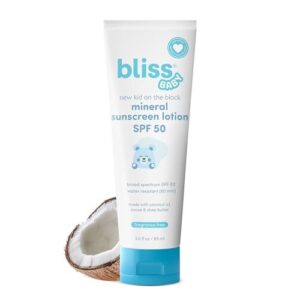
Bliss Baby Mineral SPF 50 is the one I hand to parents who’ve told me every other sunscreen leaves a chalky mess or an angry rash. The non-nano zinc oxide does the heavy lifting here, physically blocking UVA and UVB instead of soaking into skin that’s already reactive.
What sold me was the sheer finish, minimal white cast, plus shea butter, coconut oil, and aloe working together so it feels more like lotion than sunscreen. Fragrance-free, vegan, and it holds up to 80 minutes in water.
| Best For | Babies, toddlers, children, and adults with sensitive skin who need reliable sun protection without harsh chemicals. |
|---|---|
| SPF Rating | SPF 50 |
| Active Ingredient | Non-nano zinc oxide |
| Water Resistance | 80 minutes |
| Volume | 3 oz |
| Reef Safe | Yes |
| Fragrance Free | Not specified |
| Additional Features |
|
- Non-nano zinc oxide provides broad-spectrum SPF 50 protection while reflecting UVA and UVB rays
- Hydrating ingredients like shea butter, coconut oil, and aloe vera make it feel more like lotion than sunscreen
- Free from oxybenzone, octinoxate, parabens, phthalates, gluten, dairy, mineral oil, and silicones, plus reef-safe under Hawaii Act 104
- Needs to be applied 15 minutes before sun exposure, so it’s not a last-minute grab-and-go option
- Requires reapplication every 2 hours, which can be inconvenient during long outdoor days
- Must be reapplied immediately after towel drying, adding an extra step during swim days
2. Australian Gold Little Joey Sunscreen
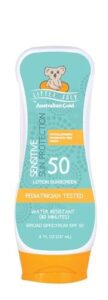
Now if you’ve got a kid who fights every application, Little Joey’s spray and lotion duo is worth a look. Just know it leans on chemical filters like avobenzone and octocrylene rather than zinc oxide, so it’s not my first pick for eczema-prone or reactive skin.
The lotion blends in glycerin and sunflower seed oil for a smoother feel, and it’s fragrance-free, which helps. But for truly sensitive kiddos, I’d reach for a mineral option first.
| Best For | This sunscreen is best for parents seeking a hypoallergenic, pediatrician-tested sun protection option for children with sensitive skin who need reliable outdoor and water protection. |
|---|---|
| SPF Rating | SPF 50 |
| Active Ingredient | N/A (chemical-free botanical) |
| Water Resistance | 80 minutes |
| Volume | 8 oz |
| Reef Safe | Not specified |
| Fragrance Free | Yes |
| Additional Features |
|
- Broad-spectrum SPF 50 protection with 80 minutes of water resistance
- Hypoallergenic, fragrance-free formula made with soothing ingredients like Aloe Vera, Kakadu Plum, and Sunflower Seed Oil
- Free from PABA, phthalates, and gluten, and both vegan and cruelty-free
- Requires reapplication every 80 minutes during water exposure
- Must be applied 15 minutes before sun exposure for full effectiveness
- Limited to topical use only, so no added convenience features like spray application
3. TruKid Eczema Mineral Sunscreen SPF 30
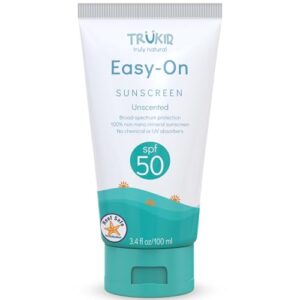
If you want to go back to basics, TruKid’s Eczema Mineral SPF 30 is where I steer most eczema parents. It’s 20% non-nano zinc oxide, nothing else, so there’s no guessing about hidden chemical filters.
The formula also folds in aloe vera, sunflower oil, and hyaluronic acid, which help calm already-irritated skin barriers. It’s unscented, paraben-free, and dermatologist tested. My only honest caveat: like most zinc-heavy formulas, expect a slight white cast, especially on darker skin tones.
| Best For | Parents seeking a gentle, mineral-based sunscreen for babies and kids with eczema or sensitive, easily irritated skin. |
|---|---|
| SPF Rating | SPF 30 |
| Active Ingredient | Zinc oxide |
| Water Resistance | Not specified |
| Volume | 3.4 fl oz |
| Reef Safe | Yes |
| Fragrance Free | Not specified |
| Additional Features |
|
- Mineral-based formula with zinc oxide offers broad spectrum SPF 30 protection without chemical UV blockers
- Clean, dermatologist-tested ingredients free from parabens and BPA, making it safe for delicate or eczema-prone skin
- Reef-safe, biodegradable, and packaged with post-consumer recycled material for eco-conscious families
- Mineral formulas can leave a noticeable white cast on the skin
- Formulated specifically for kids and babies, so it may not address adult-specific skin concerns
- Limited to a 3.4 fl oz travel size, which may require frequent repurchasing for regular use
4. Babo Botanicals Sensitive Baby Sunscreen
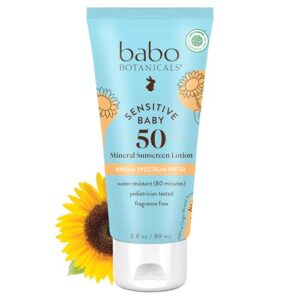
That white cast worry from zinc-heavy formulas? Babo Botanicals’ Sensitive Baby Sunscreen solves it with a fast-absorbing, lightweight lotion that rubs in smoother than most mineral options.
It leans on zinc oxide alongside sunflower oil and shea butter, so you get broad-spectrum SPF 50 without stripping the skin barrier. It’s fragrance-free, EWG Verified, and free of common allergens like peanuts and dairy.
As someone who’s recommended it for reef trips, too, it’s Hawaii-compliant, water-resistant for 80 minutes, and genuinely gentle on delicate faces.
| Best For | Babies and children with extra sensitive skin who need reliable sun protection without harsh chemicals or irritation. |
|---|---|
| SPF Rating | SPF 50 |
| Active Ingredient | Natural zinc oxide |
| Water Resistance | 80 minutes |
| Volume | 0.96 oz |
| Reef Safe | Yes |
| Fragrance Free | Yes |
| Additional Features |
|
- Fast-absorbing, lightweight formula that avoids the heavy white cast typical of mineral sunscreens
- Fragrance-free, EWG Verified, and free of common allergens like peanuts, dairy, and gluten
- Water and sweat resistant for 80 minutes, with a reef-safe formula that’s Hawaii compliant
- Mineral-based formula may apply or feel differently than chemical sunscreens users are used to
- Formulated specifically for sensitive skin, so it may not be optimized for other skin types
- Compact size (0.96 ounces) may mean more frequent repurchasing for regular use
5. Aveeno Baby Zinc Oxide Sunscreen
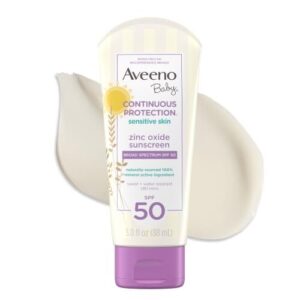
Aveeno Baby Zinc Oxide Sunscreen has been a nursery-bag staple for a reason: it pairs 100% zinc oxide with real oat extract, giving you SPF 50 without harsh chemical filters.
The lotion is tear-free, fragrance-free, and carries the National Eczema Association Seal, so you know it’s been vetted for reactive skin.
It’s water-resistant for 80 minutes, non-greasy, and comes in a travel-friendly 3 fl oz tube. For everyday errands or beach days, it’s dependable, budget-friendly protection that won’t fight your baby’s skin barrier.
| Best For | parents of infants and babies with sensitive or eczema-prone skin who want dependable, chemical-free sun protection for everyday outings or beach days. |
|---|---|
| SPF Rating | SPF 50 |
| Active Ingredient | 100% zinc oxide |
| Water Resistance | 80 minutes |
| Volume | 3 fl oz |
| Reef Safe | Not specified |
| Fragrance Free | Not specified |
| Additional Features |
|
- 100% naturally sourced zinc oxide with soothing oat formula, gentle enough for sensitive skin
- Tear-free, hypoallergenic, and carries the National Eczema Association Seal of Acceptance
- Water and sweat-resistant with a non-greasy, easy-to-spread formula
- Requires reapplication every 2 hours, and immediately after swimming, sweating, or towel drying
- Must be applied 15 minutes before sun exposure, which takes some planning ahead
- Small 3 fl oz size means frequent repurchasing for regular use
6. Aveeno Kids Zinc Oxide Sunscreen
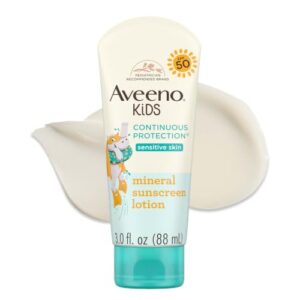
Once your little one graduates from the baby lotion, this one’s built for busier, sweatier days on the playground.
Same 100% zinc oxide base, same fragrance-free, paraben-free formula, but the texture spreads a bit lighter for kids who squirm through application.
You get 80 minutes of water resistance and genuinely non-greasy coverage, so post-swim reapplication doesn’t feel like fighting a losing battle against sticky, sandy hands.
| Best For | Active kids with sensitive skin who need reliable protection during swimming, sweating, and outdoor play. |
|---|---|
| SPF Rating | SPF 50 |
| Active Ingredient | 100% zinc oxide |
| Water Resistance | 80 minutes |
| Volume | 3 fl oz |
| Reef Safe | Not specified |
| Fragrance Free | Yes |
| Additional Features |
|
- 100% zinc oxide formula offers broad-spectrum SPF 50 protection without harsh chemicals
- Free from oxybenzone, parabens, and fragrance, making it gentle for sensitive skin
- Non-greasy, tear-free texture that’s easy to reapply after swimming or sweating
- Needs to go on 15 minutes before sun exposure, so timing matters
- Water resistance tops out at 80 minutes, meaning frequent reapplication during pool days
- Immediate reapplication is needed after towel-drying, which can be easy to forget
7. Aveeno Kids Mineral Sunscreen Stick
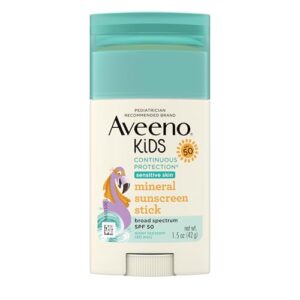
For kids who bolt the second you pull out a lotion bottle, this stick is a lifesaver. One-handed swipes across the nose, cheeks, and ears mean no fighting, no dripping product down little arms.
It’s the same 100% zinc oxide formula, fragrance-free and paraben-free, just packed into a travel-friendly, TSA-compliant size. At 80 minutes of water resistance, it holds up through sprinkler afternoons without needing constant supervision or reapplication battles.
| Best For | Parents of active babies, toddlers, and young kids who won’t sit still for lotion application and need quick, mess-free sun protection for swimming, sweating, or outdoor play. |
|---|---|
| SPF Rating | SPF 50 |
| Active Ingredient | 100% zinc oxide |
| Water Resistance | 80 minutes |
| Volume | 1.5 oz |
| Reef Safe | Not specified |
| Fragrance Free | Yes |
| Additional Features |
|
- One-handed stick application makes it fast and easy to cover the nose, cheeks, and ears without a fight
- 100% naturally sourced zinc oxide formula is fragrance-free and free of phthalates and parabens, gentle on sensitive skin
- Compact, TSA-compliant size makes it easy to toss in a diaper bag or carry-on for travel
- Needs to be applied 15 minutes before heading outside, so it’s not great for last-minute sun exposure
- Requires reapplication every 2 hours, plus another coat right after towel drying
- Water resistance tops out at 80 minutes, so it may not last through longer swim sessions without a touch-up
8. Mineral Kids Face Sunscreen Moisturizer
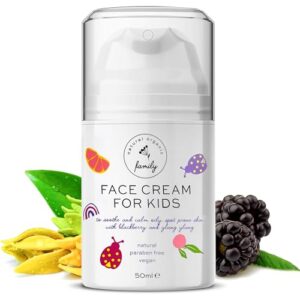
Faces need their own rules, since kids rub, drool, and smear everything within reach. A dedicated face moisturizer with zinc oxide and titanium dioxide gives broad-spectrum coverage while sitting lighter than a body lotion.
Look for non-nano formulas that skip the chalky white cast around the nose and cheeks. Many include hydrating ingredients so skin doesn’t feel tight afterward, which matters if your child already has dry patches.
Reapply after face-washing or swimming, and check the label for water-resistance timing.
| Best For | parents seeking a lightweight, non-nano zinc oxide sunscreen moisturizer for daily face protection on kids and preteens with sensitive or breakout-prone skin. |
|---|---|
| SPF Rating | SPF 30 |
| Active Ingredient | Non-nano zinc oxide |
| Water Resistance | Not specified |
| Volume | 3.21 oz |
| Reef Safe | Yes |
| Fragrance Free | Not specified |
| Additional Features |
|
- SPF 30 broad-spectrum protection from non-nano zinc oxide, plus a soothing botanical blend of aloe vera, green tea, chamomile, and gotu kola
- Lightweight, non-greasy formula that absorbs quickly and hydrates with squalane and caprylic/capric triglyceride
- Reef-safe, 97% natural formulation made with upcycled rice bran wax for eco-conscious skincare
- Formulated specifically for kids and preteens, so it’s not suited for adult use
- Reactive skin types need a patch test before regular use
- Contains multiple active botanical ingredients, which may be a lot for very sensitive or allergy-prone skin
9. Goongbe Waterful Mineral Sun Lotion
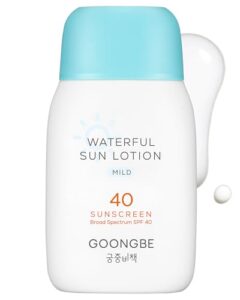
Ever have a toddler who bolts for the sprinkler mid-application? This Korean import earns its name, going on watery-thin and vanishing fast, no chalky residue. It’s built on 100% non-nano zinc oxide paired with titanium dioxide for genuine broad-spectrum coverage, plus centella and panthenol so skin stays comfortable, not tight.
It’s water-resistant, too, which matters for splash-happy kids. As someone who’s tested plenty of "invisible" mineral formulas, this one actually delivers on that promise, without sacrificing the mineral-only protection sensitive skin needs.
| Best For | Parents seeking a gentle, water-resistant mineral sunscreen for babies, kids, or anyone with sensitive skin who wants easy daily sun protection. |
|---|---|
| SPF Rating | SPF 40 |
| Active Ingredient | Non-nano zinc oxide |
| Water Resistance | Water-resistant |
| Volume | 2.82 fl oz |
| Reef Safe | Not specified |
| Fragrance Free | Not specified |
| Additional Features |
|
- Non-nano zinc oxide delivers broad-spectrum UVA/UVB protection without harsh chemicals
- Hydrating ingredients like panthenol, hyaluronic acid, and centella keep skin comfortable for 24 hours
- Vegan, hypoallergenic formula free from 25 common allergens, gentle enough for sensitive skin
- Needs to be shaken well before every use
- Requires reapplication every 2 hours to stay effective
- Thorough cleansing is needed after sun exposure to fully remove it
10. Beef Tallow Zinc Oxide Sunscreen
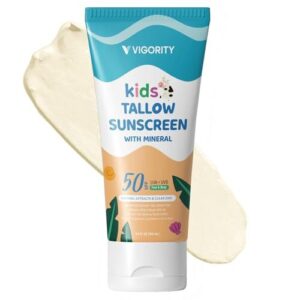
Yes, you read that right, beef tallow, and parents ask me about it constantly. These formulas pair non-nano zinc oxide with a grass-fed tallow base and food-grade botanical extracts, giving you mineral protection with a genuinely nourishing feel.
It’s water-resistant, reef-safe, and tear-free, great for face and body year-round. Just know it contains animal-derived ingredients, so it’s not for vegan households, and you’ll need to reapply after swimming like any water-resistant formula.
| Best For | parents seeking a gentle, mineral-based SPF 50 sunscreen for kids, toddlers, or anyone with sensitive skin who prefers natural ingredients. |
|---|---|
| SPF Rating | SPF 50 |
| Active Ingredient | Non-nano zinc oxide |
| Water Resistance | Water-resistant |
| Volume | 3.4 fl oz |
| Reef Safe | Yes |
| Fragrance Free | Not specified |
| Additional Features |
|
- Non-nano zinc oxide offers reliable broad-spectrum SPF 50 protection
- Nourishing grass-fed tallow base with food-grade botanical extracts moisturizes as it protects
- Non-greasy, tear-free, and reef-safe, ideal for everyday and outdoor use
- Contains beef tallow, making it unsuitable for vegan households
- Water resistance requires reapplication after swimming or sweating
- Animal-derived base may not appeal to those preferring fully plant-based formulas
Eczema-Prone Kids Sun Care

As someone who’s treated countless itchy, irritated patches on little ones, I know sun protection for eczema-prone skin takes a bit more care than the average routine.
It’s not just about blocking UV rays, it’s about calming and protecting a barrier that’s already working overtime.
Here’s what actually helps, straight from what I recommend to families every day.
Oat Extract Benefits
Comfort matters as much as protection when you’re choosing a kids sunscreen for sensitive skin. Oat extract offers real barrier strength support, plus anti-itch avenanthramides that calm reactive skin. It also brings oxidative stress protection and helps ceramide synthesis, locking in moisture.
As someone who’s seen eczema flare after sunburn, I trust skin-soothing oat ingredients in mineral sunscreens for lasting skin hydration benefits.
Aloe Vera Soothing Support
Right alongside skin-soothing oat, aloe vera earns its spot for cooling relief benefits that kids actually notice after a hot day outside.
It works by hydrating skin surface layers without feeling greasy, which matters for reducing sunburn itch during post-sun recovery.
- Non-greasy moisturizing texture
- Calms reactive, irritated patches
- Pairs well with mineral sunscreens
- Helps keep the skin barrier protected
- Gentle enough for daily use
Sunflower Oil Barrier Care
Aloe cools the surface, but sunflower oil works deeper, replenishing the barrier lipids eczema-prone skin loses. It’s rich in linoleic acid (around 60%), which smooths rough patches without heaviness.
Apply a few drops to damp skin post-bath for better absorption. One caveat: it oxidizes quickly, so buy small bottles and use them consistently for freshness and comfort.
Emollient Before Sunscreen
Once that sunflower oil sinks in, timing matters just as much as ingredients. Give it about 30 minutes before sunscreen goes on—this keeps skin barrier comfort intact and prevents pilling.
That short wait also improves sunscreen glide, so it spreads evenly instead of sliding off dry patches. For toddlers with eczema, this simple layering habit means better coverage and fewer irritated, missed spots.
Patch Testing Sensitive Skin
Skipping the patch test is tempting when you’re excited about a new tub of sunscreen, but don’t. Rub a dime-size amount behind your child’s ear (an ideal test site), leave it uncovered, and check at 24–48 hours for redness or itching. If skin stays clear, expose that patch to a few minutes of sun before going all-in—this catches irritation your pediatrician would want flagged early.
Application Tips for Better Coverage
Even the best mineral sunscreen won’t do much good if it’s not applied the right way, and as someone who’s seen plenty of sunburns despite a full bottle in the diaper bag, I promise the technique matters just as much as the product.
Timing, amount, and coverage all play a role in whether that SPF number actually holds up outside.
Here are the five habits I walk parents through at every summer checkup.
Apply Before Sun Exposure

Timing is everything: apply 15 to 30 minutes before heading out, so mineral filters settle fully on clean skin. Heading to the pool? Give it a full 30-minute water-resistance buffer.
| Activity | Wait Time |
|---|---|
| General outdoor play | 15–30 min |
| Swimming | 30 min |
| Reapplication | Every 2 hrs |
| After towel drying | Immediately |
| Morning routine | Before leaving home |
Use Enough Sunscreen

Almost nobody uses enough sunscreen, and that’s the honest truth behind most sunburns. Measuring sunscreen amounts matters: aim for a full shot glass for the body, a nickel-sized dollop for the face.
- Fill a shot glass for full-body coverage
- Use a nickel-size amount for the face
- Don’t skimp on ears or scalp
- Bigger kids need more product
- Reapply generously, not sparingly
Reapply Every Two Hours
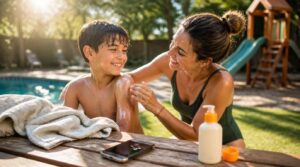
Two hours is the magic number, even with SPF 50. Sweat dilutes the layer, friction from sliding or climbing thins it, and towel drying wipes it away fast.
If your kid’s still outside, reapply — don’t assume the morning coat holds. Set a phone reminder, keep sunscreen in your bag, and always match the original SPF for consistent, broad-spectrum protection.
Cover Often-missed Areas
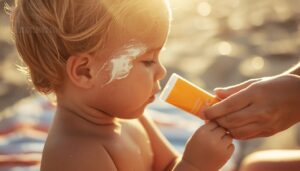
Where does sunscreen for kids usually run out first? The edges — ear contours, hairline, and neck nape all get skipped in a rush.
Wrists and hands wipe clean fast; feet and toes, especially between them, get missed entirely. As someone who’s treated plenty of surprise sunburns on sensitive skin, I always tell parents: trace the outline of your child’s body, not just the middle.
Choose Water-resistant Formulas

Pool day with a toddler? That’s when water-resistant formulas earn their keep, since splashing undoes coverage fast.
Look for labels stating 40 or 80 minutes — that’s the tested window before filters lose grip.
- Check polymer film durability for staying power
- Confirm reapplication after towel drying
- Prioritize filter retention for consistent SPF 50 protection
Emulsion stability matters too — it keeps sunscreen for kids’ sensitive skin spreading evenly, not separating.
Extra UV Protection for Kids
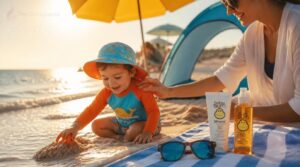
As someone who’s treated plenty of sunburns that could’ve been prevented, I can tell you sunscreen is only part of the picture. Your child’s skin needs backup, especially on long beach days or hikes where reapplying every two hours just isn’t realistic. Here are the extra layers of protection worth adding to your routine.
UPF 50+ Clothing
Think of a UPF 50 shirt as sunscreen you never have to reapply—it blocks about 98% of UV radiation through the fabric itself. Look for tight weaves, darker colors (better UV-blocking than pastels), and snug garment fit at cuffs and necklines.
| Feature | Why It Matters |
|---|---|
| Tight weave | Reduces UV penetration |
| Dark color | Blocks more UV |
| Snug fit | Prevents gaps |
Wide-brimmed Sun Hats
A good sun hat covers what fabric can’t quite reach: your child’s ears, neck, and scalp part line. Look for a brim width of 4 to 6 inches, full around the crown, made from UPF 50+ straw or cotton blends.
An inner sweatband keeps sweaty foreheads comfortable, while packable, crushable styles survive the diaper bag without losing shape.
UV-blocking Sunglasses
Eyes need the same shield skin does, since UV radiation causes cataracts and macular damage over a lifetime of sun exposure. Look for the UV 400 label, meaning full UVA/UVB blocking regardless of tint darkness.
Frame fit matters as much as the lens: a snug, wraparound style stops light sneaking in sideways. Polycarbonate lenses hold up best to active kids and rough play.
Shade During Peak Hours
Sunglasses cover the eyes, but a stroller canopy or pop-up tent covers everything else. Midday shade placement matters most, since sun angle tracking shows UV peaks between 10 AM and 2 PM.
Look for overhead coverage plus vertical shade screens for reflected light reduction. As kids move, mobile shade repositioning keeps sunscreens for kids sensitive skin working as backup, not the whole plan—pediatrician recommended sun safety always layers protection.
Baby Sun Safety Basics
Six months is the magic number: babies younger than that shouldn’t wear sunscreen at all, since their skin is too thin and absorbent to handle it safely. Until then, infant UV clothing, wide brims, and strict shade-seeking habits do all the work.
Before six months, babies’ skin is too thin for sunscreen, so UV clothing, wide brims, and shade must do all the work
Pediatricians recommend planning outings around peak sun hours, because prevention beats treatment every single time with sensitive newborn skin.
Frequently Asked Questions (FAQs)
What’s the best sunscreen for kids with sensitive skin?
Pediatrician-recommended mineral sunscreens with zinc oxide and SPF 50 protection work best for sensitive skin, since they sit on top of skin rather than absorbing chemically, reducing pediatric skin reactions while supporting your child’s natural skin barrier.
What sunscreen is good for kids with sensitive skin?
Like a Rolodex of gentle picks, mineral sunscreens with zinc oxide work best: fragrance-free, paraben-free, non-nano formulas avoiding oxybenzone.
Pediatrician recommended options soothe sensitive skin while blocking UV rays—no chemical irritation, just reliable, broad-spectrum protection for toddlers’ delicate barriers.
What can I use if my child is allergic to sunscreen?
Switch to mineral sunscreens with zinc oxide as the sole active ingredient, since it’s less likely to trigger allergic reactions. Patch-test any new formula for a few days first, and ask your pediatrician to help pinpoint the exact trigger ingredient.
What is the least harmful sunscreen for kids?
Gentlest formula, safest ingredients, simplest label — that’s the goal.
Non-nano zinc oxide mineral sunscreens offer physical, not chemical, protection, sitting on skin instead of absorbing in. That protects skin barrier integrity, avoids systemic absorption risks, and keeps things reef-safe too.
What is the best sunscreen for kids with sensitive skin?
Look for mineral sunscreens with non-nano zinc oxide, fragrance-free and paraben-free, avoiding chemical filter irritants. These protect sensitive skin without absorbing into the barrier, giving you reliable, gentle sun safety for toddlers and babies alike.
What are non-toxic sunscreens for kids & babies?
An ounce of prevention beats a pound of cure: non-toxic sunscreens rely on mineral active ingredients like zinc oxide and titanium dioxide, skipping oxybenzone and octinoxate entirely for sensitive skin protection babies and kids genuinely need.
Does sunscreen damage kids’ skin?
Not when chosen wisely. Mineral sunscreen avoids chemical filter absorption and systemic absorption risks tied to skin barrier irritation or allergic reaction risks. Zinc oxide and titanium dioxide sit on skin harmlessly, making mineral particle safety a genuine win for sensitive skin.
Do kids need sunscreen?
Yes, kids need sunscreen the way plants need water — skip it and damage builds quietly. UV exposure causes sunburn regardless of skin tone, so daily protection matters for every child spending time outdoors, rain or shine.
What should you look for in a kids’ sunscreen?
Prioritize mineral sunscreen with zinc oxide or titanium dioxide, true broad-spectrum protection, and gentle, fragrance-free ingredients. These physical blockers reflect UV rays instead of absorbing them, lowering irritation risk for sensitive baby skin while still delivering reliable, dermatologist-trusted coverage.
Are mineral sunscreens safe for children?
Picture a tiny knight in armor, not a sponge soaking up chemicals: that’s mineral sunscreen. Zinc oxide and titanium dioxide sit on skin as physical sunscreens, reflecting UV rather than absorbing it, which meets pediatric safety standards while easing concerns about systemic absorption.
Conclusion
Let’s face it: shielding your child’s skin shouldn’t feel like a burning question with no answer.
Once you know which zinc-based formulas your kid tolerates, the guessing game ends, and confidence takes over.
Sun protection for kids sensitive skin isn’t about finding one perfect bottle; it’s about building a routine, hat, shade, reapplication, that works with their skin, not against it.
Trust that rhythm, and summer stops being something you dread.
Your child gets to just play.