This site is supported by our readers. We may earn a commission, at no cost to you, if you purchase through links. This content is for general informational and educational purposes only and is not a substitute for professional medical, dermatological, or nutritional advice.
Patchy stretches of stubble frustrate more than 70% of guys in their late teens and twenties, and most of them think something’s wrong with their body. Nothing is. Beard growth for young adults runs on genetics, hormones, and time, not willpower, and those patches usually fill in as your follicles mature over the next several months.
Your beard follows its own biological clock, one shaped by DHT sensitivity and follicle patterns you inherited long before you grew your first whisker. Push it too hard with the wrong products or unrealistic expectations, and you’ll only add irritation to the wait.
Get the fundamentals right, from nutrition to skincare to timing, and you’ll grow in stronger, fill in faster, and finally understand what your face is actually working with.
Table Of Contents
- Key Takeaways
- How Beard Growth Develops in Young Adults
- How to Support Healthy Beard Growth
- Build an Effective Beard Care Routine
- Fix Common Beard Growth Problems
- Choose and Maintain Your Beard Style
- Frequently Asked Questions (FAQs)
- Is it possible to grow a beard in your 20s?
- Is 25 too late to grow a beard?
- Can genetics completely prevent beard growth potential?
- Do beard growth supplements actually work effectively?
- Will shaving frequently make my beard thicker?
- Can stress permanently damage my beard growth?
- Should I use minoxidil for beard enhancement?
- How long does a full beard take to grow?
- Can beard growth products speed up results safely?
- Is it normal for beard growth to slow down?
- Conclusion
Key Takeaways
- Patchy beard growth affects up to 70% of young guys and is driven by genetics and follicle-by-follicle DHT sensitivity, not anything you’re doing wrong.
- Your beard follows its own biological timeline, growing about half an inch a month and often taking six to twelve months to fill in fully as hormones and follicles mature through your twenties.
- Daily habits like eating enough protein, zinc, and biotin, lifting weights, sleeping well, and managing stress all support the hormone balance your follicles need to grow.
- A gentle care routine, washing 2-3 times weekly, exfoliating, applying beard oil correctly, and trimming with the right tools, does more for your beard’s look than any growth "hack" ever will.
How Beard Growth Develops in Young Adults

Your beard doesn’t grow overnight, and it doesn’t grow by accident either. Behind every whisker is a mix of timing, hormones, and genetics working together. Here’s what’s actually happening under the surface as your beard comes in.
It’s a common myth that razors speed things along, but as this breakdown of whether shaving actually boosts beard growth explains, your follicles were never taking cues from the blade.
Beard Growth Stages and Timeline
Your beard growth journey starts small: fine vellus hairs before any real stubble development timeline kicks in. Visible growth milestones follow fast, stubble by day seven, patchy growth phases through month three.
Full beard timeline? Expect six to twelve months. This growth phase progression rewards patience, so build your beard care routine now and let genetics finish the story.
Growth speed itself follows a biological hair cycle process, which explains why some patches fill in faster than others.
Average Monthly Growth Rate
Numbers help here. Your beard grows about half an inch monthly, roughly 1.25 cm, or 0.3-0.5 mm daily during active cycle phases.
Growth isn’t constant though. Summer months can push rates up to double winter’s pace, with July often marking peak testosterone and visible progress.
Track your own pattern for a few weeks. Individual factors mean your baseline might differ from average.
Genetics and Beard Density
Your genes set the ceiling on beard density, and over 80% of your growth potential traces back to inherited follicle patterns.
Ethnic growth variations explain why Mediterranean and Middle Eastern men often see thicker coverage.
Density prediction factors include follicle count, size, and hair shaft thickness, while genetic patchiness affects up to 70% of guys.
Testosterone and DHT
Your genetic blueprint sets the stage, but hormones do the building. Testosterone converts to DHT through local tissue synthesis in your follicles, and DHT binds androgen receptors with far more punch than testosterone alone. That receptor binding drives follicle activation, jumpstarting real beard growth. Your testosterone to DHT ratio matters here too, fueling the signaling pathways behind visible, lasting facial hair.
Age and Follicle Development
Time matters as much as testosterone. Puberty follicle activation kicks off the process, but full hormonal maturity unfolds through your late teens and twenties, the developmental competence shift that separates patchy stubble from real beard growth.
Genetic expression over time means follicles you inherited keep responding differently as you age. That’s why patience through your twenties often unlocks density your teenage self never had.
How to Support Healthy Beard Growth

Genetics set your ceiling, but daily habits decide how close you get to it. Your body needs the right fuel and conditions to keep those follicles firing on all cylinders. Here’s what actually moves the needle, starting with what’s on your plate.
Understanding how to stimulate hair follicle growth naturally gives you a practical edge while you still have time to act on it.
Choosing the right topical products matters too — ingredients like alcohol bases and heavy occlusives can work against your progress, so it’s worth exploring beard growth products formulated without harsh side-effect-causing additives.
Building healthy beard growth habits around sleep, hydration, and stress management can make a surprising difference in how fully your genetics actually express themselves.
Protein, Zinc, and Biotin
Your beard is only as strong as what you feed it. Protein builds keratin, zinc powers follicle enzymes, biotin metabolizes nutrients into growth fuel.
Once your beard’s fueled and growing strong, browsing classic beard styles for inspiration can help you decide how to shape and maintain it.
- Eggs, chicken, fish, beans
- Zinc-rich shellfish, nuts
- Biotin from whole grains
- Dairy for amino acids
- Leafy greens for absorption
Skip mega-dose supplements. Talk to your doctor before biotin, since it can skew bloodwork.
Exercise and Hormone Health
Lift weights to grow your beard. Resistance training nudges testosterone upward, the exact hormone your follicles crave.
Keep intensity smart: 2-3 strength days weekly, plus light cardio. Overdoing high-intensity work spikes cortisol, which fights testosterone.
Fuel properly too. Undereating while training hard tankshormones. Balance exercise, nutrition, and rest for real follicle support.
Sleep and Stress Management
Your follicles do their best work while you sleep, so guard those hours like gold.
Keep a consistent sleep schedule, skip late caffeine and alcohol, and try slow belly breathing before bed. Mindfulness quiets racing thoughts too.
- Steady sleep helps hormones
- Calm minds sleep deeper
- Stress-reactive sleepers need extra care
Treat rest as part of your beard care routine, not an afterthought.
Daily Facial Skin Care
Healthy skin grows healthier beards. Cleanse morning and night with a gentle, alcohol-free cleanser, lukewarm water, fingertips only.
Follow with moisturizer, then sunscreen by day. Exfoliate twice weekly to prevent flaking and beard dandruff.
Add serums if needed, always before moisturizer. This same logic fits your beard washing and beard oil routine underneath.
Beard Growth Myths
Ever hear that shaving makes your beard grow back thicker? Total myth. Shaving just cuts hair, it doesn’t touch your follicles.
Same goes for beard oil and biotin: they support health, not growth speed. DHT drives your pattern, but it’s not an instant switch.
Skip the shortcuts, trust real beard growth tips and a consistent routine instead.
Build an Effective Beard Care Routine
Genetics and hormones set your growth potential, but your daily routine decides how good that beard actually looks. Five habits make the biggest difference, from washing to trimming. Let’s break down each one so you can build a routine that works.
Washing Without Stripping Oils

Grab a sulfate-free formula and lukewarm water, never hot. Traditional shampoo sits at pH 8-9 and strips sebum; a pH-balanced wash (5.5-6.5) cleans without disrupting it.
Massage in for 30 seconds, rinse just 5-7 seconds. Wash 2-3 times weekly, not daily. This keeps your beard hygiene routine gentle while locking in the oils your skin worked hard to produce.
Exfoliating Under Facial Hair
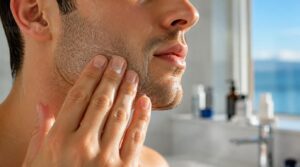
Once your face is clean, exfoliate the skin underneath, not the beard itself. Use small circular motions for 30 seconds, then rinse with lukewarm water.
- Cuts down on ingrown hairs
- Controls beard dandruff
- Prevents razor burn later
- Skip if skin’s irritated
- Never scrub hair strands
Applying Beard Oil Properly

Once skin’s exfoliated, oil becomes your best friend. Apply right after showering, when your beard’s damp, not dripping.
If you live somewhere dry, these beard oils for dry climates are worth a look, since they lock in moisture when the air keeps pulling it out.
Start with 2 to 3 drops, massage into skin at the roots, then work outward through the hair.
| Beard Length | Drops Needed |
|---|---|
| Short | 2-3 |
| Long | 5-10 |
Adjust as needed, avoid greasy buildup.
Brushing and Detangling Daily

Oil’s in, now work it through. Brush twice daily to spread those oils and keep hair manageable.
Detangle from the ends first, moving upward in short, gentle strokes so knots don’t get pushed toward your skin.
- Choose stiffer bristles for coarse, curly beards
- Pick flexible bristles for finer hair
- Try wet brushing to ease stubborn tangles
Trimming With Proper Tools

Shape starts with the right tool in hand. Use a beard trimmer with adjustable guard combs for length control, and scissors for precise edging around lips.
| Tool | Best For |
|---|---|
| Trimmer | Bulk length, guards |
| Scissors | Precision snips |
| Guard comb | Consistent length |
| Cleaning brush | Blade care |
Clean blades after every session. Keep edges pointed away from skin until you’re ready to cut.
Fix Common Beard Growth Problems

Every beard hits a few bumps along the way, and yours is no exception. The good news? Most of these issues are common, predictable, and fixable with the right approach. Let’s walk through five problems you might run into and exactly how to handle each one.
Early Growth Itchiness
That first-week itch isn’t random, it’s your skin adjusting to new hairs pushing through. Razor edge irritation and dryness are common culprits.
Ease it with beard oil on damp skin, switch to single-blade shaving, and trim to 1-2mm to dodge ingrown hairs.
Patch-test new products first, sensitive skin reacts fast to fragrance and preservatives.
Beard Dandruff and Flaking
Those white flakes catching in your beard aren’t regular dandruff, they’re dry, irritated skin underneath. Fight back with anti-dandruff shampoo 2-3 times weekly, using selenium sulfide or zinc pyrithione, left on five minutes before rinsing.
Add gentle beard exfoliation once or twice weekly, then lock in moisture with beard oil. Stick with it, flakes usually clear within one to two weeks.
Patchy or Uneven Growth
Patchy spots hit up to 70% of guys, and it’s almost always genetics, not something you did wrong. DHT sensitivity varies follicle by follicle, so uneven density is normal.
Patchy beards affect up to 70% of guys, driven by genetics and follicle-by-follicle DHT sensitivity, not personal failure
Give it time, patches often fill in through your mid-20s. If they don’t, minoxidil applied twice daily helps 56% of users. Persistent gaps? Ask your dermatologist about alopecia barbae.
Ingrown Hairs and Breakouts
That angry red bump isn’t always acne, it’s often a hair curling back into your skin. Curly beard hair triples the risk.
Prevent it:
- Soften hair with warm water
- Use a single-blade razor
- Shave with the grain
- Exfoliate weekly
- Skip tight collars after shaving
Minoxidil Risks and Medical Advice
Thinking about minoxidil for patchy spots? Topical use shows low systemic absorption (0.3-4.5%), but oral minoxidil is different, it’s a vasodilator that can trigger tachycardia, fluid retention, or rare cardiovascular events.
Effects fade within months of stopping. Talk to your doctor before starting, share your medication list, and treat this as medical guidance, not a DIY growth hack.
Choose and Maintain Your Beard Style

Growing the beard is only half the job, working with what you’ve got is the other half. The right style choice can make patchy spots disappear and average growth look sharp. Here’s how to pick and maintain a look that actually fits you.
Styles for Patchy Beards
Don’t fight your patches, outsmart them. Try a circle beard or chin strap to lean into your strongest zones.
Keep sparse cheeks at 1-2mm while jaw hair grows longer, that gradient trick blends everything together. Sharp cheek line shaping and clean neckline trimming do wonders too.
Beard balm can hold longer strands right over the gaps.
Matching Your Face Shape
Circle beards work for patches, but the real key is knowing your face shape first. Grab a tape measure: forehead, cheekbones, jaw, length.
Oval faces keep beards shorter than head hair. Square jaws want narrower width for softening. Round faces grow longer chin hair for elongation. Diamond faces balance wide cheekbones with chin volume. Rectangular faces match beard length to hair length.
Working With Hair Texture
Face shape sets the outline, but texture decides how your beard actually behaves day to day.
Curly or coily hair needs more beard oil and moisture to fight dryness. Fine strands want lighter products; coarse hair controls richer ones. Know your porosity, curl pattern, and thickness, and your beard grooming routine will finally click.
Shaping Necklines and Cheek Lines
Texture guides your routine, but lines define your look. Set your neckline just above where your neck meets your jaw, and keep cheek lines matched on both sides.
- Fade sideburns gradually for smooth jaw blending
- Trim necklines weekly; they grow back fastest
- Check symmetry from multiple mirror angles
Consistent borders turn patchy growth into intentional beard styling.
Setting Realistic Growth Goals
A calendar is your best friend here. Give your beard growth journey at least 4 months before judging results, since average growth runs 0.5 inch monthly.
Genetics set your ceiling, so track weekly photos instead of comparing to your buddy’s jawline. Aim for 80% of your genetic max. That’s realistic, and honestly, still pretty impressive.
Frequently Asked Questions (FAQs)
Is it possible to grow a beard in your 20s?
Your jawline is a garden, and your twenties are prime planting season. Testosterone and DHT wake up dormant follicles, genetics set the blueprint, and with patience plus solid beard care, that patchy sprout becomes a real beard within months.
Is 25 too late to grow a beard?
Not even close. Your genetic growth potential hasn’t peaked yet, since hormone activation and follicle maturity often continue through your early thirties. Patience pays off here: many guys see real thickening between 25 and 35, not before.
Can genetics completely prevent beard growth potential?
Only about 1% of men truly can’t grow facial hair. Genetic limits shape follicle density and ethnic variation, but complete blockage is rare. Your beard growth potential is real, work with your family patterns, not against them.
Do beard growth supplements actually work effectively?
Honestly, most don’t. Supplement efficacy only shines if you’re deficient in zinc or biotin. Otherwise, they support hair health, not beard growth effectiveness. Genetic limits still call the shots, so keep realistic expectations.
Will shaving frequently make my beard thicker?
Nope, that’s a myth. Shaving only cuts hair at the surface, your follicle biology stays untouched. Blunt tips can feel rougher, but true thickness and growth rate depend on genetics, not your razor.
Can stress permanently damage my beard growth?
Funny how the thing stressing you out about your beard is also what’s slowing it down. Cortisol disrupts hormone balance, causing shedding and patchy thinning, but it’s reversible: manage stress well, and growth recovers naturally.
Should I use minoxidil for beard enhancement?
Minoxidil is FDA approved for scalp hair loss, so facial use is off-label. It can thicken patchy spots with twice-daily use, but results take 16 weeks or longer. Talk to your doctor first.
How long does a full beard take to grow?
Good things come to those who "wait" it out. Your beard growth timeline runs 3 to 6 months for full coverage, driven by genetics, hormone influence, and age development. Patience turns stubble into a beard growth journey worth showing off.
Can beard growth products speed up results safely?
Yes, but with limits. Topical minoxidil has the strongest evidence, working existing follicles over 3-6 months. Microneedling may boost results. Supplements support overall health, not miracles. Always run skin tolerance testing first, and ask your doctor about hormone pathway risks.
Is it normal for beard growth to slow down?
Slowdowns are completely normal. Follicles cycle through active and resting phases, testosterone fluctuates, and growth plateaus happen naturally. Genetics shapes your timeline too. Stay patient, since true concern only means growth stalling entirely despite good care.
Conclusion
Good things come to those who wait, but your beard won’t grow itself while you sit around. Beard growth for young adults rewards consistency, not panic: eat well, sleep enough, and treat your skin right every single day.
That patchy stretch staring back at you now isn’t your final beard. Stay patient, stick with your routine, and let your follicles finish what genetics started. Your face is still writing its story, one whisker at a time.