This site is supported by our readers. We may earn a commission, at no cost to you, if you purchase through links. This content is for general informational and educational purposes only and is not a substitute for professional medical, dermatological, or nutritional advice.

Your scalp can produce six times more collagen after just one microneedling session, according to recent dermatological research. That tiny handheld roller covered in fine needles doesn’t just poke holes in your skin—it triggers a cascade of biological responses that can coax dormant hair follicles back to life.
Clinical trials show some patients achieving 20 to 40 percent increases in follicle counts, though these results demand months of consistent effort, not overnight miracles. The science behind dermarolling centers on controlled micro-injuries that activate your body’s repair mechanisms, flooding the scalp with growth factors that strengthen existing hair and create conditions for new strands to emerge.
Table Of Contents
- Key Takeaways
- How Derma Rollers Stimulate Hair Growth
- Benefits and Risks of Dermarolling for Hair
- How to Use a Derma Roller for Hair Growth
- Top Derma Rollers for Hair Growth
- Frequently Asked Questions (FAQs)
- How long does dermarolling take to grow hair?
- Can a derma roller help with hair loss?
- Do dermarollers help hair growth?
- What are the benefits of using a derma roller?
- Do derma rollers increase hair growth?
- Can derma rollers regrow hair?
- How long does a derma roller take to grow hair?
- What are the disadvantages of a derma roller?
- How often should I replace a derma roller?
- What are the cleaning steps for a derma roller?
- Conclusion
Key Takeaways
- Dermarolling can boost scalp collagen production by six times and increase hair follicle counts by 20 to 40 percent, though results require three to six months of consistent weekly sessions—not overnight miracles.
- The treatment works by creating controlled micro-injuries that trigger your body’s repair mechanisms, increasing blood flow by up to 20 percent and flooding follicles with growth factors that support new hair growth.
- Start with 0.25mm to 0.5mm needle lengths if you’re new to the technique, rolling vertically, horizontally, and diagonally across sectioned areas with light pressure, then work up to 0.75mm as your scalp adapts.
- Skip dermarolling entirely if you have active acne, eczema, psoriasis, weakened immunity, or take blood thinners, and always sterilize your roller in 70 percent isopropyl alcohol for 5 to 10 minutes between uses to prevent infection.
How Derma Rollers Stimulate Hair Growth
You’ve probably heard that derma rollers can encourage hair growth, but the real question is how they actually work. The science behind these tiny needles involves triggering your body’s natural repair mechanisms, which then creates conditions that support healthier hair.
For younger users exploring early growth options, products like beard growth solutions for teenage guys can complement derma roller routines by targeting follicle health from multiple angles.
Let’s break down the three main ways derma rollers stimulate your scalp to promote new growth.
Microneedling and Collagen Production
The magic behind dermarolling lies in microneedling’s power to trigger collagen production deep within your scalp. When those tiny needles create controlled micro-injuries, your fibroblasts kick into high gear, synthesizing collagen types I and III that reinforce the scaffold around each hair follicle.
This dermal remodeling process doesn’t just strengthen existing strands—it creates the foundation your follicles need to support healthier hair growth over time. Research also highlights microneedling’s ability to substantially increase collagen production rates https://wellaholic.com/blog/the-incredible-science-behind-microneedling-how-it-stimulates-collagen-production/.
Enhanced Blood Flow to Hair Follicles
Dermarolling doesn’t just build collagen—it transforms your scalp circulation by triggering vasodilation around hair follicles, which increases blood flow by up to 20 percent during treatment. That surge delivers oxygen, iron, zinc, and B vitamins directly to follicle cells, fueling keratin production and shortening the resting phase.
Dermarolling boosts scalp blood flow by 20 percent, delivering oxygen and nutrients that fuel keratin production and accelerate hair growth
Improved microcirculation also clears metabolic waste, reducing inflammation that can stall hair growth. For optimum results, it’s important to maintain a balanced scalp environment to support healthy hair growth.
Scientific Evidence for Hair Regrowth
While circulation sets the stage, clinical trials reveal microneedling’s real impact. Research shows dermarolling combined with topical therapies can boost hair density by 6 to 39 percent over several months, with follicle counts rising 20 to 40 percent in some studies.
Key findings include:
- Microneedling activates Wnt signaling, nudging follicles from resting to active growth phases
- Growth factors like VEGF and FGF surge, strengthening shaft formation
- Consistency matters—results appear only with months of dedicated use
Benefits and Risks of Dermarolling for Hair

Dermarolling comes with real potential for hair growth, but it’s not without its downsides. Understanding what it can actually do for your scalp, along with the risks you’re taking on, helps you make a smarter choice about whether this treatment fits your needs.
Before you start, it’s worth checking whether underlying scalp issues like inflammation or dandruff might be interfering with your results.
Here’s what you need to know about the benefits, side effects, and situations where dermarolling isn’t the right move.
Potential Hair Growth Results
You might notice your hair acting differently after a few months of consistent dermarolling.
Scalp health improvements often emerge first, with many people observing increased hair thickness and density around the three to six-month mark. Follicle stimulation from repeated sessions can gradually shift growth patterns, making thinned areas less visible as collagen production enhances stronger strands and hair regrowth occurs.
Strengthening Hair Follicles and Scalp Health
Beyond triggering new growth, microneedling builds a sturdier foundation for every strand. Dermarolling strengthens hair follicles by ramping up collagen synthesis, which fortifies the structures anchoring each hair and improves scalp health over time.
- Follicle nutrition increases as circulation boosts oxygen and nutrient delivery to your roots
- Scalp microbiome balance improves when gentle micro-injuries reset inflammation and support protective bacteria
- Hair thickness expands as collagen wraps follicles in resilient scaffolding, reducing breakage and shedding
Common Side Effects and Safety Concerns
Mild discomfort comes with the territory, and you’ll likely notice redness or a temporary stinging sensation in about 15 to 25 percent of first-time sessions.
Skin irritation, light bleeding, and scalp sensitivity usually resolve within two to five days. Infection risk climbs if you skip proper sterilization, so clean your roller thoroughly before and after each use to prevent hair breakage or prolonged discomfort.
Who Should Avoid Dermarolling
Certain medical conditions and histories make dermarolling off-limits for your scalp health. You’ll need to skip this treatment if you’re dealing with active acne, eczema, psoriasis, or open wounds—these skin conditions invite infection and worsen irritation.
People with weakened immune systems, those taking blood thinners, or anyone pregnant face heightened risks of complications, hair breakage, and poor healing.
How to Use a Derma Roller for Hair Growth
Using a derma roller for hair growth isn’t complicated, but technique matters if you want results without damaging your scalp. The needle size you choose, how you move the device, and what you do before and after each session all play a role in whether this treatment works for you.
Here’s what you need to know to dermaroll safely and effectively.
Choosing The Right Needle Size
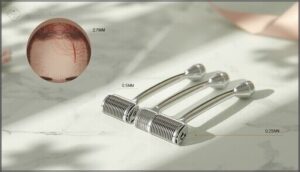
Start with shorter needle lengths between 0.25 mm and 0.5 mm if you’re new to microneedling—these minimize discomfort while still stimulating your scalp.
As your scalp sensitivity decreases with experience, you can progress to 0.75 mm needles for deeper dermal penetration. Always choose medical-grade stainless steel or titanium needle material for dermaroller safety, and consider your skin thickness when selecting sizes.
Proper Dermarolling Techniques for The Scalp
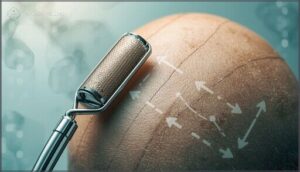
Dermarolling techniques for hair growth depend on scalp sectioning and careful rolling patterns. Divide your scalp into four to six sections, then roll vertically, horizontally, and diagonally across each area with light to moderate pressure.
Complete five to ten passes per direction, lifting the roller between strokes to avoid dragging. This systematic microneedling approach ensures complete coverage and ideal stimulation.
Prepping and Cleaning The Scalp

Your scalp needs a clean slate before dermarolling, so wash with a gentle clarifying shampoo to remove oil buildup and debris. Pat dry completely—moisture breeds bacteria during microneedling.
For those with oily scalps, consider a light exfoliation 24 hours prior to improve absorption without irritation. This prep routine promotes scalp health and reduces infection risk while maximizing hair growth potential.
Aftercare and Frequency Recommendations

Once you’ve finished rolling, apply a fragrance-free serum with hyaluronic acid to soothe those microchannels—skip heavy oils for 24 hours.
A gentle scalp massage for two to five minutes promotes hair follicle stimulation while reducing tension.
For healing times and frequency guidelines, beginners should start every four to six weeks with 0.5 mm needles, extending to six to eight weeks for longer sizes.
Top Derma Rollers for Hair Growth
Not all derma rollers are created equal, and choosing the right one can make the difference between seeing results and wasting your money.
You’ll want to look for medical-grade materials, proper needle sizing between 0.25mm and 0.5mm, and construction that won’t bend or break after a few uses. Here are three derma rollers that meet the clinical standards for safe, effective scalp microneedling.
1. Koi Beauty Derma Roller
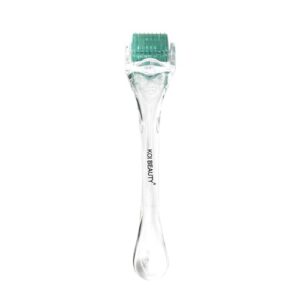
This roller features real titanium microneedles at 0.75mm, which penetrate the scalp to stimulate collagen production around your hair follicles. The 540-needle roller comes with a storage case, making it portable and easy to maintain.
You’ll find it designed for face, body, and scalp use, though beginners may experience minor bleeding initially. The titanium construction resists bending and rust, but you should replace the device after 4-6 uses to maintain hygiene.
Results require consistency—expect to commit at least six months before seeing noticeable improvements.
| Best For | People looking for an affordable, durable derma roller to improve hair growth, beard density, or skin texture with consistent long-term use. |
|---|---|
| Needle Material | Titanium |
| Needle Size | 0.75mm |
| Storage Case | Yes |
| Use Cases | Face, body, scalp |
| Weight | 2.89 ounces |
| Design | Portable |
| Additional Features |
|
- Real titanium microneedles that won’t bend or rust like cheaper stainless steel options
- Comes with a protective storage case for portability and hygiene
- Versatile enough for face, scalp, and body treatments
- Needs to be replaced every 4-6 uses, which adds up over time
- May cause minor bleeding and discomfort, especially when you’re first starting out
- Requires at least six months of regular use before you’ll see real results
2. Roselynboutique Derma Roller For Skin Care
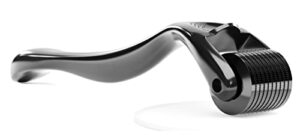
If you’re just starting out with scalp microneedling, the Roselynboutique derma roller offers a gentler entry point with 0.25mm titanium needles—substantially shorter than the Koi Beauty version. This 540-needle device works across your face, scalp, and beard areas, minimizing discomfort while still creating micro-channels that boost product absorption.
You’ll get an ergonomic handle and protective storage case, though some users report quality control issues like loose needles. At this needle depth, you can roll more frequently without significant irritation, making it ideal for building your microneedling routine gradually.
| Best For | Beginners who want to ease into microneedling with a gentle, multipurpose tool that works on face, scalp, and beard without causing much irritation. |
|---|---|
| Needle Material | Titanium |
| Needle Size | 0.25mm |
| Storage Case | Yes |
| Use Cases | Face, hair, beard |
| Weight | 0.42 ounces |
| Design | Ergonomic |
| Additional Features |
|
- Short 0.25mm needles make it comfortable and low-risk for first-timers
- Works on multiple areas (face, hair, beard) so you get more versatility
- Comes with a storage case to keep everything clean between uses
- Quality control problems reported—some arrive with loose or missing needles
- Not strong enough for deeper skin concerns or serious scarring
- May break if you press too hard during use
3. Titanium Micro Needles Derma Roller
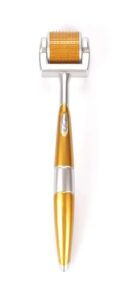
For a more intensive scalp treatment, consider the 192-needle titanium derma roller that balances durability with performance. You’ll find needle lengths between 0.5mm and 1.0mm—short enough for comfortable home use but deep enough to create meaningful micro-channels in your scalp tissue.
The ultra-slim needles (around 0.2mm diameter) resist bending through repeated sessions, and titanium construction maintains sharpness longer than stainless steel alternatives. Roll in vertical, horizontal, and diagonal directions once or twice weekly, then apply your hair serum while those fresh channels enhance absorption.
| Best For | People looking for an affordable at-home microneedling tool to improve scalp health, stimulate hair growth, or reduce the appearance of stretch marks and skin texture issues. |
|---|---|
| Needle Material | Titanium |
| Needle Size | Not specified |
| Storage Case | Yes |
| Use Cases | Face, neck, scalp |
| Weight | 3.53 ounces |
| Design | Ergonomic handle |
| Additional Features |
|
- Durable titanium needles stay sharp longer than stainless steel and resist bending through repeated use
- Lightweight and ergonomic design makes it easy to handle during sessions on face, neck, or scalp
- Comes with a storage case and manual, plus it’s simple to clean and maintain between treatments
- Can be uncomfortable or painful, especially when applying more pressure during treatment
- Results take patience—some users wait up to 12 weeks before seeing noticeable improvements in hair thickness
- Requires careful sanitation after each use to prevent infection, and may not work well for sensitive skin types
Frequently Asked Questions (FAQs)
How long does dermarolling take to grow hair?
You’ll notice gradual thickening after three to six months of consistent weekly or biweekly sessions, though individual results depend on your hair cycle, genetics, and whether you’re combining it with other treatments.
Can a derma roller help with hair loss?
Yes, dermarolling can address thinning hair by creating micro-injuries that stimulate collagen production and increase blood flow to follicles, especially when combined with treatments like minoxidil for better absorption.
Do dermarollers help hair growth?
When used correctly, dermarollers can support hair growth by stimulating collagen production and increasing blood flow to your follicles—particularly when combined with proven treatments like minoxidil for better results.
What are the benefits of using a derma roller?
Dermarolling boosts collagen production in your scalp, strengthens hair follicles, and increases blood flow to deliver more nutrients where you need them.
It also helps serums penetrate deeper, maximizing their effectiveness for thicker growth.
Do derma rollers increase hair growth?
Like planting seeds in freshly tilled soil, microneedling creates an environment where hair can thrive.
Some people see thicker, fuller growth after consistent sessions, though results vary widely and often need months to appear.
Can derma rollers regrow hair?
Research shows derma rollers may stimulate regrowth in areas with mild thinning, though they won’t restore hair to completely bald patches—results depend on your follicle health and consistent use over months.
How long does a derma roller take to grow hair?
You’ll usually see baby hairs and thicker strands within 8 to 12 weeks of consistent sessions. Most people notice meaningful improvements around the 3-month mark, though results vary by individual.
What are the disadvantages of a derma roller?
Using a derma roller is like opening tiny doors for trouble—skin puncture, infection from dirty needles, irritation, and prolonged redness can all occur, especially if you skip proper hygiene or apply too much pressure.
How often should I replace a derma roller?
You should swap out your derma roller every 8 to 15 uses, depending on needle length—shorter needles last longer, while longer ones wear faster and need earlier replacement.
What are the cleaning steps for a derma roller?
Think of your derma roller like a surgical tool—it demands hospital-grade hygiene.
Rinse it under warm water, soak the head in 70 percent isopropyl alcohol for 5 to 10 minutes, then air dry completely before storing.
Conclusion
Think of your scalp like soil aeration that needs nourishement to nourish what’s planted beneath. The evidence shows a derma roller can help hair growth when you commit to proper technique, sterilization protocols, and realistic timelines spanning months rather than weeks.
Start with 0.5mm needles, roll in multiple directions twice weekly, and pair the practice with minoxidil for amplified results. Your follicles won’t transform overnight, but controlled injury creates genuine opportunity for regrowth.