This site is supported by our readers. We may earn a commission, at no cost to you, if you purchase through links.
Most guys butcher their short beard within the first three passes of a trimmer. They go too high on the cheeks, carve out a neckline that belongs on a teenager, or trim one side shorter than the other without noticing until it’s too late.
The difference between a sharp short beard and a patchy mess isn’t genetics or luck—it’s technique. Once you know where to set your lines and how to work with your natural growth pattern, shaping a short beard becomes straightforward. The right approach takes about ten minutes and transforms your face from scruffy to styled.
Table Of Contents
- Key Takeaways
- What is a Short Beard Style?
- Choosing The Best Short Beard for You
- Tools Needed to Shape a Short Beard
- Preparing Your Beard for Shaping
- Step-by-Step Guide to Shaping a Short Beard
- How to Shape Cheek and Neck Lines
- Detailing The Mustache and Underlip Areas
- Maintaining a Well-Shaped Short Beard
- Common Mistakes When Shaping a Short Beard
- Advanced Styling Tips for Short Beards
- Frequently Asked Questions (FAQs)
- How to shape a very short beard?
- How to tidy up a short beard?
- How Often Should I Trim My Short Beard?
- What Type of Tools Should I Use to Trim My Short Beard?
- How Do I Prevent Razor Burn When Trimming My Short Beard?
- How Can I Keep My Short Beard Looking Its Best?
- How to make a short beard look good?
- How should I shape my stubble beard?
- How do you shape a low beard?
- How far down should a short beard go?
- Conclusion
Key Takeaways
- Most guys wreck their short beard by placing cheek lines too high, cutting necklines too low, or missing symmetry—mastering precise trimming technique at the jaw, cheeks, and neck transforms your look in ten minutes.
- Your face shape dictates which short beard works: oval faces handle anything, round faces need length on the chin with shorter sides, square faces benefit from fuller cheeks, and heart-shaped faces require width at the bottom.
- Set your neckline one to two fingers above the Adam’s apple in a gentle curve, trim the jawline where jaw meets neck at 75-95 degrees, and check both sides constantly to maintain sharp symmetry.
- Daily beard oil application, trimming every 7-14 days, and washing with sulfate-free products two to three times weekly prevents frizz, split ends, and keeps your beard looking intentional instead of accidental.
What is a Short Beard Style?
A short beard isn’t just stubble you forgot to shave. It’s a deliberate style that sits between clean-shaven and full-grown, usually keeping hair between 1/4 inch and 1 inch long.
Keeping it well-groomed means using the right amount of beard oil to maintain softness without looking greasy.
Let’s break down what makes a short beard work, the styles you can pull off, and why so many guys choose this length.
Defining Short Beards
A short beard hits that sweet spot between stubble and full growth—usually 1 to 3 inches in beard length. It keeps clear contrast with your skin and emphasizes facial structure through sharp lines at the jaw, cheeks, and mustache.
The key to beard styling success is intentional beard symmetry and clean edges. Your beard trimmer becomes your best friend for maintaining this look, since beard shaping requires precision over the facial hair’s natural hair texture.
Popular Short Beard Variations
Now that you understand the foundation, let’s explore the variations that give you control over your facial frames. Each style offers a different take on beard anatomy and demands specific grooming tips:
- Stubble – Light to medium growth (0 to 4 millimeters) for rugged appeal
- Boxed beard – Sharp rectangular edges along the jaw with uniform length
- Circle beard – Rounded mustache-chin loop for softer features
- Faded beard – Gradual taper from cheeks to neck for smooth transitions
Learning about the can help you choose the variation that best suits your face shape and grooming preferences.
Benefits of Short Beards
Beyond picking a variation, you need to understand why short beard styles command attention. A well-shaped short beard delivers masculine appeal and facial harmony while keeping grooming ease front and center.
Trimming takes under ten minutes per session, and you’ll spend less time battling lint or split ends. Plus, social perception shifts when your jawline stands out—observers link tidy facial hair styling with confidence and approachability in everyday settings.
A sharp, tidy beard takes minutes to maintain and signals confidence that people notice instantly
Choosing The Best Short Beard for You

Not every short beard works for every guy. Your face shape, growth pattern, and personal style all play a role in what’s going to look sharp versus sloppy.
Here’s how to zero in on the short beard that makes you look like you meant it.
Matching Beard Styles to Face Shapes
Your face shape is the blueprint for beard shaping success. Oval faces handle almost anything, from a classic full beard to a short boxed style that enhances symmetry. Round faces need length and angles—go longer on the chin, shorter on the sides for jawline enhancement. Square faces benefit from fuller cheeks and extended chin length to soften those hard angles.
Heart-shaped faces demand width at the bottom:
- Add fuller cheek growth for facial harmony
- Keep chin beards longer to balance a wider forehead
- Use beard symmetry to offset top-heavy proportions
Diamond faces shine with modest chin length and fuller sideburns. Cheekbone accentuation comes from keeping the bottom shorter while building width around the jaw. Matching beard style to face shape isn’t guesswork—it’s facial hair styling that creates real impact. For a deeper dive on, check out this thorough guide.
Assessing Your Beard Growth Pattern
Your beard growth pattern is the roadmap you can’t ignore. Check beard density in your cheeks, jawline, and neck—patchiness dictates how short you go.
Growth rates vary; some guys hit full coverage in four weeks, others need six. Examine facial hair texture and symmetry on both sides. Spotting imbalances early lets you adjust beard shaping strategy before the first trim.
Style Inspiration for Short Beards
Style Icons like George Clooney and Chris Pine show how Celebrity Looks turn heads with short boxed beard grooming. Scroll through recent red carpet shots for Beard Trends under 3 millimeters—these beard styles for different face shapes prove facial hair can stay sharp and professional.
Notice how their beard shaping techniques highlight jawlines without hiding features. That’s real Grooming Tips you can steal. Pick a beard style, study the details, then make it yours.
Tools Needed to Shape a Short Beard
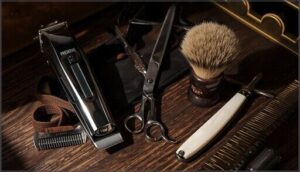
You can’t shape a short beard with your hands alone. The right tools make the difference between a barber-quality trim and a patchy mess.
Here’s what you need to get sharp lines and even length every time.
Essential Trimmers and Scissors
You can’t carve a masterpiece with a dull chisel. A quality beard trimmer with sharp stainless steel or ceramic blade materials gives you the control to nail your trimming routine every time.
Look for adjustable trimmer settings from 0.5 mm to 20 mm so you can dial in the perfect length for beard shaping. Keep a pair of sharp barbering scissors handy for snipping stray hairs the clippers miss.
Detachable blades make clipper maintenance simple—just rinse and oil after each use. Together, these tools deliver the edge definition that separates amateur hour from real barbering techniques.
Beard Combs and Brushes
Think of combs and brushes as your detailing crew—they set up every cut for success. Wooden comb benefits include anti-static properties and smooth glide through thick growth, while boar bristle brushes distribute natural oils for shine during beard maintenance.
Here’s your grooming tool maintenance arsenal:
- Wide-tooth wooden combs detangle coarse beards without snagging or breakage
- Boar bristle brushes train hairs flat and spread skin oils evenly
- Cellulose acetate combs resist static and pull less during beard shaping
- Dual-tooth designs switch between detangling and precise barbering techniques instantly
Brush care tips: rinse after use, dry bristles completely, store in a dry spot. That routine extends tool life and keeps your beard trimmer results sharp.
Preparing Your Beard for Shaping

You can’t shape what you can’t see clearly. A clean beard is your foundation for precision trimming.
Let’s walk through the three critical prep steps that separate amateur attempts from barber-quality results.
Washing and Drying The Beard
Clean facial hair sets the foundation for precision work. Use a mild sulfate-free shampoo two to three times weekly to preserve natural oils while removing dirt. Rinse with warm water first, then finish cool to seal the cuticle. Pat dry gently—never rub aggressively.
Once damp, apply a light beard oil for beard health and moisture. Proper beard hygiene and drying techniques protect facial skin underneath while maintaining strong, manageable facial hair ready for shaping.
Detangling and Combing Techniques
Tangled facial hair sabotages beard sculpting before you even pick up the trimmer. Work a wide tooth comb through damp hair from tips to roots, never yanking resistant knots.
For tangle prevention and smoother grooming, try this sequence:
- Apply light leave-in conditioner for slip
- Use detangling tools on small sections
- Follow with a boar bristle beard brush
- Comb in hair growth direction daily
- Clean combing methods prevent breakage
Proper beard shaping techniques start here.
Inspecting Growth and Symmetry
Once your beard runs smoothly, check where growth comes in strong versus patchy. Stand under good light and compare both sides from your mouth midline to your ears. Growth patterns reveal density gaps and natural lean.
Use this simple beard mapping chart before any beard sculpting:
| Zone | Density Check | Growth Direction |
|---|---|---|
| Cheeks | Compare fullness left to right | Note if hairs angle toward chin or ears |
| Jawline | Spot thin patches early | Track natural flow along bone structure |
| Chin | Assess cluster thickness | Observe vertical versus lateral lean |
| Neck | Identify sparse areas | Map upward or downward growth |
| Mustache | Check even coverage | Notice sideways spread patterns |
Facial symmetry guides your line precision and prevents lopsided results during beard shaping techniques.
Step-by-Step Guide to Shaping a Short Beard
Now comes the real work. You’ve got your tools ready and your beard is clean and dry.
These three steps will take you from scruffy to sharp with the precision of a professional barber.
Setting Your Desired Beard Length
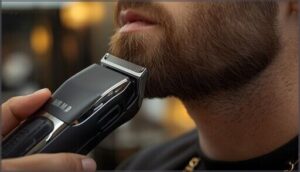
Start with a 4 millimeter guard for your first pass. This length sits in the sweet spot for most short beards, giving you a clean foundation without going too aggressive.
Test on a small patch near your jawline before committing. Brush everything downward and inspect both sides. Different brands vary slightly, so double check uniformity. Your guard setting controls the entire beard shaping process from here.
Trimming The Sides and Cheeks
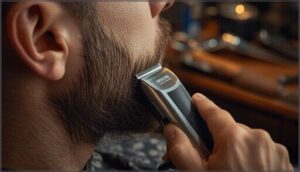
Once your length is locked in, tackle the sides with vertical upward strokes against the grain. This Facial Hair Grooming move carves out Cheek Line Precision and keeps Sideburn Alignment symmetrical.
Use Tapered Profiles on rounder faces or Square Cuts for angular jaws. Contour Blending prevents hard lines, so pass the trimmer in short sweeps.
Maintenance Frequency every five days stops overgrowth. Master these Beard Trimming Techniques and your Barbering Skills skyrocket.
Defining The Jawline and Neckline

With your sides dialed in, sharpen that Jawline by trimming a straight or slight arc from ear to chin—most guys look best when the line sits where jaw meets neck at a clean 75 to 95 degree angle. Next, set your Neckline one finger above the Adam’s apple in a gentle curve. Facial Symmetry demands you check both sides.
- Place two fingers above your Adam’s apple to mark your ideal Neckline height
- Trim the Jawline Contours following your natural bone structure for sharp Jawline Angles
- Remove hair below the neckline to reduce patchiness and boost density
- Use Neckline Curves that dip slightly at center front for a balanced profile
- Perform Beard Edging with a detail trimmer for precision Facial Hair Styling
How to Shape Cheek and Neck Lines
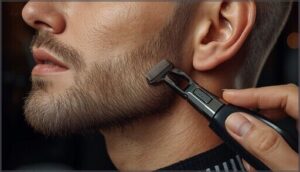
Your cheek and neck lines make or break a short beard. Get them wrong and you’ll look sloppy or unbalanced, no matter how well you trim everything else.
Here’s how to find your perfect lines and cut them clean every time.
Identifying The Ideal Cheek Line
Your cheek line is the horizontal border where your beard meets bare skin—usually right beneath your cheekbones. Most barbers recommend positioning it 1 to 2 millimeters below the bone for balanced facial structure.
Check your beard density first; patchy growth needs a softer, curved line, while thick coverage accommodates a sharper edge. Symmetry matters. Use a precision trimmer and measure both sides to keep your beard shaping clean and professional.
Creating a Clean Neckline
Two finger widths above your Adam’s apple is your baseline for neckline geometry. Hold a precision trimmer horizontally and follow the natural curve from behind each ear toward your throat. Work in short, controlled passes to avoid skin irritation and maintain beard symmetry.
Check both sides with a handheld mirror—uneven lines kill the polished barber look. This beard shaping step separates amateur trimming from pro-level grooming.
Avoiding Common Line Mistakes
Precision separates confidence from regret in beard shaping techniques. Most trimming techniques fail when you rush the cheek line errors—going too high creates an artificial frame.
Neckline mistakes happen when you carve below the Adam’s apple guideline. Combat symmetry issues by marking both sides before cutting.
Edge control demands patience, not speed. Your facial hair grooming reflects mastery when each line complements beard styles for different face shapes through deliberate beard maintenance and care.
Detailing The Mustache and Underlip Areas
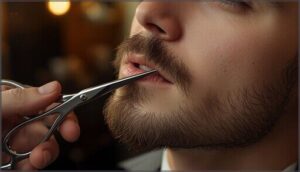
The mustache and underlip areas can make or break your short beard‘s overall look.
These zones frame your mouth and need careful attention to keep everything balanced and sharp.
Let’s break down how to trim, shape, and blend these critical areas for a clean finish.
Trimming The Mustache for a Balanced Look
Your mustache can make or break the entire beard trimming project. To nail mustache symmetry, trim along your lip line every three to seven days. Start with a conservative thickness and check both sides in daylight.
- Follow the natural lip line to prevent covering your upper lip
- Keep the center portion slightly longer for a flattering downward arc
- Create crisp upper edges that hug the lip without digging in
- Aim for width that mirrors your eyebrows when viewed from the side
Regular edge definition keeps your facial hair looking sharp without overtrimming.
Shaping The Soul Patch and Underlip
The soul patch sits dead center below your lip, so alignment makes all the difference. Use a precision trimmer to mark a small patch one to two square inches wide.
Trim every three to seven days to maintain clean beard edge definition and prevent overgrowth onto your lower lip. Comb the area first, then work in small passes while checking symmetry against your mouth center for proper facial hair alignment.
Blending With The Rest of The Beard
A choppy beard screams amateur work. Beard line blending requires gradual transitions where your mustache tapers into the sides rather than stopping cold.
Use your trimmer guard one setting shorter near the blend point to create smooth transitions that follow natural growth patterns. Check both sides in the mirror, then feather the edges with light upward strokes.
This facial hair integration transforms disconnected patches into cohesive beard styling through smart beard edge refining and beard maintenance.
Maintaining a Well-Shaped Short Beard

Getting your beard shaped is one thing. Keeping it sharp is another battle entirely.
A short beard won’t stay clean and tight on its own—it needs consistent upkeep, smart daily habits, and the right techniques to prevent damage. Let’s break down exactly how to maintain that fresh-from-the-barber look week after week.
Establishing a Regular Trimming Routine
Lock down your trimming schedule and stick to it like clockwork. Consistent grooming routine every seven days prevents uneven growth and keeps your facial hair care on track.
You’ll cut trimming time by thirty percent once muscle memory kicks in. Mark a fixed day for beard trimming and watch your beard maintenance become second nature.
Regular grooming delivers sharper lines that last longer between sessions.
Daily and Weekly Beard Care Tips
Your trimming schedule works best when paired with smart daily habits and weekly conditioning moves. Apply two to four drops of beard oil every morning to release beard oil benefits and keep hydration locked in. Run a boar bristle brush through your whiskers to spread natural oils and train growth patterns.
Weekly beard maintenance hits different when you layer it right:
- Wash with sulfate free shampoo two to three times weekly to preserve natural moisture
- Deep condition for five to ten minutes during your shower routine to soften hairs
- Exfoliate skin beneath the beard once weekly to prevent flaking and ingrown hairs
Daily trimming of stray hairs takes fifteen seconds but saves your shape between sessions. Lightweight moisturizer on the skin stops itch before it starts and aids beard hydration from the root up.
Preventing Beard Frizz and Split Ends
Even the sharpest shape falls apart when frizz and splits take over. Seal cuticles with lightweight beard oil each morning to reduce frizz by locking in moisture for eight hours. Trim every ten to fourteen days to stop splits from climbing the shaft. Wash with sulfate-free products and finish with a cool rinse to smooth ends.
| Frizz Control Method | Impact on Beard Health |
|---|---|
| Daily beard oil application | Seals cuticles, reduces frizz up to 8 hours |
| Micro trims every 10–14 days | Prevents split ends from traveling upward |
| Sulfate free beard wash | Maintains natural oils, decreases drying by 30% |
| Cool water final rinse | Closes cuticles, smooths visible frizz |
Protein intake and omega 3s from fish strengthen your beard from the inside out, cutting breakage while boosting texture.
Common Mistakes When Shaping a Short Beard

Even experienced guys mess up their beard from time to time. The difference between a sharp look and a patchy disaster often comes down to a few avoidable errors.
Let’s break down the most common shaping mistakes so you can sidestep them completely.
Over-Trimming or Uneven Lines
You can wreck a perfect beard in seconds if you rush the trim. Trimming errors like mismatched guard sizes create visible length gaps of 0.5 to 2 millimeters between sides, killing your symmetry instantly.
- Symmetry checks at eye level catch uneven lines before they spiral into full rework mode
- Edge blending with progressive guard sizes smooths harsh transitions that scream amateur
- Line corrections demand single passes per area—multiple swipes exacerbate mistakes fast
Beard mapping your jawline anchors your trimming routine and keeps your beard shaping techniques razor-sharp.
Neglecting The Neck and Cheeks
Sloppy neckline maintenance and cheek trimming destroy your beard symmetry faster than you’d think. A poorly defined neckline creates a sharp contrast between clean skin and facial hair, while untamed cheek lines produce irregular edges that mask your actual jawline. Dirt and oil accumulate under neglected neck hair, triggering skin irritation and folliculitis. Regular beard shaping prevents these issues.
| Problem Area | Visual Impact | Physical Consequence |
|---|---|---|
| Neglected Neckline | Unintentional sharp line at neck | Oil buildup, skin irritation |
| Ignored Cheek Line | Lop-sided, irregular upper edge | Stray hairs, asymmetry |
| Both Areas Skipped | Jagged, unbalanced beard | Ingrown hairs, friction redness [] |
Clear boundaries simplify beard trimming and keep you looking sharp.
Skipping Moisturizing and Aftercare
Neglect after trimming invites dry skin effects within days, triggering beard itch and flaking that derail your grooming advice. Without moisturizing, short beards lose moisture balance fast—frizz prevention becomes impossible as hair shafts dry out and irritation flares along the jawline.
Daily beard care with lightweight balm restores skin barrier function, cutting redness by 40 percent. Beard maintenance isn’t optional. Hydration protects your work and keeps beard trimming worth the effort.
Advanced Styling Tips for Short Beards

You’ve nailed the basics, but taking your short beard to the next level means pushing past simple maintenance.
Sharp fades, custom edge work, and tailored touches turn a standard trim into a signature look.
Let’s break down the techniques that’ll make your beard stand out.
Adding Fades or Sharp Edges
A tapered fade rewrites your beard geometry and transforms your entire facial contours. Start with a detail trimmer set at 0.5 to 1 mm for edge styling that cuts clean sharp lines along your jaw.
Three steps define the technique:
- Position the fade at mid-temple for balanced contrast or go high for aggressive separation.
- Blend upward in 1.5 mm increments to avoid hard stops.
- Touch up every three days to keep edges crisp.
Your trimming routine now demands precision.
Customizing The Beard to Suit Your Style
Your beard is your signature—make it unmistakable. Beard personalization depends on matching facial harmony with your lifestyle vibe.
| Style Goal | Grooming Techniques |
|---|---|
| Professional polish | Sharp cheek lines, trimmed mustache |
| Rugged edge | Softer borders, natural density |
| Modern contrast | Clean neckline, fuller chin |
| Classic masculine | Balanced mustache, even jawline |
| Casual approachable | Rounded cheeks, moderate length |
Aesthetic balance comes from deliberate beard shaping tools and products paired with honest self-assessment of your facial hair styling strengths.
Celebrity Short Beard Inspirations
Hollywood looks prove short boxed beard styles command attention without extra effort. Celebrity beard styles offer grooming tips you can adapt to your facial hair right now.
- Ryan Reynolds keeps stubble at five millimeters for adaptable beard trends.
- Ben Affleck rocks sharp jawline edges for masculine definition.
- Idris Elba balances fuller chins with trimmed cheeks.
- David Beckham pairs three-millimeter stubble with athletic polish.
- Robert Downey Jr uses soul patches for distinctive mens grooming tips.
Match celebrity styles with your beard shaping tools and products.
Frequently Asked Questions (FAQs)
How to shape a very short beard?
Think of your face as a canvas where precision meets symmetry.
Start with a uniform guard setting, trim upward against growth, then define sharp cheek lines and a curved neckline two fingers above your Adam’s apple.
How to tidy up a short beard?
Run your trimmer every three to five days to maintain clean cheek and neck lines.
Comb through daily, snip stray hairs with scissors, then apply lightweight beard oil to control frizz.
How Often Should I Trim My Short Beard?
Most guys lock in a trimming routine every 7 to 14 days.
Your facial hair maintenance schedule depends on growth rates and desired length—faster cheek growth means more frequent touch-ups to keep sharp edges.
What Type of Tools Should I Use to Trim My Short Beard?
You need a quality beard trimmer with adjustable guards, precision blades for sharp edges, a fine-tooth comb, and barber scissors. A razor helps define clean necklines. Grooming kits simplify everything.
How Do I Prevent Razor Burn When Trimming My Short Beard?
Like a shield protects, sharp blades and proper lubrication guard your skin.
Trim with hair growth using light strokes, rinse your trimmer often, then soothe with alcohol-free balm immediately.
How Can I Keep My Short Beard Looking Its Best?
Daily grooming with beard oil benefits your facial hair care routine.
Trim every week using proven techniques.
Brush regularly and moisturize for ideal beard styling tips that keep your look sharp.
How to make a short beard look good?
Master beard symmetry and facial harmony through daily brushing and weekly beard trimming sessions.
A touch of styling products tames beard texture while beard oil maintains moisture. Regular beard care and men’s grooming keep facial hair sharp.
How should I shape my stubble beard?
Start by setting your trimmer to 2-5mm for clean stubble. Define your neckline and cheek lines with precision, following your facial structure.
Regular beard trimming maintains symmetry and keeps beard texture even across your face shape.
How do you shape a low beard?
A low beard demands precision at the borders. Trim the jawline sharp, shave cheeks high, and keep the neckline one finger above your Adam’s apple for clean facial hair control.
How far down should a short beard go?
Your short beard should stop one to two fingers above the Adam’s apple for a clean neckline.
Below the chin, keep it around one to two inches to maintain balance with your jawline definition.
Conclusion
Most guys treat their beard like a hedge—hack away and hope for symmetry. You’re not most guys anymore. You’ve got the lines, the technique, and the tools to shape a short beard that looks intentional, not accidental.
Ten minutes of focused trimming beats an hour of damage control. Your face now carries clean edges and balanced proportions that separate you from the scruffy majority. That’s how to shape a short beard like you’ve been doing it for years.