This site is supported by our readers. We may earn a commission, at no cost to you, if you purchase through links. This content is for general informational and educational purposes only and is not a substitute for professional medical, dermatological, or nutritional advice.
Mutton chops have outlasted empires, survived the 1970s, and somehow made it back to modern barbershops without a scratch. That’s not a coincidence—it’s staying power. Frederick Douglass wore them as a statement of dignity. General Ambrose Burnside made them a battlefield trademark. Elvis brought them into the living room.
beard styles carry that kind of weight across centuries and cultures. What makes mutton chops beard styles so compelling isn’t just the look—it’s the identity they project.
Whether you’re drawn to the bold classic cut or a cleaner, modern variation, there’s a version built for your face, your lifestyle, and how you want to show up.
Table Of Contents
- Key Takeaways
- Mutton Chops Beard Styles Explained
- What Are Mutton Chops Beard Styles
- Benefits of Mutton Chops Beard Styles
- How to Grow Mutton Chops Beard Styles
- How to Trim Mutton Chops Beard Styles
- Popular Mutton Chops Beard Styles
- Mutton Chops Beard Styles for Different Face Shapes
- Mutton Chops Beard Styles With Mustache
- Mutton Chops Beard Styles for Working Guys
- Best Mutton Chops Beard Styles to Try
- Frequently Asked Questions (FAQs)
- What face shape is best for mutton chops?
- How to style mutton chops beard?
- Are mutton chops a classic beard style?
- How to outline the shape of a Mutton Chops beard?
- How do you cut a mutton chop beard?
- Can you wear a mutton chops beard with a moustache?
- Which face shape suits mutton chops?
- Why did mutton chops go out of style?
- Is mutton chops beard good?
- Are mutton chops still in style?
- Conclusion
Key Takeaways
- Mutton chops have a centuries-long history tied to real cultural identity — from abolitionist Frederick Douglass to Civil War generals to rock icons — which gives the style a weight most beard choices simply don’t carry.
- Your face shape is the most important factor when choosing a mutton chop variation, since the wrong cut can add unwanted width or length instead of framing your jaw the way it should.
- Keeping mutton chops sharp is surprisingly low-effort — a trim every three to four days, daily beard oil, and a quick comb session is genuinely all it takes.
- Whether you want a clean, professional look or something bold and retro, there’s a mutton chop style that fits your hair texture, lifestyle, and how much mirror time you’re actually willing to commit to.
Mutton Chops Beard Styles Explained

Mutton chops have a story worth knowing before you pick up a trimmer. From their 19th-century roots to the faces of rock legends and military generals, this style carries real history — and real personality.
Whether you’re new to the look or refining your technique, stylish winter beard ideas show how mutton chops fit right into cold-weather grooming with serious style.
Here’s what you need to know to understand where they came from, what sets them apart, and whether your face shape is the right canvas for them.
History of Mutton Chops
The history of the mutton chop beard goes back further than most people realize. Long before the Victorian Era, aristocrats made them a symbol of refinement; Indigenous men in Colombia and Mexico were braiding long sideburns called balcarrotas — a style powerful enough that colonial authorities banned it in 1692, sparking riots.
Frederick Douglass’s mutton chops became a visual symbol of dignity in his abolitionist work.
Fast forward to the 1800s, and three big forces shaped the look:
- Civil War Influence – General Burnside’s bold cheek whiskers gave us the Burnside origin of "sideburns" itself.
- Military Influence on Beard Trends – Bushy whiskers signaled authority and bravery on the battlefield.
- Rock n Roll Revival – Elvis and Brando made Civil War Mutton Chops rebellious again.
Historical beard trends don’t die — they just wait for the right face.
What Makes Mutton Chops Unique
So what actually sets mutton chops apart from every other beard style out there?
It comes down to a few things working together. First, there’s that Side Coverage Emphasis — thick strips of hair running along your cheeks toward the jaw, bold and impossible to miss. Then there’s the Chin Free Center, that clean gap that makes the whole look feel intentional rather than unfinished. That open chin is what gives this facial hair style its dramatic edge.
The Jaw Framing Effect is real, too. The hair lines naturally outline your face, adding width and definition where it counts. Add Mustache Flexibility on top of that — you can connect the sideburns or keep them separate — and you’ve got serious room to make the look your own.
Throw in Texture Variety, from close-trimmed to full and bushy, and this grooming choice practically builds itself around your personality.
Face Shapes That Suit Mutton Chops
Your face shape is the real blueprint here — and knowing it makes choosing your style a lot easier.
- Oval Balance: Medium-length chops maintain natural symmetry without overdoing it.
- Round Elongation: Longer, leaner chops draw the eye downward, slimming the face nicely.
- Square Harmony: Bold, wide chops complement that strong jaw without clashing.
- Oblong Widening: Fuller, bushier chops add cheek volume and break up the length.
This mutton chops beard styling guide works because face shape recommendations for mutton chops aren’t one-size-fits-all — choosing mutton chops based on face shape keeps everything proportional.
What Are Mutton Chops Beard Styles
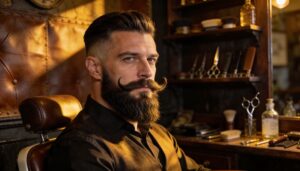
Mutton chops are more than just big sideburns — they’re a full facial hair style with their own rules, history, and personality. Before you pick up a trimmer, it helps to know exactly what you’re working with and how chops differ from a regular sideburn situation.
Here’s a closer look at what defines the style, how it stacks up against sideburns, and how it fits into the broader world of beard styling.
Definition of Mutton Chops
Mutton chops are basically the bold statement piece of the facial hair world — and they’ve earned that reputation. Picture a thick cheek band of hair running from your temples down to the corners of your mouth, creating a natural lamb chop shape on each side.
The chin void stays completely clean, which makes that facial frame pop. What separates mutton chops from other historical beard trends is their intentional hair distribution — all the weight sits on the sides, not the center.
Here’s what defines the classic mutton chop look:
- Wide, full sideburns that thicken along the jawline
- clean chin void for sharp contrast
- Optional connection to a mustache, similar to an imperial beard style
- Bold facial hair coverage that frames the cheeks
Mutton Chops Vs Sideburns
Think of sideburns and mutton chops as cousins — related, but living very different lives. Sideburns keep things simple, running a clean, narrow path down from your hairline and stopping near mid-ear or the jawline. Mutton chops go further, dropping past the jawline and creating a bold facial frame effect on both sides of your face. That length comparison alone changes everything about how your face reads.
Here’s what sets them apart in practical terms:
- Shape distinction: Sideburns use clean stop lines; mutton chops form full, vertical panels
- Facial frame effect: Chops add visual width; sideburns stay subtle
- Growth timeline: Mutton chops need 4–6 weeks minimum; sideburns shape up faster
- Maintenance frequency: Chops need trimming every 3–4 days to stay sharp
- Beard grooming scope: Mutton chops demand neckline clearance; sideburns rarely do
Mutton Chops as a Beard Style
Few beard styles carry the cultural symbolism that mutton chops do. They’ve been worn by presidents, generals, and rock icons — and that history gives them a weight that most styles simply can’t match. As a beard style, the mutton chop works by extending thick sideburns down past your cheeks to your mouth corners, leaving the chin clean-shaved. Celebrity revivals from Elvis to John Lennon kept this look alive across decades, and it’s still turning heads today.
From generals to rock icons, mutton chops carry history that most beard styles simply cannot match
Hair texture impact matters here — coarser hair holds the shape better and fills in faster. When you’re learning how to grow mutton chops, start with four to six weeks of full growth before shaping anything. From there, your mutton chop beard styling options open up: bushy, tapered, or razor-sharp edges depending on your lifestyle and professional dress codes.
Benefits of Mutton Chops Beard Styles
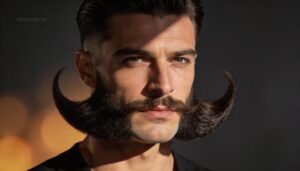
Mutton chops aren’t just a bold style choice — they actually come with some real, everyday advantages. From how they frame your face to how little time they take to maintain, this look works harder than most people expect.
Here’s what makes mutton chops worth considering.
Rugged Look and Strong Jawline
Want a look that actually does the heavy lifting? That’s exactly what mutton chops deliver. The sideburn thickness creates a solid block of hair on both sides of your face, which naturally frames the lower jaw and sharpens the overall outline. The contrast definition between the clean‑shaved chin and the bold side growth gives your jaw that chiseled, deliberate edge — no filter needed.
Here’s what makes the rugged aesthetic work so well:
- Jawline Emphasis pulls attention to the mandibular angle, making your jaw look stronger at a glance.
- Cheek Edge Sharpness creates intentional lines that frame your face instead of blending into it.
- Facial Structure Enhancement adds visual width across the cheeks, balancing your proportions naturally.
With the right beard grooming techniques, the masculine edge you get from well‑shaped chops isn’t just a style choice — it’s a statement.
Simple Maintenance Routine
Keeping mutton chops in shape is honestly one of the easier grooming routine commitments you’ll make.
Daily Shampooing keeps the sideburns fresh and clean, while Beard Oil Hydration softens the hair and stops that under-skin itch.
Comb Alignment takes a minute and trains your hair to grow neatly.
Regular Touch-ups every few days handle Edge Definition before it softens.
Stick to this simple beard maintenance and grooming routine, and your chops will always look sharp and deliberate.
Adaptability and Customization
One of the best things about mutton chops is how much room they give you to make the style your own. Length Modulation lets you dial the sideburns up or down — shorter for a cleaner look, longer for something bolder. Edge Sharpness controls the mood, going crisp for formal settings or softly blended for casual days.
Here’s where the real fun starts:
- Connection Variants let you link chops to a mustache or keep them separate
- Density Balancing evens out patchier areas with smart shaping
- Style Fusion pairs chops with different hairstyles for a complete look
- Personal style expression shapes the beard around your face and hair type
That’s real Customization of Facial Hair Based on Hair Type — practical, intentional, and fully yours.
Unique Style and Confidence Boost
Few beard styles carry the kind of Signature Edge that mutton chops bring to the table. That Bold Frame around your jaw isn’t just facial hair — it’s Personal Branding you wear every day.
Clean boundaries and symmetrical sides tell people you’re intentional, deliberate, thoughtful. That’s real Style Power.
The contrast between your styled side panels and the trimmed areas around them naturally draws attention in photos and face-to-face conversations alike. It sharpens your Masculine Edge and builds a Confident Presence without you saying a word.
A solid Mutton chop grooming and maintenance guide keeps that Confidence building, session after session, turning your beard into a genuine Style statement.
How to Grow Mutton Chops Beard Styles
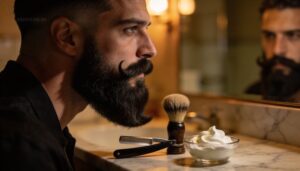
Growing mutton chops takes patience, but the process is pretty straightforward once you know what you’re doing. Before you start shaping anything, there are a few key steps that’ll set you up for a clean, sharp result.
Here’s what to focus on as your beard starts to take shape.
Allowing Your Beard to Grow
Growing mutton chops means making peace with the process — and that starts with understanding growth phases. Your beard moves through active growth, shift, and rest cycles, so don’t panic when patchiness shows up early. Most guys see real length after two to four weeks, with fuller coverage around six to eight weeks.
Here’s how to support that journey:
- Stay hydrated and moisturize daily — skin hydration keeps itching and flaking under control.
- Eat enough protein — nutrition support directly fuels thicker, healthier strands.
- Wash gently, not aggressively — harsh scrubbing worsens patchiness; solutions take time to correct.
Patience tips the scale every time.
Choosing a Shaving Method
Once the beard has some real length, it’s time to pick your shaving method — and this choice shapes everything.
| Tool | Best For |
|---|---|
| Cartridge Razor | Beginners; easy control around cheeks and neck |
| Safety Razor | Close, clean shaves with lower long-term cost |
| Electric Trimmer | Bulk removal and rough edge definition |
| Straight Razor | Precise, barber-level lines along sideburn borders |
Cartridge razors forgive mistakes. Safety razors reward patience and cost less over time. Electric trimmers handle bulk fast, making them smart for shaving techniques for sideburns before detail work. Whatever you choose, keep blades sharp — dull edges increase skin irritation, avoidance failures, and raise razor bump prevention concerns, especially on sensitive skin.
Using Quality Shaving Cream and Comb
Your razor choice is locked in — now let’s talk about what sets the stage for clean, confident lines.
Good shaving cream isn’t just comfort; it’s a functional tool. Dense lather consistency keeps skin wet and lifts hair so your razor glides without snagging. That razor glide optimization matters most when you’re working on shaving techniques for sideburns, where the hair grows in multiple directions. Apply it to a damp face, let it sit briefly, then comb your sideburns before the blade ever touches skin.
Comb tooth selection counts here — wider teeth for coarser hair, finer teeth for soft stubble. Rinse thoroughly for post-shave cleanliness, then apply beard oil. Smart grooming products and consistent beard maintenance and grooming routines keep things sharp between sessions.
- Moisturizing benefits reduce dryness and itchiness under longer sideburns
- Dense lather prevents razor drag along uneven cheek growth
- Combing before shaving aligns hair for more uniform cuts
- Rinsing cream fully prevents buildup that blurs trimming lines
Trimming and Shaping Your Beard
Once your prep work is done, it’s time to shape those chops into something worth showing off.
Start with clean, dry hair and dial in your guard length selection — guards between 2 and 6 mm give you visible shape without losing definition. Trim both sides at the same setting first, then adjust. Cheek line precision matters here: follow the natural curve from your mouth corner down toward the jaw, keeping strokes flat and steady. For neckline work, place two fingers above your Adam’s apple and trim just above that point.
Edge detailing comes last — use a shorter guard or bare blade only on borders, never the full chop. Blade guard usage keeps hair density balance even across both sides.
- Pro tip: Check your lines in natural daylight at arm’s length to catch any asymmetry before finishing.
Finish every mutton chops maintenance and grooming session with beard oil for lasting smoothness.
How to Trim Mutton Chops Beard Styles
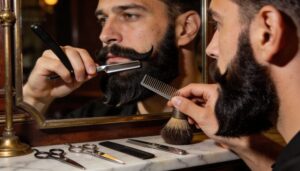
Trimming mutton chops is where the real magic happens — this is what separates a clean, sharp look from something that just grew out of control.
Getting it right comes down to a few key steps that are easier than you might think. Here’s what you need to know to trim them properly.
Using an Electric Beard Trimmer
Your electric beard trimmer is the one tool that separates a clean mutton chops look from a messy one. Guard adjustment techniques matter more than most guys realize — start with a longer guard, then work down gradually for a natural fade along your cheeks.
For cordless trimmers vs corded models, cordless trimmers give you freedom of movement around the mirror, while corded ones eliminate battery life management concerns entirely. If you go cordless, check that charge before you start — most lithium models run 60 to 120 minutes on a full charge.
A blade maintenance routine keeps everything sharp: oil your blades weekly, brush out hair after every session, and wipe the body clean. Smooth, steady passes along the jawline do the heavy lifting for mutton chops maintenance and grooming.
Creating Defined Lines and Shapes
Clean lines are what separate a sharp mutton chops style from one that just looks like you forgot to shave.
Start with symmetry guidelines — draw a straight line from your upper jaw toward the lower beard edge on both sides, checking that each matches by comparing distances from your mouth corners.
Work in short, light passes for edge detailing rather than one aggressive sweep, which causes line blowout.
Comb hair outward first so the ends are visible, then define each border carefully.
- Use a fade blend at the sideburn shaping zone
- Apply jawline definition along your natural bone structure
- Keep beard trimming techniques consistent on both sides
- Create a soft line across the jaw before finalizing hairline shaping
Trimming The Sides and Neckline
Getting the sides and neckline right is honestly where mutton chops go from “eh” to actually impressive. Place your neckline about two finger-widths above your Adam’s apple, then work outward using smooth, even strokes. Sideburn edge alignment matters just as much — line each end point up with the midpoint of your ear so both sides mirror each other. grain direction trimming helps too; follow the grain first, then clean up against it for a sharper finish.
- Use a detail tool along the neckline for a crisp, clean neck line
- Apply beard trimming techniques consistently on both sides during symmetry inspection
- Build a simple maintenance schedule — trim sideburns every three to four days
Experimenting With Different Lengths
Length is where mutton chops get personal. Start short — around 3 to 5 mm — to see how your hair density holds the shape before committing to anything dramatic.
From there, stubble length variations let you test the waters without losing the style entirely.
Guard blending techniques make blending easier: step down one guard level at a time instead of jumping straight to the skin.
Keep in mind the length growth timeline — beard hair grows roughly 1 cm per month, so seasonal length adjustments are worth planning ahead.
Your trimming technique, your call.
Popular Mutton Chops Beard Styles
Mutton chops aren’t a one-size-fits-all kind of style — there’s actually a solid range of variations to choose from. Whether you’re after something sharp and clean or bold and full, there’s a version that fits your face and personality.
Here are the most popular mutton chop beard styles worth knowing about.
Regular Mutton Chops

Regular mutton chops are the style that started it all — thick sideburns running down each cheek, meeting nothing but smooth, clean-shaven skin at the chin. The Growth Timeline here matters: plan for four to six weeks of solid hair growth before you even think about shaping.
Once you’re there, the real work is Texture Management — coarser hair often flares outward, so trim the cheek zone shorter to keep everything controlled. Daily Oil Application softens the hair and cuts down on itch. For Symmetry Tips, always trim both sides in one session using the same guard length.
Here’s what keeps regular mutton chops sharp:
- Brush daily to train hair direction
- Trim every three to four days
- Apply beard oil each morning
- Adjust length seasonally for Seasonal Care
Friendly Mutton Chops
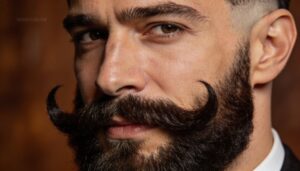
Friendly mutton chops are basically the sociable cousin of the classic style — same bold cheek coverage, but with a mustache that bridges both sides into one connected frame. That Mustache-Cheek Harmony is what sets this variation apart from every other mutton chop beard variation out there.
| Feature | What To Do | Why It Matters |
|---|---|---|
| Jawline Edge Precision | Trim every 3–4 days | Keeps borders clean |
| Cheek Texture Balance | Apply oil daily | Softens and smooths |
| Fade Technique Variations | Taper with clippers | Blends naturally |
Your Seasonal Grooming Routine should adjust length slightly in winter for fuller warmth. Keep the chin shaved clean — always.
Thin Mutton Chops
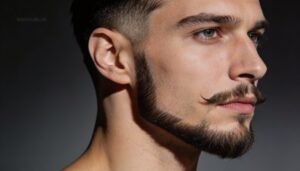
Where friendly mutton chops go bold and connected, thin mutton chops take a quieter, more refined approach. Think slim sideburns that trace your cheek line with precision — no drama, just clean definition. Cheek Line Precision and Neckline Sharpness are everything here, since thin coverage shows mistakes fast.
Keep hair between one and three inches, and trim every week or two for Density Management. This style demands meticulous upkeep to maintain sharp boundaries and avoid unruly growth.
- Works best for oval, round, or thin face shapes
- Requires tight boundary lines to avoid a strap-beard effect
- Seasonal Grooming adjustments keep edges crisp year-round
- Styling Accessories like a detail trimmer are non-negotiable
- Pairs cleanly with or without a mustache
Chin Curtain Mutton Chops
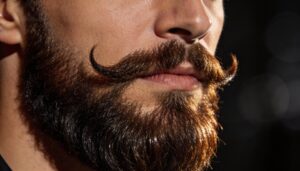
Think of chin curtain mutton chops as thin mutton chops that decided to keep going — all the way under the chin. Your sideburns drop along the jaw and connect across the front, framing your lower face, balancing like a natural U-shape.
- Growth Timeline runs 2–4 weeks before the shape becomes carvable
- Beard Oil Benefits keep that chin section soft and defined
- Edge Maintenance every 3–7 days prevents bleed-over into a full jaw beard
Disconnected Mutton Chops

Where chin curtain chops frame the lower face with connection, disconnected mutton chops do the opposite — they thrive on separation. That visible skin gap between your sideburns and mustache area is the whole point. Skin Gap Styling isn’t an accident here; it’s the look you’re building toward.
Your side panels grow down the jaw with clear Cheek Length Control, stopping around mid-jaw with a defined endpoint. Neckline Separation keeps the center neck clean so the panels never merge into something unintentional. Symmetry Balancing matters a lot with this style — uneven sides are hard to miss when there’s nothing connecting them.
Gap Maintenance means trimming every few days because beard growth bridges that gap fast. Keep edges sharp, comb panels slightly outward, and the Mutton chop beard variations this style opens up are genuinely impressive. Bold, deliberate, and all yours.
Mutton Chops Beard Styles for Different Face Shapes
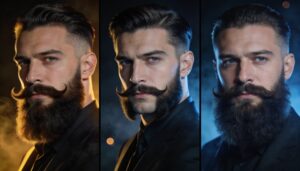
Not every face is built the same, and your mutton chops should work with your natural shape, not against it. Picking the right variation makes all the difference between a style that looks intentional and one that just feels off.
Here’s how mutton chops play out across three common face shapes.
Mutton Chops for Round Faces
Round faces actually respond really well to mutton chops — you just need the right approach. The goal is vertical length emphasis rather than width, so the style frames your jaw without making your cheeks look bigger.
Keep these three things in mind:
- Cheek Taper Technique — lighter coverage on the upper cheeks, fuller toward the jaw angle
- Jawline Definition — sharp, clean edges along the sides keep the silhouette structured
- Neckline Positioning — set it high and conservative to avoid adding bottom-face bulk
Density management matters too. Trim the cheek area with a shorter guard, and you’ll maintain the chop shape without overwhelming your face.
Mutton Chops for Oval Faces
Oval faces are genuinely the sweet spot for mutton chops — your proportions are already balanced, so styling for oval faces is more about adding structure than correcting anything. The natural symmetry gives you room to experiment, and face shape analysis confirms this shape manages nearly every variation well.
Here’s what to focus on:
- Cheekbone Emphasis — start the fullness near the cheekbone and keep upper cheek coverage moderate.
- Jawline Tapering — fade density gradually toward the jaw corner for a clean, natural finish.
- Hair Density Balance — thicker at mid-side, lighter toward the lower edge to preserve your oval silhouette.
- Neckline Placement — trim cleanly about one to two fingers above the Adam’s apple.
Round out your routine with beard grooming and maintenance tips: daily beard oil, consistent sideburn styling tips, and quality styling products keep those edges sharp.
Mutton Chops for Square Faces
Square face shapes actually work beautifully with mutton chops — the trick is knowing where to soften and where to let the beard do its thing.
Prioritize jawline softening by letting your chops taper longer toward the chin rather than flaring wide at the cheeks.
Cheek tapering and a clean sideburn fade reduce that blocky look without sacrificing boldness.
Neckline definition keeps everything sculpted.
Your face shape analysis should guide hair density balance, so follow solid beard trimming advice and stay consistent with your beard grooming and maintenance routines.
Mutton Chops Beard Styles With Mustache

Adding a mustache to your mutton chops changes the whole energy of the look — it ties the face together and gives you more room to play with your style.
Whether you want something clean and connected or bold and dramatic, there’s a mustache-and-chops combo that fits.
Here are four styles worth considering.
Friendly Mutton Chops With Mustache
Friendly mutton chops with a mustache are where bold meets balanced. The mustache integration technique is what sets this style apart — barbers define a clean junction where the mustache meets the cheek growth, so everything reads as intentional.
Keep cheek volume balance in mind: fuller near the jaw, gradually tapering down. For ear taper symmetry, check both sides at ear height after every trim pass.
Neckline precision matters too — stay above the Adam’s apple.
With a grooming frequency of every two to three days and daily beard oil, your styling tips for sideburns and mutton chops stay sharp.
Thin Mutton Chops With Mustache
Thin mutton chops with a mustache are the quiet confidence of the facial hair world — subtle, sharp, and surprisingly adaptable. Where the friendly style goes bold, this one goes precise.
Start your beard maintenance and grooming routines by letting cheek hair grow to a manageable length, then dial in your guard length settings to keep the strips narrow and consistent. Use a fine-tooth comb to separate the mustache hairs cleanly from the cheek growth before trimming.
Here’s what keeps this style looking intentional:
- Check symmetry checking methods — hold a handheld mirror at jaw level on both sides
- Follow a daily beard oil routine to handle skin irritation prevention under those tight lines
- Apply styling tips for sideburns and mutton chops by tapering slightly toward the ear
When choosing mutton chop style for different face shapes, narrower chops naturally suit rounder faces best.
Chin Curtain Mutton Chops With Mustache
The chin curtain mutton chop with mustache is where bold meets structure. Thick sideburns fall vertically like a curtain framing your jaw, while the mustache anchors the whole look above.
Celebrity inspiration aside, this style rewards consistent beard maintenance and grooming routines — comb the curtain down after washing, clean the neckline, sharp, and finish with beard oil for smooth, controlled texture.
Disconnected Mutton Chops With Mustache
Disconnected mutton chops with a mustache might be the sharpest gap in facial hair styling — and that gap is exactly the point. The skin between your mustache and chops stays visible on purpose, creating clean line definition that sets this look apart.
Gap maintenance is everything here: trim the separation every few days so it doesn’t close up. Tool selection matters too — a detail trimmer manages those tight edges better than bulky clippers.
- Apply beard oil daily for skin care and flyaway control
- Use a fine-tooth comb before trimming for cleaner lines
- Match mustache thickness to your chop density for balance
- Shorter chop length works best for thinner growth
Mutton Chops Beard Styles for Working Guys

Pulling off mutton chops at work isn’t as tricky as it sounds — it’s really just about finding the right variation for your environment. Whether you’re in a creative field or a more buttoned-up office, there’s a style that fits without sacrificing professionalism.
Here are a few solid options worth considering.
Short and Neat Mutton Chops
When your job demands a polished look, short and neat mutton chops hit the sweet spot between bold style and clean professionalism.
Think of them as the well-fitted suit of beard maintenance and grooming routines — sharp, intentional, and always on point.
- Set your trimmer to a guard length of 1–3mm for clean mutton chops with consistent body
- Follow your cheek contour closely, keeping earline precision tight and stray hairs cleared
- Trim every 3–5 days to maintain trim frequency and crisp edges
- Finish with daily oil application to keep skin smooth and sideburns defined
Modern Mutton Chops
Short and neat mutton chops keep things clean, but if you’re ready to push the style further, modern mutton chops are where things get interesting.
These aren’t your grandfather’s sideburns. Sharp edge definition along the jawline and cheek gives them a structured, intentional look that works in professional settings without feeling out of place. Cultural revival influences from grooming communities and digital grooming tutorials have made it easier than ever to nail the shape at home. product layering strategies — start with beard oil, finish with a light balm — to keep edges crisp all day. Professional barber tips for sideburn shaping suggest matching density on both sides for clean symmetry.
- Modern mutton chops adapt well across seasonal color variations in clothing, making them a year-round style anchor.
Retro Style Mutton Chops
Modern mutton chops look great, but retro style mutton chops take things back to where it all began — the 19th century facial hair fashion at its boldest.
Think Classic Hollywood mutton chops shaped with a cheek-ear taper, a clean classic neckline shave, and mid-length density that holds its shape all day.
Brush everything flat with a boar brush finish, keep retro sideburn separation crisp, and you’ve got vintage grooming that wouldn’t look out of place alongside a classic Victorian handlebar with a formal suit.
Flattering Beard Styles
Retro styles have their charm, but sometimes what you really need is a look that flatters your natural features and fits your actual life.
That’s where understanding your face shape pays off. Mutton chops can frame your jaw beautifully when you match the style to what you’re working with — and yes, hairline integration and facial symmetry matter more than most guys realize.
Here’s how to land the right fit:
- Face Shape Analysis — Longer chops add width to narrow faces; shorter, tighter chops define round ones.
- Hair Texture — Coarse hair manages bushy density well; fine hair looks sharper when trimmed close.
- Seasonal Adjustments — Go fuller in winter, trim down when it warms up.
- Color Coordination — Gray streaks or lighter tips add natural texture that flatters mature faces.
- Texture Contrast — Pairing smooth cheek lines with slightly fuller chop ends creates visual depth without overwhelming your features.
Best Mutton Chops Beard Styles to Try
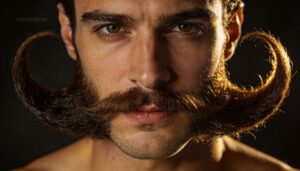
Now that you know the basics, it’s time to find a style that actually suits your face and personality. There’s no single right answer here — mutton chops come in more shapes than most guys expect.
Check out these top styles to see which one clicks for you.
Top 10 Mutton Chops Beard Styles
There’s a mutton chop style out there for every guy, whether you’re chasing Elvis’s bold sideburns or Wolverine’s rugged cheek coverage. Celebrity influences have kept these looks alive across generations, and social media trends keep pushing modern variations into fresh territory.
From thin chops that carve a sharp jawline to friendly chops that blend into a mustache, each style flexes differently depending on your hair texture compatibility and face shape.
Regional style variations also shape what works locally.
Daily beard oil usage keeps every version looking intentional, not neglected.
Tips for Choosing The Right Style
Picking the right mutton chop style comes down to knowing yourself — your face, your hair, and honestly, how much time you’re willing to spend in front of the mirror.
- Face shape analysis for beard styling: Oval faces handle fuller chops well; square faces look sharper with cleaner, defined lines.
- Hair density check: Thick, coarse hair allows bushy mutton chop beard variations; finer hair works better with trimmed, close-cropped edges.
- Lifestyle compatibility: Styling mutton chops for different occasions matters — a professional environment calls for tighter, neater lines.
- Maintenance commitment: Be honest about your personal aesthetic and how often you’ll actually trim.
How to Style Your
Styling your mutton chops well comes down to layering the right products — start with beard oil for moisture, then finish with a light balm for texture control and hold. Use a comb to train the hair in one direction daily.
Think about event suitability too; tighter, cleaner lines work for the office, while fuller mutton chop beard variations suit weekends.
Adjust length seasonally, and let your face shape guide every decision.
Frequently Asked Questions (FAQs)
What face shape is best for mutton chops?
Oval and square face shapes tend to work best.
Oval faces offer balanced proportions with natural cheek proportion and jawline accentuation, while square jaws pair beautifully with tapered edges that highlight strong bone structure.
How to style mutton chops beard?
Start with four to six weeks of growth, then shave the chin clean. Keep sideburns thick, trim edges sharp, and apply beard oil daily to condition and define your look.
Are mutton chops a classic beard style?
Yes — mutton chops are about as classic as it gets.
Rooted in Barbershop Heritage and Timeless Masculinity, this retro fashion trend has shaped grooming culture since the 19th century, and never really left.
How to outline the shape of a Mutton Chops beard?
First, define your outline by marking the corner of your mouth as your anchor point.
From there, taper downward along the cheek, keeping the Jaw Edge Positioning angled to match your natural jawline — not perfectly horizontal.
How do you cut a mutton chop beard?
your face like a canvas—grow out your cheek hair, shave the chin clean, outline the shape with a trimmer, and keep those edges sharp for a bold, classic look.
Can you wear a mutton chops beard with a moustache?
Absolutely — mutton chops and a moustache work great together.
Moustache integration tips matter here: match lengths, keep edge definition techniques clean, and mind the mouth gap for a sharp, balanced finish.
Which face shape suits mutton chops?
Not every face shape gets to "chop" and change — but most do.
Mutton chops suit oval, square, round, diamond, and heart face shapes well, each benefiting from the style’s natural width and cheekbone emphasis differently.
Why did mutton chops go out of style?
Cultural shifts and tighter professional dress codes made bold sideburns feel out of place.
Media influence pushed cleaner looks, grooming technology made minimalism easier, and youth preferences drifted away from such statement-making styles.
Is mutton chops beard good?
Mutton chops are genuinely good when matched to your face shape and hair density.
They sharpen your professional appearance, boost confidence, and stay cost-efficient since only two focused areas need consistent facial hair maintenance.
Are mutton chops still in style?
Yes, they absolutely are.
Street style resurgence and vintage fashion cycles keep bringing them back.
Barbers still shape them, influencers still wear them, and men who commit to the look always turn heads.
Conclusion
Embracing the mutton chops beard styles is more than just a grooming choice—it’s a statement of confidence and individuality. As you experiment with different lengths and shapes, remember that patience and practice make perfect.
With the right technique and a bit of flair, you’ll be rocking a bold, timeless look that’s uniquely yours. So go ahead, let your beard do the talking, and make a lasting impression with your newfound style.